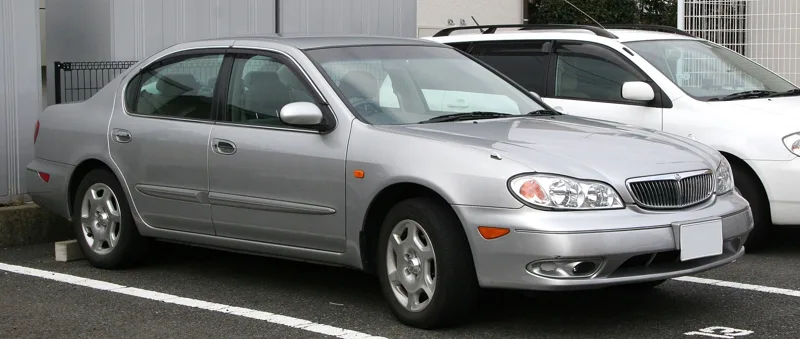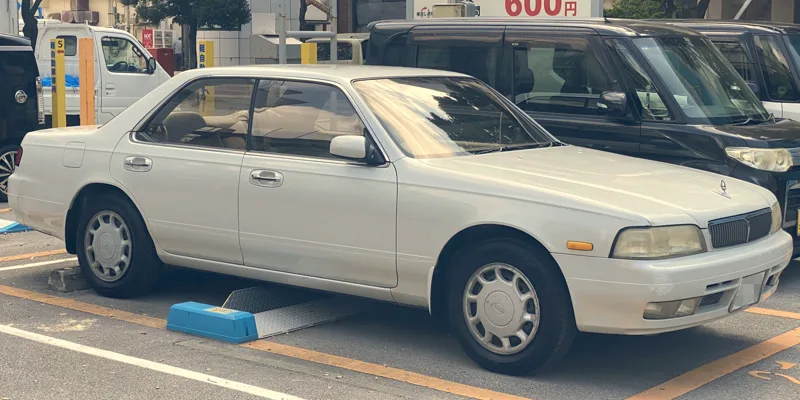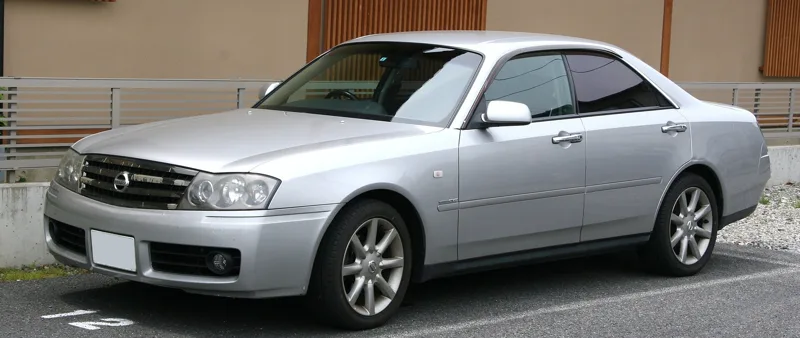
A rear-drive coupe and sedan built from 1980 to 2000, shared with the Skyline, Cedric and Gloria, and the root of Infiniti's M and J models.
The Nissan Leopard was a rear-wheel-drive sport and luxury car built by Nissan from 1980 to 2000, sold only in Japan. It began on the Skyline and Laurel, moved to the Cedric and Gloria, and offered turbo and V6 engines. Its final versions helped shape the Infiniti M and J models.
The Nissan Leopard was a line of sport and luxury cars that Nissan built in Japan from 1980 to 2000. It began on the Skyline and Laurel, later moved to the Cedric and Gloria chassis, and was rear-wheel drive throughout. Its final versions contributed to the Infiniti M and J models, and the Leopard was eventually cancelled under the Nissan Revival Plan.
What is the Nissan Leopard?
The Leopard was a coupe and sedan that Nissan sold exclusively in Japan at Nissan Store locations. It was a companion to the Fairlady Z, and it gave Nissan a badge-engineered version of the Skyline and Laurel with more luxury equipment. Its style and engineering moved with the platform underneath, which changed across the four generations.
The Leopard was cancelled because it was a casualty of overproduction during the Nissan Revival Plan. Its successor was the Nissan Fuga, which carried a more upmarket identity into the new century.
A Japan-only sport-luxury line that moved from Skyline hardware to Cedric underpinnings and left its mark on Infiniti.
Where did the first-generation Leopard come from?
The first Leopard, also known as the Leopard TR-X, was introduced in September 1980 in the upper medium class. It sat above the Bluebird 810 with its six-cylinder engine, and it was a larger coupe and sedan than the models beneath it. The coupe came after the Toyota Chaser and before the Toyota Soarer in the market.
The coupe replaced the Cedric and Laurel coupes, and it shared its angular look with the Fairlady Z. It was sold through Nissan Store showrooms, while the sedan was exclusive to Nissan Cherry Store. At introduction the two body styles carried the same price tags.
What made the first-generation body distinctive?
The body was angular, with very slim C- and D-pillars and large glass areas. The two-door hardtop was a personal luxury car, and the four-door hardtop sedan shared the same slim pillars. The coupe used a glass-to-glass rear window that carried through from the sedan's design.
The two-door version had a drag coefficient of 0.37. The Leopard also introduced some industry firsts, such as a fuel consumption gauge in the dashboard. The Japanese version had mirrors mounted on the front fenders, with small wipers on top to clear rain and dirt.
What engines did the first-generation Leopard offer?
The first Leopard used naturally aspirated inline-four and inline-six engines of 1,800, 2,000 and 2,800 cc. The largest engine used an electronic management system developed with Hitachi, called NAPS-Z. The 1.8 L fours came with a four-speed manual, while the others used a five-speed as standard or an optional three-speed automatic.
In July 1981 a turbocharged two-litre joined the range. It came in GX, SGX and ZGX trims and produced 145 PS (143 hp; 107 kW), which matched the output of the heavier and more expensive 2.8 L. The 2.8 was dropped in September 1982, when the car received a mild facelift.
How did the Leopard get its turbo V6?
In June 1984 a limited Turbo Grand Edition joined the line-up with the 300ZX's 3.0 L VG30ET turbo V6. It produced 230 PS (227 hp; 169 kW), which gave the Leopard a clear performance flagship. That made the Turbo Grand Edition the performance flagship of the range.
The Leopard shared many components with the six-cylinder Nissan Bluebird 910, which was the Datsun 810 in North America before becoming the Maxima. Its platform, however, came from the Skyline R30, which explains much of its character.
What trims were offered at launch?
At introduction the car came in several trims with different engines, and the two-litre option could lower the annual road tax for Japanese buyers. After a styling update in late 1982 the line-up included the 180X (GX and SGX), the 200X (SGX and ZGX), the 200 Turbo (SGX, ZGX and ZGX Super Edition) and the 300 Turbo Grand Edition.
What changed with the second-generation F31?
The F31 Leopard appeared in February 1986 and was offered only as a luxury GT coupe. It shared its platform with the Nissan Skyline R31, the Nissan Cefiro A31 and the Nissan Laurel C32, which spread the development costs under Project 901. The sedan gave way to the Bluebird Maxima in 1988.
The F31 competed mainly with the Toyota Soarer, the Mazda Cosmo and the Honda Legend coupe. Where Toyota offered the Soarer with several straight-six engines, Nissan gave the Leopard an all-new V6, naturally aspirated or turbocharged. The engines were the VG30DET, VG30DE, VG20DET, VG20ET and VG20E, with the quad-cam version of the VG20DET arriving in August 1988.
The bodywork was facelifted in August 1988 with a smoother front and a wind resistance coefficient of 0.32. The facelifted version was exported to the United States, where it was sold as the Infiniti M30. The turbocharged 3.0 L VG30DET was available in top-spec form, producing 255 PS (252 hp; 188 kW).
How did the F31 handle and ride?
The F31 used MacPherson struts at the front and a semi-trailing arm rear suspension with coil springs. Like the Skyline and the Fairlady ZX, it was a front-engined, rear-wheel-drive car, and it used an RE4R01A four-speed automatic with electronic overdrive. A five-speed manual was offered only in the domestic market, on the lower trims.
Buyers could add the Super Sonic Suspension system, which used a sonar module under the front bumper to scan the road surface and adjust the shock absorbers through actuators. A console switch let the driver choose between Auto, Soft, Medium and Hard settings, and the steering and automatic shift points were also linked to the suspension mode.
How did the F31 sell?
The F31 Leopard's production run lasted seven years, ending in June 1992 because sales had slowed. Seven years was very long by period Japanese standards, nearly the length of two generations for most cars. About 38,000 F31 Leopards were sold in Japan during that span.
Nobody knows exactly how many Infiniti M30 models were produced for the US market, but just over 17,000 were said to have been made. The convertible was offered only in 1991 and 1992, and around 12,000 Leopards were sold in the US, with roughly 6,000 of those converted to convertibles by ASC.
What was special about the Y32 Leopard J Ferie?
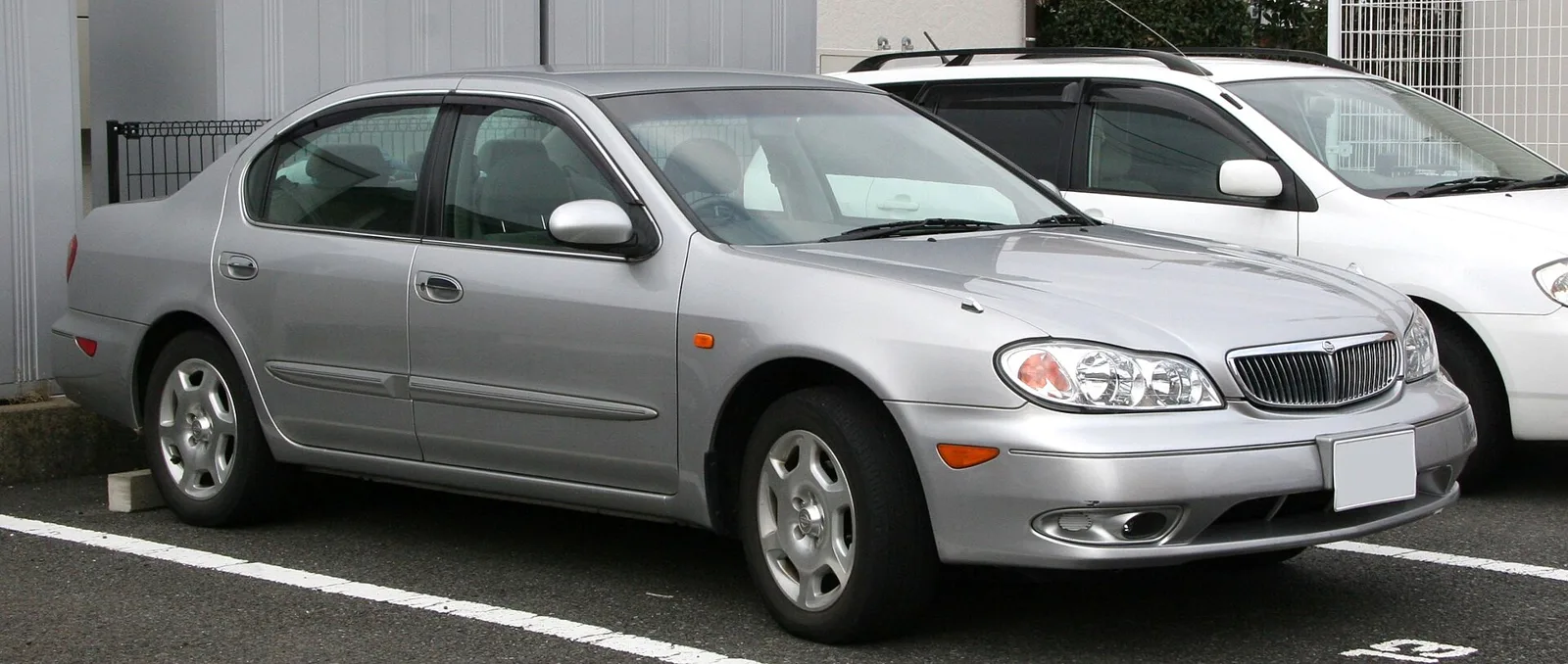
The third generation, internally the Y32, was styled under Jerry Hirshberg, president of Nissan Design International. It was marketed as the Leopard J Ferie from June 1992 as a rear-drive sedan with room for five. Build started on 7 April 1992 for the 1993 model year and ended on 18 June 1997.
The Leopard abandoned the coupe and moved to the longer Cedric and Gloria platform. The sedan was the only body style offered, and it was sold exclusively through Nissan Store. Its rounded styling was unusual for the crowded executive class of the time, and it is now seen as an early version of the four-door coupe.
The name J Ferie comes from the French jour ferie, meaning holiday, and it sounded close to the Honda Civic Ferio marketed at the same time. The car was built at Tochigi, and it used a MacPherson strut front suspension with a multi-link rear and Nissan's Super HICAS four-wheel steering.
What engines did the Y32 use?
The engine was a 3.0 L VG30DE V6, also found in the 300ZX, making 210 PS (154 kW) and 192 lb ft (260 N m) of torque. Although the Y32 shared its chassis with the Cedric and Gloria, it could also be fitted with the engines used in the Nissan Cima, including the VH41DE V8.
In Japan three trims were offered: the Type X with the V8, the Type L with the same equipment and the smaller V6, and the Type F, which was more modestly equipped. Later versions added the Type X-S and Type L-S V6 models. The V8 claimed 270 PS (199 kW) in Japanese specification.
The Y32 became the first car sold in Japan with a standard passenger airbag. Its leather was developed with Poltrona Frau of Italy. Sony supplied the stereo and video equipment, and the screen was upgraded to a colour LCD.
How did the Y32 sell?
One of the reasons the Y32 did not meet its projected sales goals was its lack of interior room. It was a mid-size car with the space of a subcompact, because its sloping roofline and rounded trunk cut into the cabin. The styling was more favourably regarded in Japan than in the United States.
Over its lifetime, about 70,000 Y32 Leopards were sold in the United States. Sales were more than 20,000 a year in 1993 and 1994, then fell to 17,899 in 1995, 7,564 in 1996 and 4,594 in 1997. Fewer than 8,000 were sold in Japan.
What did the fourth-generation Leopard change?
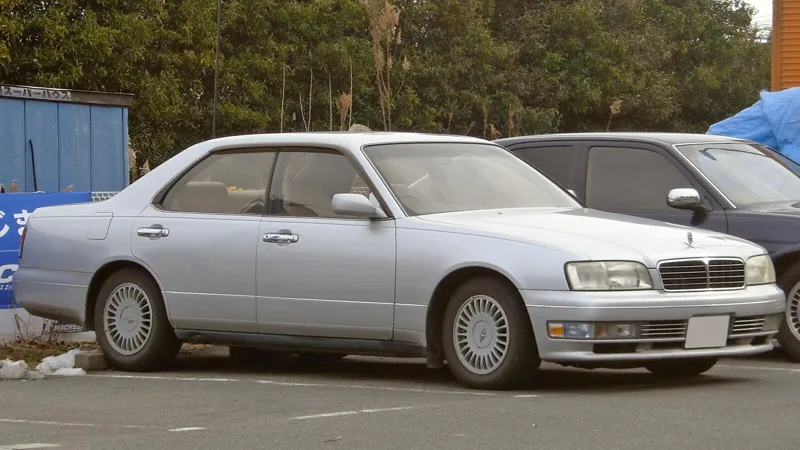
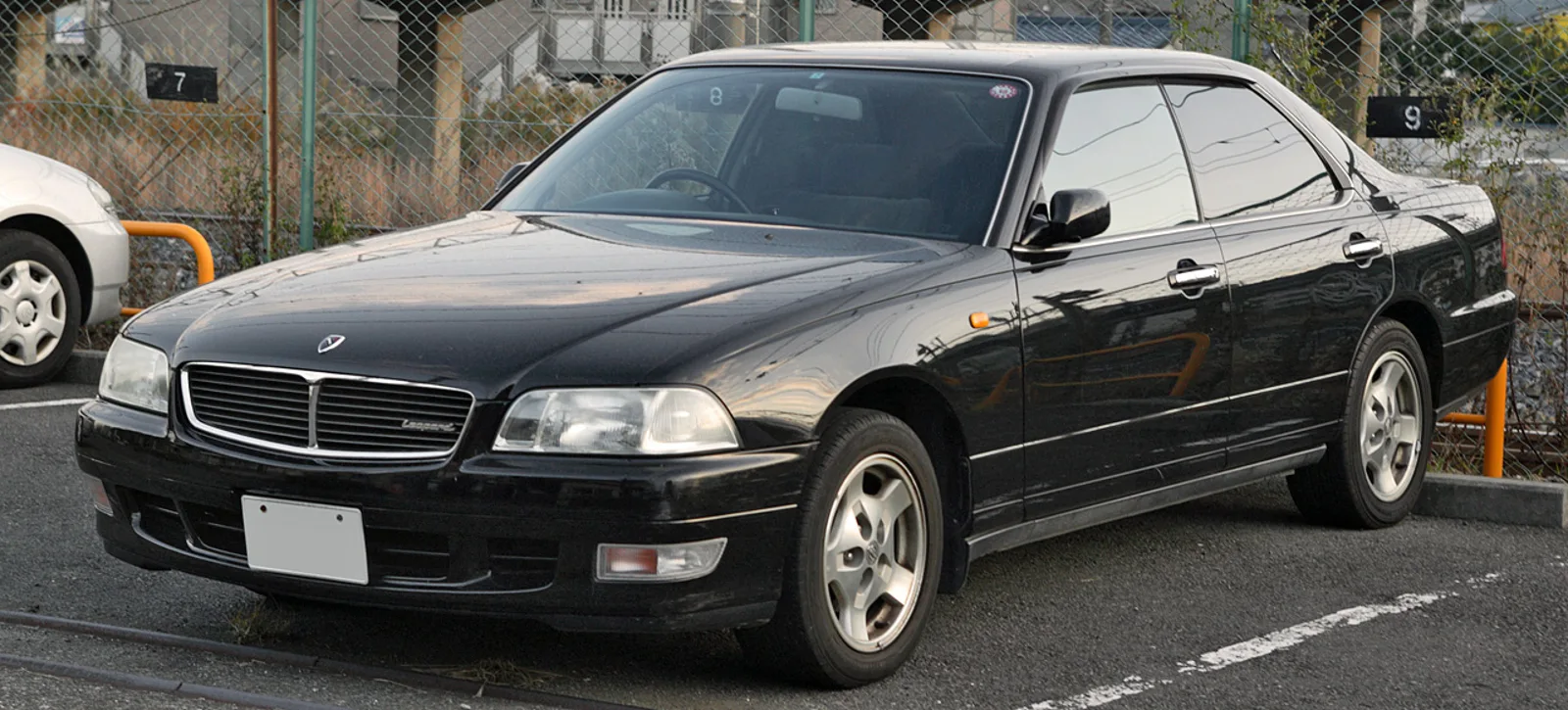
The fourth and last generation, the Y33, arrived in March 1996 as a hardtop sedan with frameless side windows. The J Ferie look and name were dropped, and the Y33 reused the chassis, suspension, powertrain and cabin of the Cedric and Gloria Gran Turismo, which kept costs down.
Four trims were offered, starting with the XV-G, which had rear-seat comfort features, followed by the XV, the XR and the XJ. Compass Link navigation was offered as an extra-cost option on every trim, with a 7-inch colour LCD screen. The XV-G and XV carried Super HICAS.
A V8 was no longer offered, and at launch only three V6 engines were available. The XV-G and XV used the VQ30DET turbo, the XR used the VQ30DE and the XJ used the VG30E. In January 1997 the XJ-Limited arrived with the VG20E. For the 1998 refresh the XJ-4 gained ATTESA E-TS all-wheel drive and the RB25DET straight-six, borrowed from the Skyline and Laurel.
Sales suffered as the economy weakened after the Japanese bubble. The Y33 was sold only at Nissan Saito Store locations rather than through Nissan Store, and it was discontinued in December 2000. In North America the J30 had been replaced by the Cefiro-based Infiniti I30, so the Y33 was never offered there.
Key specifications at a glance
| Item | Figure |
|---|---|
| Production | 1980 to 2000, four generations |
| Platform | Rear-wheel drive; Skyline and Laurel, then Cedric and Gloria |
| First-generation turbo | Two-litre, 145 PS (143 hp; 107 kW), July 1981 |
| Turbo V6 (1984) | 3.0 L VG30ET, 230 PS (227 hp; 169 kW) |
| F31 top engine | Turbo VG30DET, 255 PS (252 hp; 188 kW) |
| Y32 engine | 3.0 L VG30DE, 210 PS (154 kW) |
| Y32 production | 7 April 1992 to 18 June 1997 |
| Successor | Nissan Fuga |
What is the Leopard's legacy?
The Leopard's legacy lies in the Infiniti models that grew from it, and in its role as a sport-luxury car sold only in Japan. Its turbo V6 engines and its mix of Skyline and Cedric hardware made it a distinctive car for its time, even though sales never matched the ambitions behind it.