From the 1977 Mark II-based hardtop to the 1JZ turbo cars and a 1998 JTCC title, the Chaser was the sporty member of a three-car family that ran until 2001.
The Toyota Chaser was a mid-size sporting sedan built for six generations from 1977 to 2001. It shared its platform with the Mark II and Cresta, and its turbo 1JZ and 2JZ engines gave it a performance reputation. It was sold only in Japan.
The Toyota Chaser was a mid-size car produced by Toyota for six generations, from July 1977 until production ceased in 2001. It began as a sporting variant of the Mark II and was sold alongside the Mark II and the Cresta as one of Toyota's triplet sedans, with the Chaser keeping the image of the performance model in the family.
What was the Chaser's place in Toyota's range?
The Chaser was one of Toyota's triplet sedans, a trio of cars that were rebadged versions of the same vehicle, sold through different dealership channels. The Chaser was sold through Japanese Toyota Auto Store dealerships as their top-level model, and it sat a class below the Crown.
Within the family the Chaser had the sportiest image, compared with the Mark II and the more luxury-oriented Cresta. In the beginning it was offered as a four-door sedan and a hardtop sedan, with the two-door coupe appearing only in the first generation.
Its reputation for performance grew as each generation brought larger engines. Turbochargers and superchargers were added to bigger displacements, although Japanese taxes and emissions rules limited how far that could go. Toyota never fitted a V6 to the Chaser across the whole series.
A rear-drive Toyota sedan that carried the sporting badge in its family for twenty-four years.
How did the first-generation Chaser come about?
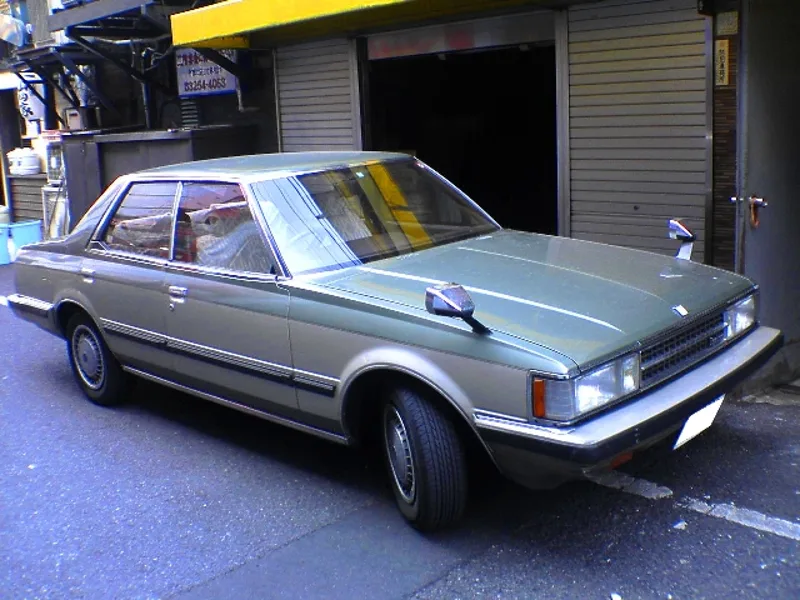
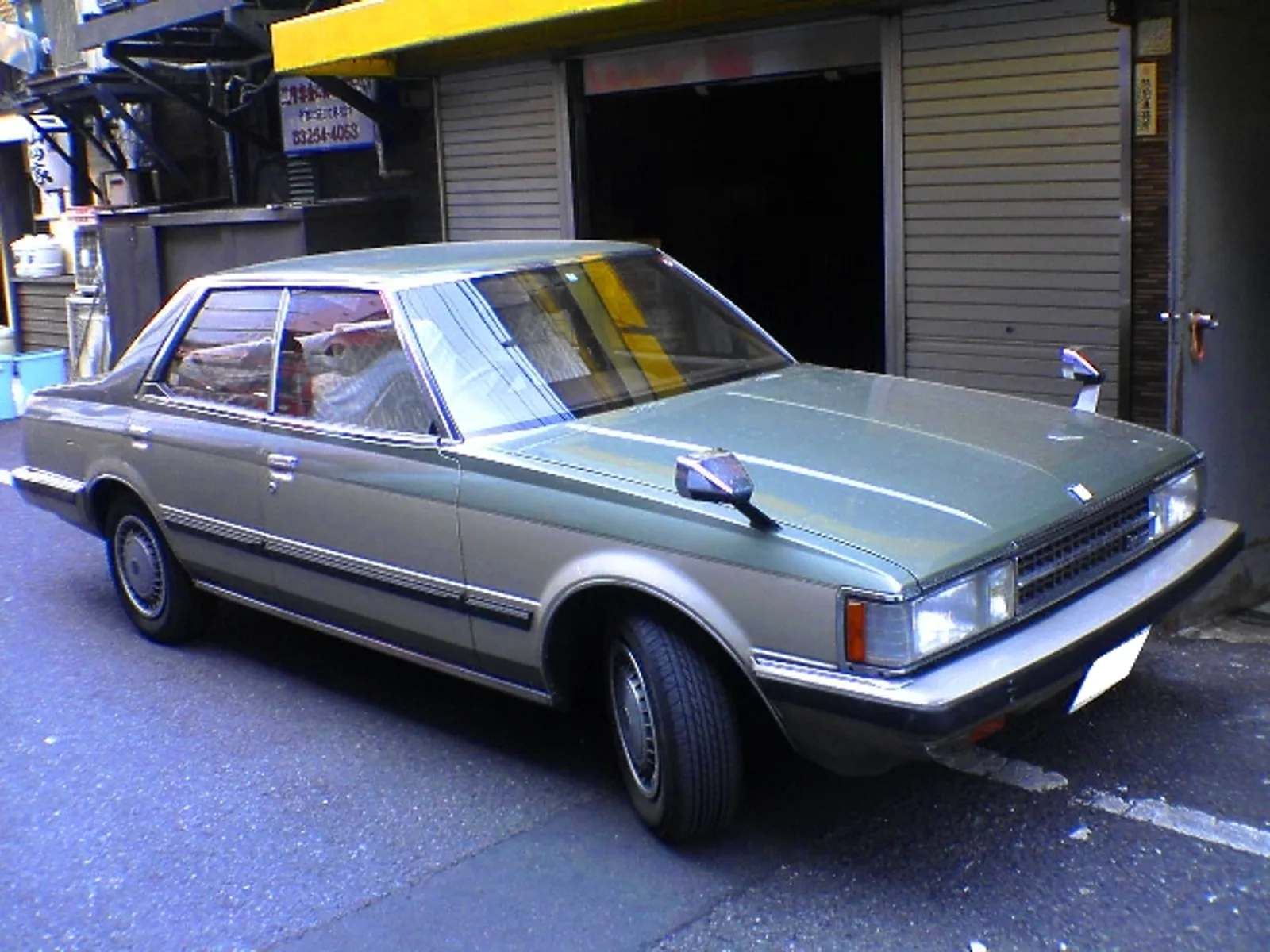
The first Chaser went on sale in July 1977 with the X30, X31, X40 and X41 chassis codes. It evolved from the X20 generation Mark II GSS hardtop coupe, and X40 numbers appeared around mid-life on cars able to meet the tougher emissions rules.
Cars sold with Toyota's TTC-C technology carried a badge on the boot lid showing compliance with Japan's Clean Air Act of 1975. The lineup used single-cam four-cylinder engines of 1.8 and 2.0 litres and six-cylinder 2.0 L M-U and M-EU engines, all tuned for economy and clean emissions. The M-EU came with multi-port electronic fuel injection and was Toyota's first engine able to meet the 1978 emissions standards.
The Chaser was a lightly redesigned Mark II, with a wider front grille, no parking lights and different taillights. It was the only Chaser offered as a two-door, because the coupe body was replaced by the Toyota Soarer after this generation.
Why was the first Chaser kept small?
To give buyers a luxury sports sedan without heavy tax costs, the car was limited to an engine size of 2000 cc, with a body no longer than 4.7 m (15.4 ft) or wider than 1.7 m (5.6 ft). Displacements of 1.8 L and 2.0 L kept the annual road tax affordable, and both the two-door and four-door shared one wheelbase.
The Chaser competed with the Nissan Skyline coupe and sedan and with the Mazda Cosmo. Its front suspension was an independent MacPherson strut, and the standard rear was a four-link system, while top trims used an independent semi-trailing arm instead.
Cars with four-wheel independent suspension also received disc brakes all round. Every body style gained a safety cage with crumple zones at front and rear, and the older body-on-frame chassis was abandoned in favour of unitary construction.
What did the second-generation X60 offer?
The X60 Chaser began sales in October 1980 with a new 2.0-litre six-cylinder multi-port injected 1G-EU single-cam petrol engine and a 2.2 L four-cylinder L-series diesel. It continued as the performance sedan and shared many technical improvements first seen on the Celica XX.
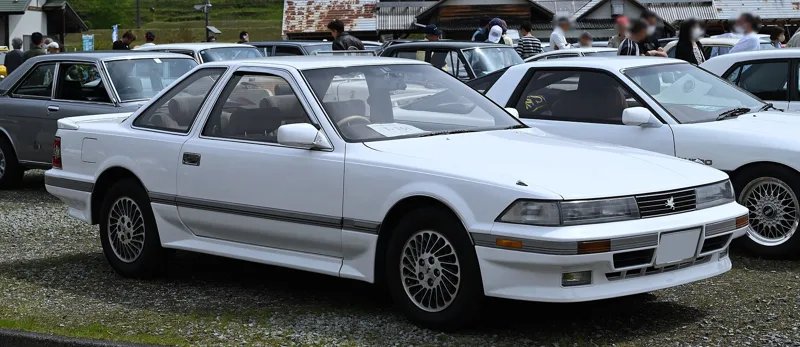
The body was now a four-door sedan or four-door pillared hardtop. The two-door hardtop gave way to the new luxury coupe Toyota Soarer, and the Avante top trim arrived, lasting until the Chaser was discontinued in 2001. The lower-priced XL and DX received flat bumpers that shortened their overall length.
Interiors were cloth only, with a power-adjustable driver's seat, a fold-down rear armrest and a 60/40 split rear seatback. Ventilated discs on all four wheels, plus speed-sensitive rack-and-pinion power steering, came as standard, and the Avante and SG Touring wore fourteen-inch alloys while other trims ran thirteen-inch steel wheels.
A companion model, the Cresta, was introduced in this generation to compete with the Nissan Leopard, while the Chaser remained the alternative to the Skyline. In August 1982 the 2.0 L six-cylinder 1G-GEU twincam joined the range with the LASREa engine family, and the R and M engines were phased out.
How did the third-generation X70 perform?
The third generation first appeared in August 1984 as a hardtop only. Its exterior was slightly smaller than that of the Mark II and Cresta, but the Chaser kept a more performance-oriented character with the Cresta's advanced features and luxurious interior.
The 1G-GTEU parallel twin-turbo reached the GT TWIN TURBO trim in October 1985. Bucket seats borrowed from the Supra (A60) set the Chaser apart from the Cresta, and side turn signals were added above the headlights for pedestrian safety.
The four-wheel independent suspension was improved and given the PEGASUS name first seen on the Soarer. Three kinds of four-speed automatic were offered under the ECT-S label, and the GT TWIN TURBO S came only with a five-speed manual. Later in the generation, the Avante Lordly and Avante Supra special editions arrived in 1987 and 1988.
What engines powered the fourth-generation X80?
The X81 Chasers reached the Japanese market in August 1988, and the GT Twin Turbo became the most powerful variant with the 1G-GTE, rated at 210 PS (154 kW; 207 hp) at 6200 rpm. The Avante G was the most fully equipped special edition, and two more Avante models arrived in August 1989.
The fourth generation was offered only as a pillared hardtop, while the Cresta was limited to a sedan and the Mark II offered both. Exterior dimensions grew to the maximum allowed by Japanese regulations and matched the Crown. High-tensile steel was used in key areas, and five studs were added to each wheel to handle the extra torque.
The top model, the Avante G, came as the 2.0 Avante G with a supercharged 2.0 L 1G-GZE straight six, or as the 3.0 Avante G with the 3.0 L 7M-GE straight six that was shared with the Soarer. The supercharger was belt-driven but worked through an electromagnetic clutch, so it engaged only when needed.
In August 1990 the lineup was revised again, with a new grille and headlights. The Avante G and GT Twin Turbo received the 2.5-litre 1JZ, also used in the JZA70 Supra. The normally aspirated 1JZ-GE made 180 PS (132 kW; 178 hp) at 6000 rpm, while the 1JZ-GTE twin-turbo reached 280 PS (206 kW; 276 hp) at 6200 rpm, the maximum allowed under Japanese rules.
Did the Chaser keep the M engine to the end?
Not quite. The 3.0 Avante G with the normally aspirated 7M-GE was the last generation to use the venerable Toyota M engine. In 1990 the 3.0 Avante G switched to the 2JZ-GE, and the larger engines carried higher annual road tax, so buyers received extra equipment as standard to offset the running costs.
What changed in the fifth-generation X90?
In October 1992 the X90 Chaser replaced the X81. It had a larger body, better handling and more power, and its curvier look was more closely aligned with the Toyota Aristo. The top Avante G received a 220 PS (162 kW; 217 hp) naturally aspirated 2JZ-GE, the next step in the JZ series after the 1JZ.
The Tourer V used the 1JZ-GTE twin-turbo, the most potent offering, while the Tourer S used the non-turbo 1JZ-GE, and the Tourer package replaced the GT trim. Manual transmissions were optional on every engine, from the 1.8-litre 4S-FE up to the 2.5-litre 1JZ-GE straight six. The MacPherson strut front suspension was joined by double wishbone technology in this series.
An i-Four system, a permanent all-wheel-drive arrangement, became optional in 1993, giving the car a response to the Nissan Skyline GTS sedan. It typically split power 30 percent to the front and 70 percent to the rear, with a centre differential lock. A driver-side airbag became standard across the range, and the ECT automatic and a limited-slip differential were standard on rear-drive models.
The Avante G could be fitted with Electro MultiVision, a 6-inch colour LCD screen that showed TV broadcasts, stereo and climate settings, fuel economy, and maintenance reminders. It was the first Chaser version with a touch-sensitive screen, a feature first seen on the Crown, and it integrated CD-ROM maps and VICS traffic information. Leather upholstery was offered for the first time in this generation.
How did the sixth-generation X100 change the car?
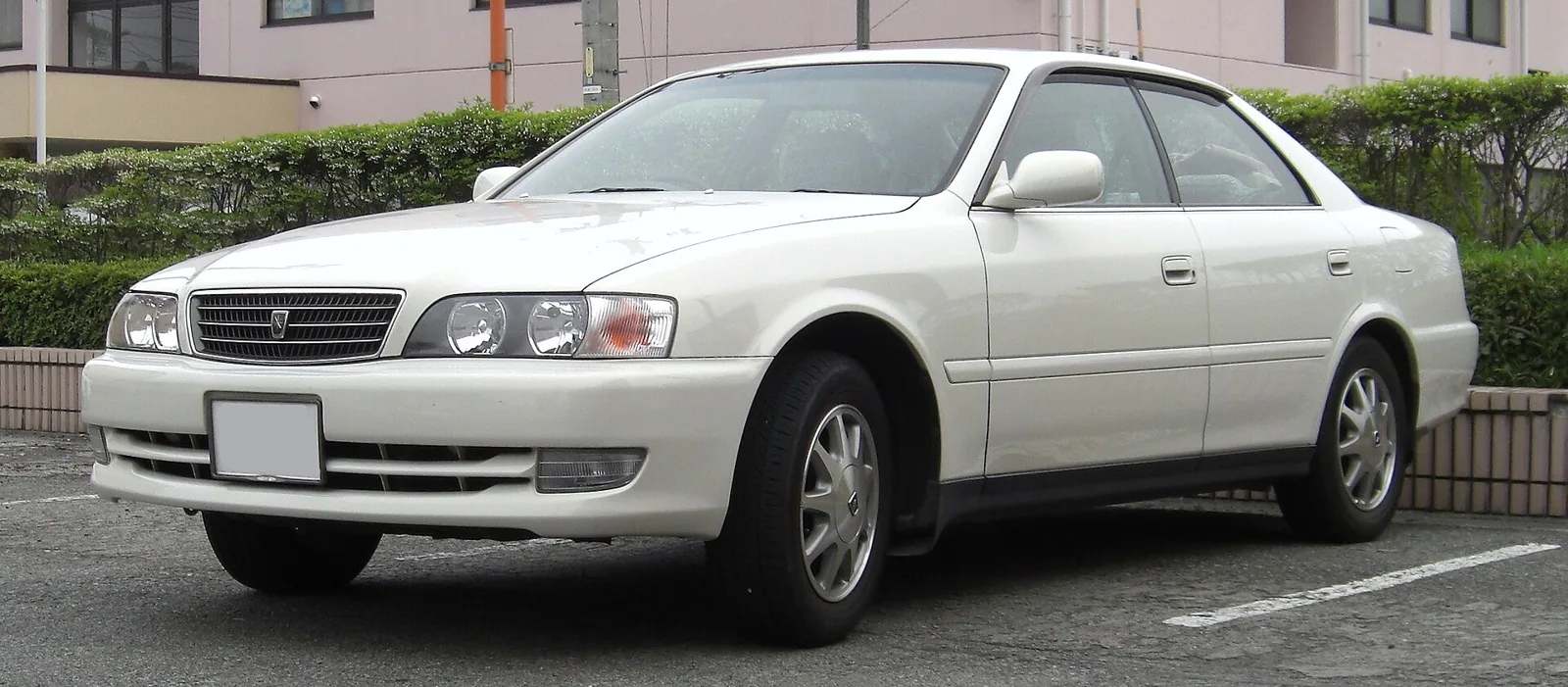
In September 1996 the X100 Chaser replaced the X90. The lineup was built mostly around the Avante, the luxury model with more interior accessories, and the Tourer, the sporty model on 16-inch wheels. Toyota's VVTi variable-valve timing was added to the 1JZ engines, and the 1JZ-GTE switched to a single turbo.
The Avante Four with i-Four all-wheel drive joined the range, and the Tourer V and the automatic-only Avante G 3.0 gained an electronic flex-lockup option. Dual airbags and side airbags in the front seatbacks became standard. In 1997 the XL moved to a 2.4 L 2L-TE turbodiesel, and the Tourer 2.0 used the 1G-FE rated at 140 PS (103 kW; 138 hp) at 5,600 rpm.
A facelift in mid-to-late 1998 changed the rear tail lights, fog lights, interior fabric and steering wheel spokes, and added orange gauge lighting. Later that year, the Vista Store and Auto Store dealer networks were merged into NETZ Store. The Chaser remained the second-level sedan below the Aristo.
Why did the Chaser end in 2001?
The Chaser was discontinued in June 2001 and replaced by the Verossa, which shared the same model code. The Cresta suffered the same fate, while the Mark II continued for another generation as the X110 before it too was dropped.
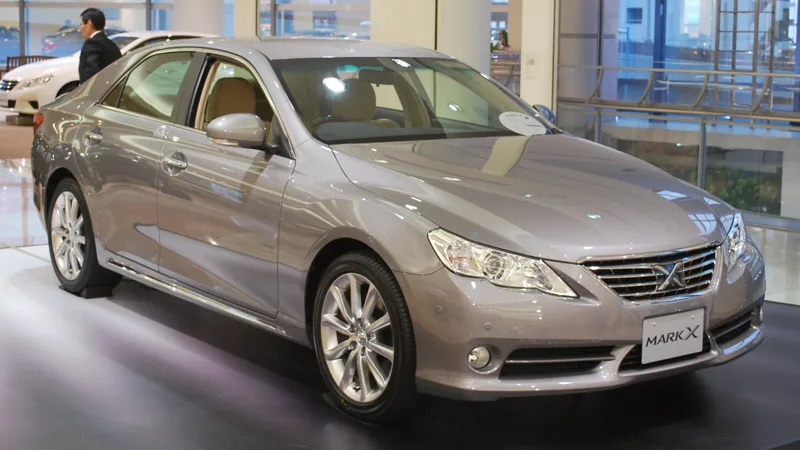
In 2004 the all-new X120 Mark X arrived in Japan, taking on many characteristics of both the Chaser and the Cresta.
How did the Chaser perform in motorsport?
The X100 raced in the Japanese Touring Car Championship during 1997 and 1998. Its debut season produced no wins, yet the next year, after other makers had quit the series, it took the title with Masanori Sekiya and TOM'S.
The Chaser later became famous in drifting, because its front-engine, rear-wheel-drive layout suited the discipline. Cars without all-wheel drive are more sought after, and many Chasers, especially the later X90 and X100 cars, have been modified for drifting.
Which Chaser engines and trims mattered most?
The Chaser's engine and trim story is easiest to follow as a set of key figures. The table below gives the highlights from each era, with the year or generation shown so that the 2.0 L, 2.5 L and 3.0 L cars are not confused.
| Specification | Detail |
|---|---|
| Launch | July 1977, X30 and X40 chassis codes |
| First-generation size limit | Under 4.7 m (15.4 ft) long, 1.7 m (5.6 ft) wide |
| Second generation sales start | October 1980, X60 |
| Third generation launch | August 1984, hardtop only |
| Fourth-generation turbo | 1G-GTE, 210 PS (154 kW; 207 hp) at 6200 rpm |
| 1990 twin-turbo | 1JZ-GTE, 280 PS (206 kW; 276 hp) at 6200 rpm |
| 1990 normally aspirated 2.5 | 1JZ-GE, 180 PS (132 kW; 178 hp) at 6000 rpm |
| Fifth-generation top engine | 2JZ-GE, 220 PS (162 kW; 217 hp) |
| Sixth-generation 2.0 Tourer | 1G-FE, 140 PS (103 kW; 138 hp) at 5,600 rpm |
| Discontinued | June 2001, replaced by Verossa |