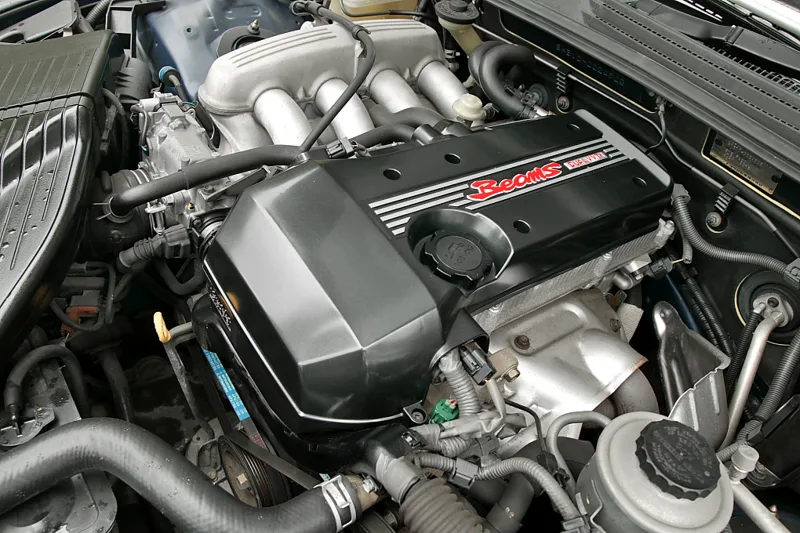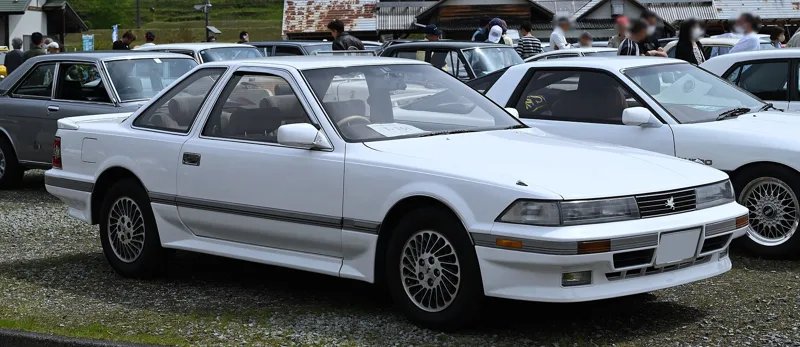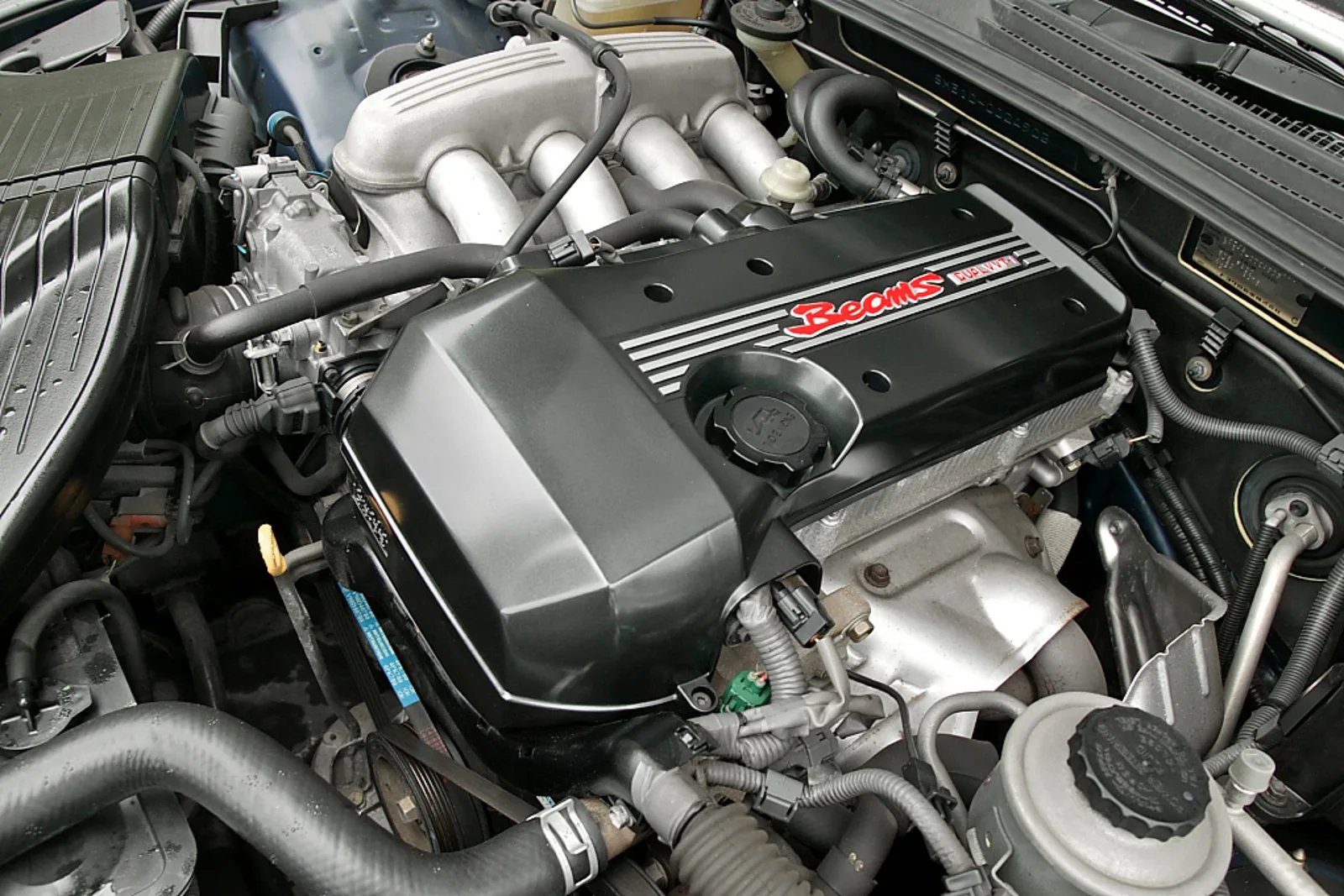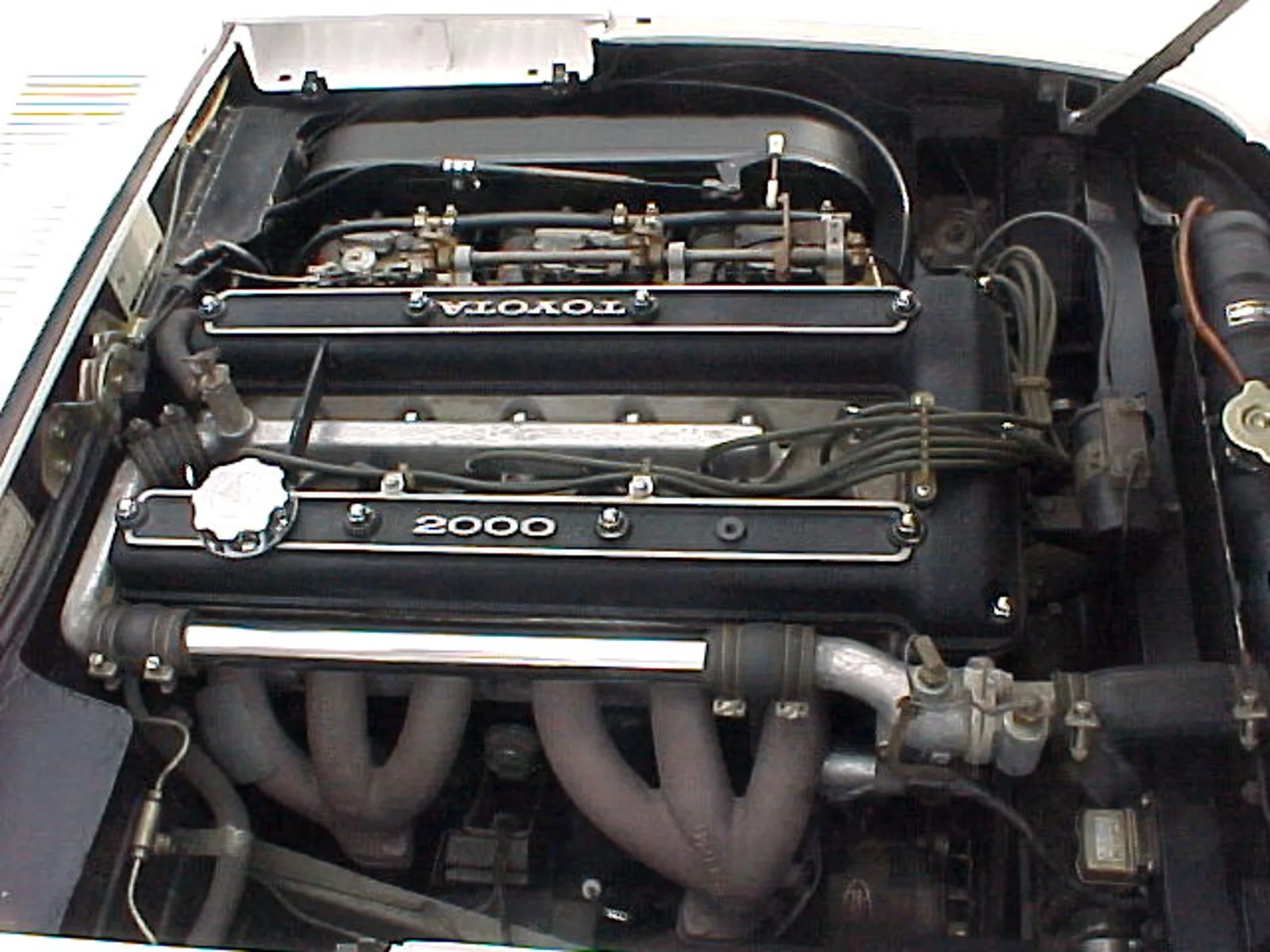
The Toyota M family ran from the 1960s into the 1990s, from the 2.0 litre 2000GT engine to the turbocharged 7M-GTE.
The Toyota M engine was a family of longitudinally mounted straight-six engines produced from the 1960s through the 1990s. Its best-known members are the 3M in the 2000GT, the 5M-GE of the Supra and Cressida, and the turbocharged 7M-GTE.
The Toyota M engine family was a set of longitudinally mounted straight-six engines that Toyota produced from the 1960s through the 1990s. They powered the company's large Crown, Mark II and Supra models, and for more than 30 years they were Toyota's most prestigious engines, apart from the rare V8 family.
Where did the Toyota M family come from?
The M family was a longitudinally mounted straight-six series that Toyota built at its Kamigo plant in Toyota City, Japan. Every member was an overhead-cam design with a cast iron block and an aluminium head, and the family moved from a chain-driven single camshaft to belt-driven DOHC after 1980.
Fuel injection first appeared in the M family as the M-E, sold only in Japan, at about the same time as the four-cylinder 18R-E. The 4M-E later became the first Toyota fuel-injected engine for markets outside Japan.
Its best-known homes were the Crown, Mark II and Supra, and the family earned a reputation as Toyota's most prestigious line in its class, with the V8 family held apart as the rarer flagship option.
A straight-six that moved from a chain-driven single cam to belt-driven twin cams and gave Toyota its most prestigious engines for decades.
The first M and its commercial variants
The first M was a 2.0 L (1,988 cc) two-valve SOHC engine built from 1965 to 1988, with a square bore and stroke of 75 mm (2.95 in). Output ran from 110 to 115 PS (108 to 113 bhp; 81 to 85 kW) at 5,200 to 5,600 rpm depending on model year, and typical torque was 157 Nm (116 lb ft) at 3,800 rpm.
The M-C was the commercial variant, producing 105 PS (104 bhp; 77 kW) in vehicles such as the Crown Van. The M-B and M-D used twin sidedraft SU carburettors to produce 125 PS (123 bhp; 92 kW), peaking at 5,800 rpm.
Emissions rules brought the M-U and M-EU in mid-1976, fitted with the Toyota Total Clean (TTC) system and a catalytic converter on the M-EU. The carburetted commercial version was called the M-J.
What was the M-E and the fuel-injected M?
The M-E was the first Toyota engine with fuel injection, but it was sold only in Japan. From 1973 to 1976 it sat in the Mark II (X10) LG sedan and hardtop, and it was redesignated M-EU in December 1976 when it gained a catalytic converter.
The Chaser (X30) also used the M-E from 1977 to 1980, in its SG Touring, SGS and GS sedan and hardtop bodies. That gave the Japanese market a range of injected six-cylinders across two model lines.
How did the turbocharged M-TEU perform?
The turbocharged M-TEU debuted in 1980 with a Garrett T-03 turbo. Launch output was 145 bhp (147 PS; 108 kW) at 5,600 rpm, while torque reached 211 Nm (156 lb ft) at 3,000 rpm. In 1983 Toyota added an air-to-water intercooler, lifting output to 160 bhp (162 PS; 119 kW).
The 1983 update also raised torque to 230 Nm (170 lb ft) at 3,000 rpm. Applications included the 1980 Supra MA46, the Soarer MZ10, the Crown and the Corona Mark II, along with the Celica XX sold in Japan from 1982 to 1986.
The 2M, 3M and 4M: stroke and sport variants
The 2M was a two-valve SOHC unit with its stroke lengthened to 85 mm (3.35 in), giving 2.3 L (2,253 cc). It was built from November 1966 to September 1974 and made 81 to 86 kW (109 to 115 bhp) at 5,200 rpm. The Corona Mark II MX12, MX22 and MX28 of 1972 to 1974 used it alongside the Crown. Its Crown years ran through several codes: the MS45 and MS47 from November 1966 to August 1967, the MS51, MS53, MS55 and MS57 from September 1967 to January 1971, and the MS64 and MS67 from February 1971 to September 1974.
The 3M was the sporting exception: a 2.0 L DOHC engine with a Yamaha-designed aluminium head, wide 79-degree valves and a hemispherical chamber. It produced 150 PS (148 hp; 110 kW) at 6,600 rpm, with compression of 8.4:1, and it powered the 2000GT MF10 from 1966 to 1971.
The 4M was bored to 80 mm (3.15 in) for 2.6 L (2,563 cc) from 1972 to 1980, giving 108 to 123 bhp (109 to 125 PS; 81 to 92 kW) at 5,600 rpm. The fuel-injected 4M-E, built from 1978 to 1980, made 110 bhp (112 PS; 82 kW) at 4,800 rpm and served in the Supra. Against the carburetted 4M, which peaked at 5,600 rpm, that is a lower speed for its peak output.
What made the 5M-GE special?
The 5M-GE was a 12-valve DOHC engine with electronic fuel injection, and it became the most common 5M, with a displacement of 2.8 L (2,759 cc). It used hydraulic valve lifters, a first for Toyota, and its rocker and lash-adjuster arrangement removed the need for routine valve clearance checks.
Its injection was Bosch L-Jetronic-derived, with an AFM intake measuring scheme and wide-angle valves. The engine made its US debut in the 1982 Celica Supra MK2, and the 1982 car had a vacuum-advance distributor. From August 1983 the TCCS engine control system, together with different intake runners, added 5 PS (5 bhp; 4 kW).
Power varied between 145 and 175 bhp (108 and 130 kW) according to exhaust, emissions equipment, compression ratio, intake runner shape and ECU tuning. Aftermarket crank and piston kits pushed capacity to 2.9 L, rated 230 bhp (172 kW), and to 3.1 L, rated 250 bhp (186 kW), and kits such as the Kuwahara 3100 were popular in mid-1980s powerboat racing.
The federal SOHC 5M was a lower-output unit at 116 hp (118 PS; 87 kW) at 4,800 rpm. In Australia the 5M-E of 1985 was rated at 103 kW (140 PS; 138 bhp).
Supra models changed through the run. The 1982 to 1983 cars had dual V-belt drive, a 65 amp alternator and 8.8:1 compression, while the 1984 to 1985.5 cars had a 60 amp alternator, a knock sensor, 9.2:1 compression and D-shaped intake runners.
What did the 6M-GE and 7M-GE add?
The 6M-GE stretched the 5M-GE's stroke to 91 mm (3.58 in) for 3.0 L (2,954 cc), and the 7M-GE from 1986 kept that displacement with 24 valves. The 7M-GE produced 190 to 204 bhp (193 to 207 PS; 142 to 152 kW), depending on the version.
Between 1984 and 1987 the 6M-GE delivered 170 to 190 bhp (172 to 193 PS; 127 to 142 kW), peaking at 5,600 rpm. The Japanese 6M-GEU was usually the lower-powered variant, because of tighter exhaust and emissions hardware. Some were imported into US-market Supras and Cressidas, since the 6M-GEU looks identical to the 5M-GE.
The 6M shared its crank with the 7M-GE and 7M-GTE, and a "6M" stamp on the counterweight of early 1986 to 1988 7M engines shows the link. The 7M-GE's valves were set at a 50-degree angle, and its bore and stroke of 83 mm x 91 mm (3.27 in x 3.58 in) suited a performance layout. Its torque was 250 to 265 Nm (184 to 195 lb ft) at 3,600 rpm.
How powerful was the 7M-GTE?
The turbocharged 7M-GTE was built from 1986 to 1992, and most 5 psi (0.34 bar) versions made 232 hp (173 kW; 235 PS) at 5,600 rpm, with 344 Nm (254 lb ft) of torque at 3,200 rpm. It was Toyota's top performance engine until the JZ-series replaced it.
A modified CT26 turbocharger with a larger intercooler took a Japanese-market 7M-GTEU to 267 hp (199 kW) at 5,600 rpm and 358 Nm (264 lb ft) at 4,400 rpm. That output was reserved for the Supra Turbo A, the homologation car for Group A racing.
The Turbo A measured air by manifold pressure rather than an air flow meter, and it had a larger intercooler and throttle body. Homologated as a Group A car, the Supra fitted with a 7M-GTE and CT26 was credited with 433 kW (580 bhp).
The 7M-GTE had a compression ratio of 8.4:1 and weighed 210 kg (463 lb). It fitted the Soarer from 1986 to 1991 and the Supra MA70 from 1987 to 1992.
How did the M family change over time?
Over its run the M family traded its chain-driven single cam for belt-driven twin cams, grew from 1,988 cc to 2,954 cc, and gained fuel injection, turbocharging and, in the 7M-GE, four valves per cylinder. The 3.0 L engines arrived in the mid-1980s.
Early members were single-cam units with two valves per cylinder, as the first M and the 2M show. Enlarging the 2M's stroke to 85 mm (3.35 in) and the 4M's bore to 80 mm (3.15 in) grew capacity without changing the basic layout.
Fuel injection and turbocharging arrived in the 1980s. The M-TEU added a turbo in 1980, the 5M-GE was a fuel-injected DOHC engine from 1982, and the 7M-GTE gave the family its highest road output.
Which cars used the M family?
The M family powered the Crown, Mark II, Corona Mark II, Supra, Celica Supra, Cressida, Soarer and Chaser over several decades. Its range covered luxury saloons and sports coupes from the early 1960s into the late 1980s.
The Crown carried M engines through many generations, from the MS40 of 1962 to 1967 to the MS130 of 1987 to 1989. The Cressida used 5M engines from 1980 to 1993, and the 7M-GE appeared in the MX83 Mark II from 1989 to 1992.
The Supra line shows the family's progression. The 4M-E served the Supra from 1978 to 1980, the 5M-GE took over in the Celica XX Supra MA61 in the early 1980s, running to 1986, and the 7M-GE and 7M-GTE arrived in the MA70 Supra in 1986 and 1987. The Soarer carried the 5M-GE in its MZ11 and the turbo 7M-GTE in its MZ20 and MZ21 bodies.
What replaced the M family?
The JZ series took over as Toyota's top performance engines after the 7M-GTE. The M family was built at the Kamigo plant for its entire run, and the 7M-GE and 7M-GTE shared the 6M crank.
The M family at a glance
| Engine | Displacement | Years | Output | Notable models |
|---|---|---|---|---|
| M | 1,988 cc (2.0 L) | 1965 to 1988 | 110 to 115 PS (108 to 113 bhp; 81 to 85 kW) | Crown, 2-valve SOHC |
| 2M | 2,253 cc (2.3 L) | 1966 to 1974 | 109 to 115 bhp (81 to 86 kW) | Crown, Corona Mark II |
| 3M | 1,988 cc (2.0 L) | 1966 to 1971 | 150 PS (148 hp; 110 kW) | 2000GT MF10 |
| 4M-E | 2,563 cc (2.6 L) | 1978 to 1980 | 110 bhp (112 PS; 82 kW) | Supra |
| 5M-GE | 2,759 cc (2.8 L) | 1982 to 1988 | 145 to 175 bhp (108 to 130 kW) | Celica Supra, Cressida |
| 6M-GE | 2,954 cc (3.0 L) | 1984 to 1987 | 170 to 190 bhp (127 to 142 kW) | Crown, Soarer |
| 7M-GE | 2,954 cc (3.0 L) | 1986 to 1992 | 190 to 204 bhp (142 to 152 kW) | Supra MkIII, Cressida Mark II |
| 7M-GTE | 2,954 cc (3.0 L) | 1986 to 1992 | 232 hp (173 kW; 235 PS) | Supra, Soarer |