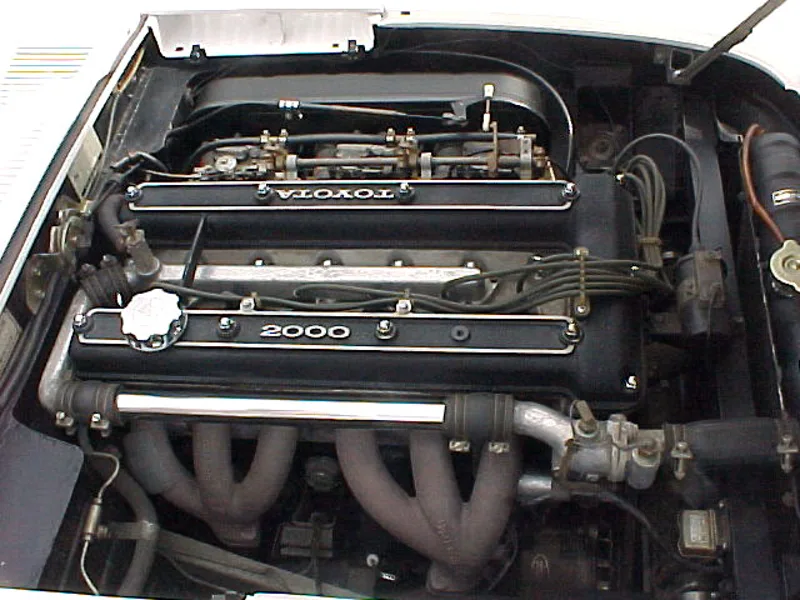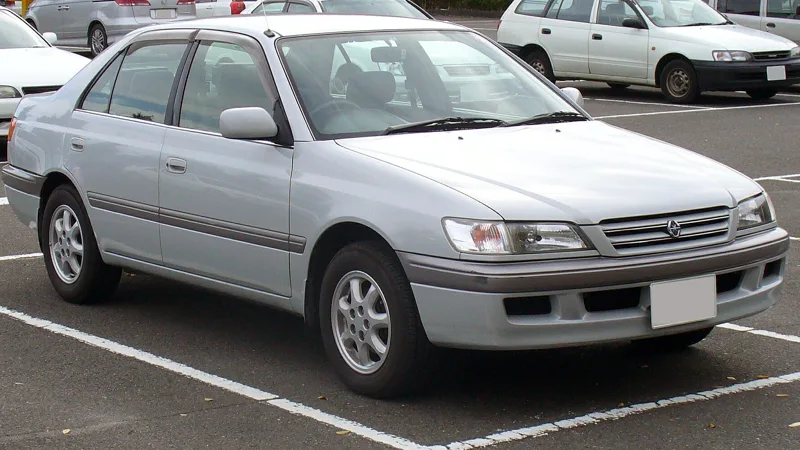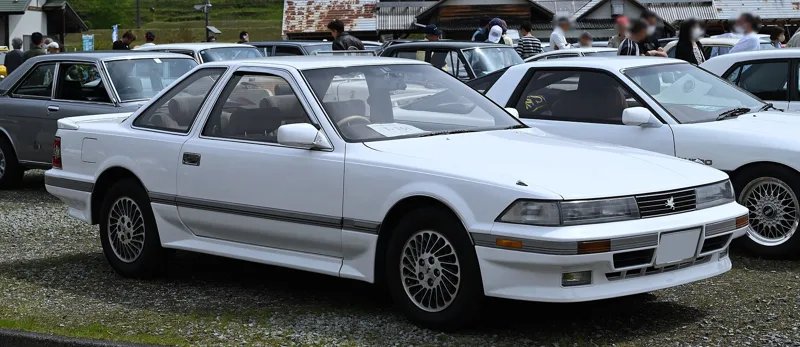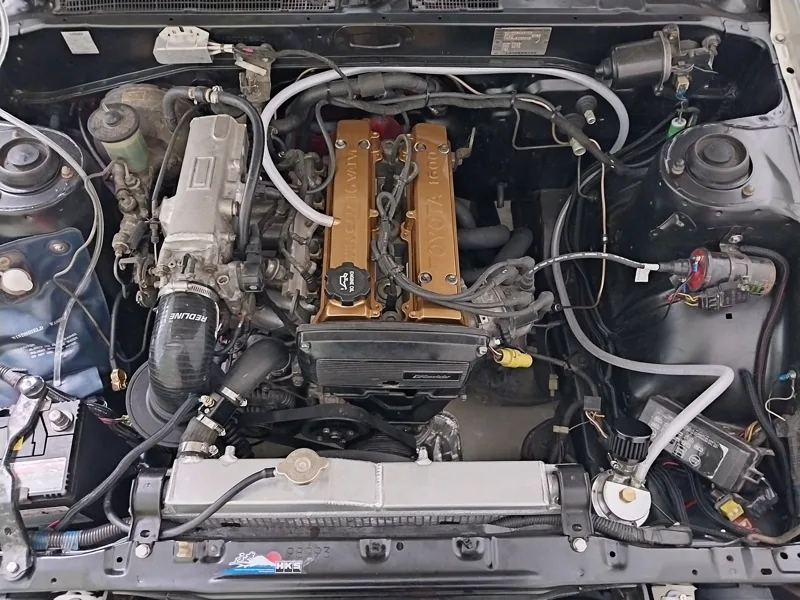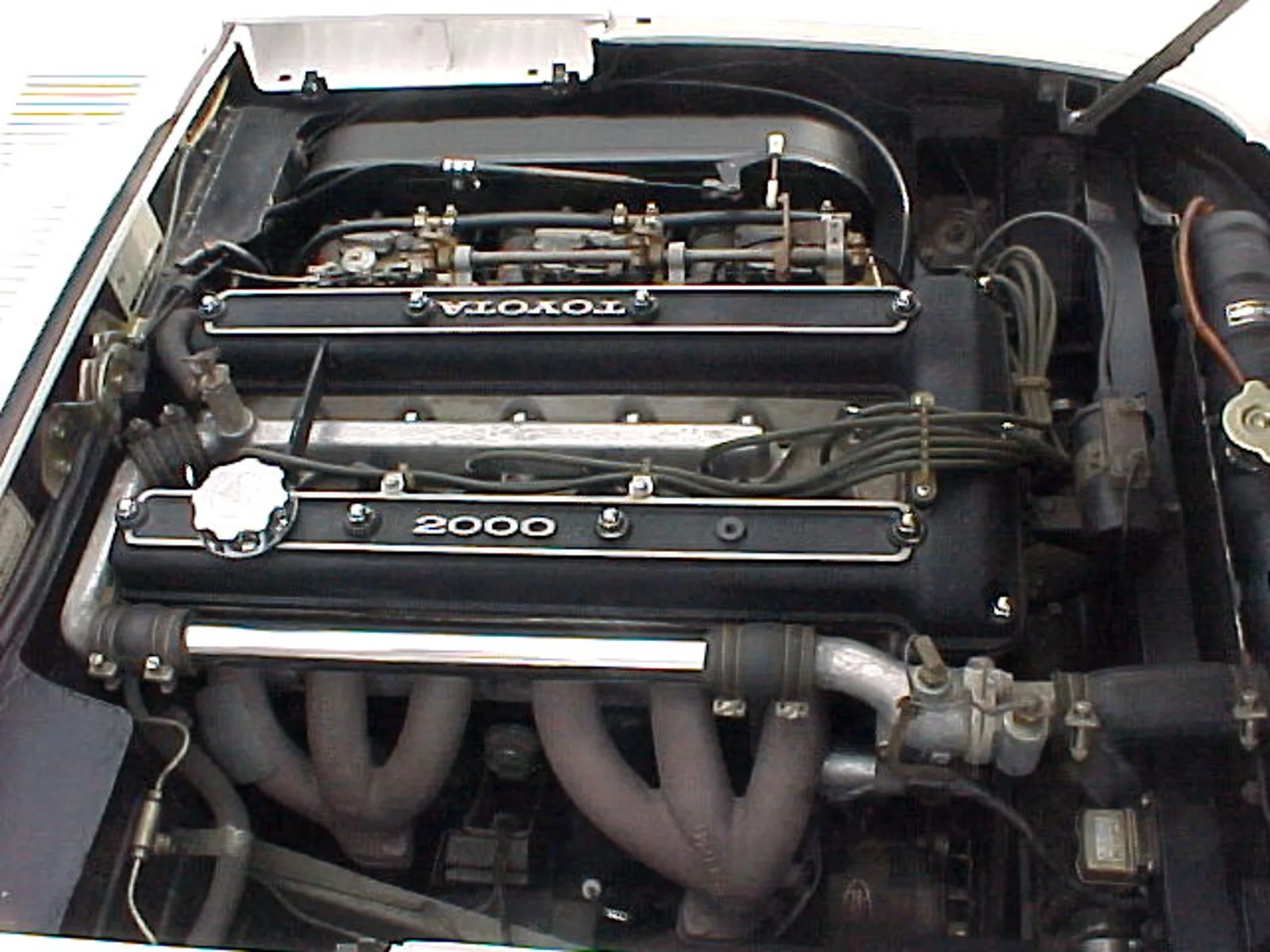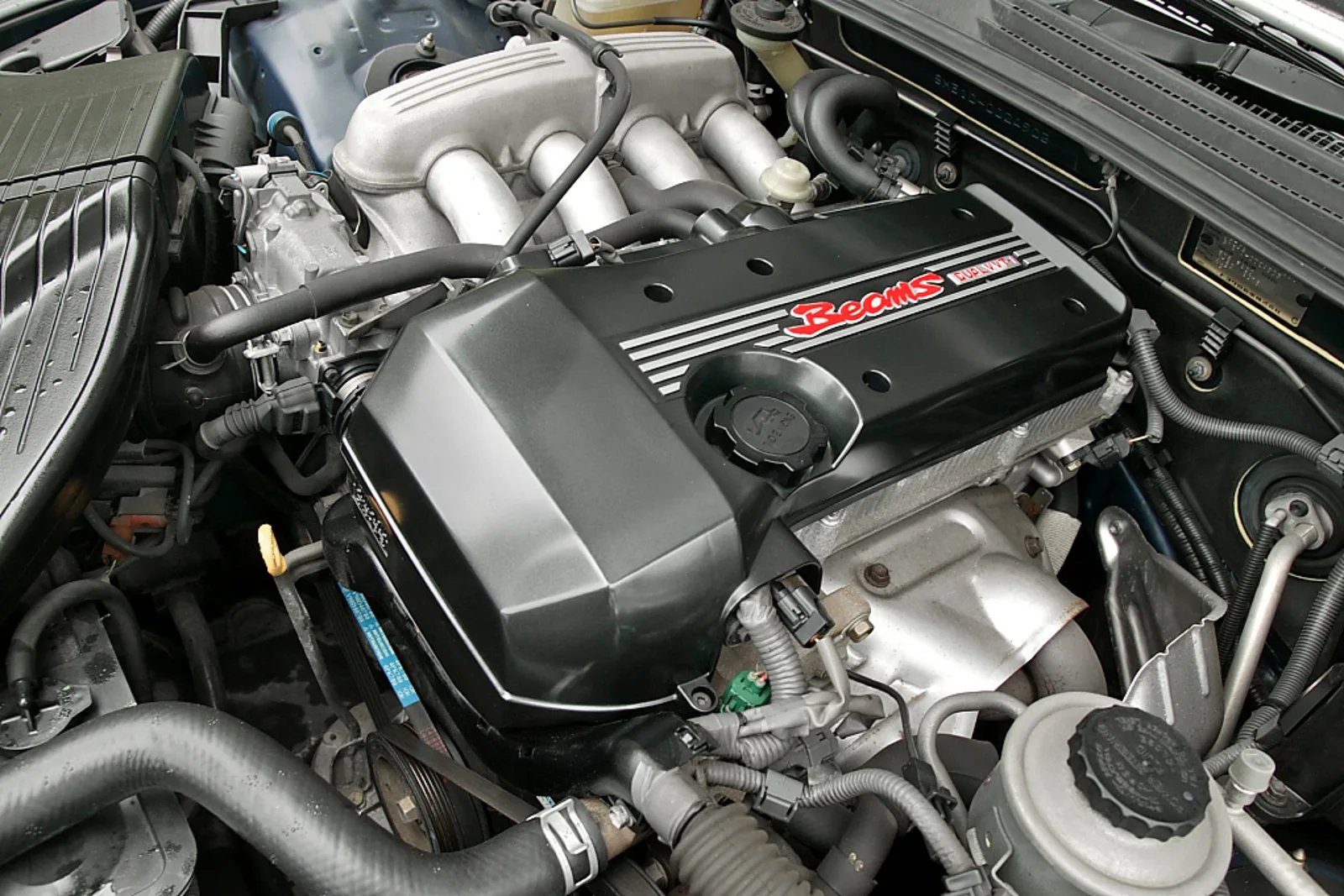
A cast iron, straight-four family that ran from 1980 to 2007, covering naturally aspirated, turbocharged and racing versions.
The Toyota S engine was a family of inline-four engines, sold in petrol and CNG forms, that Toyota built between January 1980 and August 2007. Its engines spanned 1.8 to 2.2 litres, and the best-known members are the 3S-GE and its turbocharged 3S-GTE sibling. The family used cast iron blocks with aluminium heads.
Toyota's S family was a group of straight-four engines, petrol with a CNG option, produced by Toyota Motor Corporation from January 1980 to August 2007. Displacements ran from 1.8 to 2.2 litres, and cast iron blocks paired with aluminium heads gave the family a practical balance of weight and strength.
Where did the Toyota S engine family come from?
The S series began with the 1S, the first version of the family and a member of Toyota's LASRE engine range, which stood for Lightweight Advanced Super Response Engine. It arrived in 1981 with a bore and stroke of 80.5 x 90.0 mm, and it went into a wide range of Toyotas with rear-drive and front-drive installations alike.
The family was built around LASRE technology aimed at lower weight, and one example of that work was the use of sintered hollow camshafts. Every version kept cast iron blocks and aluminium cylinder heads, which kept the engines durable without adding unnecessary mass.
Production ran from January 1980 to August 2007. The 3S was the longest-lived member of the family, staying in production through to the end, while the 1S-U had finished by June 1988.
A straight-four built for lighter weight, which became the base for one of Toyota's most celebrated sports engines.
The 1S: the first version of the S series
The 1S-U was designed for longitudinal, rear-wheel-drive applications and carried Japanese emissions controls. It was built from June 1981 to June 1988 with an SOHC 8-valve head and a compression ratio of 9.1. Output was 100 PS (74 kW) at 5,400 rpm, and torque was 152 Nm (112 lb ft) at 3,400 rpm, and it appeared in the Celica (SA60), Carina (SA60), Corona (ST140) and Mark II (SX70).
The transverse 1S-L, or 1S-LU, followed from March 1982 to August 1983 as a front-wheel-drive adaptation. It used the same power figures and went into the Camry and Vista (SV10) and the Corona (ST150).
Fuel injection came next. The 1S-iL added central injection, sometimes labelled Ci in marketing, and was built from September 1983 to April 1988 in several tunes. Those produced 85 PS (63 kW) at 5,200 rpm and 105 PS (77 kW) at 5,400 rpm. The 1S-EL added multipoint injection, producing 115 PS (85 kW) at 5,400 rpm and 164 Nm (121 lb ft) of torque at 4,000 rpm.
What were the 2S and 3S engines?
The 2S was a 2.0 L (1,995 cc) four-cylinder with an iron block and an alloy head, and its bore and stroke measured 84.0 x 90.0 mm. It was the last S engine without double overhead camshafts. Its carburetted form is the plainest of the 2S family.
The 2S-C had US emissions controls and went into the Australian-delivered SA63 Celica, which replaced the 21R-C-powered RA60, along with the ST141 Corona. The 2S-E brought electronic fuel injection and was used in the Camry and the ST161 Celica, with hydraulic lash adjusters. The 2S-EL, 2S-ELU and 2S-ELC were transverse versions for the V10 Camry, with Japanese and US emissions variants.
The 3S arrived in May 1984 and remained in production until 2007. Its bore was enlarged to 86.0 mm while its stroke was cut to 86.0 mm, which allowed larger valves and higher power outputs. The 3S-FC was a two-barrel carburettor version of the 3S-FE, used in lower-specification 1986 to 1992 Camry models and the Holden Apollo twin. It produced 82 kW (111 PS) at 5,600 rpm and 166 Nm (122 lb ft) at 3,200 rpm.
The 3S-FE was a 16-valve twin-cam engine built from 1986 to 2000. Without a catalytic converter, the European version reached 128 PS (94 kW; 126 hp) at 7,900 rpm, with 179 Nm (132 ft-lb) at 4,400 rpm; the catalysed version made 121 PS (89 kW; 119 hp). It appeared across Camry, Celica, Carina, Corona, RAV4 and Avensis models, as well as some MR2 Mk2 cars.
The 3S-FSE was a direct-injection variant using the Toyota D4 system, with a cam-driven high-pressure fuel pump at the number four end of the head. It was sold only in Japan, in the Camry Windom.
How did the 3S-GE change across five generations?
The 3S-GE was a naturally aspirated 2.0 litre engine designed in conjunction with Yamaha, and it was built in five generations for the Celica, Corona, MR2, Caldina, RAV4 and Altezza. Power climbed from roughly 135 bhp (101 kW) in the North American first generation to 210 PS (154 kW; 207 hp) in the fifth-generation Black Top.
The first generation ran from May 1984 to 1989. The North American version, the only 3S-GE sold there, sat in the Celica GT-S (ST162). The Japanese version had a more aggressive ECU and no EGR valve, which lifted output to around 160 PS (118 kW) at 6,400 rpm and 186 Nm of torque.
The second generation, built from 1990 to 1993, gained a little power: 165 PS (121 kW) at 6,800 rpm in Japan and 156 PS (115 kW) at 6,600 rpm in Europe. Japanese-spec peak torque reached 191 Nm (141 lb ft) at 4,800 rpm. ACIS replaced the T-VIS induction system, which was kept on the turbocharged 3S-GTE.
The third generation ran from 1994 to 1999. Japanese versions rose to 180 PS (132 kW; 178 hp) with compression lifted to 10.3:1. A 1996 emissions revision for other markets added EGR and trimmed output to 170 PS (125 kW; 168 hp) at 7,000 rpm, while torque held at 191 Nm for both.
The fourth generation, the Red Top BEAMS, began production in 1997, and BEAMS stood for Breakthrough Engine with Advanced Mechanism System. The first version used VVT-i and produced 200 PS (147 kW; 197 hp) with a manual gearbox. The automatic was rated at 190 PS (140 kW; 187 bhp), a figure believed to be an ECU limit set to protect the gearbox. The Grey Top variant, a RAV4 and Caldina option, gave the RAV4 180 PS (132 kW; 178 hp) at 6,600 rpm, while the Caldina GT pushed it to 190 PS (140 kW; 187 hp).
The fifth generation, the Black Top, appeared in 1998 only in the Japanese-delivered Altezza RS200. It used dual VVT-i, raised compression to 11.5:1 and had lighter rods and pistons for a higher redline. The manual, with a J160 six-speed gearbox, used larger titanium intake valves and made 210 PS (154 kW; 207 hp) at 7,600 rpm and 216 Nm at 6,400 rpm. The automatic, with the A650E five-speed, made 200 PS (147 kW; 197 hp) at 7,000 rpm and 216 Nm at 4,800 rpm.
What engineering set the 3S-GE apart?
The 3S-GE was built around a forged crankshaft running on five aluminium bearings and balanced by eight weights, plus a cross-flow head with the spark plug in the centre of each chamber. Its firing order was 1-3-4-2, and the first version weighed 143 kg (315 lb) for a design that was kept light on purpose.
The intake manifold had four independent ports that used inertia to build low and mid-range torque. A single timing belt drove both camshafts and the oil and water pumps. Each cam was supported at five points and fed through an oiler port in the middle of the camshaft.
The pistons had an indentation in the crown so that they would clear the valves if the belt broke, which made the engine a non-interference design. The later BEAMS engines did not share that feature. Valve clearance was set by shims above the lifters under the Outer Shim Type System, so the camshaft did not need removing to change them.
How did the 3S-GTE turbo versions develop?
The 3S-GTE was a turbocharged 3S-GE with under-piston oil squirters and a lower compression ratio to suit boost, built from 1986 to 2007. It powered the MR2, Celica GT-Four and Caldina GT-T and GT-Four, and its turbochargers were Toyota designs with internal wastegates. Cast iron crankshafts were fitted to the 3S-FE, while the 3S-GE and 3S-GTE used forged ones.
The first-generation CT26 had a single-entry turbine housing and a single wastegate port. It fitted the first Celica GT-Four (ST165) and produced 182 to 190 hp (136 to 142 kW; 185 to 193 PS) with 258 Nm (190 lb ft) of torque and 8 to 9 psi of factory boost. Intake charge was cooled by a water-to-air intercooler.
The second generation, also a CT26, used a twin-entry turbine housing with dual wastegate ports. It went into the ST185 Celica GT-Four and the SW20 MR2 Turbo, with output of 200 to 232 hp (149 to 173 kW; 203 to 235 PS). Boost rose to 10 to 11 psi, or 16 psi in the ST185RC rally homologation car, and compression was 8.8:1.
The third generation used the C20b turbo, with a larger compressor wheel and a factory BPV on all applications. Boost reached 13 psi, injectors grew to 540 cc, and the air flow meter gave way to a MAP sensing system. Compression fell to 8.5:1, while power rose to 245 to 255 PS (180 to 188 kW; 242 to 252 hp) with 304 Nm (224 lbf ft) of torque.
The fourth generation used a proprietary CT15B turbocharger first seen in the Caldina GT-T AWD Wagon (ST215). Its exhaust housing was cast into the manifold, boost stayed at 13 to 14 psi, and compression rose to 9:1. Output was 260 PS (191 kW; 256 hp) and 324 Nm (239 lbf ft). The fifth generation kept that turbo for the Caldina GT-Four (ST246), with changes such as a centre-feed intake manifold and OBD2 diagnostics, while holding power at the same level.
What was the 503E racing engine?
The 503E was a hand-built racing engine that powered Toyota's 88C Group C entry and the All American Racers Eagle HF89 and HF90, along with the Eagle MkIII IMSA Grand Touring Prototypes. Toyota Racing Development built it by hand in Torrance, California, and it produced up to 600 kW (800 bhp). Its design later became the starting point for the 3S-GTE.
The TOM'S Supra GT500 ran the 3S-GT, another name for the 503E, detuned to 360 kW (480 bhp) to meet GT500 regulations. The team did not use the Supra's usual 2JZ, which was judged too front-heavy for the race car.
The 4S and 5S: the 1.8 and 2.2 litre members
The 4S displaced 1,838 cc from an 82.5 x 86.0 mm bore and stroke, a narrower-bore version of the 3S. It was essentially a multi-valve, twin-cam replacement for the 1S series, and came in two forms: 4S-Fi with central-point injection and 4S-FE with multipoint injection. The 4S-Fi made 105 PS (77 kW; 104 hp) and 149 Nm (110 lb ft), and it appeared in the Carina ED, Corona, Camry and Mark II family.
The 4S-FE covered a longer run of models from 1989 to 2001, including the Carina and Corona ST170 and ST190, the Carina ED and Corona EXiV, the Cresta, Mark II and Chaser, and the Comfort (SXS11Y).
The 5S kept the basic design of the 3S, but its larger bore and stroke of 87.1 x 90.9 mm gave a displacement of 2.2 L (2,164 cc). Celica (fifth and sixth generations), MR2 (second generation), Camry (third and fourth generations) and the first-generation Camry Solara all carried it. Like the 3S, it was a non-interference design.
The 5S-FE came in several guises. The first generation, in the 1990 to 1992 Celica GT and GT-S and the MR2, produced 130 hp and 144 lb ft. The second generation, from 1993, reached 135 hp and 145 lb ft, while California-specification cars were rated at 130 hp. Output was 133 hp at 5,200 rpm and 147 lb ft at 4,400 rpm from 1997 to 1999, then 136 hp and 150 lb ft from 2000 to 2001.
The 5S-FE had a compression ratio of 9.5:1 and was replaced in every application by the 2.4 L 2AZ-FE. A CNG version, the 5S-FNE, was fitted to fleet XV20 Camry models in California in 1999.
Which S series engines were fitted where?
The S series appeared under Celica, Camry, Corona, Carina, MR2, Caldina, RAV4, Altezza and Mark II nameplates. The 1S went into rear-drive and front-drive Toyotas from 1981, while the 3S-GE was the only 3S-GE sold in North America, in the Celica GT-S.
S series at a glance
| Engine | Displacement | Bore x stroke | Notable output | Example applications |
|---|---|---|---|---|
| 1S-U | 1,832 cc | 80.5 x 90.0 mm | 100 PS (74 kW) at 5,400 rpm | Celica (SA60), Mark II (SX70) |
| 1S-EL | 1,832 cc | 80.5 x 90.0 mm | 115 PS (85 kW) at 5,400 rpm | Corona (ST150) |
| 3S-FE | 1,998 cc | 86.0 x 86.0 mm | 128 PS (94 kW; 126 hp) at 7,900 rpm, European | Camry, Celica, Carina, RAV4 |
| 3S-GE, gen 5 | 1,998 cc | 86.0 x 86.0 mm | 210 PS (154 kW; 207 hp) at 7,600 rpm, manual | Altezza RS200 |
| 3S-GTE, gen 4 | 1,998 cc | 86.0 x 86.0 mm | 260 PS (191 kW; 256 hp) | Caldina GT-T AWD Wagon (ST215) |
| 4S-Fi | 1,838 cc | 82.5 x 86.0 mm | 105 PS (77 kW; 104 hp) | Carina ED, Camry (SV22) |
| 5S-FE | 2,164 cc | 87.1 x 90.9 mm | 136 hp at 5,200 rpm, 2000 to 2001 | Celica, MR2, Camry |
What were the main S engine production dates?
The family was in production from January 1980 to August 2007. The 1S-U ended in June 1988, the 3S carried on until 2007, and the 5S-FE was replaced by the 2.4 L 2AZ-FE in all applications. The 3S-GE and 3S-GTE both made it to the end of the S series run, with the 3S-GE's fifth generation the last of its kind.