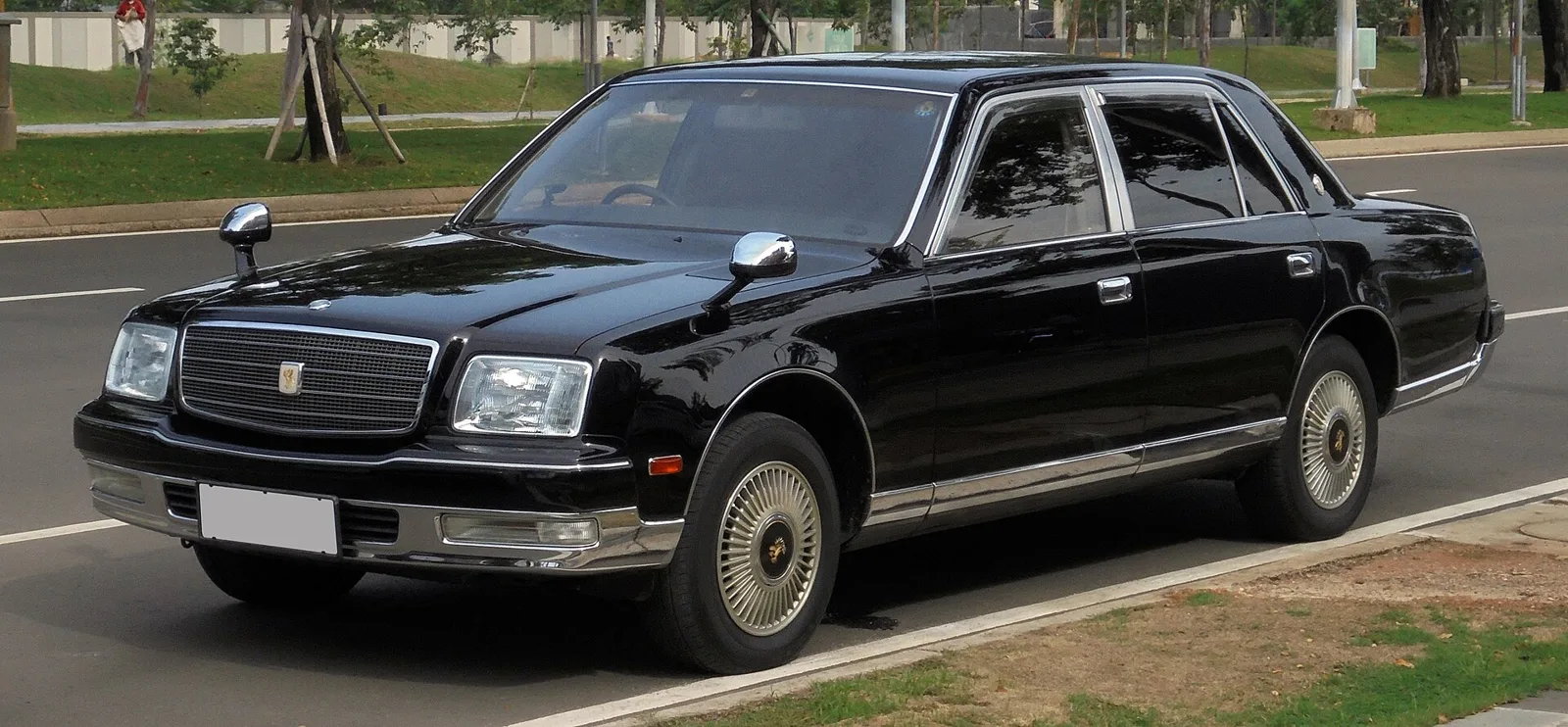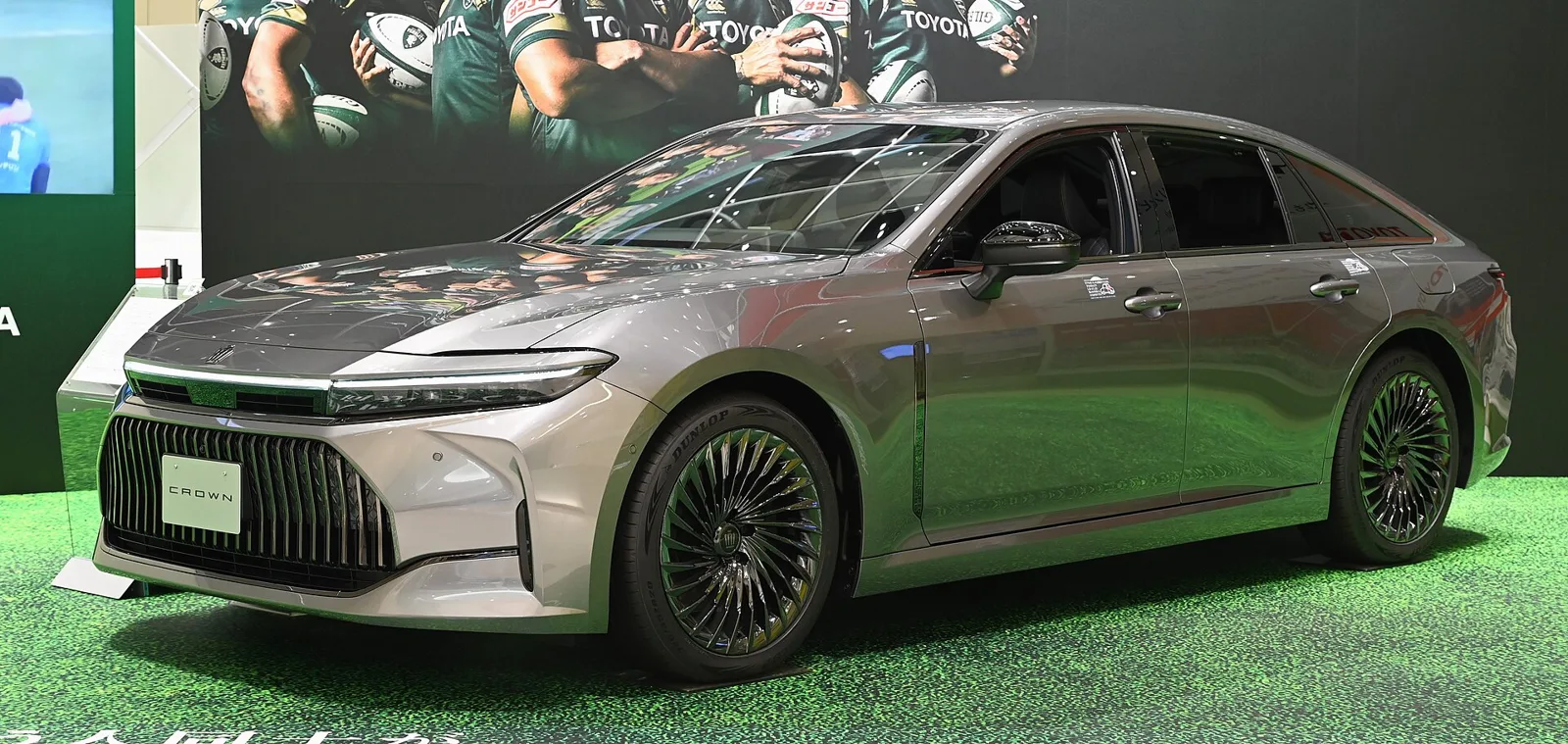
Toyota's executive nameplate, built in Japan since 1955, from the first Toyopet Crown to the sixteenth-generation global reboot.
Built in Japan since 1955, the Crown is Toyota's executive car, first sold as the Toyopet Crown. It has run through sixteen generations, was exported to the United States from 1958, and was relaunched as a global nameplate in 2022.
The Toyota Crown is an executive car that Toyota has built in Japan since 1955. It has served as the mainstream upscale sedan in the company's Japanese lineup, and it is one of the longest-running passenger-car nameplates Toyota owns.
What is the Toyota Crown?
The Crown is primarily a line of executive cars, positioned as the upscale offering in Toyota's range. It was introduced in 1955 as the Toyopet Crown and has been the company's main Japanese sedan throughout its life. Its executive status set it apart from the smaller models in the range.
Only the Japanese Land Cruiser has a longer run among Toyota nameplates in Japan. Worldwide, the Crown ranks seventh among long-running model names, behind a list that includes the Mercedes-Benz S-Class and the Chevrolet Corvette.
Under Toyota's Discover Crown Spirit Project, Japanese dealers restore examples of every generation to demonstrate that the earliest models remain roadworthy.
An executive sedan that started as a Toyopet in 1955, carried the Crown badge through sixteen generations and now sells worldwide.
Where did the Crown come from?
The Crown was introduced in January 1955 to meet the demands of public transport. It was aimed at private buyers, while the Master served as a commercial taxi with the same 1.5-litre Type R engine. Private buyers were the Crown's intended market.
The Crown sold far better than the Master. Its more compliant suspension won over the market, and the Master was dropped in November 1956, having lasted only a year, with its production moved to the Crown.
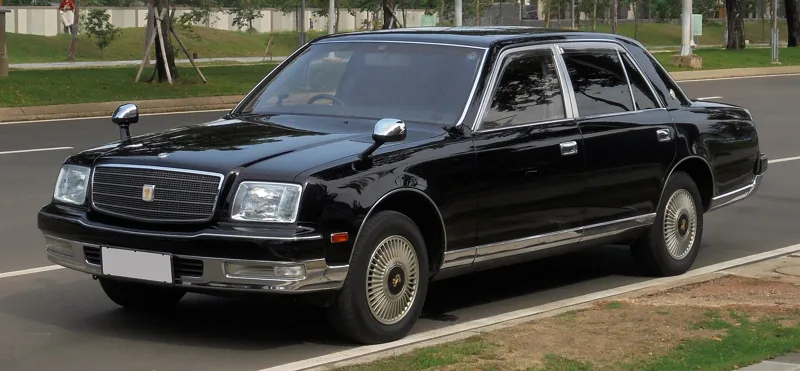
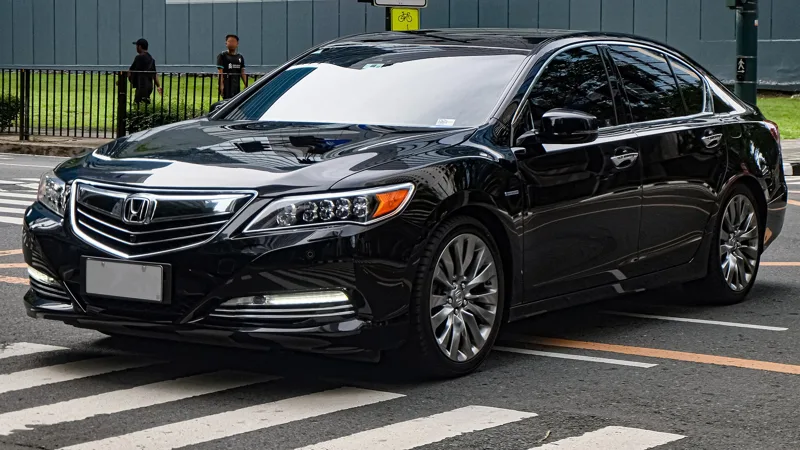
Its rivals in Japan and Asia included the Nissan Cedric and Gloria, the Honda Legend, the Mazda Luce, the Isuzu Bellel and the Mitsubishi Debonair.
Over the years the Crown became a common sight as police cars, government vehicles, company cars and taxis, and in 1995 the Comfort arrived as a cheaper alternative for the taxi trade.
How did the Crown reach the United States?
The Crown was the first Toyota exported to the United States, and it was sold there from 1958 to 1973. Toyota set up a sales company and a parts warehouse in Long Beach, and the first 30 Crown Deluxes arrived in June 1958.
American roads exposed weaknesses. The early car struggled to keep pace on fast interstates, and it suffered from stability, noise and vibration issues. Toyota suspended passenger-car imports for a time before introducing an improved model in July 1960.
Sales started modestly. The series sold 287 cars in 1958 and 967 in 1959, then 659 in 1960, before falling to 225 in 1961, 74 in 1962 and 28 in 1963. Across the whole first series, American sales totalled 2,240 units.
By the end of 1960 the American subsidiary had lost a significant sum on the Crown, and Toyota concentrated its US effort on the Land Cruiser until it had a car suited to the American market.
What was the Crown Eight?
The Crown Eight, code G10, arrived in 1964 for the Japanese market with a 2.6-litre V8. It was wider and more upmarket than the S40 Crown, and it carried the Toyota badge rather than Toyopet. It was a big step up from the S40.
Kanto Auto Works, a Toyota subcontractor, built the Crown Eight because its unusual parts could have disrupted mass production at Motomachi. Output was about 1,000 cars a year, and roughly 3,800 were built in total.
The Crown Eight was meant to take over from big American cars that major companies used. It was the first mass-produced Japanese car with an eight-cylinder engine, and it was too large for the normal classification rules of its time.
It was not chosen for the Imperial Household Agency, and it was succeeded in 1967 by the Century.
How did the Crown evolve through the 1960s and 1970s?
The third generation, launched in 1967, kept much of the earlier mechanicals but dropped the X-frame for a perimeter frame that improved collision protection. Its 2.3-litre 2M engine was shared with the Toyota 2000GT sports coupe. Each change kept the Crown at the top of Toyota's Japanese range.
The fourth generation, launched in February 1971, was the first Crown marketed worldwide as a Toyota rather than a Toyopet. Its trims ran from Deluxe to the Super Saloon and, from the 1973 facelift, the Royal Saloon.
The fifth generation arrived in Japan in 1974, with exports from 1975. It was offered as a sedan, hardtop coupe, hardtop sedan, wagon and van, and a 2.2-litre diesel followed in October 1977.
The sixth generation, launched in 1979, upgraded the engine to a 2.8-litre 5M-EU. It was the first Crown sold in Germany, from 1980, but sales there fell sharply by 1982 as prices rose with the strong yen.
The seventh generation arrived in 1983 with a choice of 2.8-litre engines and a new 2.0-litre DOHC unit. It was the first Crown to use Toyota's PEGASUS four-wheel independent suspension, on the higher-grade models.
What changed in the 1980s and 1990s?
The eighth generation (S130) arrived in 1987 in sedan, hardtop and wagon forms, with a van for commercial use. An airbag arrived in 1988, a first for any Toyota, and in 1989 the top Royal Saloon G introduced an early CD-ROM navigation system.
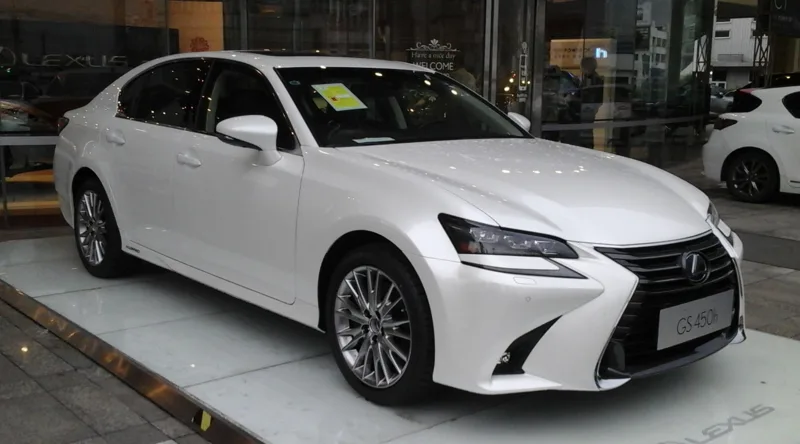
The Royal Saloon G used a 4.0-litre V8 that was also fitted to the Lexus LS400, and the air-suspended version had a different model code. In 1989 the Lexus LS took over the flagship role in Toyota's global range.
The ninth generation (S140) arrived in 1991, departing from the traditional styling and introducing the Royal Touring trim. Its rear taillight design was poorly received, and sales trailed the Nissan Cedric and Gloria until a facelift in 1993 brought back the earlier rear look.
The tenth generation (S150) appeared in 1995 with boxier styling. It was the first Crown built without body-on-frame construction, and in 1996 it took a Japanese industry prize from the Automotive Researchers' and Journalists' Conference.
The eleventh generation (S170) launched in September 1999, with a shorter front overhang for more interior and boot space. The Majesta shared its chassis, and the Athlete V sold 10,545 sedans and 5,012 estates.
How did the 2000s and 2010s shape the Crown?
The twelfth generation (S180) arrived near the end of 2003 and took its design from the Zero Crown concept. The Royal and Athlete gained a V6, while the Majesta kept a V8, and it grew by 70 mm (2.8 in) in wheelbase and gained 15 mm (0.6 in) of width.
The thirteenth generation (S200) arrived in 2008 with four trims: Royal, Athlete, Majesta and Hybrid. The Athlete was tested to 0-100 km/h in under six seconds, and the Hybrid's estimated time was 5.4 seconds.
The fourteenth generation (S210) launched on 25 December 2012, and the Crown Hybrid followed in January 2013. A special Reborn Pink edition in 2013 drew 650 orders, and the S210 was launched in China in March 2015.
What is the fifteenth-generation Crown?
The fifteenth generation (S220) first appeared in study form during the 45th Tokyo Motor Show of October 2017; sales began on 26 June 2018. It sits on a narrow version of TNGA-L, the architecture behind several Lexus and premium Toyota saloons.
Three engines were offered: the 2.0-litre 8AR-FTS turbo four carried over, a 2.5-litre A25A-FXS came with the Hybrid Synergy Drive, and a 3.5-litre 8GR-FXS V6 carried the hybrid architecture first seen in the Lexus LC 500h and LS 500h.
In October 2019 the S220 was picked as an official vehicle for Indonesian cabinet ministers, though only small numbers were imported. The November 2020 update brought a single 12.3-inch touchscreen in place of the earlier dual screens.
The fifteenth generation was one of the first Toyotas with a Data Communication Module for T-Connect services. In August 2018 Toyota City and Toyota began a road-maintenance trial that used data from connected cars.
The S220 made its race bow in the ST-3 class at the 2020 Fuji 24 Hours, winning on its first outing, an early result for the new car.
What is the sixteenth generation?
The sixteenth generation (S230) was unveiled on 15 July 2022 as a reboot of the nameplate, with four body styles: Crossover, Sport, Sedan and Estate. Toyota said the Crown would be sold in about 40 countries for the first time, with around 200,000 units a year expected.
The Crossover went on sale in North America in October 2022, the first Crown there since 1972. It uses the front-wheel-drive GA-K platform with E-Four electric all-wheel drive as standard.
Powertrains include a 2.5-litre A25A-FXS hybrid whose system delivers 234 PS (231 hp; 172 kW), and a turbocharged 2.4-litre T24A-FTS hybrid rated at 349 PS (345 hp; 257 kW) with 400 lb-ft (542 N m) of torque.
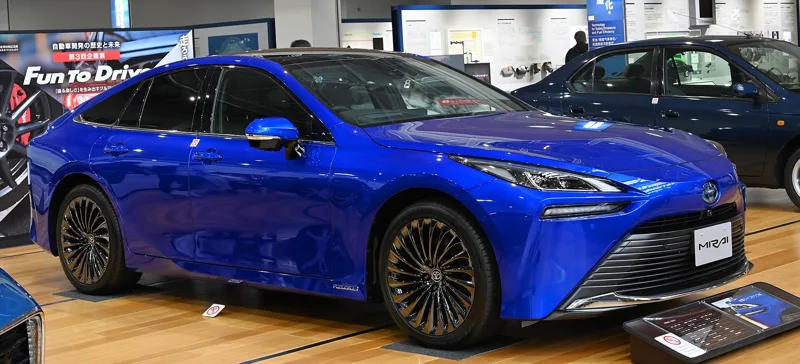
The Sedan shares its platform with the second-generation Mirai, keeping a longitudinal engine and rear-wheel drive. It went on sale in Japan in November 2023 and is offered as a fuel cell or hybrid, and its fuel cell version has a range of about 820 km (509.5 mi).
The Sport was previewed in July 2022 and launched in Japan in October 2023, while the Estate, sold as the Signia in North America, followed in 2024 with hybrid and plug-in hybrid powertrains.
How has the Crown performed in motorsport?
Toyota entered motorsport in 1957, when a Crown Deluxe was entered in the Round Australia race, a first for a Japanese car in overseas rallying. The 19-day event covered 17,000 km of rough Australian roads and tracks, and it was meant to promote the company there.
At the 2020 Fuji 24 Hours the S220 Crown made its debut in the ST-3 class, the opening round of that year's Super Taikyu season, and it won on its first outing. It replaced the Mark X as the car built for ST-3 competition.
The ST-3 class is contested by two-wheel-drive cars with engines from 2000cc to 3500cc, so the Crown competed against a field of similar-sized machines.
Toyota Crown specifications
| Model or generation | Detail |
|---|---|
| First generation (1955) | 1.5-litre Type R engine; Crown Deluxe with radio and heater |
| Crown Eight (1964) | 2.6-litre V8; about 3,800 built |
| Tenth generation (1995) | Inline sixes of 2.0, 2.5 and 3.0 litres; not body-on-frame |
| Thirteenth generation (2008) | 4.6-litre 1UR-FSE V8 in the top models |
| Fifteenth generation (2018) | 2.0-litre 8AR-FTS turbo four; 2.5-litre A25A-FXS hybrid; 3.5-litre 8GR-FXS V6 hybrid |
| Sixteenth generation Crossover | 234 PS (231 hp; 172 kW) with the 2.5-litre hybrid |
| Sixteenth generation T24A-FTS | 349 PS (345 hp; 257 kW) and 542 N m (400 lb-ft) |
| Sixteenth generation Sedan FCEV | About 820 km (509.5 mi) range with three high-pressure tanks |
| Crown Signia (2025 model year) | 246 PS (243 hp; 181 kW) with a 2.5-litre hybrid |