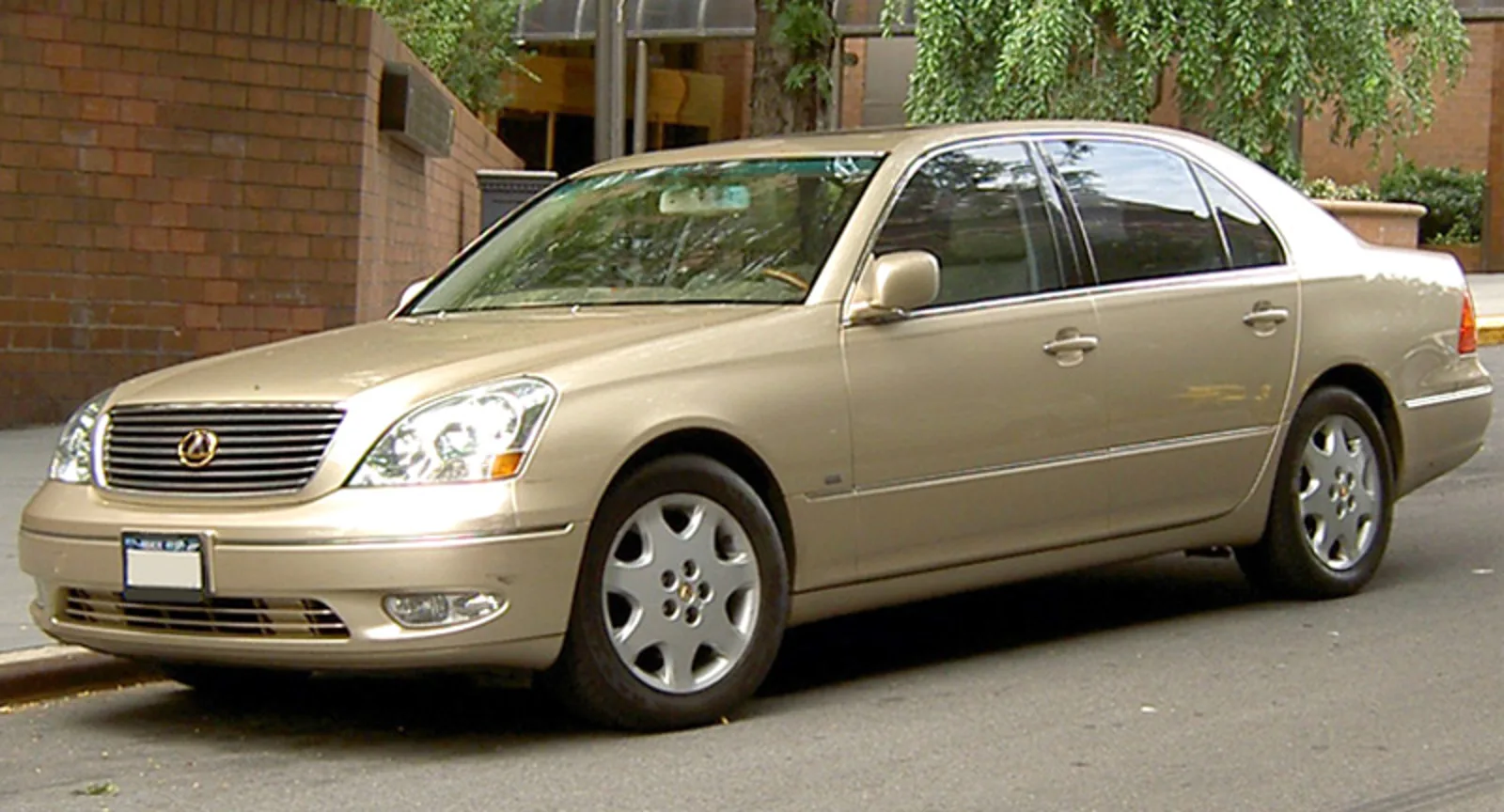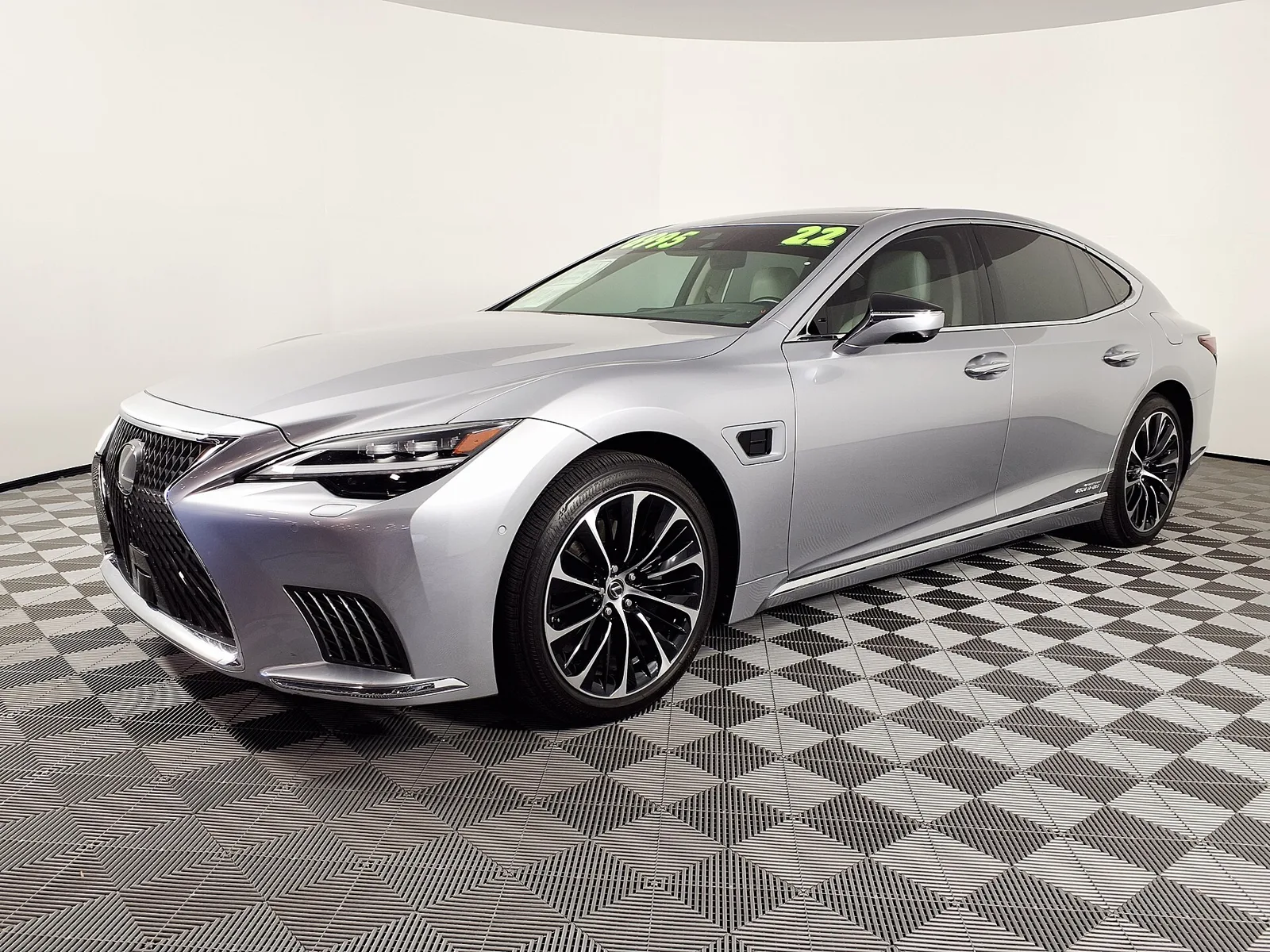
Since 1989 the LS has been Lexus's flagship, starting with the LS 400 that rivals took seriously and running through five generations to the V6 car of today.
The Lexus LS has been the marque's flagship since 1989, when the LS 400 arrived. It used a 4.0-litre V8 and sold from US$35,000 in the United States. The fifth generation switched to a V6, and the 2026 Heritage Edition marked the LS's US farewell.
The Lexus LS is a full-size luxury sedan that has been Lexus's flagship since 1989. For its first four generations it used V8 engines and was mostly rear-wheel drive, while the fourth generation added all-wheel drive, hybrid and long-wheelbase versions. The fifth generation switched to a V6 with no V8 option and only one length.
The LS was the first model Lexus developed, and it did much of the work of establishing the marque. The LS 400 gave a Japanese brand a credible place in a segment long dominated by German makers, and the nameplate has carried that role through every generation since.
Why was the LS developed at all?
Development began in 1983 under the codename F1, which stood for flagship and number one. Toyota's two existing flagships, the Crown and the Century, were sold only in Japan and had little appeal in the international luxury market, where Mercedes-Benz, BMW and Jaguar were the benchmarks.
The programme ran for five years and cost over US$1 billion. It was meant for export from day one, so Lexus was set up as a separate division to sell and maintain it abroad.
A flagship that began as a secret project and carried Lexus into the luxury mainstream.
How much work went into the first LS?
Chief engineer Ichiro Suzuki was given an all-new design, with no specific budget or time limit. About 60 designers, 1,400 engineers in 24 teams and 2,300 technicians worked on the car, along with over 200 support staff. The project built roughly 450 flagship prototypes and 900 engine prototypes.
Testing covered 2.7 million kilometres (1.7 million miles), on routes that ran from winter roads in Europe to deserts and American highways. The aim was to beat American and European flagships in aerodynamics, cabin quietness, top speed and fuel efficiency.
Materials testing was just as thorough. Designers evaluated 24 kinds of wood and several types of leather for two years before they settled on the interior trim.
When did the LS 400 reach the market?
The LS 400 was unveiled at the January 1989 Detroit show, ahead of its 1990 sales year. Production began on 15 May 1989, and US sales started on 1 September 1989 at a base price of US$35,000. That price undercut rivals by thousands of dollars and drew accusations of selling below cost from BMW.
The original target price had been US$25,000, but a weaker yen pushed the figure up. Production was capped at about 50,000 cars a year, with 40,000 earmarked for the United States, 8,000 for Japan and roughly 2,000 for the rest of the world.
In Japan the car arrived as the Toyota Celsior on 9 October 1989, sold through Toyopet Store locations. The name comes from a Latin word meaning supreme, and the Celsior introduced a semi-active suspension system called Piezo TEMS.
What was under the bonnet of the first generation?
The LS 400 used a new 4.0-litre 1UZ-FE 32-valve V8 whose output was 245 PS (180 kW; 242 hp), with 350 Nm (258 lb ft) on tap. A four-speed automatic with electronically controlled shifts sent the power to the rear wheels.
Its 0-100 km/h time was 8.5 seconds, and it reached a top speed of 250 km/h (155 mph). Against the BMW 735i and Mercedes-Benz 420 SE, the LS 400 was quieter and faster, with a lower drag coefficient, a lower curb weight and no US Gas Guzzler Tax.
The car had a drag coefficient of Cd 0.29, which was low for a conventional production vehicle of its time. Its body used sandwich steel panels and fluid-damped fixtures, and an electroluminescent gauge cluster gave the cabin a modern look.
Did the first LS have any early problems?
A December 1989 voluntary recall covered 8,000 vehicles sold so far, after two customer complaints about wiring and an overheated brake light. Every car was serviced within 20 days, and the episode helped build Lexus's reputation for customer care.
By 1990 US sales of the LS 400 had passed those of Mercedes-Benz, BMW and Jaguar in the same segment. First-generation production totalled over 165,000 units, which speaks to how well the car sold.
How did the second generation change the LS?
The second-generation LS 400 arrived in November 1994 with a longer wheelbase, 36 mm (1.4 in) longer, and similar specifications to the original. The second-generation 4.0-litre 1UZ-FE engine made 194 kW (260 hp), while torque reached 366 Nm (270 lb ft), and the 0-100 km/h time improved to 7.5 seconds.
The body was new in more than 90% of its parts, with a drag coefficient of Cd 0.28 and a weight 95 kg (209 lb) lower than its predecessor. The design came from Calty Design Research in the United States, and the first LS with Skyhook adaptive air suspension arrived with it.
US pricing started at US$51,000, and Lexus backed the car with a US$50 million advertising campaign. Sales dipped in 1995 when tariff threats were raised, and production of the second generation totalled about 114,000 units.
What did the third generation bring?
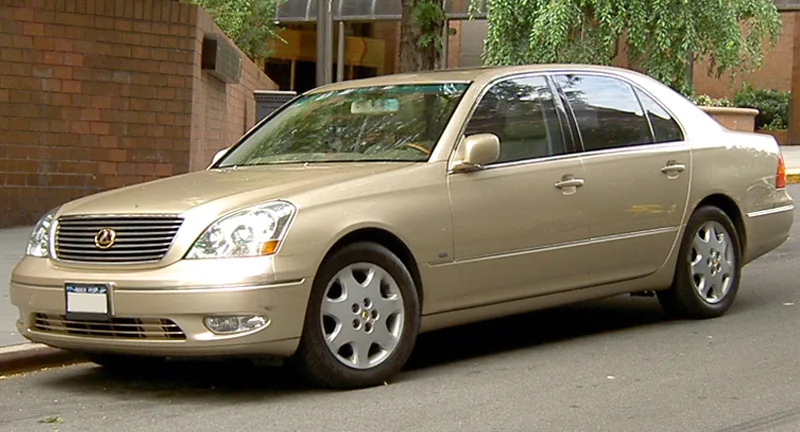
The third-generation LS 430 (UCF30) debuted at the January 2000 Detroit show, ahead of the 2001 model year. It was the first US-market Lexus with adaptive cruise control, using a lidar sensor that could brake as well as slow the car.
The third-generation 4.3-litre unit, a 3UZ-FE, made 216 kW (290 hp), and its 407 Nm (300 lb ft) peak arrived in the mid range; it reached 100 km/h in 6.7 seconds. The car was one of the first gasoline V8 vehicles certified as an Ultra Low Emissions Vehicle, and its drag coefficient of Cd 0.26 was among the best of any sedan at the time.
The LS 430 was highly regarded for reliability. It was the most reliable luxury sedan in the J.D. Power Initial Quality Survey in every year of production, and production exceeded 140,000 units before it ended in July 2006.
How did the fourth generation move the LS upmarket?
The LS 460 (USF40) was introduced at the January 2006 Detroit show for the 2007 model year. It became the first Lexus model built in both standard and long-wheelbase forms, with a 2,970 mm (117 in) wheelbase for the standard car and 3,090 mm (122 in) for the LS 460 L.
The new 4.6-litre 1UR-FSE V8 made 283 kW (380 hp), and 498 Nm (367 lb ft) were on tap, coupled to the first production eight-speed automatic transmission. The car also won Car of the Year Japan for a second time.
A hybrid version, the LS 600h L, went on sale in May 2007. It was the first production V8 full hybrid, and Lexus later added all-wheel-drive versions of the standard car.
What makes the fifth-generation LS different?
The fifth-generation LS (XF50) debuted at the January 2017 Detroit show. It was the first LS to use a V6, and Lexus made no plans for a V8, unlike earlier models and European rivals. The 3.4-litre twin-turbo V6 made 309 kW (415 hp), with 600 Nm (440 lb ft) of torque available.
The LS 500h hybrid used a lithium-ion battery and the multi-stage hybrid system from the LC 500h. The car also introduced a six-sided window design and an outer-slide panoramic roof, which helped reconcile headroom with a low roofline.
A facelift for the 2021 model year brought a 12.3-inch touchscreen, Apple CarPlay and Android Auto, and an updated Lexus Safety System with Lane Change Assist. In 2025 the LS was discontinued in the UK, although it remained on sale elsewhere.
Where is the LS built, and how well is it assembled?
Every LS has been built at Toyota's Tahara factory in Aichi, Japan, since 1989. The LS 400 was the first production car to receive extensive laser welding, which produced seamless steel joins. Panel gaps on the LS 400 fell from 7 mm to 4 mm compared with Toyota-brand cars.
On the LS 430, measurement margins were tightened tenfold, to 0.001 mm. Specialists still test each V8 on a dynamometer and by stethoscope before installation, and the LS 460 introduced a hand-sanded paint process. Those standards were later adopted for other Toyota models.
How did the LS change the luxury market?
The LS marked the first successful entry of a Japanese manufacturer into the prestige luxury sector. By 1991 the LS 400 was the top-selling model in Lexus's line-up, and Lexus had overtaken Mercedes-Benz and BMW in overall US sales. By 2000 Lexus had moved ahead of Cadillac, becoming the top luxury seller in the largest car market.
Rival makers responded with lower prices and added features. Mercedes-Benz rushed extra features into the 1991 S-Class, which caused budget overruns. Automobile magazine added the LS 400 to its list of 24 most important vehicles of the 20th century in 1996.
How did the LS sell around the world?
In the United States the LS was the top-selling flagship luxury sedan for 15 of its first 17 years. In 2007 Lexus sold 71,760 LS sedans worldwide, placing it second to the Mercedes-Benz S-Class, which sold 85,500 units. More than half of the LS total came from outside the United States.
The LS has done less well in Europe, where it has ranked behind Jaguar, Mercedes-Benz, Audi and BMW in flagship sales. Analysts have linked this to European buyers placing less emphasis on reliability and showing more loyalty to domestic marques.
Which awards did the LS win?
The LS has won World Car of the Year in 2007, Car of the Year Japan in 1989 and again in 2006, and Canadian Car of the Year in 1991. It was the most reliable car in the J.D. Power dependability study for fifteen consecutive years, and the US survey ranked it top from 1994 to 2009.
How did the LS end in the United States?
On 26 September 2025 Lexus announced the LS 500 Heritage Edition for the 2026 model year, which closes the LS chapter in the US after 36 years. Production was capped at 250 units, with five going to Canada, and all were AWD.
The Heritage Edition is finished in a black called Ninety Noir, with 20-inch wheels in Dark Gray Metallic and Rioja Red upholstery. Panoramic View Monitor, a panoramic glass roof and a 23-speaker Mark Levinson system are standard, and the LS will continue to be sold outside North America and Europe.