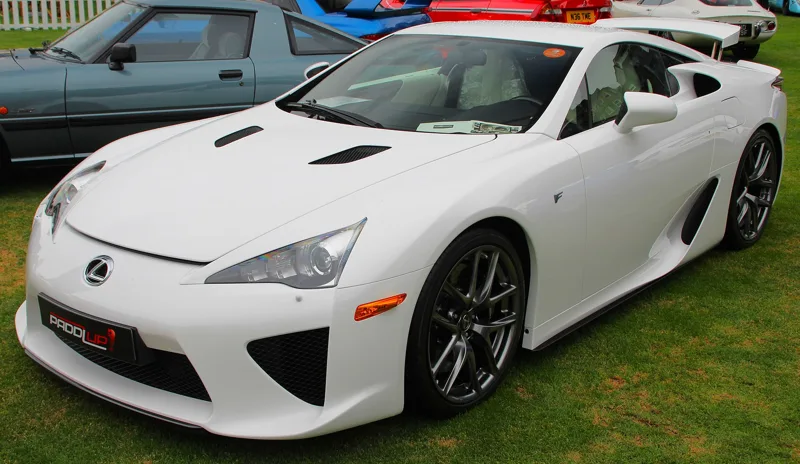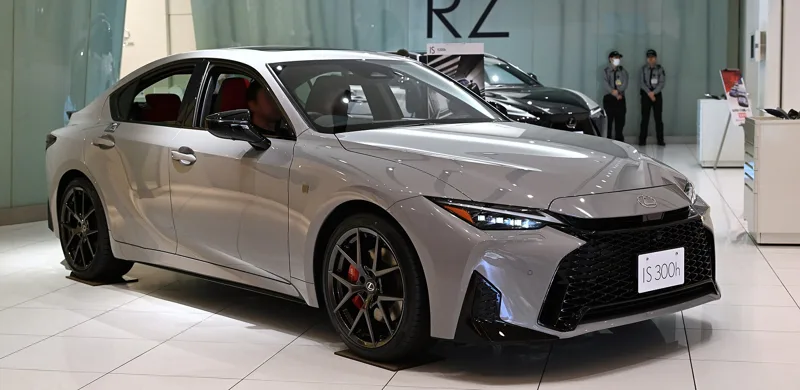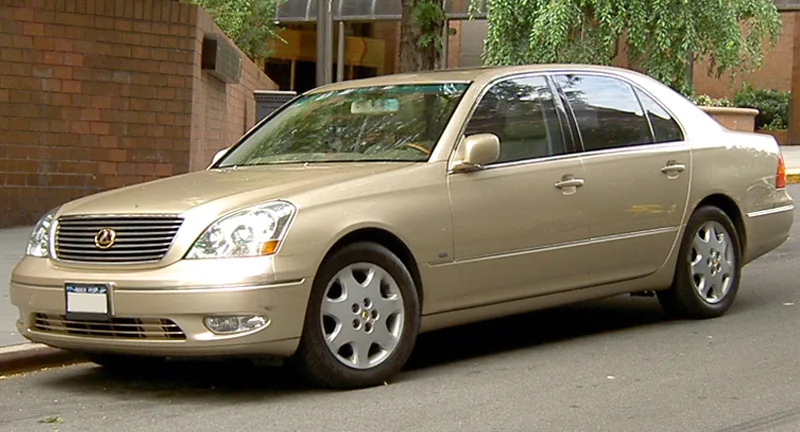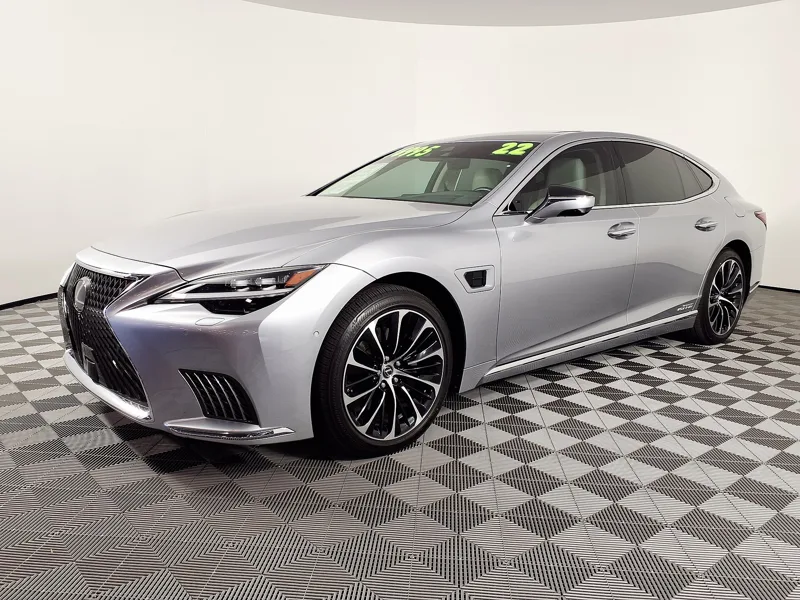
From the Toyota Aristo in 1991 to the V8 GS F and the hybrid GS 450h, the executive sedan that carried Lexus's performance image for almost three decades.
A rear-wheel drive sedan from Lexus, the GS ran through four generations from 1991 to 2020. The line started life as the Toyota Aristo before adding V8 engines, a hybrid GS 450h and the high-performance GS F. The name stands for Grand Sedan.
The Lexus GS was an executive car built by Toyota and sold by its luxury arm, Lexus, across four generations. It began as the Toyota Aristo in Japan in 1991, reached export markets in 1993, and ended production in August 2020. Along the way it carried six-cylinder and V8 power, rear-wheel drive and eventually a hybrid and a high-performance F model.
Where did the Lexus GS come from?
The GS was launched in Japan in 1991 as the Toyota Aristo, and it reached export markets as the Lexus GS from February 1993. Lexus positioned it between the compact IS and the flagship LS, making it a performance sedan for the mid-luxury class. The name GS stands for Grand Sedan, although some importers used the Grand Sport reading.
Italdesign Giugiaro started the first drawings of the GS 300 in 1988. The studio aimed at a deluxe sedan with a simpler, more European-style look than the Japanese premium cars of the time.
The GS shared its chassis with the Toyota Crown until 2011, when the fourth generation moved to a separate platform. That shared heritage explains why the early cars felt related to one of Toyota's longest-running nameplates.
An executive car sits between a mid-size family saloon and a luxury flagship, which is why the GS mattered as a sporting alternative within the Lexus range.
A rear-wheel drive Toyota sedan that became Lexus's performance flagship, from a 1991 Japanese launch to a 2020 finale.
What was the first-generation GS like?
The first generation was the export Lexus GS 300, with a 3.0-litre 2JZ-GE straight-six rated 169 kW (227 hp) and 285 Nm (210 lb-ft) of torque. Production of the export car began on 22 February 1993, and the design had a drag coefficient of Cd=0.31 for its time.
In Japan the same platform was the Toyota Aristo, which appeared in October 1991. The Japanese range offered the 3.0Q with the 2JZ-GE and the 3.0V with a 24-valve twin-turbo 2JZ-GTE rated 205 kW (275 hp), while a V8 4.0Zi-Four with iFour all-wheel drive arrived in 1992.
Sales were modest. The GS 300 sold 19,164 units in 1993, its best year, and the car faced competition from more powerful V8 sport sedans. Production of the first generation ended in July 1997, when the second generation was already on its way.
Early luxury sedans of this era were judged on refinement and smoothness, and a straight-six engine was a natural fit for those qualities.
How did the second-generation GS improve?
The second generation arrived in 1997 with a new platform and in-house styling, and its first full year of sales reached 30,622 vehicles. Sales stabilised at 28,079 vehicles by 2000, a clear step up from the first car, and Lexus kept the model in the lineup for eight years.
The redesign carried a drag coefficient of Cd=0.30 and quadruple headlights in a style similar to the Lexus SC coupe. Inside, Optitron gauges with electroluminescent lighting appeared for the first time, and the V300 versions got a better stereo.
The engine range was refined. The GS 300 used a revised straight-six rated 168 kW (225 hp) with 305 Nm (225 lb-ft) of torque, while the GS 400 used the 4.0-litre 1UZ-FE V8 rated 224 kW (300 hp) with 420 Nm (310 lb-ft).
The second generation also picked up honours. Motor Trend named it Import Car of the Year for 1998, and Car and Driver placed it on its Ten Best list for 1998 through 2000.
Honours from car magazines show how a model was received at the time, though sales figures tell a fuller story.
What did the third-generation GS change?
The third generation premiered globally for the 2006 model year and was the introductory Lexus model for the marque's L-finesse design philosophy. Its fastback profile, retained quad headlights and one-piece bumpers set a new direction for the brand, and its drag coefficient was Cd=0.27.
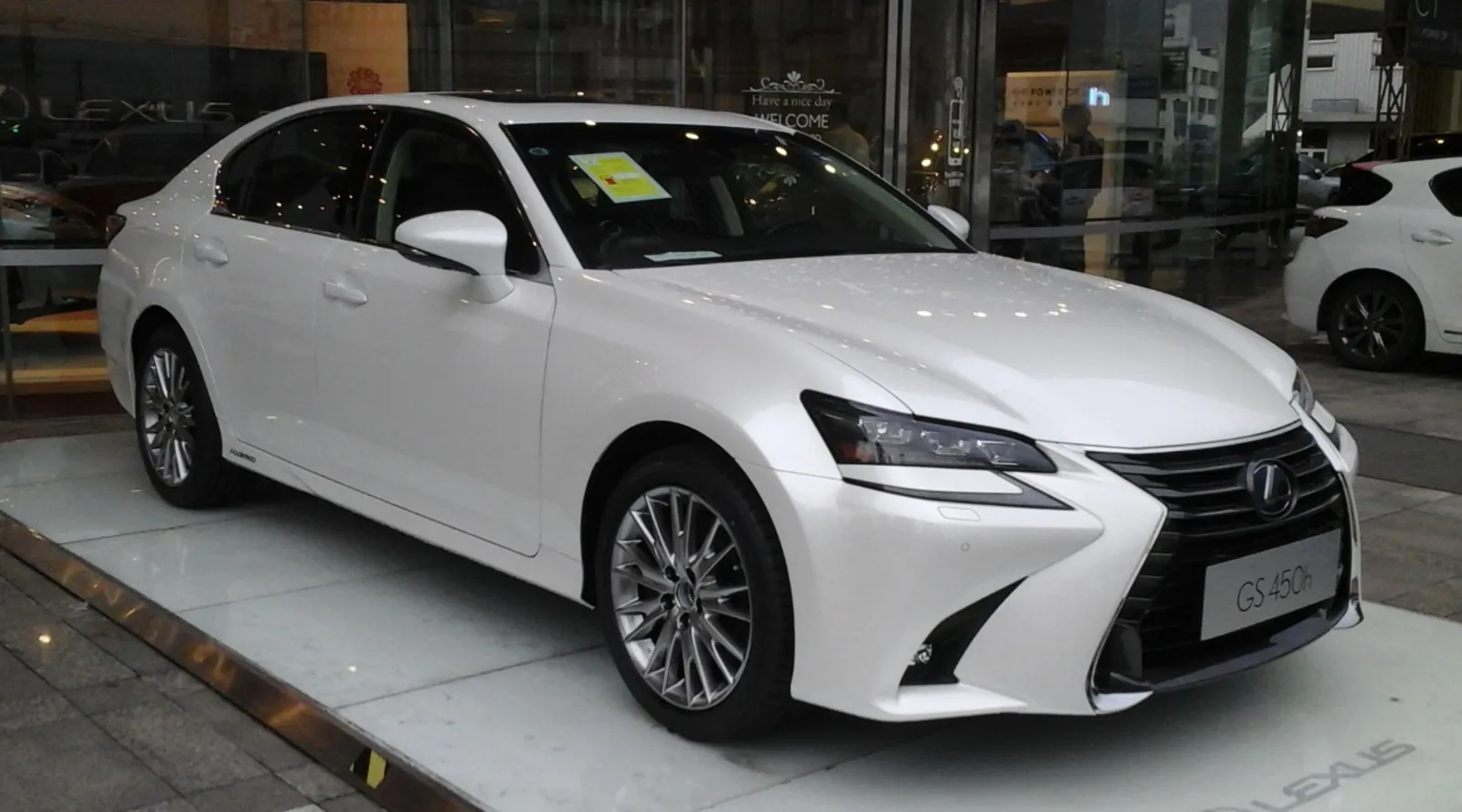
The engine range was built around V6 and V8 units, plus a hybrid. The GS 450h used a naturally aspirated 3.5-litre 2GR-FSE V6 with two electric motors and a continuously variable transmission, and it was the first mass-production rear-wheel drive luxury hybrid.
The hybrid system delivered a total output of 253 kW (339 hp) and accelerated from 0-60 mph in 5.2 seconds, according to manufacturer data. It also carried a SULEV emissions rating.
Chassis technology moved on too. The third generation added electric power steering, a variable gear ratio steering system, an electronically controlled brake and adaptive dampers on the V8 and hybrid models.
Adaptive dampers adjust their firmness to the road and the driver's inputs, which keeps the car composed without making the ride uncomfortable.
What did the fourth generation bring?
The fourth generation premiered in August 2011 at the Pebble Beach Concours d'Elegance. It was built on a separate New N platform rather than the Crown's, and it used aluminium suspension components to reduce unsprung mass and overall weight. That approach gave Lexus a clean slate for the car's chassis.
The fourth-generation GS 350 used a V6, and sales began in Japan on 26 January 2012. The GS 450h hybrid followed as a separate model.
A lower-displacement GS 250 premiered at the Auto Guangzhou show in November 2011, aimed at Asian and European buyers. Later the GS 200t, with a 2.0-liter 8AR-FTS turbo, replaced the GS 250 in a 2015 revision.
The fourth generation was central to the drive to restore passion to the Lexus brand. Toyota's chairman Akio Toyoda backed the project, and the car was intended to compete more directly with German luxury sedans in the United States.
Rear-wheel drive gives a sedan a balanced weight distribution and a more engaging feel through corners, which is why Lexus kept the layout for its sporting models.
How fast was the GS F?
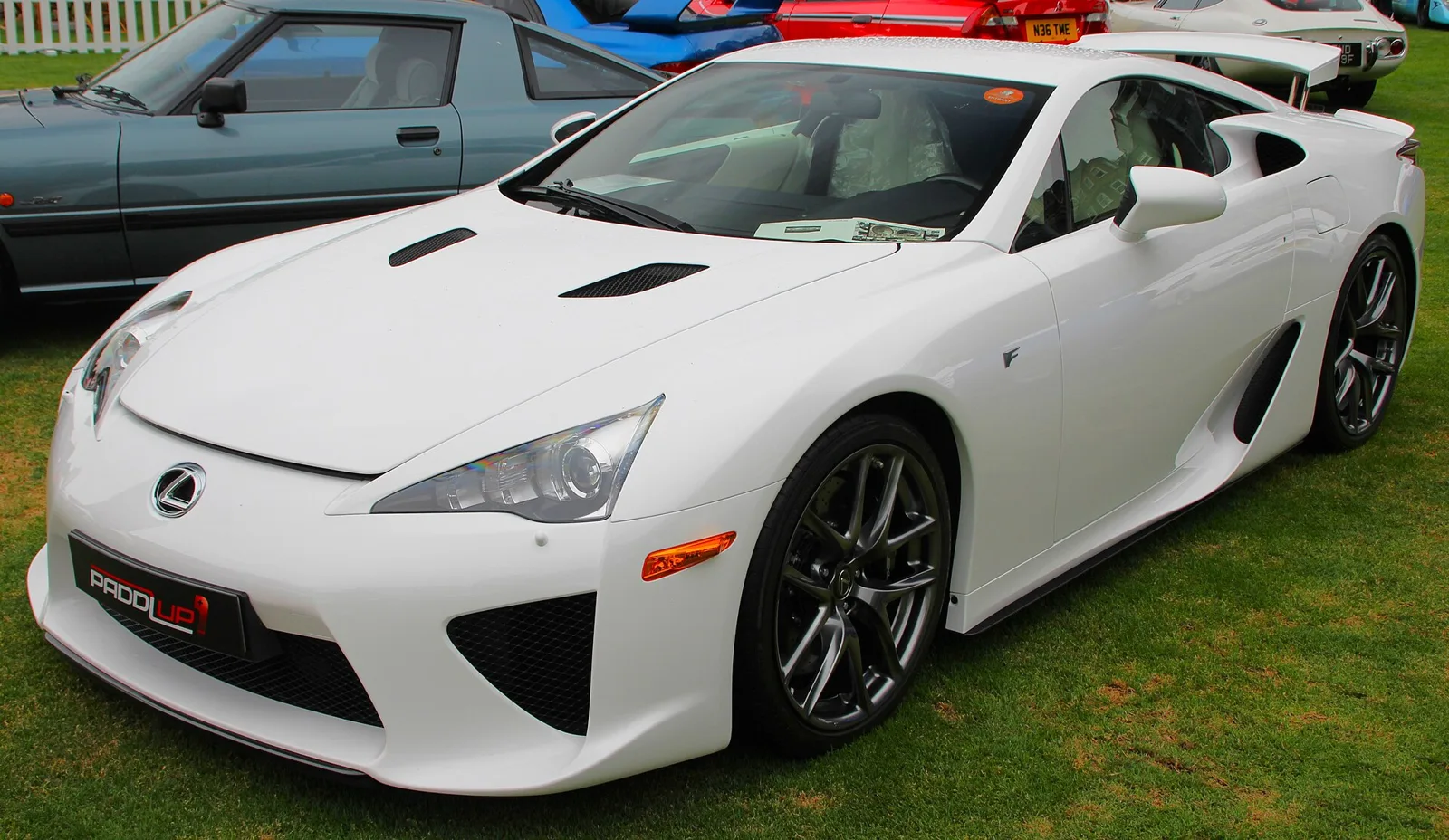
The GS F was the high-performance version of the car. It made its debut at the 2015 North American International Auto Show before reaching American dealers as a 2016 model. Its V8 was the strongest engine the GS line ever carried.
The GS F used a 5.0 L 2UR-GSE V8 rated 348 kW (473 PS; 467 hp), with 527 Nm (389 lb-ft) of torque. It was paired with an 8-speed transmission built by Aisin, which gave the car its strongest performance in the range.
The GS F also received Brembo brakes, a rear Torsen or torque vectoring differential with three operating modes, and an instrument cluster with a large central tachometer taken from the LFA. Those details set it apart from the standard GS, and they made the F the flagship of the line.
A high-performance V8 in a sedan is a demanding package, because brakes, cooling and tyres all have to cope with sustained use.
Did the Lexus GS race?
Yes. The GS was used in the Motorola Cup North American Street Stock Championship in 1998, when Team Lexus started with two GS 400 race vehicles. The team achieved its first GS 400 victory in 1999, in its sixth race at Road Atlanta.
The GS 400 raced until 2001, when Team Lexus switched to the IS 300. In 2006 a GS 450h hybrid entered the 24 Hours of Tokachi race in Hokkaido, Japan, which was the first time a hybrid had been used in that event.
The car also appeared in less formal roles. In 2009 the GS 450h served as a safety car at the Muscle Car Masters event at Eastern Creek, and in 2008 Manabu Orido drifted a second-generation Aristo in Formula D competition, using a car with prototype suspension and parts from the export GS 300.
Motorsport programmes like these are useful for a manufacturer because they show how a road car handles under pressure.
What awards did the Lexus GS win?
The GS collected a steady run of awards in its life. J.D. Power named the series the best midsize luxury car in initial quality for 2002 to 2005, while AAA chose the third-generation GS 300 as its top car in the class for 2005.
Consumer Reports put the GS at the top for predicted reliability in 2005. Awards from specialist and consumer bodies test different things, from build quality to reliability, so a model that wins several is usually well rounded.
What were the Lexus GS specifications?
The GS moved from a 169 kW (227 hp) straight-six to a 348 kW (473 PS; 467 hp) V8 over four generations. Its acceleration figures improved over the same period, and the hybrid and F models gave buyers two very different routes to performance. The table below sets out the main figures.
| Specification | Detail |
|---|---|
| Generations | Four, 1991 to 2020 |
| First-generation export engine | 3.0-litre 2JZ-GE straight-six, 169 kW (227 hp) |
| First-generation torque | 285 Nm (210 lb-ft) |
| Second-generation V8 | 4.0-litre 1UZ-FE, 224 kW (300 hp), 420 Nm (310 lb-ft) |
| GS 430 torque | 441 Nm (325 lb-ft) |
| GS 460 V8 | 4.6-litre, 255 kW (342 hp), 460 Nm (339 lb-ft) |
| GS 450h hybrid | 3.5-litre V6 plus motors, 253 kW (339 hp) |
| GS 450h 0-60 mph | 5.2 seconds, manufacturer data |
| GS F engine | 5.0 L 2UR-GSE V8, 348 kW (473 PS; 467 hp) |
| GS F torque | 527 Nm (389 lb-ft) |
Figures such as drag coefficient and torque help explain how each generation felt on the road, even though the headline numbers only tell part of the story.
How did the Lexus GS end in Europe?
Lexus dropped the GS from European showrooms in 2018, with the front-wheel drive ES taking its place. That was an unusual move, since the new ES was not a rear-wheel drive car like the GS it replaced. Lexus kept the GS name for its rear-wheel drive character, which made the switch a notable one.
Production of the GS ended in August 2020, after a run that began with the Aristo in Japan in 1991.
Successive generations followed the same basic idea of a refined, rear-wheel drive sedan, even as the engines, electronics and styling changed around it.
The car's long life meant its engine, electronics and styling were updated several times, which is typical for a sedan with a multi-generation run.