A 1983 challenge from Toyota's chairman, a $1 billion flagship sedan, a hybrid push and a Daytona-winning racing record.
Lexus is the luxury division of Toyota Motor Corporation, created from a 1983 flagship project and launched with the LS 400 in 1989. It sells in over 90 nations and is Japan's leading premium make. Its milestones include the RX crossover, an early hybrid push and Daytona victories.
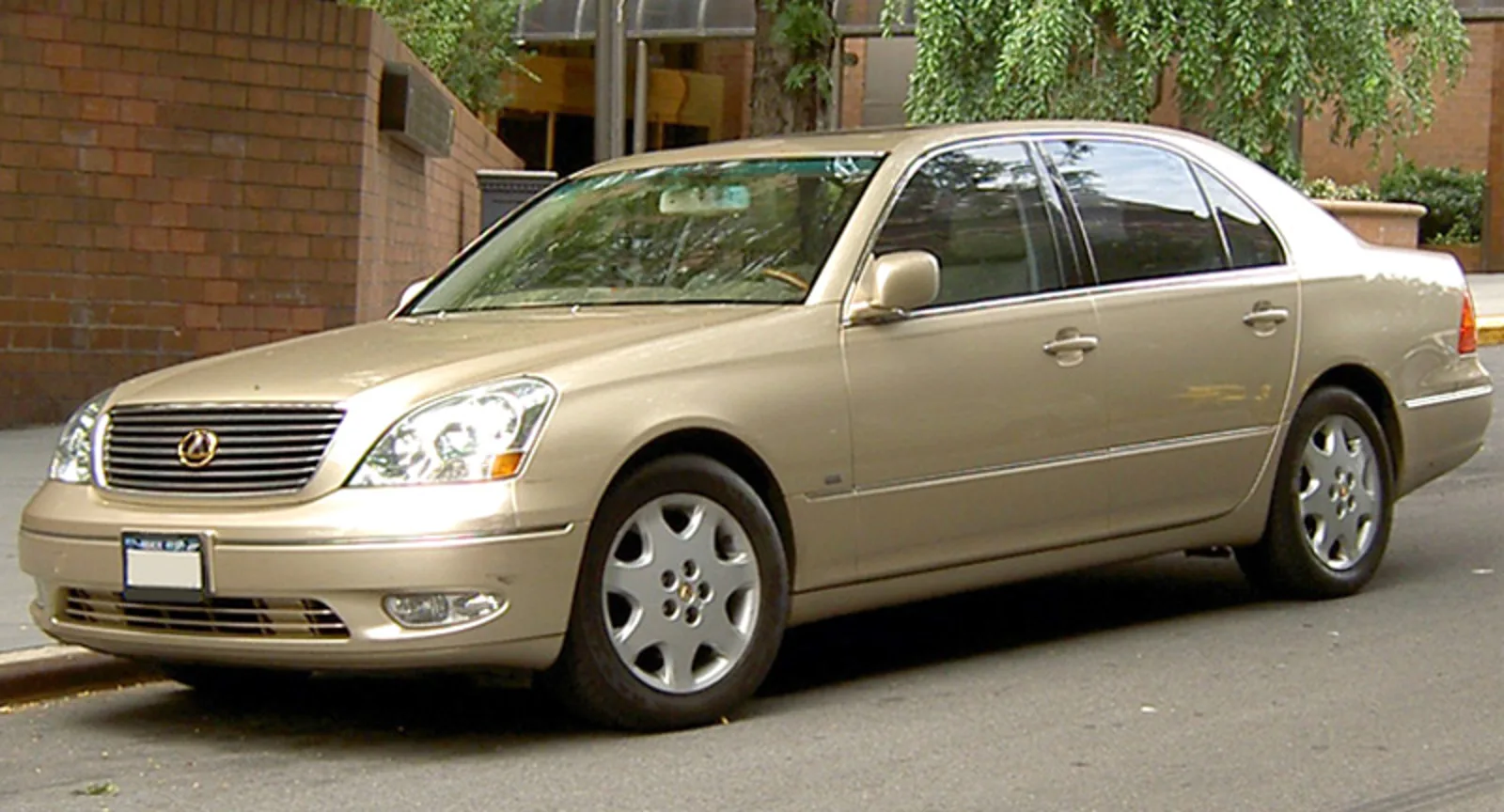
Lexus is the luxury vehicle division of Toyota Motor Corporation, and it sells in more than 90 countries and territories. It began as a 1983 project to build a flagship sedan, and it reached the market with the LS 400 in 1989. Today it is Japan's largest-selling make of premium cars.
Why did Toyota create Lexus?
In 1983 the Toyota chairman, Eiji Toyoda, set the team the goal of building the finest car in the world. Developers code-named it F1, and the goal was to expand Toyota's product line in the premium segment with a sedan aimed at international buyers.
Lexus originated at about the same time as rival premium brands from Honda and Nissan. Honda launched its Acura marque in the US in 1986, and Nissan launched its Infiniti Q45 in 1990. Toyota saw that a separate luxury brand was the way to reach the market.
Toyota researchers ran focus groups and market research on luxury consumers in the US in May 1985. Their conclusion was that the new sedan needed its own brand and sales channel, which led to a new network of dealerships in America.
A 1983 challenge to build the world's best car produced a flagship that changed how Japan thought about luxury.
Did Lexus exist in Japan before 2005?
Until 2005 the name was absent from Japan's showrooms. Vehicles marketed internationally as Lexus from 1989 appeared in Japan as Toyota models with similar names, which meant the brand was invisible to Japanese buyers for years.
The Japanese launch came in July 2005, making Lexus the first Japanese premium marque to launch in its country of origin. The move reflected the brand's growing confidence in its own identity.
How much did the F1 project cost?
The F1 project was completed in 1989 and involved 60 designers, 24 engineering teams, 1,400 engineers and 2,300 technicians. It also used approximately 450 prototypes and cost more than $1 billion, an enormous commitment for a new brand.
The resulting car, the LS 400, shared no major elements with previous Toyota vehicles. It had a fresh 4.0 L V8 gasoline unit and rear-wheel drive, which set it apart from the company's mainstream models of the time.
Much of the programme depended on specialist work outside the core design team, which reflects the scale of the effort.
What did the LS 400 launch look like?
The LS 400 was first shown in January 1989 at the Detroit show. Sales opened the next September across 81 new Lexus dealerships in the US, and the launch was accompanied by a multimillion-dollar advertising campaign.
The car was sold alongside the smaller ES 250, which was a rebadged Toyota Camry Prominent built for the Japanese market. Together the two models gave the brand a full-size flagship and a mid-size sedan from its first day on sale.
How did critics and rivals react to the LS 400?
The LS 400 earned praise for its quiet cabin, finished interior, ergonomics, engine, build quality and value. Some automobile columnists criticised its derivative styling and a suspension that some felt sacrificed handling for ride comfort.
Car and Driver rated the LS 400 ahead of the Mercedes-Benz 420 SEL and BMW 735i on ride, handling and performance. The car also won awards from automotive publications including Automobile Magazine and Wheels Magazine, which helped the brand establish a reputation for quality.
How quickly did Lexus grow in the United States?
In 1990, the brand's first complete year on sale, Lexus moved 63,594 LS 400 and ES 250 sedans in the US, with the LS taking the majority of those sales.
In 1991 Lexus launched the SC 400 coupe and became the top-selling premium car import in the US, with sales reaching 71,206 vehicles. The LS 400's base price had risen 18 percent by 1992, which showed the brand's growing confidence in its pricing.
The brand then widened its range with the GS 300 in 1993, the LX 450 in 1996, the RX 300 in 1998 and the IS in 1999. Lexus later recorded its 1 millionth vehicle sold in the US market, and it reached its 2 millionth US sale in 2004.
Why did the RX crossover matter so much?
The RX 300 of 1998 was the first luxury-branded crossover SUV. It targeted suburban buyers who wanted an upmarket SUV without the off-road capability of the LX, and it became a signature model for the brand.
The RX also led the hybrid push. The RX 400h of 2004 was the first luxury-branded production hybrid SUV, and it used Toyota's hybrid system to combine gasoline and electric motors. Hybrid cumulative sales reached 500,000 in November 2012 and 1 million in March 2016.
When did Lexus start its F performance division?
Lexus announced its F marque performance division in January 2007, and the first model was the IS F. It made its debut at the North American International Auto Show in 2007, accompanied by a concept car called the LF-A.
The LFA supercar followed in 2009 at US$375,000. The F division was created to produce racing-inspired versions of Lexus performance models, and it reflects a deliberate move towards sportier cars.
How big did Lexus sales get?
Lexus global sales reached 475,000 vehicles by the end of 2006 and surpassed 500,000 in 2007, which was a record for the brand. The 2007 record was 518,000 units.
The 2008 recession pushed global sales down 16 percent to 435,000. Sales then recovered to 410,000 in 2011, and reached 582,000 in 2014 before rising to a record 652,000 in 2015, a gain of 12 percent.
By 2009 the brand ranked fourth among premium makers worldwide by volume, and it had led the US premium segment for 10 consecutive years.
Did Lexus win races in motorsport?
Team Lexus entered motorsport in 1999 with two GS 400 race cars. The team achieved its first victory at Road Atlanta that year, and it won the 2001 Grand-Am Cup race at Virginia International Raceway with the IS 300.
In 2002 the team claimed Drivers' and Team Championships in the Grand-Am Cup ST1 class. An SC 430 won the Super GT GT500 championship in 2006 with Andre Lotterer and Juichi Wakisaka, and Lexus later won the Rolex 24 Hours of Daytona in 2007 and again in 2008.
Lexus departed the Rolex Sports Car Series for the 2010 season after winning more than 15 of its series races. The company later won the 2023 IMSA GTD Pro championship with Vasser Sullivan.
What is the Lexus Covenant and how does the brand handle service?
The Lexus Covenant promises that the brand will treat each customer as a guest in the owner's home, and it is the founding promise behind the company's service culture.
Consumer Reports placed Lexus among its five most dependable makes in the reliability surveys of the 2000s. That reputation for dependability helped the brand win customers from rival premium makes.
What slogans and marketing has Lexus used?
The original slogan was The Relentless Pursuit of Perfection, which the brand used for more than two decades. Lexus unveiled the Experience Amazing tagline in February 2017 with a 60-second advertisement at Super Bowl LI, replacing its earlier slogans.
The voice of the brand for many years was James Sloyan, who narrated the commercials as Mr. Lexus until 2009. His narration was a fixture of the brand's early advertising.
What does the Lexus range look like today?
The Lexus range has 13 models, and 9 of them are crossovers or SUVs. That split shows how far the brand has shifted towards higher-riding vehicles.
Lexus also introduced the UX 300e as its first all-battery electric vehicle in 2020, and in June 2023 it launched the LBX as its first B-segment car. The LC 500 was announced in March 2016 as a two-door flagship with a V8 of 467 horsepower.
Where are Lexus cars made?
Lexus cars were first made at Toyota's Tahara plant in Aichi, and the Kokura plant in Kitakyushu opened in 2008 as a dedicated hybrid production site. Lexus vehicles have also been assembled abroad, which widened the brand's manufacturing base.
The ES 350 was assembled at Georgetown, Kentucky from late 2015. In India the brand launched in 2017 as the fifth luxury brand to enter the market, with dealerships opening in several cities.
Which Lexus hybrid has sold best?
The RX 400h and RX 450h is the top-selling Lexus hybrid, with 335,000 units delivered as of March 2016. Cumulative sales of Lexus hybrids reached 500,000 in November 2012 and passed the 1 million mark in March 2016.
The LS 600h L introduced LED headlamps to production cars in 2008, a detail that set the hybrid flagship apart from its conventional siblings in the range.
The line of hybrids began with the RX 400h of 2004, and the later hybrid models built on that start.
What new flagship models did Lexus announce?
In March 2016 Lexus announced that it would produce a new flagship, the two-door LC 500. The vehicle was planned with a V8 version producing 467 horsepower, and a V6 hybrid variant was also expected to follow in the years after its launch.
The LM is a rebadged limousine version of the Toyota Alphard, which adds a large luxury people-carrier to the line-up. Together the LC 500 and the LM show the range stretching in two directions, from a sporting coupe to a large luxury vehicle.
How is the Lexus network structured in Japan?
All 143 dealerships in Japan are owned and operated by Lexus, a direct structure that gives the company full control of its home network. The network is central to the brand's identity in its domestic market.
In its home market the brand has led premium sales, and its July 2005 debut ended years of Toyota-badged luxury models. That move gave the brand a clear identity to build its dealer network around.
What are the key Lexus models and figures?
The table lists selected Lexus models with the year, a defining figure and the role each car played in the brand's history. Where a model had several versions, the figure shown is the one that best describes it.
| Model | Year | Defining figure | Role |
|---|---|---|---|
| LS 400 | 1989 | 4.0 L V8 with rear-wheel drive | Flagship that launched the brand |
| ES 250 | 1989 | Rebadged Toyota Camry Prominent | Mid-size sedan at launch |
| SC 400 | 1991 | Shared the LS 400 V8 | First sports coupe |
| GS 300 | 1993 | Mid-size sports sedan | Below the LS in the range |
| RX 300 | 1998 | First luxury-branded crossover SUV | Targets suburban SUV buyers |
| RX 400h | 2004 | First luxury-branded production hybrid SUV | Hybrid pioneer |
| IS F | 2007 | First F marque model | Performance division launch |
| LFA | 2009 | Priced at US$375,000 | Supercar flagship |
| UX 300e | 2020 | First all-battery electric vehicle | Electric pioneer |
Frequently asked questions
How many countries sell Lexus?
The brand has more than 90 national markets. It has operational centres in Brussels, Belgium, and Plano, Texas.
How many LS 400 sedans were sold in 1990?
The first full year of sales produced 63,594 units across the LS 400 and ES 250 in America, a strong result for a brand that had launched only the year before.
What was the Lexus LFA?
The LFA was a supercar that debuted in 2009 at US$375,000. It was the flagship of the F marque, which was created in 2007 to produce racing-inspired performance models.
Who was Mr. Lexus?
Mr. Lexus was the nickname for the actor James Sloyan, who narrated the brand's television advertising from 1989 until 2009.