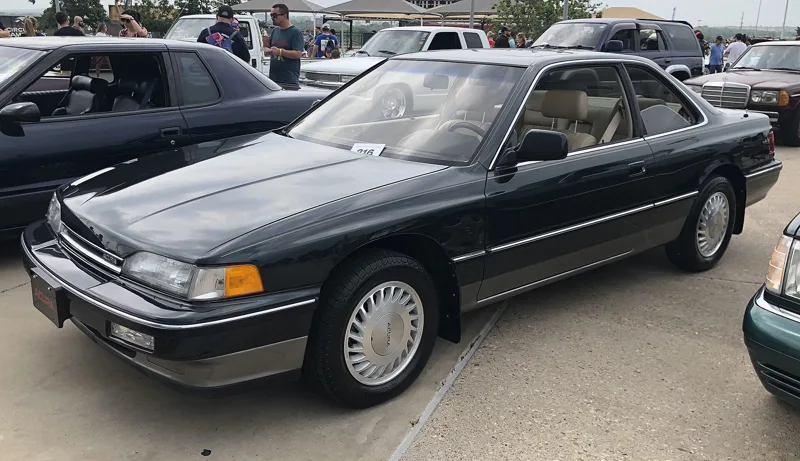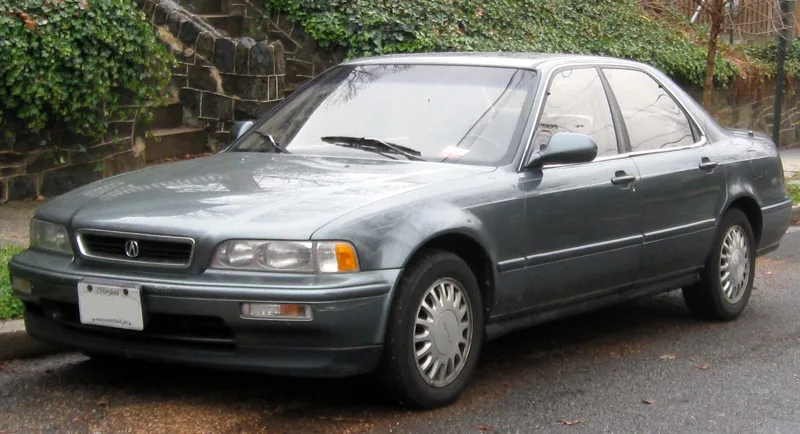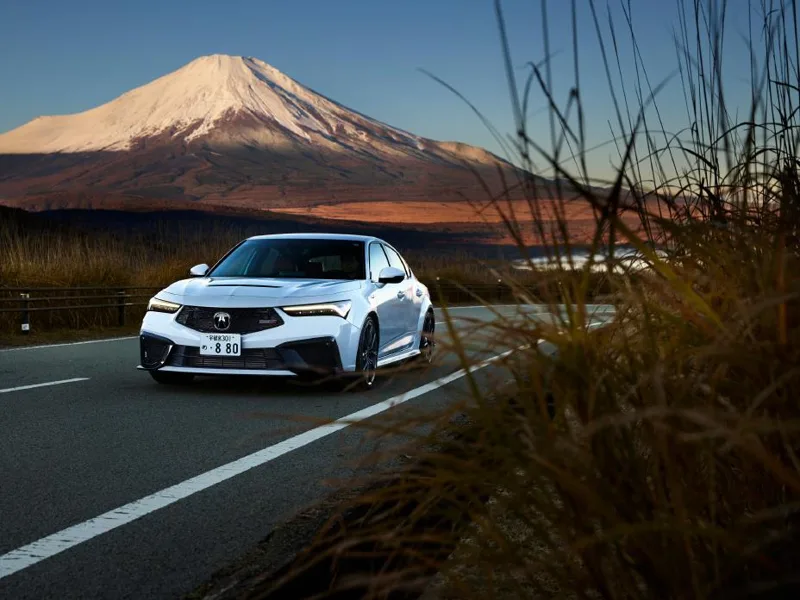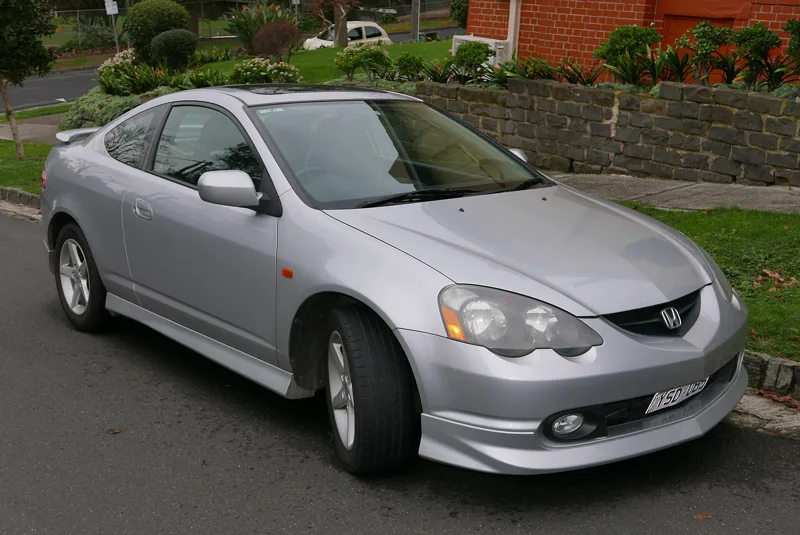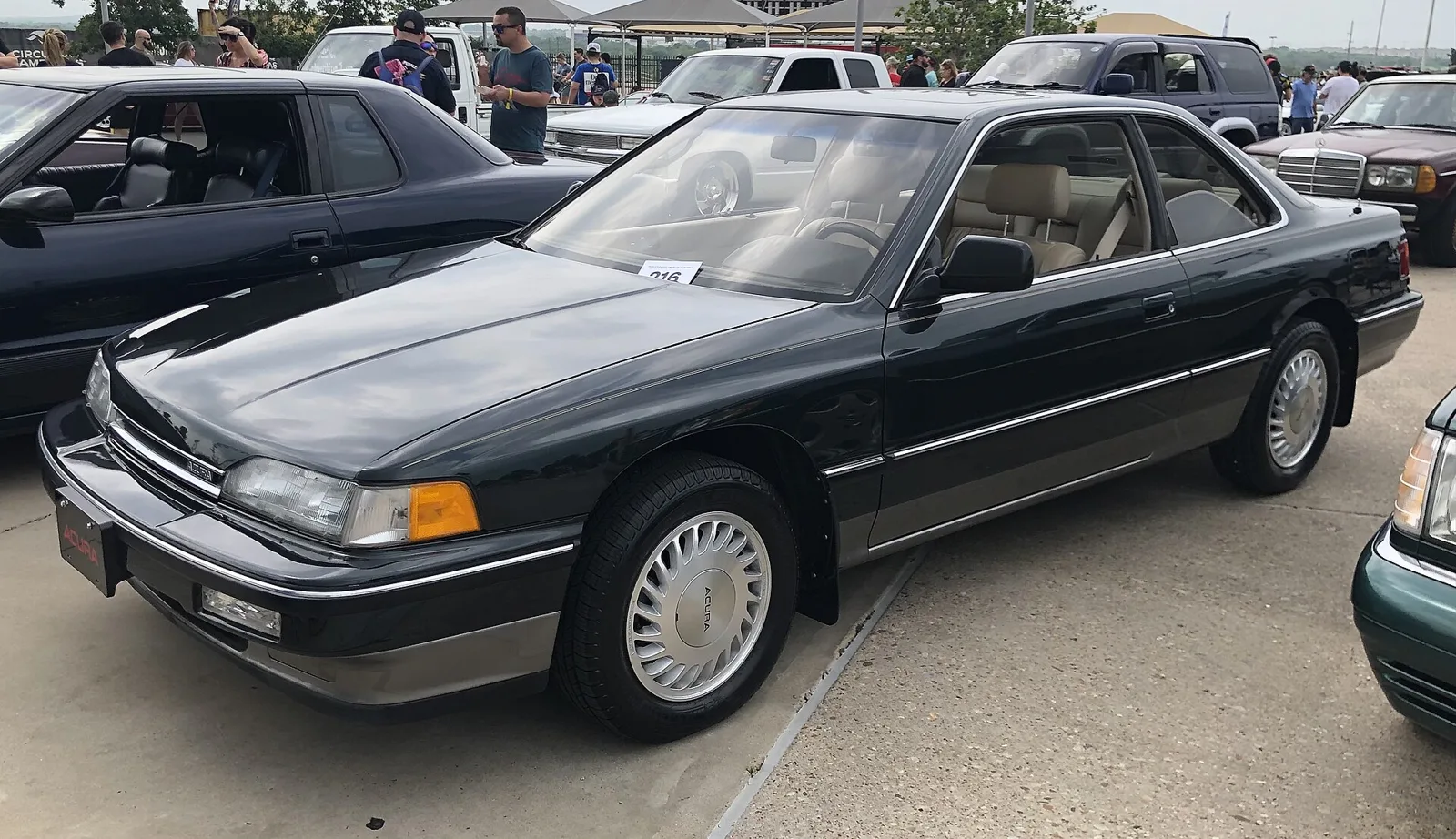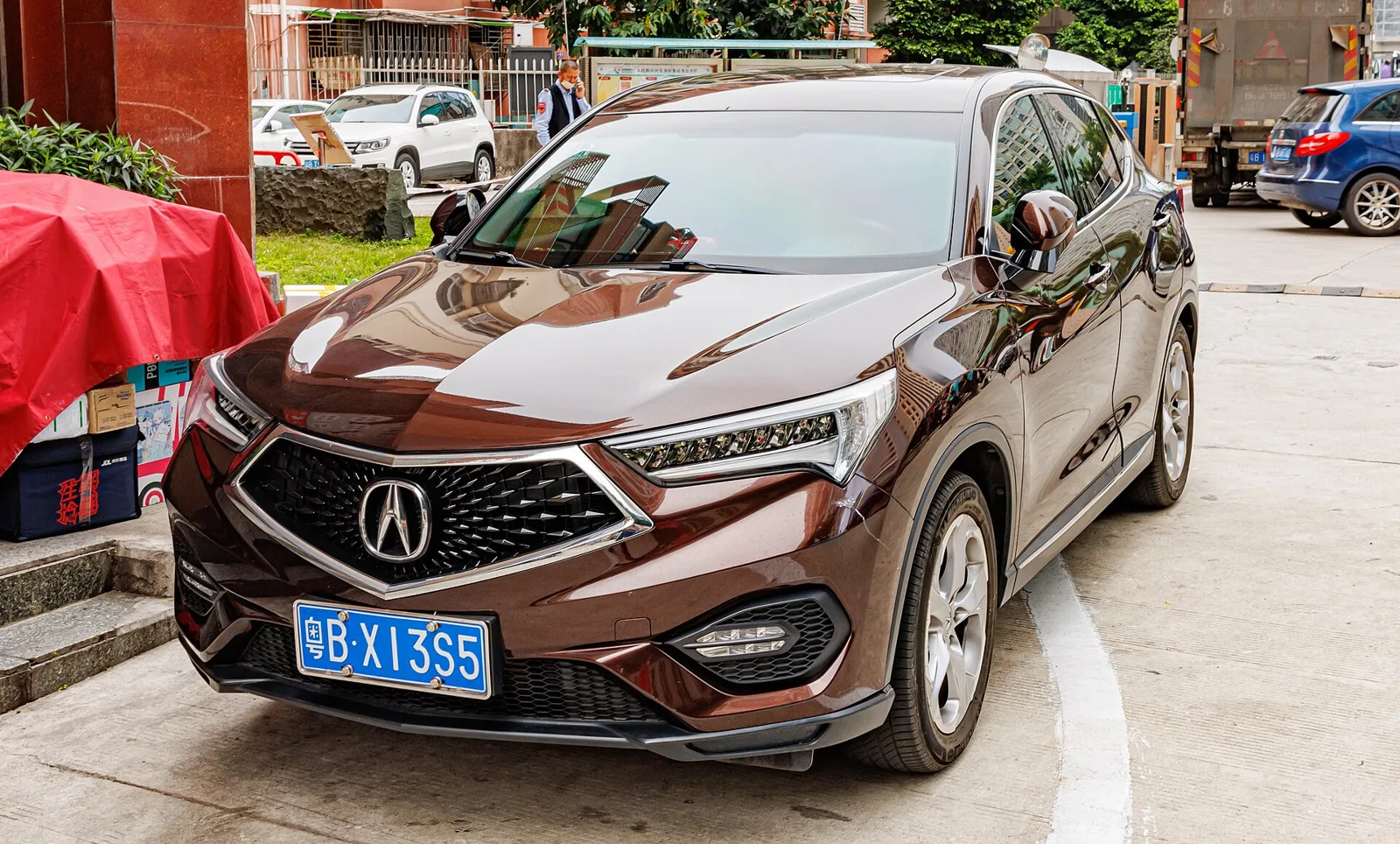
Launched in North America in 1986, Acura built its name on the Legend, the Integra and the NSX before widening into SUVs and crossovers.
Acura is Honda's luxury and performance division, launched in North America in 1986 with the Legend and Integra. It built its name on the NSX sports car, sold 109,000 cars in its first full year of sales, and later added SUVs and crossovers.
Acura is the luxury and performance division of Honda, and it was the first luxury division set up by a Japanese automaker. The brand arrived in 1986 with the Legend and the Integra. Over the following decades it built its reputation on performance models such as the NSX, then widened its range into SUVs and crossovers.
The timing was not accidental. Other Japanese carmakers were also looking for a way into the premium market, and Toyota and Nissan began work on their own luxury arms, Lexus and Infiniti. Lexus started development in 1983 as the F1 project, and Infiniti began in 1985 from the Nissan President.
When did Acura launch and what did it sell first?
Acura's first two models were the Legend, an executive-class car, and the Integra, a compact. The brand was introduced as the first Japanese luxury brand, and Honda had set up 60 new dealerships in North America by 1986 for the brand. The marketing slogan at launch was Precision Crafted Automobiles.
The Legend was the result of Project XX, a joint venture with the Austin Rover Group in the UK. The launch also coincided with the Honda Clio dealership channel for luxury cars. Honda's Verno dealerships were already in place, and Honda Primo followed the year after.
Two launch cars in 1986 grew into a brand that produced a supercar, a racing record and a family of crossovers.
Did Acura's early models sell well?
Yes, in its early years. In 1987, the first full year of sales, Acura sold 109,000 cars, and 55,000 of them were Legends. By 1990 the figure had reached 138,000 vehicles, with 54,000 Legends, and the brand was ahead of Mercedes-Benz, which sold 78,000 cars, and of BMW and Lexus at 64,000 each.
The Legend carried much of that early volume, and the brand was counted among the best-selling luxury marques in the United States during its first years. Sales slipped in the mid-to-late 1990s, but the early numbers show how quickly buyers accepted a Japanese luxury badge.
What made the NSX important?
The NSX arrived in 1990 as a midship V6 sports car with rear-wheel drive, and it was the world's first all-aluminium production car. It was marketed as an everyday supercar, and it introduced VTEC to North America. Acura introduced its A-badge with the car, which made the NSX a showcase for the brand.
The NSX was unusual because its ease of use, quality and reliability were traits that buyers did not expect from a supercar.
The NSX ran from 1991 to 2005 and then again from 2017 to 2022. The second generation arrived in 2016 with a twin-turbo mid-engine, and its gearbox was a nine-speed dual-clutch unit paired with Sport Hybrid SH-AWD, so the mid-engined layout carried on into a new era.
How did the brand fare in the 1990s?
Sales were down in the mid-to-late 1990s, and the line-up looked dated to some buyers. The brand's youngest customers found it through a different route. The Integra became a popular tuner car in the 1990s, and it gave Acura a following among enthusiasts who modified their cars.
Its appeal grew from Honda's reputation for engines that were easy to tune and eager to rev. The 1999 3.2 TL was the first model of the revival, and it helped the brand recover after a difficult period in sales.
How did Acura revive in the early 2000s?
The revival began with the 1999 3.2 TL, an upscale sedan that buyers liked for its competitive price and balanced character. The MDX followed as a three-row crossover SUV, and it was rated top in its first comparison test against rival SUVs. Both models helped Acura regain ground in the market.
The early 2000s brought more models and more variants. Type-S versions of the RSX, CL and TL joined the range during the 2000s, and the MDX and RSX kept the brand's sporty image in front of buyers.
Sedans and luxury models that followed
The TL reached 70,943 American units in 2005, and the TSX appeared on Car and Driver's Ten Best list from 2004 to 2006. The RL, a 2005 flagship, lagged far behind German rivals in the midsize luxury segment.
Sedans were the brand's strength in this period, but the RL needed more than a good chassis to win over buyers who expected a German badge. The TL and TSX carried the brand's sales in the mid-2000s, while the flagship struggled to find its audience.
What did SH-AWD add to the range?
Super Handling All-Wheel Drive, known as SH-AWD, debuted on the 2005 RL, a flagship with a 300 hp V6. The system then appeared on the 2006 RDX, a turbocharged 240-hp four-cylinder crossover, and the brand later used it in the NSX and the TLX 3.5-litre V6. The 2013 RDX dropped it in favour of AWD with intelligent control.
The RLX Sport Hybrid paired a 310 hp 3.5-litre V6 with two electric motors, and the combined output reached 377 horsepower. The TLX offered an eight-speed dual-clutch transmission with the 2.4-litre engine, and a nine-speed transmission with the 3.5-litre V6 and SH-AWD.
What did the RDX bring to the range?
The RDX arrived in 2007 as a compact crossover, and it marked the first North American use of a turbocharged Honda engine. The 2006 RDX used SH-AWD with the turbocharged 240-hp four-cylinder, and the 2013 version dropped SH-AWD in favour of AWD with intelligent control.
The RDX has run as a compact crossover since 2007, and the name has stayed with Acura's compact SUV line through the years that followed.
What engineering firsts did Acura bring?
Acura's 1993 Legend coupe introduced the brand's first six-speed manual gearbox. The 2005 RL added SH-AWD, and the 2005 RL was the first Acura to carry the system. The 2014 RLX Sport Hybrid also introduced an electronic gear selector in place of a conventional shift lever.
The push-button array let the driver choose park, drive, reverse, sport and normal modes, which was a clear step away from the traditional centre console. The brand's technology focus also reached its hybrid and electric models, from the RLX Sport Hybrid to the ZDX, which was Acura's first electric vehicle.
Where does the Acura logo come from?
The Acura A-badge is a stylised pair of calipers, the measuring tool that suggests precise engineering. It was introduced with the NSX in 1990. The logo also resembles Honda's H logo, with the tops of the verticals pinched together, so it can be read as a stylised H as well as an A.
The badge has a notable story. Soichiro Honda ordered 5,000 unapproved badges destroyed, and the emblems were pried off 309 cars that had already been fitted, including US-spec Integra, Legend and NSX models.
How has Acura competed in motorsport?
Comptech Racing used NSX V6 power in the Camel Lights Spice prototype. The team won the Lights championship in its first year, 1991, and repeated the feat in 1992 and 1993. The 1993 season also brought a class win at the 12 Hours of Sebring.
Realtime Racing took the NSX into the SCCA World Challenge in 1996 and won the final two races of that season. Acura added Integras to the lower classes in 1997 and won those championships. Realtime then took the touring title with the Integra in 1998 and again in 2000.
Acura entered the American Le Mans Series in 2007 with three LMP2 teams. Andretti Green's car finished second overall at the 2007 12 Hours of Sebring. Acura then developed the ARX-01a from a purchased Courage chassis, and its first LMP1 car, the ARX-02a, arrived in 2009.
In 2010 Honda rebadged all of Acura's prototypes as HPD cars, and later prototypes were built under the HPD name. Acura returned to the track in 2013 with ILX entries at the 25 Hours of Thunderhill, and an ILX won its class at the 2014 event. The NSX GT3 began competing in 2017.
How has Acura marketed itself?
Acura has tied its name to sport, film and entertainment rather than a single advertising message. Its sponsorships have stretched across tennis, a film festival and a football club. Between 1995 and 2007 the brand backed two women's tennis events on the WTA Tour, and both carried the Acura Classic name.
In 2012 Acura took the lead sponsor role at the Sundance Film Festival and supplied its official vehicles. It was also the shirt sponsor of the Columbus Crew from 2017 to 2020. The film tie-ins were just as visible. The brand became the official brand of the fictional S.H.I.E.L.D. organisation in 2011, and Iron Man drove a specially made Acura sports car in The Avengers in 2012. Acura also runs a Mobility Program for disabled drivers. It offers cash towards the cost of adaptive equipment, which connects the brand to a practical need as well as a showroom image.
The line-up over time
The brand's major launches follow a clear sequence, and each one marks a shift in the range. The list below shows the main steps from the first cars to the present plans.
- 1986: Acura launches in North America with the Legend and the Integra.
- 1990: The NSX arrives with the A-badge, and the first all-aluminium production car goes on sale.
- 1999: The 3.2 TL leads the revival of the early 2000s.
- 2001: The MDX, a three-row crossover SUV, joins the range.
- 2005: The RL becomes the first model to offer SH-AWD.
- 2007: The RDX compact crossover goes on sale.
- 2011: A tie-up with Marvel begins, with S.H.I.E.L.D. as its partner.
- 2014: The RLX replaces the RL and arrives with a Sport Hybrid option.
- 2015: The TLX replaces the TL and TSX.
- 2016: The second-generation NSX arrives with a twin-turbo mid-engine.
- 2025: The ADX subcompact crossover is added.
- 2026: Acura plans to sell the Integra Type S in Japan.
Read together, the entries show two strands. One is the sedan and coupe line, which runs from the Legend and Integra through the TL and TSX to the TLX. The other is the performance line, which runs from the NSX and the Type-S badge to the SH-AWD systems that appear across the range.
The SUV line began with the MDX in 2001 and the RDX in 2007, and it has since been joined by the ADX in 2025. That SUV line has grown alongside the sedans and sports cars, and the brand has kept both strands alive through the changes that followed.
Where is Acura sold today?
Acura sells cars in the United States, Canada, Mexico and Panama. It has also announced that it will sell the Integra Type S in Japan in 2026, which adds a new market to a brand that is based primarily in North America.
The Japanese plan stands out for that reason. North America remains the centre of the business, and the Integra Type S gives the brand a fresh push in Asia alongside its existing markets.
Which Acura models are on sale now?
The current range includes the MDX midsize crossover, which has run since 2001, and the RDX compact crossover, which has run since 2007. The ADX subcompact crossover was added from 2025. The Integra, revived in the 2020s as a five-door liftback, sits at the compact end of the line-up.
The TLX replaced the TL and TSX in 2015. The RLX replaced the RL and ran from 2014 to 2020, and the ZDX launched as Acura's first electric vehicle in the 2020s.
The Type-S marque returned in the 2020s after a long break. Buyers who want the sharpest version of a model can look for the Type-S badge across the range, which signals the brand's continued focus on performance.