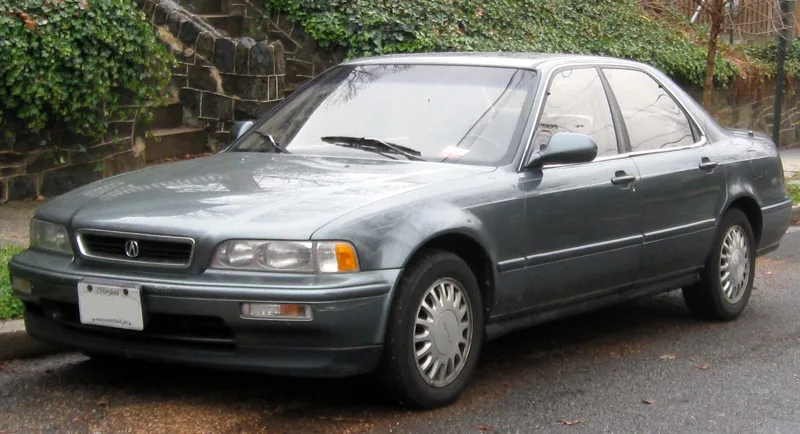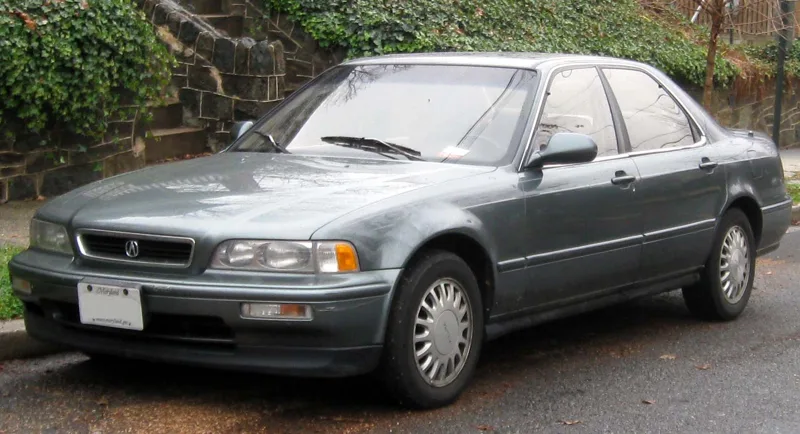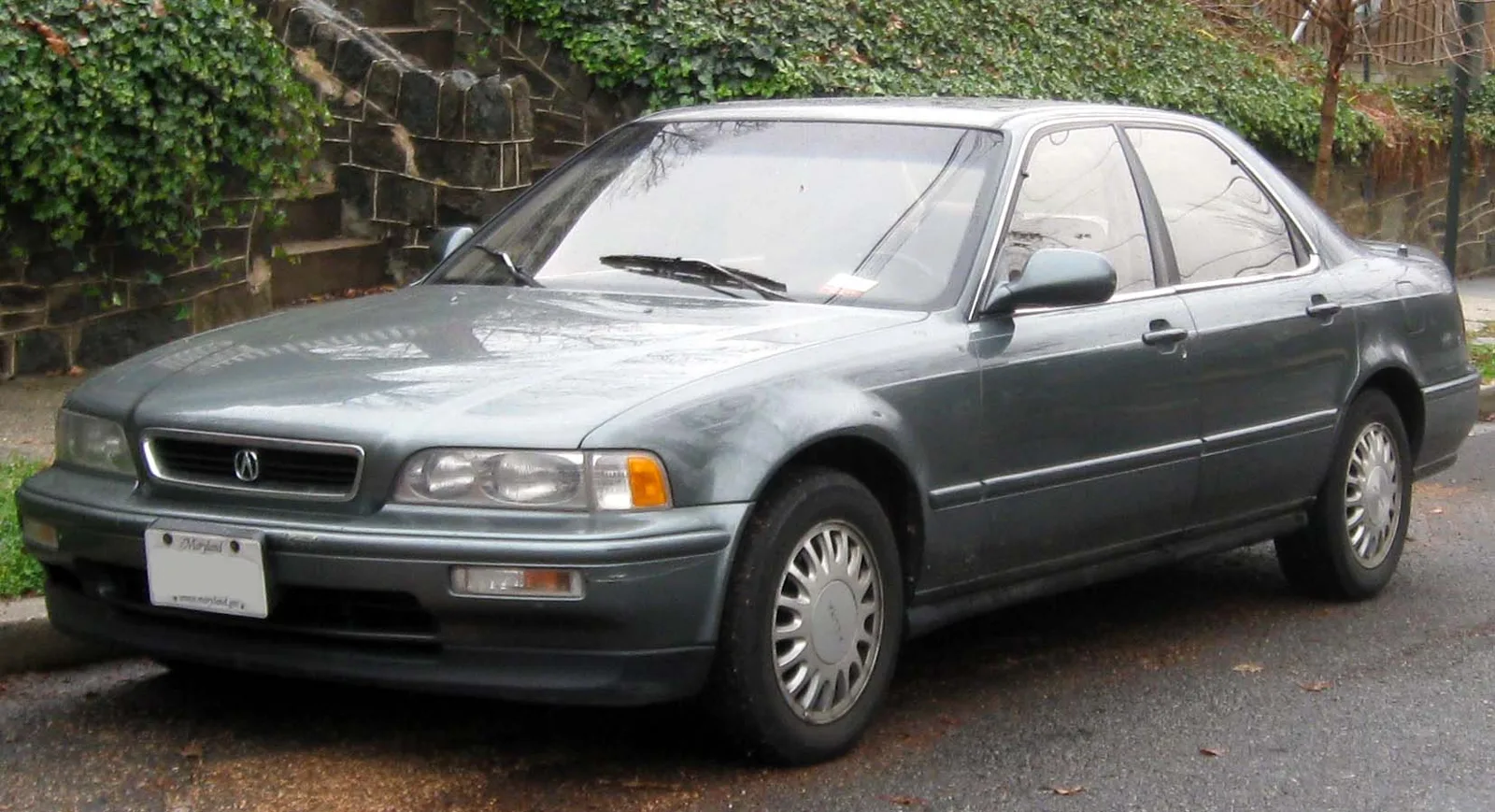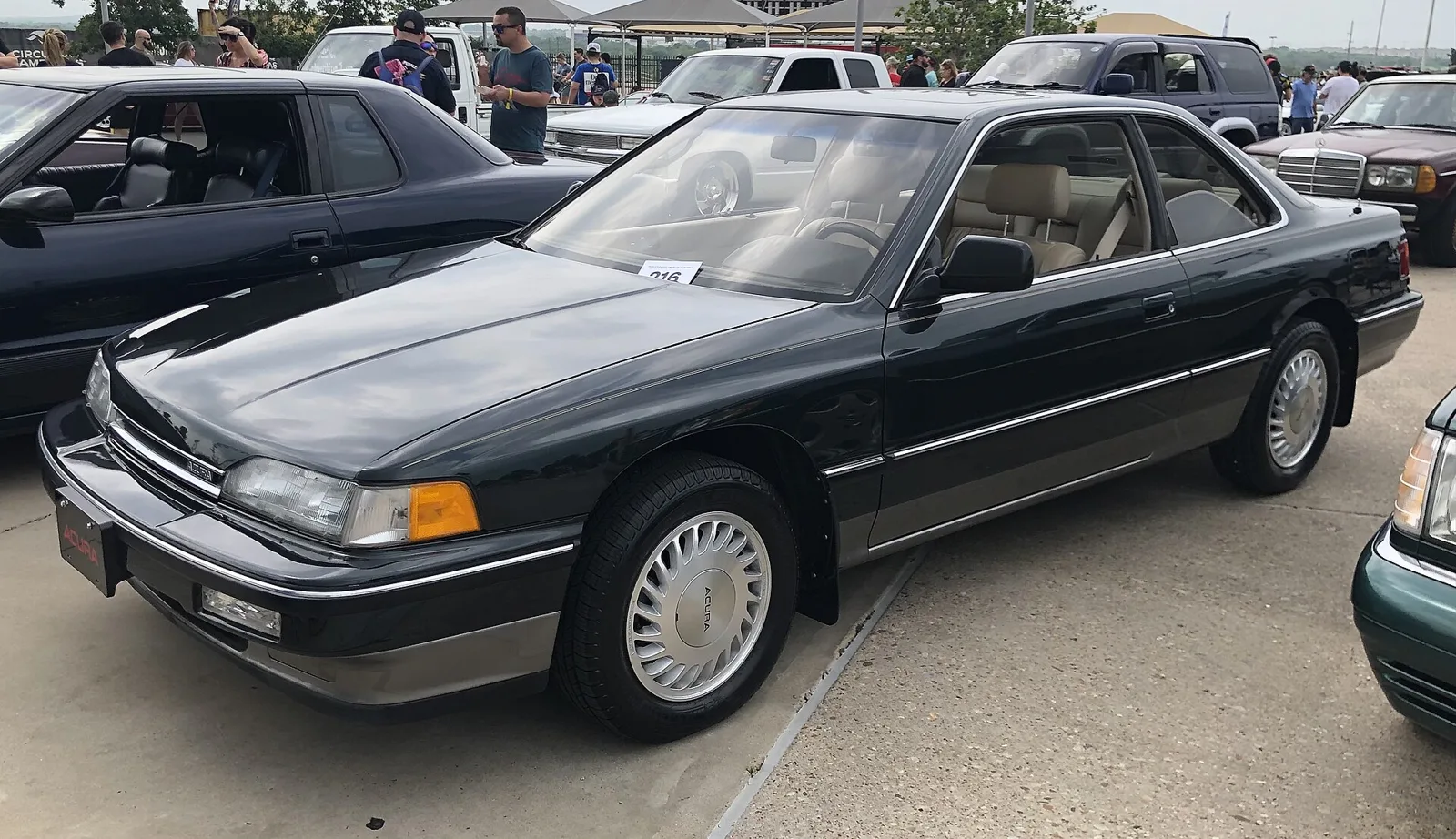
A V6 mid-size luxury sedan and coupe from 1985 to 1995, co-developed with Rover and credited with putting Acura ahead of BMW and Mercedes-Benz in US sales.
The Acura Legend was a V6 mid-size luxury sedan and coupe sold from 1985 to 1995 by Honda's Acura division. Developed with Rover, it was the first Acura flagship and was renamed the RL in North America for its third generation.
The Acura Legend was a mid-size luxury sedan and coupe sold by Acura, Honda's luxury division, from 1985 to 1995. It was the first flagship sedan under the Acura name and was renamed the 3.5RL in 1996, the North American version of Honda's KA9 Legend. Its V6 engines helped Acura establish itself as a serious luxury brand.
What was the Acura Legend?
The Legend was Honda's premier luxury model, introduced in Japan on 22 October 1985 and offered in North America from the 1986 model year. Acura had been created as a separate division just for the Legend, using the slogan Precision Crafted Performance.
The Legend was the first production Honda to offer a V6 engine. Its sedan came first, with coupes following in 1987, and the car was sold in a single trim level with one factory option, the choice of transmission.
The North American car was virtually identical in equipment to the Japanese V6Zi, but it used the larger 2.5 V6 of the top-level V6Xi and a longer overall length to meet United States crash standards.
A Rover-developed V6 flagship that gave Acura its first real foothold in the American luxury market.
Why did Japanese luxury brands appear in the 1980s?
Voluntary export restraints negotiated in the 1980s limited mainstream car sales from Japan, which gave manufacturers a reason to sell more expensive models. Honda used the Legend to take on established European and American luxury makers.
The Legend's early success led directly to Toyota and Nissan creating the Lexus and Infiniti brands. Both were designed to compete in the same premium segment that Acura had entered.
Where did the Legend's engineering come from?
The Legend began as a joint venture with the British company Austin Rover Group. The project, known as Project XX, started in November 1981 with a letter of intent to replace the Rover SD1 and to provide a luxury vehicle for Honda.
The British version was the Rover 800-series, which was badged as the Sterling in the United States and competed with the Legend. Both cars shared a core structure and chassis, though the Rover had its own exterior panels, interior and electrical systems.
Rover had a long reputation for luxury in the UK and Europe, and it wanted to return to the American market. It had sold only 1,500 cars in the US in 1971 and returned briefly in 1980, selling 800 SD1s through the Sterling brand.
What did the first-generation Legend offer?
Sedans arrived first in 1986 with a 151 hp (113 kW) 2.5 L C25A V6. Coupes followed in 1987 with a 161 hp (120 kW) 2.7 L C27A V6, and the sedan received the new engine for 1988.
The 1987 Legend LS coupe became the first Japanese car to offer a driver's side airbag. Manual cars could reach 0-60 mph (97 km/h) in under 8 seconds and a top speed of 135 mph (217 km/h), and the Legend won Car and Driver's Ten Best three years in a row.
Motor Trend named the Legend its Import Car of the Year for 1987. Sedans had a drag coefficient of 0.32, while the coupes managed 0.30.
How did the first-generation Legend change?
For the 1989 model year the sedan received a revised front bumper, trunk lid, tail lamp cluster and double-wishbone rear suspension. Four-wheel anti-lock brakes and a driver's airbag became standard across the range.
The high-end LS added a trip computer, an electronic vehicle monitoring system, a Bose sound system and power driver's seat memory for three positions. The Japan-only Wing Turbo, with a 2.0 L V6 and variable-geometry turbocharger, was added for 1989 as well.
For 1990 all Legends came with body-coloured side mirrors, and the coupes gained a revised grille and new tail lights. LS coupes added a trunk-mounted lip spoiler and burlwood interior trim, and production of the first generation ended that year.
What changed with the second-generation Legend?
The second-generation car went on sale from 24 October 1990 for the 1991 model year, with a 200 hp (149 kW) SOHC C32A engine. It was offered with a standard six-speed manual or an optional four-speed automatic, and it was larger and more streamlined than its predecessor.
Its body was called a fuselage shape, and its engine sat longitudinally, which allowed rear-drive proportions in a front-wheel-drive family. Drag coefficients rose to 0.34 for sedans and 0.32 for coupes.
Features included speed-sensitive steering, a hands-free telephone, automatic climate control, heated leather seats, heated mirrors and four-wheel ABS disc brakes. Dual front airbags arrived on the 1991 LS and on the 1992 L and LS trims.
The Acura Vigor filled the segment the first Legend had occupied, which let the new Legend move closer to rear-drive rivals such as the Lexus LS and the Infiniti Q45. Honda chose not to fit a V8, because it would have overshadowed the NSX and its V6 with VTEC.
How did the 1993 to 1995 Legend differ?
For 1993 Honda made a 230 hp (172 kW) Type II version of the SOHC C32A1 engine standard on all coupes, with a six-speed manual available. Dual airbags became standard on every trim that year, and the sedans gained a new 16-spoke wheel design.
The LS sedan lost its manual option from 1993 and was offered only with an automatic. For 1994 and 1995 the base sedan was dropped, and a new GS sedan became the top variant, with the 230 hp engine, sport suspension and the six-speed manual.
The 1995 SE was a limited-production sedan based on the L, with two-tone paint, LS coupe wheels, special edition floor mats and an automatic transmission. It was the last model year before the Legend changed name in North America.
Why was the Legend renamed the RL?
The Legend launched Acura as a separate division and, together with the Integra, helped the brand outsell BMW, Mercedes-Benz and Lexus in the US.
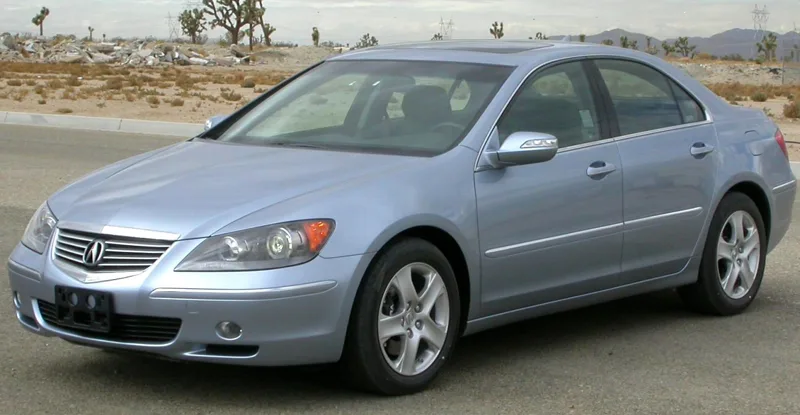
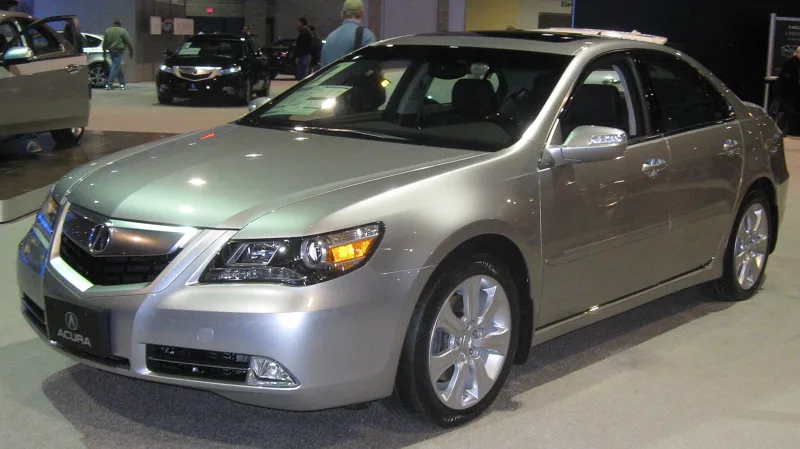
Honda executives felt the Legend name was overshadowing the Acura brand, and rivals such as BMW and Mercedes-Benz used alphanumeric names. The third-generation sedan was therefore badged RL in North America, a move that some observers argued hurt sales.
The Legend had accounted for about 40% of the marque's sales volume in its early years. Later, the MDX and the TL front-drive sedan led Acura sales, while the RL contributed little to the total.
What are the Acura Legend specifications?
| Specification | Detail |
|---|---|
| Body | Mid-size luxury sedan and coupe |
| Years in North America | 1986 to 1995, as the Legend |
| First generation engine | 151 hp (113 kW) 2.5 L C25A V6, sedans from 1986 |
| Coupe engine | 161 hp (120 kW) 2.7 L C27A V6, from 1987 |
| Second generation engine | 200 hp (149 kW) SOHC C32A, from 1990 |
| 1993 engine | 230 hp (172 kW) Type II C32A1, all coupes |
| Transmission | Manual or 4-speed automatic at launch; 6-speed manual from 1993 |
| Drag coefficient | 0.32 sedan and 0.30 coupe (first generation); 0.34 and 0.32 (second) |
| 0-60 mph | Under 8 seconds for manual first generation cars |
| Top speed | 135 mph (217 km/h) for manual first generation cars |
| Successor | Third generation Legend, badged RL in North America |