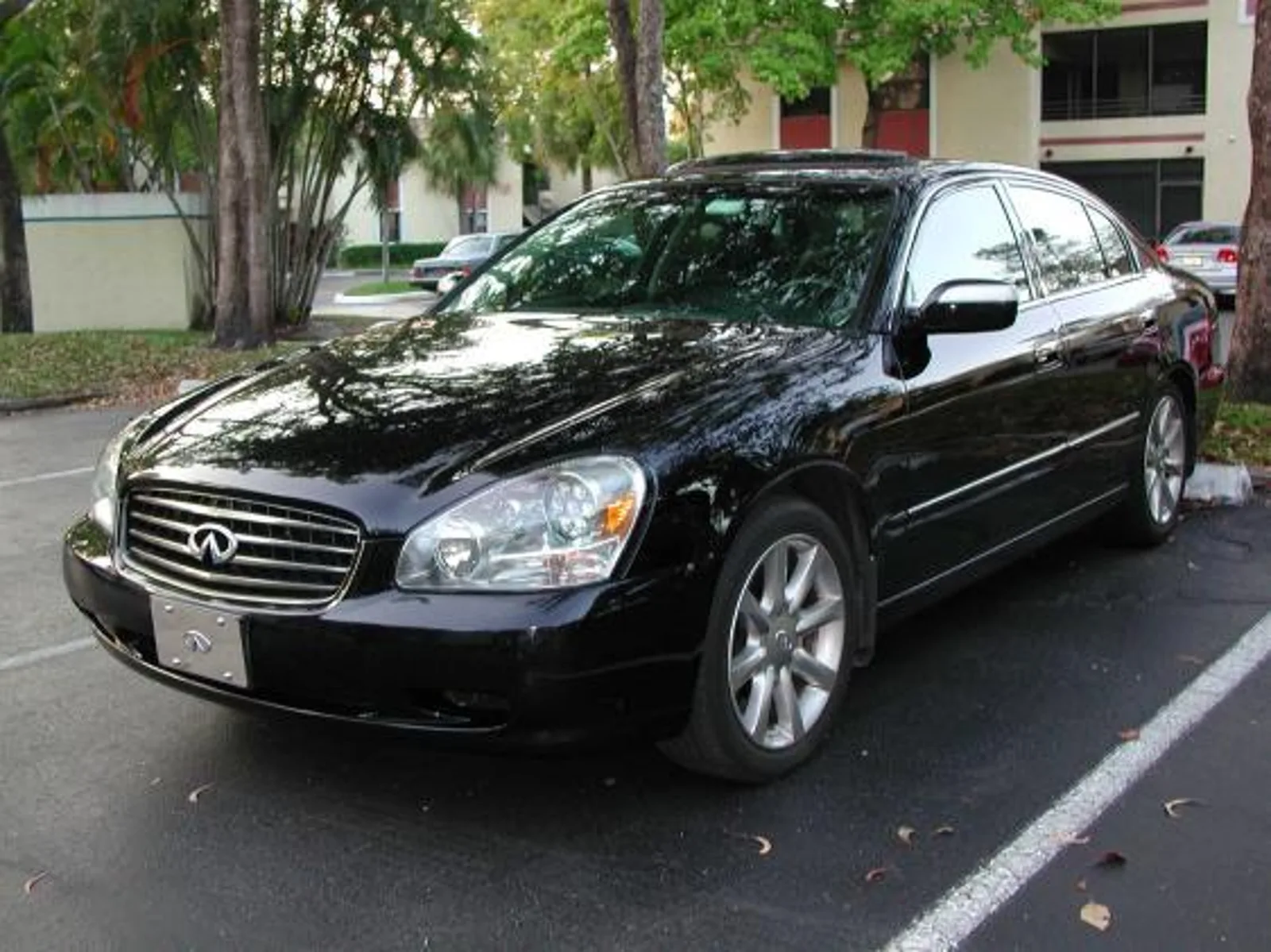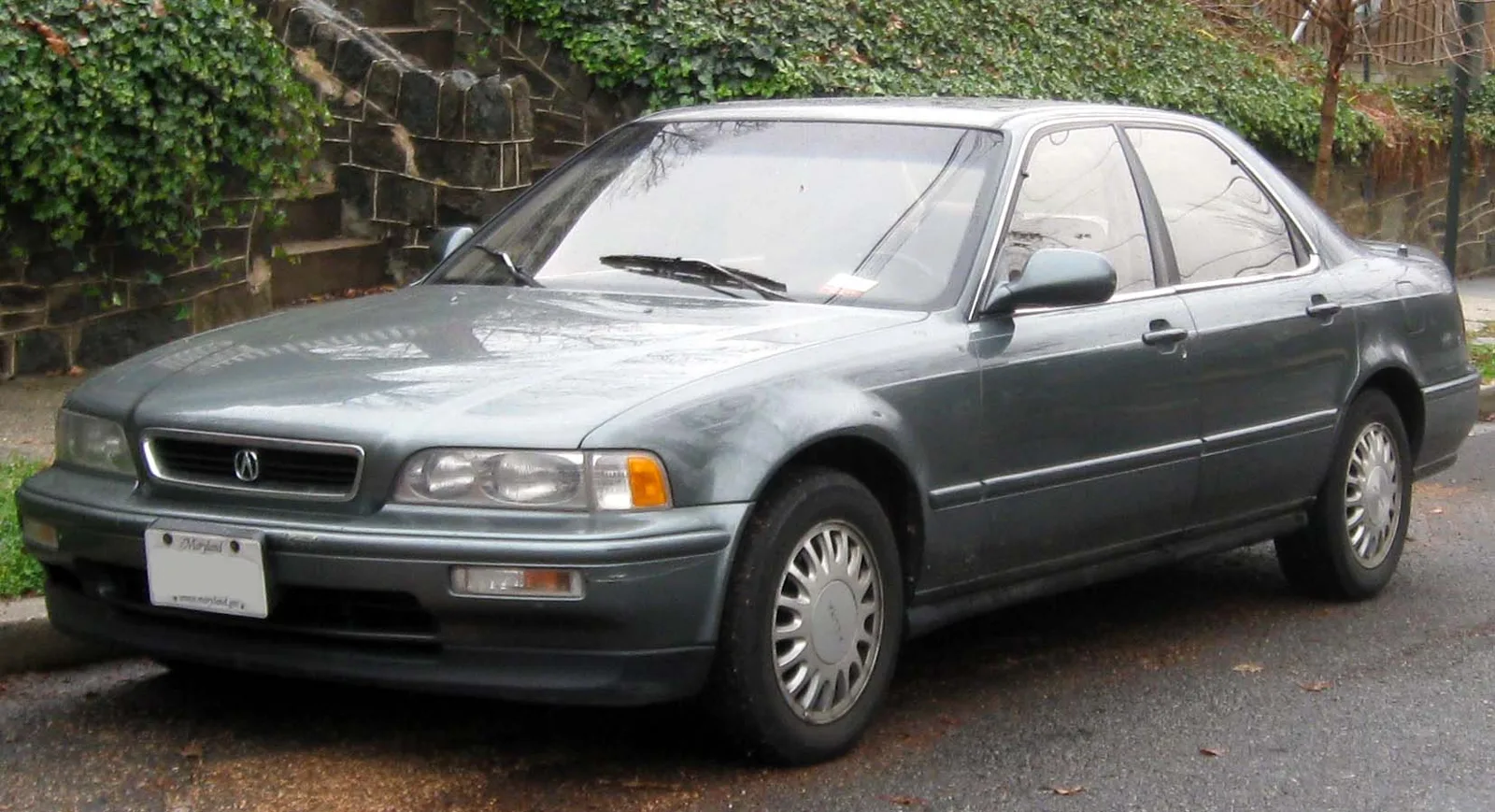
Honda's Acura and Nissan's Infiniti both answered the luxury boom of the late 1980s. Their engines, styling and sales records took very different paths.
The Acura Legend and Infiniti Q45 were Japanese luxury sedans sold in North America from 1986 and 1990. The Legend was a mid-size car with V6 power and a Honda-built lineage, while the Q45 was a full-size V8 flagship that struggled to match Lexus sales.
The Acura Legend and Infiniti Q45 were Honda's and Nissan's answers to the luxury boom of the late 1980s. Both were full-size or mid-size Japanese flagships sold in North America, and both were designed to win buyers from established European and American brands.
They were not twins. The Legend started a brand, while the Q45 was Infiniti's first product line. Their engines, styling and sales records took very different paths, and the comparison below sets those differences out in full.
Why were the Acura Legend and Infiniti Q45 rivals?
The two cars were built to win the same buyers in the late 1980s, when Japanese manufacturers began building dedicated luxury brands in North America. The Q45 was positioned directly against the Legend and the Lexus LS 400, and it also faced the BMW 7-Series and Mercedes-Benz S-Class on size.
The Legend came out of a joint venture with Austin Rover Group, a project called XX that began in November 1981 with a letter of intent between the two companies. Honda wanted a luxury car for both Japan and the United States, and the British partner's version, the Rover 800-series, was sold in the US as the Sterling.
The Q45 followed a different route. It launched in August 1989 as a 1990 model, and it was Infiniti's inaugural product line and flagship. That made it the new brand's answer to the same Lexus and Acura cars, and it kept that role until Infiniti's flagship changed in 2006.
The timing mattered. Voluntary export restraints in the 1980s restricted the mainstream cars Japanese makers could sell, which opened the door to pricier exports. Both the Legend and the Q45 were products of that shift toward more expensive models.
Two Japanese flagships, one a mid-size V6 that helped launch a brand, one a V8 that had to earn its place against Lexus.
How did the two cars differ in design?
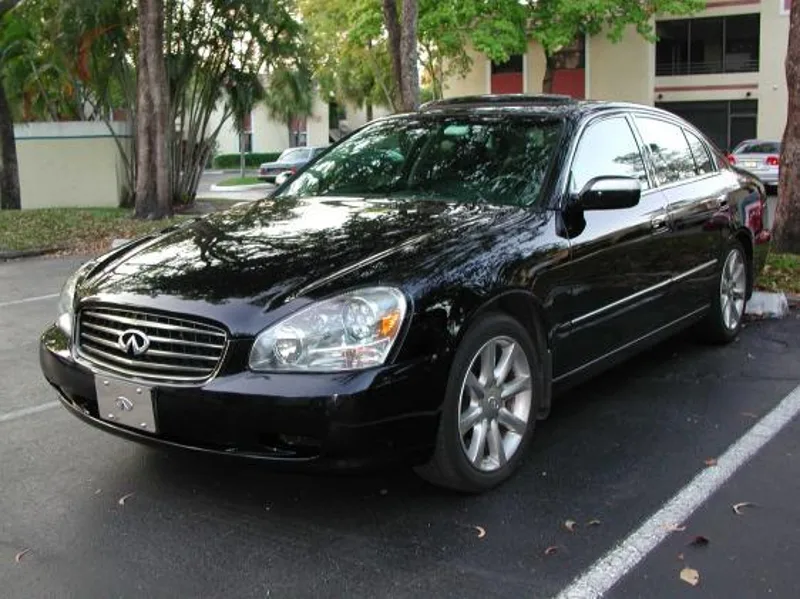
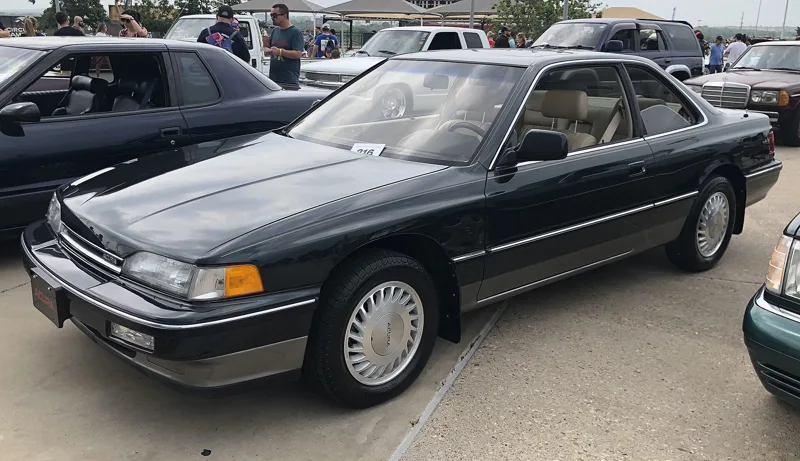
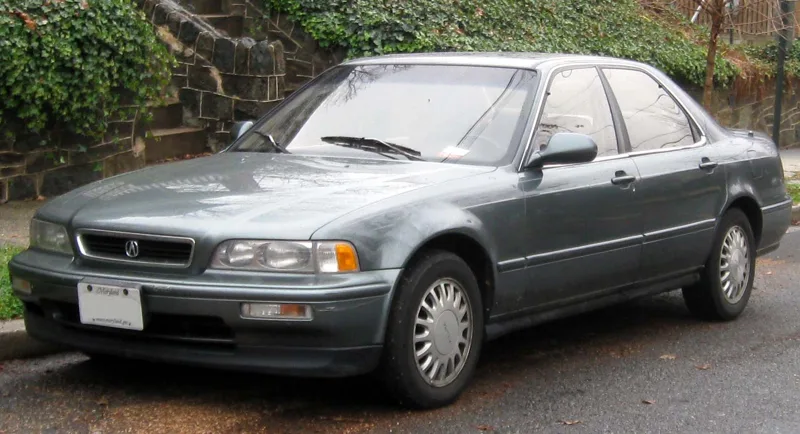
The Legend's first generation had a three-box shape with an upright stance and a two-tone body, while its second generation adopted a larger fuselage-shaped body. The Q45 began life with no front grille and no wood on the dashboard, a deliberately minimalist look that Nissan later softened with a grille in 1993 and wood trim by 1995.
The Legend's second generation used a longitudinally mounted engine in a car with front-wheel drive, which the record calls unusual. The body also took on rear-drive proportions, even though the car was front-wheel drive.
Honda tied the Legend's look to its sports car. Coupes received the mirror design of the first generation Acura NSX, and Honda declined a V8 so the Legend would not upstage that car. Subaru later drew visual inspiration from the Legend for its own Legacy.
Nissan's approach was more philosophical. The Q45 was meant to express the Japanese concept of luxury. Mamori Aoki's exterior designs were frozen in 1998 and patented in March 2000, and he said the styling should evoke a driver's car, not a limousine. Poltrona Frau helped with the interior's minimalist finish.
How much power did each car make?
The first-generation Legend offered 151 hp (113 kW) from a 2.5-litre V6, and the 1987 coupe moved up to 161 hp (120 kW) from a 2.7-litre engine. The Q45 started with a 4.5-litre V8 rated at 278 hp (207 kW) in North American trim, a step up in both capacity and output.
The Legend's power rose steadily. The second generation brought a 200 hp (149 kW) SOHC engine from October 24, 1990, and the 1993 Type II engine lifted output to 230 hp (172 kW). The Legend was also the first production Honda to offer a V6.
The Q45 was built around V8 engines from the start. The G50 generation's 4.5-litre VH45DE produced 292 lb-ft (396 N-m) of torque in North American trim. The Y33 switched to a 4.1-litre VH41DE V8 with 267 hp (199 kW) and 278 lb-ft (377 N-m), and the F50 returned to 4.5 litres with the new VK45DE twin-cam V8.
Acceleration figures show the two cars at different stages of their lives. Manual Legends reached 0-60 mph (97 km/h) in under 8 seconds and a top speed of 135 mph (217 km/h). The Y33 Q45 is credited with about 7.5 seconds to 0-60 mph, but that result belongs to a later car, so the two figures are not a head-to-head test.
Aerodynamics also changed over time. First-generation Legend sedans had a drag coefficient of 0.32 and coupes 0.30. The second generation rose to 0.34 for sedans and 0.32 for coupes, so the later cars were a touch less slippery than the originals.
How did the Q45 handle differently?
The Q45 was the more technical of the two on paper. The Q45a introduced Full-Active Suspension in 1989, using ten sensors, and the system added 202 lb (92 kg) and cut fuel economy by 10%. The Q45t added Super HICAS four-wheel steering and firmer suspension.
Every Q45 came with a viscous limited-slip differential and multi-link suspension at the front and rear. That layout was derived from the Z32 300ZX, part of Nissan's 901 program, which aimed for top handling performance by 1990.
The Super HICAS system did not last. It was deleted for the 1995 Q45t. The Legend's handling story in the record centres instead on its anti-lock brakes, standard by the 1989 model year.
Practicality and equipment
Cabin space improved across the Q45's generations. The Y33 gained 3.9 in (99 mm) of rear legroom despite a shorter wheelbase, but owners faulted its trunk, which held 12.6 ft3 (360 L). The F50 widened the car and added 5 ft3 (0.14 m3) of interior volume over the Y33.
Standard equipment on the Q45 was generous from the outset. A Bose sound system, leather upholstery, a power-adjustable passenger seat with memory and keyless entry came as standard. The F50 added 8-way power front seats, side curtain airbags, a power sunroof and tire pressure monitoring.
Legend buyers got four-wheel anti-lock brakes and a driver's side airbag from the 1989 model year, plus a power driver's seat that stored three positions. Dual airbags became standard in every trim from 1993, and the LS trim added a trip computer and a Bose sound system.
Which car sold better, and how were they received?
The Legend carried Acura in its early years, making up 40% of the marque's sales volume. Together with the Integra, it let Acura outsell BMW and Mercedes-Benz. The Q45 did not match the Lexus LS 400's volumes, and unusual styling and an advertising campaign without photos of the car were blamed.
Reviewers were kind to the Legend. Car and Driver named it to its Ten Best list three years in a row, and Motor Trend gave it the Import Car of the Year award for 1987. Car and Driver's Brock Yates also praised the third-generation Q45 for its refinement.
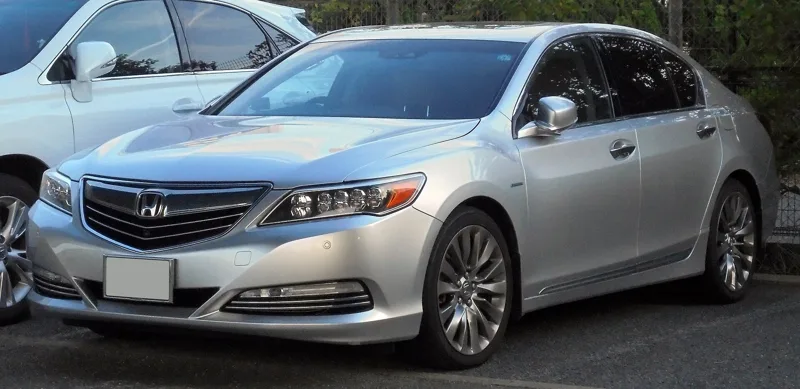
Edmunds said the 1997 Y33 no longer aspired to be a sport sedan, and that car weighed about 200 lb (91 kg) less than the G50. The Acura line changed course later: the RL and RLX never matched the original Legend's success, and the Legend name was dropped in North America.
The Q45's pricing shows how the market moved. It launched at US$38,000 (equivalent to $99,000 in 2025), but by 1995 the price had risen to US$54,000 (equivalent to $114,000 in 2025), and the record ties that increase to slowing sales. In Australia the car carried an A$140,000 price in 1993 before the brand's withdrawal in 1996.
How do the specifications compare?
| Specification | Acura Legend | Infiniti Q45 |
|---|---|---|
| Years on sale | 1985 to 1995 | 1990 to 2006 model years |
| Launch engine | 2.5-litre V6, 151 hp (113 kW) | 4.5-litre V8, 278 hp (207 kW) North American trim |
| Later engine | 230 hp (172 kW) Type II, 1993 | 4.1-litre V8, 267 hp (199 kW), Y33 |
| Torque | no figure given | 292 lb-ft (396 N-m), G50 |
| 0-60 mph (97 km/h) | under 8 seconds, manual | about 7.5 seconds, Y33 |
| Top speed | 135 mph (217 km/h), manual | no figure given |
| Drag coefficient | 0.32 sedan, 0.30 coupe, first generation | no figure given |
| Launch price | no figure given | US$38,000, 1990 |
| Sales note | 40% of Acura sales volume in early years | below Lexus LS volumes |
Read down the table and the two cars look different in character. The Q45's V8 figures fill more of the table, reflecting its flagship role. Neither column can settle which car was better, because the generations and test conditions differ.
Which buyer suits each car?
The Legend suits a buyer who wants a mid-size Japanese luxury sedan with a V6 and a Honda pedigree, particularly the first generation with its three-box styling. The Q45 suits a buyer who wants a full-size V8 flagship with a distinctive, minimalist look and, in its later years, a car set up for long highway journeys.
A buyer who values a clean Honda engineering story will find more of it in the Legend, which was the first production Honda with a V6 and shared its development with a British partner. A buyer who wants a larger flagship with more rear legroom will find that in the later Q45.
On price, the record gives the Q45's launch figure of US$38,000 but no launch price for the Legend. A like-for-like purchase comparison cannot be made from the material here, so the choice comes down to character and specification rather than cost. Buyers should also check the generation carefully, because the first and second Legend differ as much as the Q45's G50 and Y33 do.