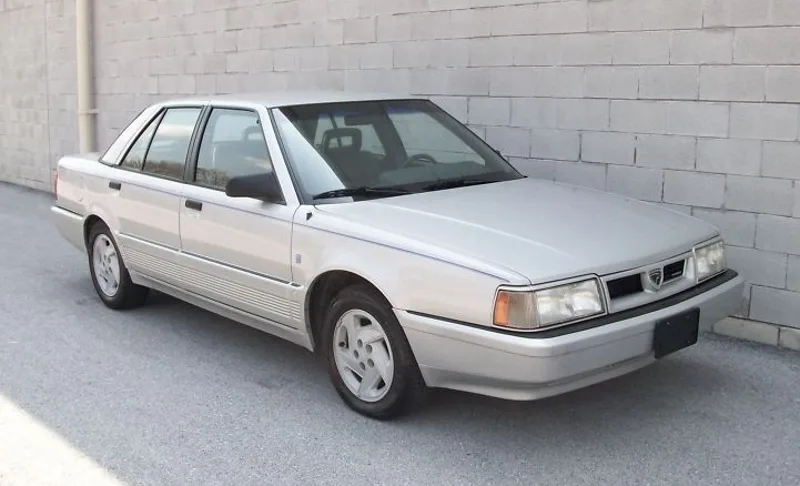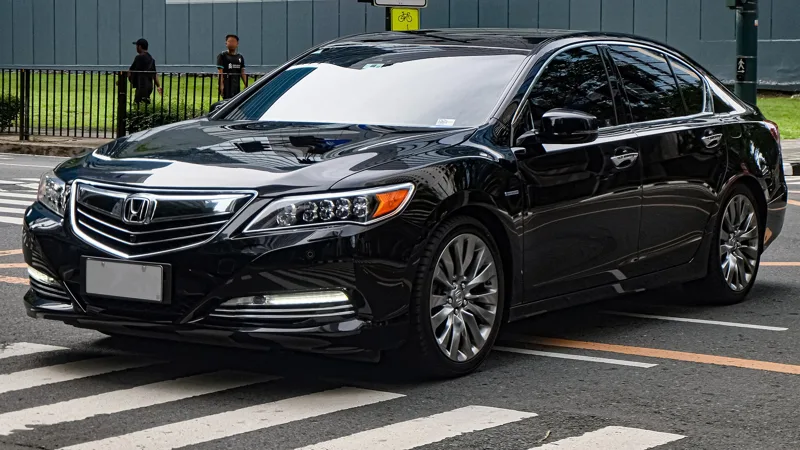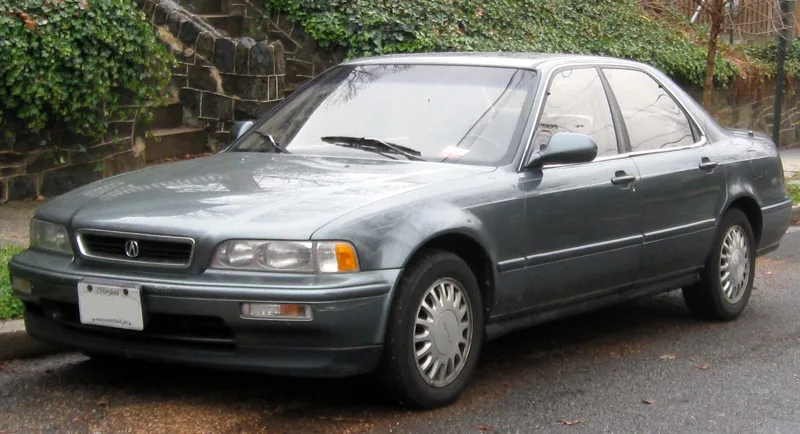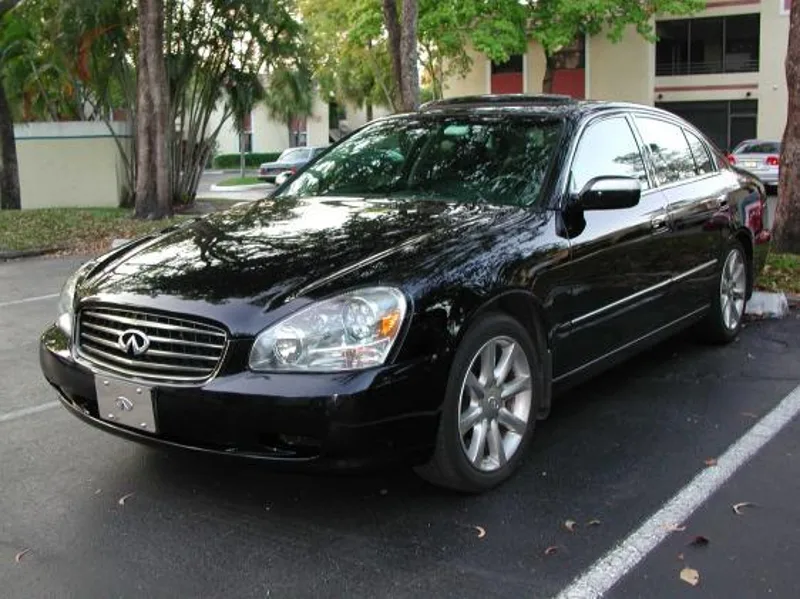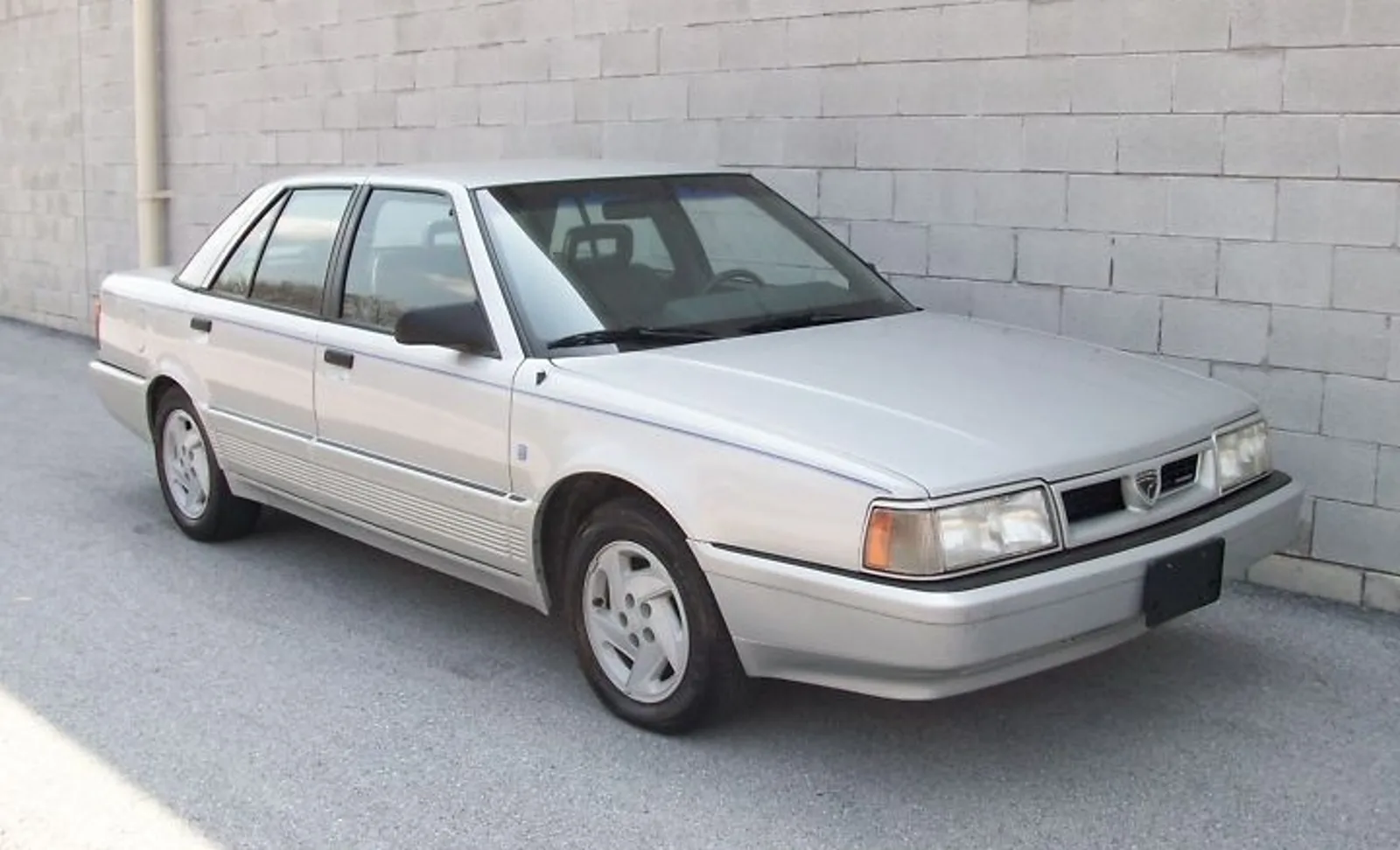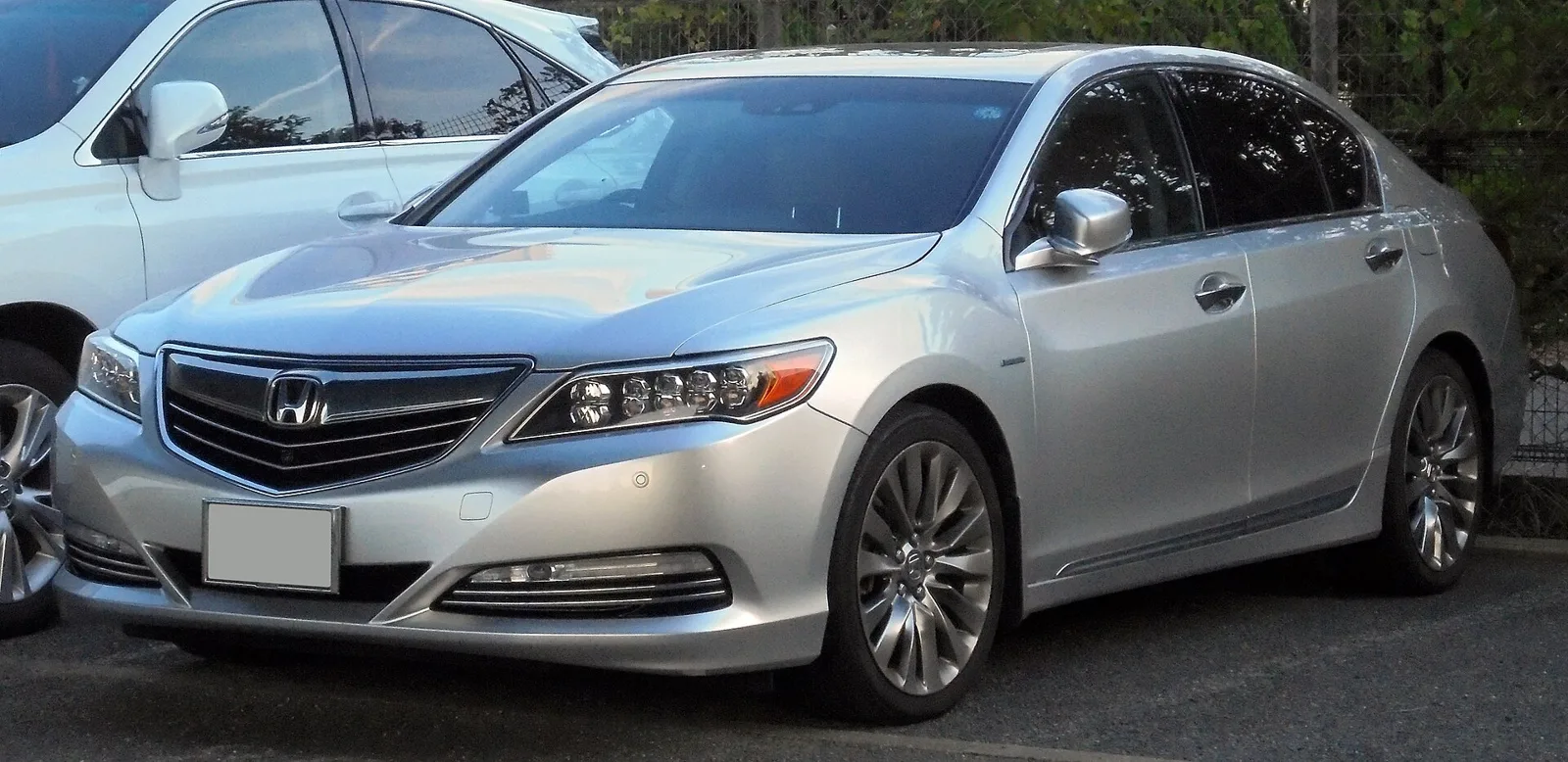
Honda's compact-luxury Legend and Nissan's Infiniti Q45 both aimed at buyers who wanted a flagship sedan without German prices, but they took very different routes.
Honda's front-drive V6 Legend arrived in Japan in 1985, and Nissan's full-size V8 Q45 followed in 1989. Both aimed above the mainstream sedan, and their paths crossed in North America, where the Legend sold under the Acura name and the Q45 was its direct competitor.
The Honda Legend and the Infiniti Q45 both arrived to fill a gap above the mainstream. The Legend was Honda's answer to buyers of the Crown, Luce and Cedric, a front-drive V6 sedan with compact dimensions, while the Q45 was Nissan's first flagship under the new Infiniti name, a full-size V8 rear-drive car that aimed at the German benchmark.
The two cars shared a time frame and a market, and both were built by Japanese makers that wanted a luxury badge in North America. Their engineering choices, from the drivetrain to the suspension, show two very different answers to the same brief.
Were the Legend and Q45 direct rivals?
The Q45 was positioned against the Acura Legend and the Lexus LS 400, the closest Japanese luxury rivals of its day, as well as the BMW 7-Series and the Mercedes-Benz S-Class. The Acura Legend was the North American face of the Honda Legend, which makes the Q45 a direct rival to the Honda car in the American market.
Both cars were priced to compete in the luxury segment. The Q45 launched at US$38,000 in 1990, and its price had climbed to US$54,000 by 1995.
A front-drive V6 luxury car built for quiet refinement, set against a full-size V8 with a suspension that thought for itself.
Specifications side by side
| Specification | Honda Legend (first generation) | Infiniti Q45 (G50, 1990) |
|---|---|---|
| Introduction | Japan, 22 October 1985 | August 1989 as a 1990 model |
| Layout | Front-wheel drive, transverse V6 | Full-size V8 sedan; no layout given |
| Japanese engines | 2.5 L C25A V6 (V6Xi); 2.0 L C20A V6 (V6Gi, V6Zi) | No figure given |
| Top engine | Wing Turbo 2.0 L C20A, 140 kW (190 PS; 188 bhp) at 6000 rpm | 4.5 L VH45DE V8, 278 hp (207 kW) |
| Torque | 241 N m (178 lb ft) at 3,500 rpm, Wing Turbo | 292 lb ft (396 N m) in North American trim |
| Weight distribution | 63/37 front to rear | No figure given |
| Drag coefficient | 0.32 | No figure given |
| Interior noise | 63 dB at 100 km/h in fifth gear | No figure given |
| Suspension | Double wishbone at the front; RF strut rear, double wishbone from 1988 | Multi-link front and rear; Full-Active option on the Q45a |
| Transmission | Four-speed automatic or five-speed manual | No figure given |
| Launch price | No figure given | US$38,000 in 1990 |
| Later price | No figure given | US$54,000 by 1995 |
| Production | 4,409 cars built at Cowley in the UK, 1986 to 1988 | Kaminokawa, Tochigi, 1989 to 2006 |
Why did Honda choose front-wheel drive?
Honda described front-wheel drive as the most logical way to reach its goals, which were a low, aerodynamic bonnet, a spacious and nearly flat interior floor, and the traction that comes from placing the engine and drivetrain across the drive wheels. The result was a 63/37 front-to-rear weight split, similar to the NSU Ro 80.
The Legend's ride was tuned for luxury rather than performance, and the car's half-shafts were equalised to reduce torque steer. That helped the Legend accelerate in a straight line.
What engines did the Legend offer in Japan?
The Japanese Legend came in three trims, with the V6Xi using the 2.5 L C25A V6 and the slightly shorter and narrower V6Gi and V6Zi using a 2.0 L C20A V6. The V6Gi had the same equipment as the V6Xi, while the V6Zi had reduced content and a lower price.
The 2.5 engine was upgraded to a 2.7-litre C27A for model year 1988 and gained a variable-length intake manifold. Transmissions were a four-speed automatic with a lock-up torque converter or a five-speed manual.
What was the Wing Turbo?
In October 1988 Honda gave the C20A V6 used in the KA5 series Legend a variable-geometry turbocharger, which it called the Wing Turbo. Its turbine had movable wings that opened at idle and cruise and closed under full acceleration, which gave quicker boost.
The Wing Turbo produced 140 kW (190 PS; 188 bhp) at 6000 rpm and 241 N m (178 lb ft) of torque at 3,500 rpm. It was sold only in Japan, as the 2.0 Ti Exclusive and 2.0 Ti, and it was used for just two years before the 1990 second generation arrived.
Did the Wing Turbo influence later Honda engines?
Much of the research on the Wing Turbo contributed to the VTEC C30A V6 used in the 1990 Honda NSX. The Legend Turbo was identified by a TURBO badge on the front grille and a V6Ti badge at the rear.
The Wing Turbo was not built for raw power. Honda aimed it at fuel efficiency and emissions, because Japanese buyers paid a tax linked to the emissions a car produced.
How did the Q45's V8 compare?
The first-generation Q45 used a 4.5-litre VH45DE DOHC 32-valve V8, rated at 278 hp (207 kW) and 292 lb ft (396 N m) in North American trim. Every Q45 had a viscous limited-slip differential and multi-link suspension at both ends.
The second-generation Q45 used a smaller 4.1-litre VH41DE V8 with 267 hp (199 kW) and 278 lb ft (377 N m). It reached 97 km/h (60 mph) in about 7.5 seconds, and by 1997 Edmunds noted that the Q45 no longer aspired to be a sport sedan.
What was the Q45's Full-Active suspension?
The Q45a model introduced Full-Active Suspension for the 1990 model year. Ten sensors fed microprocessor-controlled hydraulic actuators at every wheel to cut body roll, dive and pitch, and the system added 202 lb (92 kg) and cut fuel economy by 10 percent.
The system came to the United States from 1990, for the 1991 model year. It sat within Nissan's 901 Movement, which aimed for the best handling in the industry by 1990, and the Q45's multi-link suspension was derived from the 300ZX Z32.
Which Legend features were firsts?
The Legend offered many Honda firsts. It had a choice of 100% wool or cloth moquette upholstery, and a driver airbag, speed-sensitive power-assist rack and pinion steering, anti-lock brakes, seat belt pretensioners with emergency locking retractors and, as the first front-drive car to use it, traction control.
Honda also used NASTRAN, a stress analysis program created by NASA, to refine the car. Its triple seals around the door openings and its interior noise of 63 dB at 100 km/h were part of the quiet-running goal.
What did the Q45 bring as firsts?
The Q45's most distinctive engineering feature was Full-Active Suspension. Its interior, with Poltrona Frau help and a deliberately plain exterior, tried to express Japanese luxury in its own terms. Standard equipment also included a Bose sound system, leather upholstery and keyless entry.
Its plain exterior was a deliberate choice, and its handling pedigree came from the 901 programme.
How did the Legend's sales compare?
Honda sold the Legend in Japan through a new dealership channel called Honda Clio, which launched alongside the car. The Legend was also built in the UK at Cowley, although few British-built cars met Honda's quality standards, and only 4,409 were built there from 1986 to 1988.
The Q45 did not reach the sales volumes of the Lexus LS 400. Its styling was blamed, along with an advertising campaign with no photos of the car, and the Q45 sold poorly in Australia, where it was withdrawn in 1996.
How did the Legend's second generation arrive?
The second-generation Legend arrived in 1990 with the much larger C32A V6, which ended the Wing Turbo after two years. The Wing Turbo had been sold only in Japan, in the more compact sedan body, and Wing Turbo sedans are now extremely rare.
Honda's Legend served as an inspiration for many vehicles from several manufacturers, and the Subaru Legacy shares many visual resemblances and dimensions with it, inside and out.
What changed with the Legend coupe and Exclusive trim?
The Legend Coupe arrived on 6 February 1987 with a larger 2.7-litre V6 featuring a variable intake system for more torque. The Japanese coupe was longer and wider than the sedan, which increased its tax liability, yet its wheelbase was 56 mm (2.2 in) shorter.
From the 1988 model year the Exclusive trim added genuine wood trim from Tendo Mokko for the dashboard and centre console, automatic headlights, a headlight washer and wipers, separate rear climate control, and chrome-plated power folding mirrors with infrared remote keyless entry. A minor interior restyle followed on 14 October 1988.
How was the Legend sold in Europe?
The Legend was introduced in Europe for the 1987 model year and was virtually identical in equipment and dimensions to the North American car, with a single trim called the V6-2.5i. Few options were offered beyond the choice of transmission and an air conditioning system like the American one.
Europeans could order a Special Equipment Pack with cruise control, aluminium alloy wheels, a driver's seat with power lumbar and adjustable reclining, adjustable rear headrests, a four-speaker stereo by Philips and headlight wipers.
What did the Q45 Y33 offer inside?
The second-generation Q45 came with traction control, leather upholstery with faux wood trim, a single-zone climate control that later became dual-zone, and a Bose audio system with eight speakers. Owners faulted its trunk as small, at 12.6 cubic feet (360 L), although rear legroom grew by 3.9 in (99 mm).
Options included a satellite navigation system, a six-disc CD autochanger and heated seats. The Q45t touring package added 17-inch wheels, electronically modulated suspension, a blacked-out grille and a performance steering wheel.
How did the Q45's handling change from the first generation?
The Y33 was about 200 lb (91 kg) lighter than the G50, and its steering ratio was slowed from 17.0:1 to 18.5:1. The front suspension became MacPherson struts, while the rear kept a multi-link design similar to the first car.
Edmunds noted for the 1997 model year that the Q45 no longer had aspirations to be a sport sedan, because its main duty was now interstate cruising. The third generation, the F50, kept front struts and a multi-link rear, with anti-roll bars at both ends.
Which buyer suits each car?
The Legend suits a buyer who wants a compact, front-drive luxury sedan with a V6 and a quiet cabin, and, in Japan, the Wing Turbo option. The Q45 suits a buyer who wants a full-size V8 sedan with an active suspension option and a full-size body.
Practicality is only partly covered. The Legend's Japanese width and wheelbase advantage are given, but no boot or rear seat figures for either car are set out, and running costs are not compared.
What did the Q45's later models offer?
The Q45 was updated through its life, with Anniversary and Touring editions and new standard equipment. The Anniversary Edition was limited to 3,000 units, and it added wood trim, a wood and leather steering wheel and 17-inch performance wheels. The 1999 update made HID headlights and an analogue clock standard.
The third-generation F50 arrived in 2001 with a 4.5-litre twin-cam V8 and a five-speed automatic. Its starting MSRP was US$50,500, and Car and Driver's Brock Yates praised it as superbly refined and comfortable.