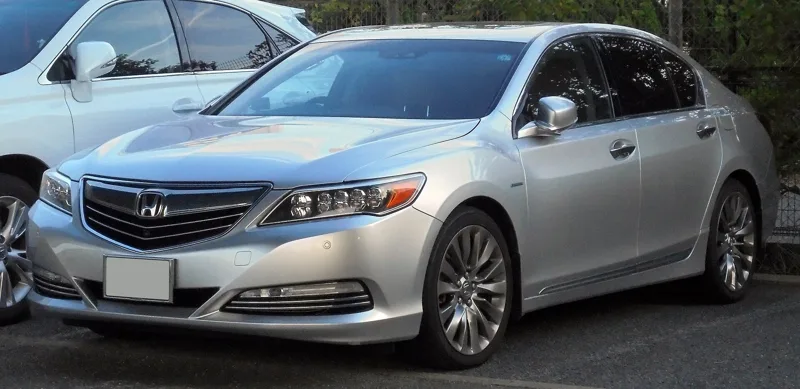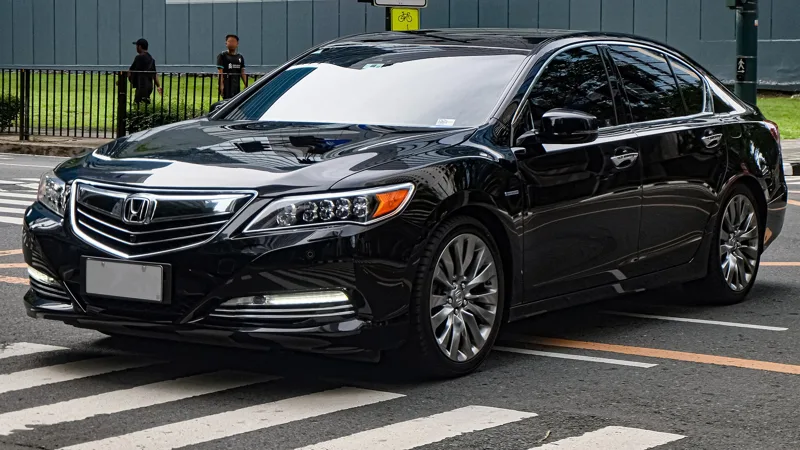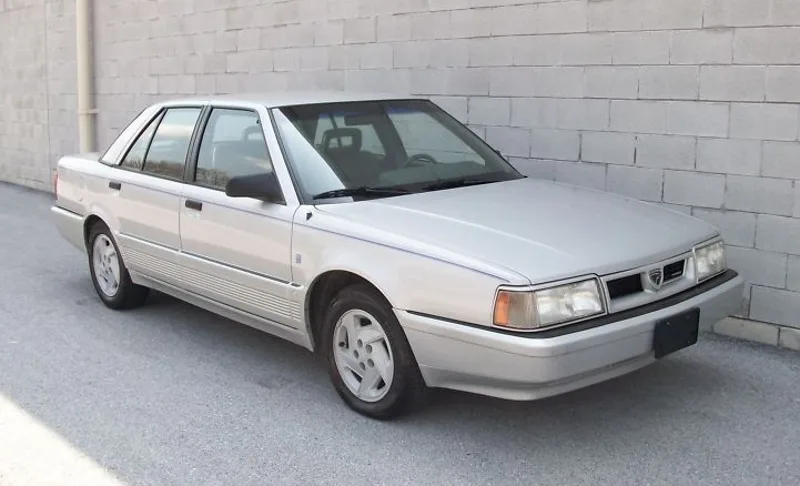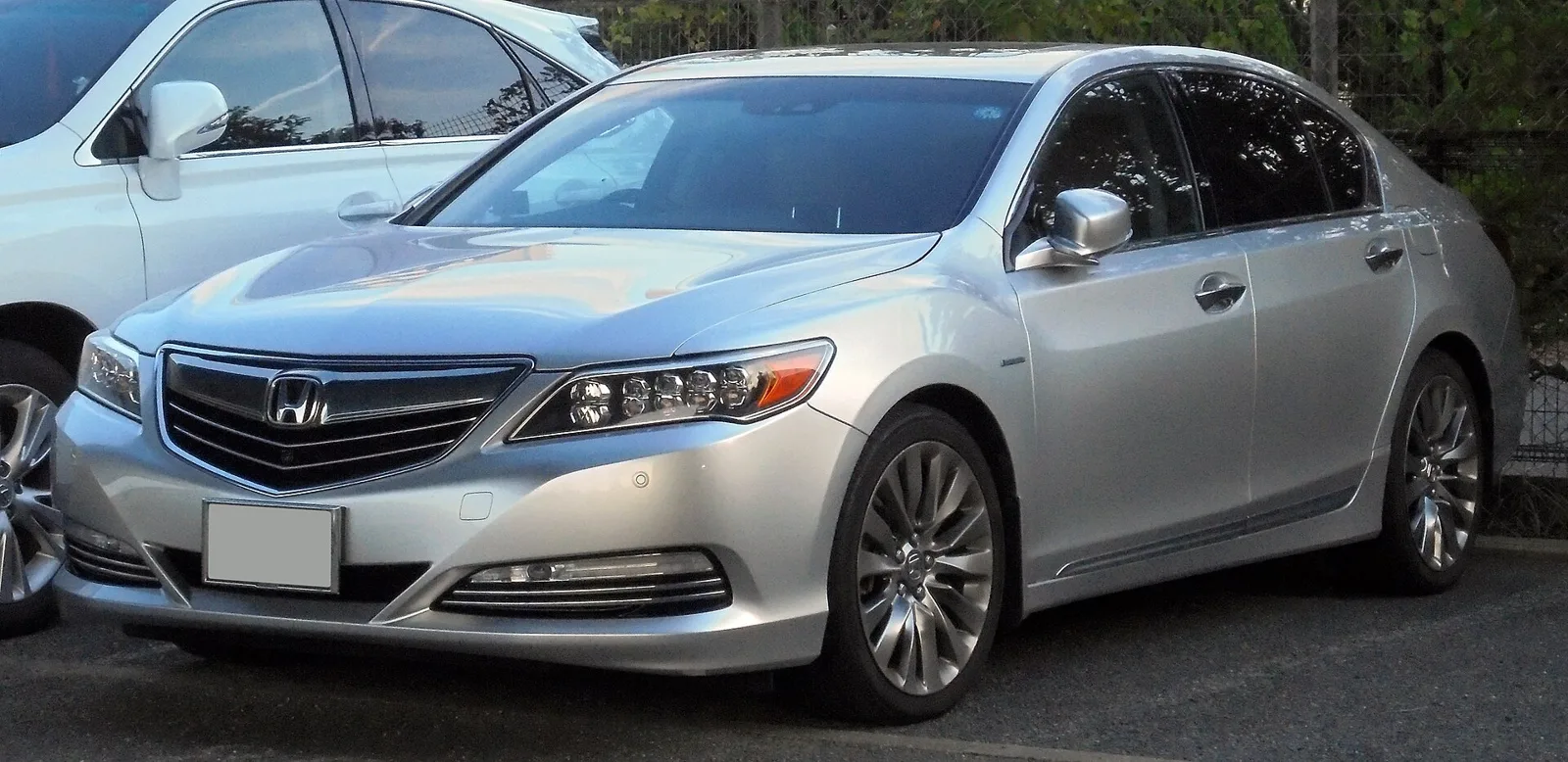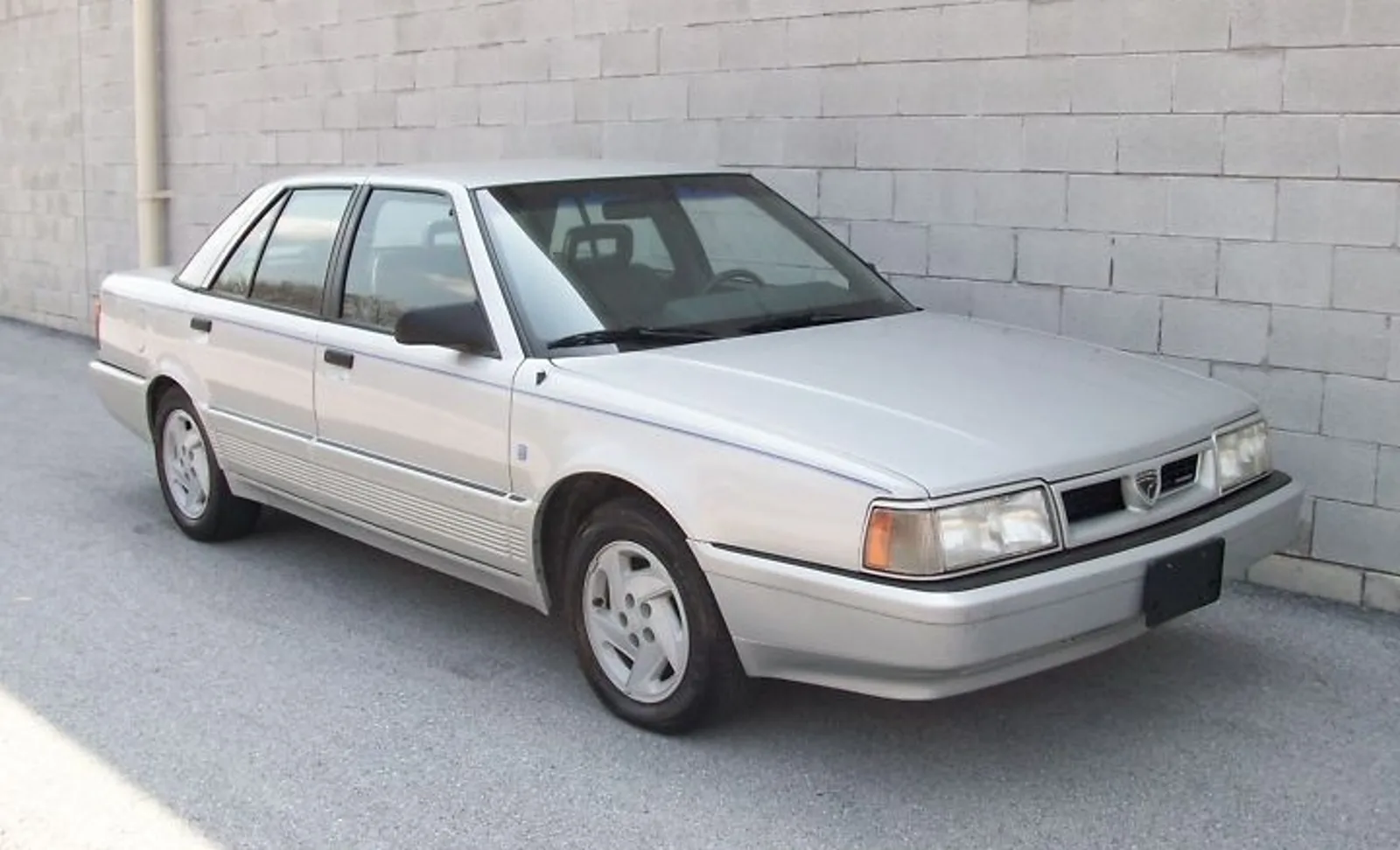
Both were products of foreign partnerships, one from AMC and Renault and the other from Honda and Rover, and both used front-wheel drive to chase the luxury buyer.
The Honda Legend launched in Japan in October 1985 as a Honda and Rover joint venture with a V6 engine. The Eagle Premier followed in January 1988 from the AMC and Renault partnership, with a 122 cubic-foot cabin and a 150 hp V6 as its top engine.
The Eagle Premier and the first-generation Honda Legend were both executive cars built through foreign partnerships. The Premier came from AMC's tie-up with Renault, and the Legend from Honda's joint venture with Austin Rover. Both used front-wheel drive to chase the luxury buyer, and both were sold on comfort rather than speed. The Legend came first, and it set the pattern the Premier followed.
Which came first, and where did each start?
The Legend was introduced in Japan on 22 October 1985. The Premier followed, with its first production cars built on 28 September 1987 and its launch in January 1988. The two-year gap meant the Legend was already on sale when the Premier arrived.
The Legend began as a joint venture with Britain's Austin Rover Group, known as Project XX. It was meant to replace the Rover SD1 and give Honda a luxury car for Japan, Europe and North America. Rover's Canley plant in Coventry and Honda's Tochigi centre shared the development work.
The Premier had a similar story. AMC began work in 1982 on a downsized full-size front-drive car, code-named X-58, with the Renault 25 as its base. Chrysler bought Renault's stake in AMC in 1987 and sold the car under the Eagle name.
Two partnership-built executive cars from the 1980s, one with a turbo V6 in Japan and the other with the largest cabin in its class.
Where were the two cars built?
The Premier was built at Brampton Assembly in Ontario, a plant that was new when the car was introduced. Its exterior was styled by Italdesign, under Giorgetto Giugiaro, and its interior was done in-house under Dick Teague.
Honda and Rover agreed that Legends would be built at Cowley for the British market. Few of those cars passed Honda's quality control, and many ended up as in-plant transport. Only 4,409 Legends were built in the UK between 1986 and 1988, and all of the US-market Legends came from Japan.
Who was each car aimed at?
The Legend was aimed at a wealthy, middle-aged Japanese buyer who would otherwise have chosen a Toyota Crown, a Mazda Luce or a Nissan Cedric or Gloria. Honda had earlier offered a luxury Accord, the Vigor, but it needed a larger and more exclusive sedan.
The Premier was aimed at the American family who wanted a roomy, European-feeling mid-size car. Its advertising stressed a fully independent suspension and an American car with European handling, and its interior room was its headline figure.
How did the chassis and drivetrain compare?
The Legend's front-wheel drive layout gave it a front-heavy weight distribution of 63/37 front to rear, close to that of the NSU Ro 80. Honda said the layout was the most logical way to get a low, aerodynamic hood, a near-flat floor and good traction.
The Legend used a double wishbone front suspension and a Reduced Friction strut rear, with progressive rate coil springs. The rear was upgraded to a double wishbone from the 1988 model year. Its suspension was tuned for ride comfort rather than performance.
The Premier was built on the Renault 25's monocoque, with a four-wheel independent suspension, MacPherson struts at the front and four torsion bars across the car. Its drag coefficient of 0.31 was marginally better than the Legend's 0.32.
How did Japanese size rules shape the Legend?
The Legend had to fit Japan's vehicle size rules and its tax system. The car with the 2.0-litre V6 was made slightly shorter and narrower for Japanese buyers, with reduced bumper extensions and an overall width of 1,695 mm (66.7 in).
Its wheelbase still held a 30 mm (1.2 in) advantage over the Cedric, Gloria and Crown. Honda built it as a pillared sedan rather than a four-door hardtop, partly for durability, and this kept it in a smaller tax class than its rivals.
The Legend's front-drive layout meant the interior space was not lost to the transmission tunnel, so it offered comparable room to the larger rivals. That allowed Honda to pitch a smaller and cheaper car with luxury equipment that the bigger cars could not match at that size.
What did the Premier's interior offer?
The Premier's interior was built around fingertip reach. Most driver controls sat within easy distance of the steering wheel, and the dash-mounted gear selector recalled the 1955 Chrysler PowerFlite shifter, with a grip handle on its lever.
Other features set it apart. The turn signal returned to centre on its own and sounded a gong when a turn was complete, cruise control was built into the leather-wrapped wheel, and the self-diagnosing radio was standard on every Premier.
The gear selector did not last. In 1990 the automatic shifter moved to the floor centre console, and the car's other changes that year, from the wiring to the badges, showed Chrysler's hand in the car.
What engines did each car offer?
The Legend was a V6 car from the start, the first Honda sold worldwide with only a SOHC V6. Japanese models ran a 2.5-litre C25A in the V6Xi and a 2.0-litre C20A in the V6Gi and V6Zi, and a 2.7-litre C27A arrived for the 1988 model year.
The Premier's base engine was a 2.5-litre AMC four rated 111 hp (83 kW; 113 PS) and 142 lb-ft (193 N-m). Its 3.0-litre PRV V6 was optional on the LX and standard on the ES, giving 150 hp (112 kW; 152 PS) and 171 lb-ft (232 N-m).
In October 1988 the Legend gained the Wing Turbo, a variable geometry turbocharger on the C20A V6. It made 140 kW (190 PS; 188 bhp) at 6,000 rpm and 241 N-m (178 lb-ft) at 3,500 rpm, and it was sold only in Japan. Honda fitted it to improve efficiency, because Japanese buyers paid tax on emissions.
The Wing Turbo used a movable set of wings controlled by a computer that also managed fuel injection. Its turbine housing had four vanes made of heat-resistant Inconel alloy, and it used no conventional wastegate. The engine was used for only two years before the second-generation Legend arrived in 1990.
The Wing Turbo's wings were fully open at idle and steady cruising, letting exhaust pass with little resistance. At the start of hard acceleration they closed, which sped up boost, and as maximum boost arrived they opened gradually until the car settled at its cruising speed.
Specifications side by side
| Specification | Eagle Premier | Honda Legend (first generation) |
|---|---|---|
| Launch | January 1988; first production 28 September 1987 | 22 October 1985 in Japan |
| Partnership | AMC and Renault; Chrysler acquired the stake in 1987 | Honda and Austin Rover (Project XX) |
| Platform | Renault 25 monocoque, adapted for AMC | Honda front-wheel drive, designed with Rover |
| Body styles | Four-door sedan; coupe and wagon cancelled | Sedan; coupe from February 1987 |
| Base engine | 2.5-litre AMC four, 111 hp (83 kW; 113 PS) | 2.5-litre C25A V6 in the V6Xi |
| Larger engine | 3.0-litre PRV V6, 150 hp (112 kW; 152 PS) | 2.7-litre C27A V6 from 1988; Wing Turbo at 190 PS in Japan |
| Transmission | Four-speed automatic from ZF | Four-speed automatic or five-speed manual |
| Drag coefficient | 0.31 | 0.32 |
| Interior noise | Not given | 63 dB at 100 km/h in fifth gear |
| Interior room | 122 cubic feet | Not given |
| Traction control | Not given | TCS, the first front-wheel drive car with traction control |
| Build location | Brampton, Ontario | Japan for the US; Cowley, UK, for Britain |
| Production | Not given | 4,409 built in the UK from 1986 to 1988 |
Which car had the stronger safety features?
The Legend had a string of firsts for a Honda. It came with a driver side airbag, speed-sensitive power-assisted rack and pinion steering, anti-lock brakes and seat belt pretensioners with emergency locking retractors.
The Legend's traction control, called TCS, made it the first front-wheel drive car to use the system. That was a notable step for a front-drive car, where traction is harder to control under power.
The Premier's safety record was more modest. Its anti-lock brakes became standard on the ES Limited only in the 1991 model year, and other models could have them as an option, so the Premier came later to the feature the Legend already had.
How quiet and how aerodynamic were they?
Honda used a NASA-derived stress analysis program, NASTRAN, to design the Legend, and it achieved a drag coefficient of 0.32 and an interior noise level of 63 dB at 100 km/h in fifth gear with a manual. Triple seals around the door openings helped keep the cabin quiet.
The Premier had its own quiet touches. Its automatic temperature control kept the blower off until the heater core was warm, and its variable-speed wipers reacted to how much water hit the screen.
What were the Legend's coupe and special trims?
The Legend Coupe arrived on 6 February 1987 with a larger 2.7-litre V6 and a variable intake system for more torque. It also had a rear double wishbone suspension, which the sedan did not get until the 1989 model year.
The Japanese coupe was longer and wider than the sedan, which increased its tax liability, yet its wheelbase was 56 mm (2.2 in) shorter.
A minor interior restyle on 14 October 1988 gave the Legend a more luxurious look against the Nissan and Toyota uplevel sedans it competed with.
How were the two cars trimmed?
The Legend launched with three Japanese trims: the V6Xi, the V6Gi with the same equipment and the V6Zi with less equipment and a lower price. From the 1988 model year the Exclusive trim added wood trim, automatic headlights, rear climate control and chrome power-folding mirrors.
The Premier's LX had six-passenger seating with a 55/45 split front bench, and the ES had individual front seats and a full-length console. The ES Limited arrived mid-1989 with monochrome paint and eight Accusound speakers.
In Europe the Legend was virtually identical to the North American car, with a V6-2.5i trim and an optional Special Equipment Pack. The Premier's Japanese version was sold from 1989 as the Chrysler Premier ES with the 3.0-litre V6.
How did the Premier's 1990 changes matter?
In 1990 the Premier was substantially reengineered, with four-wheel disc brakes and a stainless exhaust as standard. Chrysler's electrical parts replaced the original Renix system, which proved less reliable, and the Design Giugiaro badges came off the front fenders.
The fuel crisis was fading by then, and most buyers chose the V6, which became the only engine after the four-cylinder was dropped. The Premier's engine line was therefore simpler by the end of its life.
Who drove each car, and what came next?
The Legend's notable owners included Soichiro Honda, the company's founder, the racer Satoru Nakajima and Ayrton Senna. The V6Xi was also the pace car at the Suzuka Circuit in 1986, which gave the car a sporting link.
The Legend inspired other manufacturers' cars, including the Subaru Legacy, which shares many of its visual lines and dimensions. The Legend's second generation arrived in 1990 with the larger C32A V6.
The Premier's future was more tied to Chrysler. From 1990 it was reengineered with four-wheel disc brakes, and it became the basis for Chrysler's next generation of cars. The badge-engineered Dodge Monaco ran until 1992.
Which buyer suits each car?
A buyer who wanted a premium front-drive sedan with a V6, a turbocharged option and an early list of safety firsts would look at the Legend. Its Japanese roots and its later second generation suit a buyer who wanted a Honda luxury car.
A buyer who wanted a roomy mid-size car with a choice of a four or a V6, and who valued a long warranty, would look at the Premier. Its cabin room was the figure that most set it apart.
Neither car is a clear winner. The Legend had the earlier start and the stronger list of firsts, while the Premier had the roomier cabin and a longer warranty. The choice depends on whether a buyer wants a Honda's technology or an American-sized interior.