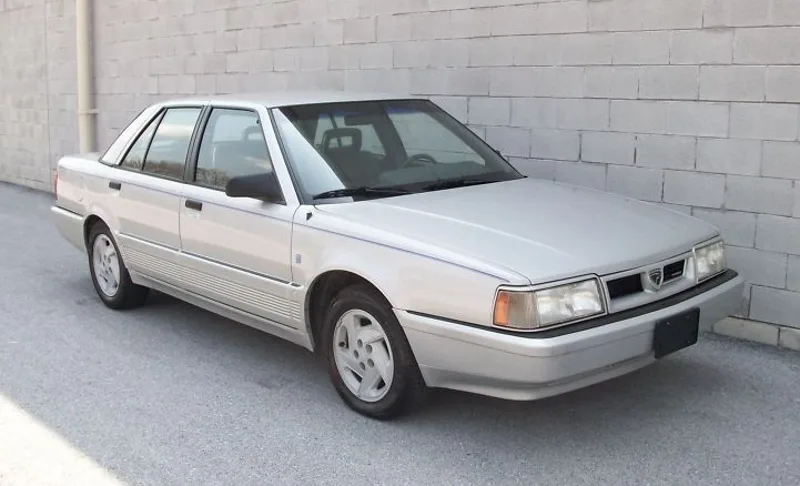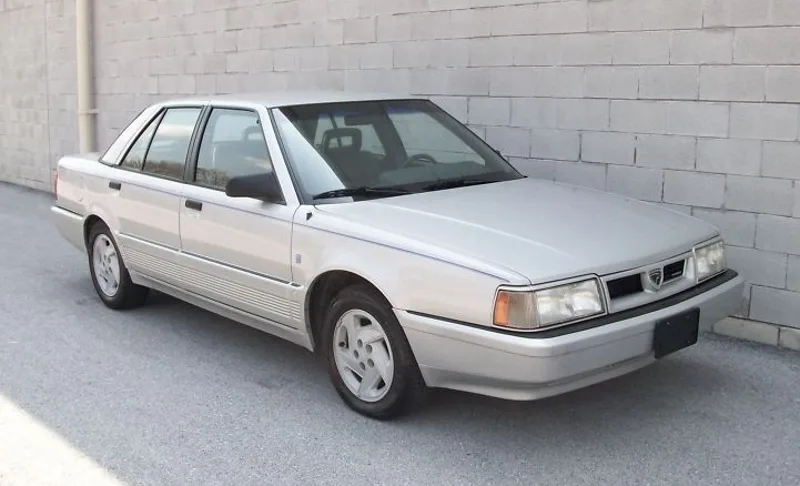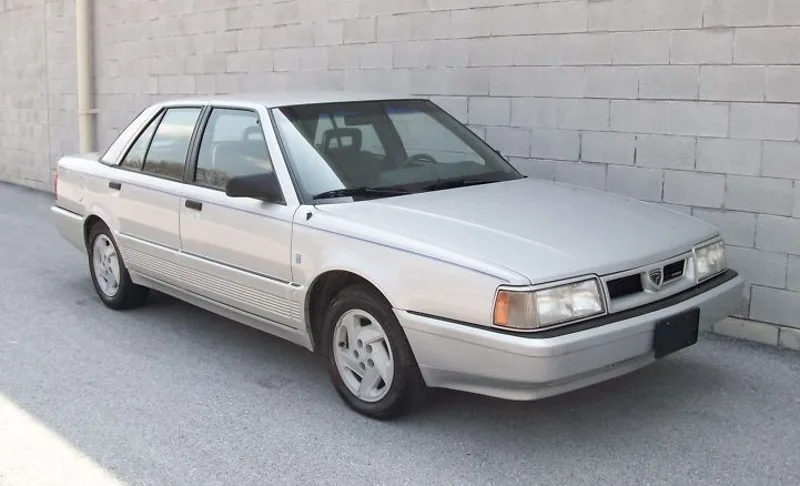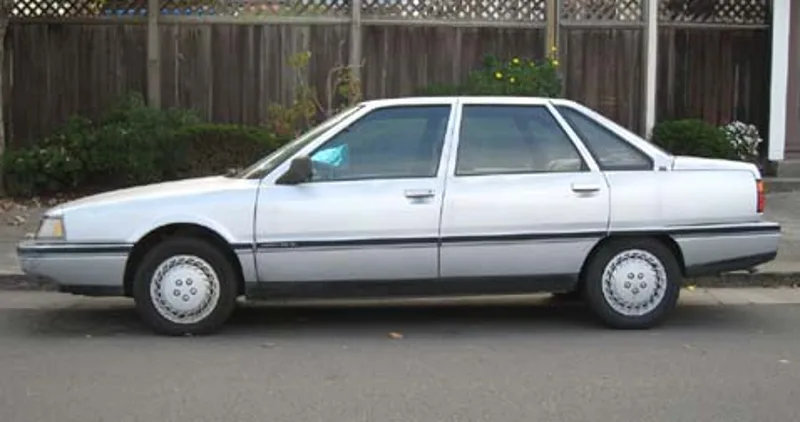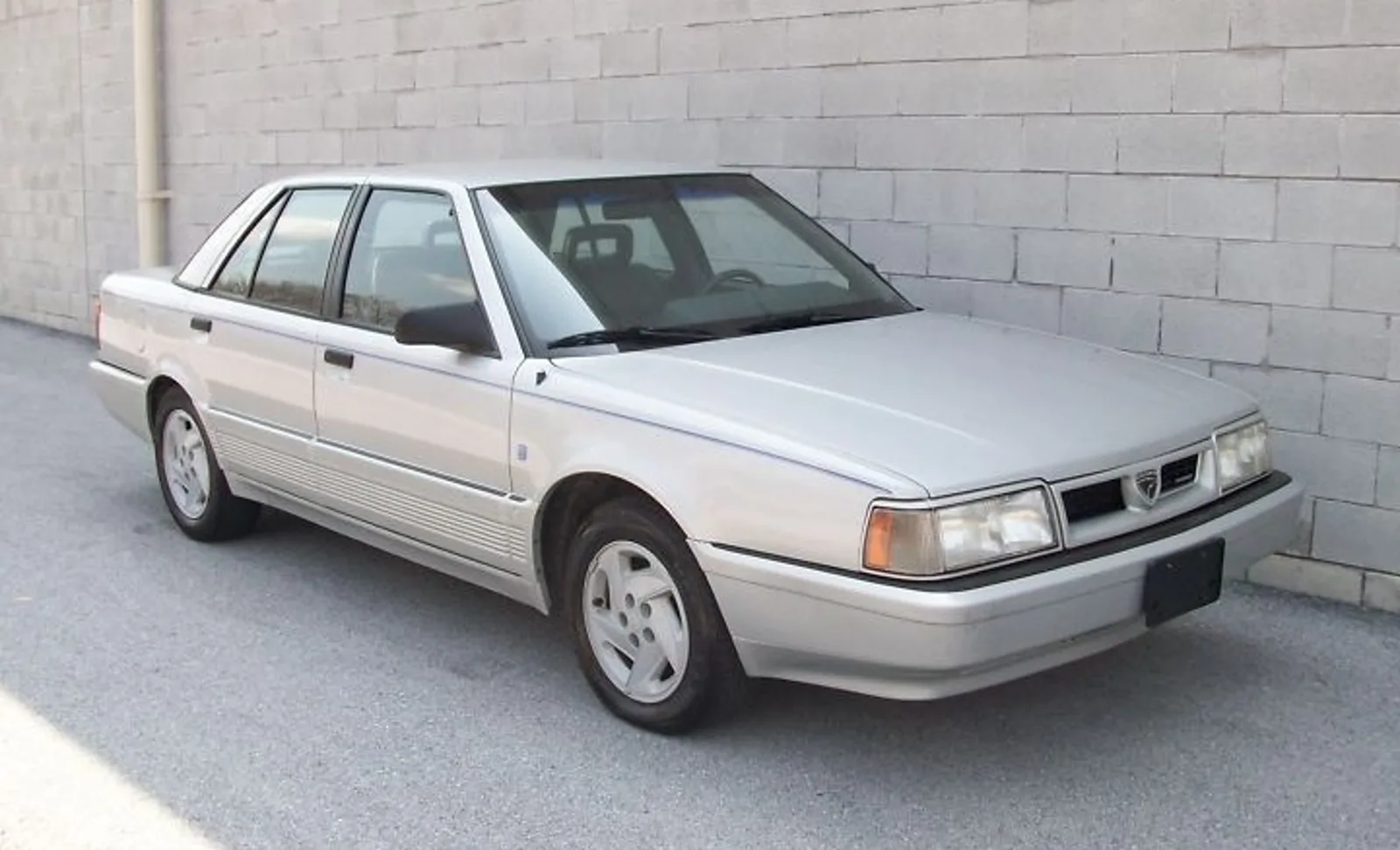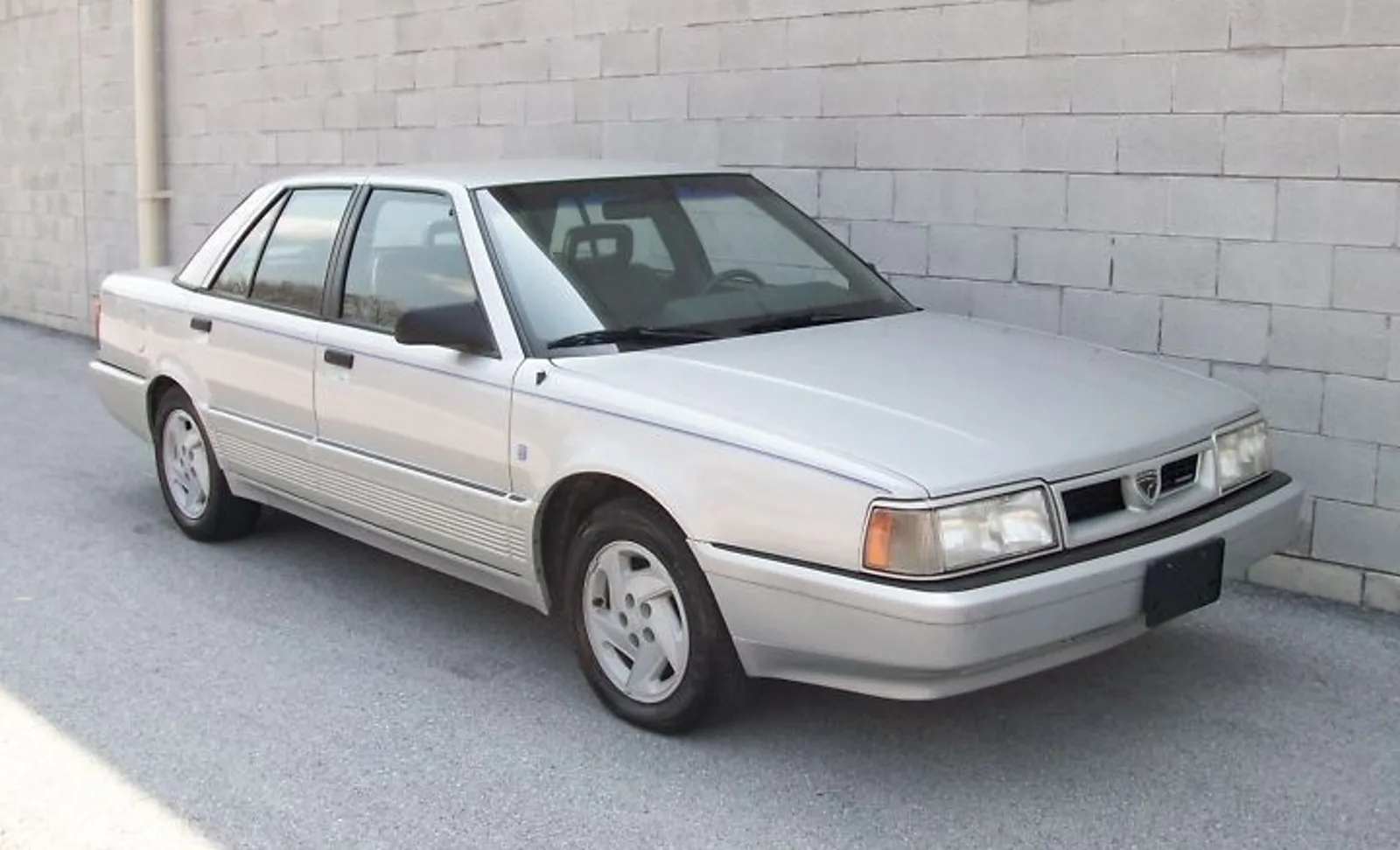
An Italian-styled, Canadian-built front-drive executive car that began life at American Motors and ended as the last of its kind before Chrysler's LH cars arrived.
The Eagle Premier was a full-size front-drive sedan developed by American Motors with Renault and built in Canada. Chrysler sold it under the Eagle name from 1988 to 1992, using a 2.5-litre four or a 3.0-litre PRV V6. A Dodge Monaco rebadge joined it from 1990.
The Eagle Premier was a full-size executive sedan developed by American Motors Corporation with Renault during the 1980s and built at the new Brampton Assembly in Canada. Chrysler bought the car's rights when it took control of AMC in 1987 and sold it under the Eagle marque, with production running until December 1991.
Where did the Eagle Premier come from?
In 1982 American Motors began work with Renault, a major AMC shareholder since 1979, on a downsized full-size front-drive car. The project carried the code X-58 and was aimed at a late-1986 launch, with a two-door companion, code named X-59, planned for the 1988 model year. These would have been the first full-size AMC cars since the 1978 Matador.
The strategy was to widen AMC's reliance on small cars such as the Alliance and Encore, as buyers turned toward roomier family cars, with the Chevrolet Celebrity and new Ford Taurus leading that shift. The Premier was the answer to that shift, and it was meant to reposition the company.
Chrysler acquired the rights in 1987 when it bought Renault's stake in AMC, and the car went on sale under the new Eagle name. Although some people still call it a Renault, the car was never marketed as one, and pre-production cars with Renault emblems were corrected before launch.
A Renault-based sedan that Chrysler sold as an Eagle, and a stepping stone to the LH cars that followed.
How was the Premier engineered?
Rather than create a new chassis, the team used the monocoque of the Renault 25 as its base and adapted it for the new car. The suspension came from the Renault Medallion (Renault 21) and used four-wheel independent suspension, with MacPherson struts at the front and a stabiliser bar.
At the rear, the setup used forward-angled gas-filled dampers and four torsion bars running across the body, two working as springs and two as anti-roll bars. The setup gave the car a well-controlled ride.
The body was styled by Giorgetto Giugiaro's Italdesign, chosen over concepts from AMC's own styling staff and from other independent firms. Its drag coefficient of 0.31 was slightly lower than that of the 1986 Ford Taurus, which was known for its aerodynamic shape.
What was the Premier's interior like?
The Premier was stretched in every dimension, which left it with more room inside than any rival. AMC's own design staff, led by Dick Teague, drew the cabin from scratch, with a set of features that were unusual for the time.
The dashboard put most driver controls within easy reach of the steering wheel. A dash-mounted gear selector resembled the shifter of the 1955 Chrysler PowerFlite, with a grip handle at the end of a metal lever that dropped into the dash when the driver shifted in the usual way.
Climate controls used an up-down button that cycled through heating modes, and the turn signal returned to centre after a turn and was cancelled by a gong. Intermittent wipers adjusted their speed to the amount of water on the windshield, and the automatic climate system held back the blower until the heater core was warm.
Standard equipment included an electronically controlled AM/FM stereo, billed as self-diagnosing, and a premium speaker system on the ES models. Later years added a seven-band equaliser with memory, a cassette deck with music search and a CD player.
Which engines did the Premier use?
At launch there were two powertrains. The base LX carried a 2.5 L AMC four-cylinder with electronically controlled throttle-body injection, rated at 111 hp (83 kW; 113 PS), and its torque of 142 lb-ft (193 N-m) peaked at 2500 rpm. It was paired with a new electronically controlled four-speed automatic developed by ZF Friedrichshafen.
The four-cylinder was rated at 22 mpg-US in the city and 31 mpg-US on the highway, giving a 527-mile (848 km) range from a 17 US gal (64 L) tank. Whether any four-cylinder cars were actually sold is unclear, and most buyers went for the V6.
The V6 was optional in the LX and standard in the ES. It was a 3.0 L member of the Peugeot-Renault-Volvo (PRV) family, fitted with multi-port injection. Peak output was 150 hp (112 kW; 152 PS), reached at 5000 rpm, and torque of 171 lb-ft (232 N-m) arrived at 3750 rpm, and it managed 18 mpg-US in town and 27 mpg-US on the highway.
How quick was the Eagle Premier?
Factory estimates put the four-cylinder car at 11.5 seconds from standstill to 60 mph (97 km/h), with the V6 taking 10 seconds. Powertrain cover ran 7-year and 70,000-mile (112,654 km), a term that topped its rivals at the time.
By 1990 most buyers had chosen the V6, and the four-cylinder was officially dropped from the lineup, leaving the V6 as the sole engine.
How did the Premier change from 1988 to 1992?
The Premier arrived in January 1988 with a set of unusual touches, and it was refined in small steps before a larger reengineering in 1990. The LX seated six, with front bench seats that reclined and split 55/45, while the ES seated five with individual front buckets and a full-length console.
The LX rear seat included a fold-down centre armrest, and map pockets were standard in the front seatbacks. ES models added lower bodyside cladding, firmer suspension and larger touring tyres, and their front buckets had adjustable see-through headrests. The standard automatic was operated by a column shifter.
The 1989 model year brought cruise control and a mid-year ES Limited with monochromatic paint and body-coloured trim, while eight Accusound by Jensen speakers became standard on the ES. Japanese sales began that year as the Chrysler Premier ES, with the 3.0 L V6, a four-speed automatic and a 150 PS (110 kW) rating, carrying the model code E6U.
In 1990 the car was substantially reengineered. Disc brakes on all four wheels and a stainless exhaust became standard, and the electrical system moved to Chrysler parts with a better reliability record than the original Renix setup. The four-cylinder was officially dropped, and the automatic shifter was relocated to the floor console.
The 1991 model year added anti-lock brakes, standard on the ES Limited and optional on other models. Supplies climbed to 222 days at the start of the year, so Chrysler offered dealers a $1,000 discount on the invoice price, buyers a $1,500 rebate, and a $2,000 incentive per car after the dealer's fourth sale. By year end Jeep-Eagle dealers had only 28 days' supply, against 119 days for the overstocked Chevrolet Caprice.
For 1992 the car changed little, although all cars got the grille and tail lamps that had been ES Limited exclusives the year before. It was the final year of production, and Bramalea ended output on 17 December 1991 as Chrysler prepared its LH cars.
What did critics and reviewers say about the Premier?
Bob Lutz, then a vice president at Chrysler, counted the Premier among the new products that Chrysler gained when it acquired the smaller automaker. The Premier replaced the Liberty project, a car Chrysler had long planned as the foundation of its future models but was struggling to finish.
Car and Driver's road test described the car as a competitive Euro-style sedan and a pleasant surprise, and it said the Premier would probably unsettle its rivals. Popular Science ranked it among the sportiest sedans in a four-car test, citing its road holding and drive precision.
Chrysler promoted the Premier as the slipperiest sedan made in North America, combining American space with European handling. The Premier was also described by one journalist, Dan Roth, as a possible future classic.
Why did the Premier sell less than planned?
The original projections called for 150,000 Premiers a year, but the car never reached that level. Calendar-year production for 1989 reached only 32,720, and critics blamed a confused market position, with the ES competing against imports and the LX against the Ford Taurus and GM mid-sized cars.
Chrysler also had six brands after the AMC purchase, which made it hard to promote each one properly. The company also carried the reputation of French cars in the United States, and the Premier had to compete with that legacy as well.
Who built the Eagle Premier?
A new factory, the Bramalea Assembly, was built to make the Premier close to an existing AMC plant in Brampton, Ontario. The plant came online in 1986 and was among the AMC holdings that drew Chrysler's attention, and it was renamed Brampton Assembly after the buyout.
Magna International won a 1986 deal to supply body panels, and the supplier was granted $10 million in grants from the governments of Canada and Ontario to expand its Milton, Ontario plant. Chrysler later retooled the Brampton site for its LH cars, which arrived in autumn 1992.
What was the Dodge Monaco?
The Dodge Monaco was a rebadged Premier added in 1990, using a name that Dodge had employed from 1965 until 1978 on a full-size rear-drive sedan. The Monaco came out of a deal in which Chrysler had agreed to take 260,000 PRV engines over five years, part of the AMC buyout from Renault.
Monaco volume stayed small, and the two cars were both cancelled in 1992. Jeep-Eagle dealers gave the Premier little marketing, because they were focused on the more profitable Jeep models. In total 139,051 Premiers and Monacos were built at Bramalea.
How did the Premier shape Chrysler's later cars?
The Premier inspired many features of Chrysler's LH platform. Francois Castaing, who had led product engineering at AMC, joined Chrysler in 1988 as vice president of vehicle engineering, and the Premier became the starting point for the LH sedans.
The LH engines were mounted longitudinally, as in the Premier, which was a hallmark of Renault's front-drive designs. The LH's own transmission, the A606, bore a close resemblance to the electronically controlled automatic fitted to four-cylinder Premiers. The Premier's body shell was also used for LH prototype mules to test the drivetrain.
What are the key Eagle Premier specifications?
| Specification | Detail |
|---|---|
| Body | Four-door sedan, built September 1987 to December 1991 |
| Base engine | 2.5 L AMC four-cylinder, 111 hp (83 kW; 113 PS); torque peaks at 2500 rpm, 193 N-m (142 lb-ft) |
| V6 engine | 3.0 L PRV V6, 150 hp (112 kW; 152 PS), 171 lb-ft (232 N-m) torque |
| Four-cylinder economy | 22 mpg-US city, 31 mpg-US highway |
| V6 economy | 18 mpg-US city, 27 mpg-US highway |
| Fuel tank and range | 17 US gal (64 L), 527-mile (848 km) range on the four-cylinder |
| 0-60 mph | 11.5 seconds with four-cylinder; 10 seconds with six |
| Drag coefficient | 0.31 |
| Cargo space | 16.4 cu ft (464 L) |
| Warranty | 7-year, 70,000-mile (112,654 km) powertrain |
| Total built | 139,051 Premiers and Monacos at Bramalea |