How two brothers turned a body shop into a carmaker, built the Interceptor and FF, then lost the company in receivership.
Jensen Motors was a British maker of sports cars and commercial vehicles in West Bromwich, England. It grew out of a body-making business run by brothers Alan and Richard Jensen, built the Interceptor and FF, and stopped trading in 1976 before a series of short-lived revivals.
Jensen Motors built sports cars and commercial vehicles from a works in West Bromwich, England. It began as a body-making firm, started producing cars under its own name in the 1930s, and stopped trading in 1976 before a run of short-lived revivals. Its Interceptor and FF models remain its best-known cars.
Who founded Jensen Motors?
Jensen Motors took its name from the brothers Alan Jensen (1906-1994) and Richard Jensen (1909-1977). After the owner of the lorry body firm W J Smith & Sons died in 1934, they bought a controlling shareholding and renamed the business Jensen Motors Limited.
The story begins in 1926, when Alan Jensen built a boat-tailed sporting body on one of the first Chummy baby Austins. Alfred Herbert Wilde, chief engineer at the Standard Motor Company, saw the work and persuaded Alan to join New Avon Body Co, a Standard associate. Under Wilde's guidance Alan designed the first Standard Avon open two-seaters, which were built from 1929 to 1933.
The brothers then moved to Edgbaston Garage in Bournbrook, an Austin dealership whose building still stands beside the University of Birmingham campus. Their bodies for the Wolseley Hornet and Hornet Special chassis were advertised as 'The Patrick Special', a name that did not please them. In 1931 the garage became Patrick Motors Limited, and the brothers moved on again.
Their next base was the lorry body maker W J Smith & Sons in Carters Green, West Bromwich. There they built bodies for small sports cars, including more Wolseley Hornet Specials, and Smith's marketed the work as Jensen Motors. In 1934 Smith died, and the brothers acquired control of the firm before renaming it Jensen Motors Limited.
From a body shop in West Bromwich to the Interceptor and FF, then a receivership and a name that keeps returning.
Why did a Clark Gable car matter to Jensen?
In 1934 the American film actor Clark Gable commissioned Jensen to build a car on a Ford V-8 chassis. The result won wide acclaim and led to a deal with Ford for a run of Jensen-Fords, with Jensen bodywork on Ford chassis and engines.
The same period brought the company's first true production design, a car called the White Lady, which Jensen began drawing in 1934. It evolved into the S-type, which went into production in 1935. Customised bodies for standard cars from Morris, Singer, Standard and Wolseley also formed part of the work of those years.
The Gable commission drew wide attention to the brothers' work, and it opened the door to the Ford arrangement.
Did Jensen build commercial vehicles?
Yes. In the late 1930s Jensen diversified into commercial vehicles under the JNSN marque, building lightweight trucks for Reynolds Tube and the articulated Jen-Tug, which went into production in the late 1940s. Its lightweight diesel trucks later served pantechnicon and bus operators as well.
The lightweight trucks were built for Reynolds Tube, and the same programme produced a prototype of the articulated Jen-Tug.
During the Second World War Jensen turned its effort to the war. It made components for military vehicles, including turrets for tanks, and produced specialised ambulances and fire engines.
After the war Jen-Tug production thrived, and Jensen added a new range of JNSN lightweight diesel trucks and chassis for pantechnicons and buses. A handful of buses and coaches went to independent operators into the 1950s, with Perkins diesel engines, David Brown gearboxes and bodywork from several bodybuilders. Each carried a large JNSN badge below the windscreen.
In the 1950s the British Motor Corporation chose Jensen to build bodies for the four-wheel-drive Austin Gipsy. In 1958 the company also built a small number of Tempo light commercial vans, pick-ups and minibuses, a German design built under licence in Britain. Chassis number 5, shown at the 1958 commercial motor show with a Ruthmann cherry picker fitted, is the only known survivor and is being restored.
When did Jensen start building sports cars?
Jensen's first post-war model was the PW, a luxury saloon offered in 1946 but built in small numbers because raw materials were tightly controlled. The company then built the Interceptor coupe from 1950 until 1957, after body designer Eric Neale joined from Wolseley in 1946.
Eric Neale, the former Wolseley stylist, designed what many regard as the company's masterpiece. The 541 went into production in 1955 with a body made from fibreglass, a material that was then new to car bodies. An unusual flap, which the driver could swivel, covered the radiator grille.
The 541S was replaced in October 1962 by the C-V8, another Neale design. It swapped the Austin-sourced straight-six of the earlier cars for a 6-litre American Chrysler V8. Putting such a large engine into a lightweight car made the Jensen one of the fastest four-seaters of its time.
How did the Interceptor replace the C-V8?
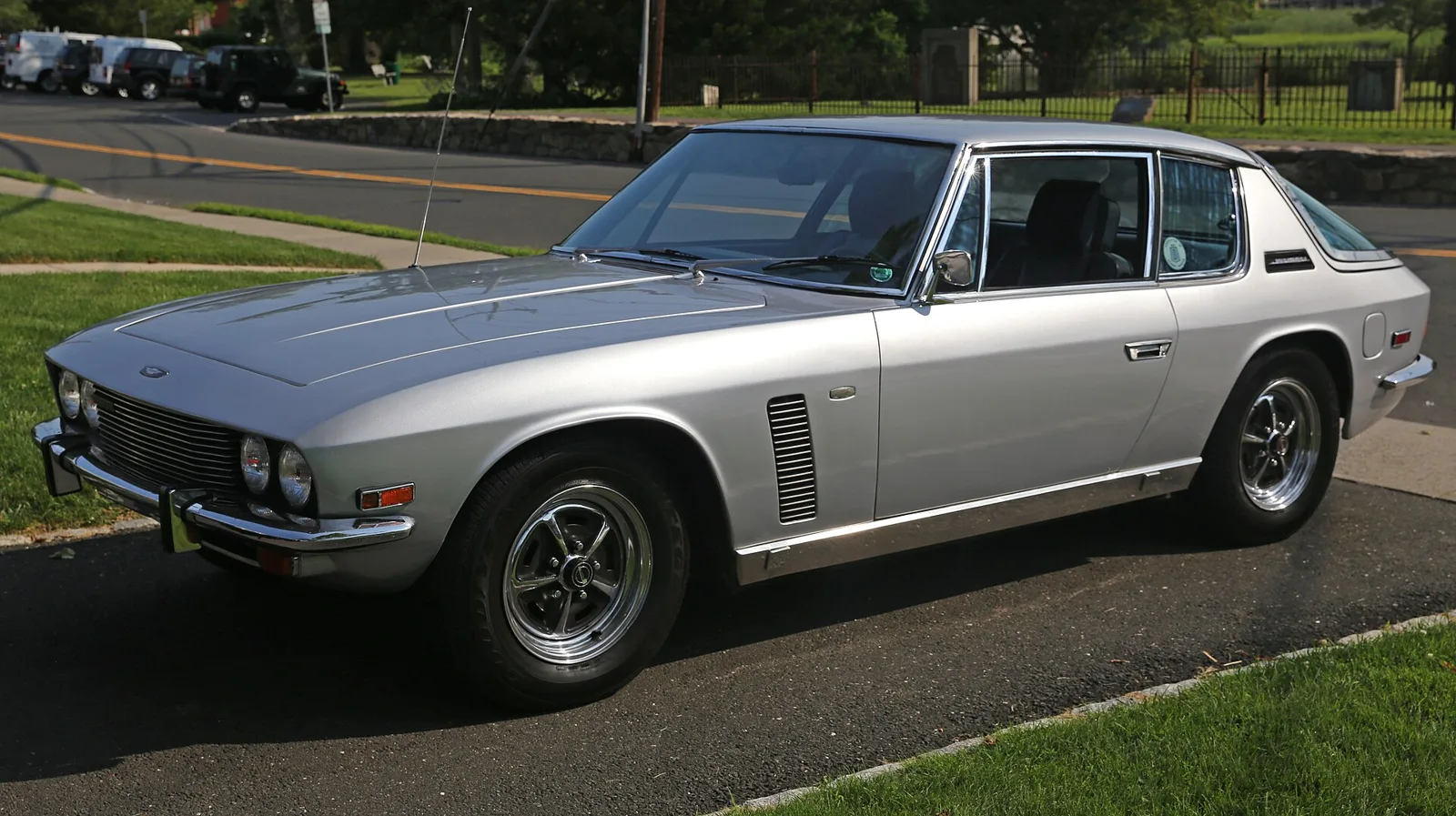
The Interceptor replaced the C-V8 as the company's next major road car. Jensen turned to the Italian coachbuilder Carrozzeria Touring for the design and chose steel for the body. It was first shown in October 1965 and entered production in the second half of 1966.
Early cars used a 6.3 litre (383 cu in) Chrysler wedge-head V8, and later cars moved to a 7.2 litre (440 cu in) unit. The bodyshells were built first by Vignale of Italy and later by Jensen itself. The Interceptor name had already been used on the 1950 coupe, so the 1966 car was the second to carry it.
The Interceptor came as a fastback, a convertible and a rare coupe. The fastback was by far the most popular version. Its large, curving rear window wrapped around the car and hinged to give access to the storage area, which made the Jensen an early form of liftback.
Why was the Jensen FF important?
The FF was an Interceptor-based car with full-time all-wheel drive and anti-lock brakes. The name stood for Ferguson Formula, after the Ferguson Research system it used, and only 320 were built before production ended in 1971. It was the first production sports car to use that system.
Jensen first publicised the FF in February 1964 and displayed it at the October 1964 Earls Court Motor Show. A production-ready CV-8 FF appeared at the October 1965 show, priced almost 50 per cent above the standard car. That version stayed a prototype, and the Interceptor-based FF entered production in 1966 instead.
Visually the FF was apparently identical to the Interceptor. The main differences were a longer bonnet, all of the extra length ahead of the windscreen, and a second row of air vents behind the front wheels.
Its braking was equally notable. The Dunlop Maxaret anti-lock system was one of the first ABS installations in a production car. Production ended in 1971 after 320 had been built.
Which other carmakers used the Jensen factory?
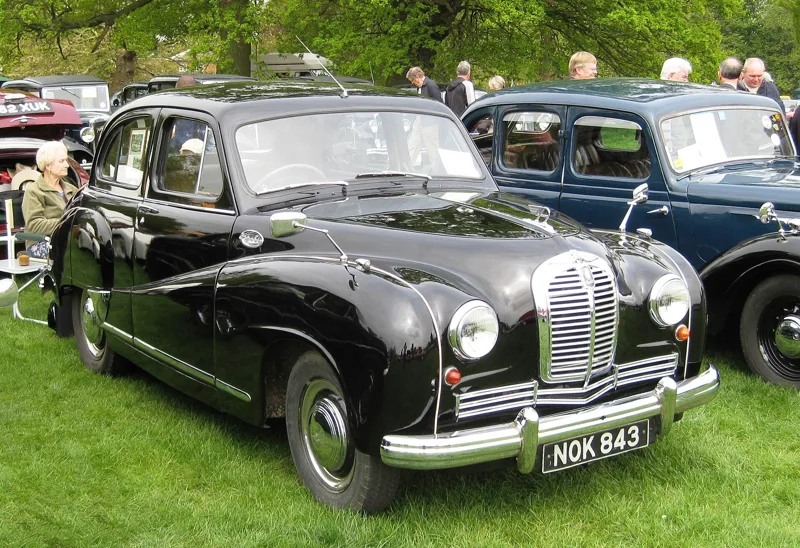
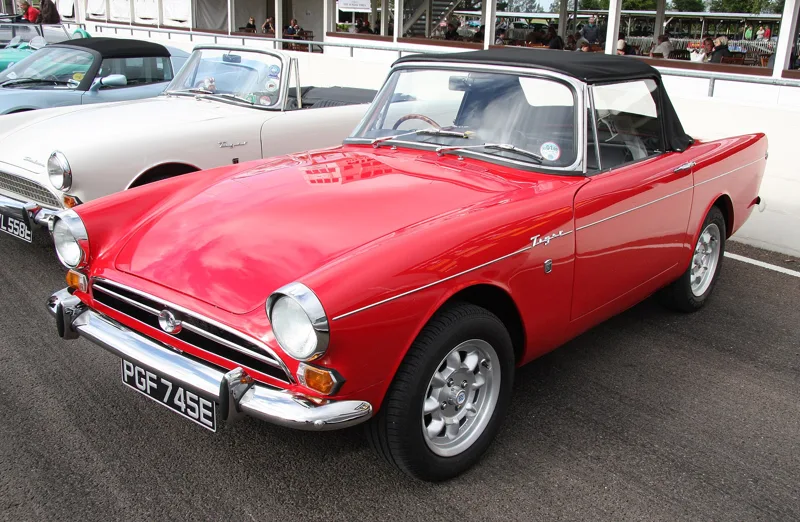
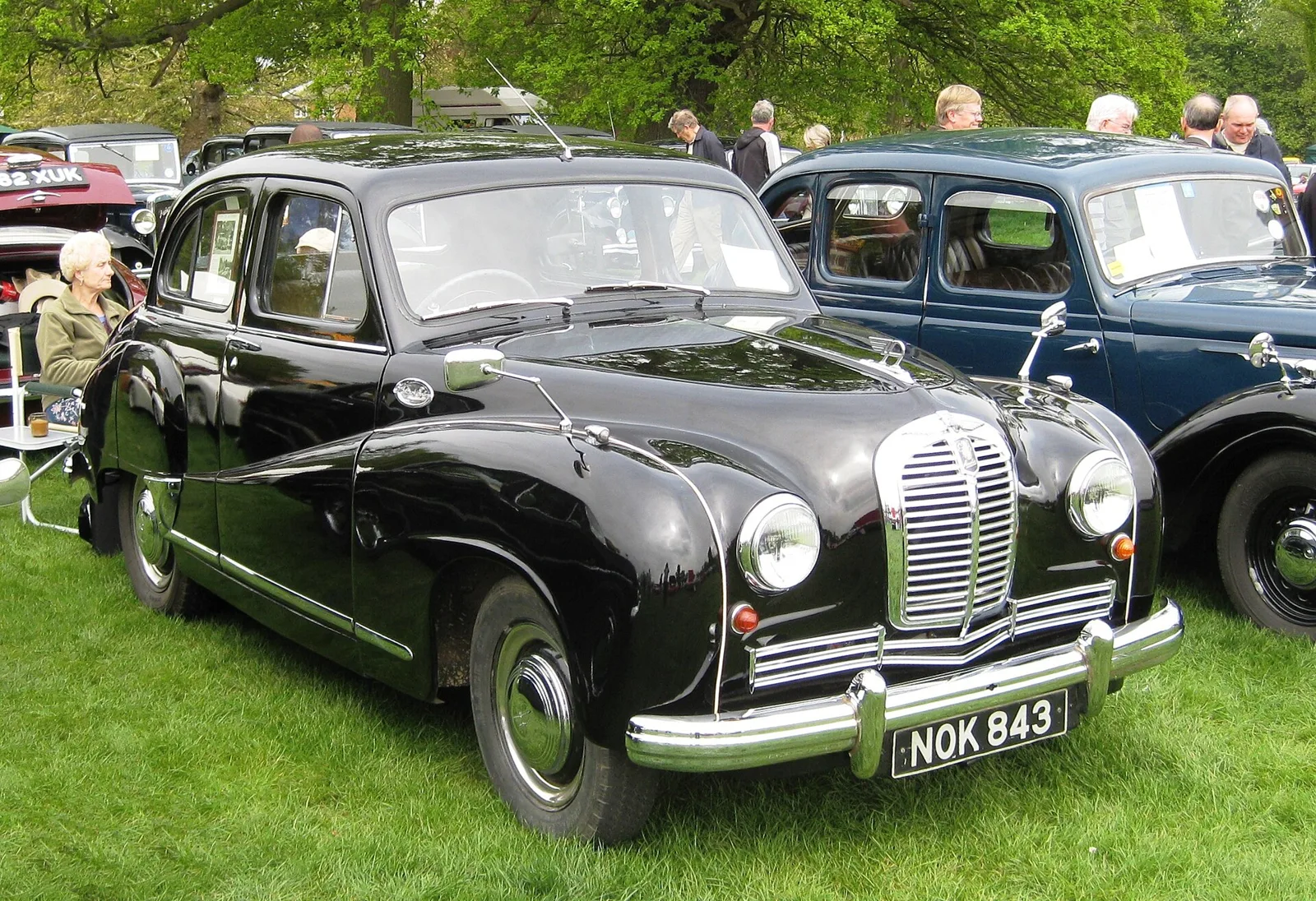
Jensen built bodies for Austin, Volvo and the British Motor Corporation, and it worked on the Sunbeam Tiger in the early 1960s. Its Austin A40 Sports was built in over 4000 examples from 1951 to 1953. By March 1962, 1,100 workers were making Austin-Healey and Volvo cars at West Bromwich.
Austin's chairman, Leonard Lord, asked Jensen and designer Eric Neale for a body that could use A40 mechanicals. The result was a body-on-frame car with aluminium bodies built at Jensen and then carried to Austin's Longbridge plant for final assembly. It debuted at the 1949 London Motor Show and was intended as a sporty touring car rather than a true sports car.
The British Motor Corporation rejected a Jensen design for a new Austin sports car in 1952 and chose one from Donald Healey instead. Jensen still won the contract to build the bodies for the Austin-Healey 100 and the rest of the big Healey cars. At the end of 1960, about 350 of the 850 people in the factory were working on Austin-Healeys.
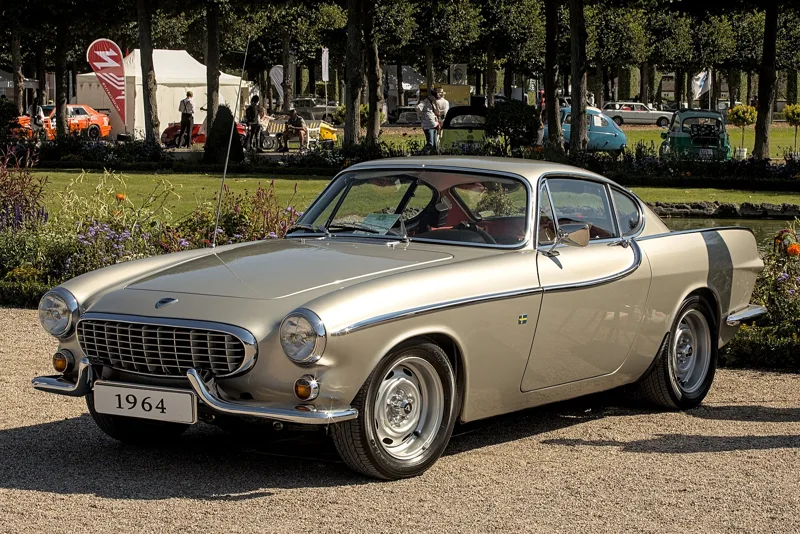
In 1960 Volvo contracted Jensen to assemble and finish the bodies of its P1800 coupe. Pressed Steel made the shells at Linwood in Scotland, and Jensen painted, trimmed and finished them in West Bromwich. The engine and gearbox came from Sweden, the back axle from the United States and the electrics from Germany. The first batch came off the line in May 1961, but the contract ended in 1963 over quality concerns, and production moved to Gothenburg, Sweden.
Why did Jensen Motors stop contract work?
US car safety rules, due to start the following January, cut demand for the Austin-Healey 3000 and Sunbeam Tiger, and those contracts ended by the end of 1967. Jensen then became a full-time car maker, building 12 Interceptors and FFs a week by mid-1968.
Norcros, an industrial holding company, had bought Jensen in June 1959. Alan Jensen retired as joint managing director in October 1964 but stayed on the board. Richard Jensen gave up his joint managing director role in November 1965 and remained chairman, but both brothers left the board in 1966 after disagreements.
In mid-1968 Norcros decided to sell its automotive subsidiary, whose cars were said to cost about as much as small houses. The merchant bank William Brandts bought the business that year. Richard Jensen later retired to Malta and died in London in September 1977. Alan died in Brighton in 1994.
Who ran Jensen in the 1970s?
Norwegian-American West Coast car distributor Kjell Qvale became majority shareholder in 1970, and Donald Healey became chairman that April. The Jensen-Healey was announced in March 1972, but sales were mediocre even though 3,356 had been built by the following May.
Healey and Qvale appointed a new chief executive in May 1970, a month after Healey took the chair. The company's next car, the Jensen-Healey, was announced in March 1972. Factory performance disappointed the owner, and the volume of sales stayed modest.
In October 1974 Qvale made himself chief executive as well as chairman, and production was cut from 25 a week to 12 to match sales. In July 1975 a Jensen GT, a Jensen-Healey with a coupe-estate body, was announced. The company's future was already in doubt, and 700 workers, two thirds of the workforce, faced redundancy.
Why did Jensen Motors go into receivership?
A receiver was appointed by Bank of America in September, after the company's future came under threat. Kjell Qvale blamed the unions, while financial commentators said he had built production capacity far beyond market demand. The empty premises were auctioned in mid-August 1976.
The collapse ended the main company but left the Jensen name intact. Two successor companies were created to deal with what remained of the business, and the name and its rights went on to be sold again in the years that followed.
What happened to Jensen after 1976?
Two new companies picked up the pieces: Jensen Special Products and Jensen Parts and Service. In 1982 the parts business's rights to the Jensen names went to Ian Orford, who revived the Interceptor as the Mk IV.
Jensen Special Products was a specialist engineering and design business that grew out of the old development department. Jensen Parts and Service was set up to supply parts and service to existing owners. Both were bought by a holding company, Britcar Holdings, and the parts business later traded as International Motors, which held the UK franchise for Subaru and Maserati, and Hyundai from 1982.
The company was later renamed Jensen Cars Limited and averaged 11 cars a month in the 1980s, always in small numbers. It was then sold to Unicorn Holdings of Stockport. A Mk V Interceptor was proposed but never built, although a few more Mk IV cars were completed.
Did the S-V8 revival succeed?
No. The two-seat S-V8 convertible, launched at the 1998 British International Motor Show, was backed by 10 million pounds sterling of investment. Only 110 orders were placed by October 1999 against a plan for 300, and the company entered administration in July 2002.
The investment included contributions from Liverpool City Council and the Department of Trade and Industry, and the car was priced at 40,000 pounds sterling. The new factory in Speke began production in August 2001, but only 20 cars left it, with another 18 left partly built.
The Jensen name and the part-finished cars passed to SV Automotive of Carterton, Oxfordshire, in 2003. The new owner completed 12 cars, kept the rest for spare parts and later sold the remainder for 38,070 pounds sterling. By the end of 2002, production of the S-V8 had already ceased.
Are new Jensen cars planned?
Plans have been announced several times since 2010, and in early 2026 Jensen International Automotive described an ultra high performance British GT with a V8 engine on an aluminium chassis. Buyers should check the status of each plan before ordering.
Jensen International Automotive was founded in April 2010 to buy old Interceptors and sell them as new cars after a full restoration, with new engines and interior trim. In September 2011 CPP, a specialist sports car maker, announced a new Jensen expected on sale in 2014, with an all-aluminium chassis and alloy panels that echoed the four-seat grand tourer layout of the original.
On 25 February 2015 Autocar reported that the Jensen name was being revived, with two models expected by 2016. One was the Jensen GT, to be built in bespoke numbers and to cost around 350,000 pounds sterling outside the UK. The other was a successor to the Interceptor. The Jensen Group, which claimed full ownership of the marque, backed both plans.
The 2026 announcement is the latest. It describes an all-new, ultra high performance British GT, inspired by the Interceptor, with a V8 engine and an aluminium chassis. The car is designed to compete with companies such as Aston Martin and is reportedly to be built in very low numbers in the UK.
What are the key Jensen specifications?
| Specification | Detail |
|---|---|
| Company | Jensen Motors Limited, West Bromwich, England |
| Founders | Alan Jensen (1906-1994) and Richard Jensen (1909-1977) |
| 541 body | Fibreglass, launched 1955 |
| C-V8 engine | 6-litre Chrysler V8, from October 1962 |
| Interceptor engine | 6.3 litre (383 cu in) Chrysler; later 7.2 litre (440 cu in) |
| Interceptor production | Second half of 1966 |
| FF drivetrain | Ferguson Research full-time all-wheel drive |
| FF brakes | Dunlop Maxaret anti-lock braking |
| FF production | 320 built; ended 1971 |
| Austin A40 Sports | Over 4000 built, 1951 to 1953 |
| Jensen-Healey | 3,356 built by the following May |
| S-V8 price | 40,000 pounds sterling |
| Ceased trading | 1976 |
How is Jensen remembered today?
Jensen is remembered for the Interceptor, the FF and its body contracts with Austin-Healey and Volvo. Its archive is catalogued at the Modern Records Centre at the University of Warwick, and books by Keith Anderson and Richard Calver document its history.
The Interceptor's fastback body and the FF's all-wheel drive are the two features most often associated with the company. The FF put all-wheel drive and anti-lock brakes into a production sports car, while the Interceptor's rear window gave it an early form of liftback.
Keith Anderson wrote Jensen in 1989 and Jensen and Jensen-Healey in 1998, and Richard Calver published a history of the chassis data in 1991. The Modern Records Centre holds the Jensen Motors archive.