A Birmingham carmaker that led Britain in the Edwardian era, failed in the 1920s, was rescued by William Morris and ended in the British Leyland years.
Wolseley was a British car maker founded in 1901 by Vickers with Herbert Austin. It became Britain's largest motor manufacturer before failing in 1926, was bought by William Morris in 1927, and its name was dropped in 1975.
Wolseley was a British car manufacturer set up in 1901 with Vickers backing and Herbert Austin as its first driving force. For a while it was the biggest motor maker in Britain, but it struggled after the First World War, was bought by William Morris in 1927, and was absorbed into the Morris and later British Leyland empires. The name was finally dropped in 1975, after 74 years.
Who founded Wolseley and when?
Early in 1901 the Vickers armaments group and Herbert Austin set up Wolseley Motors, and Austin served as the company's managing director. The firm's first cars grew out of Austin's earlier experiments for a sheep-shearing machinery business, which had dropped its own motor plans before Vickers and Hiram Maxim took the project on.
A Vickers and Austin venture that led Britain in cars, fell into receivership and ended as a name in 1975.
How did Herbert Austin start making cars?
Austin had been looking for products beyond sheep-shearing machines, because that trade was highly seasonal. Around 1895 and 1896 he began experimenting with engines and automobiles in his own time, working at night and at weekends. He built his own version of a design by Leon Bollee that he had seen in Paris.
A two-seat tricycle with a two-cylinder motor followed in 1896, steered by a lever. When he learned a rival British group had acquired the Bollee rights, he was forced to design his own machine, and he won the sheep-shearing directors over to paying for the tooling.
What were the first Wolseley cars like?
The first Wolseley car, the Autocar No. 1 of 1897, was a three-wheeler with independent rear suspension and a mid-engine layout for two adults. It was advertised, but none were sold. A four-wheeled Voiturette appeared in 1899 and another four-wheeler in 1900. The 1901 Gasoline Carriage swapped the tiller for a steering wheel.
Public sales began with Voiturette-derived cars, though output only started in 1901, when the sheep-shearing board had already cooled on motoring.
How did Vickers take over the Wolseley venture?
The Vickers brothers, Thomas and Albert, sat on the board of Vickers and Maxim, the country's leading arms producer. They had resolved to enter the car industry at the right moment, and Austin's achievements at the sheep-shearing company convinced them to take on his enterprise.
Austin's five-year contract with the company ended in 1906. By then more than 1,500 cars had been built, and Wolseley had become Britain's largest motor manufacturer. Austin's reputation was made, and he went on to found his own Austin Motor Company.
What did the 1901 Wolseley range look like?
The first catalogue appeared on 1 May 1901, listing two models, a 5 hp and a 10 hp. Both could be ordered with a tonneau or phaeton body and either pneumatic or solid tyres. Buyers of the 10 hp could pay an extra thirty shillings (1.50 pounds) for a sprag to stop the car running backwards on hills.
Austin claimed horizontal engines lubricated better than vertical ones, and he said his 750 rpm running speed spared them the early wear he blamed on rivals turning at 1,000 to 2,000 rpm. The association with Vickers helped not only the design but also the speed of production and the supply of special steels.
Horizontal engines kept the car's centre of gravity down. The cylinders were cast individually and set singly, in pairs or in two horizontally opposed pairs. The crankshaft ran across the car, so a simple belt or chain drive reached the rear axle. By 1904 the range ran from 5 hp up to 24 hp, with steps in between.
In 1904 Queen Alexandra took delivery of a 24 hp landaulette, a 5.2-litre car with coil ignition, four forward gears and chain final drive.
How did John Siddeley change Wolseley?
John Siddeley, later Baron Kenilworth, founded the Siddeley Autocar Company in 1902 to build cars to Peugeot designs. Demonstrators based on Peugeot designs were displayed at the Crystal Palace in 1903. By 1905 a dozen models were offered, and some were assembled at Vickers' Crayford plant in Kent.
In 1905 Wolseley, then the dominant name in the British car market, bought the goodwill and patent rights of Siddeley's company and gave him the job of London sales manager. Austin left soon after, after refusing to accept vertical engines for his Wolseleys, and Siddeley took over as manager. He added his own name to the badge without any authority to do so.
Why did the horizontal engines disappear?
Siddeley replaced Austin's horizontal engines with the conventional upright type, and he brought his associate Lionel de Rothschild onto the Wolseley board. At the November 1905 Olympia show the firm displayed two small horizontal-engined cars, the 6 hp and 8 hp, alongside new Siddeley models of 15, 18 and 32 hp with vertical engines.
What went wrong with management after Siddeley?
Wolseley kept the sales lead it had inherited from Austin, but running the business from London rather than Birmingham meant overheads were not being covered. Board member Walter Chetwynd was asked to find a fix. He concluded that the firm operated from too many locations, so the Crayford works were closed, the operation returned to Birmingham, and commercial vehicles and taxicabs were dropped.
Over 500 commercial vehicles came out of the Siddeley years. One early 10 hp taxicab, built in 1908, went to a W R Morris, who ran a garage and hire business in Oxford. The London head office was then closed too. Following stormy meetings, Siddeley quit in spring 1909 and Rothschild went too.
Did Wolseley build cars abroad?
Yes, in several places. In 1907 the Macchi brothers and a bank in Legnano founded Wolsit, an Italian company that made Wolseley cars under licence. Legnano lies roughly 18 kilometres north-west of central Milan. Another firm, Fial, had opened in the town a year before and collapsed in 1908.
Wolsit stopped making cars in 1909 but kept producing luxury bicycles. Emilio Bozzi built the Ciclomotore Wolsit between 1910 and 1914. Wolsit entered cars in competitions as early as 1907.
What else did Wolseley make besides cars?
Wolseley was far less specialised than the car makers that came later. As a general engineer in the Vickers group, it took on work sent to it by other group companies, and its catalogue ranged from engines of 12 hp to 250 hp, some with as many as twelve cylinders.
Double-decker buses were built for Birmingham Corporation, along with electric lighting sets, motor boat engines, fire engines and special War Office vehicles. Machine tools such as turret lathes and horizontal borers were also produced, mainly for internal use and for sister firms in the group.
Large engines powered petrol-electric railcars, including a unit used by the North-Eastern Railway in 1904, and bigger engines went to the Delaware and Hudson railroad. In 1905 Wolseley also offered petrol narrow-gauge locomotives. At the 1910 Japan-British Exhibition in Shepherd's Bush, a Brennan monorail gave rides, with a 20 hp Wolseley engine spinning its gyroscope and an 80 hp unit driving the 22-ton machine electrically.
Marine engines were first supplied for launches built by the Teddington Launch Works, and later for larger craft. Boats of 70 feet (21 m) were ordered with them, built by S E Saunders at Cowes on the Isle of Wight. In 1906 Wolseley designed horizontal sixteen-cylinder engines for British submarines, and the first British rigid airship, HMA No. 1 Mayfly, was fitted with 160 hp Wolseley engines.
How did Wolseley help in the First World War?
Entering the war as Britain's largest car maker, Wolseley first contracted to supply cars for staff officers and ambulances. Government soon suggested that its plant could be used for more urgently needed supplies, and the output that followed was large.
Wartime production included 3,600 motorcars and lorries, 4,900 aero engines, 760 aeroplanes and 6,000 airscrews. Wartime output also covered firing gear for 27 battleships, 56 cruisers and 160 destroyers and flotilla leaders, plus 1,200 gun mountings with sights and ten airship transmissions. Some 2,650,000 18-pounder shells and 300,000 Stokes bombs also came out of its works.
Aero engines made in wartime included Renault V-type eight and twelve-cylinder units, a 180 hp six-cylinder Maybach, the Dragonfly nine-cylinder air-cooled radial and the Boucier fourteen-cylinder radial. The Hispano-designed V8 known as the Viper was produced at a rate of sixty a week by 1918.
An operating car was designed in 1914 by Colonel H. Wade for a field ambulance of the Scottish Horse Mounted Brigade. Built on a Wolseley chassis, it carried an operating table, sterilisers and surgical kit. Its service took it to Gallipoli and Suvla, through the Senussi Campaign in the Libyan Desert and on to Kantara in Egypt. From 1917 it was attached to a Desert Mounted Corps unit and later took part in the taking of Jerusalem.
Why did Wolseley fail in the 1920s?
After 1919 the Vickers directors wanted cheap cars in large numbers, and they borrowed heavily to buy the whole Ward End site and expand the works. Wolseley acquired several Vickers departments and announced a programme of 10 hp, 15 hp and 20 hp models, all shown at Olympia in November 1919. A 14 hp car was rushed out to fill a gap in the range.
The company spent more than 250,000 pounds on Wolseley House in Piccadilly, more than double its 1919 profits. Government contracts were ending, and a special tax on excess wartime profits applied. A moulders' strike ran from December 1919 to April 1920, and a sharp trade slump in July 1920 cancelled almost every order on the books.
Losses followed. Wolseley lost 83,000 pounds in 1920, and by 1924 its annual loss had reached 364,000 pounds. In October 1922 W R Morris cut the prices of his own cars, which hurt Wolseley. The managing director, A J McCormack, resigned in November 1923, and a committee of management took over.
In late October 1926 the firm was declared bankrupt with debts of about 2 million pounds, and two receivers, Sir Gilbert Garnsey and T W Horton, took control. The collapse is still cited as one of the most dramatic failures of the motor industry's early years.
How did William Morris buy Wolseley?
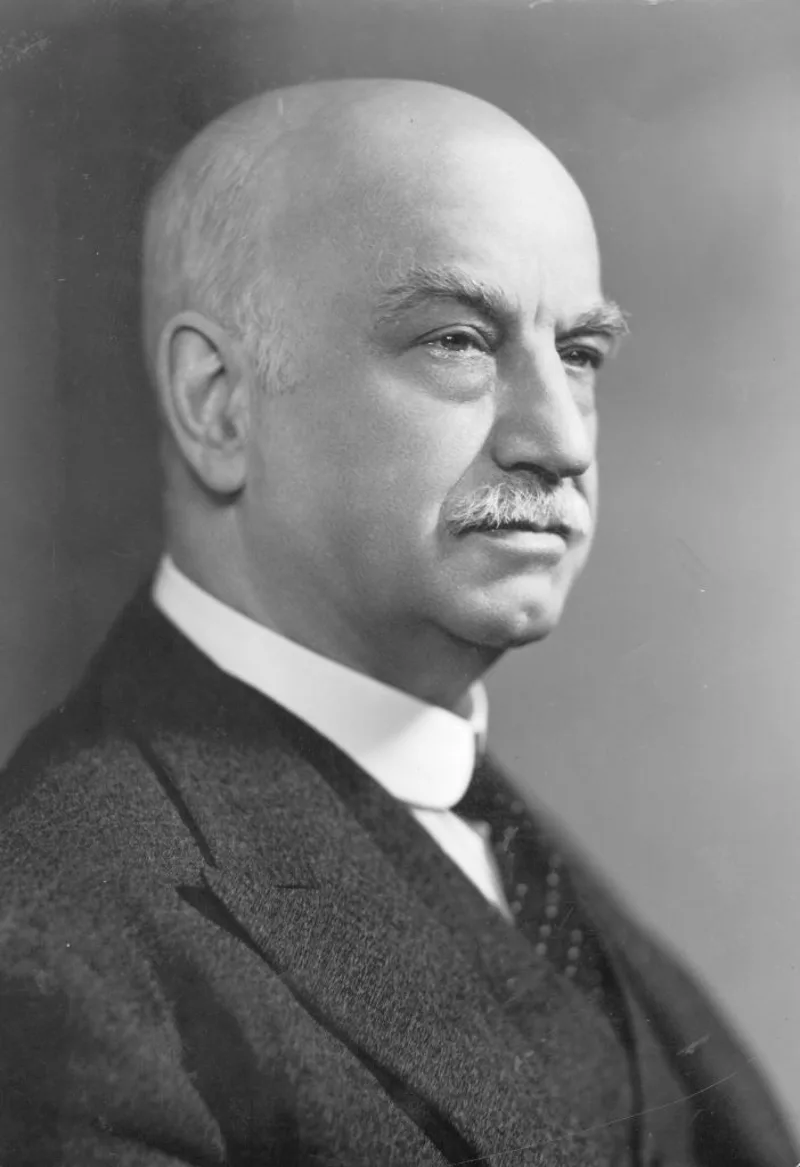
When the receivers auctioned Wolseley in February 1927, William Morris, later Viscount Nuffield, bought it for 730,000 pounds from his own money. General Motors, which later bought Vauxhall, was among the other bidders, and the Austin Motor Company also tried to buy it. Herbert Austin was reportedly very upset that he could not.
What did Morris change at Wolseley?
Morris had tried and failed to produce a six-cylinder car of his own, and he wanted a light six in his range. Wolseley's 2-litre six, the 16-45 that developed from its postwar Fifteen, made a strong impression on him. He formed Wolseley Motors (1927) Limited, later allowed to drop the date from its name, and concentrated production at the large Ward End works in Birmingham.
He sold off large unwanted parts of the Adderley Park plant and moved Morris Commercial Cars from Soho into the remainder. The 1919 policy of building cheap cars in quantity had not worked, and Morris reversed it before the Wolseley name lost its luxury reputation.
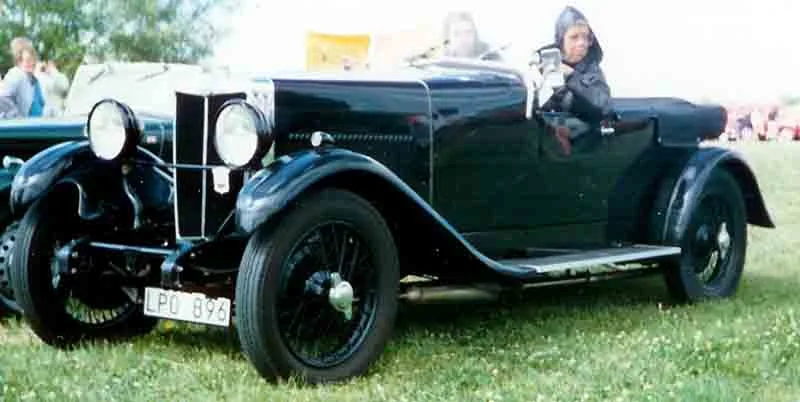
After lengthy re-tooling he kept the 2-litre six as the 16-45 Silent Six and added a four-cylinder version, the 12-32. An eight-cylinder car, the 21-60, followed. The six-cylinder 21-60 reached the market in September 1928 with a Messenger name for export sales. It stayed in production until 1935 and was noted for its robust construction, with a deep frame and an all-steel body.
How did Wolseley engines develop under Morris?
Every postwar Wolseley engine used a single overhead camshaft, turned by a vertical shaft running off the crankshaft. The eight-cylinder 21-60 carried that shaft through the centre of the engine. The smallest engine, of 847cc, was designed for the new Morris Minor, but it was costly and prone to oil leaks, so Morris Engines converted it to a conventional side-valve layout for Morris cars in 1932.
Meanwhile Wolseley extended its own design to six cylinders. A six-cylinder single-cam engine unveiled in 1930 went into the Hornet and into a number of MG models. It was eventually made in three sizes, and its camshaft drive moved from the dynamo spindle to an automatically tensioned single roller chain.
How did Wolseley fit into the Morris group?
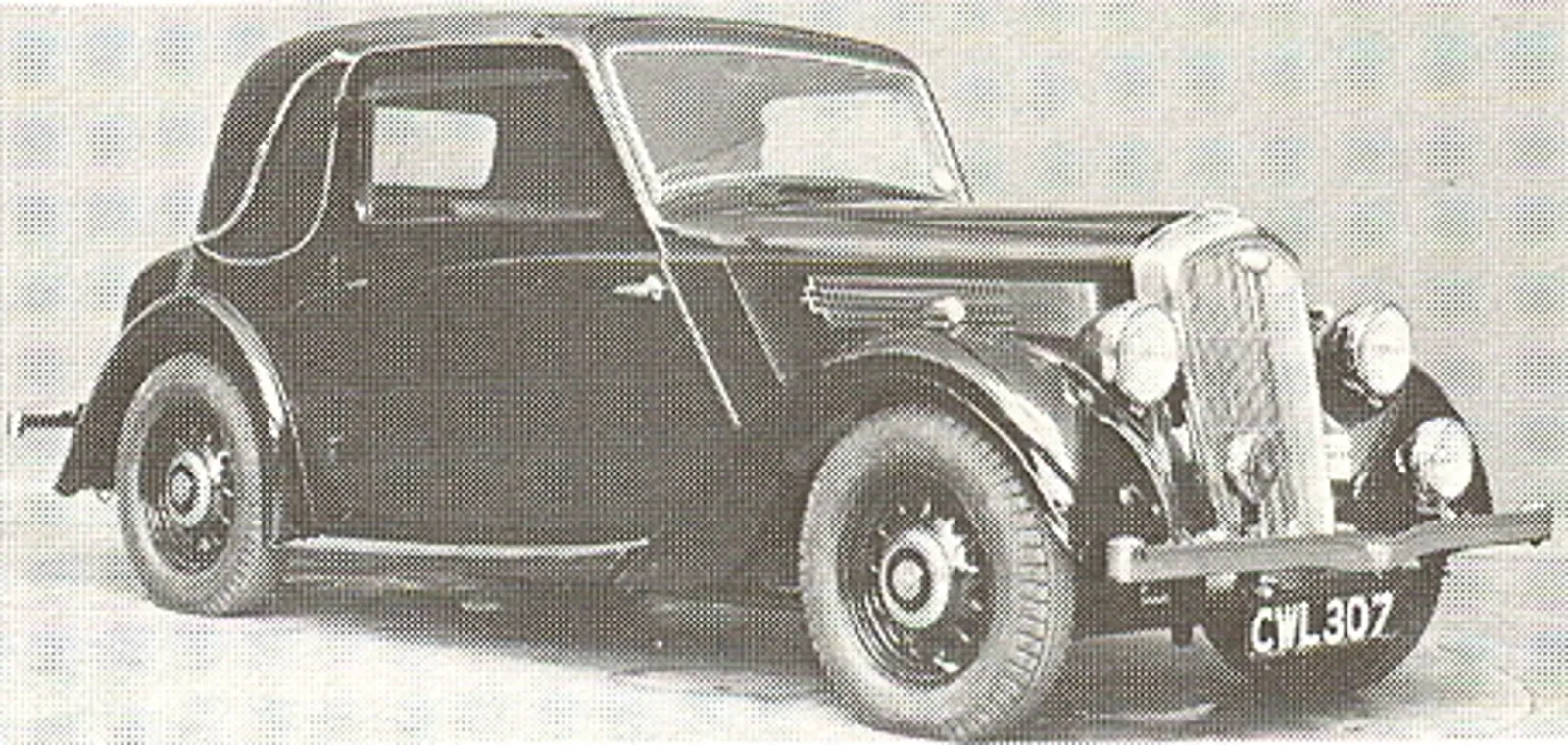
On 1 July 1935 Morris moved his personal holding in Wolseley into Morris Motors Limited. Before long every Wolseley model was a badge-engineered Morris design.
Wolseley joined Morris, MG and later Riley and Autovia in the Morris Organisation, which was later promoted as the Nuffield Organization.
What were the postwar Wolseleys?
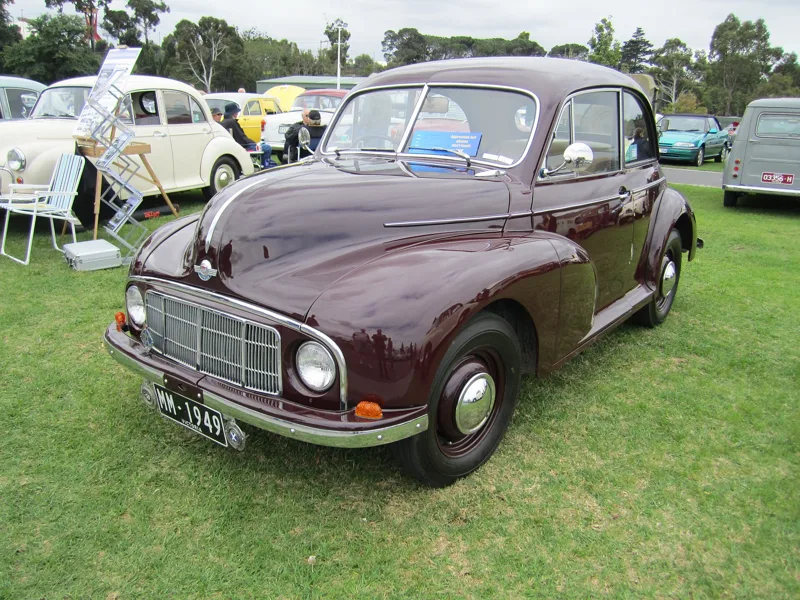
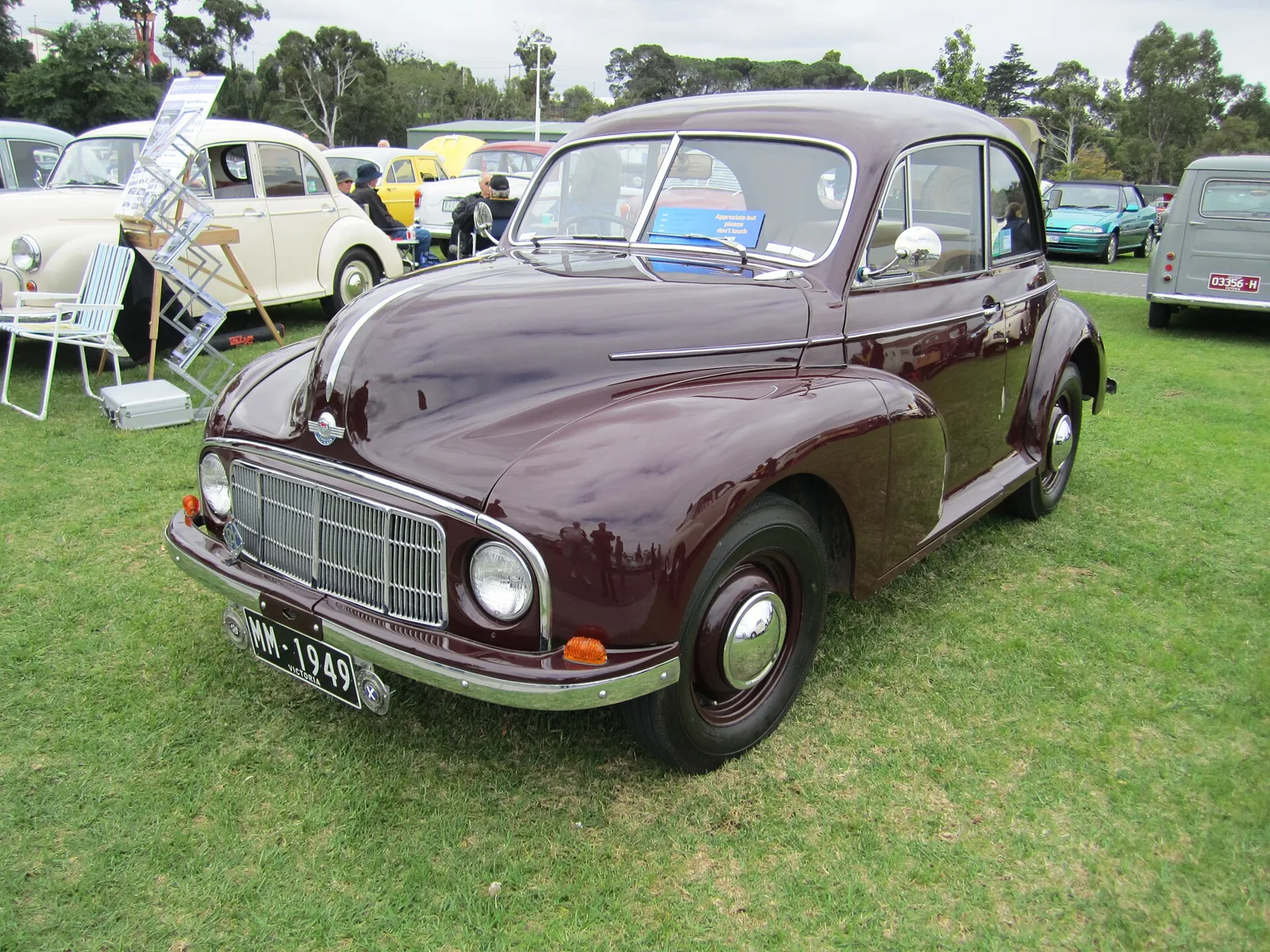
Once peace returned, Wolseley quit Adderley Park and its output was brought together at Cowley. The first postwar Wolseleys were the 4/50 and the 6/80, both with Wolseley overhead-camshaft engines. Both were built on Morris Oxford MO and Morris Six MS underpinnings, though they kept the classic Wolseley grille.
The 6/80 was the flagship. Its Wolseley engine delivered more power than the Morris unit, and it handled well for its day. British police used the car as a squad car well into the late 1960s.
How did Wolseley fare inside BMC?
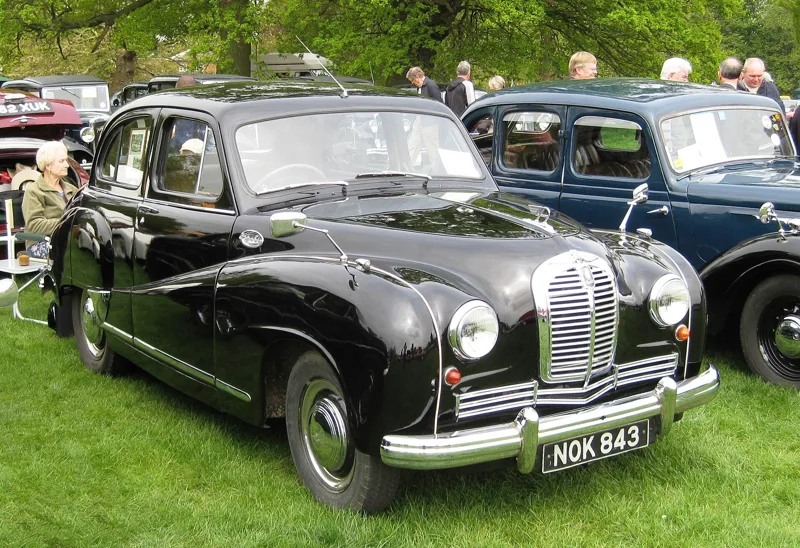
After the merger of Austin and Morris to form the British Motor Corporation (BMC), Wolseleys shared bodies and chassis with MG and Riley. Engineering cousins of the MG Magnette ZA and ZB and the Riley Pathfinder and Two-Point-Six, the 4/44 (later 15/50) and 6/90 shared their components.
Launched in 1957, the Wolseley 1500 was built around the planned Morris Minor successor and used the same shell as the Riley One-Point-Five. The next year the Wolseley 15/60 introduced the new mid-sized BMC saloon, penned by Pinin Farina, and similar vehicles followed from five marques within the year.
The Wolseley Hornet was a booted version of the Mini, shared with Riley as the Elf. The 1500 gave way to the Wolseley 1100 in 1965, which became the 1300 two years later. A version of the Austin 1800 arrived in 1967 under the Wolseley 18/85 name.
When did the Wolseley name end?
BMC and Leyland merged in 1969 to form British Leyland, and the Riley marque, which had long overlapped with Wolseley, was retired. The marque limped on with the 1972 Wolseley Six, a derivative of the Austin 2200.
Three years later the marque was finally withdrawn. Its last model was a Wolseley version of the wedge-shaped 18-22 saloon, which was badged simply Wolseley and sold for only seven months before the range was renamed Princess. That brought the Wolseley marque to an end after 74 years.
By 2012 SAIC Motor held the Wolseley marque, which had reached it via the Nanjing Automobile subsidiary after MG Rover broke up.
How did Wolseley name its cars?
Wolseley used a two-number system for its model names. Until 1948 the first number was the engine size in taxable horsepower under Royal Automobile Club rules. The 14/60, for instance, was rated 14 hp for tax purposes but produced 60 hp. After that the first figure matched the cylinder count, and from 1956 four-cylinder models showed their displacement instead. The 15/60 was therefore a 1.5-litre engine producing 60 hp. Eventually the whole system was abandoned.
Key dates in the Wolseley story
| Year | Event |
|---|---|
| 1901 | Wolseley Tool and Motor Car Company incorporated in March |
| 1905 | Siddeley's company bought; Austin leaves; Olympia shows vertical-engined cars |
| 1906 | Austin's five-year contract ends; more than 1,500 cars built |
| 1907 | Wolsit set up at Legnano, Italy |
| 1913 | 3,000 cars sold, the largest British output |
| 1914 | Renamed Wolseley Motors Limited |
| 1921 | 12,000 cars manufactured in the year |
| 1926 | Company declared bankrupt in October |
| 1927 | William Morris buys Wolseley at auction in February |
| 1928 | Six-cylinder 21-60 announced as the Messenger for export |
| 1935 | Morris Motors Limited takes over Wolseley on 1 July |
| 1957 | Wolseley 1500 launched, sharing its body with the Riley One-Point-Five |
| 1969 | BMC and Leyland merge to form British Leyland |
| 1975 | Last Wolseley model sold before the Princess rename |