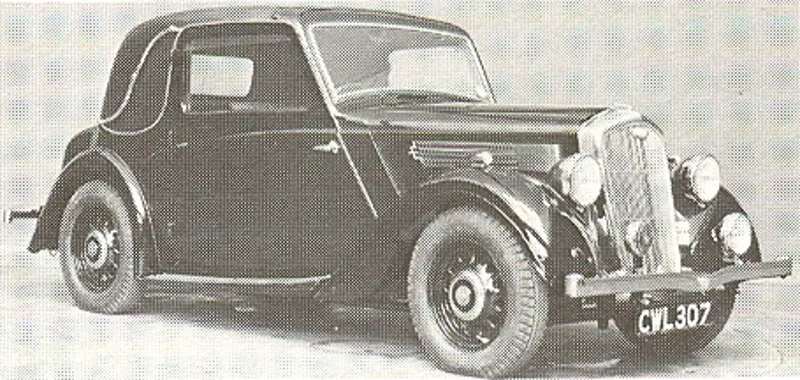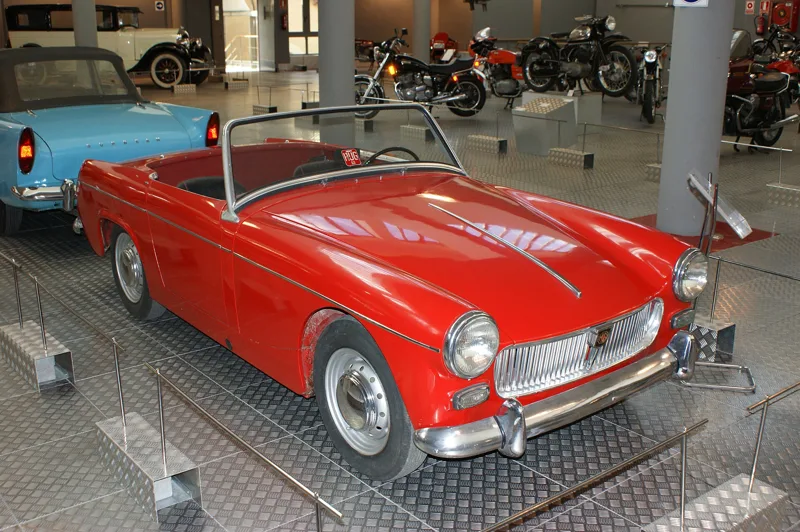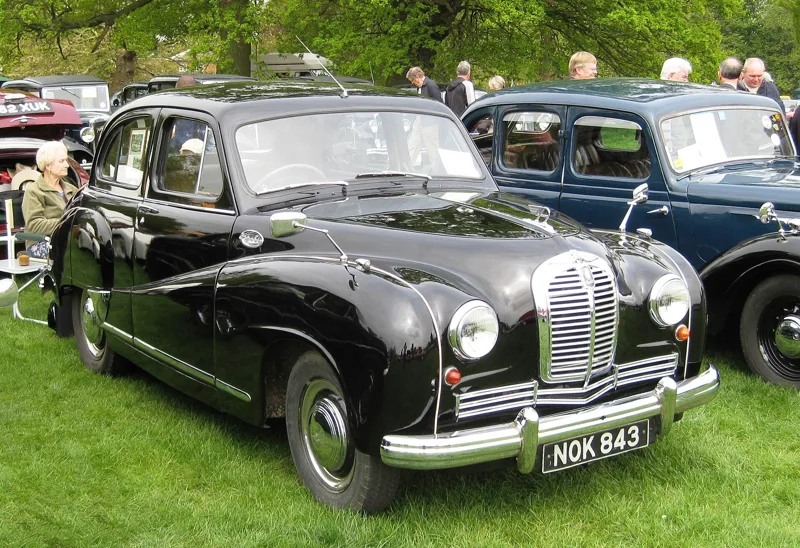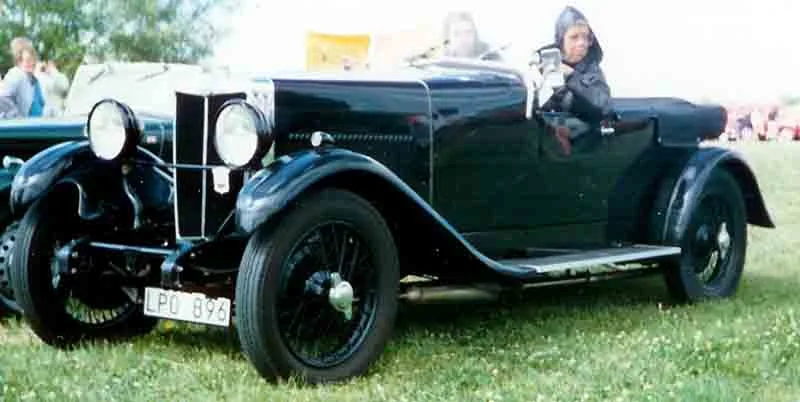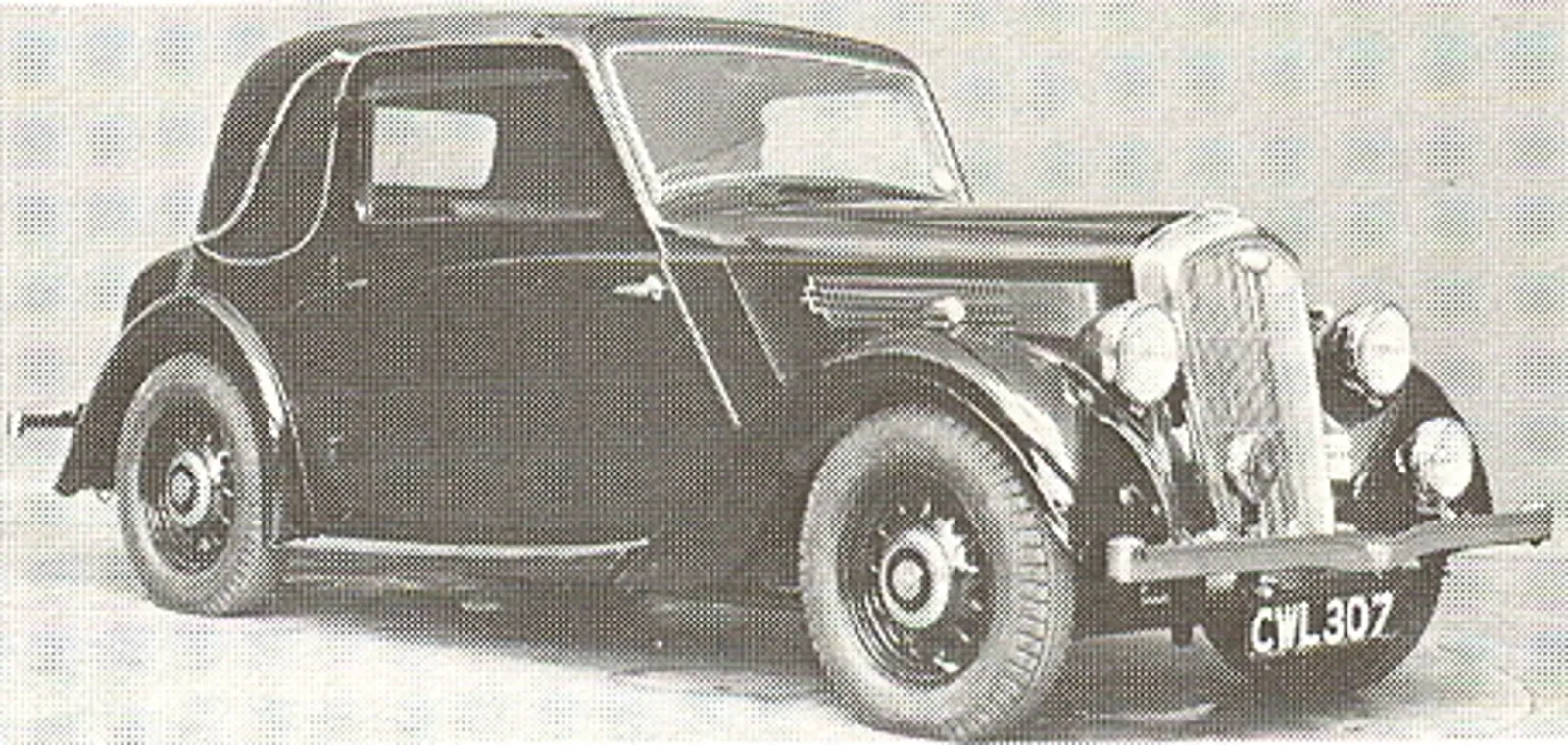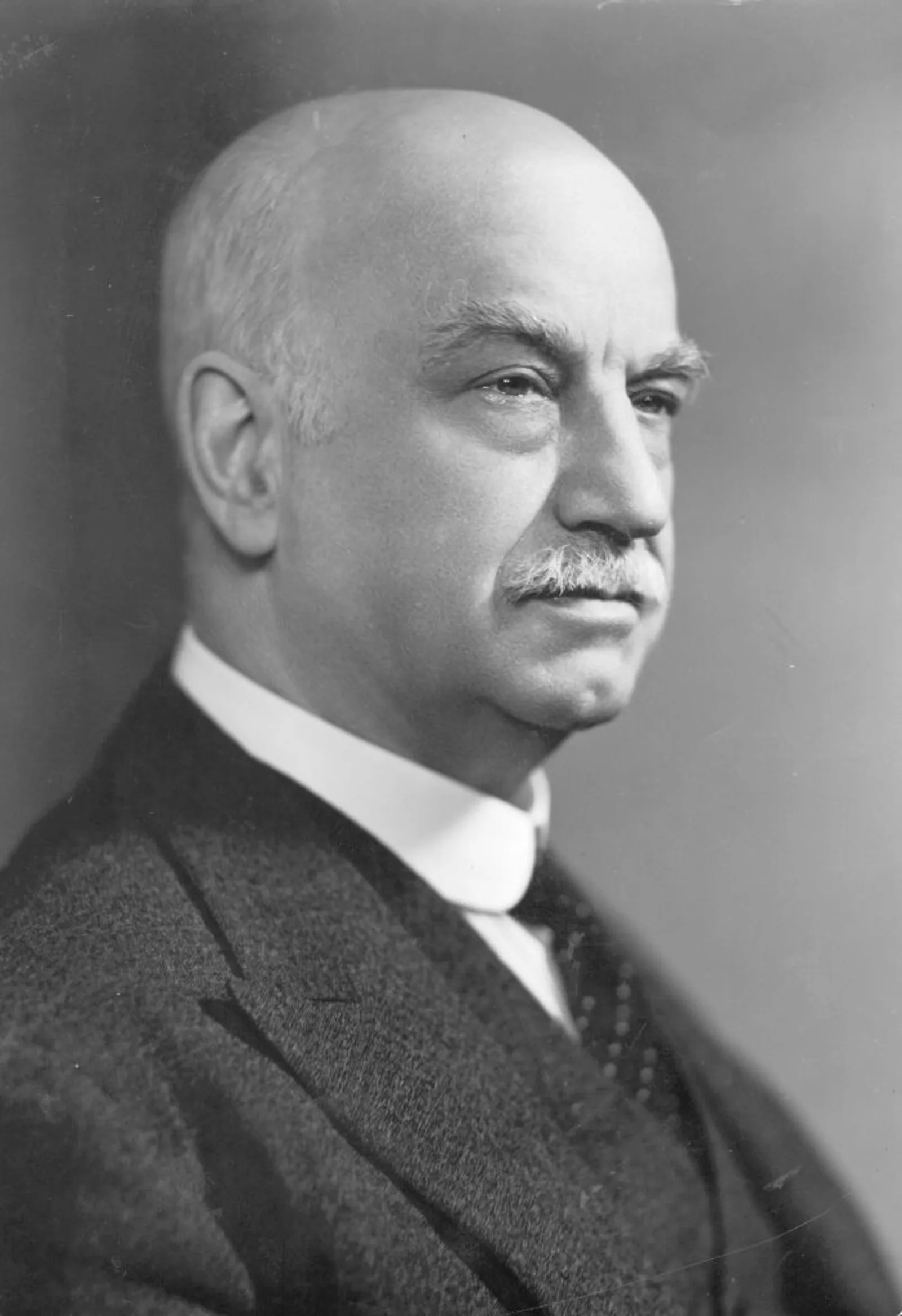
Four careers that overlap at Longbridge, Abingdon, Warwick and Birmingham, from the first British car in 1895 to the Austin-Healey.
Frederick Lanchester built the first British car in 1895, Herbert Austin founded Austin at Longbridge in 1905 and launched the Baby Austin in 1922, Cecil Kimber created the MG brand, and Donald Healey designed the Austin-Healey 100 shown in 1952.
The man who gave Britain the Baby Austin started out mending and improving sheep-shearing machines in Australia. Herbert Austin emigrated in 1884, worked in Melbourne engineering firms, and eventually returned to England with the Wolseley sheep-shearing company. Out of that unlikely beginning came the Longbridge works, one of the great British car factories.
Austin is one of four men who shaped British motoring from different directions. Frederick Lanchester built the first British car in 1895. Cecil Kimber turned a Morris dealership into MG. Donald Healey, a Monte Carlo Rally winner, put his name to cars from the Healey Elliot to the Austin-Healey. Their careers overlap in ways that are easy to miss.
Frederick Lanchester: the first British car
Frederick William Lanchester (1868 to 1946) was an English polymath who contributed to automotive engineering and aerodynamics and helped invent the field of operations research. He won scholarships but ended his education without a formal qualification. In 1888 he took a Patent Office draughtsman's job at 3 pounds a week, and later that year became assistant works manager at the Forward Gas Engine Company in Saltley, Birmingham.
He showed an early instinct for protecting his ideas. His contract said any improvements he made would belong to the company, and he struck the clause out before signing. In 1889 he patented a pendulum governor for controlling engine speed and earned ten shillings from every one fitted to a Forward engine. A self-starting device for gas engines, patented in 1890, he sold to Crossley for a handsome sum.
In 1893 he gave up his job to his younger brother George to concentrate on research. His benzene-burning engine had a wick carburettor, which drew fuel into a series of wicks to vaporise it, and he patented it in 1905. He fitted the engine to a flat-bottomed launch built in his garden and put on the water at Oxford in 1904, the first motorboat built in Britain.
The first Lanchester car
Lanchester's first car was a four-wheeler with a 5 bhp (3.7 kW) engine built with two crankshafts turning in opposite directions for smoothness, and air cooling by vanes on the flywheel. It had an epicyclic gearbox with two forward speeds and reverse, years before Henry Ford adopted such a design, and drove the rear wheels by chains. The walnut body seated three side by side.
He finished the car in 1895, but its first run only came in 1896, and it proved underpowered with transmission trouble. Lanchester then designed a new air-cooled engine of 8 hp (6 kW) and 2,895 cc, with two horizontally opposed cylinders, redesigned the gearbox and refitted the original car. To pay for the work he sold his house and moved to larger workshops in Birmingham. A second car with his own cantilever suspension, finished in 1898, won a gold medal at an exhibition and trials at Richmond and became known as the Gold Medal Phaeton. In 1900 it finished the Royal Automobile Club's first 1,000 Miles Trial, despite one mechanical failure along the way.
Lanchester's company and inventions
In December 1899 Lanchester and his brothers formed the Lanchester Engine Company at the Armourer Works in Sparkbrook, Birmingham. The 10 hp car that followed, built from 1901 to 1905, used worm drive, splined shafts and roller bearings, with the engine between the front seats and a side-mounted tiller in place of a wheel. Its transmission clamped a clutch disc to brake the car, much like a modern disc brake, and he was granted a patent for it on 1 December 1902.
Larger engines followed: a 20 hp four in 1905 and a 28 hp six in 1906. Henry Royce had already tackled crankshaft vibration, but Lanchester analysed it scientifically and patented a torsional vibration damper in 1907, with a secondary flywheel on a viscous clutch. He also patented a harmonic balancer for four-cylinder engines. He is credited with the accelerator pedal, steering wheels on his cars from 1907, detachable wire wheels, pressure-fed bearings and piston rings.
The company sold about 350 cars between 1900 and 1904, when it went bankrupt, and was reformed as the Lanchester Motor Company. Lanchester resigned as general manager in 1910 to become a part-time consultant, leaving his brothers George and Frank in charge. In 1909 he had become a technical consultant to Daimler, whose Daimler-Knight engine powered all its cars from 1909 until the mid-1930s and won the RAC Dewar Trophy in 1909. Lanchester's involvement also touched the petrol-electric KPL bus, which was withdrawn in May 1911 after 10 were made when a rival firm threatened a patent action.
In 1922 he became a Fellow of the Royal Society. His Lanchester Laboratories, founded in 1925, closed in 1934 when his health failed. He lived his last years with Parkinson's disease and cataracts in straitened circumstances and died at home on 8 March 1946.
Four careers, one trail through Longbridge, Abingdon, Warwick and Birmingham.
Herbert Austin: from sheep shearing to the Baby Austin
Herbert Austin (1866 to 1941) was born in Buckinghamshire to a farmer. After Melbourne engineering jobs and evening art classes, he took charge in December 1887 of a workshop owned by Richard Pickup Park, who was perfecting a shearing machine for Frederick York Wolseley, and spent three months improving it. He then joined the Wolseley Sheep Shearing Machine Company in Sydney and sold his patents to it in 1893 in exchange for shares.
Wolseley moved assembly to England, and Austin returned in November 1893 and set up a Birmingham factory. Shearing equipment sold seasonally, so in quiet periods they built bicycles. Looking for work to even out the year, Austin built two three-wheeled cars in his own time. The company listed one for sale in 1900, but its board saw no profitable future in motoring. In 1901 Vickers bought Wolseley's car interests, Austin included, and Austin resigned in 1905 to start on his own, taking senior staff with him and joined by his brother Harry.
He raised 37,000 pounds and took over an old print works at Longbridge, then in Worcestershire; the area became part of Birmingham in 1911. By 1908 Austin made seventeen models. In the First World War the company turned to munitions and built Austin Village at Turves Green for its workers. Peace brought trouble: by 1921 Austin was facing bankruptcy and a receiver was brought in.
The Baby Austin and the war years
The answer was the Baby Austin, launched in 1922 at 225 pounds, a price meant for people who had never owned a car. Output reached 25,000 a year by 1925 even as the price fell every year. Larger Austins followed, including the 12/6 in 1931 and the 12/4 in 1933.
Austin was knighted in 1917 and also received a Belgian order for employing 3,000 Belgian refugees at Longbridge. In the Second World War the firm made aircraft, Horsa glider fuselages, army vehicles, gun-turret hydraulic motors and pressings for jerrycans. Austin was put in charge of the producers' side of the government's shadow factory scheme to expand aircraft output.
He served as Conservative MP for Birmingham King's Norton from 1918 to 1924 without ever making a speech, and became Baron Austin in 1936. His only son, Vernon, had been killed in France in 1915, so the peerage ended with Austin's death from a heart attack and pneumonia on 23 May 1941.
Cecil Kimber: the man behind MG
Cecil Kimber (1888 to 1945) was a self-taught engineer and driver whose design rule was simple: a sports car must look quick even at a standstill. His MG M-type, the first Midget, was the world's top-selling sports car in 1932.
He came from a London family that made printer's ink, and began repairing motorised bicycles at 18. A motorcycle accident shattered a leg, and he took the insurance money rather than hand it to his father's struggling business; in 1914 he left the firm. He worked for Sheffield-Simplex, AC Cars and the supplier EG Wrigley, where he styled the radiator of the Angus-Sanderson, a car that sold badly and cost him his investment.
Morris Garages and the MG brand
In 1921 Kimber became sales manager of Morris Garages, a dealership founded in 1909 by William Richard Morris that also customised cars to order, and by 1923 he was general manager. He designed special bodies for Morris Oxford chassis and sold them as MGs. A modified 14/28 Oxford "Bullnose" of 1924 was marketed under the Morris Garages Super Sports banner.
Kimber believed racing would build awareness and demand. In March 1925 he drove Old Number One to first place in the 300-mile London-to-Land's End Reliability Trial, the marque's first major win. That same year he wrote to motor traders insisting that MG sports cars were not hotted-up versions of standard cars but built as sports cars throughout. The M.G. Car Company was formed in 1928. It relocated from Oxford to Abingdon in 1929, and Kimber took over as managing director in July 1930. He said a supercharged Alfa Romeo two-seater spurred him to build a better MG.
Records and racing
Kimber wanted to beat Austin in the 750cc "Baby car" class. He managed development of the MG C-type, the EX120, with Captain George Eyston, whose Powerplus supercharger was fitted to the engines. In 1931 an EX120 driven by Eyston reached 103.13 mph at Montlhery, passing 100 mph in the 750cc category, and in 1932 Eyston set a 119.48 mph record at Pendine Sands in the "Magic Midget".
The K3 Magnette became the 1100cc EX135, which won the 1933 Mille Miglia, and Tazio Nuvolari drove a supercharged K3 to victory in the 1933 RAC Tourist Trophy in Ulster at an average of 78.65 mph over 478 miles. An 1100cc MG reached 204.3 mph for the mile at Dessau in 1939.
In 1935 Morris formally sold MG to Morris Motors, and Kimber, now taking orders from head office, grew disillusioned. In the war he took on aircraft contract work without approval, was asked to resign and left in 1941. He died on 4 February 1945 in the King's Cross railway accident. His daughter later said MG was everything to him and that he never quite got over being dismissed. He is remembered with a 2014 Oxfordshire Blue Plaque in Abingdon, a 2017 induction into the British Sportscar Hall of Fame and a Kimber Wing at New College, Oxford, opened in 2019.
Donald Healey: from rallies to the Austin-Healey
Donald Healey (1898 to 1988) was born in Perranporth, Cornwall, and joined Sopwith Aviation as an apprentice in 1914. He became a Royal Flying Corps pilot in 1916 and was invalided out in November 1917. In 1920 he opened the first garage in Perranporth, but he cared more about rallies and racing than the business.
He entered the Monte Carlo Rally in a Triumph 7 in 1929, won it in 1931 in an Invicta and finished second overall the next year. He worked for Riley, then Triumph, where he rose to technical director and designed the Southern Cross and the 1935 Dolomite 8 straight-eight. He had taken a class win and third place overall in the 1934 Monte Carlo Rally in a Gloria he designed himself. Triumph went into liquidation in 1939, and during the war Healey made aircraft carburettors and worked on Humber armoured cars.
Healey's own cars
In 1945 he formed the Donald Healey Motor Company with Achille Sampietro and Ben Bowden in an old RAF hangar at Warwick. The first car, the 1946 Healey Elliot, was a saloon with a Riley engine, and it took the 1947 and 1948 Alpine rallies and won the touring class at the 1948 Mille Miglia. The 1949 Silverstone sports car was successful enough to win a deal with Nash Motors president George W. Mason.
The Nash-Healey began in 1951 with a Nash Ambassador six, an aluminium body and a Silverstone chassis, and Pininfarina restyled it in steel for 1952. A Nash-Healey driven by Duncan Hamilton and Tony Rolt finished fourth overall at Le Mans in 1950, despite being struck from behind by a Delage with no brakes.
The Austin-Healey
All of Healey's cars so far had been expensive. He wanted an affordable sports car with 100 mph performance, so he fitted an Austin engine and gearbox in place of the Riley 2.5-litre unit and displayed the Austin-Healey 100 at Earls Court in October 1952. The merger of Morris and Austin had led BMC to phase out the Riley engine. Healey's own Cape Works could not meet demand, so BMC built the car under licence at Longbridge, the factory Herbert Austin founded. Output of the Austin-Healey 100 reached 74,000, with more than 80 per cent exported.
A design consultancy formed in 1955 produced the Austin-Healey Sprite, which entered production in 1958. After BMC ended the arrangement in 1967, Healey became chairman of Jensen Motors in 1970 and helped design the Lotus-engined Jensen-Healey with William Towns to replace the Austin-Healey. Prototypes with Vauxhall and Ford engines had failed on power, bonnet fit or US emissions rules. Healey was made a CBE in 1973 for services to export and entered the International Motorsports Hall of Fame in 1996.
The four founders compared
| Name | Lived | Best known for | Main company |
|---|---|---|---|
| Frederick Lanchester | 1868 to 1946 | First British car (1895), disc-brake patent, vibration damper | Lanchester Engine Company, later Lanchester Motor Company |
| Herbert Austin | 1866 to 1941 | Baby Austin (1922) at 225 pounds | Austin Motor Company, Longbridge |
| Cecil Kimber | 1888 to 1945 | MG M-type Midget, record-setting MGs | M.G. Car Company, Abingdon |
| Donald Healey | 1898 to 1988 | Austin-Healey 100 and Sprite, Jensen-Healey | Donald Healey Motor Company, Warwick |
How their paths crossed
Kimber went after Austin directly, building the EX120 to beat the little Austins in the 750cc class and reach 100 mph there. Healey's Austin-Healey was made at Austin's Longbridge works. Lanchester, a generation older, built his cars before either of them started.