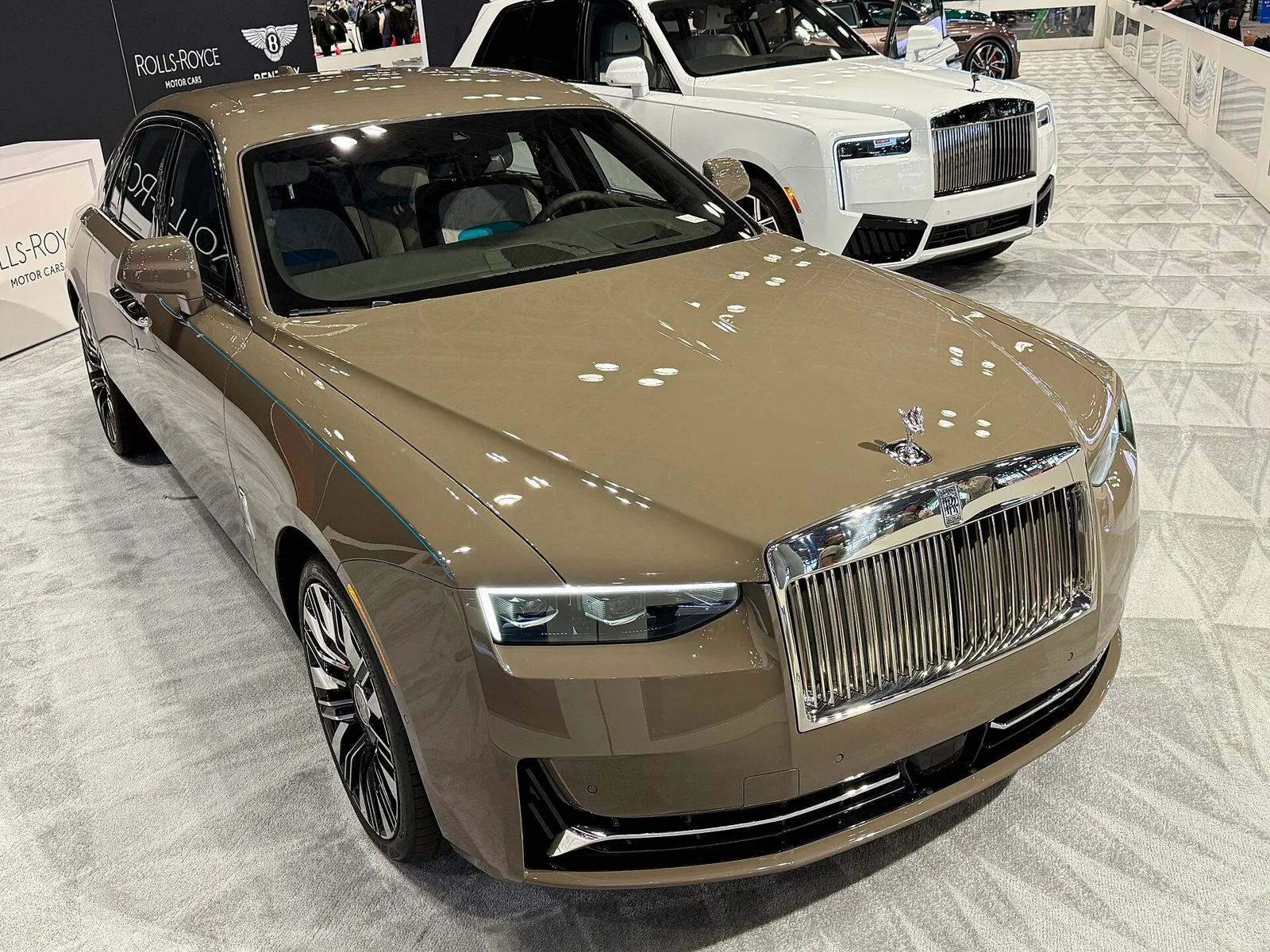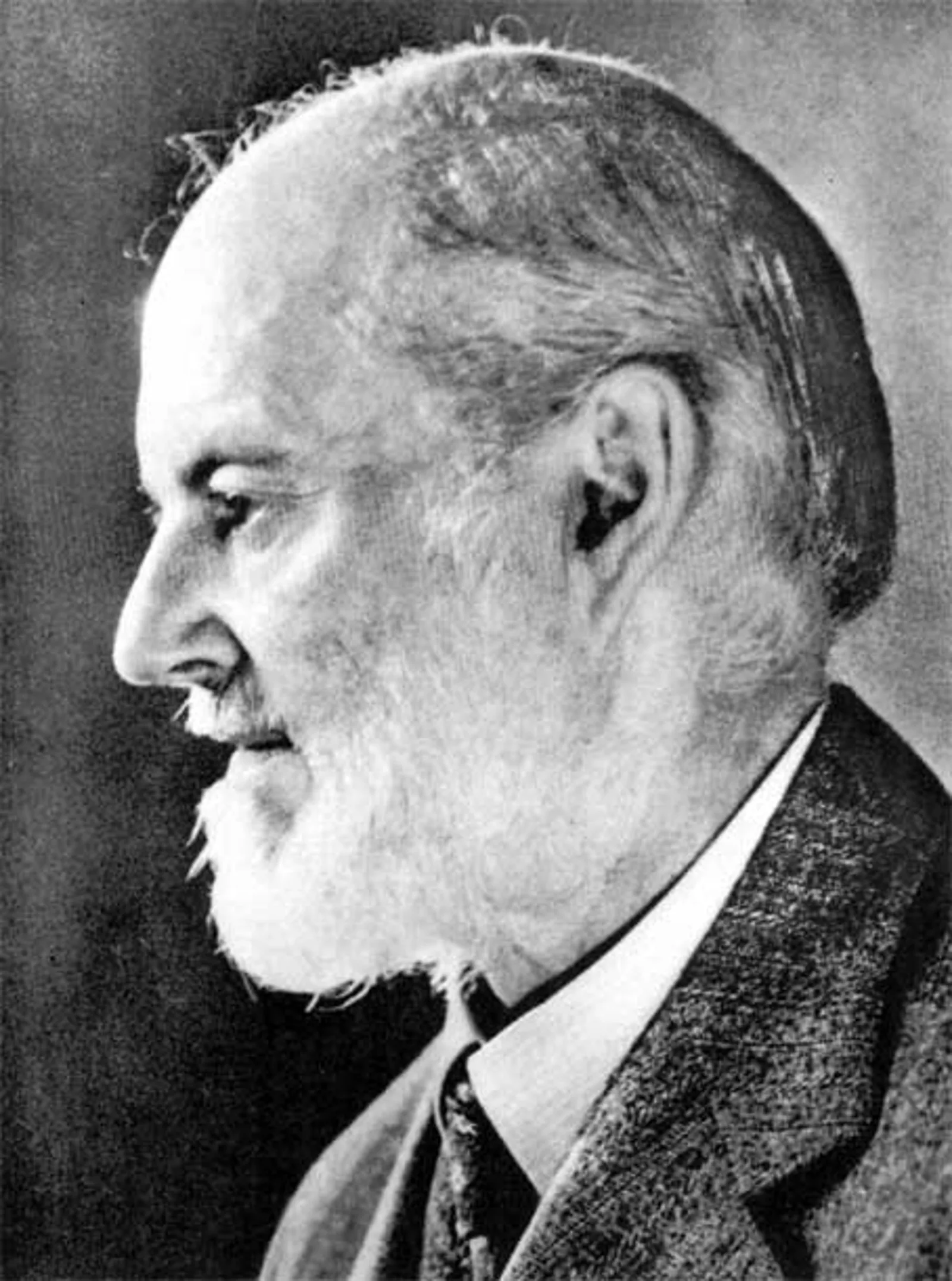
A self-taught Manchester engineer who co-founded Rolls-Royce, designed the Silver Ghost and went on to create engines that powered Britain's wartime aircraft and speed records.
Henry Royce was an English engineer who co-founded Rolls-Royce with Charles Rolls and Claude Johnson. He designed the Silver Ghost car and later the Eagle, Falcon, Hawk and Condor aero engines, plus the R engine that won the Schneider Trophy in 1929.
Sir Henry Royce was an English engineer whose car and aero engines earned a reputation for reliability and longevity. Together with Charles Rolls and Claude Johnson he founded the Rolls-Royce company, and his designs carried it from motor cars to aero engines.
Who was Henry Royce?
Henry Royce was born at Alwalton, near Peterborough, on 27 March 1863. He is best known for the Rolls-Royce Silver Ghost and for aero engines that gained a reputation for reliability and longevity. He died at his home in Sussex on 22 April 1933.
His childhood was marked by hardship. His father's flour-mill business failed in 1867, and James Royce died in 1872, aged 41, in a public poorhouse in Greenwich. Henry was nine at the time and had completed only a year of schooling at the Croydon British School.
He turned to work early. At 10 he sold newspapers for W. H. Smith, and at 13 he delivered telegrams for the Post Office, earning a halfpenny per delivery. An elderly great-aunt paid for an apprenticeship with the Great Northern Railway at Peterborough in 1878, but when her money ran out in November 1880 he walked to Leeds and found work at toolmakers Greenwood and Batley.
Of the Allied aero engines of the period, just two were neither a production nor a technical failure, and the Eagle was one of them.
How did Royce start his own business in Manchester?
In 1884 Royce, then 21, founded F. H. Royce and Company in Blake Street, Hulme, Manchester, with savings of 20 pounds. His friend Ernest Claremont joined as partner within six months, contributing 50 pounds. Claremont handled sales, payments and deliveries, while Royce designed and built the products.
The firm first sub-contracted lighting components and took any engineering job that paid, including repairing sewing machines. The earliest product to sell well was a household electric bell. By 1889 it had nine employees, and in 1891 it was registered as F. H. Royce and Co.
From 1894 the company made electric cranes, and nine of them were supplied for the Manchester Ship Canal. On 24 July 1897 Royce took out his first patent, for a bayonet-cap lamp socket. Two years later the business was reconstructed as Royce Ltd, and in 1901 it bought 1,200 acres (490 ha) of land beside the Ship Canal in Trafford Park.
Why did Royce's health collapse in 1902?
The electrical trade became harder through the early 1900s, as German manufacturers cut prices and American and rival British firms arrived. The price of electric motors had fallen by over 50% by 1905, and Royce's habit of working long hours took a toll on him.
In 1902 he had a nervous collapse. Under pressure from his wife and the other directors to rest, he travelled with her to South Africa by sea. After ten weeks with no contact with the company, he returned refreshed in late 1902.
How did Royce move into car making?
Royce bought a 1901 two-cylinder Decauville in 1902 or 1903. On collection it refused to start, and four hired men had to shove it through the streets to the works. He began improving it, and eventually persuaded the other directors to let him build three experimental cars, the first of which was completed by 1 April 1904.
With help from Ernie Mills and two electrical apprentices, Royce refined the Decauville using detailed notes and drawings. The new cars had a 10 hp two-cylinder engine, a three-speed gearbox and a differential rather than chain drive. He also removed the heavy cast-bronze warning bell fitted to the Decauville, saving weight.
On 16 September 1903 the first engine was run on a dynamo for the first time. The first assembled car was driven by Royce for 30 miles (48 km) to his home in Knutsford and back, before it was sent to a coachbuilder for its body.
How did Royce come to partner with Charles Rolls?
Henry Edmunds, a director and friend of Charles Rolls, had bought the third Royce car, and Rolls ran a London showroom selling imported models. Edmunds arranged a meeting between the two men, which took place on 4 May 1904. Rolls preferred cars with three or four cylinders, but he was impressed by the two-cylinder Royce 10.
An agreement signed on 23 December 1904 gave C.S. Rolls and Co the exclusive right to sell Royce cars, with a range that would grow from the 10 hp to 15 hp, 20 hp and 30 hp models. The cars were badged as Rolls-Royce and sold as chassis, for customers to commission bodies from coachbuilders.
The partnership was formalised in 1906, when Rolls-Royce Limited was registered on 15 March 1906 with capital of 60,000 pounds. Royce took the title of chief engineer and works director, with pay of 1,250 pounds a year and 4% of profits above 10,000 pounds. Rolls received 750 pounds a year and 4% of the profits, which reflected Royce's technical role.
The public flotation in December 1906 initially fell short, with 41,000 pounds subscribed against a 50,000 pound minimum. The shortfall was filled when Arthur Harry Briggs took 10,000 pounds of shares in return for a seat on the board. By 9 January 1907 a total of 63,000 pounds had been raised.
What was the Silver Ghost?
The Silver Ghost was Rolls-Royce's first wholly new model, a six-cylinder car unveiled to the public at the London Motor Show in November 1906. It was initially designated the 40/50 hp. Its engine blocks suffered water seepage into the cylinders, and Royce was so frustrated that he attacked the castings with a sledgehammer, insisting they had to be redone.
A different casting method solved the fault, though the setback delayed the car's release until April 1907. In March 1908 Claude Johnson persuaded the directors to concentrate on the Silver Ghost alone, and the earlier models were dropped. The company's claim to build the best car in the world came from a phrase coined by the magazine Autocar in 1907, not from Rolls-Royce itself.
Why did Royce move to Derby and cut back his workload?
Royce moved to Derby in 1908, renting a property called The Knoll in Quarndon until 1911. By 1909 Johnson believed the workload from the Silver Ghost and the new factory had become dangerous for Royce, who sometimes worked 36 hours without stopping. He was also known for sacking workers and then being quietly overruled by his foreman.
Johnson persuaded Royce to give up the post of works director and become Engineer-in-Chief instead. That took him away from the production floor, where he had been working from a small office and interfering with day-to-day decisions.
What happened after Rolls died in 1910?
Charles Rolls died on 12 July 1910 when his Wright Flyer aircraft crashed, and his death was a shock to Royce and the company. Royce then collapsed physically, which was generally blamed on his workaholic habits and poor eating. Doctors in London are believed to have diagnosed bowel cancer, and they carried out a major operation before giving him three months to live.
Johnson did not accept that verdict. Royce began recovering, and he was taken to Overstrand in Norfolk for quiet, then to the Riviera. Johnson hired a nurse, Ethel 'Auby' Aubin, who would become central to Royce's life for the rest of it. The pair spent a winter in Egypt before settling at Le Canadel.
Johnson then devised a split working arrangement. Royce would spend winters at Le Canadel on the Cote d'Azur and summers in a quiet part of southern England, with a small personal design team turning his ideas into formal drawings at Derby. Johnson had a house built for the design team below Royce's own at Le Canadel.
How did Royce contribute to the First World War?
Royce began designing Rolls-Royce's first aero engine after the First World War broke out, and the Eagle was introduced in 1915. He reduced his salary as a contribution to the war effort. Of the Allied aero engines of the period, just two were neither a production nor a technical failure, and the Eagle was one of them.
Royce then oversaw three further engines: the Falcon, designed by Robert Harvey-Bailey, and the Hawk and the Condor. Aircraft engines soon became Rolls-Royce's principal product. He also bought a second-hand Bugatti for his own use during the war, which caught fire on the trip home and was later tuned to his satisfaction.
Why did Royce settle at West Wittering?
By late 1917 conditions at St Margaret's Bay had worsened, with shortages of food and household goods, security scares from nearby military camps, and German bombardment of nearby Dover. Royce searched the south coast in his Silver Ghost and chose Elm Tree Farm, which he renamed Elmstead. It remained his summer home until his death.
The house had no electricity and lay about 8 miles from Chichester. Its engine and chassis design teams worked in separate studios nearby, while his cars were kept in a converted barn. In October 1928, while walking on the beach at West Wittering, Royce sketched the ideas for his R engine in the sand.
What were the R engine and the Schneider Trophy record?
Designed in his studio in the village, the R engine set a new air speed mark of 357.7 miles per hour, and in 1929 it took the Schneider Trophy. Royce followed the race through binoculars from a haystack near his house.
Lucy, Lady Houston guaranteed 100,000 pounds toward another attempt after the government declined to fund one in 1931. Royce discovered the R had further power in reserve, and the Supermarine S.6B took the prize at 340.08 mph (547.31 km/h) on 13 September 1931. On 29 September a further flight, in the same aircraft with an upgraded engine, reached 407.5 mph (655.8 km/h), the first craft to exceed 400 mph.
The R engine led to the PV-12, a privately funded 12-cylinder engine that Rolls-Royce launched in October 1933. Its first test run came in 1934, a year after Royce's death, and the project went on to become the Merlin.
How did the Bentley purchase and ride control come about?
In 1931 Rolls-Royce bought out its rival W. O. Bentley. A 20/25 engine was fitted into a chassis with a Bentley radiator, and the car was taken to West Wittering for Royce's approval. He was enthusiastic and suggested a way for the driver to adjust suspension stiffness while driving.
That idea evolved into an automatic ride control. It adjusted the dampers to suit speed, being softer at low speeds for comfort and firmer at higher speeds for stability. A steering-wheel control let the driver tune the range of damping to their taste.
How did Royce die?
Royce died at his house, Elmstead, in West Wittering on 22 April 1933. On the night before he died, he sketched an adjustable shock absorber on the back of an envelope while propped up in bed. He asked his nurse to make sure the 'boys' in the factory received it, but he died before it reached Derby.
By late 1921 his health had been failing, and he spent more time in bed. Ethel Aubin had taken increasing control of his private life after his illness in 1911, and in his will he credited her for prolonging his life. He left her Elmstead, its lands and furniture, together with a share of two-fifths of what remained of his estate, held in trust. His wife also received two-fifths.
Honours and memorials
Royce was appointed OBE in 1918 and created a baronet in 1930 for his services to British aviation. He had no children, so the baronetcy became extinct on his death. He had requested no mourners or flowers at his funeral.
In 1962 a memorial window dedicated to him was unveiled in Westminster Abbey, part of a set of Ninian Comper windows honouring eminent engineers. The Henry Royce Institute in Manchester, the national centre for advanced materials research, is named after him. Michael Jayston portrayed him in the 1972-1973 BBC series The Edwardians.
Henry Royce at a glance
| Date | Milestone |
|---|---|
| 27 March 1863 | Born at Alwalton |
| 1884 | F. H. Royce and Company founded in Manchester |
| 24 July 1897 | First patent, bayonet-cap lamp socket |
| 8 June 1901 | Trafford Park site bought, 1,200 acres (490 ha) |
| 4 May 1904 | Meets Charles Rolls |
| 15 March 1906 | Rolls-Royce Limited registered |
| April 1907 | Silver Ghost launched |
| 12 July 1910 | Charles Rolls killed in a flying accident |
| 1915 | Eagle aero engine introduced |
| 1929 | R engine wins the Schneider Trophy |
| 29 September 1931 | S.6B reaches 407.5 mph (655.8 km/h) |
| 22 April 1933 | Dies at Elmstead, West Wittering |