A 1909 engine firm tied to Zeppelin airships, opulent pre-war cars, wartime tank engines and two attempts at a luxury car brand.
Founded in 1909 by Wilhelm Maybach and his son Karl, the company began as an engine maker linked to Zeppelin airships. It built cars from 1921, returned as a luxury marque in 2002, and its Mercedes-Maybach sub-brand launched in 2015. The brand is owned by Mercedes-Benz today.
Maybach is a German luxury brand owned by Mercedes-Benz, founded on 23 March 1909 by Wilhelm Maybach and his son Karl. It began as an engine business tied to Zeppelin airships, built opulent cars between 1921 and 1940, and returned in 2002 before the Mercedes-Maybach form of the name took shape.
Who founded Maybach and where did it start?
Wilhelm Maybach founded the company on 23 March 1909 with his son Karl Maybach, and it started as a subsidiary of Luftschiffbau Zeppelin GmbH. Wilhelm had been technical director of Daimler-Motoren-Gesellschaft until 1907, so the company's engineering roots ran back to Daimler.
The company was renamed Maybach-Motorenbau GmbH in 1912. Its first products were diesel and petrol engines for German Zeppelins, and the business grew out of that airship work rather than out of car building.
During the First World War the Maybach Mb.IVa was used in aircraft and airships. The company's engines therefore served military aviation before it built any road cars of its own.
Maybach built an experimental car in 1919, which came before the first production model, the 1921 W3. Daimler-Benz purchased the company in 1960, bringing the brand into the Mercedes family.
Zeppelin engines, opulent pre-war cars and wartime tank engines all came before the luxury brand of today.
What did the Zeppelin link mean for Maybach?
The company began as a subsidiary of Luftschiffbau Zeppelin GmbH, and its first product line was built for the airship trade. Maybach first made diesel and petrol engines for German Zeppelins, so the early reputation rested on demanding aviation work.
The Mb.IVa engine served in aircraft and airships during the First World War. The Zeppelin name later appeared on the DS7 and DS8 cars, a reminder of the connection that started the business.
Rail car engines followed the Zeppelin engine work, extending the company's track record into a different field of transport. For a brand now known for luxury cars, the airship origins are the earliest chapter of the story.
What were Maybach's first cars?
The 1921 Maybach W3 was the first Maybach, shown at the Berlin Motor Show with a 70 hp (52 kW) 5.7 L inline six. Through the 1920s and 1930s the range grew into six-cylinder and V12 cars, and around 1800 Maybachs were built before the Second World War.
The 1926 Maybach W5 had a 7 L inline six with 120 hp (89 kW). The 1929 Maybach 12 was a V12 precursor, and the 1930 Maybach DS7 Zeppelin had a 7 L V12 with 150 hp (112 kW).
The 1931 Maybach DS8 Zeppelin had an 8 L V12 with 200 hp (150 kW). The Zeppelin name tied the car to the airship firm, a reminder of how closely the brand was linked to the Zeppelin engine work that started it.
The DSH, or Doppel-Sechs-Halbe, was built from 1930 to 1937, a run that overlapped the DS7 and DS8. The 1934 Maybach W6 DSG featured a twin overdrive transmission,.
The 1935 SW35 had a 3.5L 140 hp (104 kW) inline six, and the 1936 SW38 had a 3.8L 140 hp (104 kW) unit. The 1939 SW42 had a 4.2L 140 hp (104 kW) inline six, and the 1945 JW61 had a 3.8L 145 hp (108 kW) inline six.
Which Maybach engines and cars should you know?
| Model | Year | Engine | Output |
|---|---|---|---|
| W3 | 1921 | 5.7 L inline six | 70 hp (52 kW) |
| W5 | 1926 | 7 L inline six | 120 hp (89 kW) |
| DS7 Zeppelin | 1930 | 7 L V12 | 150 hp (112 kW) |
| DS8 Zeppelin | 1931 | 8 L V12 | 200 hp (150 kW) |
| SW35 | 1935 | 3.5L inline six | 140 hp (104 kW) |
| SW38 | 1936 | 3.8L inline six | 140 hp (104 kW) |
| SW42 | 1939 | 4.2L inline six | 140 hp (104 kW) |
| JW61 | 1945 | 3.8L inline six | 145 hp (108 kW) |
Did Maybach make gearboxes as well as cars?
Maybach's British subsidiary, Maybach Gears Ltd, specialised in gearboxes. The Merritt-Maybach gearbox was produced in 1938 for the Nuffield A.16E1 Cruiser tank, which tied the transmission work to armoured vehicles.
Spyker ordered 5.7 L inline six engines from Maybach, and not all of the engines were purchased. The gearbox and engine work shows a company that supplied parts as well as complete cars, and that supplied its drivetrain components to other manufacturers, not only to its own car customers.
Engines were designated with codes such as HL120, HL116, HL210 and HL230. Those codes appear again in the wartime history, where the HL230 powered the Tiger tanks.
How did the Second World War change Maybach?
Maybach produced engines for most of Nazi Germany's tanks and half-tracks, and it built the engines for the Tiger I and II as the HL230. The engine plant at Friedrichshafen was targeted by Allied bombers.
To keep production going, an underground factory codenamed Richard I was set up under the Radobyl mountain.
After the Second World War the factory did repair work but never restarted automotive production. Some 20 years later Maybach was renamed MTU Friedrichshafen, a name that marked the end of the car side of the business.
How did Maybach serve Mercedes-Benz after 1960?
After 1960 Maybach made special editions of Mercedes cars in the W108 and W116 ranges. These cars were virtually hand built and carried Mercedes badges and Mercedes serial numbers, so the Maybach name was not visible to the buyer.
Rolls-Royce Power Systems AG, based in Friedrichshafen, made commercial Maybach diesel engines. Those engines were marketed under the MTU brand, so the Maybach name survived in industrial power rather than in cars.
The Maybach Foundation and a Museum for Historical Maybach Vehicles now preserve that heritage.
Maybach's name therefore survived in several forms after 1960: as a Mercedes special edition, as diesel engines under the MTU brand, and as a foundation that keeps its history. Maybach's pedigree was virtually unknown outside Germany.
When did the Maybach name return in 2002?
Daimler presented a luxury concept car at the 1997 Tokyo Motor Show, and the production Maybach 57 and Maybach 62 followed. The Maybach name returned as an ultra-luxury brand in 2002, and the revived cars shared significant components with Mercedes-Benz models.
The 57S arrived in 2005 with a 6.0 L V12 bi-turbo engine producing 450 kW (603 hp) and 1,000 Nm (738 lbf ft) of torque. The S in the name stood for Special rather than Sport.
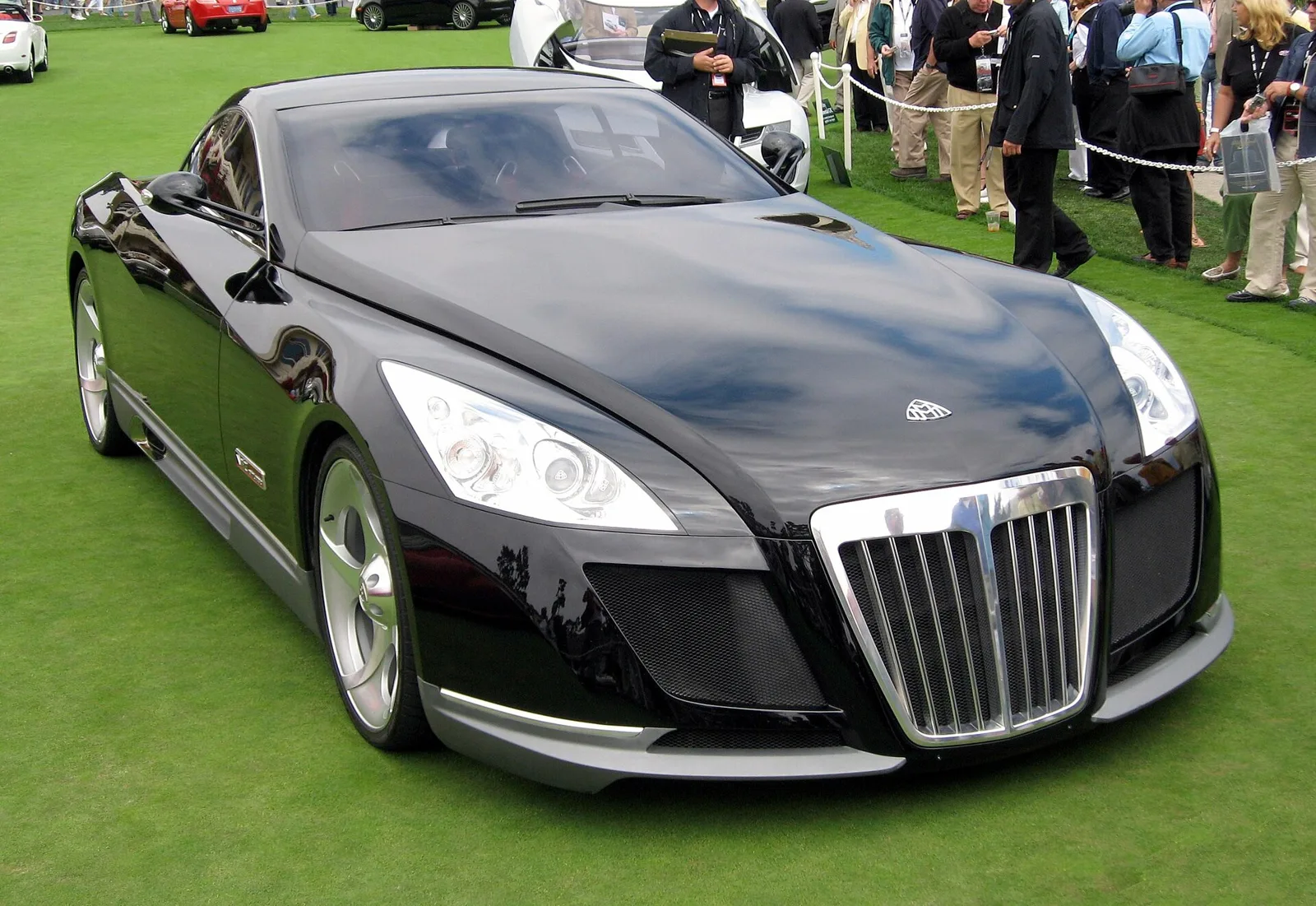
The 2005 Maybach Exelero prototype was shown at the IAA in Frankfurt, and the 2006 Maybach 62S and 2007 62 Landaulet extended the range. The first models had poorer driving dynamics than the Rolls-Royce and Bentley cars they competed with.
Daimler-Chrysler predicted 2,000 annual sales worldwide, and it expected 50 percent of those sales in the United States. The results that followed fell well short of that plan.
Why did the first Maybach revival struggle?
In 2010 only 157 Maybachs were sold worldwide, while 2,711 similarly priced Rolls-Royces were sold in the same year. Only 44 Maybachs were sold in the US in the first ten months of 2011, and about 3,000 had been sold worldwide since the 2002 revival.
In 2007 Mercedes bought back 29 US dealers, reducing the total from 71 to 42.
Maybachs were built alongside the Mercedes-Benz S-Class in Sindelfingen. Rolls-Royce and Bentley were assembled in England, separate from their parent plants,.
Maybachs were never advertised as owner-driven vehicles, and journalists were asked to ride in the back seat rather than drive. Model names reflected vehicle lengths in decimetres,.
How did the first Maybach brand end in 2012?
Daimler's CEO Dieter Zetsche announced the end of the brand in November 2011, with the brand to cease by 2013. Maybach 57, 57S, 62, 62S and Landaulet were discontinued in August 2012, and the last Maybach vehicle was manufactured in Sindelfingen on 17 December 2012.
The announcement in November 2011 came more than a year before the last vehicle was built on 17 December 2012. Poor sales drove the decision to end the brand. Daimler had approached Aston Martin to engineer the next generation of Maybach, but the brand did not continue in that form.
In the 1990s Mercedes missed the chance to buy Rolls-Royce and Bentley.
How did Mercedes-Maybach return as a sub-brand?
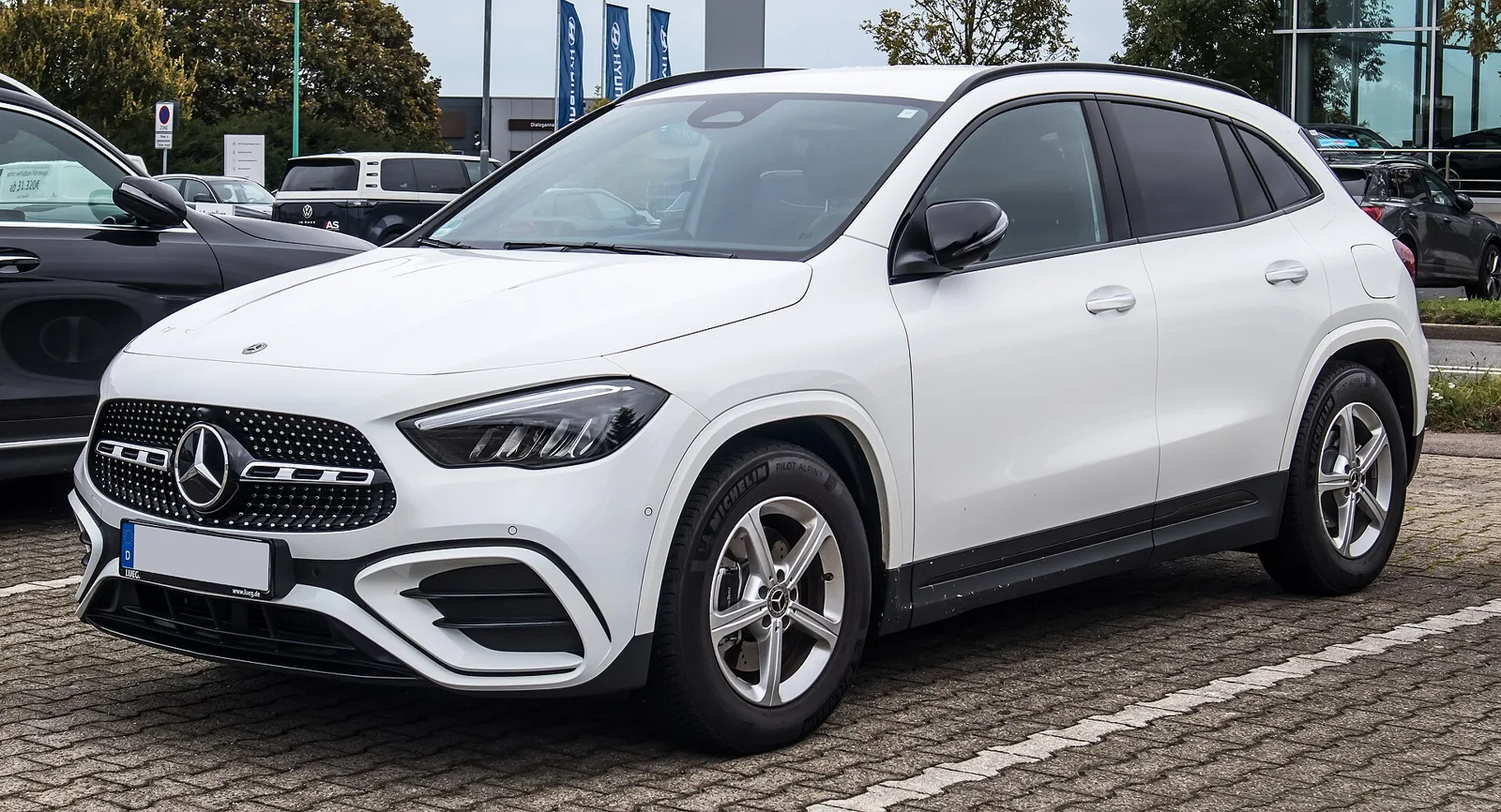
In November 2014 Daimler announced the revival of Maybach as an S-Class sub-brand. The Mercedes-Maybach S600 was unveiled at shows in Los Angeles and Guangzhou, and the car launched in April 2015 to target the Bentley Mulsanne and Rolls-Royce Phantom.
The Mercedes-Maybach is 5.453 metres (17.89 ft) long, with a wheelbase of 3.365 metres (132.5 inches). It is about 20 centimetres (7.9 in) longer than long-wheelbase S-Class models, and acceleration from 0 to 97 km/h (0 to 60 mph) takes 5.0 seconds.
The Mercedes-Maybach S600 was the first car of the new sub-brand, and the return was announced as a sub-brand rather than a separate company. Assembly uses the same Sindelfingen line as the S-Class. A long-wheelbase Mercedes-Maybach S600 Pullman appeared in 2015, and the 2021 Mercedes-Maybach S680 was launched later in the decade.
Assembly beyond Germany has grown. Maybach S500 assembly in Pune, India began in September 2015, and the 2019 Mercedes-Maybach GLS600 added an SUV to the family.
What are the modern Maybach plans?
The Vision Mercedes-Maybach 6 was unveiled at the 2016 Pebble Beach Concours as a showcase for the brand's direction.
Virgil Abloh's Maybach S680 went on sale in April 2023. Abloh had died from cancer in 2021, before the car reached showrooms.
Why does China matter to the modern Maybach?
In China the Maybach is used as a limousine, and demand there was strong. In November 2020 Daimler planned to double Maybach sales, led by Chinese demand.
The sub-brand's production also spans Germany, India and the United States. Assembly in Sindelfingen sits alongside Pune and Vance, Alabama, so the modern range is built on more than one continent.
Who were the people behind Maybach?
Wilhelm Maybach founded the company, and his son Karl Maybach worked with him from the start. Karl was a co-founder, and the family name stayed attached to the company through its pre-war years. Later the brand used Ulrich Schmid-Maybach and golfer Nick Faldo as ambassadors.
Dieter Zetsche presided over the end of the brand in 2011, and the decision to bring the name back as a sub-brand came later.