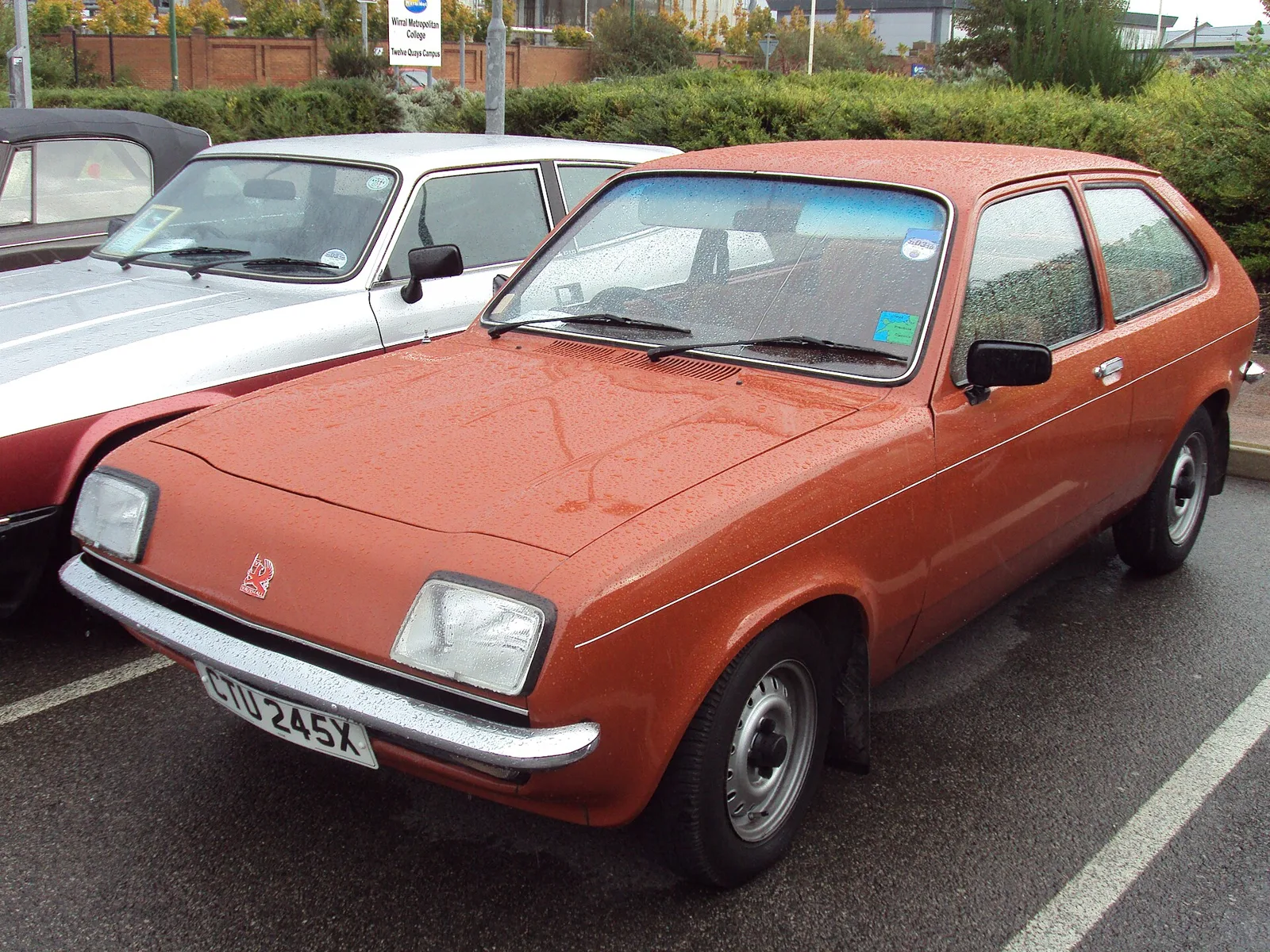
A British marque founded in 1857, shaped by General Motors and Opel engineering, and now part of Stellantis after the Luton works closed in 2025.
Vauxhall is a British car marque founded in 1857 as a pump and marine engine maker. It built its first car in 1903, became a General Motors brand in 1925, and now sits within Stellantis after the Luton works closed in 2025.
Vauxhall Motors is a British car marque headquartered in Coventry, and its story starts with a London engineering works founded in 1857. General Motors owned the company from 1925 until 2017, after which it passed to the PSA group and then to Stellantis. This guide follows the marque from its first pumps and marine engines through its landmark cars, its key people and its motorsport record.
Who founded Vauxhall and what did it make first?
Scottish marine engineer Alexander Wilson founded the business in 1857 to build pumps and marine engines. Andrew Betts Brown bought the company in 1863, began producing travelling cranes and renamed it Vauxhall Iron Works. The firm was based in London, and its early output was industrial rather than automotive.
Industrial work filled the order books for decades before the first car appeared in 1903. The business started in London, and most of its production moved to Luton in 1905. The name Vauxhall Motors was adopted in 1907, as the firm turned to building motor cars.
From pumps and marine engines to Stellantis, Vauxhall has reinvented itself at almost every stage of its life.
When did Vauxhall start building cars?
Vauxhall built its first car in 1903, a five-horsepower single-cylinder model with tiller steering. Roughly 70 cars were made in that first year. Wheel steering and a reverse gear arrived in 1904, which improved the car considerably.
The 1903 model was a simple machine by later standards, but it marked the point at which a company with an established engineering trade became a car maker. The Luton works took over most production from 1905, and the modern name followed two years later.
Who was Laurence Pomeroy and why does his work matter?
Laurence Pomeroy joined Vauxhall in 1906 as an assistant draughtsman and went on to shape the company's early cars. His Y-Type won class E of the 1908 reliability trial, and the car was put into production as the A-Type. A-Type production ran from 27 October 1908 until 1914.
The Y-Type's result showed that the design could perform under test conditions, and the A-Type carried that engineering into the showroom. Those trial successes gave Vauxhall a reputation built on performance, one that the company would carry into later decades of rallying and touring car racing.
How did General Motors change Vauxhall?
General Motors acquired Vauxhall on 16 November 1925 for US$2.5 million. The first significant passenger car after the takeover was the Cadet of 1930, and Bedford Vehicles was set up as a Vauxhall subsidiary the same year. The American owner would shape the company's products for decades.
The Cadet showed the new relationship at work, with the parent company's resources feeding into the car programme. Later Vauxhall models would share engineering with Opel, General Motors' German subsidiary, and that partnership defined the marque for a long period.
What did the Light Six and the 10-4 bring to the range?
The Light Six arrived in June 1933 with an all-steel body and an overhead-valve six-cylinder engine. Its D-type successor added Dubonnet independent front suspension, a General Motors patent. The H-type 10-4 of 1937 then brought a unibody structure, which was a first for a British saloon.
The 10-4 had overhead valves and fully hydraulic brakes. Its unibody construction set Vauxhall on a more modern engineering course, one that would carry into the postwar range. The 1930s cars gave the marque a modern engineering identity just as the country moved toward war.
How did Vauxhall cope with wartime and the postwar years?
Car production at Luton paused while the works turned to military output, including the Churchill tank. More than 5,600 Churchill tanks were built during the war. After 1945 the company was one of the first to return to civilian production.
The postwar years were shaped by supply. Car output was limited by the capacity to build bodyshells, and that restriction kept Vauxhall sales from growing as fast as demand. The company's answer in the years after 1945 was a new car rather than a quick fix.
The E-type arrived in 1951 with full-width pontoon styling and a front end that used coil springs and twin wishbones. New short-stroke engines followed during 1952, and by 1953 Luton was producing 110,000 E-types a year. That figure shows how heavily the postwar programme depended on the Luton plant.
What made the F-type Victor and the Cresta so important?
The F-type Victor was announced in February 1957 and closely resembled the 1955 Chevrolet Bel Air, with tailfins and wrap-around screens. The Cresta joined the range for 1955. Nearly 400,000 Victors were built at Luton, which made the model a major step for the company.
The Victor drew its drivetrain from the E-type Wyvern, but it used a 1.5-litre four-cylinder overhead-valve engine and a new body. Its styling pushed American influence further than earlier Vauxhalls had done, and the car stood out on the road as a result.
The P-type Velox and Cresta followed the Victor. Over 180,000 of them were built, and more than 100,000 were exported. Those figures show how strongly the postwar range sold overseas as well as at home.
How did Vauxhall expand its plants and range in the 1960s?
A plant at Ellesmere Port opened in 1962 to make components, and passenger car production began there in 1964. The Viva of 1963 was aimed at the Ford Anglia, giving Vauxhall a small family car in one of the busiest parts of the market.
The Slant Four engine entered production in 1966 and was a production first for its rubber timing belt. The FD Victor made its debut at the Earls Court show, and the decade closed with the company's range firmly built around volume models.
How did the 1970s and early 1980s reshape the range?
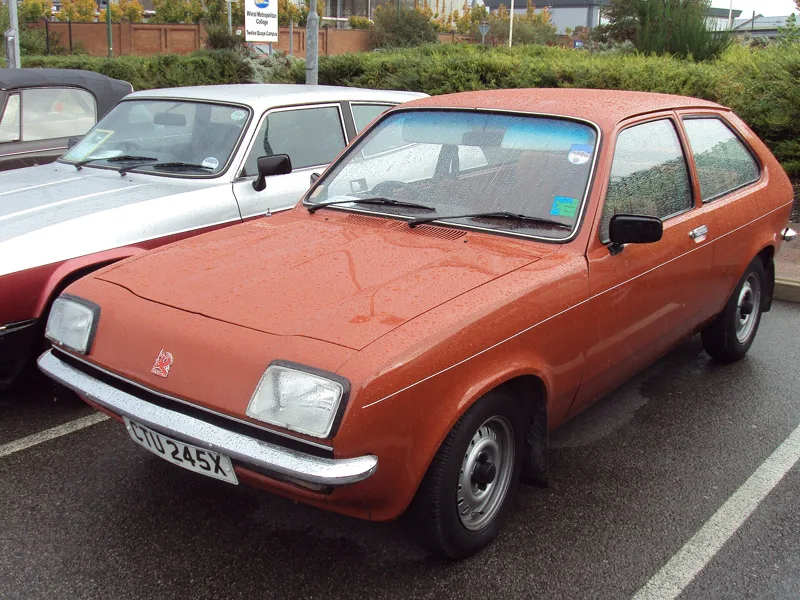
The HC Viva was Vauxhall's best-selling car of the decade. Through the 1970s the company's range leaned on engineering shared with Opel, and the Vauxhall 1256 engine powered both the Chevette and the Cavalier. The Astra of 1980 followed as a rebadged Opel Kadett with front-wheel drive.
The Chevette HS of 1976 was a homologation special that showed what the platform could do in competition. The Mk2 Cavalier of 1981 brought front-wheel drive to a car of that size for the first time.
The Astra and the Mk2 Cavalier together drove the marque's revival in the early 1980s. Their success showed that buyers would accept a Vauxhall built on Opel engineering, provided the cars were modern and well made.
What did the 1980s bring to Vauxhall buyers?
The Nova supermini arrived in April 1983 and was built at Zaragoza in Spain. The Cavalier's sales peaked at more than 130,000 by 1984, and it was the country's second most popular car in 1984 and 1985. The Astra of 1984 had an aerodynamic design close to the Sierra.
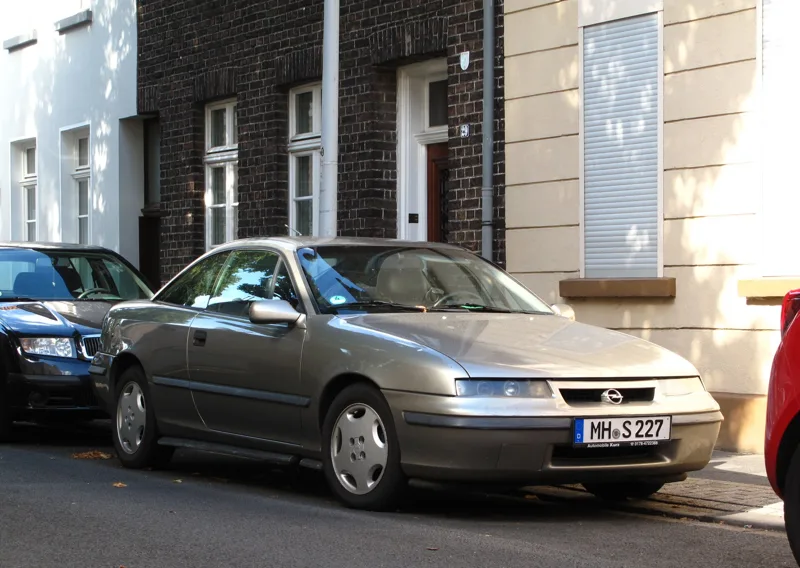
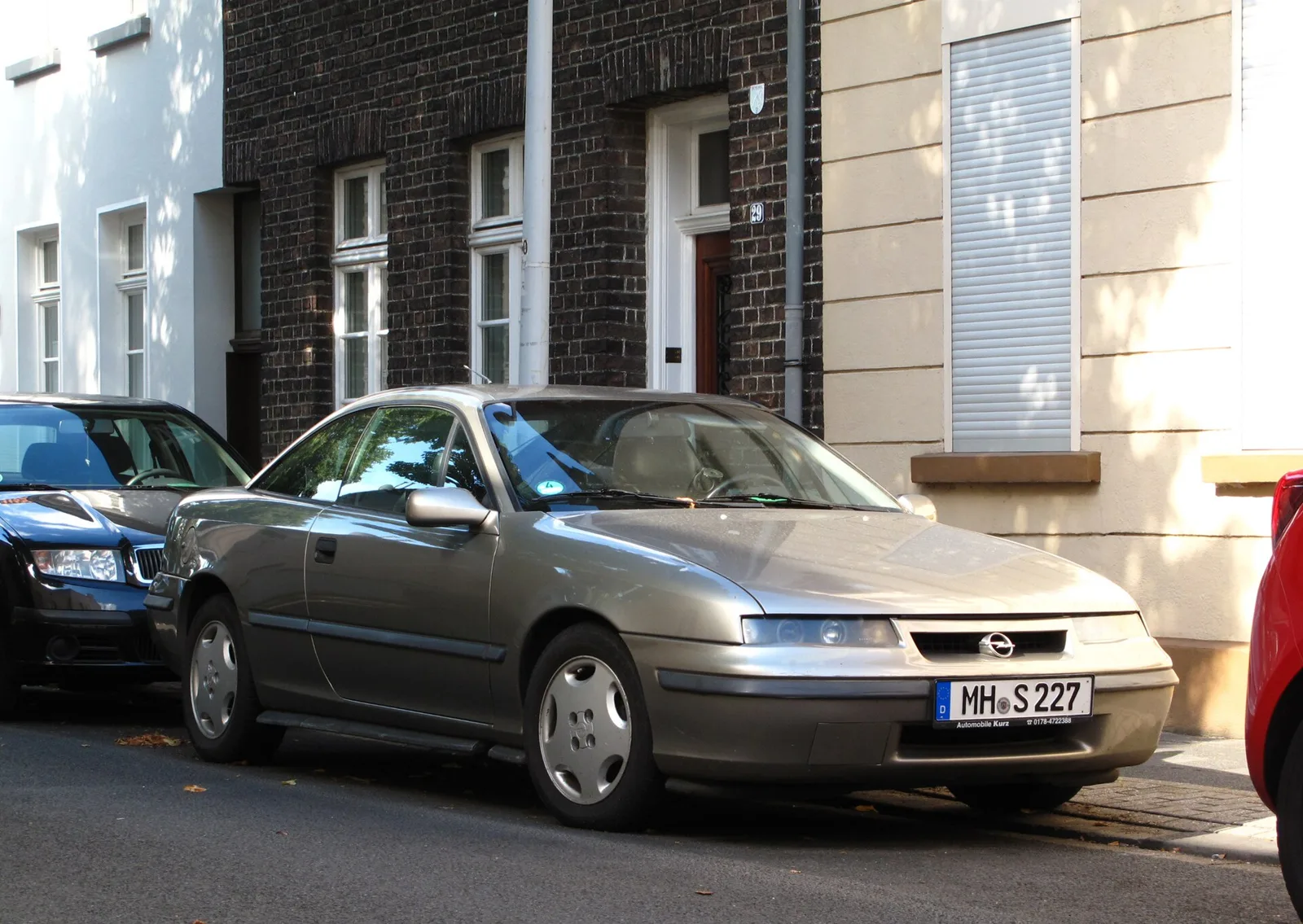
The Calibra coupe arrived in 1989 and was described as the most aerodynamic production car at launch. The decade ended with a range that looked and drove very differently from the cars that had carried the marque through the 1960s and 1970s.
What changed in the 1990s?
Omega replaced the Carlton in 1994 and carried the V grille, a feature that marked Vauxhall's models from that point. The Vectra replaced the Cavalier in 1995 under a common GM naming policy that aligned the names of Vauxhall and Opel models.
The naming change was part of a wider move to make Vauxhall and Opel cars more alike. The grille and badge identified the marque, while the engineering increasingly came from the same family of cars that the German brand used.
How did customer surveys treat Vauxhall in the late 1990s?
A 1998 Top Gear survey criticised the Vectra, and in 1999 the Vauxhall marque ranked last in a Top Gear survey. The complaints reflected a quality reputation that the company was still trying to shake off. Those results sat awkwardly beside the marque's sales performance.
A reputation for rust-prone models had been attached to the company since the 1960s, and the later quality complaints added to it. Sales did not always follow the survey results, and the marque kept a strong place in the British market throughout.
What did the 2000s bring, from the VX220 to the Insignia?
The Lotus-based VX220 roadster arrived in 2000 as the marque's first real foray into sports cars. The Insignia replaced the Vectra in 2008, and the Monaro coupe, designed by Holden in Australia, joined the range as a high-performance model.
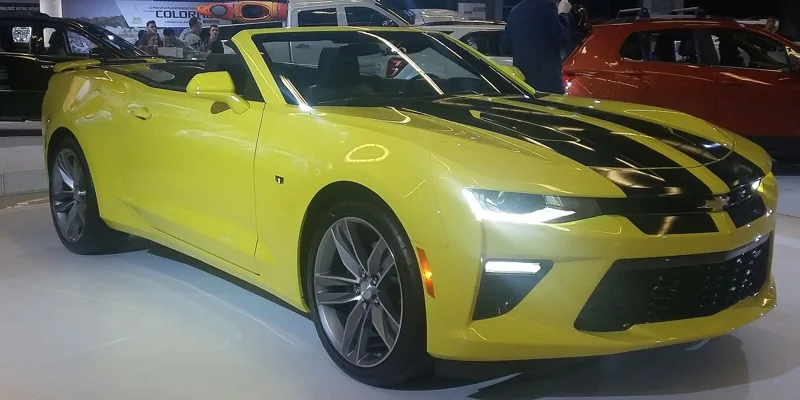
The VXR8 came from Holden Special Vehicles, rebadged for the British market from HSV Clubsport and GTS models. Together these cars showed how Vauxhall used GM's wider Australian and American engineering to fill gaps in its own line-up.
What happened when General Motors tried to sell Vauxhall?
General Motors filed for bankruptcy on 1 June 2009. Magna International agreed to buy Vauxhall on 10 September 2009, but the deal was called off in November. The uncertainty over ownership ran alongside the continuing operation of the Luton and Ellesmere Port works.
Ownership stayed with General Motors for several more years. The company's position was shaped by the parent's finances, and the eventual sale to the PSA group in 2017 closed a long chapter in the marque's history.
How did the PSA and Stellantis era reshape Vauxhall?
PSA agreed to buy Vauxhall and Opel from General Motors for EUR 2.2 billion in 2017. The company was renamed Vauxhall Motors Limited in September 2017. Stellantis was formed on 16 January 2021, and Vauxhall now sits within that group.
In November 2024 Stellantis announced the closure of the Luton plant, with up to 1,100 jobs lost. The works closed on 28 March 2025. The Ellesmere Port works remained open and recorded around 1,880 staff in 2012, with a capacity of approximately 187,000 units.
What is the Vauxhall griffin and where does it come from?
The griffin emblem traces back to a thirteenth-century coat of arms, which gives the marque a heraldic link to its identity. The badge has stayed part of the brand through several changes of owner, from General Motors to PSA and then Stellantis.
Owners have changed the cars many times, but the griffin has remained the signal that a car is a Vauxhall. The badge links the modern marque to its early roots as much as its cars link it to the wider General Motors family.
What were Vauxhall's most notable motorsport moments?
Vauxhall competed successfully in rallying and touring cars. Pentti Airikkala took the 1979 British rally title driving a Chevette, and Louise Aitken-Walker claimed the women's world title in 1990 while driving an Astra. Both results showed that the road cars could be turned into effective competition machines.
The Magnum coupe competed in British rallying in the 1970s, and the Chevette HS of 1976 later took on the rally programme. Touring cars brought further success, with Vauxhall first entering the British Touring Car Championship in 1989.
John Cleland won the title in 1995, and the Astra went on to dominate the series between 2001 and 2004. Fabrizio Giovanardi won the title in 2007 and 2008 in a Vectra, bringing back championship success after a quiet spell.
What were the key specifications and milestones?
| Specification | Detail |
|---|---|
| Founded | 1857, by Alexander Wilson |
| Headquarters | Coventry |
| General Motors acquisition | 16 November 1925, for US$2.5 million |
| First car | 1903, five-horsepower single-cylinder |
| Ellesmere Port capacity | Approximately 187,000 units |
| Ellesmere Port staff | Around 1,880 in 2012 |
| Luton closure | 28 March 2025 |
| PSA purchase | EUR 2.2 billion, announced 2017 |
| Parent group | Stellantis, formed 16 January 2021 |