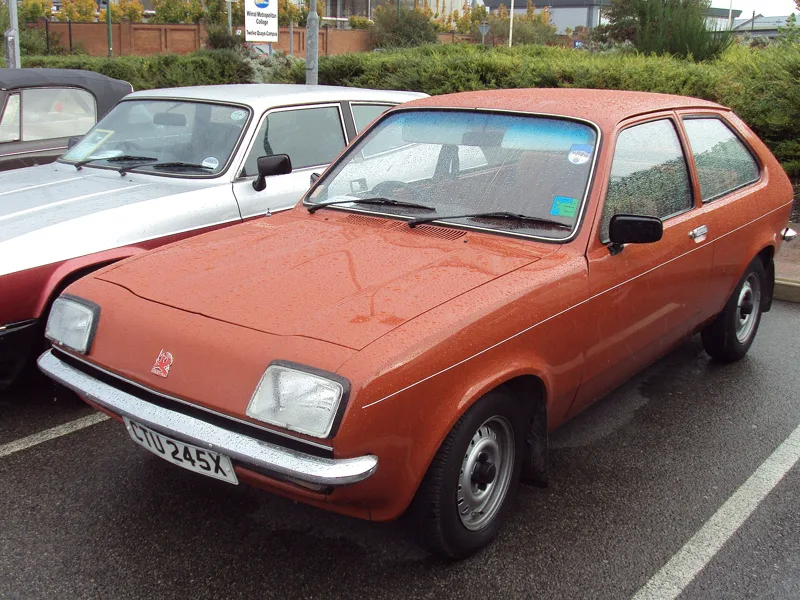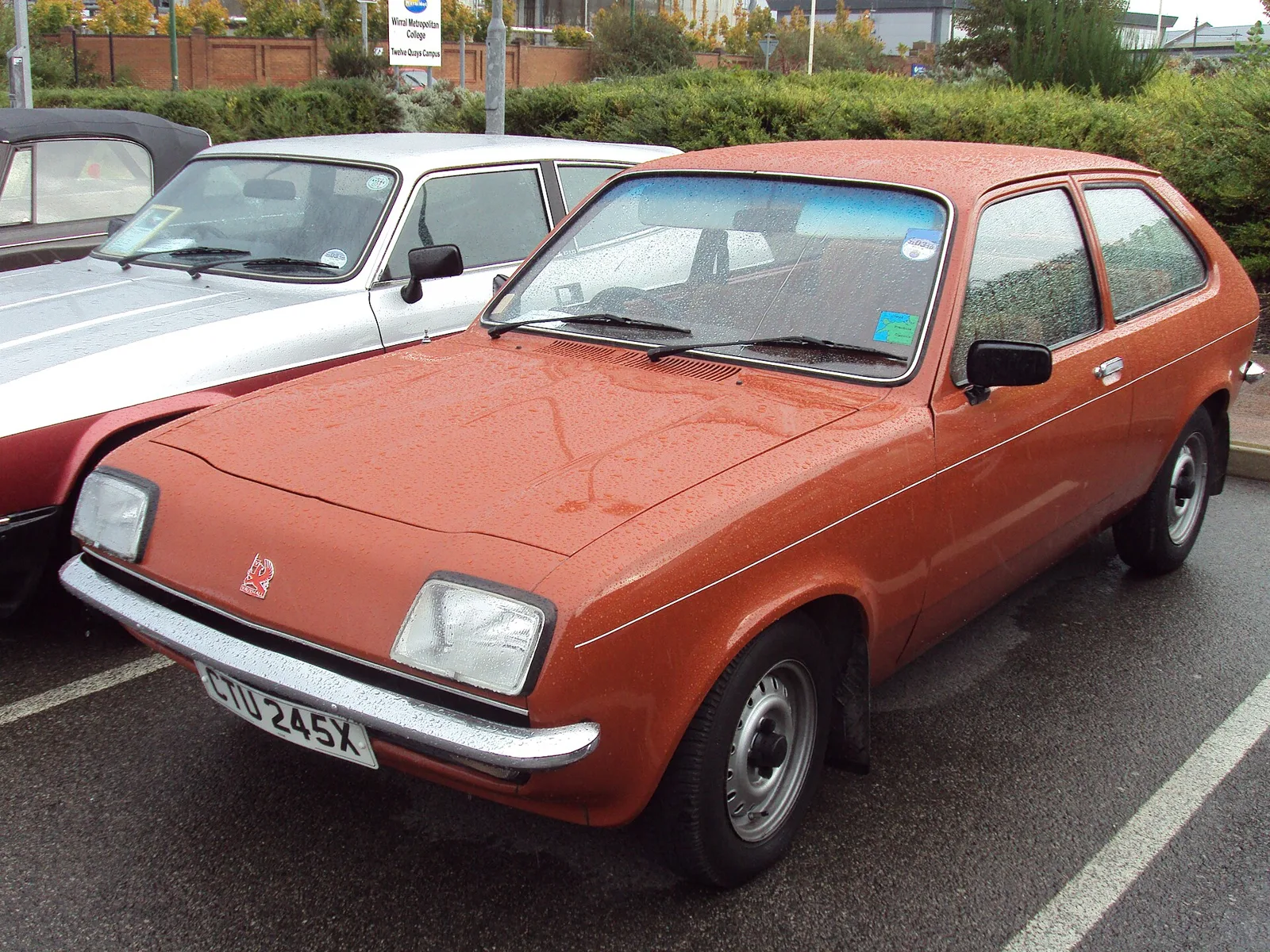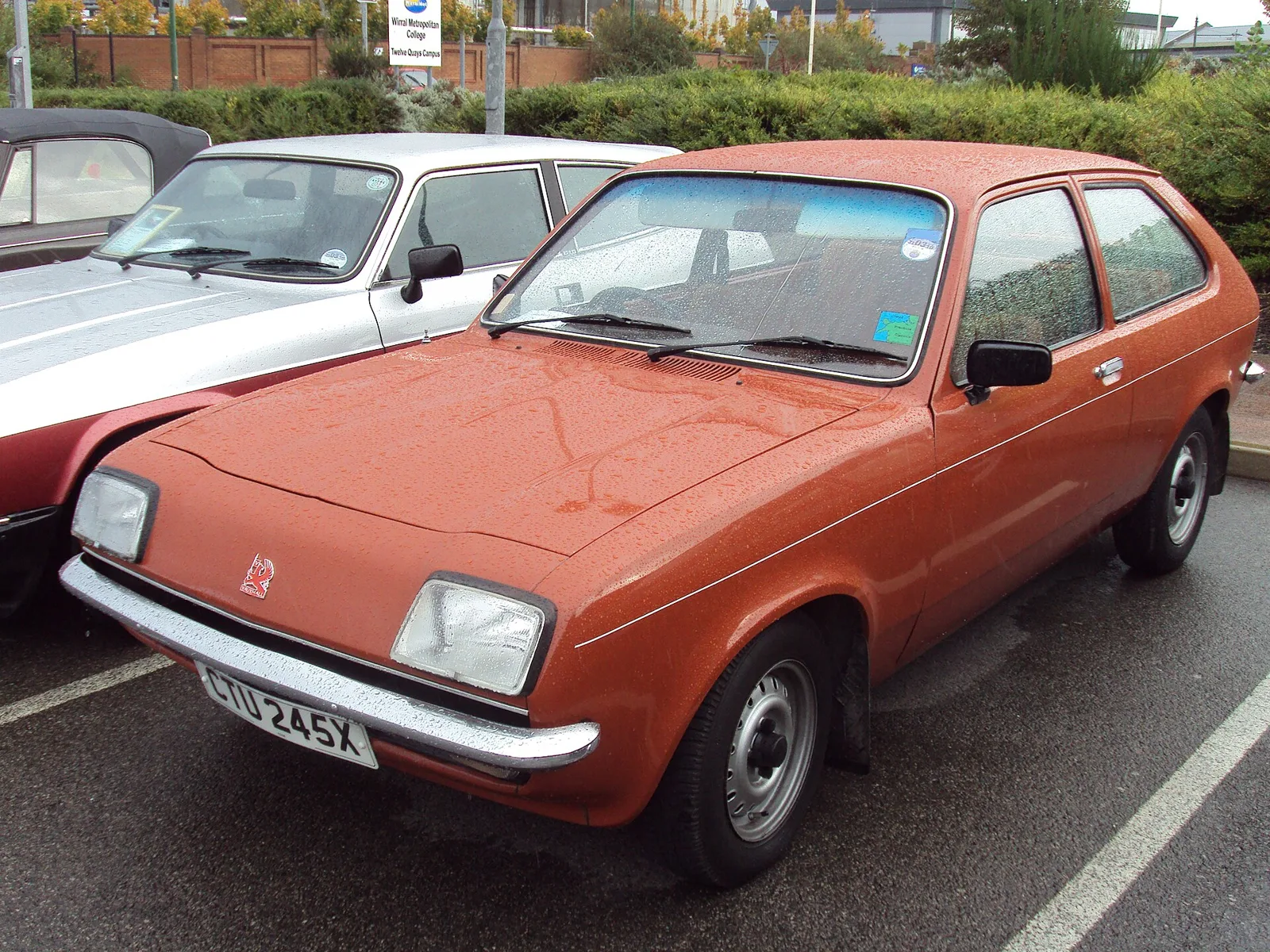
A rebadged Opel Kadett with a shovel nose, a 1,256 cc engine and a rally sister, the Chevette was Britain's best-selling hatchback for three years before production ended in 1984.
The Vauxhall Chevette was a rear-wheel-drive supermini built in the UK from 1975 to 1984. Based on the Opel Kadett C, it was Britain's best-selling hatchback from 1975 to 1978 and spawned the HS rally car. Production ended in January 1984 after 415,000 sales in Britain.
The Vauxhall Chevette was a supermini built in the United Kingdom from 1975 to 1984. It was Vauxhall's version of General Motors' T-car small-car family and rested on the Opel Kadett C, with rear-wheel drive and a simple overhead valve engine. Its rally sister, the HS, and a long run as Britain's best-selling hatchback gave it a lasting place in motoring history.
What was the Vauxhall Chevette?
The Chevette was a small hatchback that Vauxhall sold in Britain from May 1975. It was one member of a wider family that included the Isuzu Gemini in Japan, the Holden Gemini in Australia and the Chevrolet Chevette in North and South America, where it was also sold as the Pontiac Acadian and T1000 in the United States and Canada.
The car was sold alongside its Opel sister for several years. The two ranges were later merged, and the Chevette was gradually phased out as the front-wheel-drive Astra took its place.
A rebadged Opel with a shovel nose that outsold its rivals for three years before the Astra and Nova took over.
Where did the Chevette design come from?
The Chevette began as a plan to create a small Chevrolet, and Vauxhall was also working on a project known as the Baby R. GM management shelved that work to save costs and merged the styling studies into the existing T-car programme. The Chevette therefore came from the Opel Kadett C.
The car first appeared in Brazil in 1973 as a restyled Kadett with a hatchback added to the range. That hatchback reached the US and Britain in 1975 with reworked front ends. Early cars were built at Luton, before assembly moved to the Ellesmere Port plant in Cheshire.
Why did the Chevette look so different from the Kadett?
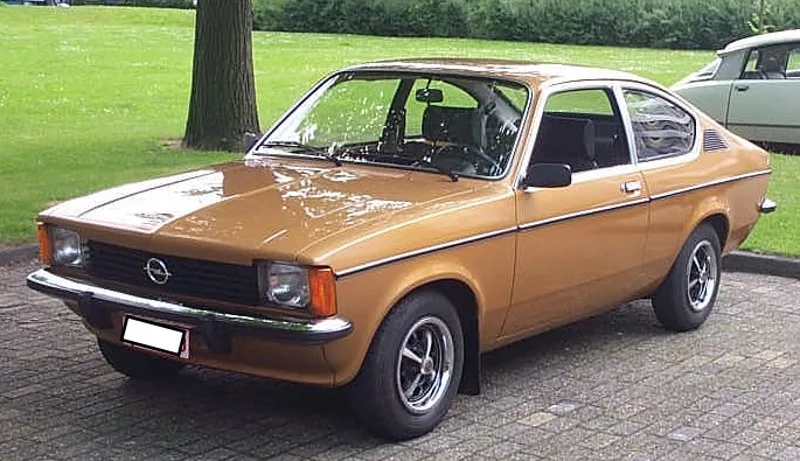
The Chevette's Pontiac-inspired shovel nose and inset headlamps made it look quite unlike the Kadett, and buyers took it as a new car. Its front end was loosely based on the droopsnoot Firenza, which was itself linked to the Pontiac Firebird. The Kadett kept a more conventional flat front.
Underneath, the two cars shared a lot. Front suspension of the double wishbone type, the rear-wheel drive layout and a Panhard-rod rear axle with torque tube and coil springs were carried over unchanged. The Chevette's instrument binnacle was more angular, and its instruments used imperial scales, while the controls were laid out for right-hand drive.
How much did the first Chevette cost?
The car went on sale on 1 May 1975 at GBP 1,593. Vauxhall's car competed head to head with the Opel sibling until 1979, when that model was replaced. The UK launch centred on the three-door hatchback, which was the only body style offered at first, while saloons, estates and vans followed later in the decade.
The model was built in purpose-built premises at Ellesmere Port under a government scheme to bring jobs to the area. The original hatchback was promoted with a jingle that praised its versatility, describing it as a sporty coupe, a family saloon and a handy estate in one.
Why was the Chevette Britain's best-selling hatchback?
Between 1975 and 1978 the car led British hatchback sales. British-branded rivals were slow to reply to foreign hatchbacks like the Peugeot 104, Fiat 127 and Renault 5, and Ford's Fiesta did not arrive until the end of 1976. Chrysler UK launched the Sunbeam in 1977, and British Leyland followed with the Austin Metro in 1980.
The Chevette also outsold larger hatchbacks, including the Austin Maxi and the Chrysler Alpine. Its 1.3-litre engine and compact body gave good performance, its controls were light and visibility was good, and it was roomy inside. Its versatility, which compared well with a car like the Ford Escort, helped drive that success.
How did the Chevette family grow?
More conventional two- and four-door saloons arrived in June 1976, along with three-door estates that were essentially Kadett C models with Vauxhall front bodywork and engines. The Bedford Chevanne van, a Chevette estate without rear windows and seats, followed in September 1976. The two-door Kadett C coupe had no Chevette counterpart.
The trim line-up shifted often. The base car was renamed L in April 1976, and the GL became the GLS, which had velour upholstery. Those changes showed how quickly Vauxhall adjusted the car to the market.
What was the Chevette HS?
The HS was a hot version of the three-door hatchback, introduced in January 1978 with a 2,279 cc slant-four that had 16 valves, a five-speed close-ratio gearbox, uprated brakes and suspension, a full front air dam and a rear spoiler. It was painted silver with red decals and had a black and tartan interior. The engine developed 135 bhp on two Stromberg carburettors.
The HS was built to qualify for Group 4 rallying, which meant making 400 production cars for public sale. Vauxhall developed the 16-valve head, though rally cars used a Lotus unit until the FIA banned that head in 1978. Suspension and the rear axle came from the Kadett C GT/E, and the Getrag five-speed was a feature of the package.
Did the HS win rallies?
Yes. The HS took the drivers' title in the British Open Rally Championship in 1979 and the manufacturers' title in 1981, challenging the Ford Escort at the top of the sport. Pentti Airikkala and Jimmy McRae were among those who scored notable wins in the car, and it was also competitive in national championships such as Belgium's.
The evolution model, the Chevette HSR, added fibreglass wings, a spoiler, bonnet and tailgate, along with revised rear suspension. Its nickname, Plastic Fantastic, reflected the plastic panels. Group 4 evolution required 50 cars to be built, made by rebuilding unsold HSs and modifying customers' cars. The HSR programme was eventually cancelled in favour of the Manta 400.
What engines were planned for the rally cars?
Budget cuts meant a 2.6-litre Clubsport engine and a turbocharged 300 hp (224 kW) version were never fully developed. Only a handful of 2.6-litre units rated 220 hp (164 kW) were made, and Blydenstein rented one out to stand in for the 2.3-litre engine at single events.
How did the Chevette range change over time?
| Date | Change |
|---|---|
| May 1975 | Three-door hatchback in base and L trims, with a 1,256 cc OHV engine |
| November 1975 | Chevette GL with sports wheels and a centre console |
| June 1976 | Saloons in two and four doors, with the GLS joining the four-door range |
| January 1978 | HS three-door hatchback with 2,279 cc slant-four |
| September 1979 | Flush-fitting headlights, restyled seats and optional three-speed automatic |
| April 1980 | E estate for the fleet market and HSR introduced |
| October 1980 | ES cars: a two-door saloon and a three-door hatch joined the range |
| August 1983 | Range cut to just the L saloon and the estate |
| January 1984 | Last L saloon and estate built |
What was the Chevette's role in other countries?
Austrian buyers could take a detuned 1,256 unit making 49.5 bhp, and in Ecuador the local factory Aymesa built a version called the Condor from 1978. The Ecuadorian car used a glass-fibre body and a 1,500 cc unit, fitted with a higher-compression head from GM Brazil to cope with the altitude.
In France the car did not sell well against the Peugeot and Renault models, and it was the last Vauxhall sold there. On 6 December 1979 Vauxhall said it would withdraw from 11 major European markets where it had shared sales with Opel, a move completed by the end of 1981.
Was the Chevette sold in Germany?
Yes. Vauxhall continued to export Chevettes to West Germany even as it withdrew from the wider continent. The car was sold through Opel dealers without Vauxhall badging, and 12,332 Chevettes were sold there from October 1980. The rear-wheel-drive model suited buyers who wanted a low-cost option or who resisted front-wheel drive.
How was the Chevette sold in New Zealand?
General Motors New Zealand assembled the Chevette from 1976 to 1981, offering every body style sold in the UK. Most cars were GL specification with metric instruments, and the cars gained Holden-engineered suspension and wider tyres in 1979. A stripped E model for fleets was added in 1980, and production ended in June 1981.
What were the special editions?
Several special editions were made. The Chevette Jubilee was produced in silver for the Queen's Silver Jubilee in 1977. Star Custom Vehicles, set up in Ampthill, Bedfordshire, produced the Blackwatch with black and silver paint, a plaque for styling by Farina and flared arches. The Grenadier, based on the L hatchback, had black, silver and orchid livery and a walnut fascia.
The Chevette HS was a serious competitor on the road and in rallies. Its engineering was taken seriously, while the dealer specials were made to help the sales floor.
What equipment did the early Chevette offer?
Standard kit on the first hatchbacks ran to a two-speed heater fan, radial tyres, reversing lamps, a heated back window and reclining front seats. From November 1975 the GL added sports wheels on 175 x 70 SR tyres, a bumper that wraps over the riders, a centre console, pockets in the front doors and velour trim on the door panels.
Underneath, the L and GL shared a 1,256 cc overhead valve engine and four-speed gearbox, plus rear-wheel drive, independent front suspension and rack-and-pinion steering. Servo-assisted dual-circuit brakes completed the package.
Trim names were reshuffled through 1976. The base car became the L with cloth upholstery in April that year, the L became the GL, and the GL became the GLS with velour seats. Limited editions such as the E, with black rubber window surrounds and vinyl seats, added further choice without changing the engineering.
What changed in the 1979 and 1980 updates?
In September 1979 every model received a flush-fitting pair of headlamps, reworked seats, pockets in the front doors, extra dashboard vents, new badges and rear fog lamps. Protective side mouldings went onto the GL, and an optional three-speed automatic became available on the L and GL.
The 1980 facelift brought Bosch distributors, revised heater ducting and a simpler throttle linkage. Fresh wheel patterns, altered C-pillar vent covers and reworked front seats with a little more rear knee room refreshed the interior. The facelift also gave the car a family look alongside the larger Cavalier.
How did the Astra and Nova end the Chevette's run?
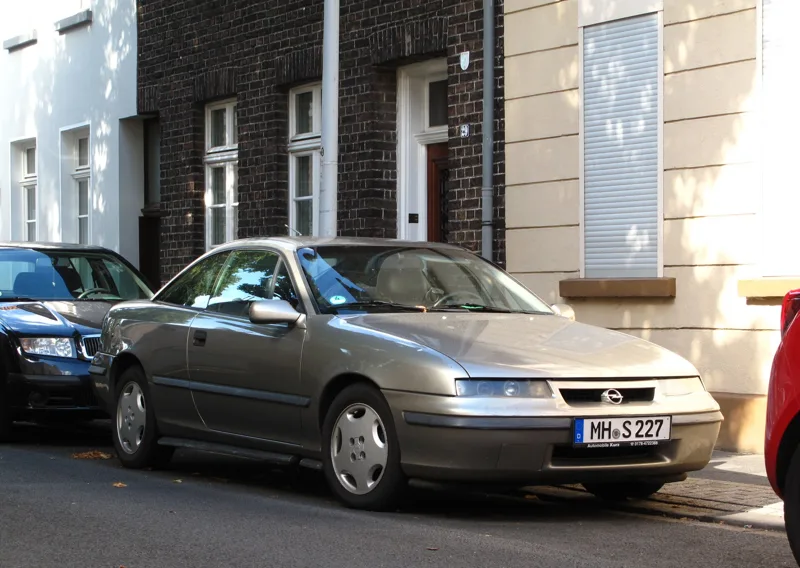
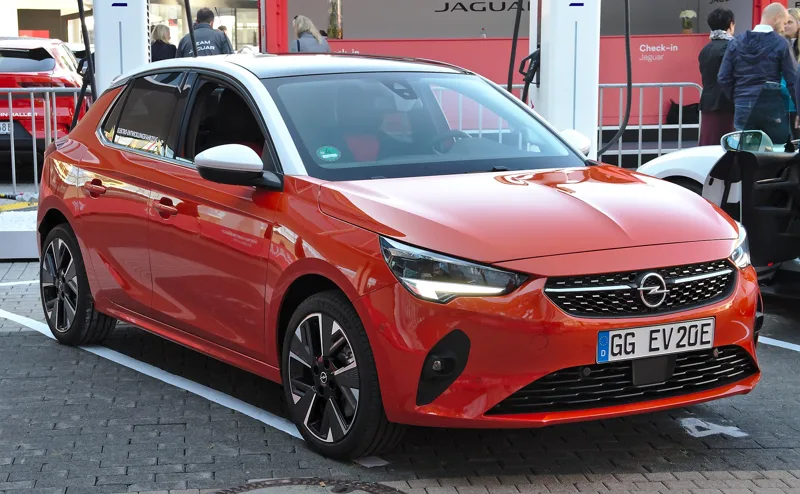
The front-wheel-drive Astra, Vauxhall's version of the Kadett D, went on sale in March 1980 but was not built in Britain until November 1981. The Nova, a rebadged Spanish-built Opel Corsa, arrived in April 1983 as the entry-level Vauxhall, and the Chevette carried on alongside it for another year.
Behind the scenes General Motors was preparing a new entry-level model for Europe under both the Vauxhall and Opel marques, to be built in a new factory at Zaragoza in Spain. The Chevette's line-up was steadily pruned until only the L saloon and estate remained.
Why did Ellesmere Port matter so much?
The Chevette was built at a purpose-built factory at Ellesmere Port after its early production at Luton. A second-generation Chevette was planned for the same plant, but General Motors decided to shelve most of the factory and keep only the assembly shop.
The loss of jobs was significant, and representations led to the continued production of the existing models alongside the new Kadett, which in turn led to the Astra name. The planned mothballing of most of the plant then went ahead as originally intended.
What was the Bedford Chevanne?
Launched in September 1976, the Bedford Chevanne was a light commercial derived from the Chevette estate. Its rear floor was flat, the rear seats were gone, and sheet panels stood where the side glass would be. It was meant to succeed the Bedford HA, and it gave way to the Astravan in October 1982.
The van's 1,256 cc inline-four matched the car's, and it produced 52.7 hp at a 7.3 to 1 compression ratio. A three-speed automatic was offered with a heavy-duty battery, better carpeting and a higher compression engine of 8.7 to 1 that produced 56.3 hp. A similar van, the Holden Gemini, was built in Australia.
What did the Sun Hatch offer?
The Sun Hatch was a limited-edition three-door launched in June 1980 on the L model. Extras ranged from a sunroof and tinted glass to sports wheels, metallic paint, side mouldings and front head restraints. Manual cars were priced at GBP 3,954 and automatics at GBP 4,167.
Other limited editions followed quickly. The Special saloons arrived in April 1980, the Black Pearl in May 1981 and the Silhouette hatchback in January 1982. Each used a dressed-up specification rather than new engineering.
What is the Chevette's legacy?
The Chevette ended production in January 1984 after 415,000 sales in Britain. Its end marked the close of Vauxhall models that were visually distinct from Opel designs, a sign of how far the two brands had converged.
Today the Chevette is remembered for its shovel nose, its rear-wheel-drive layout and the HS and HSR rally cars. Owners still gather through clubs that cater to restorers, enthusiasts and the modified cars that gave the family its following.