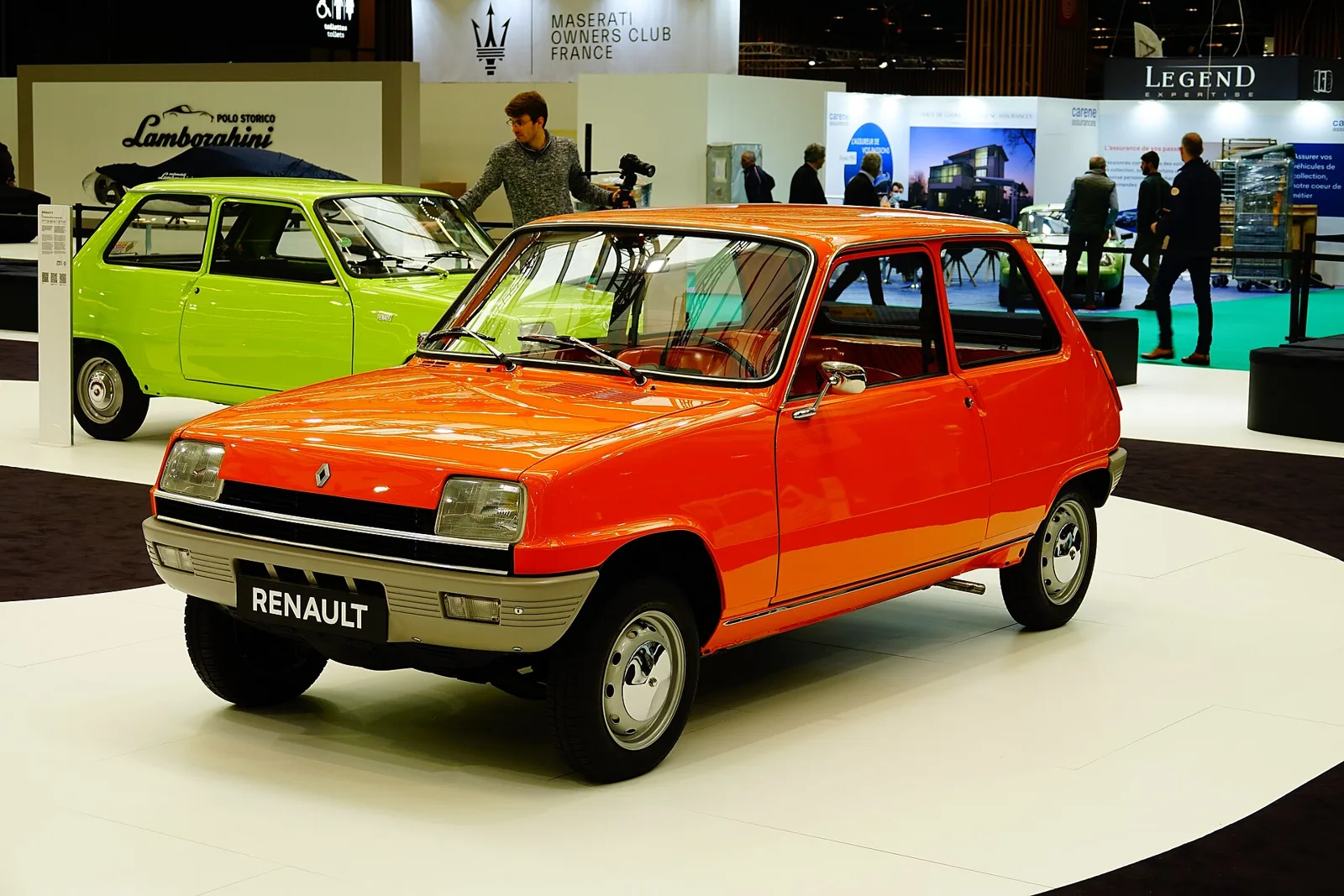
From Michel Boue's spare-time sketch to the Le Car, the Alpine, the rally-bred Turbo and an electric revival, the R5 lasted nearly 25 years.
Built in two generations between 1972 and 1996, this French hatchback sold more than 5.5 million cars and was France's top-selling car from 1972 to 1986. Its rally-bred Turbo variant made the nameplate famous far beyond the road.
The Renault 5 was a French supermini built from 1972 to 1996 in two generations, and it was France's best-selling car from 1972 until 1986. Its first generation, sold in North America as the Le Car, used a front mid-engined, front-wheel-drive layout.
Who designed the Renault 5?
Michel Boue styled the car in his spare time, outside his regular duties at Renault. When executives saw his concept they authorised a formal development programme at once. The design featured a steeply sloping rear hatchback, and Boue had wanted the tail-lights to climb into the C-pillar, although production used a more conventional position.
Boue died of cancer at the end of 1972, only months after the car reached the market.
A hatchback that became France's best-selling car, then turned up as a rally monster with its engine behind the driver.
What did the first Renault 5 borrow?
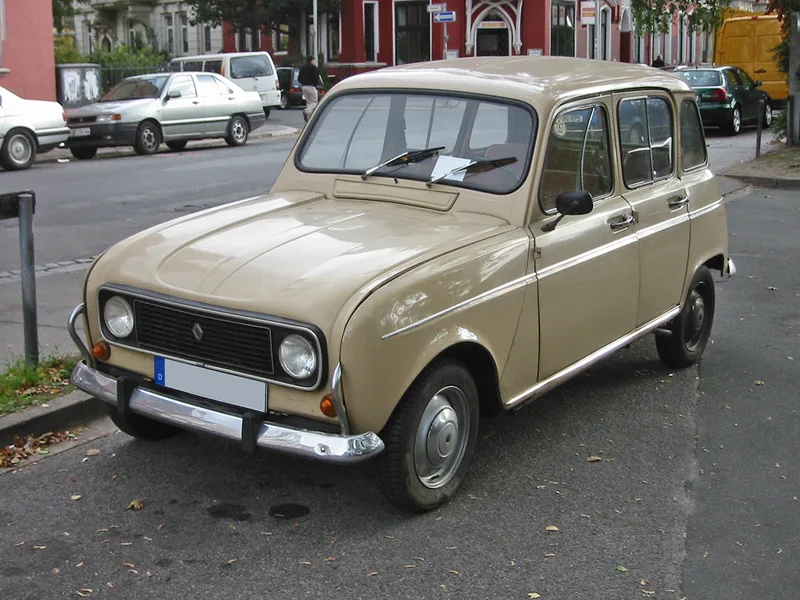
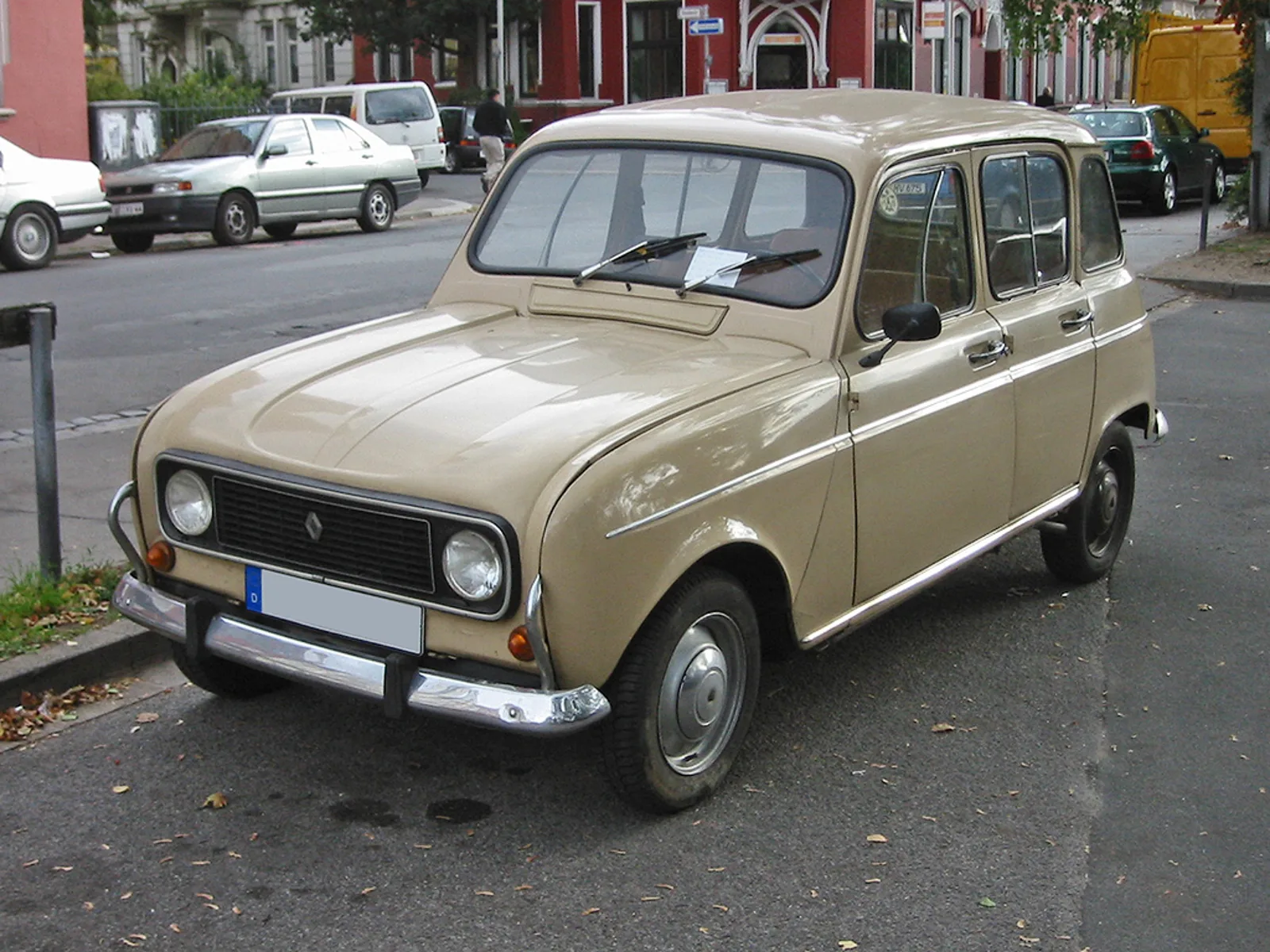
The R5 borrowed its mechanicals from the Renault 4, with a longitudinally mounted engine driving the front wheels and torsion bar suspension. Its body, however, used a welded monocoque, which was more advanced than the separate platforms of the Renault 4 and Renault 6.
Engines began at 782 cc and 956 cc, and a 1,289 cc unit from the Renault 12 arrived in April 1974 on the 5LS. Entry-level cars grew to 845 cc in 1976, and the top of the range eventually reached 1,397 cc.
Why was the R5 seen as a modern supermini?
The R5 was one of the first modern superminis, building on the hatchback layout Renault had pioneered with the 1961 Renault 4 and extended to the mid-range Renault 16 in 1965. It reached showrooms about three years ahead of the Volkswagen Polo and the Vauxhall Chevette, and roughly four years before the Ford Fiesta.
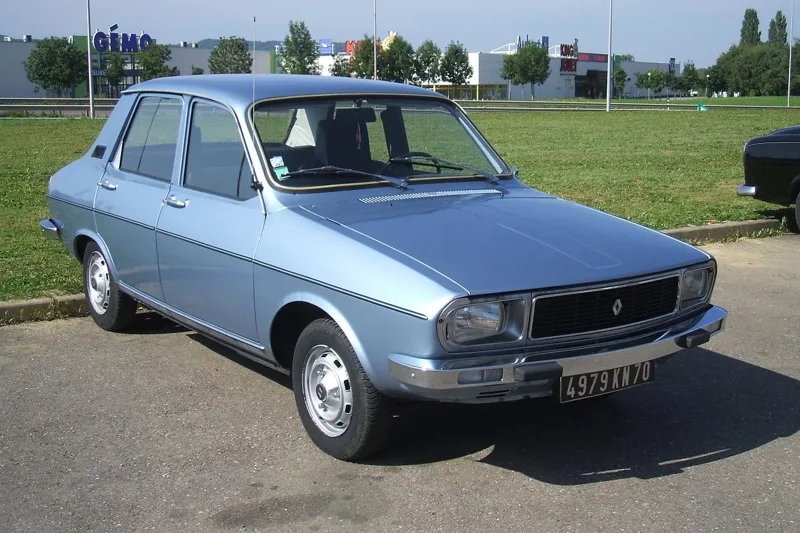
Its timing was notable: it arrived a year after the Datsun 100A reached the UK and about six months before the Honda Civic. British Leyland did not field its own rival until the Austin Metro in 1980.
How did the R5 reach the UK and Japan?
The car reached right-hand-drive British showrooms in autumn 1972, where it sat beside the Fiat 127 as a newer import in a market of Mini and Hillman Imp rivals. In Japan it went on sale in 1976 as the Renault Go, since go is the Japanese word for five.
Early Japanese cars were first sold left-hand drive and later converted, and they used the bigger bumpers and round headlamps of the North American Le Car.
What made the entry-level car cheap?
The entry-level L had the same 782 cc engine as the Renault 4, drum brakes on all four wheels and a price below 10,000 francs in 1972. Many export markets never received it, so the TL, with front disc brakes and a 956 cc engine, became the usual choice abroad.
Plastic bumpers were among the car's signature features. They came from a specialist Renault factory at Dreux, covered more of the car's surface than conventional bumpers and survived low-speed parking knocks without staying distorted. The drag coefficient of 0.37 was well below the 0.45 typical of European cars.
How did the Le Car fare in North America?
Renault's North American R5 debuted in 1976, but sales were disappointing, so the company changed agencies and rebranded the car as the Le Car for 1977. The campaign stressed its sporty character and European competition record. Sales rose from 6,800 in 1976 to 37,000 in 1982.
An alliance with American Motors from January 1979 let the car be sold through about 1,300 AMC dealers, where it competed with the Honda Civic and Volkswagen Rabbit. Imports from France continued until 1983, when the Kenosha-built Renault Alliance replaced it, and Canadian sales lasted until 1986.
Some practical uses followed. A police department in La Conner, Washington, bought three in the late 1970s, while Ogunquit in Maine used five as police cars. Heuliez built about 450 Le Car Vans between 1979 and 1983, and U.S. Electricar converted cars to battery power as the Lectric Leopard.
What were the Alpine and Turbo versions?
The Alpine arrived in 1976 as one of the first hot hatches, two months ahead of the original Volkswagen Golf GTI. Its 1.4-litre engine made 93 PS and gave a top speed of 110 mph, and in Britain the car was sold as the Gordini because Chrysler held the Alpine name there.
The Alpine Turbo of 1982 used a Garrett T3 turbocharger for 110 bhp (82 kW; 112 PS), replacing the naturally aspirated Alpine. Motor magazine recorded a top speed of 179.9 km/h (111.8 mph) and 0 to 60 mph in 8.7 seconds, but it criticised the price.
What was the rally-spec R5 Turbo?
The Renault 5 Turbo was a radically modified rally car, with a turbocharged engine mounted behind the driver and driven through the rear wheels. It belonged to the Group 4 formula, later Group B, and little of the road car survived beyond its door panels.
Jean Ragnotti drove the car to victory on the 1981 Monte Carlo Rally, its first event. Four-wheel-drive rivals later outpaced it on loose surfaces, but it stayed among the fastest cars of its era on tarmac.
How did the second generation differ?
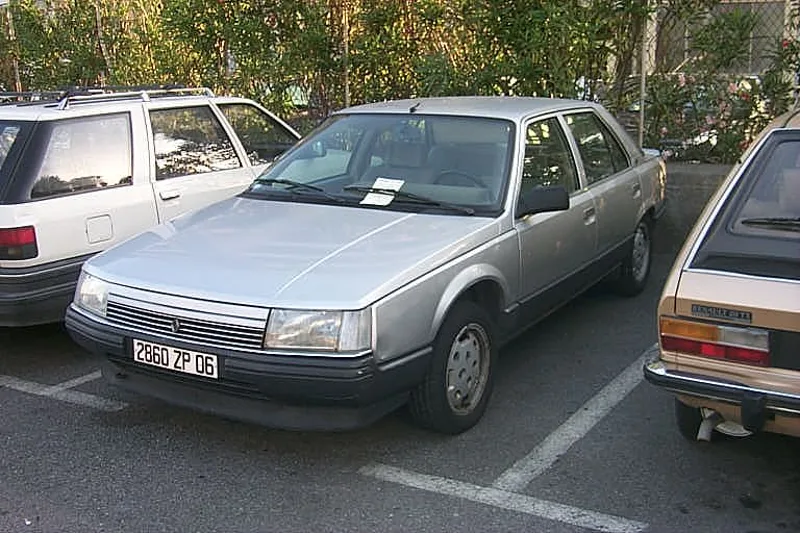
The second generation, sold as the Renault 5 or Supercinq, launched in October 1984 with a transverse engine, MacPherson front struts and a body styled by Marcello Gandini. It was wider and longer than its predecessor, with 20 percent more glass area and a drag coefficient of 0.35.
The three-door came first, and the five-door followed in May 1985 with a 60 mm longer wheelbase. The line-up began with TC, TL, GTL and Automatic trims, and the 1.7-litre F2N engine joined the range in 1987.
The design was linked to the AMC Pacer. Renault had planned the car as a downsized successor to the Pacer in the United States, and that aim shaped its design, although the second generation was never sold there under its own name.
What did the GT Turbo add?
The GT Turbo arrived in February 1985 with a turbocharged 1,397 cc Cleon engine, weighing 850 kg and producing 85 kW (113 hp; 115 PS). It could reach 60 mph in 7.5 seconds, and the front ride height dropped by 38 mm for sharper handling.
The Phase II of 1987 added water cooling for the turbocharger and a revised ignition, lifting output above 88 kW (118 hp; 120 PS). Renault's Rallye Cote d'Ivoire win in 1989 remains the only overall WRC victory for a Group N car.
What happened in the car's final years?
Production moved to the Revoz factory in Yugoslavia when the Clio arrived in 1990, and the car kept its 1.1-litre, 1.4-litre petrol and 1.6-litre diesel engines. The GT Turbo was discontinued in 1991 when the Clio 16V replaced it, and the Campus ran out the model's life.
The Campus was a minimally equipped model that remained the most common version after the Clio launched. The 12-year production run ended in 1996, closing the R5 designation after nearly 25 years of use.
Were there vans and convertibles?
Yes. The Renault Express panel van was sold as the Extra in the UK and the Rapid in German-speaking countries, replacing the R4 F6 van. Belgian firm EBS also converted about 1,400 cars into convertibles in 1989, almost all left-hand drive.
Fourteen of those EBS convertibles were based on right-hand-drive GT Turbo Phase II cars, which makes them rare among the right-hand-drive examples.
Is the Renault 5 coming back?
Yes. The nameplate returned in February 2024 as an electric hatchback with design cues from the original and the Renault 5 Turbo. An Alpine version was said to be in development, and the Renault 5 E-Tech won the 2025 European Car of the Year award.
The new model shows how strongly the original car still shapes expectations, with the name signalling both a city car and a performance variant.
How did the R5 compare with its UK rivals?
In the UK the R5 competed with the Mini and the Hillman Imp, and it had no rival from Ford or Vauxhall at launch. It arrived as an imported car with a more modern layout than its British rivals.
What was the R5's gearshift history?
The early R5 used a dashboard-mounted gearshift linked by a rod that ran over the engine to a stick from the gearbox, which sat directly in front of the engine. A floor-mounted lever with a cable linkage replaced it in 1973.
An automatic version with the larger 1,289 cc engine arrived in early 1978, and automatic cars were just under five percent of production at the time.
Why did the Le Car campaign change direction?
The first campaign for the North American R5 used American Motors' agency, which pitched the car as Europe's best-selling automobile with millions of satisfied owners. Dealers still struggled, so the advertising shifted towards the car's features and low base price.
Advertisements also compared the car with the imported Ford Fiesta, Honda Civic and VW Rabbit, which put the R5 beside rivals on price rather than style.
How did the GTE fit into the second generation?
The GTE used the naturally aspirated 1.7-litre engine from the Renault 9 and 11, with multipoint fuel injection and a catalytic converter, producing 70 kW (94 hp; 95 PS). It shared the interior and exterior sporting look of the turbo model.
Its suspension and brakes matched the turbo, so the difference lay mainly in the engine and its performance rather than in the car's handling.
Which engines did the second generation's trims use?
The second-generation TC used a 956 cc engine, the TL a 1,108 cc unit, and the GTL, Automatic, TS and TSE a 1,397 cc engine. Diesel versions arrived in November 1985 and mostly completed the range.
What did the Campus name mean for UK buyers?
British buyers took to the Campus more than buyers elsewhere did, because the Renault Twingo, aimed at the same niche, was only offered in left-hand drive and in mainland Europe. In 2011 Car Mechanics Magazine recommended it as one of Britain's best bangers.
Many of those cars had low mileage and full service histories, which made them inexpensive to buy. The Campus name returned in 2005 with the Renault Clio II, which showed how the badge outlived the original car.
What were the first-generation engines?
The table lists five engines from the first generation, from the 845 cc entry unit to the 160 PS turbo. The 0 to 100 km/h times show how far turbocharging changed the car's pace.
| Engine | Output | 0-100 km/h |
|---|---|---|
| 845 cc B1B | 37 PS (27 kW; 36 hp) | 22.3 seconds |
| 1,108 cc C1E | 45 PS (33 kW; 44 hp) | 21.4 seconds |
| 1,289 cc 810 | 64 PS (47 kW; 63 hp) | 15.6 seconds |
| 1,397 cc C6J turbo | 110 PS (81 kW; 108 hp) | 9.1 seconds |
| 1,397 cc C1J turbo | 160 PS (118 kW; 158 hp) | 6.9 seconds |