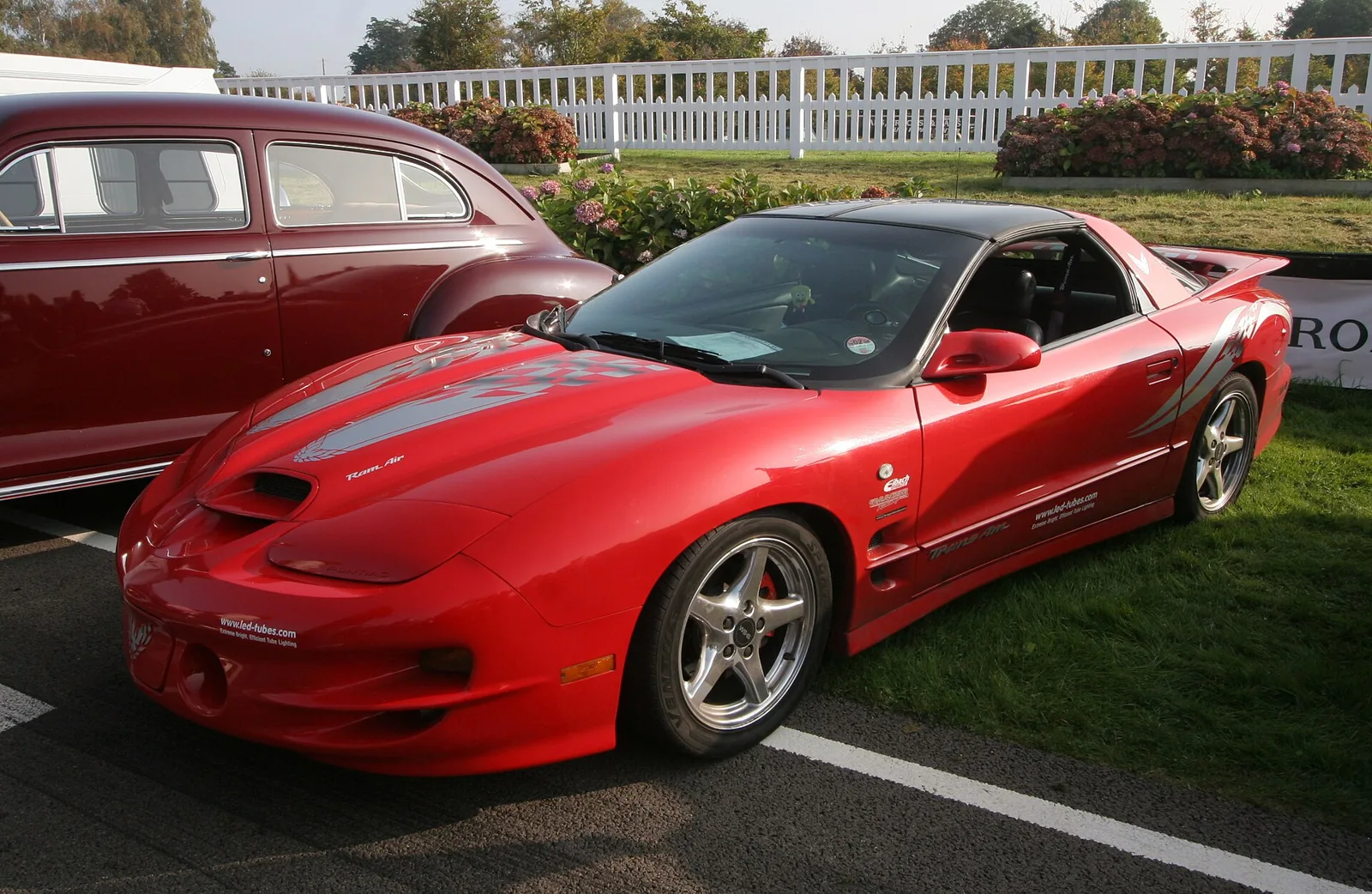
From the Series 6-27 and the Silver Streak to the GTO, the Tempest and GM's 2010 closure of the brand.
Pontiac was a General Motors brand launched in 1926 as a companion to Oakland. It became GM's performance-focused marque, known for the GTO and Firebird, and GM ended it in 2010 with the final white G6.
Pontiac began life in 1926 as a companion make for GM's pricier Oakland line. It overtook its parent in popularity and became one of the corporation's dominant divisions, known for affordable cars with a performance edge.
The brand ended in 2010, when GM dropped it during a restructuring, but the Pontiac name remains a registered trademark. The sections below trace the marque from its Oakland origins to the final white G6.
What was Pontiac and where did the name come from?
The name comes from the Odawa chieftain Pontiac, who led an uprising around Detroit from 1763 until 1766. The division itself was introduced by General Motors in 1926, and its cars were sold in the United States, Canada and Mexico.
The chief's name was given to the division and to the city of Pontiac, Michigan, where the cars were first produced. The division later used Native American imagery in its logo and naming, and that choice caused little controversy during the brand's life.
In GM's hierarchy Pontiac sat above Chevrolet but below Oldsmobile, Buick and Cadillac. It marketed itself as the performance division of General Motors, with the tagline we build excitement.
From a junior Oakland to a final white G6, with the Pontiac name still registered by GM for licensing.
How did Pontiac grow out of the Oakland brand?
Edward Murphy, a maker of horse-drawn carriages, set up the Oakland Motor Car Company in Pontiac, Michigan, in 1907. Oakland became part of General Motors in 1909, and Pontiac arrived in 1926 as a junior make. It overtook Oakland before the older brand was cancelled in 1931, and it supplanted its parent by 1933.
William C. Durant founded General Motors in Flint, Michigan, the following year. Pontiac's first model was the Series 6-27, a six-cylinder junior brand to Oakland, and it was outselling its parent within months of its launch.
When the Wall Street Crash hit, both Pontiac and Oakland sales fell sharply. Because Oakland was the more expensive car, GM leadership decided Pontiac should remain, which set the division on its own path. Pontiacs were also assembled from knock-down kits at GM's Osaka Assembly in Japan from 1927 until 1941.
What engines did the early Pontiacs use?
The Series 6-27 used a 186.7 cu in straight six producing 40 hp (30 kW). It sold 39,000 units within six months of its debut at the 1926 New York Auto Salon, and it reached 76,742 units in 12 months.
In 1928 the Series 6-27 became the top-selling six-cylinder car in the United States. Pontiac's first V8 arrived in 1932 as the Series 302, which displaced 251 cu in and produced 85 hp (63 kW) at 3200 rpm.
Pontiac switched to the straight-eight for 1933 and kept that engine until it was replaced in 1954. A large chrome strip running along the hood, called the Silver Streak, became a Pontiac trademark.
What was the Pontiac Torpedo and when did civilian production stop?
The Pontiac Torpedo was built on three different bodies from 1940 to 1942, the only Pontiac model to use all three. The last civilian Pontiac was manufactured on February 2, 1942, as American factories switched to military production.
The Torpedo's A body was shared with Chevrolet, the B body with Oldsmobile and Buick, and the C body with the large Oldsmobile and Buick and the small Cadillac. The Streamliner also carried a straight-eight engine in its final prewar form.
Prewar straight-eight engines were less powerful than the V8s that were becoming popular. Their long crankshaft flexed excessively, which limited the compression ratio and kept the redline modest.
What changed in Pontiac's cars between 1949 and 1954?
The first all-new Pontiac models appeared in 1949 with the Chieftain line, which was built on the GM B-body platform. The Hydramatic automatic transmission had arrived in 1948, and the Catalina pillarless hardtop coupe followed in 1950 as a halo model.
The Star Chief was added in 1954, and the Streamliner was dropped in favour of more Chieftain models built on the A-body platform. Pontiac had prepared a V8 for its 1953 models, but Buick complained that an early Pontiac V8 might take sales from its own new V8, so the launch was held back.
In 1954 Pontiac ran an advertising campaign built on prints of Native American tribal life. The campaign gave the brand a memorable cultural link with its buyers.
Why did Pontiac switch to V8 power in 1955?
The Strato Streak V8 arrived in 1955 with 173 hp (129 kW), and the six-cylinder engines were discontinued the same year. The full-size range received completely new bodies and chassis, and sales increased.
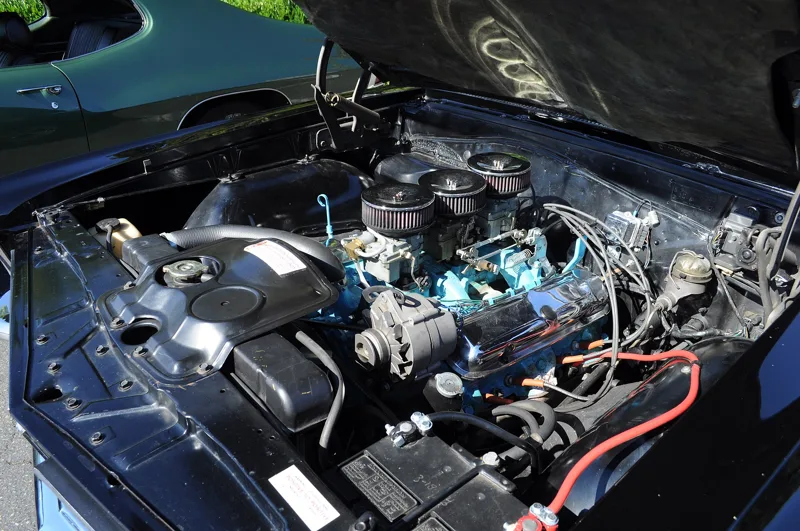
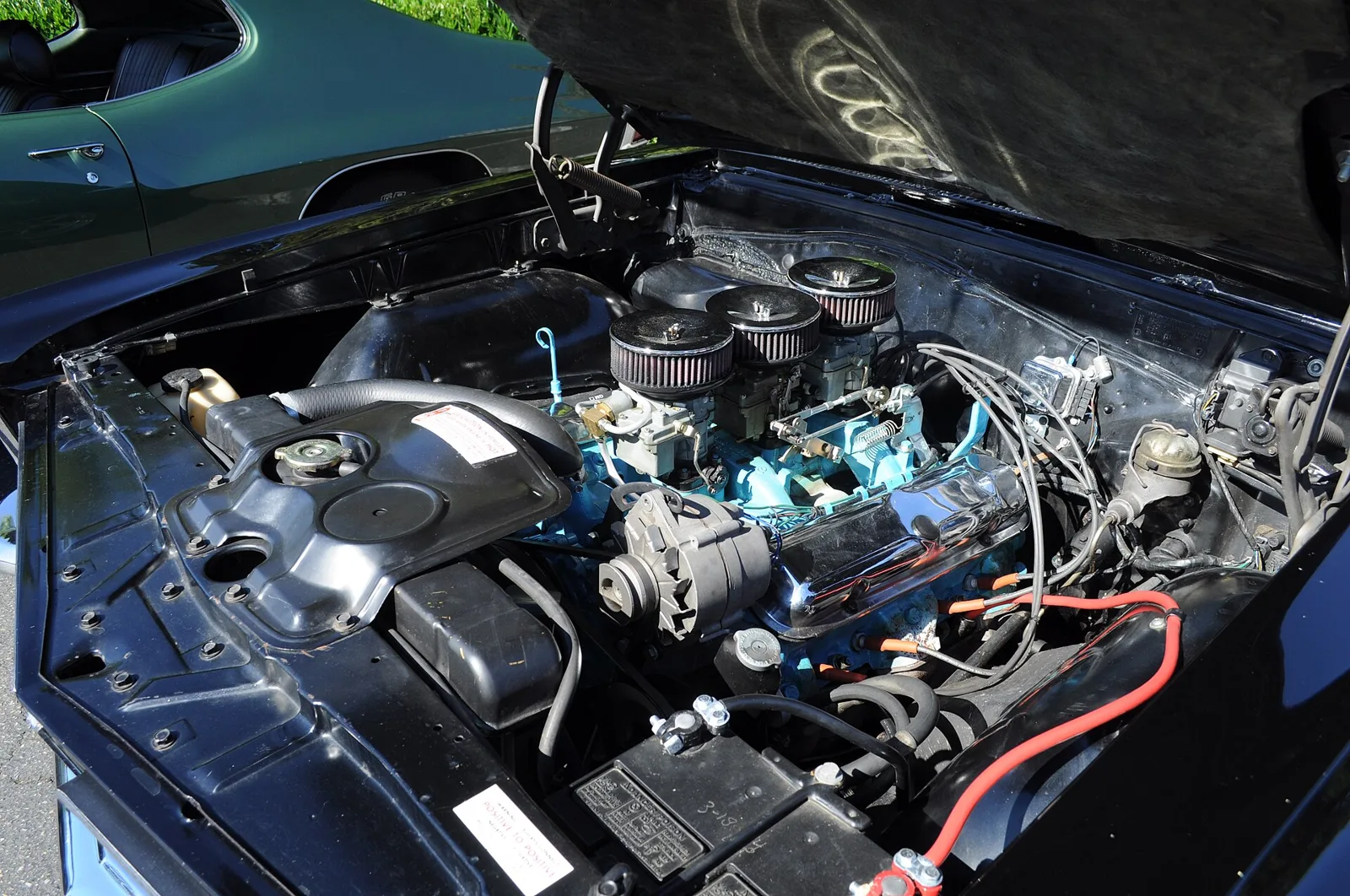
A higher-powered version of the V8 followed in 1956 with a racing camshaft and dual carburettors. It was the first of a series of NASCAR-ready engines that made Pontiac a major player in the muscle car era.
How did Bunkie Knudsen transform the brand in the late 1950s?
Semon Bunkie Knudsen became general manager of Pontiac in 1956 and began reworking the brand's image. The silver streaks were removed from the 1957 models, and the Bonneville was introduced that year as a sporting model.
The first Bonneville, a version of the Star Chief convertible, was meant to display the first fuel-injected Pontiac engine. About 630 were built, and the 1958 Tri-Power Bonneville served as the Indianapolis 500 pace car.
The 1959 Pontiacs were 5 inches wider in track, at 64 inches. Knudsen felt the wider bodies sat oddly on the 1958 chassis, which had been carried over, and the Wide-Track cars helped revive the division in the marketplace. Motor Trend selected the Pontiac line as its 1959 Car of the Year.
What were the Tempest and the first GTO?
The 1961 Tempest was a unibody Y-body car with a flexible steel shaft and torque tube. Its rear-mounted transaxle gave close to a 50/50 weight distribution, and its slant-four was derived from the right bank of the 389 V8, earning it the nickname Hay Baler.
The Tempest won Motor Trend's Car of the Year award in 1961. The Grand Prix debuted in 1962 to take advantage of the trend toward sporty bucket-seat coupes, and it helped move Pontiac to third place among American car brands in 1962.
The GTO arrived in 1964 as an option package with a 389 cu in engine rated at 325 or 348 hp. John DeLorean pushed the idea through with support from Jim Wangers at the advertising agency, and the GTO became a separate series in 1965.
How did Pontiac's awards and sales develop in the 1960s?
Motor Trend named the entire Pontiac line its 1965 Car of the Year, the third time the honour had gone to the brand. Pontiac held third place among American car brands from 1962 until 1970.
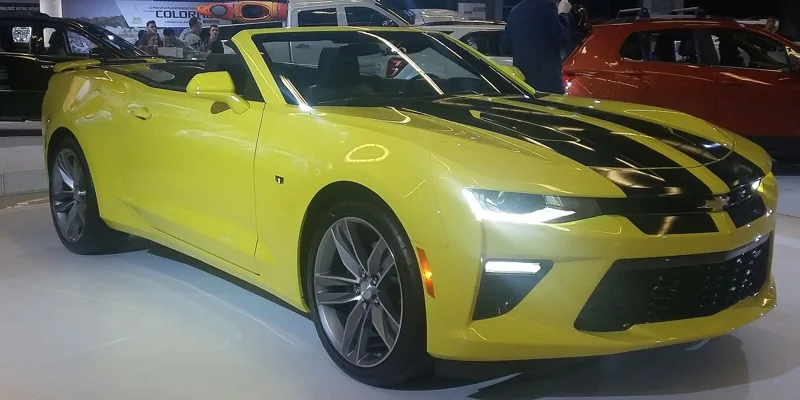
The Firebird pony car arrived in 1967 as a variant of the Chevrolet Camaro. In 1968 the GTO gained an Endura rubber front bumper, and the first Ram Air engines drew cold air into the carburettor for more power.
The 1969 Grand Prix moved to a G-body model of its own. Dealers moved 112,000 units, more than four times the 1968 figure, and the Trans Am debuted with the standard 400 cu in engine.
How did emissions rules change Pontiac engines in the 1970s?
GM mandated unleaded-capable engines in 1971, which lowered compression ratios and cut performance. The Super Duty 455 engine was introduced in 1973 and became a last fast engine for the Firebird, although only a few were fitted.
The Grand Ville replaced the Bonneville as the flagship in 1971, and the Astre subcompact arrived in 1975 as a version of the Chevrolet Vega. The Iron Duke 151 cu in four-cylinder followed in 1977.
The Firebird was redesigned in 1982 with a wedge shape, and it was marketed through the Knight Rider television series. The Trans Am's performance image survived the decade even as the wider range softened.
Did the Fiero save Pontiac in the 1980s?
The 1984 Fiero was a two-seat mid-engined coupe that helped Pontiac see its first sales increase in four years. Pontiac became the number three domestic car maker for the first time since 1970 in 1988, and the median age of its owners dropped from 46 in 1981 to 38 in 1988.
The Fiero was a major departure from anything Pontiac had produced before. Pontiac introduced more performance-oriented models over the next decade and began to focus on technology, including electronics and anti-lock brakes on later models.
From 1988 all Pontiacs except the Firebird switched to front-wheel drive platforms, which reshaped the range for the rest of the brand's life.
What happened to Pontiac in the 1990s?
The 1990 Trans Sport was Pontiac's first minivan and light truck. The 1992 Bonneville introduced front-wheel drive and the 3800 Series I V6, and the supercharged SSEi made 205 hp.
An all-new Firebird arrived in 1993, with a 275 hp LT-1 V8 in Trans Am guise. The 1997 Grand Prix GTP had a supercharged 3.8 L V6 rated at 240 hp, and the Grand Prix debuted that year with its Wider is Better campaign.
In 2002 the Firebird, Trans Am and Camaro were discontinued because of declining sales and a saturated sports market. Pontiac's final NASCAR victory had come with Ricky Craven, and the brand left NASCAR after 2003.
Why was the GTO revived in 2004?
The 2004 GTO was based on the Australian Holden Monaro, and its LS1 V8 made 350 hp. The LS2 V8 made 400 hp in 2005 and 2006, and buyers got it without paying extra.
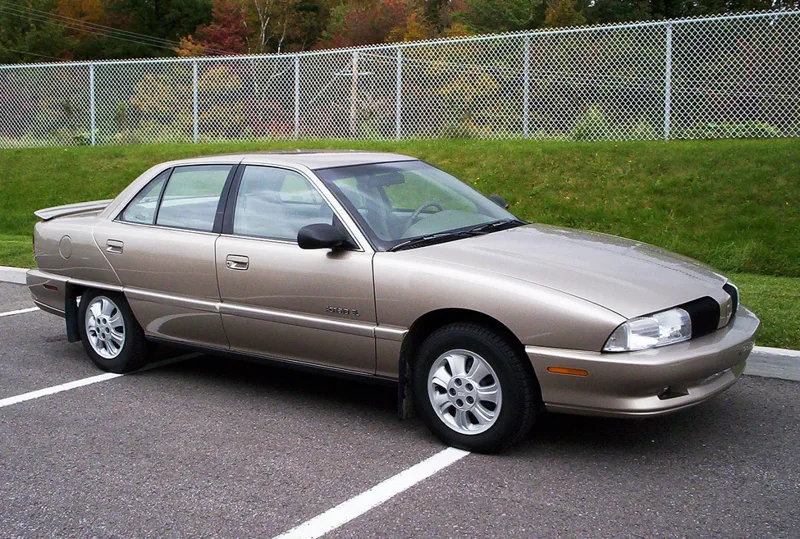
The G6 replaced the Grand Am in 2005, and over 64,000 Solstice convertibles were built on the same line. Several later Pontiacs were rebadged Chevrolets, including the Torrent, which matched the Chevrolet Equinox.
The G8 was a rear-wheel drive car built in Australia from 2008. Its GXP version ranked as the strongest car the brand had produced.
Why did GM end the Pontiac brand?
On December 2, 2008, General Motors proposed eliminating numerous brands, including Pontiac. On April 23, 2009 a report said GM would dissolve the brand, which would leave four North American marques: Chevrolet, Buick, GMC and Cadillac.
The last car off the line was a white G6, assembled on January 4, 2010. Dealer franchise deals ended on October 31, 2010, and Pontiac was one of three brands GM discontinued that year.
Pontiac remains a registered trademark of GM for licensing. The last Pontiac is held by the Pontiac Transportation Museum, which has had it since March 17, 2023.
Who led the Pontiac division?
Alfred R. Glancy led the division from 1926 to 1933, and Semon Bunkie Knudsen led it from 1956 to 1961. Elliott M. Pete Estes followed from 1961 to 1965, and John Z. DeLorean led the division from 1965 to 1969.
Knudsen brought in new heads of engineering, including Estes and DeLorean, and together they pushed the division toward performance cars. DeLorean later left to take a similar post at Chevrolet.
What was Pontiac's place in Canada?
Pontiacs were built in Canada from 1926, at factories in Oshawa and Regina. The models were largely the same as their American counterparts, although Canadian cars used Canadian oak in the bodies rather than the peach wood of U.S. cars.
The Tempest was never built in Canada, so a rebadged Chevy II called the Acadian was created for the market. Acadians were marketed alongside the other Pontiacs in Pontiac-Buick-GMC showrooms.
After the 1955 divergence, Canadian Pontiacs were built on Chevrolet chassis with Chevrolet engines, and the brand was positioned there as entry-level. Pontiac-badged Chevrolets continued to be sold in Canada until the brand was discontinued in 2010.
Which engines did Pontiac design itself?
Pontiac engineer Clayton Leach designed a stamped steel rocker arm, a simpler and more reliable alternative to a bearing-equipped rocker. Nearly every OHV engine maker later adopted the design at one point or another.
The 389 cu in V8 was the second-largest displacement engine in Pontiac's second-generation family. Its size allowed the brand to place it in the mid-size LeMans and create the GTO.
The Super Duty 455 of 1973 was one of the last strong performers in the brand's engine line, with provisions for dry-sump oiling. The 301 was among the last engines Pontiac designed on its own.