A Detroit founder, a Belfast factory, gull-wing sports cars built between 1981 and 1982 and a time machine role that outlived the company.
The DeLorean Motor Company was a short-lived American carmaker set up in 1975 by John DeLorean. It made one stainless steel gull-wing sports car in 1981 and 1982, went bankrupt in 1982, and its car later became a film time machine.
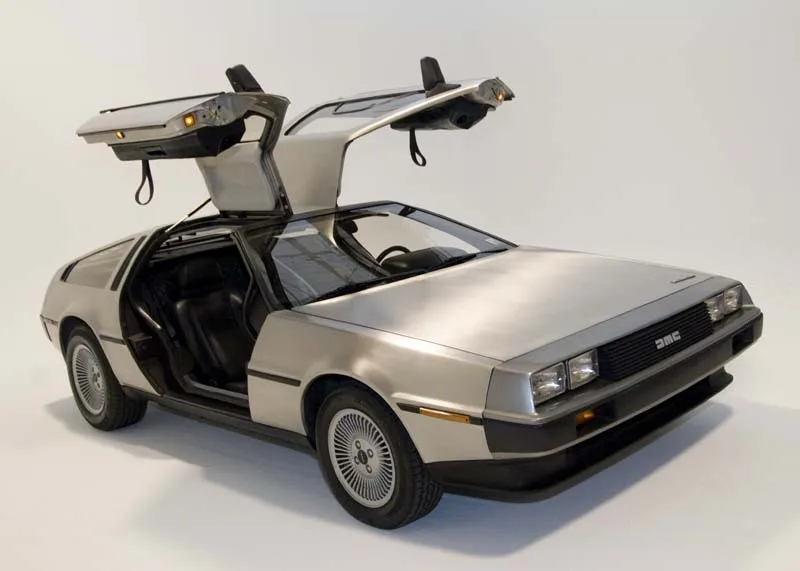
The DeLorean Motor Company was an American manufacturer that John DeLorean set up in 1975. It sold a single model, a stainless steel sports car with gull-wing doors, between early 1981 and late 1982, and receivership followed. The car went on to fame as the time machine in the Back to the Future films, long after the firm had gone.
Where did the DeLorean Motor Company begin?
The company was set up in Detroit on October 24, 1975, by John DeLorean. Within the car industry he was a known name, regarded as an engineer and a business thinker, and he had risen to a General Motors executive post while still young.
The start-up money arrived mostly as business loans from Bank of America. Private investors also came in, among them the talk-show host Johnny Carson and the entertainers Roy Clark and Sammy Davis Jr. A dealer investment programme made the dealerships that would sell the car into shareholders, linking the retail network to the firm's fortunes.
The venture was built on the idea of a new sports car that would stand out on the road. Its funding mixed celebrity backers, bank loans and dealer shares, so the company depended on sales from the outset.
A stainless steel sports car built for two years, then immortalised as a time machine.
Why was Northern Ireland chosen for the factory?
DeLorean wanted government and economic bodies to pay for his plant, so he sought a site in an area of very high unemployment. He first considered Ireland and a site in Limerick, but the Republic's minister for industry and commerce, Desmond O'Malley, declined to support the project and later described it as too good to be true.
Talks in Puerto Rico had nearly reached agreement when DeLorean chose a rival offer from the Industrial Development Board in Northern Ireland. The British Government ended up providing about $120 million of the company's $200 million start-up costs, and it offered export credit covering 80% of the wholesale price of each vehicle on completion and delivery.
Britain wanted new employment in Northern Ireland, partly to ease sectarian tension. DeLorean understood the offer to include that export credit.
What did the DeLorean look like and how did it drive?
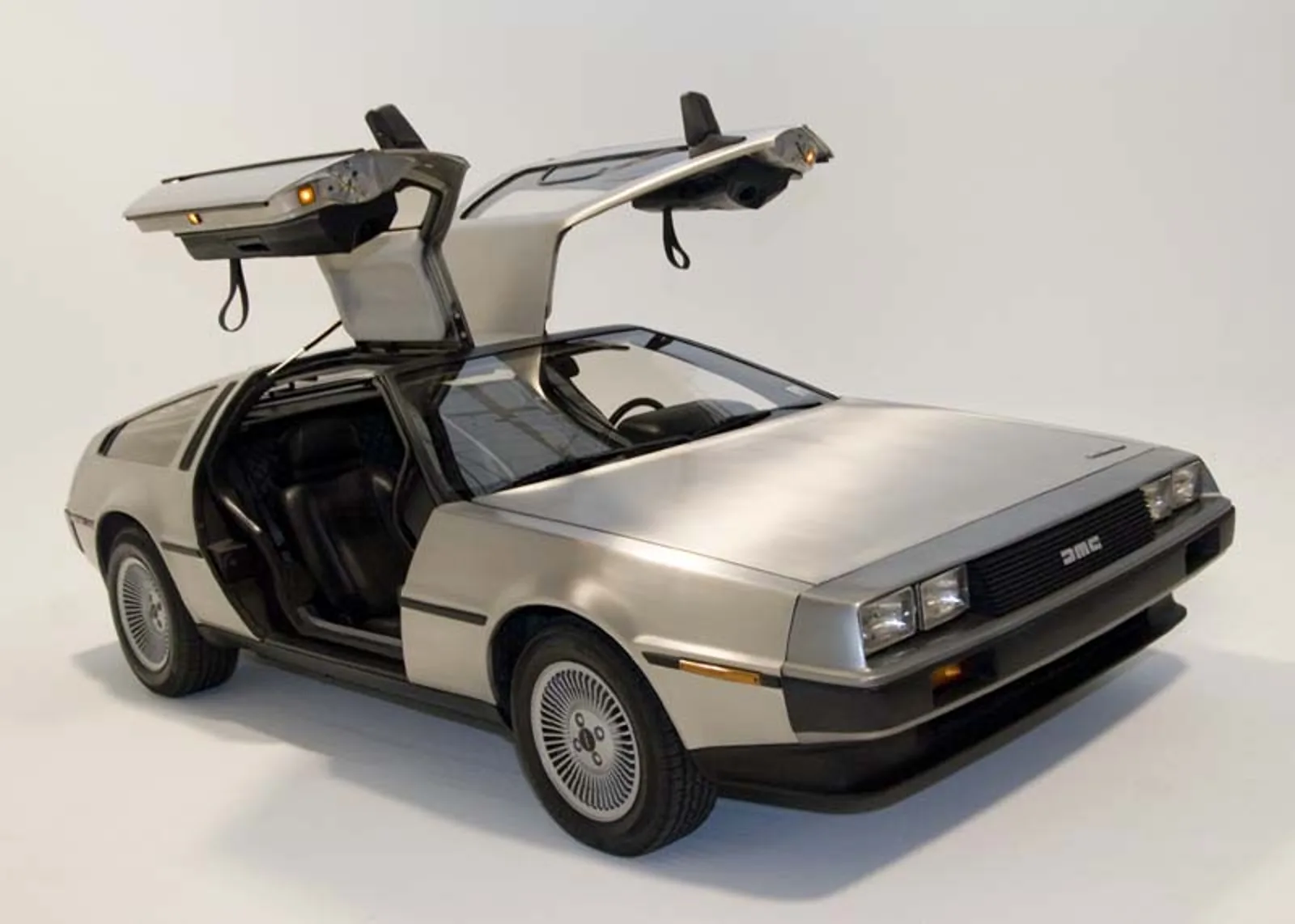
The DeLorean was the only car the company produced, and it was known inside the firm during development as the DMC-12. Its stainless steel body panels resisted corrosion, but the polished surface showed fingerprints and could not be painted in the usual way, so every car looked the same.
The list price was $25,000, roughly $89,000 in 2025 money, which put the car beyond the reach of most buyers. Many reviewers found it underpowered and impractical for the money. Road & Track timed it at 10.5 seconds from 0 to 60 mph and judged that performance unremarkable for the price.
Options were limited. The automatic transmission was the only factory option at first, and a grey interior arrived later in 1981 as an option to the usual black. Certain dealers painted cars to stand out, and pinstriping and luggage racks gave owners further personal touches.
Early owners of the 1981 cars received a 12-month warranty covering 12,000 mi (19,000 km), a sign of how many teething problems the early production run had.
Did the DeLorean have any other body variants?
No. The production car used the stainless finish throughout, and the company did not sell cars with factory-painted body panels. Individuality came from the dealer paint jobs and from aftermarket accessories rather than from the factory range.
Why did the DeLorean Motor Company fail?
Management had put break-even somewhere between 10,000 and 12,000 units, yet sales came to only around 6,000. Lack of demand, cost overruns and unfavourable exchange rates began to drain its cash flow in late 1981.
A restructuring plan proposed a new holding company that would have sat above the manufacturer, the United States distributor and a research partnership. In January 1982 the United States Securities and Exchange Commission questioned the company's viability, and a stock issue for the holding company, which was meant to raise about $27 million, was cancelled.
In March 1982 Bank of America took legal action over missed loan repayments and demanded 1,979 of the cars as compensation. The company went bankrupt later that year, taking 2,500 jobs and more than $100 million in investments with it. Output is put at roughly 9,000 cars for January 1981 through December 1982, though the records are imperfect. Some cars made in 1982 were later given 1983 identification numbers by Consolidated International, which bought the unsold stock and leftover parts. It had run a buyback programme with the company before the collapse. The collapse also cost 2,500 jobs in Northern Ireland, a heavy blow to a region that had been promised an industrial revival. DeLorean later retired to New Jersey and maintained that the Northern Ireland subsidiary had been closed for political reasons. He argued it had been viable, holding substantial cash and a long run of dealer orders.
Was John DeLorean convicted of drug charges?
No. John DeLorean was taken into custody in October 1982 and accused of plotting to bring $24 million of cocaine into the United States. He was acquitted of all the charges, although the case left a lasting mark on his reputation.
The key evidence for the prosecution was a videotape of DeLorean discussing the deal with undercover agents. His attorney, Howard Weitzman, persuaded the court that the agents had first approached him as legitimate investors and had then pressed him into the arrangement.
After the trial DeLorean made a famous quip: would you buy a used car from him? The line captured the awkward position he was left in, even though the company's collapse had already been set in motion before the arrest.
What happened to the Dunmurry factory?
The plant was a six-building complex covering 660,000 sq ft (61,000 m2). Work started in October 1978 at The Cutts, in Dunmurry, on Belfast's south-western fringe, and a test and proving track was laid beside it. Gerald Mooney of Brodie and Hawthorn Architects designed and managed the work, which was built in 16 months by Farrans, McLaughlin and Harvey.
Output had been pencilled in for 1979, but engineering setbacks and overspending delayed the lines until early 1981. Many of the workers had never held a factory job before, and the early cars suffered quality problems that led to Quality Assurance Centers in California, New Jersey and Michigan.
Quality improved by 1982, with better components and a more experienced workforce, but disputes arose with dealers who refused warranty work they were not reimbursed for. Attempts by the British Government to rescue usable pieces of the plant failed, and Dunmurry was shut for good. Folk tales in Ireland blame the failure on a sacred fairy fort that the company supposedly destroyed to build its factory.
The French supplier Montupet took over the site and began casting cylinder heads there in 1989. By its 2015 acquisition the factory employed more than 600 people, and the site is now run as Montupet UK, part of Linamar Corporation.
How did the Back to the Future films affect the car?
The car took a starring role in the 1985 film and its two sequels, released in 1989 and 1990, where it became a time machine. The company had already closed before the first film was made, so the car's afterlife came from the movies rather than from the business.
That screen role played a major part in the model's lasting popularity. Owners and enthusiasts still gather to drive their replica cars, and at one point a fleet of 62 DeLorean vehicles assembled in June 2024, using the defunct test track that enthusiasts had renovated for low-speed use.
A separate business, the DeLorean Motor Company (Texas), was founded in 1995 by Stephen Wynne, a mechanic born in Liverpool. It was not connected to the original firm, though Wynne did take over the leftover parts stock and created his own version of the DMC logo.
What concepts did DMC plan beyond the sports car?
The company explored several proposals beyond its one production car. The DMC-24 was a four-seat saloon that retained the DeLorean's overall profile and its gull-wing doors. Designers produced several drafts, and ItalDesign built the four-door version as a rolling mock-up using the Lancia Medusa concept as a base.
The DMC-44 was a lightweight 4x4 off-road vehicle that would have used drivetrain and other parts from the Polski Fiat 126p. A tubular steel frame prototype, a clear departure from the car's stainless construction, was built, and a promotional video was made to attract investors. DeLorean had brought a French Lohr Fardier paratrooper vehicle to headquarters for study, and the design was similar to it. There were to be two versions, one purely off-road and one road legal.
The DMC-80 was a bus idea floated in autumn 1981, which could have carried one of several six-cylinder engines. A brochure was printed to pitch it to transit operators, and the design would have been an American-built low-floor bus with German roots.
What are the key DeLorean figures?
| Item | Detail |
|---|---|
| Founded | October 24, 1975, Detroit |
| Only production model | DeLorean sports car, stainless steel, gull-wing doors |
| List price | $25,000, about $89,000 in 2025 terms |
| Acceleration | 0-60 mph in 10.5 seconds, per Road & Track |
| Factory | 660,000 sq ft (61,000 m2), six buildings, Dunmurry |
| Break-even estimate | 10,000 to 12,000 units |
| Sales | Around 6,000 cars against that target |
| Output | About 9,000 cars, January 1981 to December 1982 |
| Bankruptcy | 1982, 2,500 jobs lost, over $100 million lost |
| Back to the Future | Released in 1985, 1989 and 1990 |