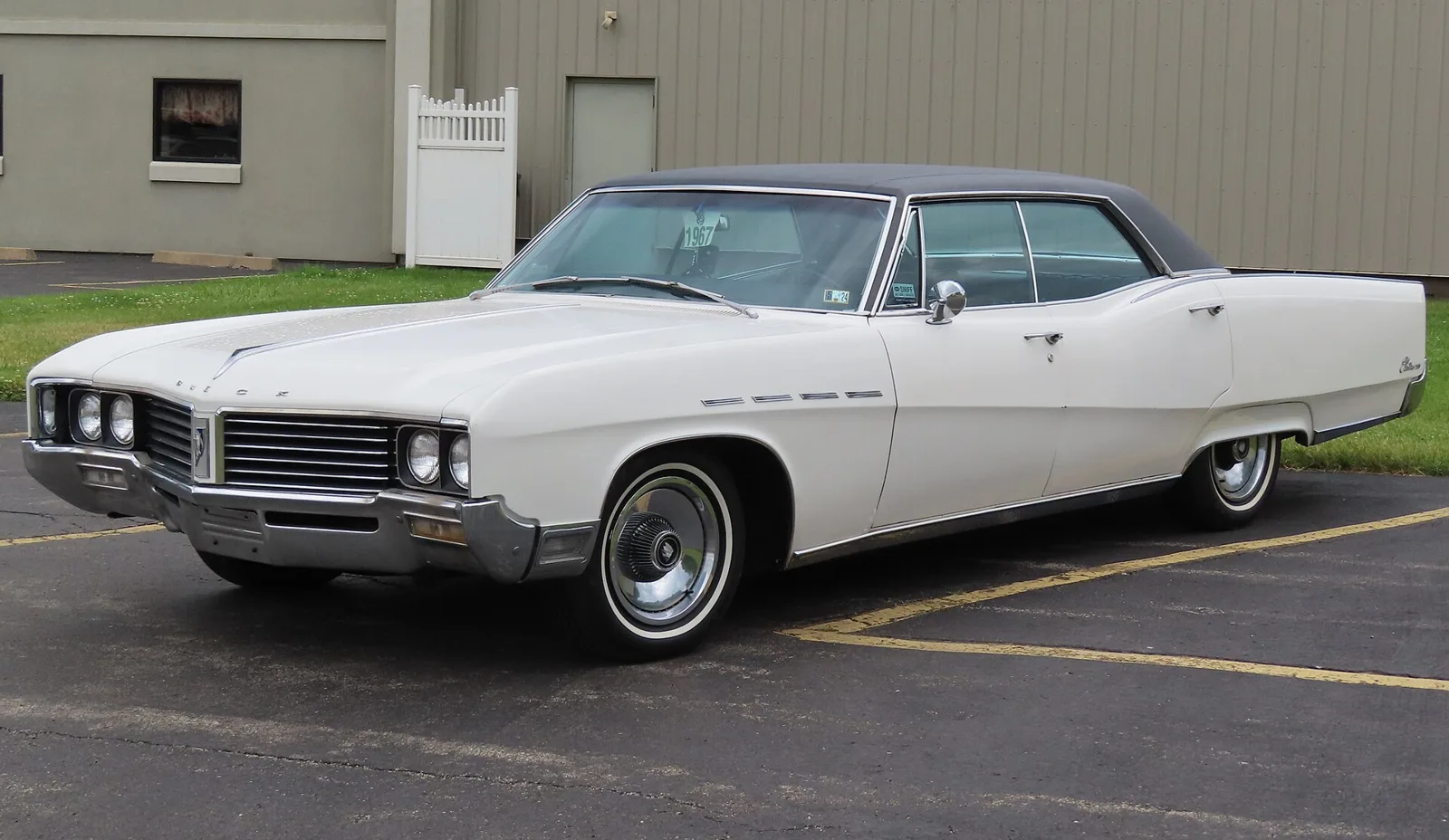
The cheapest Buick that gave America its first volume V6, the economy-engined Super, the Nailhead-powered Wildcat and the Limited that Cadillac wanted gone.
The Buick Special was usually the cheapest Buick, the Super a full-size car built on the Roadmaster's long wheelbase, the Wildcat a high-performance full-size model from 1963 to 1970, and the Limited the flagship of 1936 to 1942 and a halo car in 1958. Each name later became a trim level.
The cheapest Buick of 1962 gave America its first V6 in volume production, and Motor Trend named it Car of the Year. The Special was the entry point to a ladder of names, with the Super above it, the Limited at the top and the Wildcat sitting off to one side as the fast one, and between the 1930s and the 1970s each rung had its own story.
Where did the Buick Special sit in the range?
The Special was usually Buick's lowest-priced model. It started out as a full-size car in 1936, returned in 1961 after a two-year absence as a compact, and became a mid-size car in 1964. It came as a coupe and a sedan and later as a station wagon, and by 1970 it was no longer a model in its own right.
Buick traces its entry-level cars to the Model 10, a companion to the company's first car, the Model B. The Model 10 began life as an independent brand called the Janney. The Series 40 of 1930 was the direct ancestor of the Special: a 257.5 cu in (4,220 cc) straight-six rated at 80.5 bhp at 2,800 rpm, which sold 74,257 units, the most of any Buick that year. It lapsed in 1931 when the Marquette arrived and the Series 50 took over as the cheap Buick. When the Series 40 came back for 1935 it had a 233.0 cu in (3,818 cc) straight-eight with 93 bhp. The name Special followed in 1936, when Buick began giving its cars names instead of serial numbers.
Later the name survived as a trim level. The entry-level Century carried it from 1975 to 1979 and again from 1991 to 1996.
The first volume V6 in an American car came in the cheapest Buick, and Cadillac wanted the dearest one gone.
What did the prewar and postwar Specials offer?
Wheelbase on the first Specials was 118 in (3.0 m), stretched to 122 in (3.10 m) a year later, and they carried a straight-eight that grew from 233 cu in (3.8 L) to 248 cu in (4.1 L). A full restyle in 1939 gave the car an enclosed nose and a wider grille.
The year 1940 was the only one in which a four-door convertible Special, the Sport Phaeton, was offered, and just 552 were built. Prices ran from US$795 for the Business Coupe to US$925 for the Touring Sedan or the two-door convertible. The 1941 body was new again, and a 40-A series on a shorter wheelbase shared its body with the Oldsmobile Series 70. The Estate Wagon moved down from the Super. Production stopped on 4 February 1942.
After the war only the larger B-body Special returned, and it made up less than two percent of Buick's output in 1946. Choices were a sedan with four doors or a sedanet with two until new bodies arrived in 1949.
How did the Special change in the 1950s?
Midway through 1949 the Special received an all-new body with a dramatic grille, nine of whose bars doubled as bumper guards. A better-equipped Special DeLuxe, the 40D, was added. The 248 cu in engine stayed until 1951, when the larger Fireball straight-eight replaced it.
There were two body shapes, the fastback Jetback and the notchback Tourback. In 1950 Buick built 195,072 Jetbacks and 142,537 Tourbacks, but only 72,735 of the Jetbacks were four-door sedans, a little over half the Tourback figure. The fastback, a throwback to GM's prewar streamliners, was dated by 1951, and the Jetback was dropped. A two-door hardtop arrived that year, and an all-new, wider and lower body and chassis followed in 1954 with the Fireball V8.
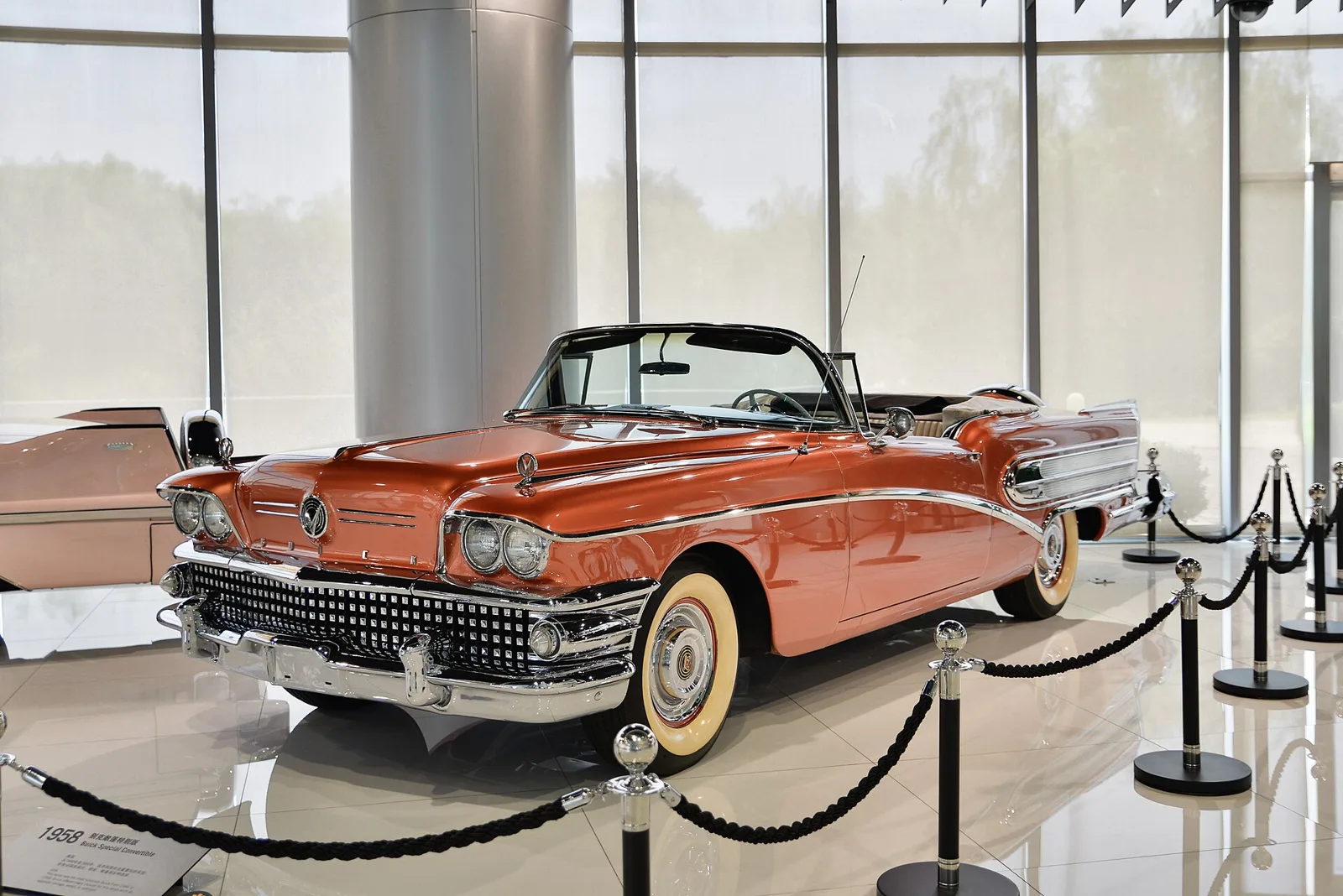
The four-door Special Riviera, introduced in mid-1955, was among the earliest pillarless four-door hardtops anywhere. By then the Special was one of America's best-selling series and is credited with lifting Buick to third place in sales, ahead of Plymouth. A 322 cu in (5.3 L) V8 arrived for 1956, then a 364 V8 of 250 hp (186 kW) for 1957. In June 1957 Popular Mechanics recorded 0-60 mph in 11.6 seconds and 17.4 mpg-US (13.5 L/100 km; 20.9 mpg-imp) at 50 mph (80 km/h). The 1958 car had the most chrome yet and twin headlights. For 1959 GM renamed it the LeSabre, after the 1951 Le Sabre concept.
Why was the 1960s Special a technical landmark?
When the Special returned in 1961 it sat on the new unibody GM Y platform and used an innovative 215 in3 aluminium-block V8 with 155 hp (116 kW), Dual Path transmission and power steering. A Skylark option followed mid-year with bucket seats and a four-barrel carburettor that lifted the V8 to 185 hp (138 kW).
The big step came in 1962. The Special became the first American car with a volume-production V6, and it won the Motor Trend award. Buick derived the 198 cid Fireball from the 215, scaled down and cast in iron but keeping many of its design parameters. It produced 135 hp (gross) at 4600 rpm and 205 lb ft (278 N m) at 2400 rpm. Road & Track called the engine practical and said it sounded and performed much like the aluminium V8. Buick sold 153,763 Specials that year, including 42,973 Skylarks, and 148,750 in 1963, including 42,321 Skylarks, when a new body hid unchanged mechanicals.
The 1963 buyer could choose a three-speed manual, a Borg-Warner T-10 four-speed or the two-speed Turbine Drive automatic. That automatic was a Buick design, and it had nothing in common with the rival Power-Glide from Chevrolet. The 215 V8 had a surprising second career. It powered the Rover P6 3500S from 1968 and other British cars including the Morgan Plus 8, MGB GTV8 and Triumph TR8. It was the sole engine in the Range Rover for a couple of decades and later reached Land Rover models including the Defender and the Discovery.
What happened to the Special from 1964 to 1970?
For 1964 the Special and the upmarket Skylark moved to separate body-on-frame construction, the A-body, as intermediate cars. The Skylark grew into a full top-line series, while a plain Special and a Special Deluxe, with a little more finery, filled the range beneath it. The V6 grew from 198 to 225 cubic inches, and a cast-iron 300 cubic inch V8 with aluminium heads replaced the aluminium V8. Cast-iron heads followed in 1965 after problems with the aluminium ones.
For 1968 and 1969 Buick built only Special Deluxes, the plain Special having gone, with a short wheelbase of 112 in (2,845 mm) for two-door models and 116 in for four-door ones. The V6 tooling went to Kaiser Industries, which used it in Jeep vehicles, and the base engine became a 250 cu in (4.1 L) Chevrolet six of 155 hp (116 kW). In 1970 the Special Deluxe was dropped in favour of the slightly upscale Skylark, and the Special's run ended.
What was the Buick Super?
The Buick Super was a full-size car built for the 1940 to 1958 model years, with a brief hiatus from 1943 to 1945. Its recipe was to put the Roadmaster's longer wheelbase around the Special's smaller engine, which favoured passenger comfort over performance.
Its ancestor was the Series 50 of 1930 to 1935, which began with a 331.4 cu in (5,431 cc) straight-six of 99 bhp, before the straight-eight took over. When the Series 40 vanished in 1931 the Series 50 became Buick's entry model, and 127,416 were built in total. The 1940 Super shared its Art Deco C-body with the Roadmaster and with cars from Cadillac (Series 62), Oldsmobile (Series 90) and Pontiac (Custom Torpedo). It had shoulder and hip room more than five inches wider than before, no running boards and a lower body, and its 248 cu in (4.1 L) Fireball straight-eight made 107 hp. Prices ran from US$1,058 for the Sport Coupe to US$1,549 for the Convertible Phaeton, and 128,736 were sold in the first year.
For 1941 the compression ratio rose from 6.15:1 to 7.0:1, and Buick added Compound Carburetion, twin two-barrel carburettors with one working only under hard acceleration. It was a forerunner of the modern four-barrel and lifted output to 125 hp, though sales fell to 92,067. The 1946 Super lost the system and dropped to 110 hp, yet it made up 76.98 percent of Buick sales and 119,334 were sold. A record 159,588 followed in 1947.
Why did the Super sell so well after the war?
Roomy Roadmaster dimensions on a thrifty Special engine made the Super an American favourite. In 1949 it moved to a new C-body and gained three VentiPorts on each front fender, signalling the smaller engine, against four on the senior cars. Dynaflow automatic was optional from that year, at 120 hp, and sales reached 190,514.
The VentiPorts had a story. Styling chief Ned Nickles had fitted a bank of four amber lights to each side of his own 1948 Roadmaster's bonnet, wired to flash with the firing of the pistons like the exhaust flames of a fighter aeroplane. Buick chief Harlow Curtice loved the idea and ordered non-lighting VentiPorts on every 1949 Buick. The brochure said they ventilated the engine compartment, which may have been true until they became plugged during the model year.
In 1950 a 263 cu in (4.3 L) Fireball straight-eight with 112 hp (84 kW) arrived, and the Super could pass 90 mph (140 km/h) with the optional Dynaflow. That transmission used a torque converter and a single gear ratio instead of changing gears. In June 1953 Popular Mechanics measured 0-60 mph in 14.5 seconds, which it blamed on Dynaflow's languid nature. The 251,883 sold in 1950 remained the Super's best year ever. In the 1959 renaming it became the Invicta, and the Super name returned as a performance trim on V8 LaCrosse and Lucerne sedans from 2008 to 2011.
What was the Buick Limited?
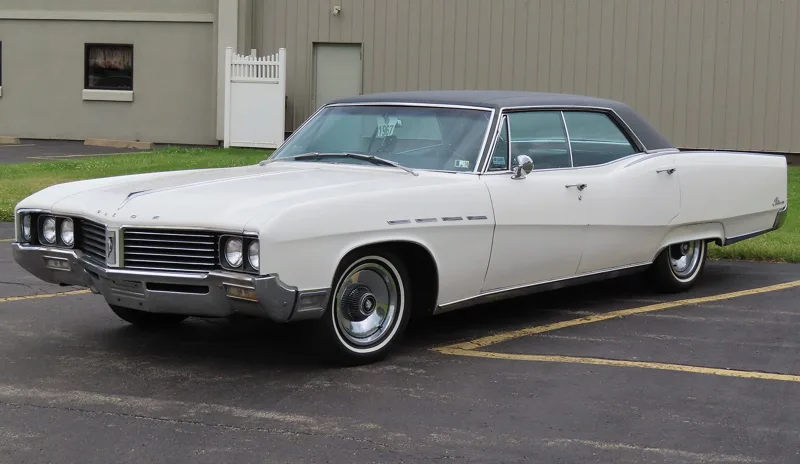
The Limited was Buick's flagship from 1936 to 1942 and a single-year halo car in 1958, and from the 1960s the word was used as a top trim designation. The original cars competed directly with senior Cadillacs for buyers who wanted a General Motors luxury car but found Cadillac ostentatious next to Buick's image as a maker of sturdy, dependable, sober upmarket cars.
Its forerunner was the Series 90 of 1931, built on the C-body it shared with the Cadillac Series 355. Under the bonnet was a 344.8 cu in (5.7 L) straight-eight of 104 bhp at 2,800 rpm, and its rivals were the Cadillac V8 and the Packard Standard Eight. Closed cars had mohair velvet interiors, retractable silk shades and wool carpeting. The seven-passenger limousine cost US$2,035. The line sold 43,321 cars in total and became the 90 Limited in 1936, sharing its chassis with the Cadillac Series 70.
In 1938 the wheelbase was stretched two inches to 140 in (3,556 mm) and the Limited swapped its wooden structural parts for steel, which made it one of the last Buick passenger cars to use wood. The 1939 Limited kept the 1938 body and added a sectioned rear compartment with a glass partition that could be raised for privacy. Cadillac executives lobbied behind the scenes to end it. At US$2,453 it came close in its fittings to Cadillac's Imperial Touring Limousine, a car with nearly four times the price. Buick replied that its Limited production averaged only 1,561 cars a year from 1938 to 1940, which was insignificant next to Cadillac's senior output.
What was the 1958 Limited?
For General Motors' 50th anniversary, Buick revived the Limited name as a halo car for 1958 only. It used the GM C platform and was slightly more restrained than the chrome-laden Special, Century, Super and Roadmaster. A body-colour insert carrying fifteen slanted slashes in three groups of five replaced the usual chrome side trim, and a wraparound tail light lens broken by four chrome bands replaced heavy tail light housings.
The grille was the Fashion-Aire Dynastar, cast from 160 chrome squares, and power brakes were standard. The Limited came as a four-door hardtop, a two-door hardtop coupe or a convertible, on a 127.5 in (3,238 mm) wheelbase and 227.1 in (5,768 mm) overall length, with full leather in the convertibles. Only 7,438 were sold. The four-door hardtop started at $5,112, which was $221 more than the entry-level Cadillac Series 62 four-door hardtop at $4,891. Cadillac sold 13,335 of those.
After that the word went down the trim ladder. It was a trim option on the Electra 225 Custom in 1967, and from 1971 to 1979 the top Electra 225 wore Limited scripts, available with Park Avenue or Park Avenue DeLuxe packages. Buick used the designation on various models through 2005.
What was the Buick Wildcat?
The Buick Wildcat ran for the 1963 to 1970 model years as a full-size performance car, and the name came from Buick's concept cars of the 1950s. It replaced the Invicta in the junior B-body range and was the higher-performance full-size Buick, sat above the LeSabre and below the larger C-body Electra. The Buick Centurion replaced it for 1971.
Before 1963 the Wildcat had been a 1962 Invicta subseries, a two-door hardtop with a 325 hp (242 kW) version of the 401 cu in (6.6 L) Nailhead V8 and a name, Wildcat 445, taken from its 445 lb ft (603 N m) of torque. It had bucket seats, a console with a tachometer, Electra 225 taillights and a wild cat head emblem on each rear pillar. As its own series from 1963 it added a convertible and a four-door hardtop, with a pillared four-door sedan in 1964. The wheelbase was 123 in (3,124 mm), against 126 in (3,200 mm) for the Electra.
From 1964 to 1966 a bigger 425 cubic inch engine offered 340 hp (254 kW) with a four-barrel carburettor or 360 hp (268 kW) with two. Buick named its engines for torque, so the 425 was the Wildcat 465, with 465 lb ft (630 N m), and the dual-quad version was the Super Wildcat. In 1966 a one-year Gran Sport Performance Group package was sold, and of the 1,244 Wildcat GS cars built, 242 were convertibles and only 22 were Super Wildcats.
For 1967 a new 430 cubic inch V8 of 360 hp replaced the older Nailhead layout, which went back to Buick's first V8 of 1953. It had larger valves, a 10.25:1 compression ratio and 475 lb ft (644 N m) at 3,200 rpm, and it lasted until 1969. In 1970 the largest Buick V8 ever, a 455 cubic inch unit rated at 370 hp, took over. Like other full-size American cars of the late 1960s, the Wildcat grew bigger, plusher and less economical, and it was offered only in Custom trim in its final year.
Buick has used the name for concepts too: three Wildcat show cars of 1953, 1954 and 1955 under Harley Earl, a mid-engine all-wheel-drive Wildcat in 1985 and a Riviera Wildcat in 1997. On 1 June 2022 the company revealed a Wildcat EV concept as a design study rather than a preview of a production car. Buick said its first production electric vehicle was expected in 2024.
The four names at a glance
| Name | Years | Role in the range | Notable fact |
|---|---|---|---|
| Special | 1936 to 1969, with a gap before 1961 | Usually the lowest-priced Buick | First volume V6 in an American car, 1962 |
| Super | 1940 to 1958 | Full-size, Roadmaster body with Special engine | Record 251,883 sales in 1950 |
| Limited | 1936 to 1942, and 1958 | Flagship and halo car | Only 7,438 sold in 1958 |
| Wildcat | 1963 to 1970 | Higher-performance full-size | 455 V8 of 1970, the largest Buick V8 |