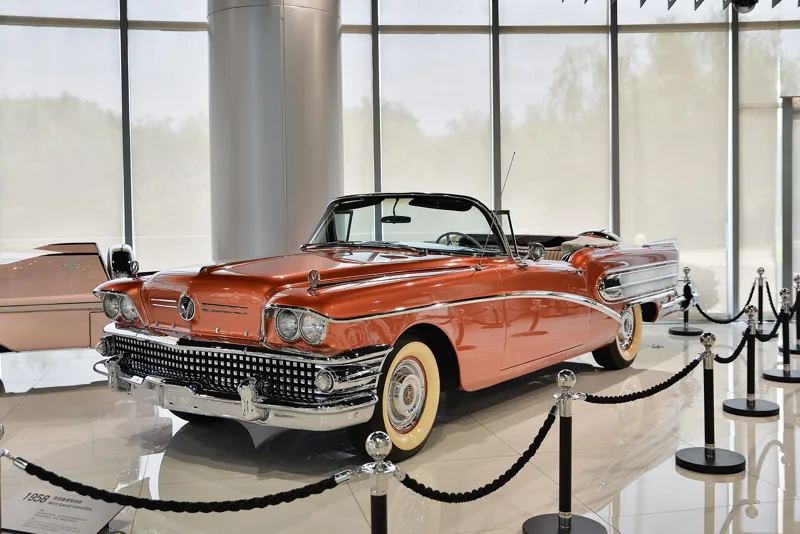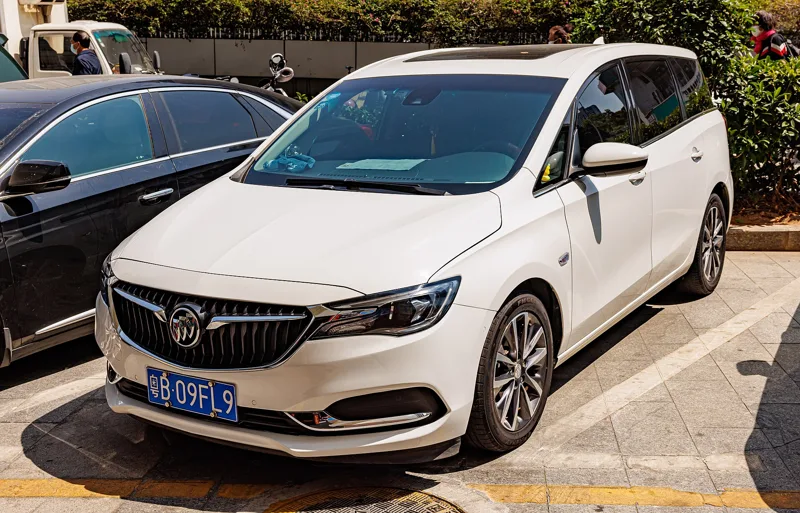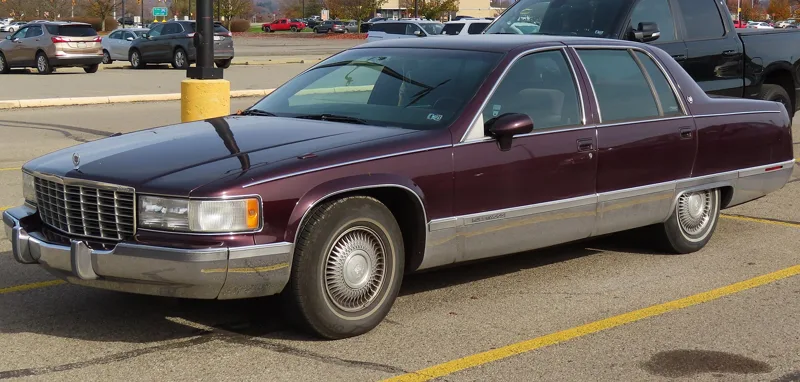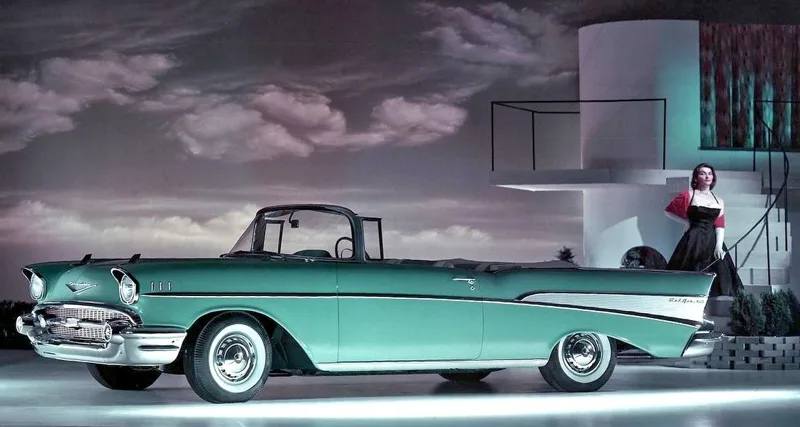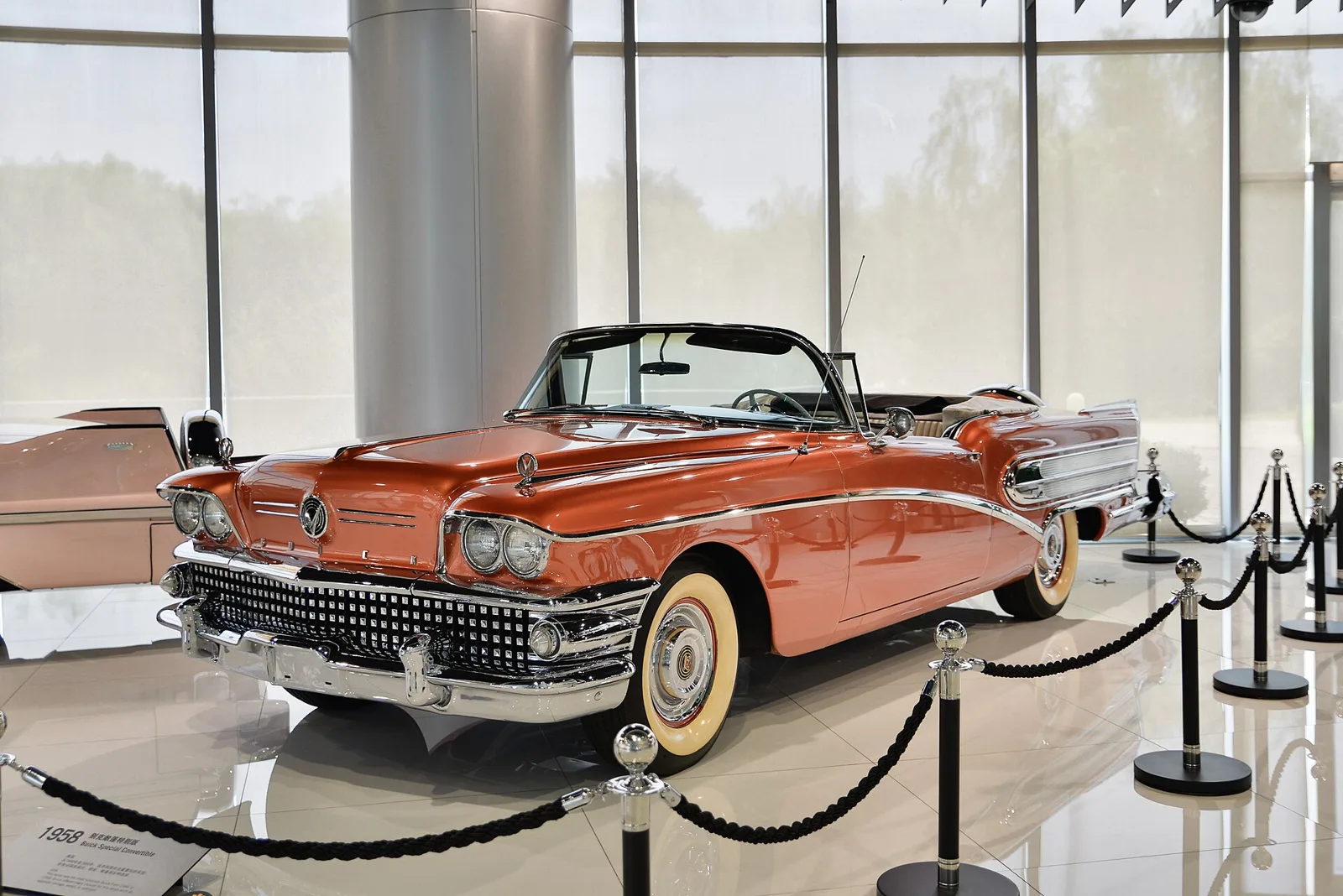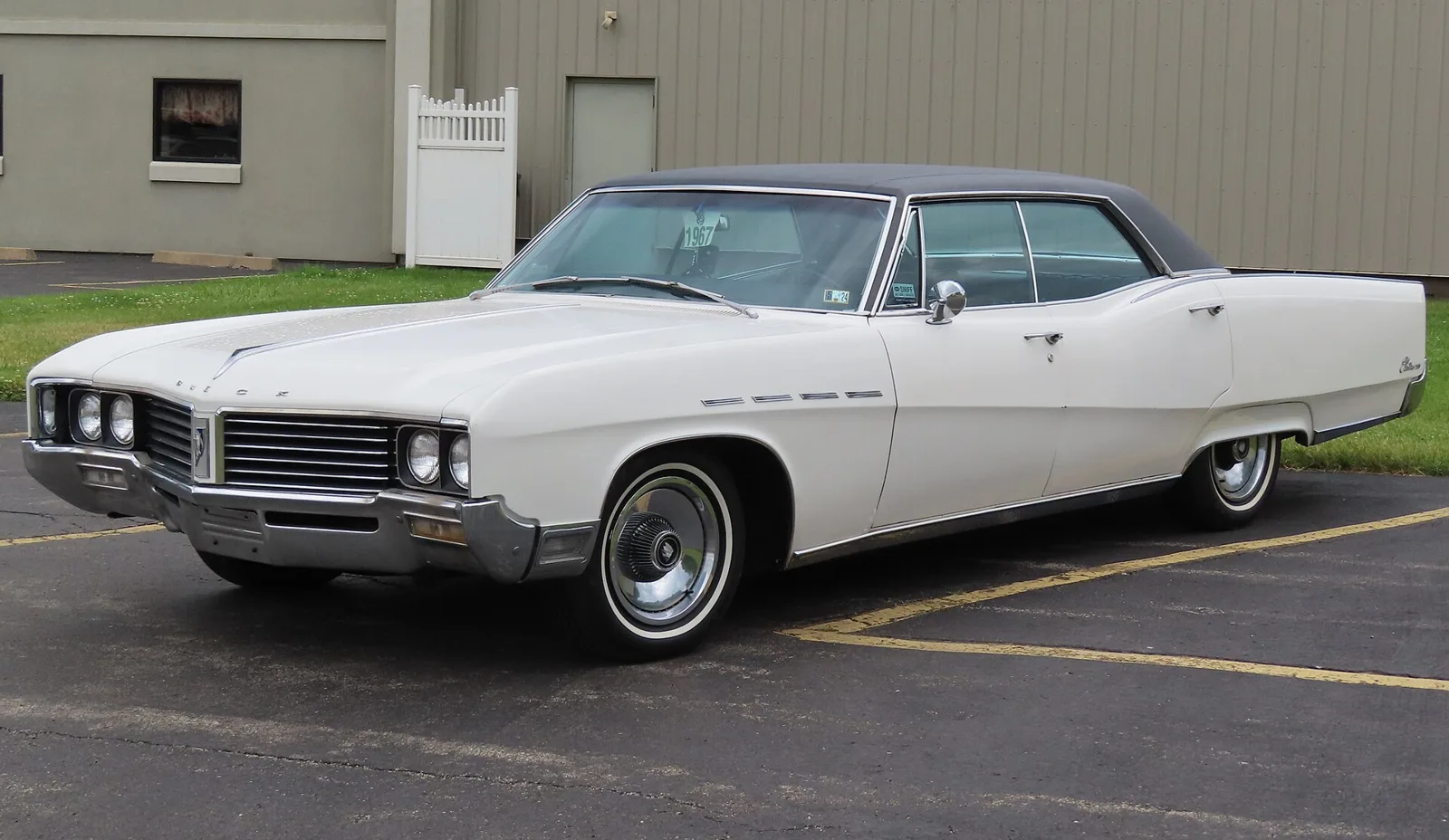
A socialite's name on the flagship, an entry-level LeSabre that outlived its rivals, a Roadmaster that came back as a wagon, and a Park Avenue that started as a trim package.
Buick's full-size line began with the 1959 Electra, LeSabre and Invicta, which replaced the older Roadmaster and Special names. The Electra was the flagship until 1990, the LeSabre was the entry model until 2005, the Roadmaster returned in 1991 and the Park Avenue became its own model in 1991.
The Buick Electra was named after a Texas socialite and sculptor, Electra Waggoner Biggs, who happened to be the sister-in-law of General Motors president Harlow H. Curtice. Her name sat on the flagship of Buick's full-size range from 1959 to 1990, and she also lent it to the Lockheed L-188 Electra airliner.
The Electra, LeSabre, Roadmaster and Park Avenue were never four unrelated cars. They were rungs and replacements on one ladder, and as the ladder moved, names slid up it: the Roadmaster became the Electra, the Electra became the Park Avenue, and the Roadmaster came back as a wagon and sedan after being retired for decades.
What did the Buick Electra replace?
The Electra replaced the Roadmaster lines for 1959 and stayed Buick's flagship sedan through six generations, until it was retired after 1990. Its front-drive successor took the Park Avenue name, which had been an upper trim level of the Electra, and the Electra Estate wagon became the Roadmaster Estate for 1991.
In 1958 Buick had brought back the Limited name, slotting it between the Roadmaster and the Cadillac Series 62, but the Limited was not a success. For 1959 the old Super was renamed Invicta, the Roadmaster became the Electra and Electra 225, and the Limited was discontinued. The 225 in the name referred to an overall length of over 225 inches (5,715 mm), which earned the car its street name, the deuce and a quarter.
Four names, one ladder: as each rung changed, the names slid up and down it.
How did Buick's full-size ladder work in 1959?
Four nameplates arrived together for 1959: the entry-level LeSabre, the mid-level Invicta, and the Electra and Electra 225 at the top. All used new styling with slanted headlights, a square chrome grille and fins at the back, and all of it was unique to Buick.
Rank showed in the hardware. The Electras rode on the GM C-body shared with the Oldsmobile 98 and every Cadillac, with a wheelbase of 126.3 inches (3,210 mm), while the LeSabre and Invicta used the B-body with 123 inches (3,100 mm). The Electra had one engine, the 401 cubic-inch Wildcat V8 with 325 horsepower (242 kW), a two-speed Dynaflow automatic, power steering and power brakes with 12-inch finned aluminium drums. The LeSabre made do with a 364 cubic-inch V8 rated at 250 horsepower.
Trim told the same story. Electra interiors used nylon Mojave cloth or broadcloth with Cordaveen vinyl, and the Electra 225 convertible alone came with leather, power windows and power seats as standard. Every Electra also carried a horizontal Red-line speedometer, an electric clock, dual exhausts and a trunk light.
For 1960 the face changed to a concave grille with horizontal headlights centred by the Trishield logo that Buick still uses. Chrome VentiPorts returned on the front fenders as a rank marker, four per side on Electras and three on the LeSabre and Invicta. Inside, the Mirromatic panel reflected the speedometer from a tilting mirror, and a two-spoke steering wheel replaced the old horn ring.
How did the Electra change from 1961 to 1990?
The second generation of 1961 to 1964 shrank the fins drastically. Buick dropped the plain Electra name at the end of the 1961 model year and left only the Electra 225 from 1962. The 1964 car gained fender skirts and a three-speed TH-400 automatic in place of the two-speed Dynaflow.
The Riviera name had once marked premium hardtops across the Buick line, and after 1963 Buick stopped using it as a body style designation because it now belonged to a new personal luxury coupe. In 1965 the third generation arrived with Coke-bottle lines, a perimeter frame in place of the X-frame used since 1961, base and Custom trims and a thin-pillar four-door sedan. Engines ran from the 325 horsepower 401 to a 425 V8 rated at 340 or, with two four-barrel carburettors, 360 horsepower.
The Electra then downsized for 1977 and again for 1985. The sixth generation adopted unibody construction and GM's front-wheel-drive C platform. Along with its Oldsmobile and Cadillac cousins, the 98, DeVille and Fleetwood, it counted as the first GM full-size car to combine unibody construction, a transverse engine and front-wheel drive.
What is the history of the Buick LeSabre?
The LeSabre was Buick's entry-level full-size car through all eight generations from 1959 to 2005, taking over the role of the older full-size Special. The name is French for the sabre, and it came from the 1951 Le Sabre show car with its wrap-around windshield and tail fins.
It was consistently Buick's best-selling full-size model, and it outlasted the other three 1959 nameplates. Throughout its life it came as a convertible, hardtop or sedan, and a wagon, except for the years 1965 to 1969 when no LeSabre wagon was offered. The 1977 downsizing left only pillared coupe, sedan and wagon bodies.
Engines tell the story. The 1959 to 1961 cars used the 364 cubic-inch V8, with a no-cost 235 horsepower economy version for 1960 and 1961. A 401 two-barrel with 280 horsepower took over for 1962 and 1963, and from 1964 the LeSabre shared smaller V8s with Buick's mid-size cars, of 300, 340 and 350 cubic inches, until a 455 became an option from 1970 to 1976. From 1977, and in the front-drive generations of 1986, 1992 and 2000, the 3.8-litre V6 was the usual engine. V8s survived only in wagons once the final rear-drive sedans and coupes ended production in 1985.
The chassis story changed too. LeSabres were rear-drive, body-on-frame cars from 1959 to 1985, with wagons continuing through 1990. The 1961 redesign brought a finless body and an X-frame that replaced a torque tube driveline, the 1965 car moved to a perimeter frame, and the 1986 model switched to front-wheel drive with unit-body construction. LeSabre wagons moved to the revived Roadmaster series after 1990, and the car came in Custom and Limited versions.
Transmissions followed a similar path. A three-speed manual was standard on most LeSabres from 1959 to 1971 yet rarely ordered, since buyers preferred the Turbine Drive automatic, and a four-speed manual offered from 1963 to 1965 found few takers. The automatic became standard again in mid-1971 and stayed that way until the model ended after 2005.
What was the Buick Roadmaster?
The Roadmaster was built in three separate periods: 1936 to 1942, 1946 to 1958, and 1991 to 1996. From 1946 to 1957 it was Buick's flagship, and the revived 1991 version became the marque's largest car, 10 inches (254 mm) longer than the Park Avenue with a wheelbase 5 inches (127 mm) greater.
The name dates from 1936, when Buick named its whole range. The Series 80 of 1932 was the first Buick with the 344.8 cubic-inch straight-eight, which made 104 hp, and at the end of 1933 that series was discontinued after 24,117 were built. The 1936 Roadmaster sedan cost $1,255, which was $440 less than the cheapest Cadillac, and it weighed 4,098 pounds. The four-door phaeton cost $1,565 against at least $2,745 for a Cadillac in the same body. That year Buick's sales rose from just over 48,000 to nearly 158,000, with the Roadmaster contributing 16,049.
In 1938 the engine rose to 141 hp with new pistons, but sales slumped to 5,568. For 1940 the Roadmaster name moved to the new Series 70, with a torpedo C-body, while the Series 80 became the Limited. Sales tripled to 18,345. The 1941 car introduced Compound Carburetion, twin two-barrel carburettors that helped it reach 165 hp, the most powerful engine on an American car that year, five more than a senior Packard and 25 more than the largest Chryslers.
After the war the Roadmaster grew to a 20 percent share of Buick sales in 1946, around 31,400 cars. An Estate wagon followed in 1947, with 300 sold. In 1948 Dynaflow, the first torque converter transmission in a passenger car, became optional on the Roadmaster and was standard from 1949. Sales were just under 80,000 in both 1947 and 1948. The 1949 restyle brought the first VentiPorts, four on each front fender of the Roadmaster and Century and three on lesser models.
The 1991 Roadmaster was the first to ride on the B-body rather than the C-body and borrowed its running gear from the Chevrolet Caprice, Cadillac Fleetwood and Oldsmobile Custom Cruiser. It returned as a wagon in 1991 and as a sedan in 1992. The Roadmaster Estate had been manufactured in several generations since 1947 and ended in 1996.
Where did the Buick Park Avenue come from?
The Park Avenue first appeared in 1975 as an appearance package on the Electra Limited, became an Electra trim level in 1978, and gained its own model status for 1991 after the Electra was discontinued. The name comes from the boulevard in an affluent part of New York City.
The 1975 package gave buyers seats like those of the Cadillac Sixty Special, a 455 cubic-inch V8, rallye wheels and automatic climate control. In 1985 the car moved to front-wheel drive with the 3800 V6 as standard, and a diesel offered for that year only sold poorly. The coupe went after 1987. In 1989 Buick added the Park Avenue Ultra, with twenty-way power front seats by Lear Siegler styled by Giorgetto Giugiaro of Italdesign, anti-lock brakes and a base price above the Cadillac Sedan de Ville.
The 1991 Park Avenue was introduced in July 1990 after the 1989 Essence concept, with projected sales of 100,000 a year. It was Buick's largest front-wheel-drive sedan and was marketed as the flagship, even though the base Park Avenue cost more than the rear-drive Roadmaster Limited. Ultra models from 1992 had a supercharged 3.8-litre V6. The car was sold in Europe from 1991 to 1996, and it was the last Buick GM officially marketed there. GM withdrew it to trim a cluttered range that confused European buyers, leaving Cadillac and Chevrolet as its only North American brands on sale in Europe.
A new generation arrived in October 1996 for 1997 on the G platform, though GM continued to call it the C platform. Only Ultra models were supercharged, and the base car was the last Buick sold in the United States with a factory hood ornament. VentiPorts returned on the Ultra in 2003. The last 3,000 of 7,000 cars built in the final run carried Special Edition badges with a New York skyline, and production ended on 18 June 2004, with the Lucerne replacing the Park Avenue in 2006.
The name returned in April 2007 on a luxury sedan for China, based on the Australian-built Holden Caprice and assembled by Shanghai GM from kits sent from South Australia. It replaced the Royaum, offered five trim levels and used 2.8 and 3.6-litre V6 engines until a single 3-litre engine took over in 2010. It was discontinued in October 2012, and a version eventually reached the American market as the stripped-down Chevrolet Caprice police car.
How do the four Buick names compare?
| Name | Years | Role | Layout |
|---|---|---|---|
| Electra | 1959 to 1990 | Flagship full-size sedan | Rear-drive, front-drive from 1985 |
| LeSabre | 1959 to 2005 | Entry-level full-size car | Rear-drive to 1985, front-drive from 1986 |
| Roadmaster | 1936 to 1942, 1946 to 1958, 1991 to 1996 | Flagship, then largest Buick | C-body, then B-body in 1991 |
| Park Avenue | 1975 package; own model from 1991 | Front-drive flagship | Front-drive C platform |
Where this goes next
Buick said in late 2022 that the Electra name would come back on its coming electric models for 2024.