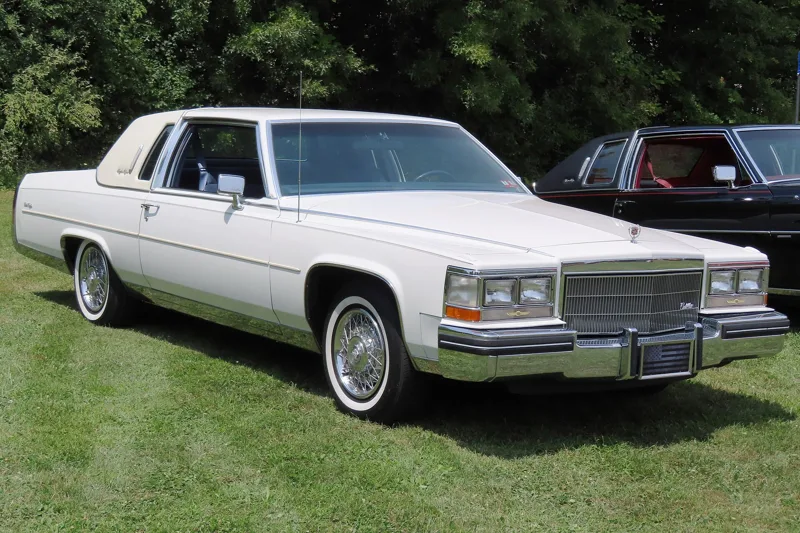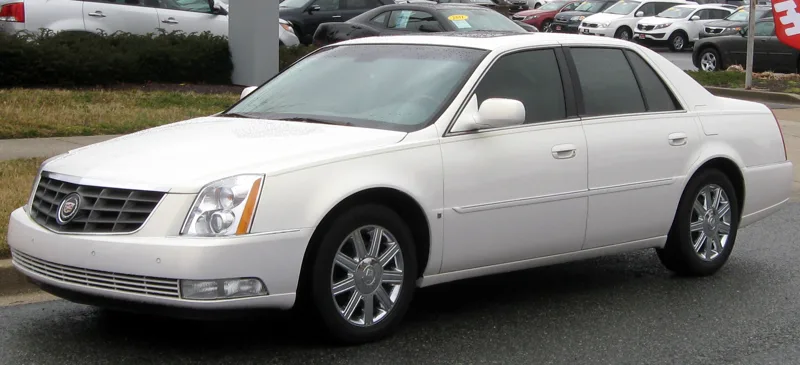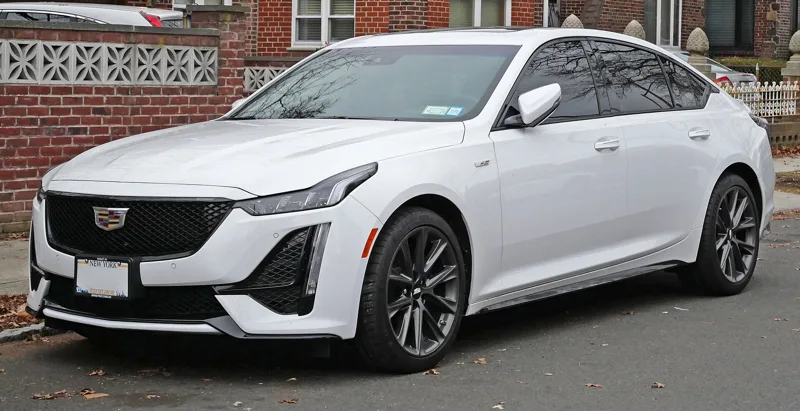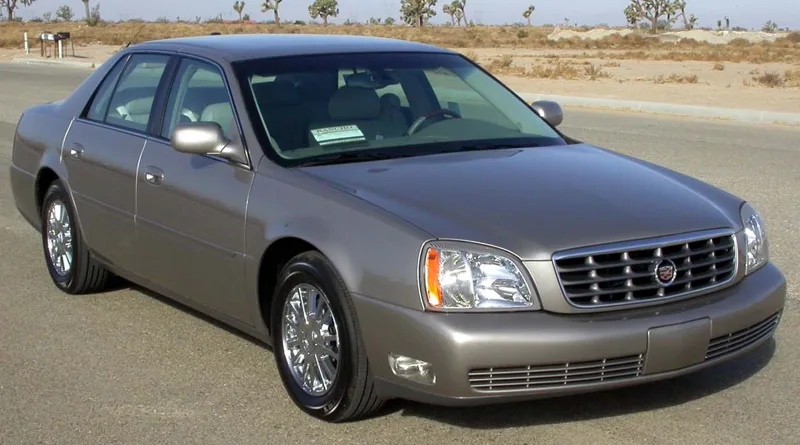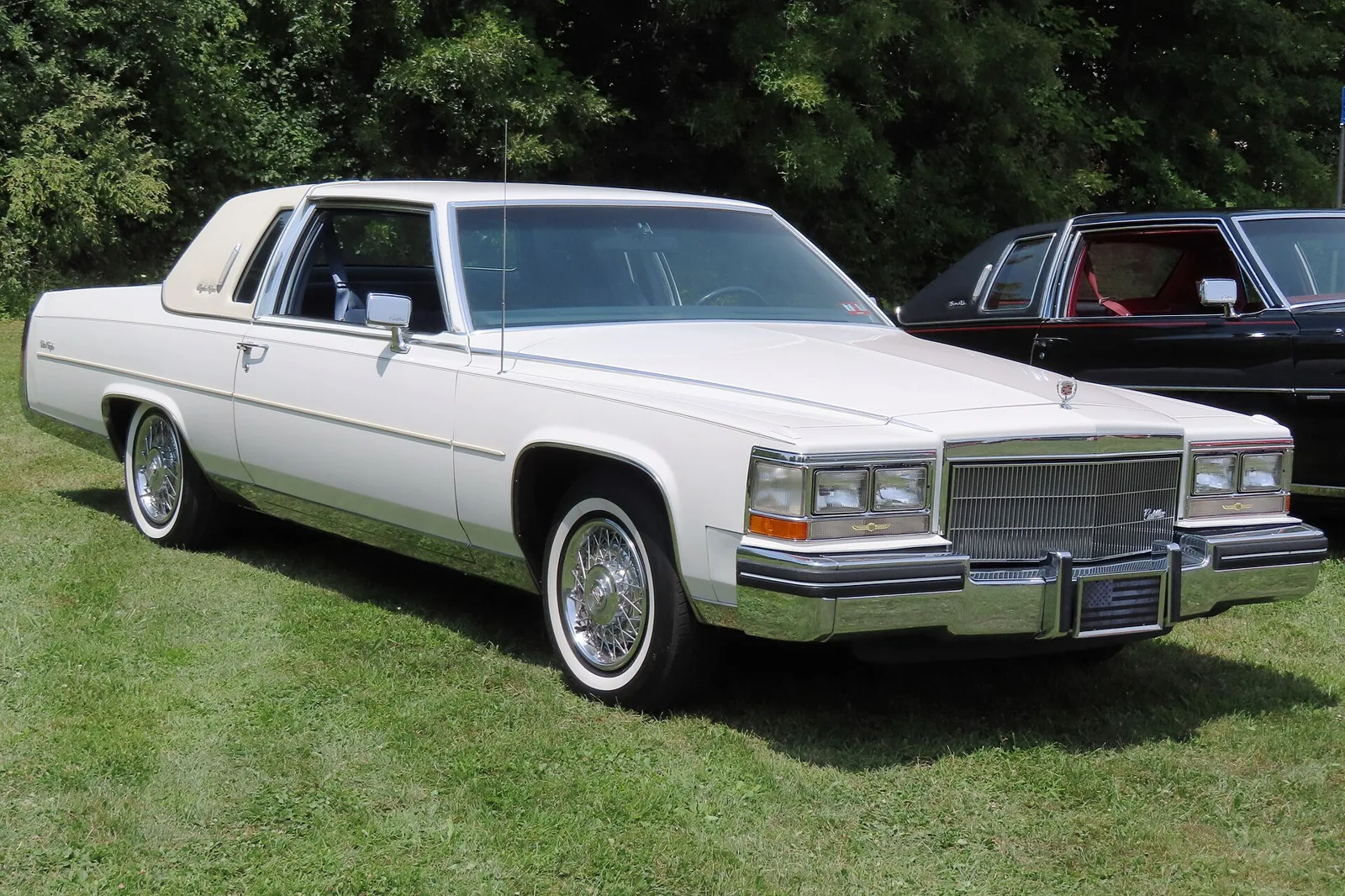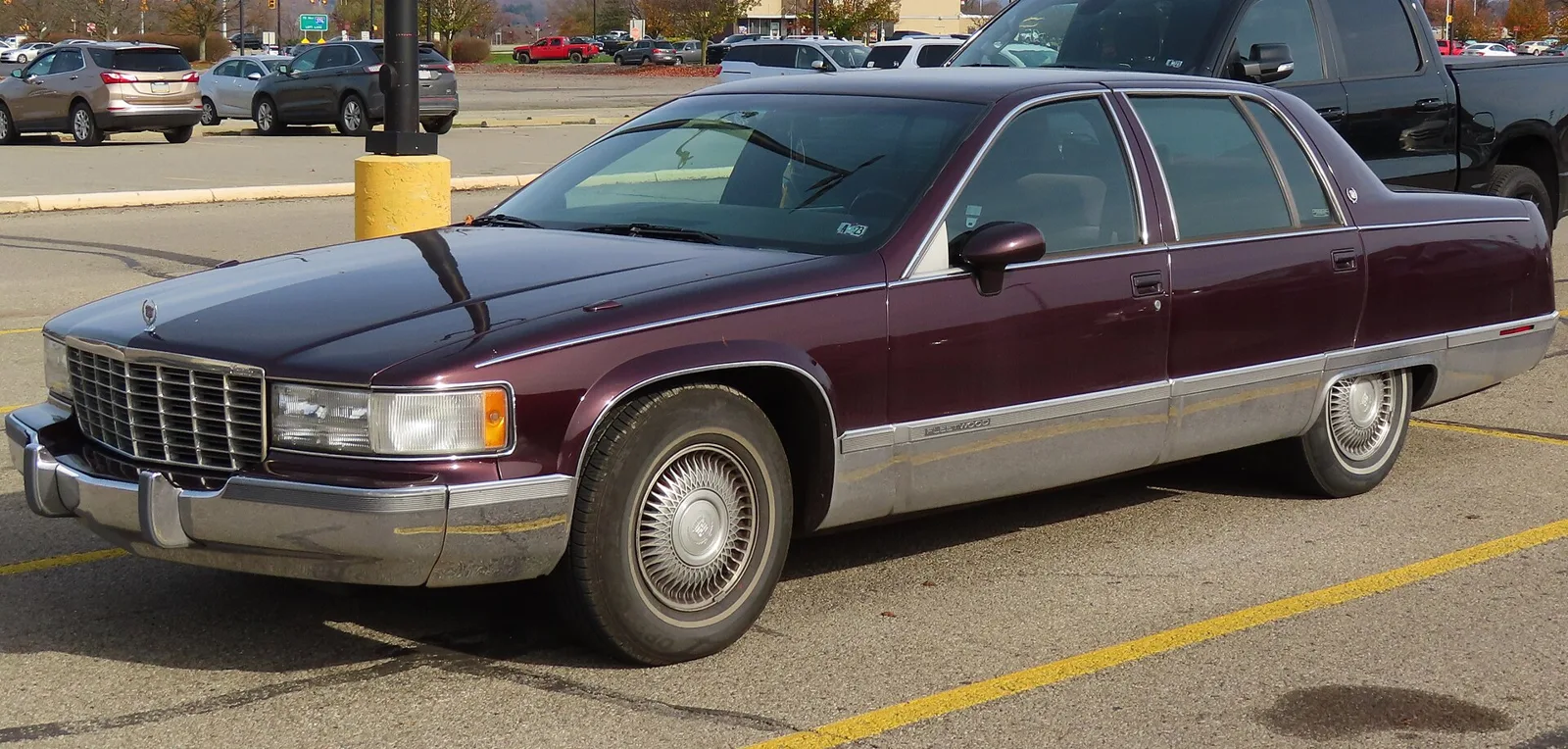
The Sixty Special launched three-box sedan styling, the Series 62 outsold it, and Fleetwood went from coachbuilder to model line.
The Cadillac Series 62 ran from 1940 to 1964 as the volume model, while the Sixty Special, launched in 1938, was the owner-driven flagship. Fleetwood began as a coachbuilder bought by Fisher in 1925 and became a separate Cadillac model line from 1985 until 1996.
Cadillac's Sixty Special launched three-box sedan styling in 1938, then lost its customers to a cheaper car built in its image. By 1947 the Series 62 made up 84% of everything Cadillac built, while the Sixty Special had slipped to 14%.
Three names carry that story. The Series 62 was the volume car from 1940 to 1964, the Sixty Special was the owner-driven flagship, and Fleetwood began as a coachbuilder before becoming a stand-alone model line.
What was the Cadillac Sixty Special?
It was a lengthened, lowered version of the Series 60, designed by Harley Earl and Bill Mitchell for 1938. It replaced the Series 65 and slotted between the entry-level Series 60 and the large-bodied Series 70. Unlike most luxury cars then, it was meant to be driven by its owner, not a chauffeur.
The four-door sedan was styled to look like a convertible sedan. It had a trunk integrated into the body, which launched "three-box" sedan styling, no running boards, doors with bright metal window frames that led Mitchell to call it "the first hardtop", and a steeply raked windshield. Underneath sat an "X" frame that let the 4,170 lb (1,890 kg) body drop within it, so the roof was 3 inches lower with no loss of headroom. Shoulder and hip room grew by over 5 inches, and the wheelbase was 127.0 in (3,230 mm). A column-mounted shifter and a 130 hp (97 kW) 346 cu in (5.67 L) V8 completed it.
It sold 3,703 in its first year at $2,090, 39% of all Cadillacs. A cooler reception met the 1939 front end, which was patterned on the Lincoln Zephyr, but buyers could now order a sliding "Sunshine Turret-Top Roof", fitted to only 280 of the more than 5,500 cars built. The 1941 car gained its own wide "tombstone" grille that identified Cadillacs for years, and the one Town Car built that year was bought by film director Cecil B. DeMille. Nearly 17,900 Sixty Specials were built from 1938 to 1941.
The 1942 car was 7 inches (180 mm) longer and rode a 133 in (3,400 mm) wheelbase, longer than any other non-limousine Cadillac. From then on a uniquely stretched C-body was the Sixty Special's defining trait for 28 of the next 34 model years. Decorative chrome louvers on the roof became its trademark. After the war the car was little changed: in 1946 only a $3,054 standard sedan remained and 5,700 were built, and the 1947 car added Cadillac's stainless "sombrero" wheel covers. Its price had risen to $3,195, a steep jump over the $2,435 of 1942 for practically the same car, and its 8,500 sales were a mere 14% of Cadillac's total. Then 1948 brought tail fins inspired by the Lockheed P-38 fighter and a rainbow-shaped instrument cluster used for that year only. In 1949 the new 331 cu in (5.42 L) overhead-valve V8 was 10 hp (7.5 kW) more powerful and 188 pounds lighter than the old flathead, and the $3,859 car set a record at 11,399 units.
Later flagships kept the name alive in trim form. The Fleetwood Sixty Special Brougham d'Elegance of 1973 and the Talisman of 1974 were each offered as a single trim package below the Series 70 limousine, before the name was retired in 1976.
The car that launched the low, owner-driven Cadillac was outsold by its own cheaper copy.
Cadillac Series 62, the car that outsold the flagship
The Series 40-62 launched for 1940 as the new entry-level car beside the Series 61, and it rode a low "torpedo" C-body that also went under Buick's Roadmaster and Super, Oldsmobile's Series 90 and Pontiac's Custom Torpedo. Shoulder and hip room was more than 5 inches wider, running boards had gone, and with a column shift and Hydramatic automatic it offered true six-passenger comfort. General Motors meant it as a rival for the popular Packard One-Twenty.
| Year | Model | Built | Share of Cadillac sales |
|---|---|---|---|
| 1938 | Sixty Special | 3,703 | 39% |
| 1939 | Sixty Special | More than 5,500 | 40% |
| 1940 | Series 62 | 5,903 | About 45% |
| 1941 | Series 62 | 24,734 | 37% |
| 1946 | Series 62 | 18,565 | About 65% |
| 1947 | Series 62 | 39,834 | 84% |
| 1947 | Sixty Special | 8,500 | 14% |
| 1948 | Series 62 | 34,213 | 68% |
| 1951 | Series 62 | 81,844 | Over 74% |
| 1952 | Series 62 | 70,255 | 78% |
The 1940 car came as a club coupe or sedan, with two- and four-door convertibles added mid-year, at prices from $1,685 for the coupe to $2,195 for the four-door Convertible Sedan. The 1941 model was the last four-door convertible Cadillac ever made, and it used the same 346 cu in V8, with 135 hp (101 kW) rising to 150 hp (112 kW).
The first postwar Cadillac left the line on 7 October 1945, and Series 62s were the only cars built for several months. Demand far exceeded supply, with as many as 100,000 unfilled orders into 1947, and some cars shipped with wooden bumpers because of materials shortages. The 1948 car brought tail fins and a flathead V8 that needed 16 seconds to reach 60 mph and topped out at 93 mph, returning 14 mpg on the highway. The 331 V8 of 1949 made 160 hp (119 kW) and weighed 200 pounds less, and by then only 10% of Cadillacs were ordered with a manual gearbox.
Through the early 1950s the Series 62 only grew in popularity. The 1942 car had introduced the egg-crate grille that every later Cadillac adopted, and from January 1942 chrome trim was banned for wartime production. The 1950 car was lower and sleeker with a one-piece windshield and Hydra-Matic as standard, and sales of 59,818 set another record. In 1951, at 81,844, the Series 62 accounted for over 74% of Cadillac sales. For the company's 50th anniversary in 1952 the hood and deck emblems were gold castings, the 331 V8 rose to 190 hp (142 kW), and a Series 62 sedan gained back-up lights and a higher rear deck for more luggage space.
The Series 62 was also the testing ground for the Coupe de Ville. Late in 1949 it became one of the first pillarless hardtop coupes, alongside the Buick Roadmaster Riviera and Oldsmobile 98 Holiday. At $3,496, only a dollar less than the convertible, it came with power windows, leather and chrome "bows" in the headliner to mimic a convertible top's ribs. In 1953 the Eldorado, one of three specialty convertibles that year with the Oldsmobile 98 Fiesta and Buick Roadmaster Skylark, arrived as a Series 62 subseries and brought the wraparound windshield to Cadillac. Series 62 sales set a record 85,446 that year. The model became the Series 6200 in 1959 and the Calais for 1965.
Cadillac Fleetwood history, from coachbuilder to model line
Fleetwood started in the nineteenth century as the Fleetwood Body Company of Fleetwood, Pennsylvania, founded by Harry Urich, with roots in a community of craftsmen founded by Henry Fleetwood of Penwortham, near Lancaster in England. Its coach-building tradition earned it a worldwide reputation by the 1920s. Lawrence P. Fisher, who became Cadillac general manager in May 1925, oversaw the purchase of the Fleetwood Metal Body Company that September, after which Fleetwood bodies were reserved exclusively for Cadillac.
From 1927 to 1934 every Cadillac series offered Fleetwood bodies as an option. After that Cadillac became more selective, and by 1938 only the Series 75 and 90 had them. From 1940 the Sixty Special was marketed as a Fleetwood, though the Fleetwood script did not appear on its deck lid until 1947. The Series 75 carried it by 1952. In 1957 the Eldorado Brougham joined the Sixty Special and the Series 75 as the only Fleetwood-bodied Cadillacs, the first time in 20 years that a Fleetwood body had been paired with the Brougham name. The 1963 Eldorado Biarritz was the first Fleetwood-bodied convertible since 1941. In 1959 production of the Eldorado Brougham moved from the Fleetwood plant in Detroit to Pininfarina in Turin, Italy, yet it kept Fleetwood wheel discs.
The name became part of a model in 1977 with the Cadillac Fleetwood Brougham and Fleetwood Limousine, and in 1985 Fleetwood became a separate series.
The front-drive Fleetwood of 1985 to 1992
That first Fleetwood was a front-drive sedan on the new C-body platform, with a 110.8 in (2,810 mm) wheelbase shared with the DeVille, Buick Electra and Oldsmobile Ninety-Eight. It slotted between the Sedan deVille and the Sixty Special, and there was little more than trim to separate it from a DeVille. The optional d'Elegance package added tufted-button seating.
Cadillac stretched the platform to make a Fleetwood Sixty Special for 1987 and 1988, on a 115.8 in (2,940 mm) wheelbase, and a Series 75 limousine on 134.4 in (3,410 mm). The aluminium 4.1 L V8 grew to 4.5 L in 1988, giving 180 hp (134 kW) for 1990 with a dual-stage intake manifold, and to 4.9 L and 200 hp (149 kW) for 1991. The coupe returned for 1989 to 1992 but sold poorly: 4,108 in 1989, then 2,438, 894 and only 443 in its last year.
For 1993 the Fleetwood name moved to a new rear-drive car, and the front-drive flagship became a Sixty Special again. 5,292 were built that year, including 688 with the Ultra package, whose 22-way adjustable front seats were designed in Italy by Giorgetto Giugiaro. That package had been standard since 1989 and cost $3,550 as an option in 1993. The Sixty Special was retired after 1993.
Rear-drive Fleetwood, 1993 to 1996
The 1993 Fleetwood replaced the Brougham as Cadillac's largest sedan. At 225 inches (5,715 mm) it was the longest production car sold in the United States, four inches longer than the 1992 Brougham, and it competed mainly with the Lincoln Town Car. It was the first American line to switch from rear-drive to front-drive and then back again.
It had a body-on-frame chassis with the 121.5-inch wheelbase of the earlier C-body cars, yet it gained only 90 pounds in weight, and it shared its front doors and windshield with the Chevrolet Caprice and Buick Roadmaster. Dual airbags were standard, and the 1993 car introduced Cadillac's "Airbank" SRS system, a wider passenger airbag for a front bench seat. A Fleetwood Brougham option package returned, with a full vinyl roof, six-way power seats with three-position memory and vanity mirrors for the rear seat. Other options included a CD player, chrome wheels and a sliding glass moonroof called the "Astro Roof".
The 1993 engine was a 185 hp 5.7L V8, replaced for 1994 by a 260 hp LT1, shared with the Corvette and Camaro but detuned and fitted with cast-iron heads. The V4P towing package let the Fleetwood tow 7,000 lb (3,200 kg), the first Cadillac sedan rated that way since the 1976 Sixty Special.
Sales were weak. It was the lowest-produced 1990s D/B-body sedan, and it struggled against the Chrysler LHS and Lincoln Town Car. The Fleetwood also supplied the commercial chassis for limousines and hearses, and Cadillac kept supplying DeVille chassis to funeral coach makers afterwards. When General Motors ended its full-frame, rear-drive sedans, Cadillac retired the Fleetwood after 1996, and the Arlington plant was retooled for full-size SUVs, later including the Cadillac Escalade. Since then the only longer-wheelbase Cadillac sedans have been the CT6 and the Celestiq.