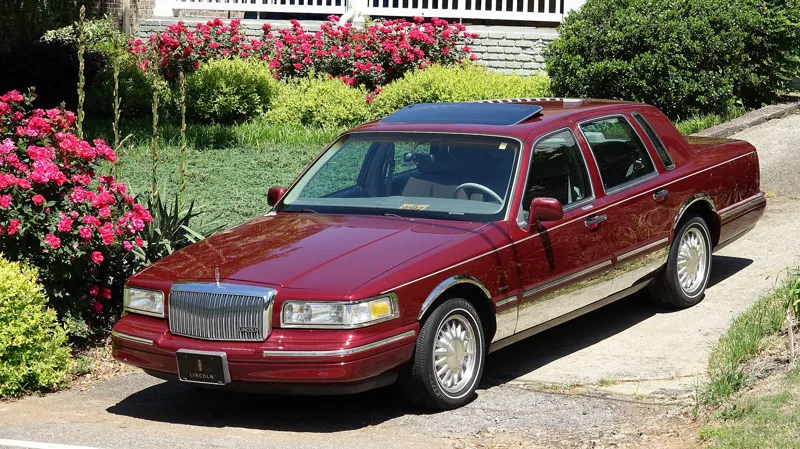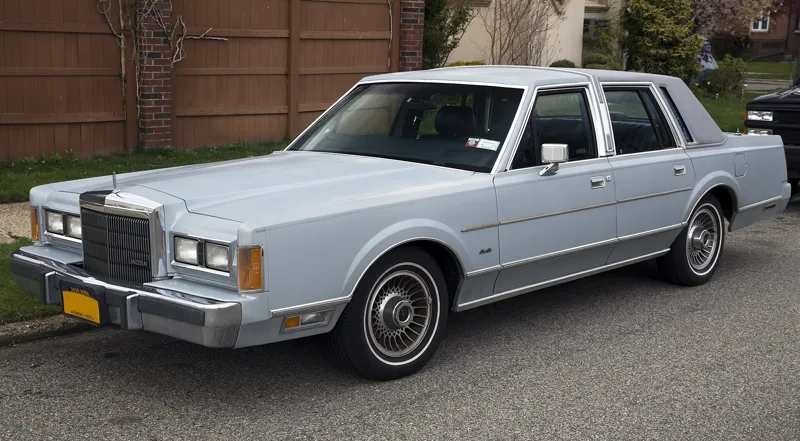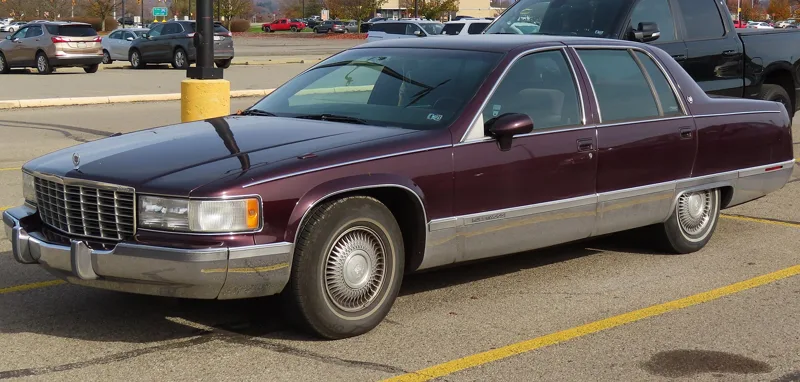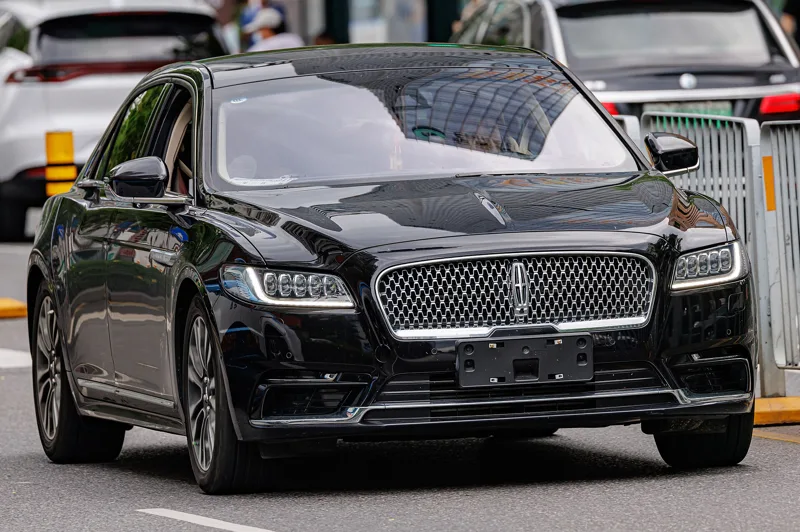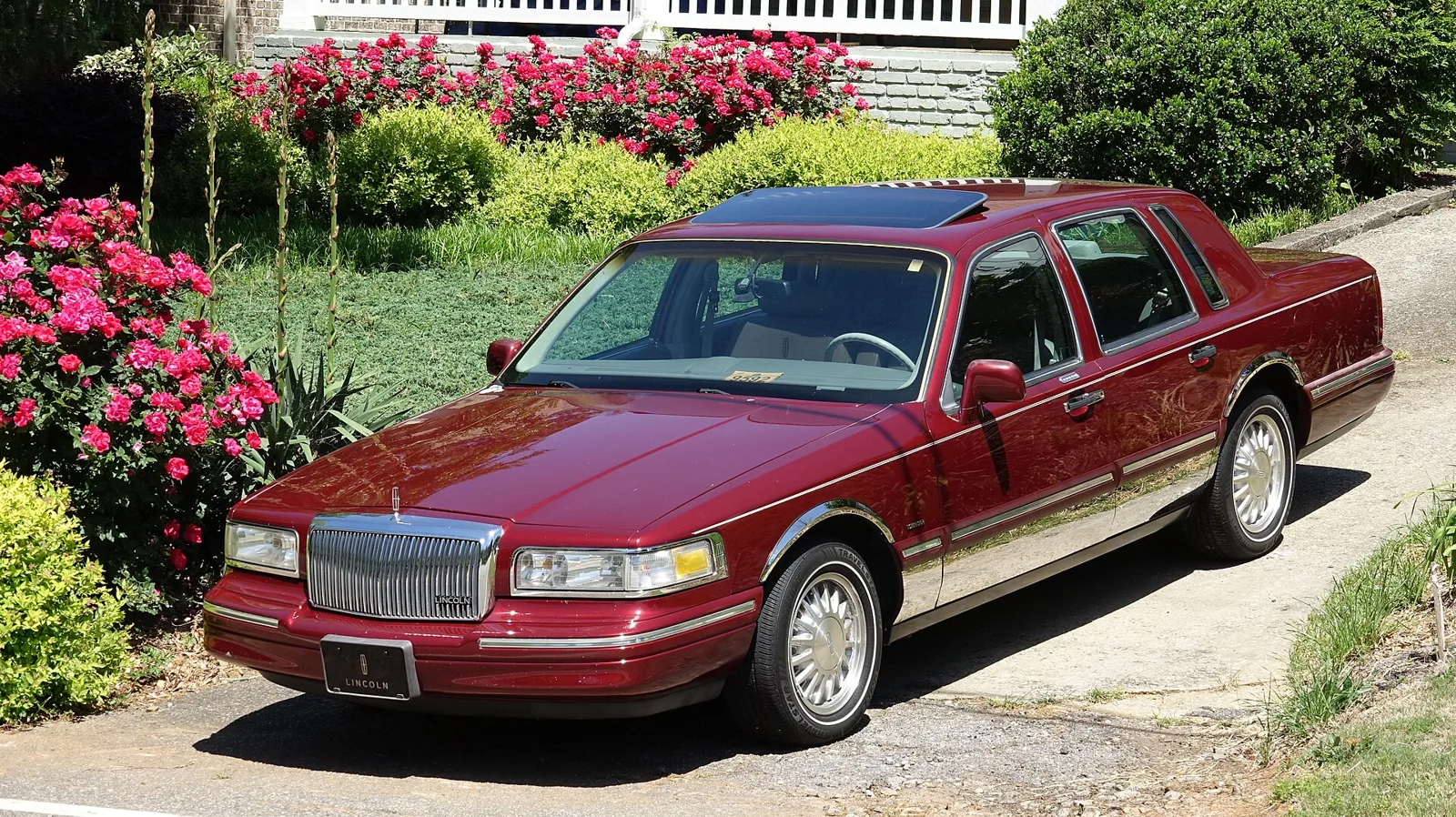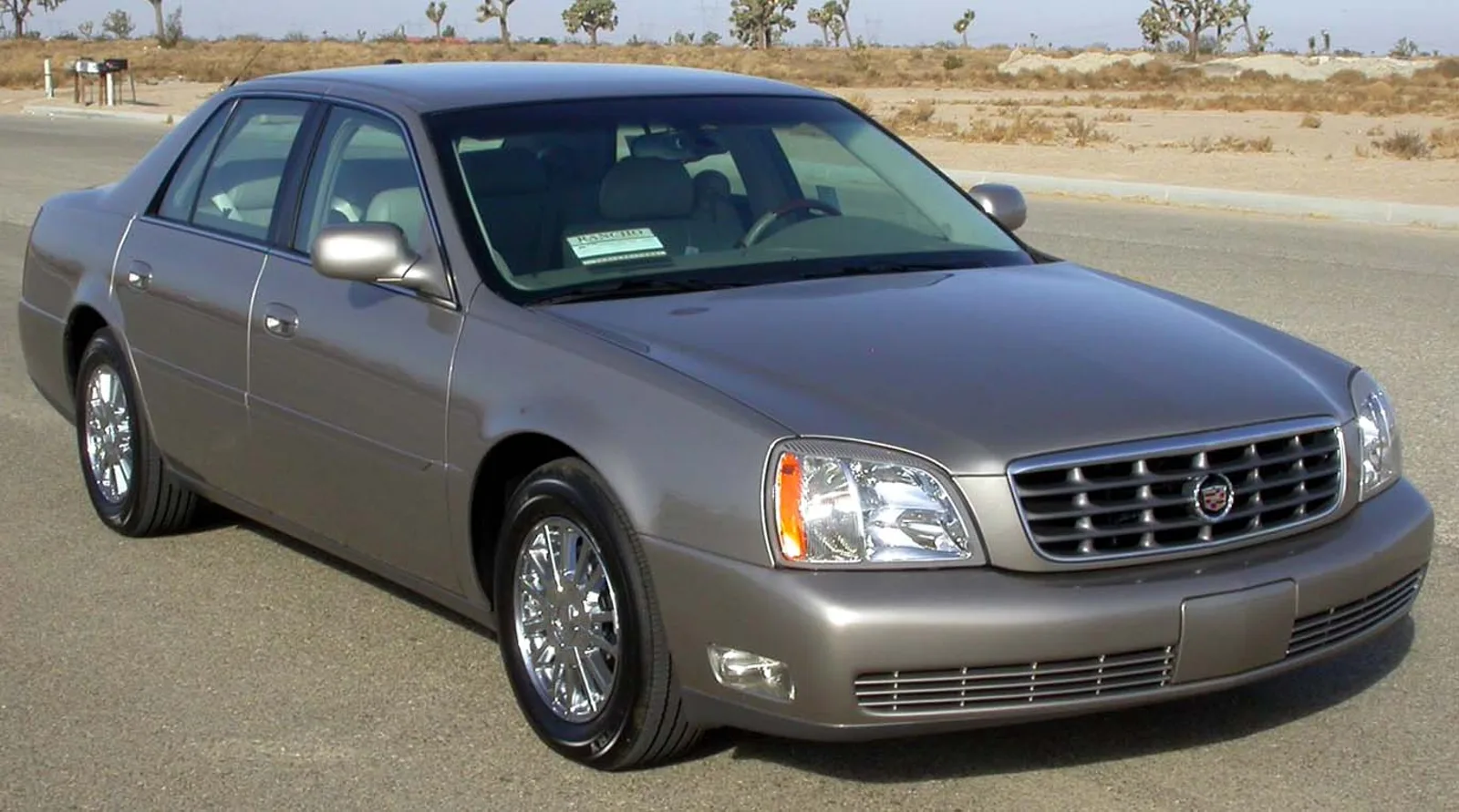
The DeVille and the Town Car were long-running American full-size luxury cars, compared on history, engines, size, sales and what each nameplate became.
The Cadillac DeVille was a Cadillac nameplate from 1949 to 2005, first as a trim level and later as a standalone model. The Lincoln Town Car was a full-size Lincoln from 1981 to 2011, built on the Panther platform and sold against the DeVille for much of the late twentieth century.
The Cadillac DeVille and the Lincoln Town Car were two long-running American full-size luxury sedans. The Town Car was marketed directly against Cadillac and Chrysler sedans, and their paths crossed for more than two decades before the DeVille name was retired.
This comparison covers the DeVille from its 1949 origins and the Town Car from its 1981 launch, with most of the detail on the years when both were on sale. Where a figure is missing for one car, the gap is shown rather than estimated, and metric figures come first with imperial values in brackets.
Were the DeVille and Town Car really rivals?
Yes. The record names the Cadillac de Ville series as the primary rival of Lincoln for the second half of the twentieth century. The Town Car was marketed against luxury sedans from Cadillac and Chrysler, and the two overlapped on sale from 1981 until the last DeVille model year in 2005.
The two nameplates started from different places. The DeVille began as a trim level of the 1949 Series 62, and the first Coupe de Ville was shown at the 1949 Motorama on a Sixty Special chassis. The Town Car name first appeared in 1959 on a Continental-based formal sedan built with the coachbuilder Hess and Eisenhardt, and it became a standalone model for 1981.
The names themselves have different roots. DeVille comes from the French phrase meaning of the town, a term from coachbuilding for a short closed carriage. A town car was a design with an open chauffeur's compartment and an enclosed rear cabin, which Lincoln later borrowed for its name.
Two full-size American sedans that rivalled each other for decades: a Cadillac with coupe roots and a Lincoln built on a shorter Panther chassis.
How did the two cars change in size?
The 1965 DeVille rode on a 129.5-inch (3,290 mm) wheelbase, while the Town Car's Panther-platform chassis of 1980 had the shortest wheelbase ever used for a full-size Lincoln at the time. The Town Car was the longest car Ford produced worldwide from 1983 to 2011.
The Panther chassis was designed partly for fuel economy and handling, and it cut weight by up to 1,400 lb (635 kg) compared with the 1970 to 1979 full-size Lincolns. The 1980 Continental and Town Car were within 200 pounds of the compact Versailles in curb weight, and the redesign reduced the turning diameter by over 8 feet against the 1979 Continental.
Later, the Town Car became the longest mass-production car sold in North America from 1997 to 2011. The record says the Lincoln MKS took that title until 2016, when the Cadillac CT6 overtook it, and that the MKS was not a direct successor of the Town Car.
What engines did each car use?
The 1980 Town Car came with a 130 hp (97 kW) 4.9-litre V8, marketed as a 5.0-litre, and a 140 hp (104 kW) 351 cu in (5.8 L) V8 was an option. From 1981 the 302 cu in V8 was the only engine, and in 1986 it rose to 150 hp (112 kW) with sequential multi-port fuel injection.
The DeVille's 1959 engine was a 390 cu in (6.4 L) V8 producing 325 hp (242 kW). For 1964 that became a 429 cu in (7 L) unit with 340 hp (253.5 kW), and a new Turbo-Hydramatic transmission arrived with it. By 1968 the engine had grown to 472 cu in (7,730 cc).
The Town Car's gearbox was a 4-speed AOD automatic overdrive, which was its sole transmission from 1981 to 1989. Every Town Car from 1980 to 1989 could also be specified with a trailer towing package, with a 3.55:1 limited-slip differential and an improved cooling system.
Which car sold more?
The DeVille reached 110,379 units in 1964, which the record says was nearly two thirds of all Cadillacs sold that year. The Town Car, which overtook the Mark VI in 1982 to become Lincoln's best-selling line, sold over 100,000 a year after its 1985 revision and topped 200,000 in 1988.
Sales cannot be compared neatly across the two brands, because the DeVille's peak came in the 1960s and the Town Car's came in the late 1980s. The record gives no sales total for the DeVille across its whole run, although it does give first-year and annual figures.
How did the DeVille sell in its early years?
The Coupe de Ville sold 2,150 units in its first year, and 4,507 in 1950. In 1951 sales reached 10,241, and the early figures show steady growth. The Sedan de Ville, added in 1956, was Cadillac's first standard four-door hardtop and sold 41,732 in its first year.
It was also more expensive and more luxuriously trimmed than the standard four-door Series 62, and it outsold that sedan easily in its first year.
The DeVille became a separate series in 1959, and over 53,000 were sold that year, roughly 37 percent of all Cadillacs. In 1962 the DeVille sold 71,883 units, nearly 45 percent of the brand's total, and the record marks that as the first time its separate-series sales exceeded its trim-level sales.
How were the two cars styled?
The 1959 DeVille had sharp tailfins with dual bullet taillights and jewel-like grille patterns, while the 1960 model was smoother and more restrained. The 1965 redesign canted the tailfins downward and replaced rounded lines with sharper body lines, and it moved to a perimeter frame in place of the X-frame.
The 1981 Town Car was, apart from its nameplate badging, identical to the 1980 Lincoln Continental. Its Panther chassis brought better suspension geometry and upgraded power steering, which the record says reduced the turning diameter.
What did the Town Car's early history look like?
The first Continental Town Car and Limousine were built in 1959 and 1960, when Ford limited production to two vehicles a day. In total 214 Town Cars and 83 Limousines were built, all in Presidential Black, which makes them among the rarest vehicles the company ever built.
The Town Car was developed as an owner-driven car, while the Limousine was meant for a chauffeur and had a retractable glass partition behind the front seat. Town Cars had broadcloth seats for both rows, and Limousines had leather-upholstered front seats.
The name returned as a Continental trim package in 1970, and the 1971 Golden Anniversary edition had 1500 units. From 1972 it became a permanent flagship sub-model, and a two-door Town Coupe followed in 1973. The Town Car went standalone for 1981, while the Continental nameplate took a year off and returned for 1982 on a mid-size sedan.
How did each nameplate end?
The last DeVille was the 2005 full-size sedan, which was Cadillac's largest model at the time. In 2006 the DeVille name was retired, and the line carried on as the DTS, following the STS and CTS naming pattern. The Town Car's final car was produced on 29 August 2011.
The Lincoln Town Car nameplate was later used from 2012 to 2019 for livery and limousine variants of the MKT. For 2017 the Continental returned and took over from the MKS, a car whose wheelbase and width came close to the Town Car's.
Side-by-side specifications
| Specification | Cadillac DeVille | Lincoln Town Car |
|---|---|---|
| Model years | 1949 to 2005; retired 2006 as DTS | 1981 to 2011, three generations |
| Name origin | French de la ville, meaning of the town | Limousine body style |
| Wheelbase | 129.5 inches (3,290 mm) in 1965 | Shortest full-size Lincoln wheelbase at the time, 10 inches less than the 1979 car |
| Engine at launch | 390 cu in (6.4 L) V8, 325 hp (242 kW), 1959 | 302 cu in (4.9 L) V8, 130 hp (97 kW), 1980 |
| Later engine | 429 cu in (7 L), 340 hp (253.5 kW), 1964; 472 cu in (7,730 cc), 1968 | 150 hp (112 kW) with sequential fuel injection, 1986 |
| Transmission | Turbo-Hydramatic from 1964 | 4-speed AOD, sole gearbox 1981 to 1989 |
| Weight | not given | Up to 1,400 lb (635 kg) lighter than 1970 to 1979 Lincolns |
| Body styles | Coupe, hardtop sedans, convertible from 1964 | Four-door sedan; two-door in 1981 only |
| Sales peak | 110,379 in 1964 | Over 200,000 in 1988 |
| Share of brand | Nearly two thirds of Cadillacs in 1964 | not given |
| Assembly | not given | Wixom, Michigan, 1980 to 2007; St. Thomas, Ontario after; final car 29 August 2011 |
| Size record | not given | Longest Ford worldwide from 1983 to 2011 |
| Successor | DTS from 2006 | MKT livery variants 2012 to 2019; Continental 2017 |
| Special versions | First Coupe de Ville shown at 1949 Motorama | Golden Anniversary 1971, 1500 units; 214 Town Cars and 83 Limousines in 1959 to 1960 |
Which buyer suits each car?
On the figures available, the DeVille suits a buyer who wanted a Cadillac with a long history of coupe and hardtop body styles, and a V8 that grew over the years. The Town Car suits a buyer who wanted a compact-for-its-class full-size Lincoln with a fuel-conscious Panther chassis and a long run as the brand's best seller.
Both cars were built for the same kind of owner, but the record shows them following different paths. Neither history is complete in the record, so both verdicts rest only on the years described. The DeVille's strengths lie in its early-1960s volume and its styling changes, while the Town Car's lie in its long production run and its sales in the late 1980s.
What does the record leave open?
Several points are missing. The record gives no weight figures for the DeVille, no assembly location for the DeVille, and no sales total across its whole run. It also gives no size record for the DeVille, so the length comparison runs only one way.