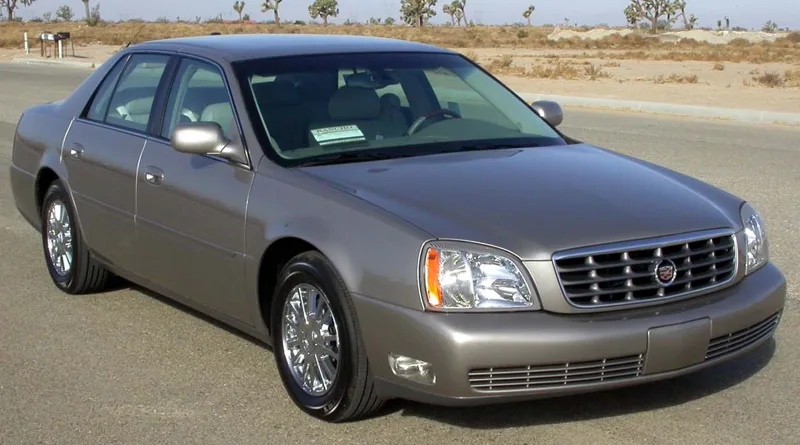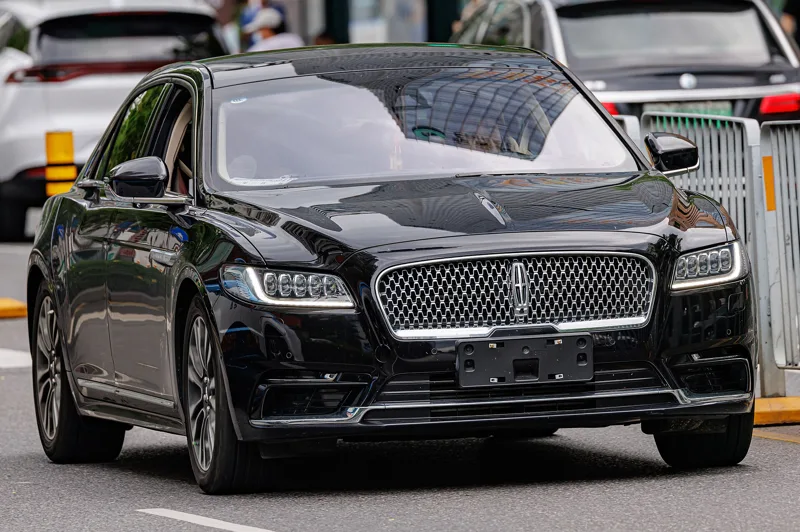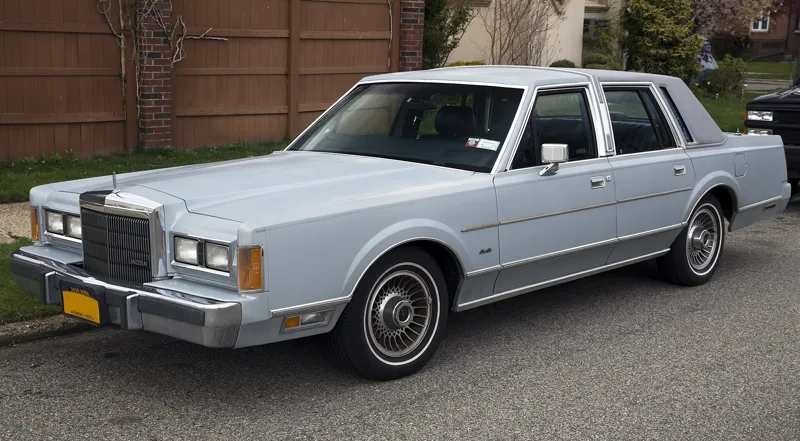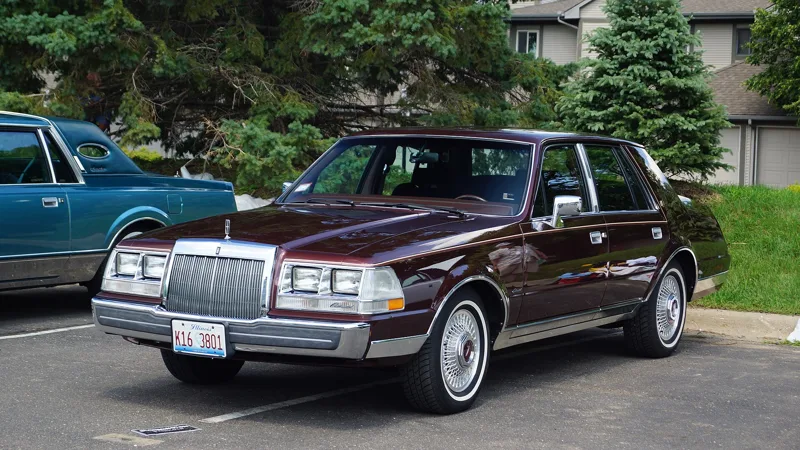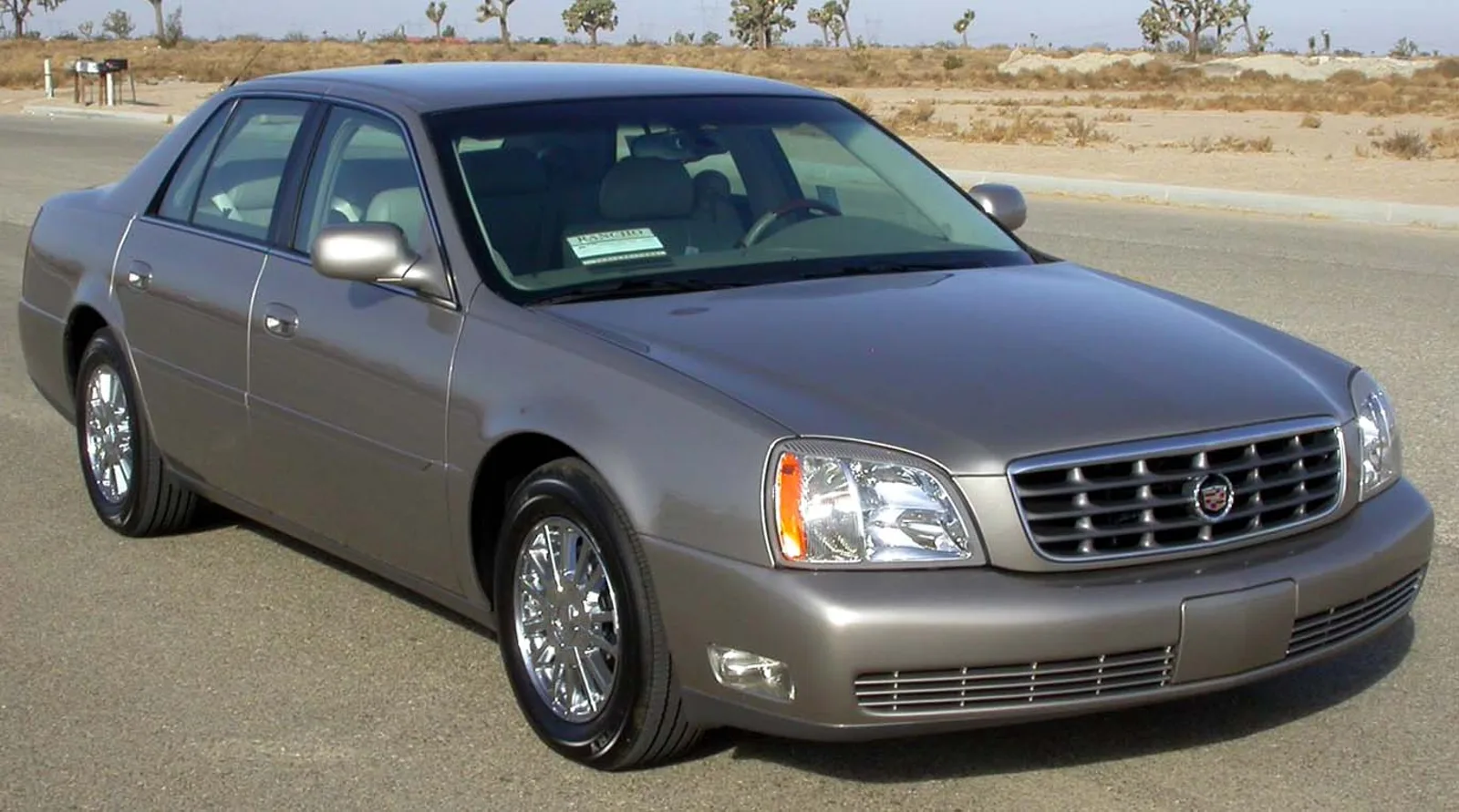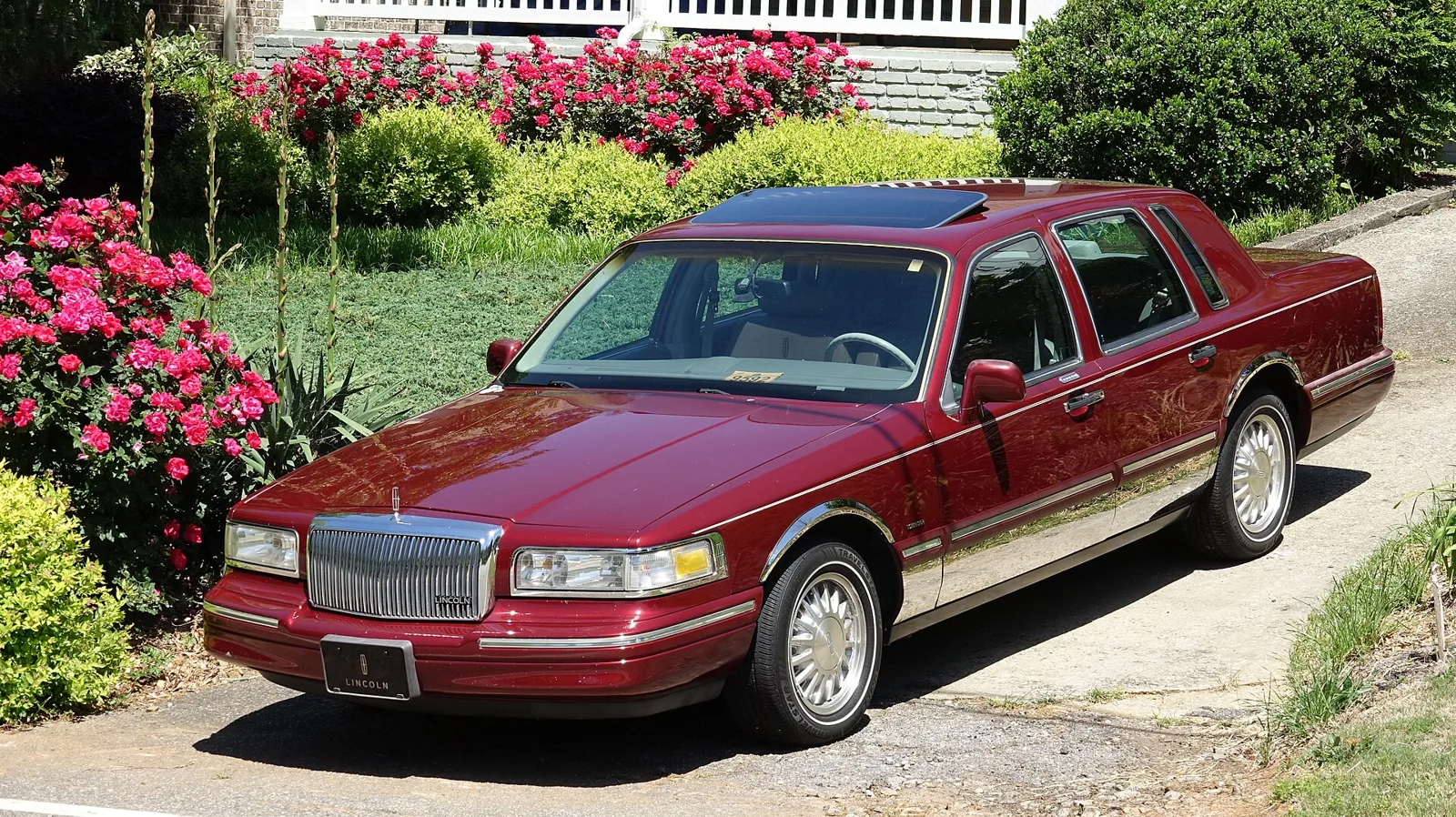
From the 1981 Panther-platform sedan to the 2011 finale, the Town Car ruled Lincoln's showroom, fleet lots and limousine ranks for three decades.
Lincoln's Town Car was a Panther-platform sedan sold from 1981 to 2011 across three generations. It took its name from a limousine body style, became the brand's best-selling model and ended on 29 August 2011.
The Lincoln Town Car was a full-size luxury sedan that Lincoln sold from 1981 to 2011, running through three generations on the Panther platform. Its name came from a limousine body style, and it became the brand's best-selling model and the favourite of taxi firms and chauffeur services. It took its final bow on 29 August 2011, after thirty model years.
What is the Lincoln Town Car?
The Town Car was a four-door sedan with a long wheelbase and a V8 engine, sold almost entirely in four-door form. A two-door version existed for 1981 only, and it was then dropped. Many examples went to fleet and livery buyers, and the car was the longest vehicle Ford built worldwide from 1983 until its discontinuation.
Lincoln built the car at Wixom, Michigan, from 1980 until 2007, and then moved production to St. Thomas Assembly in Ontario. The model was marketed directly against luxury sedans from Cadillac and Chrysler, and for decades it held the position of Lincoln's flagship.
A rear-drive V8 sedan that outlived its rivals in the fleet market and carried a president before it was retired.
How did the Town Car name start out?
The Town Car name began life as a Continental body style. Lincoln added a Town Car and a Limousine to the Continental range for 1959, built with coachbuilder Hess and Eisenhardt. Production was tiny, with 214 Town Cars and 83 Limousines completed in 1959 and 1960.
The name returned in 1970 as a trim package for the Continental, with leather seating and deeper carpeting. A Golden Anniversary edition marked the brand's fiftieth year in 1971, and it had 1500 cars. From 1972 the Town Car became a permanent Continental sub-model, and a two-door Town Coupe followed for 1973.
Lincoln downsized its full-size cars for 1980, which left three nearly identical model lines in the range. The following year the Continental, Town Car and Mark VI were rationalised, and all full-size Lincolns became Town Cars.
How was the first-generation Town Car built?
The first generation rode on the Panther platform, which was shared with Ford and Mercury. Despite its shorter wheelbase, it kept the Lincoln look, with a radiator-style grille and exposed halogen headlamps, the first on a full-size Lincoln since 1969. Its chassis cut weight by up to 1,400 lb (635 kg) compared with the 1970 to 1979 full-size Lincolns.
Early engines were a 130 hp (97 kW) 4.9 litre V8 in 1980 and a 140 hp (104 kW) 351 cu in option. From 1981 the 302 cu in (4.9 litre) V8 was the only engine offered. A revision in 1986 raised output to 150 hp (112 kW), and a four-speed AOD automatic overdrive was the sole transmission for the decade.
The 1985 model year brought the first CD player offered on a Ford vehicle, as part of a 12-speaker JBL system. Owners could also choose a keypad lock called Securicode, which unlocked the car through a five-digit code entered at the driver's door.
How did sales develop in the 1980s?
The Town Car overtook the Mark VI in 1982 to become Lincoln's best-selling model line, a title it kept until its discontinuation. Only 4,935 two-door Town Cars were sold in 1981, and that body style was dropped for 1982. Full-size Lincolns were then sold exclusively as four-door sedans.
Sales grew after the 1985 revision, and they passed 100,000 a year. For 1988 more than 200,000 Town Cars were sold, the highest figure ever for the brand. Even in the year after that, the 1989 model year became the second most successful for the car.
The Cartier Designer Edition moved from the Mark VI to the Town Car in 1982 and remained the top trim until 2003. Special editions such as the Sail America commemorative and the Gucci Edition gave collectors something different. These packages mattered most for a model that otherwise changed slowly.
Why was the second generation a major redesign?
The second generation was launched on 5 October 1989 as a 1990 model, and it was a complete reworking inside and out. Developed under the codename FN36 at a cost of US$650 million, it was led by project manager John Jay. The redesign aimed to bring a more contemporary image to the Lincoln brand, and it earned the car the 1990 Motor Trend Car of the Year award.
Engineering changed in several ways. Rear air suspension became standard on every Town Car, and the drag coefficient fell from 0.46 to 0.36. The 302 V8 gave way to a 190 hp (142 kW) 4.6 litre Modular V8 for 1991, and that engine rose to 210 hp in dual-exhaust form for 1994.
Sales declined again after the redesign. Town Car sales dropped below 100,000 in 1995 for the first time in more than a decade. The model had become one of the best-selling full-size American luxury sedans, yet the market was shifting toward more agile cars and SUVs.
The 1995 mid-cycle refresh brought a curved dashboard and door panels, and it moved the car to the 4R70W automatic from the Mark VIII. The Town Car's dashboard and steering wheel were shared with some Mercury models, so the interior work was a visible sign of how much the platform was being shared.
How did the third generation differ?
The third generation arrived for the 1998 model year, unveiled at the 1997 New York International Auto Show. It was a completely new body, and it was three inches shorter than its predecessor while being two inches wider and one inch taller. The car became the tallest Lincoln sedan in 40 years and adopted a sleeker, curved profile.
The chassis underwent significant upgrades. For 1998 two-piston front calipers and larger rotors arrived, and in 2003 the frame was redesigned with hydroformed, fully boxed rails that improved rigidity by nearly 25 percent. The Town Car also moved to a speed-sensitive rack and pinion steering system.
Engine output rose over the years. The 4.6 litre V8 was tuned to 205 hp with a single exhaust and 220 hp with dual exhaust, then reached 235 hp in 2001 with Performance Improved heads. By 2003 the dual-exhaust version produced 239 hp, and it became standard on the Town Car.
Why was the Town Car so popular with livery operators?
The Town Car became the most commonly used limousine and chauffeured car in the United States and Canada. Its body-on-frame design, rear-wheel drive and V8 power made it durable in the rough conditions taxis and livery cars face. Many examples lasted well over 400,000 miles in commercial service.
For 2001 Lincoln introduced the extended-wheelbase Town Car L, which offered an extra 6 in (150 mm) of rear-seat legroom. The Signature L had 46.9 in (1,191 mm) of rear legroom and 60 in (1,524 mm) of rear shoulder room. Forbes repeatedly named the Town Car among the best cars to be chauffeured in, alongside far more expensive sedans.
The car also served the state. In 1989 a Town Car was commissioned by George H. W. Bush as the Presidential State Car, and it remained his limousine for the whole presidency. It was succeeded by a Cadillac Fleetwood under Bill Clinton, and it stands as the last Lincoln to serve in that role.
How did the Town Car end?
Ford announced the closure of the Wixom plant after the 2007 model year, and Town Car production moved to St. Thomas Assembly in Ontario. The Town Car was no longer sold to retail customers in Canada after 2007. Ford also announced the closure of St. Thomas in 2011, which ended the line.
The final Town Car rolled off the line on 29 August 2011, with no fanfare from Ford. The nameplate lived on for 2012 to 2019 as a livery and limousine variant of the Lincoln MKT, and that marked the final use of the Town Car name. In total the name served Lincoln for 49 years, with 30 as a distinct model line.
How did Cartier and special editions shape the Town Car?
The Cartier Designer Edition became the Town Car's top trim in 1982 and stayed in the range until the 2003 model year. Its cars used coordinated exterior and interior colours, with the Cartier logo embroidered on the seats in place of the usual Lincoln star. In later years Cartier cars came in several colour combinations rather than a single one.
Special editions broadened the appeal. The Jack Nicklaus Signature Series ran from 1992 to 1997 with green exteriors and white leather, while the 1994 Regatta Edition used maritime blue trim and was produced in roughly 1,500 cars. The 1996 Diamond Anniversary Edition marked Lincoln's 75th anniversary with nearly every available option fitted.
Outside North America the name travelled further. FAW produced a licensed version in China, rebadged as the Hongqi CA7460, from November 1998 until 2005. The Chinese cars later evolved into the Hongqi Limousine range, which kept the long-wheelbase layout that made the Town Car a favourite of chauffeur fleets.
Armoured versions were also sold. From 2003 a Ballistic Protection Series was available from the factory, adding a substantial amount to the base price and pushing the curb weight to nearly 7,000 lb (3,175 kg). A small number of authorised dealers in the United States sold these cars.
Specification overview
| Specification | Detail |
|---|---|
| Production span | 1981 to 2011, thirty model years |
| Platform | Panther, shared with Ford and Mercury |
| 1980 V8 | 130 hp (97 kW), 4.9 litre |
| 1986 V8 | 150 hp (112 kW), 302 cu in |
| 1991 engine | 4.6 litre Modular V8, 190 hp (142 kW) |
| 2003 V8 | 239 hp, dual exhaust |
| Drag coefficient, second generation | 0.36, down from 0.46 |
| Rear legroom, Signature L | 46.9 in (1,191 mm) |
| Rear shoulder room | 60 in (1,524 mm) |
| Final vehicle built | 29 August 2011 |