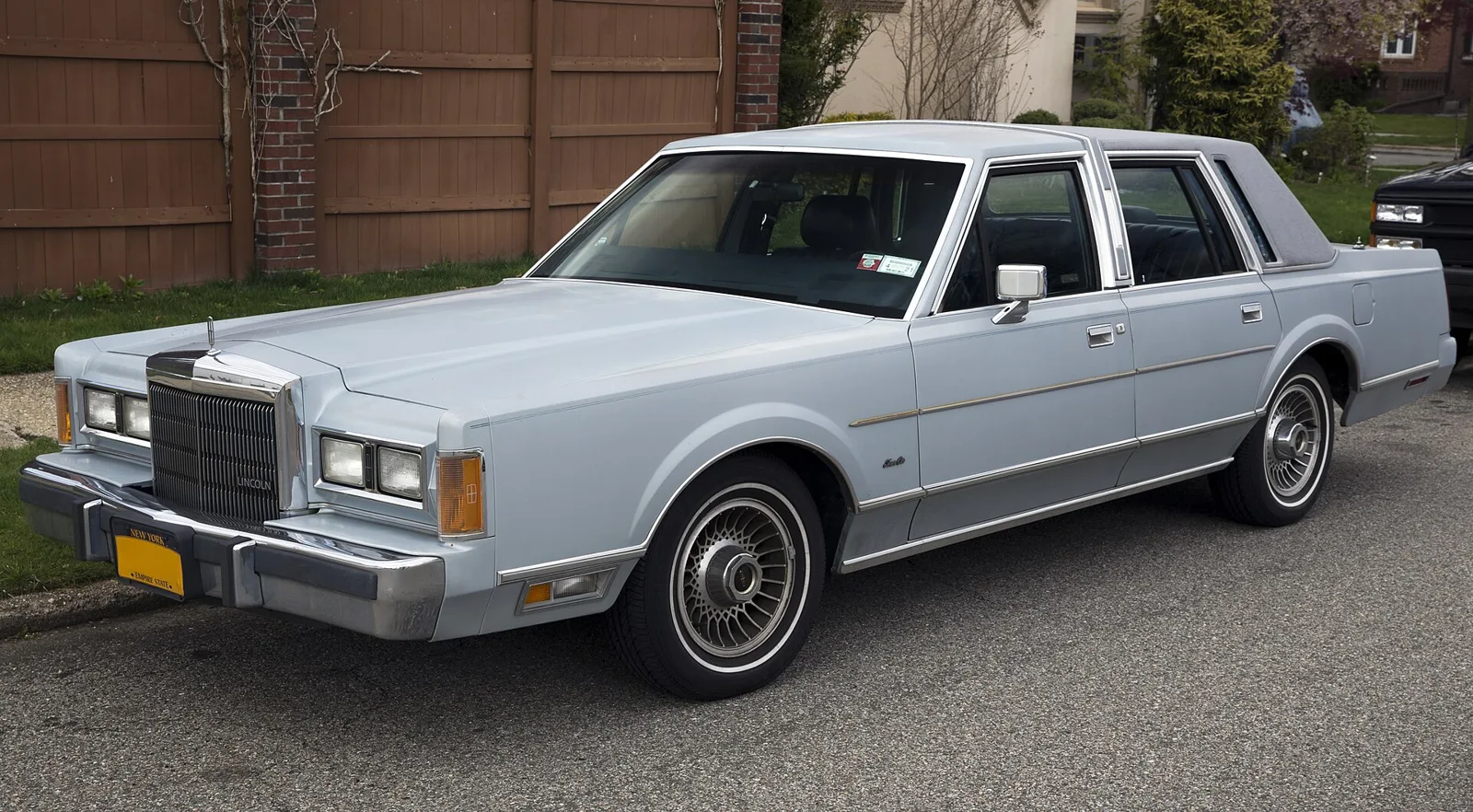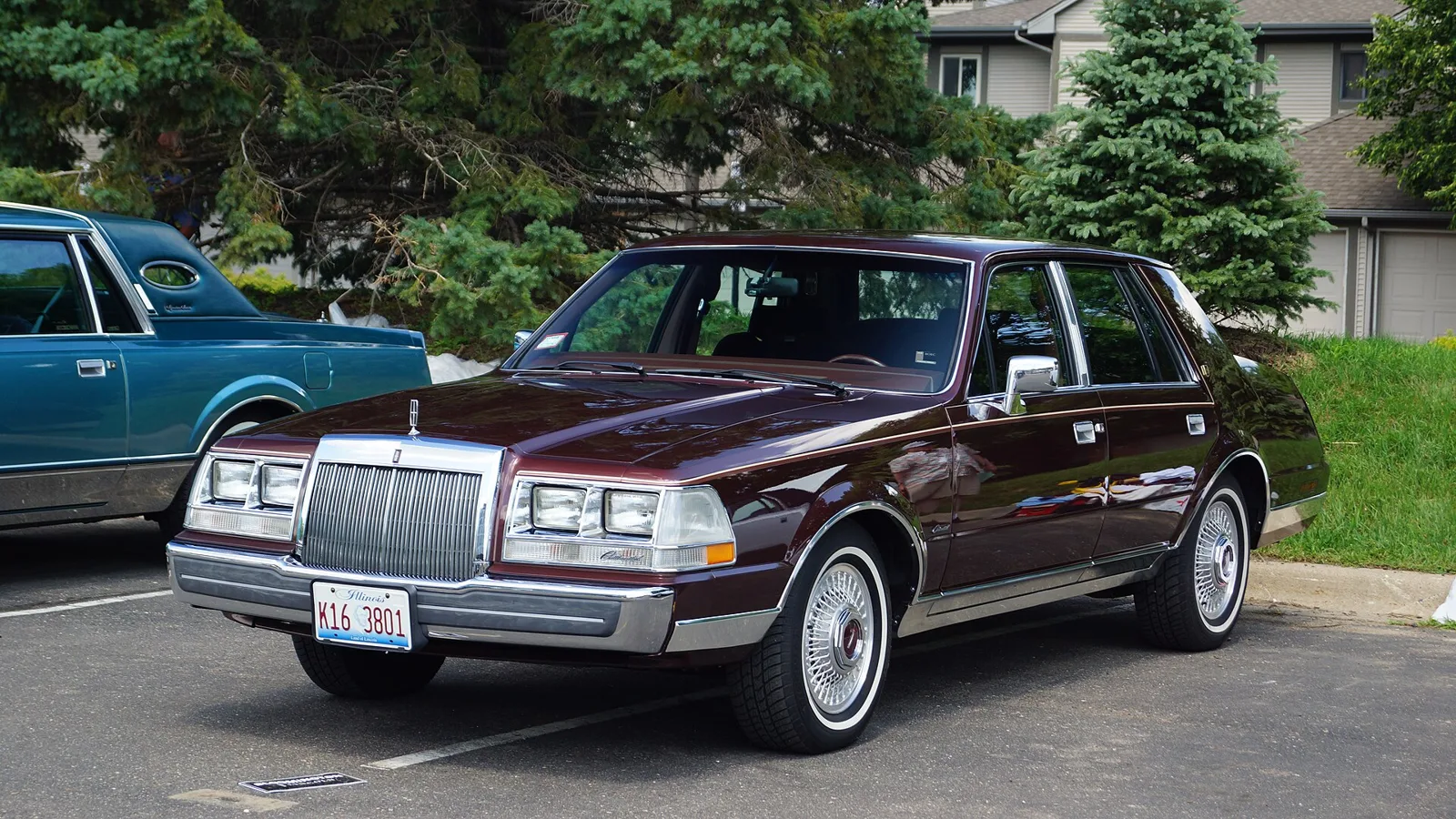
A mid-size Continental that took the name from the largest Lincolns, sold against the Cadillac Seville, with a 1984 facelift and a short-lived diesel.
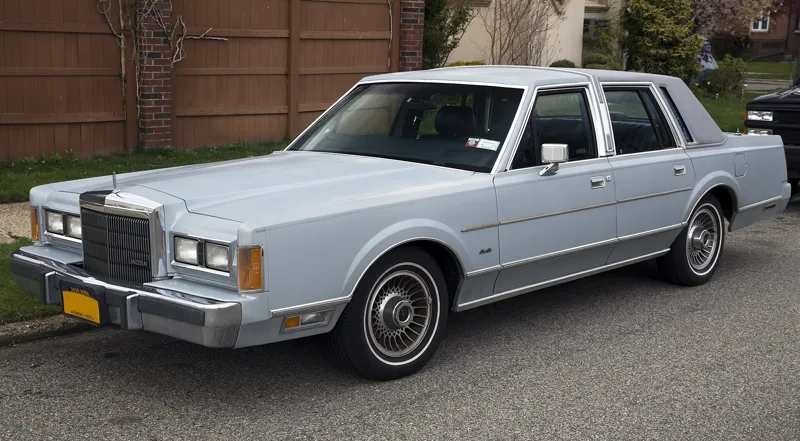
The 1982 Lincoln Continental was a mid-size four-door saloon that took over the Continental name from the largest Lincolns. Built until 1987 on Ford's Fox platform, it competed with the Cadillac Seville, and more than 136,000 were built across its run.
The 1982 Lincoln Continental was the first car to carry the name in the mid-size class, and it moved the name down from the largest Lincolns. It was built from 1982 to 1987 as a rear-drive four-door notchback, and more than 136,000 were built across the run. Its shape and name were both borrowed from elsewhere in the range and beyond it.
Why did Lincoln give its mid-size car the Continental name?
Ford renamed the old full-size Continentals Lincoln Town Car and gave the Continental name to the successor of the unsuccessful Versailles. This move, known as badge shifting, gave the new mid-size car a fresh start outside the Versailles tradition. The car appeared in October 1981 as a 1982 model.
Lincoln had sold only full-size cars until the 1970s. The Versailles of 1977 was an only slightly disguised Ford Granada, and its price sat several thousand US dollars above the full-size Continental. That larger car stayed in the range until 1979 and was often called the last dinosaur in print.
For the 1980 model year Lincoln had already switched to a new Continental on Ford's Panther platform, about 40 cm (15.7 in) shorter than its predecessor. The 1982 car then took over the name for the mid-size range.
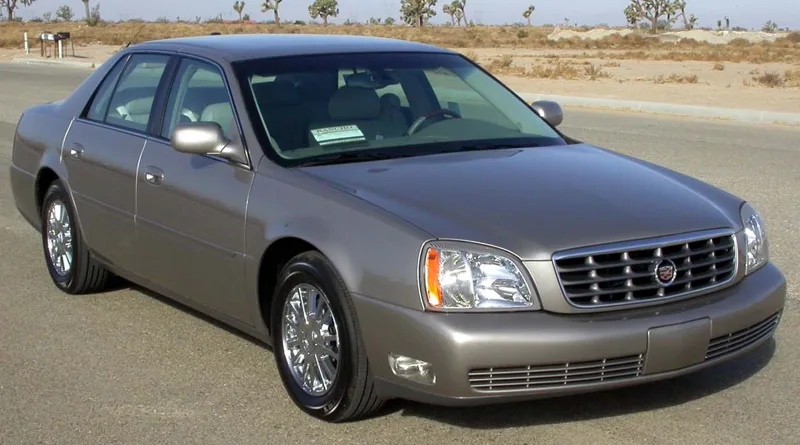
Ford's rival in this segment was the Cadillac Seville. General Motors had added that mid-size car, which was derived from a Chevrolet, to its large DeVille range in 1975.
The same name, moved down the range: a mid-size Continental built on a shared Ford platform.
How was the 1982 Continental built?
The 1982 Continental used a unit-body structure instead of a separate box frame, based on Ford's Fox platform. That platform had been introduced in 1978 for the Ford Fairmont and Mercury Zephyr, and for the Continental it was lengthened by about 80 mm (3.1 in). It was the first American car to fit gas-pressure shock absorbers.
The chassis departed in essential parts from the cheaper Ford and Mercury sister cars and was elaborately built by American standards. The front suspension used wishbones with an elastically mounted tension strut and strut dampers. At the rear a live axle sat on lower trailing arms with upper diagonal links. Coil springs were used until 1983, and from 1984 air suspension went onto all four wheels as standard, which proved problematic in practice.
Disc brakes worked at all four corners. On petrol-engined cars, anti-lock brakes were standard on the more expensive trim lines and optional on the base model. Rear-wheel drive set the car apart from the front-drive Cadillac Seville and appealed to conservative buyers.
Why did the body borrow from the Cadillac Seville?
The body was completely new and shared no exterior panels with other Ford-group cars. Its rear followed the bustle back that Cadillac designer Wayne Kady had given the second-generation Seville, a C-pillar whose rear line breaks into the wings so that the boot appears to be added on. Ford took the idea for its own Continental.
The bustle back quoted British luxury-car design, namely the Empress Line of the former London coachbuilder Hooper. That line could still be found on the Daimler DS420 saloon in the 1980s. Kady wanted the Seville to look classic, and the polarising design sold well in the American market.
Because the adjustments came late, after the body's basic structure had been approved, the Continental could not have a strongly raked C-pillar or a kink dropping to the bumper. Instead it has a short bead that carries the steep pillar only about 20 cm (7.9 in) into the wings. A semicircular bulge on the boot lid, as on Continental models since the Mark III of 1969, imitates a spare-wheel cover.
What engines did the Continental have?
The main engine was a 4,949 cc (302 cu in) V8 that produced 131 hp (98 kW; 133 PS) with a twin-barrel carburettor. From model year 1983 it had central-tube fuel injection, which became fully electronic in 1984, lifting output to 150 hp (112 kW; 152 PS). The V8 stayed in the range until 1987.
The 3.8-litre (232 cu in) V6 came from the Canadian Ford Essex family and was available only in the introductory year. It was the first six-cylinder engine in a Lincoln since 1945, with aluminium cylinder heads and a plastic engine cover. It produced 112 hp (82 kW) through a twin-barrel carburettor and was dropped after a year.
A turbodiesel followed in 1984 and 1985. Lincoln bought the 2,443 cc (149.1 cu in) inline six from a German maker, an M21-series engine rated at 114 hp (85 kW; 116 PS). Fitting it needed a larger water radiator, thicker noise insulation and reinforcements in the engine bay.
Lincoln discontinued the diesel after one and a half years because demand was lacking. Every Continental came with an automatic transmission, and the diesel was paired with a four-speed automatic from a German supplier.
Engines and specifications at a glance
| Item | Detail |
|---|---|
| Model years | 1982 to 1987 |
| V8 engine | 4,949 cc (302 cu in), 131 hp (98 kW; 133 PS), then 150 hp (112 kW; 152 PS) from 1984 |
| V6 engine (1982 only) | 3.8-litre (232 cu in), 112 hp (82 kW) |
| Turbodiesel (1984 and 1985) | 2,443 cc (149.1 cu in), 114 hp (85 kW; 116 PS) |
| Body | Four-door notchback saloon, rear-wheel drive |
| Brakes | Disc brakes on all four wheels, anti-lock on higher trims |
| Production | More than 136,000 units |
What did the 1984 facelift change?
The 1984 facelift reworked the front with a slightly angled and rounded nose, described in the United States as Aero Design. The styling came from Ford design chief Jack Telnack, and the aim with the Continental was a resemblance to the Continental Mark VII coupe, presented at the same time, whose rounded body was meant to show aerodynamic finesse.
In this second series the radiator grille was set at an angle, the indicators moved below the headlamps, and the side marker lights shifted into the upper corners of the wings. The front bumpers were reshaped to match the Mark VII. Other body changes were marginal, and the car stayed in this form until 1987.
How did the trim lines work?
Since 1976 Lincoln had offered extra-cost trims named after fashion designers. The designers licensed their names but took no part in the design, and the packages were developed in Ford's own design centre. Each designer package cost between 3,000 and 3,500 US dollars.
The Givenchy Series was the only trim available across the whole production run. Its two-tone colours changed from year to year: dark red and black in 1982, black and platinum in 1983, black and purple in 1986, and only one grey shade in 1985. Blue combinations came in 1984 and brown tones in 1987.
The Valentino Series ran from 1983 to 1985, also with two-tone paint: walnut and gold in 1983, wine red and grey in 1984, and black and grey in 1985. The Signature Series, the middle trim, existed only in the first model year.
What did the Continental cost, and how many were built?
The Continental was among the most expensive series-production cars built in the United States. Its prices sat only marginally below those of the Mark VI and Mark VII coupes and close to the Cadillac Seville. More than 136,000 were built across all years and variants.
The much larger Lincoln Town Car cost more than 5,000 US dollars less than the small Continental. Production took place at Ford's Wixom Assembly Plant in Wixom, Michigan, which also built the Continental Mark VII coupe. The Versailles managed just over 50,000 units in four model years, so the Continental was far more successful.
Why does the 1982 Continental matter today?
The 1982 Continental matters because it marked the point at which the Continental name moved from Lincoln's largest cars to a mid-size model. It also shows how Ford combined a shared platform with a Cadillac-inspired shape to give a Lincoln an identity of its own.
Its story runs from the Versailles through badge shifting to the front-drive generation of 1988, which stayed in production until 1994.