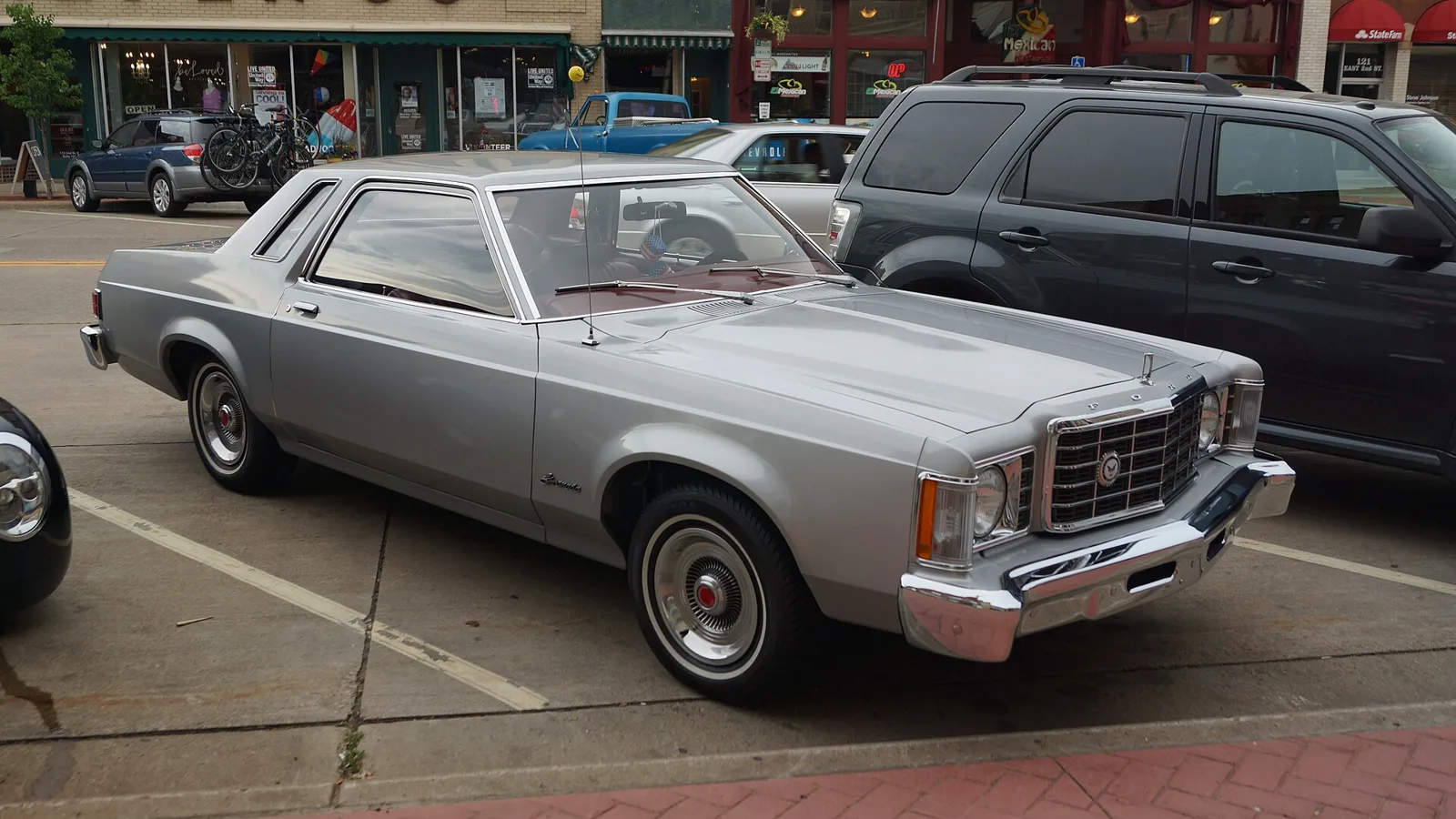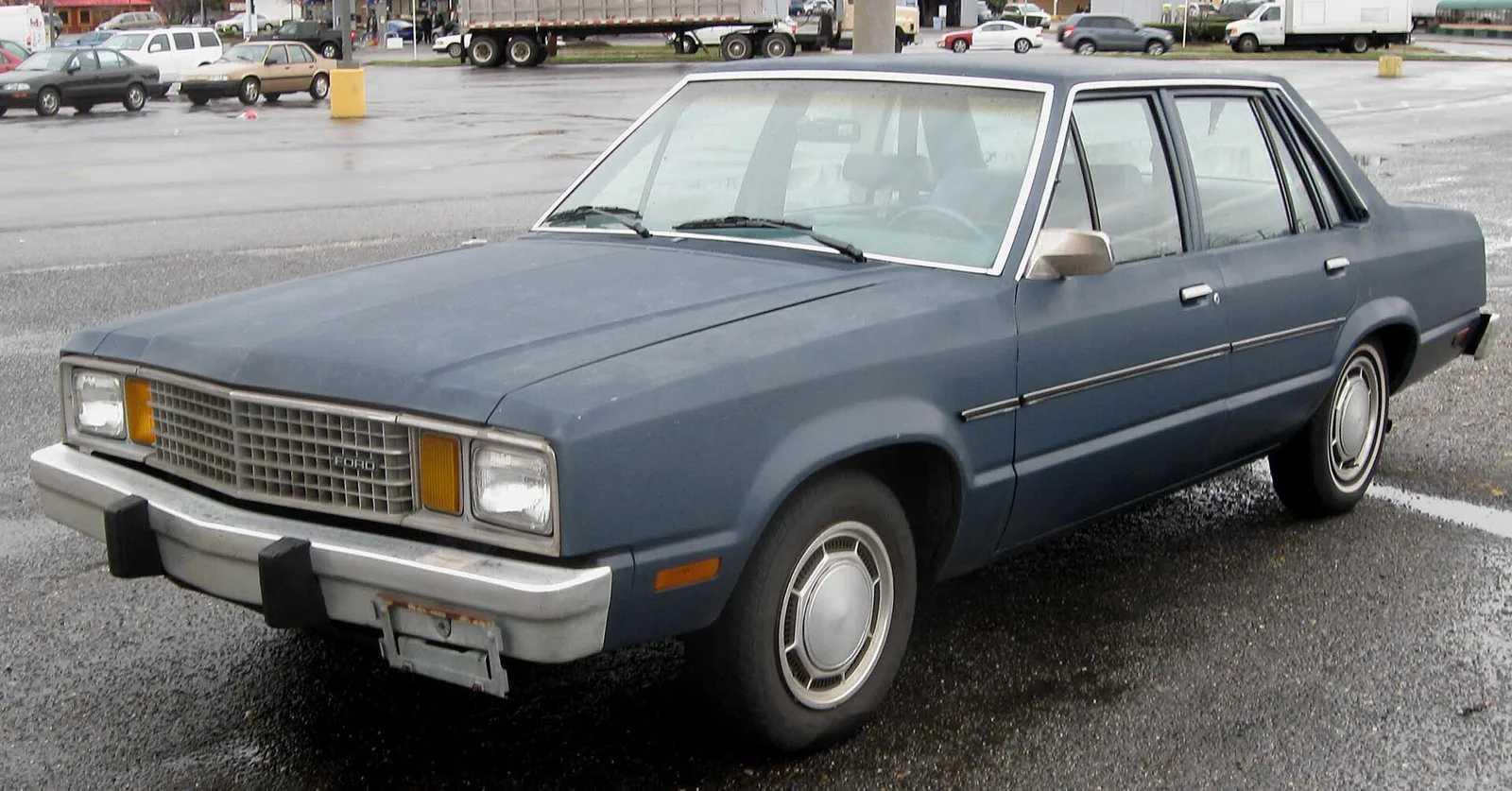
A rear-wheel-drive compact that started the Fox platform, came with a Thunderbird-style Futura coupe and gave Ford its first Fox-based racer.
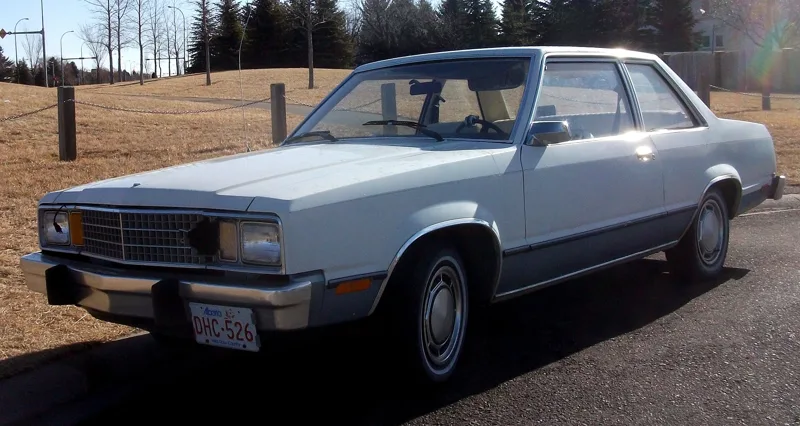
Ford's Fairmont was a compact sold for 1978 to 1983 that replaced the Maverick. Its body styles ran from a notchback sedan to a station wagon, with a sporty Futura coupe. Mercury's Zephyr was its twin, and the front-wheel-drive Tempo succeeded it for 1984.
The Ford Fairmont was a compact car line that Ford sold for the 1978 to 1983 model years, succeeding the Maverick as the third generation of its North American compact sedans. It was the first range built on the rear-wheel-drive Fox platform, and Mercury sold a close relative called the Zephyr. The Fairmont was replaced for 1984 by the front-wheel-drive Tempo.
What was the Ford Fairmont?
The Fairmont was a compact car line built for the 1978 to 1983 model years and marketed as the successor to the Maverick. Its range spanned notchback and coupe bodies as well as sedans and wagons, a wider choice than its predecessor offered. Ford first placed it between the Pinto and Granada, then between the Escort and LTD.
The car launched in August 1977 as a 1978 model. The Fairmont name was not new to Ford, because it first appeared in 1965 on an upscale trim of the Australian Falcon (XP), and it was also used in the South African market from 1969.
A rear-wheel-drive compact that started the Fox platform and gave Ford a Thunderbird-style coupe for the late 1970s.
Where did the Fairmont come from?
The Fairmont grew out of a period of upheaval at Ford. The EPA published its fuel economy results in April 1973, the oil crisis began in October of that year, and Ford's North American range needed replacements for the Pinto, Mustang II and Maverick. Ford of England's Cortina and the Taunus from Ford of Germany also needed refreshing.
Hal Sperlich, the vice-president of product planning and research, was a strong advocate of downsizing. He conceived a world car for sale in Europe and North America, but by 1974 the conflicting regulations and differing production methods across the divisions had ended the idea. From 1975, development of the Fox passed from Sperlich's group to North American Automobile Operations.
Lee Iacocca formally approved the Fox platform in December 1973. Development had begun in early 1973 on two versions, a short wheelbase car to replace the Pinto, Cortina and Taunus lines, and a long wheelbase car that became the Fairmont. The first working prototype was a reworked Cortina with struts and torsion bars at the front.
Electric power was also explored. A 1980 Fairmont wagon was converted by Electric Vehicles Associates and renamed the EVA Current Fare Wagon. The US Department of Energy evaluated it from March 1980 to November 1981.
What was the Fox platform?
The Fox was Ford's rear-wheel-drive platform that replaced Falcon-based models, and the Fairmont and Zephyr were its first models. In total the platform was shared with twelve other model lines across the Ford, Mercury and Lincoln brands. The Fairmont itself was built for only six model years, but the platform lived on for two decades longer.
The name Fox has been linked to the Audi 80, which was sold in the United States and Australia as the Audi Fox from May 1973. One theory holds that Ford borrowed the name because its executives treated the 80 as their class-leading subcompact rival and used it as the baseline. Another account says the name appeared in an internal Ford report in February 1973, which makes borrowing less likely.
The Fairmont was the first Fox-based car to reach the market, but the platform's development had been guided by an anticipated sport coupe. The updated Fox continued through model year 2004.
How was the Fairmont engineered?
The Fairmont used a steel unibody on the rear-wheel-drive Fox platform. At the front it had independent suspension with lower lateral arms, MacPherson struts and helical coil springs. Ford called this a modified or hybrid MacPherson strut system, because the coil springs sat apart from the struts, between the lower arm and the front cross-member. A front anti-roll bar was standard.
The rear suspension used a solid axle on coil springs and vertically mounted dampers. Four links located the axle, made up of two lower trailing arms and two sharply angled upper control arms.
Power-assisted brakes combined 10.0 inch vented discs at the front with 9.0 x 1.8 inch drums at the rear. The wheels came as 14x5.0 with DR78-14 tyres. Steering was a rack and pinion system with 3.2 turns lock-to-lock.
What engines did the Fairmont offer?
The standard engine for the whole production run was a 2.3 L inline-four, which was shared with the Pinto. It produced 88 hp when new, and revisions raised it to 90 hp by 1983. The optional 3.3 L inline-six, offered from 1978 to 1983, made less power than the four but significantly more torque.
The 2.3 L was first paired with a three-speed manual, which was replaced by a four-speed in 1979. A three-speed automatic was available as an option throughout. For 1980 only, Ford offered a 120 hp turbocharged version of the 2.3 L, shared with the Mustang Cobra, in sedans and coupes. Those cars were identified by a centre-mounted power bulge on the bonnet.
For 1978 and 1979 buyers could choose a 302 cu in (4.9 L) V8 making 139 hp, with a four-speed manual offered only in the 1979 model year. It was replaced by a 255 cu in (4.2 L) V8 with 115 hp for 1980 and 1981, which was paired exclusively with the three-speed automatic. These Windsor V8s were shared with mid-size and full-size Ford models.
What body styles and trims did the Fairmont have?
At its 1978 launch the Fairmont came as two-door or four-door sedans and a five-door wagon. The wagon was sold in base and higher Squire trims. Late in the 1978 model year, in December 1977, a two-door coupe called the Futura arrived, reviving a sporty name used on the 1960s Ford Falcon.
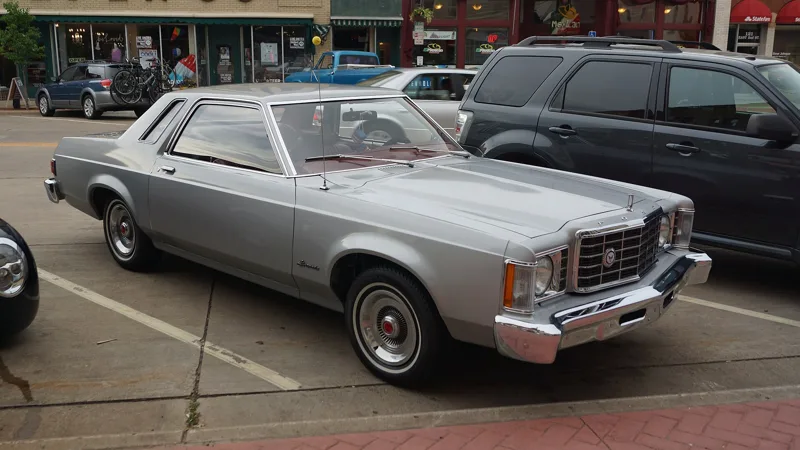
The Futura grew out of a Fairmont-based Thunderbird design proposal from March 1976. Its roofline was unique to the coupe, with a wrap-over B-pillar reminiscent of the 1977-1979 Thunderbird and no opera windows. The coupe received a four-headlight front fascia from the Zephyr and a cross-hatched grille in place of the standard eggcrate pattern. Ford extended the Futura name to a four-door sedan for 1980, and it added a Futura station wagon for 1981.
For 1981 Ford added a slim side moulding and more convenience equipment. For 1982 the Fairmont station wagon moved to the Granada line, and the Futura became the sole trim, which extended it to the two-door sedan for the first time. For 1983 Ford introduced an S model of the Futura as a base trim, sold only as a sedan with the 2.3 L engine, with the radio and right-hand mirror as options.
What was the Mercury Zephyr?
The Mercury Zephyr was the Fairmont's Mercury counterpart from 1978 to 1983, replacing the Maverick-based Comet. Within the Mercury line it sat between the Bobcat, replaced by the Lynx for 1981, and the Monarch, replaced by the Cougar in the same year. It shared the Fairmont's range of two-door and four-door sedans, a five-door wagon and the two-door Zephyr Z-7 coupe.
At launch the Zephyr was distinguished by four headlights. Its styling carried elements that several Mercury lines adopted in the early 1980s, including a waterfall-style grille, horizontally ribbed taillamps and non-functional front fender vents. For 1981 the standard, ES and Ghia trims were replaced by a GS trim, which matched the Futura on the non-coupe Fairmonts.
The Zephyr was gradually phased out. For 1982 the 4.2-litre V8 option and the station wagon moved to the upscale Cougar. The Zephyr then gave way to the Mercury Topaz for the 1984 model year, as Mercury moved to front-wheel drive. The nameplate was briefly reused by Lincoln in 2006, before the Lincoln Zephyr mid-size sedan became the MKZ for 2007.
How did the Fairmont end?
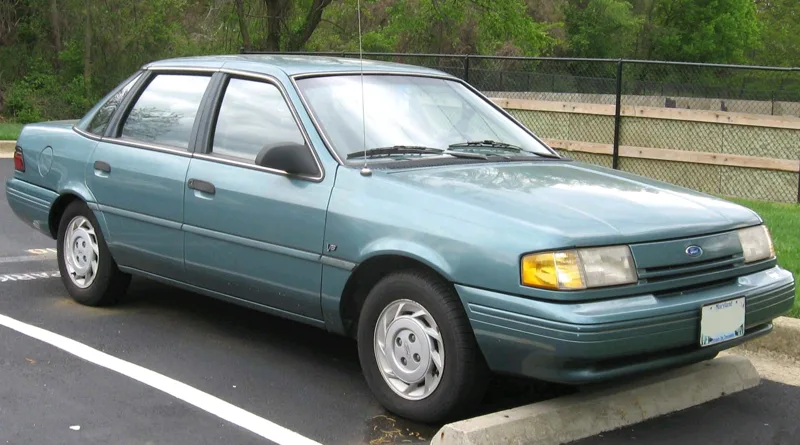
The Fairmont was replaced for the 1984 model year by the Ford Tempo, with the Mercury Topaz taking the Zephyr's place. Ford had moved its compact and mid-size range toward front-wheel drive after the Escort arrived in 1981, which left the rear-wheel-drive Fox in a narrower role. The Fox was kept for performance and luxury models.
The Fox remained in production for the Mustang, the Thunderbird and their Lincoln-Mercury counterparts, as well as the Ford LTD and Mercury Marquis. Ford's broader plan was to expand front-wheel drive across the compact and mid-size segments, and the Tempo and Topaz followed the Thunderbird in using aerodynamically influenced styling.
The Fairmont also left one small mark. In 1983 it became the only Ford model in North America to keep the FORD lettering instead of the Blue Oval emblem. The one-piece lift-up tailgate designed for the Fairmont wagon was used on the fourth-generation Australian XD, XE and XF Falcon and Fairmont wagons, which were built until 1988.
Which variants and special versions were built?
Several versions went beyond the standard lineup. The Ford Durango, built by a joint venture with National Coach Corporation from 1978 to 1981, was a two-door two-seat pickup based heavily on the Futura coupe. Only about 200 are estimated to have been built.
The European Sport Option was a styling and handling package sold between 1978 and 1980. It added a black grille and window frames, black three-spoke leather-wrapped steering, stiffer springs, re-valved shocks and a rear anti-roll bar. It also mounted DR78-14 radial tyres on 5.5 inch wheels, half an inch wider than stock.
Ford offered specially prepared Fairmonts as police cars and taxis from 1978. Those packages added an automatic transmission with first-gear lockout, an external transmission oil cooler, power brakes, reinforced bodywork and a heavy-duty suspension with higher-rate springs and hardened spindles. A high fin-density radiator and 14 x 5.5 inch wheels were also fitted.
- Police and taxi cars initially used either the 200 cubic inch inline-six or the 302 V8.
- The naturally aspirated 2.3 L inline-four became available for them in later years.
- A few turbo four-door automatic sedans were used by the California Highway Patrol for testing.
How did the Fairmont sell in Mexico and Venezuela?
The Fairmont reached Mexico in late 1977 as a 1978 model, replacing the locally built Maverick. Mexican cars used only the 5.0 L (302) V8, with manual or three-speed automatic transmissions. The Futura coupe was never offered there. Instead Mexico had the Fairmont Elite, an uplevel two-door sedan with a vinyl roof and the Futura's four-headlight grille.
For 1981 every Mexican Fairmont received four headlights. For 1982 the Elite was renamed the Ford Elite II and offered as a two- or four-door sedan, using the front end and rear bumper of the North American Granada. For 1983 a 3.8 L Essex V6 joined the V8, and that was the last year before the Ford Topaz replaced the Fairmont.
A version of the Fairmont was also built in Venezuela, first sold under the Fairmont badge and later as the Ford Zephyr. The Ford Futura was sold there as a separate model without Fairmont badging.
How did the Fairmont perform in racing?
The Fairmont's motorsport story centres on Bob Glidden, who campaigned an NHRA Pro Stock Futura in 1978. The car was powered by a Cleveland V8 and won its debut race on 8 July 1978 at Edgewater, where it also set a national record. Additional wins followed at several major NHRA events.
Glidden won his third national title in the car. The Futura was retired after the 1978 season, following a brief but successful career with wins at several major NHRA events.
How was the Fairmont received?
Contemporary reviews were generally favourable. Many commented on the car's European feel and compared it with the Volvo 200 series, . The 1978 Fairmont was later described as the most efficient Ford family sedan ever built when judged on space per unit of weight.
The Fairmont also showed that the Fox platform could carry a range of body styles, from sedans and wagons to a sporting coupe. The Fox outlived the Fairmont by roughly two decades, carrying that range of bodies with it.
What is the Fairmont's legacy?
The Fairmont's legacy lies mainly in the platform it introduced. The Fox was used for twelve other model lines across three brands, and its updated versions remained in production through model year 2004. The Fairmont was the first of those cars, and its Futura coupe and wagon showed the platform's range.
Key specifications at a glance
| Item | Figure |
|---|---|
| Model years | 1978 to 1983 |
| Platform | Ford Fox, rear-wheel drive, steel unibody |
| Base engine | 2.3 L inline-four, 88 hp rising to 90 hp |
| Turbo engine | 120 hp, 1980 only |
| Largest option | 3.3 L inline-six, 1978 to 1983 |
| Top V8 | 4.9 L with 139 hp, 1978 and 1979 |
| Brakes | 10.0 inch vented front discs |
| Steering | Rack and pinion, 3.2 turns lock-to-lock |
| Successor | Ford Tempo, 1984 |