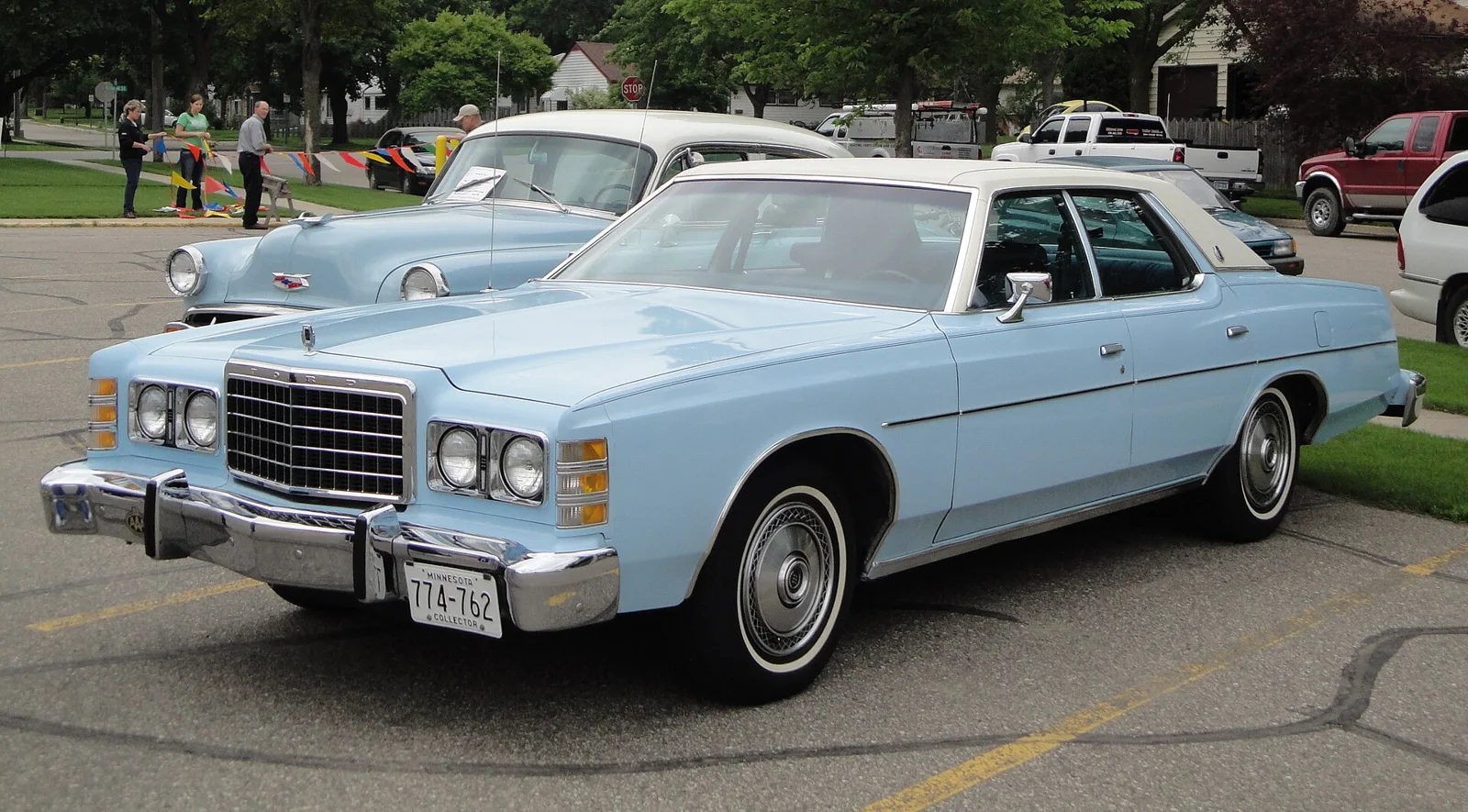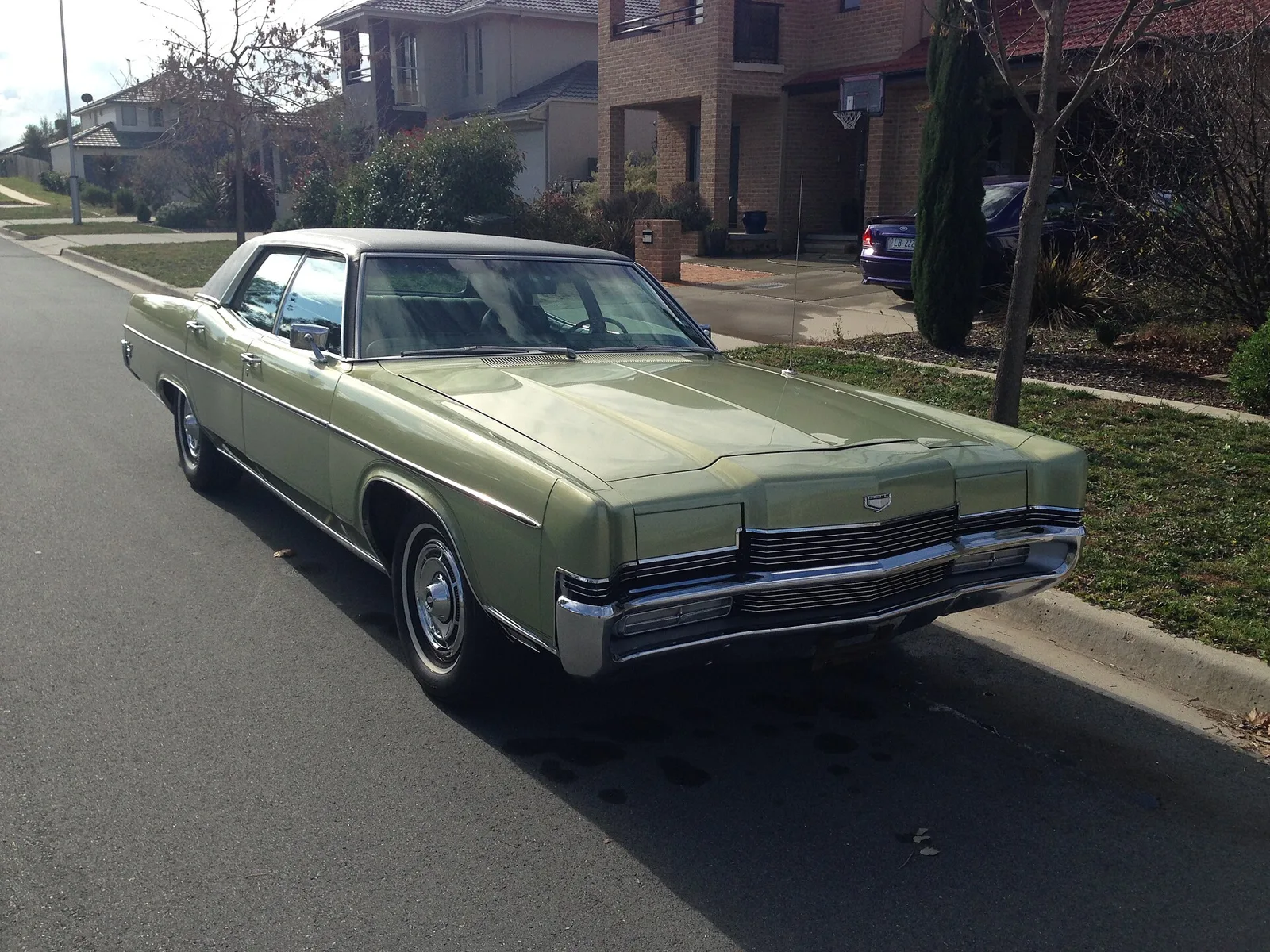
From the 1967 hardtop to the Fox-platform sedan of 1983, the Marquis was Mercury's flagship, its LTD twin and the seed of the Grand Marquis.
The Mercury Marquis was a Mercury model sold from 1967 to 1986, matching the Ford LTD across four generations. It was full-size until 1983, when it moved into the mid-size class. It was replaced by the Sable, and its name lived on through the Grand Marquis.
The Mercury Marquis was a model line that Mercury sold from 1967 to 1986 as the counterpart of the Ford LTD. It started life as the flagship of the Mercury full-size range, above the Monterey, and it became the basis for the later Grand Marquis. Four generations appeared, first as full-size sedans and then as a mid-size Mercury.
What was the Mercury Marquis?
The Marquis took its name from a title of French nobility, and it sat at the top of Mercury's range when it first appeared. It was paired with the Ford LTD through four generations, with each version sharing much of its bodywork with its Ford counterpart. Its market position changed over time, moving from a full-size luxury car to a mid-size sedan.
The first three generations were full-size sedans, sold alongside the Mercury Colony Park station wagon. The fourth generation moved the Marquis into the mid-size class, following the 1983 split between the Marquis and the Grand Marquis. The Marquis ended with the 1986 model year.
A Mercury flagship that stayed close to the Ford LTD underneath, then gave way to the Grand Marquis.
How did the first-generation Marquis start?
For 1967 Mercury introduced two hardtop lines above the Park Lane to match the Ford LTD. The Park Lane Brougham was a four-door, while the Marquis was offered only as a two-door. The two-door was fitted with a standard vinyl roof, which gave it a wider C-pillar than the other full-size Mercury two-doors.
The Marquis differed from its Ford twin in its interior. It used higher-grade wood trim where the LTD had simulated wood, and leather was available on the Marquis but not on the LTD. Sedans were built on a 123-inch wheelbase, four inches longer than the LTD.
The interior also introduced Twin Comfort Lounge front seats. They were a 50/50 split bench that combined the three-passenger capacity of a bench with the individual legroom adjustment of bucket seats. Variations of the design gradually replaced traditional bench seats in many American cars during the 1970s and 1980s.
What engines did the first-generation Marquis have?
For 1967 the standard engine was a 410 cu in Marauder V8 producing 330 hp. The Marauder was exclusive to the division and optional across the full-size Mercury line. A four-speed manual was standard, and a three-speed automatic was the option.
For 1968 the 410 gave way to a 390 cu in Marauder Super 390 V8 with 315 hp, which was shared with the Park Lane and Brougham. The three-speed manual replaced the four-speed, while the automatic returned as an option. A 428 cu in Super Marauder V8 was also offered in both years, with 345 hp, later retuned to 340 hp for 1968.
How did the second generation expand the Marquis?
For 1969 Mercury revised its full-size range, and the second-generation Marquis expanded into a full set of body styles above the Monterey. It succeeded the four-door Brougham and the two-door Park Lane. For 1975 the full-size Mercury range was reduced to the Marquis alone, including the Brougham and Grand Marquis trims.
The 1969 four-door hardtop had a list price of US$3,973 ($34,881 in 2025 dollars), and 29,389 of them were built. In Canada, the Meteor brand sold the Marquis as its top model, the Meteor LeMoyne, from 1969 to 1970. After the Meteor brand closed in 1976, Ford Canada kept the name in use within Mercury for a Marquis Meteor base trim in 1977 and 1978.
The second generation also had a 1971 revision that dropped the convertible and introduced the pillared hardtop. In 1973 the car was redesigned with a new roofline, a complete interior revision and 5-mph bumpers, and the four-door hardtop was offered for the last time in 1974.
What were the second-generation chassis and brakes like?
The second-generation Marquis shared its chassis with the full-size Ford range introduced in 1969. It used a rear-wheel-drive perimeter frame, and Mercury sedans kept a longer wheelbase of 124 inches than the 121-inch Ford models. Coil springs were fitted at all four corners.
The suspension combined a three-link live rear axle with a double wishbone independent front, plus a front stabiliser bar. Front discs and rear drums were the norm, and power assistance came as standard from 1971. Sure-Track, an early anti-lock system, was offered from 1973, and four-wheel discs became optional in 1975.
What powertrains did the second generation use?
Mercury replaced its Marauder engines with a 429 cu in 385-series V8, a short-stroke version of the Lincoln 460. It came with a two-barrel carburettor for 320 hp or a four-barrel for 360 hp, and the manual gearbox was dropped in favour of the three-speed Ford C6 automatic.
The 460 arrived from Lincoln as an option in 1972 and replaced the 429 outright for 1974. As emissions and fuel economy became priorities, smaller Ford engines took over. A 402 cu in Ford 400 V8 appeared in 1975, and the 351M became standard on the Marquis in 1978, with the 400 and 351M using the lighter FMX transmission.
Why did the Marquis downsize in 1979?
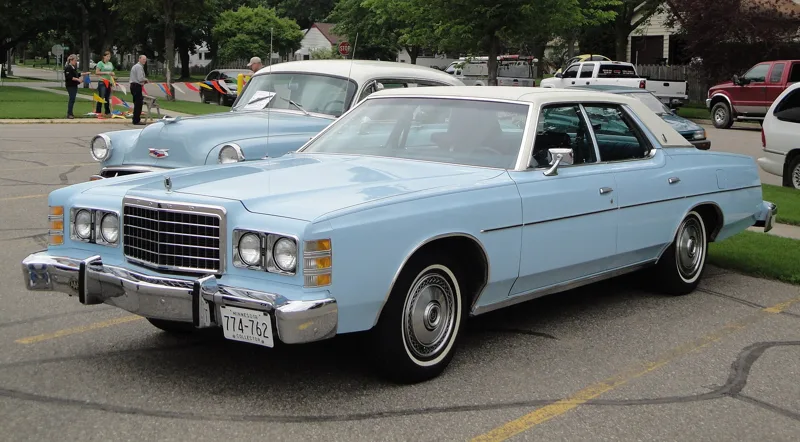
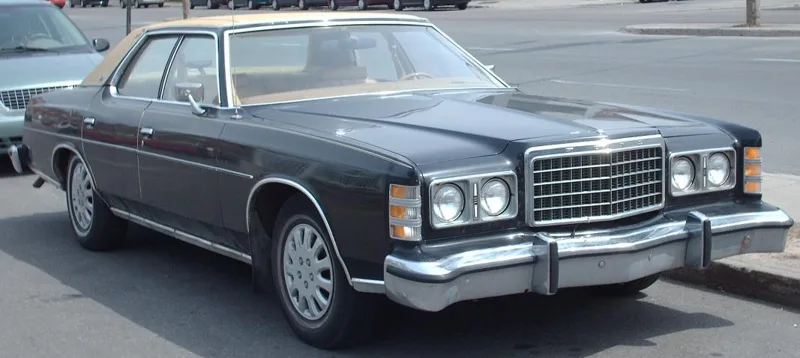
For the 1979 model year, Mercury introduced a third-generation Marquis that was the first ground-up redesign of the full-size range since 1969. The car shed 17 inches in length and over 1,000 pounds in curb weight compared with its 1978 predecessor. It also traded places with the Cougar as the longest Mercury.
The redesign rode on the Ford Panther platform, which was developed for the downsizing of full-size ranges across all three Ford Motor Company divisions. The Marquis and Ford LTD shared a 114.3 in (2.90 m) wheelbase, 9.7 in (25 cm) shorter than the 124 in (3.15 m) of the previous car. It was the first time the full-size Mercury had shared a common wheelbase with Ford.
Interior space still increased, thanks to a taller roofline and redesigned seats, while a larger glass area improved visibility. For the first time since 1955, the full-size Mercury station wagon weighed under 4,000 pounds. The 1979 cars also moved to a four-link live rear axle, and the Panther chassis was adopted by Lincoln for the downsized Continental in 1980.
What engines did the 1979 Marquis offer?
The standard engine became a 4.9 L V8, the rebadged 302 that was rounded up to 5.0 L to distinguish it from the 4.9 L inline-six. The Marquis also offered a 5.8 L V8 taken from the Cougar XR7 as an option. Both V8s were paired with a three-speed SelectShift automatic when the car was introduced.
For 1981 the base Marquis outside California received a 4.2 L V8 as standard, and the 5.0 L became optional on Brougham and Grand Marquis sedans. The 5.8 L was dropped from the US-market Marquis for 1982, although it continued in Canada. The four-speed AOD overdrive automatic came in for 1980 and became the only transmission for all three engines by 1982.
How was the 1979 Marquis styled?
The Marquis shared its body with the Ford LTD, but it had its own styling. Where the LTD used an egg-crate grille, the Marquis had a vertically oriented grille. Hidden headlamps gave way to quad rectangular headlamps, and full-width taillamps returned, bordering the licence plate moved from the rear bumper.
The Marquis four-door carried a full-length vinyl roof, standard on all but base cars, where it was an option. Non-functional fender louvers sat behind the front wheels, and vents appeared in the front bumper. For 1981 the bumper vents were removed, and for 1982 the fender vents were deleted as well.
Inside, the dashboard was styled differently from the LTD's. The two-spoke steering wheel gave way to a four-spoke design, and the Marquis received two square instrument pods, where the LTD had a horizontal speedometer. A digital trip computer replaced the dashboard clock as an option for 1982.
What changed when the Marquis moved to the mid-size class?
For 1983 the fourth-generation Marquis arrived as Mercury moved the nameplate into the mid-size segment. It replaced the slow-selling Cougar sedan and station wagon, while the Cougar XR-7 gave way to a redesigned two-door Cougar. All full-size Mercury sedans took the Grand Marquis name.
The 1983 Marquis shed nearly 9 inches of wheelbase, nearly 16 inches of length and up to 900 pounds of curb weight, depending on engine and body style. It rode on the Ford Fox platform, which had been introduced for the mid-size segment in 1980. The wheelbase was 105.6 inches, shared with the Ford LTD and the Ford Granada and Mercury Cougar.
Production moved from St. Louis to Chicago Assembly, while Atlanta Assembly also built the fourth-generation car. Ford Venezuela sold a version as the Ford Cougar from 1983 to 1985, and the fourth-generation Marquis stayed the Mercury counterpart of the LTD, which that year took over from the Granada.
Which engines did the fourth-generation Marquis use?
Sedans came with a 2.3 L inline-four as standard, and a propane-fuel version was optional. Station wagons used a 3.3 L inline-six, which dated back to the Falcon and Comet, as standard. A 3.8 L V6 was optional on both body styles and replaced the inline-six entirely for 1984.
The Marquis LTS, sold only in Canada from 1984 to 1985, used the 5.0 L HO V8 shared with the Mustang. The 2.3 L was paired first with a four-speed manual, then with a three-speed automatic once the manual was deleted after 1983. The 3.3 L six used a three-speed C5 automatic, and the 3.8 L moved between the four-speed AOD and the C5.
Where else was the Marquis sold?
The Canadian Marquis Meteor remained the entry trim through 1981, and that was the last use of the Meteor name by Ford. Between 1981 and 1982 Mercury also sold a police-spec Marquis derived from the standard four-door sedan. Police cars had their own speedometer and used a 165-hp 5.8 L V8.
In Canada the LTS matched the Ford LTD LX. It used a 165 hp 5.0 L V8 and suspension and brake components from the police-package LTD. Only 134 were produced before the trim was discontinued in 1985, which makes it one of the rarest cars Mercury sold.
How did the Marquis end?
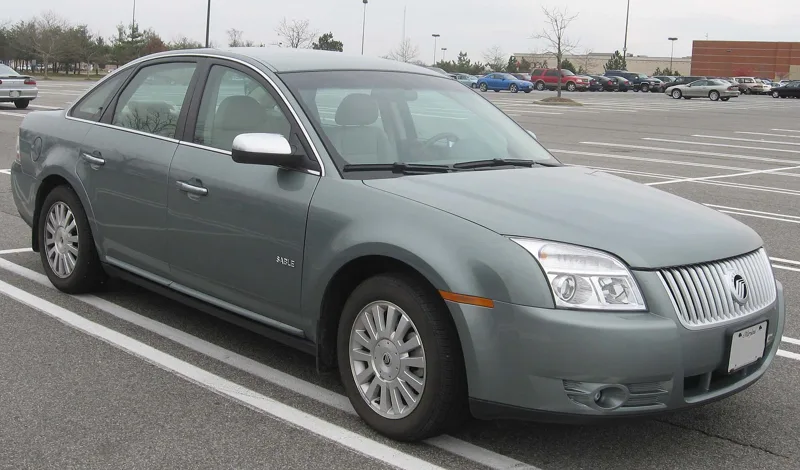
For the 1986 model year, Mercury introduced the front-wheel-drive Sable as its mid-size line. It replaced the Marquis, and both were sold together for 1986. The final Marquis was built by Atlanta Assembly on 13 December 1985, and Chicago Assembly completed its last on 3 January 1986.
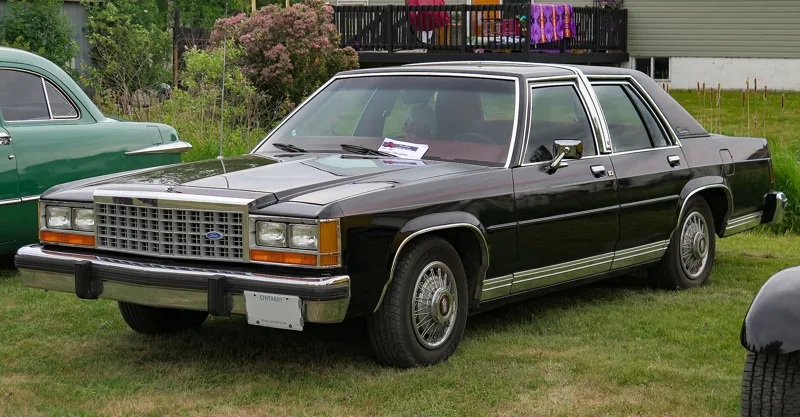
The Grand Marquis had started as a third-generation Marquis in 1979 and was produced nearly unchanged through the 1991 model year. After an extensive redesign on the Panther chassis for 1992, the Grand Marquis stayed in production for 19 model years. It was the last vehicle produced for the brand, in January 2011.
Key specifications at a glance
| Item | Figure |
|---|---|
| Model years | 1967 to 1986, four generations |
| 1967 standard engine | 410 cu in Marauder V8, 330 hp |
| 1979 platform | Panther, 114.3 in wheelbase |
| 1983 platform | Fox, 105.6 in wheelbase |
| 1979 base engine | 4.9 L V8, rounded up to 5.0 L |
| 1983 base engine | 2.3 L inline-four on sedans |
| 1969 four-door hardtop | US$3,973 (29,389 built) |
| Final Atlanta build | 13 December 1985 |
| Successor | Mercury Sable, 1986 |
What is the Marquis's legacy?
The Marquis's main legacy is the Grand Marquis, which carried the nameplate forward on the Panther chassis for decades. The Marquis itself showed how a Mercury flagship could stay close to its Ford sibling while still keeping its own look and interior.