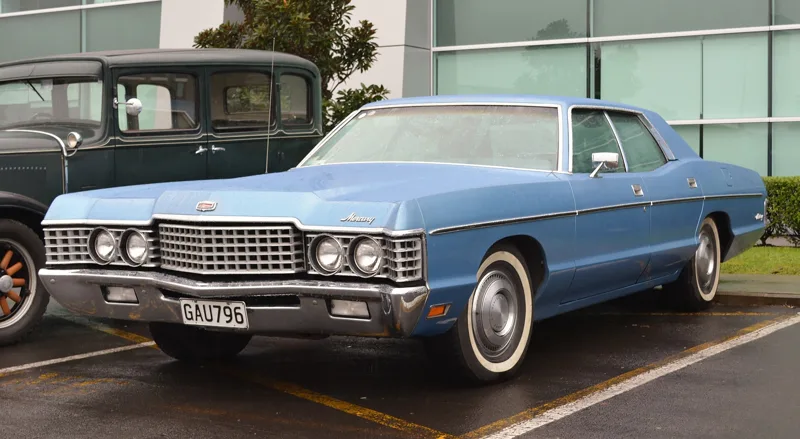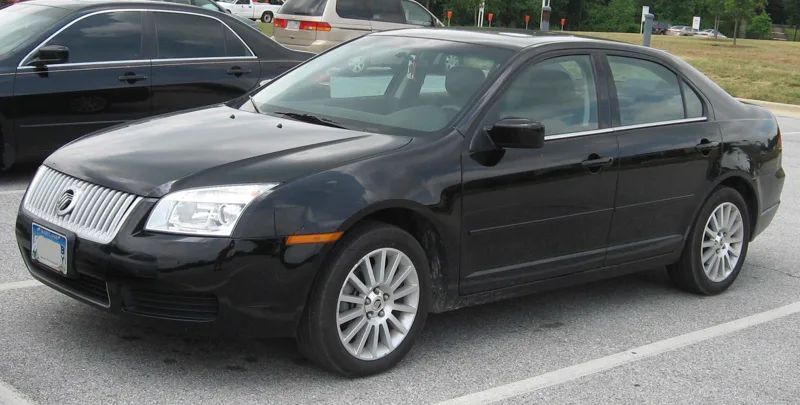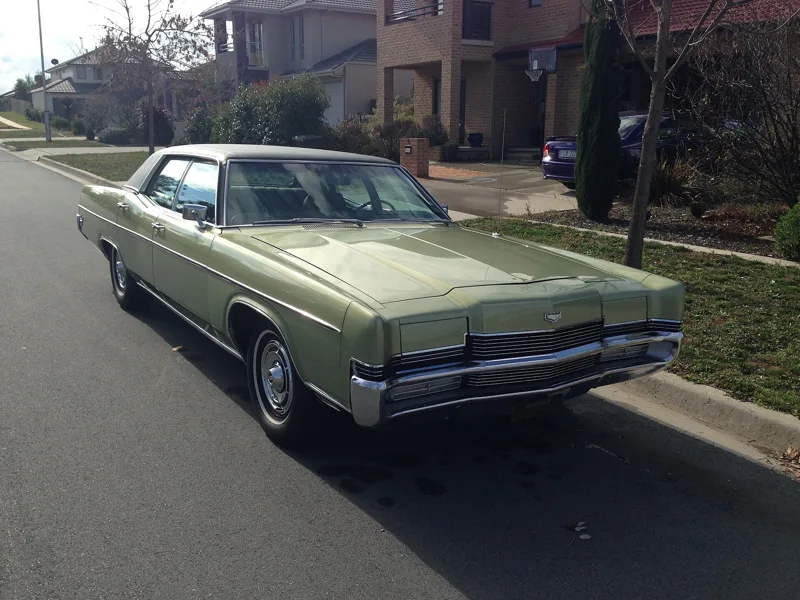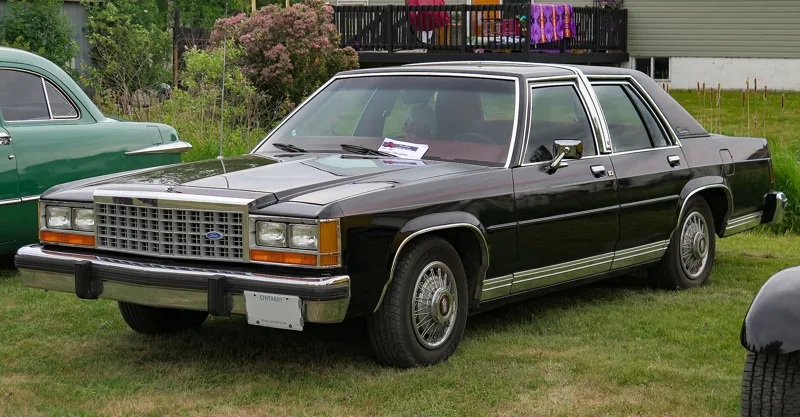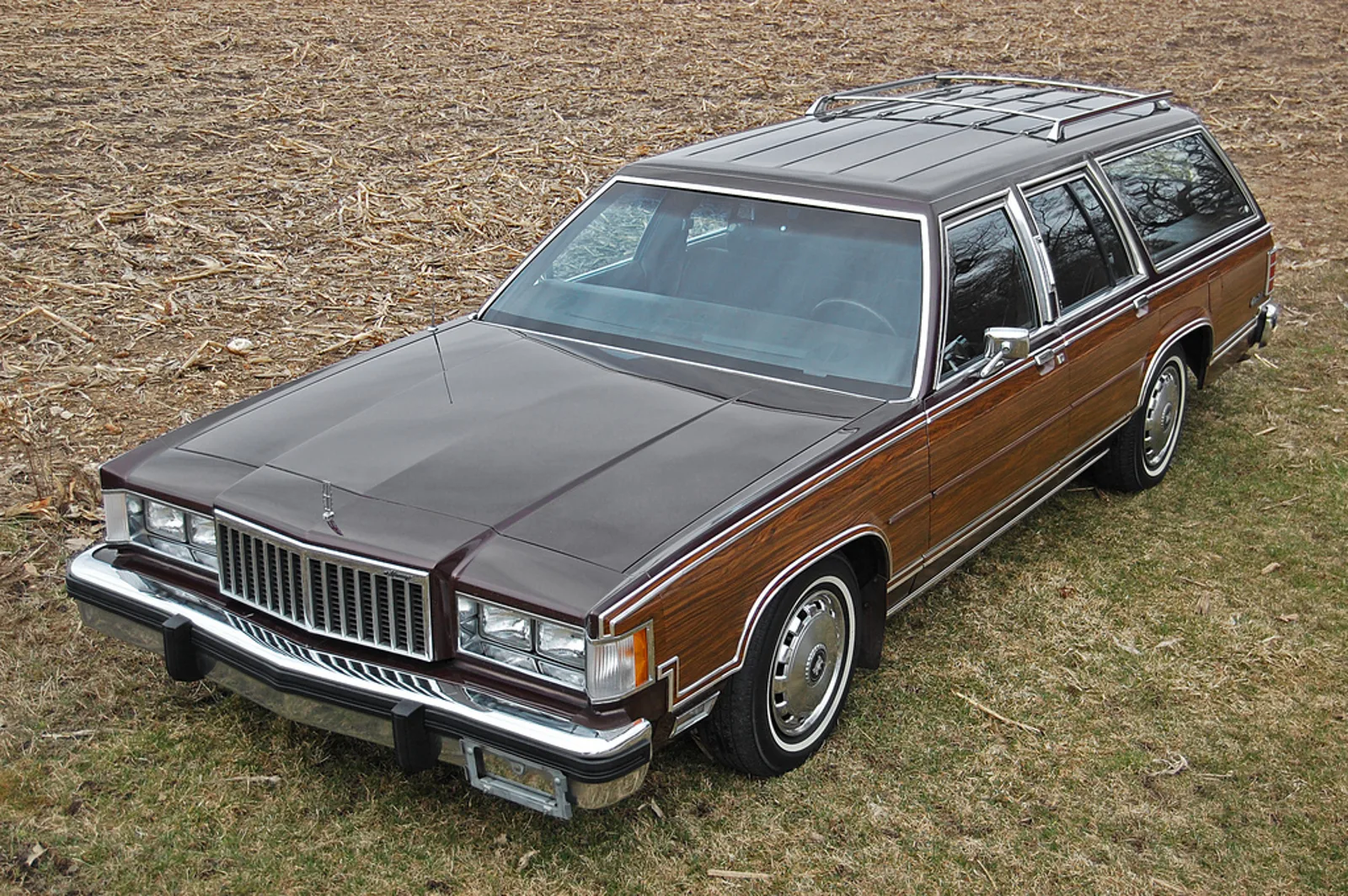
Simulated woodgrain, a shared Ford platform and a long run as Mercury's flagship station wagon.
The Colony Park was a Mercury wagon sold in the United States from 1957 until 1991. Its look came from faux woodgrain panels, and most of its body was shared with a Ford sibling. It stayed the flagship wagon from first year to last, and the 1991 cars were the final ones made.
The Mercury Colony Park was the flagship station wagon of Mercury, the Ford Motor Company division that sold it from 1957 until 1991. Its simulated wood-grain body panels set it apart from plainer wagons, and for most of its life it was a close relative of the Ford Country Squire. The name stayed in the range for more than three decades.
What was the Mercury Colony Park?
Mercury's full-size luxury station wagon ran from 1957 to 1991 and carried a simulated wood-grain finish throughout. It was the Mercury counterpart to the Ford Country Squire for much of its life and remained the brand's flagship wagon. Its name, Colony Park, was attached to the four-door flagship from the start.
Simulated woodgrain was the car's trademark, and it helped Mercury pitch the wagon upmarket. Rivals such as the Buick Estate, the Oldsmobile Custom Cruiser and the Chrysler Town and Country also used faux-wood trim on their large wagons. Mercury kept that look on its top wagon for decades.
A woodgrain flagship that rode on Ford's full-size platform for more than three decades.
Where did the Colony Park come from?
The Colony Park grew out of Mercury's 1953 Monterey station wagon, the first four-door Mercury wagon since 1941. That car shared its roofline with the Ford Country Squire. When Mercury split its sedans and wagons into separate ranges for 1957, the Colony Park became the four-door flagship of the new wagon line.
The Colony Park name appeared on a four-door-only flagship from its first year in 1957. After 1968 it was the only Mercury wagon left, so it outlasted every other wagon in the brand's range.
Mercury also set itself apart with hardtop rooflines. Every 1957 Mercury wagon used one, a feature most rivals did not offer as standard, and the flagship came only as a four-door.
What changed in the 1957 and 1958 cars?
The first Colony Park ran for 1957 and 1958 as a four-door hardtop wagon with simulated mahogany paneling and maple trim. Its tailgate window could be retracted, power operated if the buyer chose that option, and nine-passenger seating was on offer.
For 1958 the front bumper carried a gold Big M badge and the taillamps changed from a delta shape to a rocket style. Under the bonnet, the 1957 car used a 368 cubic-inch Lincoln Y-Block V8 rated at 290 hp. For 1958 Ford's MEL big-block took over, and the standard engine became a 383 cubic-inch Marauder V8 producing 330 hp.
The 430 cubic-inch Super Marauder was an option, rated at 400 hp and fed by triple two-barrel carburettors. The optional Multi-Drive automatic was paired only with this engine. The automatic was operated by Keyboard Control, a pushbutton panel, and reverse gear locked out above 10 mph.
What did the 1959 and 1960 cars change?
The 1959 and 1960 Colony Park sat on a 126-inch wheelbase and was part of the Country Cruiser series. In 1960 the headlights moved into the grille, the hoodline was lowered and the scalloped fins gave way to chrome trim. The Voyager and all two-door wagons were discontinued that year.
On the engine side, the 1959 car used the 383 Marauder as its only V8, retuned to 322 hp. Mercury replaced the pushbutton transmission controls with a column-mounted shifter that year. The 1960 range brought back the 430 V8 as a 310 hp Marauder with a single four-barrel carburettor.
Mercury built 5,929 examples of the 1959 car, listed at US$3,932, or $43,427 in 2025 dollars. That low volume is why surviving examples are somewhat rare today.
Why did the 1961 model shrink?
The 1961 Colony Park shrank after Edsel closed during the 1960 model year, a move that reshaped Mercury's range. The car lost about five inches of length and about 500 pounds of curb weight. From 1961 it also shared bodywork with the Ford Country Squire.
The 292 Y-Block V8 was the standard engine in 1961 and 1962, and the 390 V8 became standard in 1963. Wood-grain trim remained the main thing that separated the Colony Park from the Commuter.
How did the 1965 to 1978 generations evolve?
The 1965 redesign replaced the leaf-spring rear with a coil-spring live axle and adopted slab sides echoing the Lincoln Continental. The car was listed at US$3,364, or $39,803 in 2025 dollars, and 4,213 were manufactured that year. That generation ran through 1968, before the 1969 cars arrived.
In 1966 the tailgate became the Magic Doorgate, a two-way tailgate that could also swing out as a door. The engine range grew that year with a 410 Marauder rated at 330 hp and a 428 Super Marauder at 345 hp. In 1967 a sideways-facing third row was offered as an option, and in 1968 the 410 gave way to a 315 hp version of the 390.
By 1969 the Colony Park sat within the Marquis model line, on a 121.0 inch wheelbase shared with the Ford Country Squire and LTD. Covered headlights worked by a vacuum canister system were new that year, and 25,604 cars were built. The list price rose to US$4,457, or $39,130 in 2025 dollars.
The 1972 model swapped the 429 for a 460 cubic-inch V8 sourced from Lincoln. For 1973 the station wagons became pillarless hardtops with frameless door glass, and the car weighed nearly 5,000 lb (2,300 kg). For 1978 the 351 Windsor V8 became standard outside California and high-altitude areas. Across 1969 to 1978 about 7,850,000 full-size Fords and Mercurys were sold, a total second only to the Ford Model T platform.
How did the 1979 downsizing change the Colony Park?
For 1979 the Colony Park shed over 11 inches of length and moved into the Grand Marquis line. It also lost over 1,000 lb compared with the 1978 car, which made it a noticeably lighter wagon. The smaller body still seated eight as standard.
Eight-passenger seating became standard from 1979, compared with the nine-passenger layout offered in 1957.
The 1981 model received fuel injection on the 302 Windsor, which was marketed as a 5.0 L engine. The AOD 4-speed overdrive transmission arrived with it, the first of its type in a full-size American car. The carbureted 5.8 L V8 returned as an option in 1986.
What were the final years like?
From 1983 the Colony Park was Mercury's sole full-size wagon, and the non-woodgrain Grand Marquis wagon was dropped in 1984. The 1987 model year brought GS and LS trim levels that matched the Sable and Topaz. The front end was redesigned in 1988, and a driver airbag arrived in 1990.
Production ended in December 1990, so the last cars were sold as 1991 models. The Colony Park had no direct successor, and the 1991 cars were the last to carry the name.
What were the Colony Park specifications?
| Model year | Wheelbase | Engine | Retail price | Built |
|---|---|---|---|---|
| 1957 | Not recorded | 368 cubic-inch Y-Block V8, 290 hp | US$3,677 | 7,386 |
| 1959 | 126 inches | 383 Marauder V8, 322 hp | US$3,932 | 5,929 |
| 1961 | Not recorded | 292 Y-Block V8 | US$3,118 | 7,887 |
| 1965 | Not recorded | Not recorded | US$3,364 | 4,213 |
| 1969 | 121.0 inches | Not recorded | US$4,457 | 25,604 |
| 1981 | Not recorded | 302 fuel-injected V8, 5.0 L | Not recorded | Not recorded |
The figures show a car whose size and engine changed far more than its name did over three decades of production.
What did the Commuter and Voyager offer?
In 1957 Mercury offered the Commuter as its base wagon and the Voyager as its mid-price model, with the Colony Park above both. The Voyager was discontinued in 1960, and the Commuter wagon was cancelled in 1968, which left the Colony Park as the only Mercury station wagon.
In 1959 the Commuter and the Colony Park both belonged to the Country Cruiser series. By 1961 the two were told apart mainly by trim, because the Commuter had no wood-grain finish and the Colony Park did.
How did the Colony Park compete with rivals?
Mercury's rivals included General Motors and Chrysler wagons, and the Colony Park was marketed against them. American Motors later added the Jeep Grand Wagoneer as a further challenger in 1976. Its woodgrain was the main point of comparison with those cars.
The woodgrain look was the centre of Mercury's pitch. The Colony Park sat above the cheaper Commuter, and it had been the flagship since 1957.
Why did full-size wagons disappear?
Buyers moved toward minivans and four-door SUVs, and demand for full-size wagons fell through the late 1980s. The Ford Crown Victoria and the Grand Marquis dropped their wagon bodies for 1992, and the Colony Park was not directly replaced before the Mercury brand closed in 2010.
The end of the wagon was therefore part of a wider change in what families bought, rather than a single decision about one model. By the end of the run the Colony Park was the only wagon in the Mercury range, so the brand's whole wagon offering rested on one model.
What engines do surviving cars usually have?
Most surviving Colony Parks carry one of the larger V8s, because those engines were the ones buyers chose most often. The 460 cubic-inch V8 from Lincoln arrived in 1972, and the 302 became fuel injected and was marketed as a 5.0 L from 1981.
The 351 Windsor became standard in 1978 outside California and high-altitude areas, so the region of sale can explain an engine choice. Buyers who wanted the earlier big-block sound had to look at the cars built before that change.
Which years produced the most cars?
The year with the largest recorded output was 1969, when 25,604 cars were built. The other recorded years ranged from 4,213 in 1965 to 7,887 in 1961, so 1969 sat far ahead of every other figure in the record. The gap is wide enough to show that the fifth generation was the busiest in the record.
Those counts describe the cars built in each year, not the number still on the road. That is one reason the 1959 car, with 5,929 built, is described as somewhat rare today. A single year's count also says nothing about how long a generation ran, so the totals should be read with care.