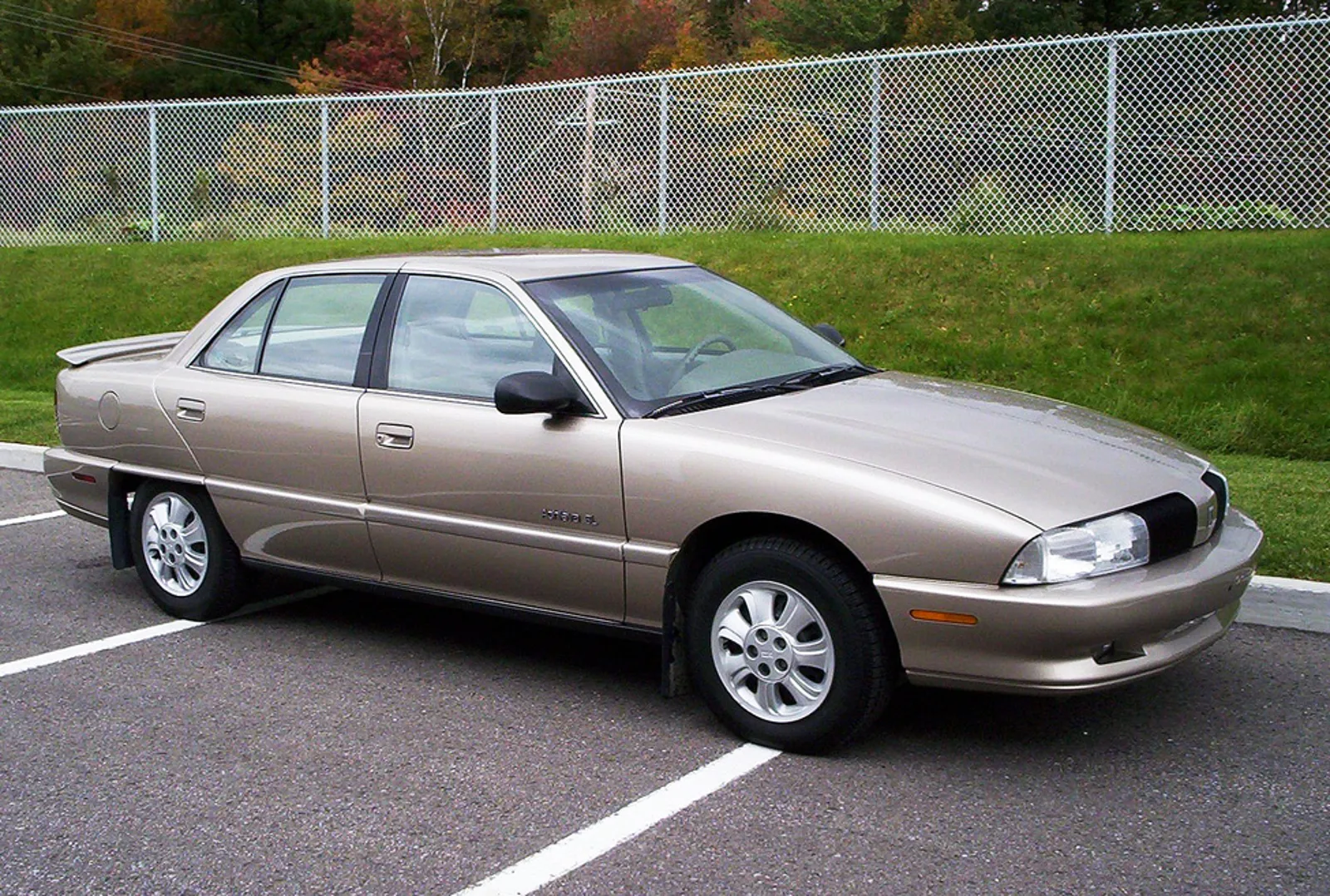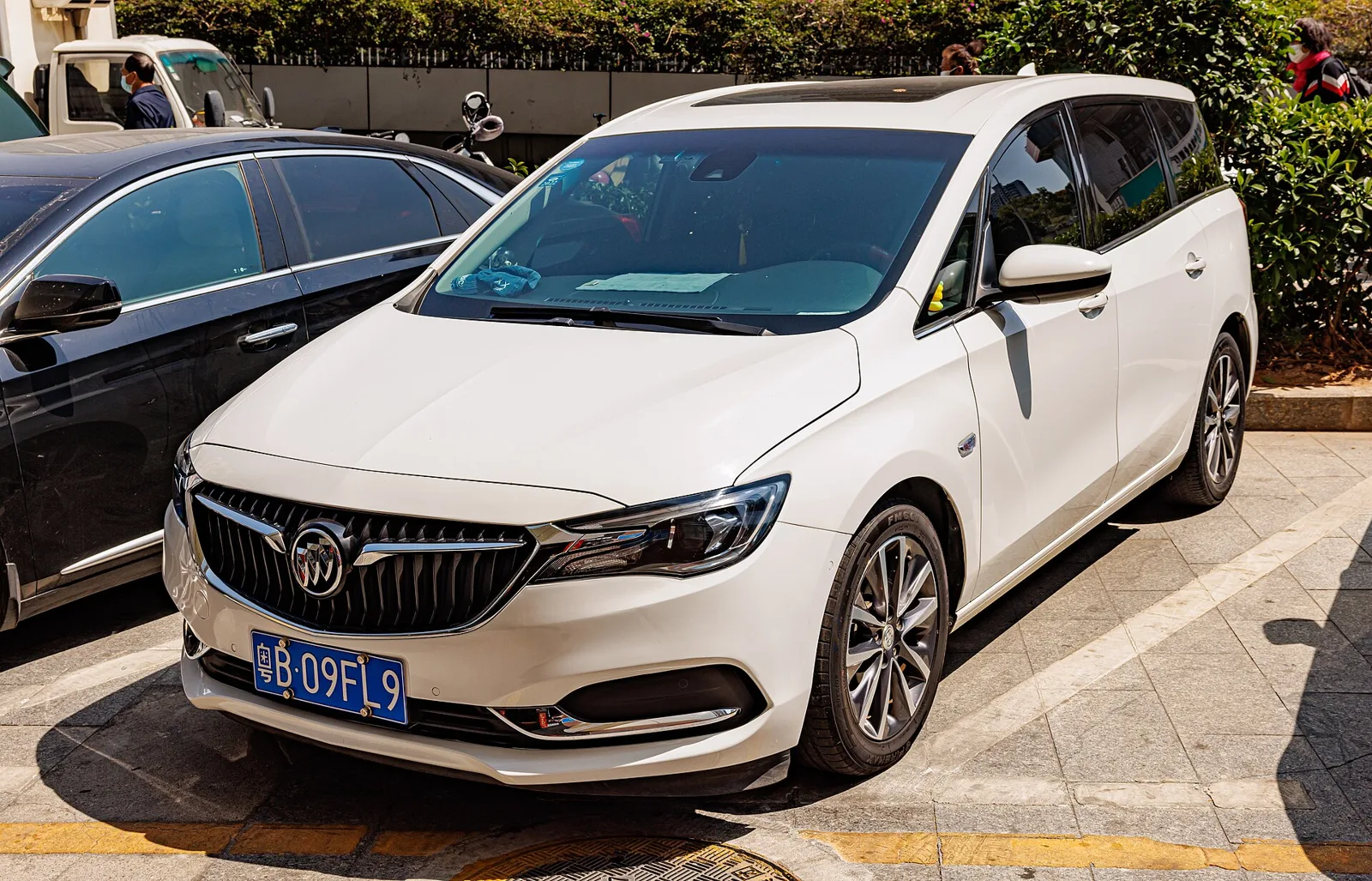
From Flint engine works and General Motors roots to the Grand National era and a crossover range sold partly in China.
Buick is a premium General Motors brand founded by David Dunbar Buick in 1899. It is the oldest surviving American car brand, sits between Chevrolet and Cadillac, and in 2026 offers four crossovers in North America. Its history includes the valve-in-head engine, the Trishield emblem and a celebrated performance era.
Buick is the General Motors division that began building cars in 1899 and is now the oldest car brand in the United States still in operation. GM places it above Chevrolet and below Cadillac, and in North America it usually shares dealerships with GMC. Its story runs from early workshops in Flint, Michigan, to a major business in China.
Who founded Buick and how did it start?
David Dunbar Buick founded the company in 1899, but he was more interested in stationary and marine engines. Walter Marr, the chief engineer, built the first two Buick automobiles in 1899 and 1900. Control passed to James H. Whiting in 1903, and the firm moved to Flint, Michigan.
The business was registered in Detroit on May 19, 1903, under the Buick Motor Company name. William C. Durant, who had earned his fortune in carriage making, took a controlling interest in 1904 and pushed sales upward. Only 37 cars were built that year, and none of them survive today.
Whiting planned to fit Buick's engines to his wagons, so the Flint operation began as an add-on to an existing business. David Buick stayed on as manager and re-hired Walter Marr, who had left the company.
Output climbed to 8,820 cars in 1908, enough to claim the number one spot from Ford, Maxwell and Olds.
From a Detroit engine maker that helped bring General Motors into being to a crossover brand still selling in China.
How did Buick help create General Motors?
Buick's profits and reputation became the foundation for General Motors, which Durant formed in 1908. He positioned Buick just below Cadillac and gave it the GM A platform, shared with Chevrolet, Oakland, Oldsmobile and Cadillac. Early growth rested on the valve-in-head engine, later known as the overhead valve design.
Eugene Richard applied for a patent in 1902 on Walter Marr's engine design, and patent 771,095 was granted to Buick in 1904. Marr had left in 1901 and was rehired in Flint as chief engineer in 1904.
Early engineering and the valve-in-head engine
The first production Buick, the Model B, used a two-cylinder engine of 2.6 litres (159 cu in) with its cylinders horizontally opposed. The 1907 Model D brought the first full-size Buick, a four-cylinder T-head engine of 4,178 cc (255.0 cu in) at the front. The Model 10 of 1910 adopted an overhead valve four-cylinder, and the 1911 Buick Six became the first closed-body Buick, four years ahead of Ford.
Buick also introduced a string of firsts. Its 1931 straight-eight with overhead valves came with synchromesh gearboxes on most models, and in 1939 Buick became the first company to fit turn signals, almost a decade before rivals followed.
Which Buick models shaped the postwar years?
Buick reached its 50th anniversary in 1953, the year it introduced its own V8 and a new Skylark. In 1955 it pushed past Plymouth into third place among US makers, and in 1956 sales reached 738,814 vehicles, a record that lasted until 1977. The 1959 range added the Electra, Invicta and LeSabre.
An Electra paced the Indianapolis 500 that year. In 1961 the Fireball V6 became the first V6 fitted to an American passenger car, and the Riviera followed as its own model in 1963. The V8 earned the nickname Nailhead, which is explained later in this article.
Landmark models at a glance
| Model | Years built | Why it mattered |
|---|---|---|
| Model B | 1904 | First Buick made for sale |
| Model D | 1907-1908 | First full-size Buick, 4,178 cc (255.0 cu in) four |
| Buick Six | 1911 | First closed-body Buick |
| Roadmaster | 1936-1958, 1991-1996 | Large flagship of the postwar years |
| Electra | 1959-1990 | Full-size model that paced the 1959 Indianapolis 500 |
| Riviera | 1963-1993, 1995-1999 | Personal luxury coupe, restyled in 1995 |
| Regal Grand National | 1982 | Performance package on the Regal |
| Reatta | 1988-1991 | Two-seat luxury car |
| Rendezvous | 2001-2007 | Buick's first crossover |
| Enclave | 2008 onward | Mid-size crossover still in the 2026 range |
Which Buick performance cars are most remembered?
The best-known Buick performance cars include the Gran Sport and Skylark GSX from the 1960s and 1970s, plus the Grand National and GNX of the 1980s. Buick offered the Grand National package on the Regal from 1982, and it built only 547 GNX specials in 1987. Later, the T-Type name revived the performance theme.
The T-Type trim first appeared on the Riviera in 1981. Enthusiasts still describe the turbocharged Regals as among the quickest American cars ever built.
Buick in motorsport
Buick's racing story starts with Phil Shafer, who took a Buick to victory in the 1933 Elgin Trophy, a contest often treated as the first organised stock car race in the United States. Buick later ran in the Grand National stock car series with the Regal and then the Gran Sport.
The golden period ran through the 1980s. General Motors entered the Regal Grand National in NASCAR's Cup Series alongside the Oldsmobile Cutlass, and Buick engines powered IndyCar and IMSA GTP cars. Buick-powered cars took pole and second at Indianapolis in 1985.
Buick engines powered 11 cars in the 33-car Indianapolis 500 field in 1990, and 12 in 1992. Bobby Allison won the 1988 Daytona 500 in a Regal. In 1986 Buick also built fewer than 120 LeSabre Grand National coupes so the body style could qualify for NASCAR.
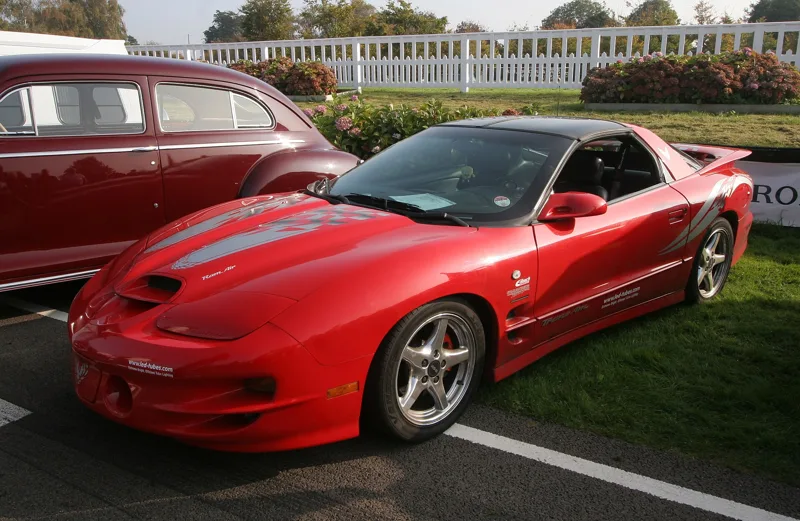
The success faded in the 1990s, when GM moved its racing effort to Oldsmobile. Buick also raced in Trans Am during the 1980s and 1990s, fitted with aftermarket V8 units.
How did Buick's lineup change in the 2000s?
In the 2000s Buick dropped its compact and performance models and concentrated on crossovers and SUVs. The Rendezvous arrived as a 2002 model and was Buick's first crossover. By 2008 the North American range had shrunk to three models: the LaCrosse and Allure, the Lucerne, and the new Enclave.
The 2000 LeSabre had been the best-selling full-size car in the US for eight straight years. The Rainier SUV arrived in 2004 and the Terraza minivan a year later. In 2011 the Regal returned as a sedan based on the Opel Insignia, and the compact Verano joined the range in 2012.
The 2010 LaCrosse, unveiled in January 2009, brought a new styling direction with traditional Buick cues. Reviewers compared it favourably with luxury models such as the Lexus ES.
Was Buick ever close to being discontinued?
Rumours that Buick would be dropped spread through the 2000s, as sales slipped and the brand was seen as appealing mainly to older buyers. General Motors kept it because of its profitability and popularity in China, and it discontinued Pontiac instead.
During the 2009 restructuring the company named Buick a core brand, citing its success in China. The same year, a J.D. Power dependability study put Buick level with Jaguar at the top of its US table.
Where is Buick sold today?
China is one of Buick's major markets, where more than 1.1 million Buicks were sold in 2016. In North America four crossovers make up the 2026 range, from the subcompact Envista and Encore GX to the compact Envision and the mid-size Enclave.
Buick's presence in China reaches back a century. Before the Second World War, one in five cars in China was a Buick, and the last emperor, Puyi, was among the owners, along with Sun Yat-sen and Zhou Enlai.
Elsewhere the brand has come and gone. Buick sold cars in Mexico from 1921 until 1962, returned in 2009, and by 2019 offered only crossovers there. Yulon GM, a Taiwan joint venture formed in July 2005, split ownership 51 to 49 percent, with the larger share held by Yulon Motor. In South Korea, a localised LaCrosse called the Alpheon arrived in April 2010.
What are the Trishield and VentiPorts?
The Trishield traces back to the family crest of David Dunbar Buick, a red shield with a diagonal stripe, a stag above and a cross below. Buick first put it on radiator grilles in 1937, and the 1960 version used red, white and blue shields for the LeSabre, Invicta and Electra.
The VentiPorts are the vents set behind the front wheels, first seen on 1949 models. The number once matched the size of the straight-eight engine, later the body size, and from 1961 the cylinder count. The revived versions on the 2003 Park Avenue Ultra and the Lucerne followed the same rule, so a V6 had three per side and a V8 had four.
Styling cues that carried through the decades
The Sweepspear was a curved chrome trim line first offered on the 1949 Roadmaster Riviera hardtop, and by 1951 it was standard on all Buicks. It evolved into the Delta fin on 1959 models, which was trimmed in 1960 and removed for 1961.
The dollar grin grille, a horizontal oval of thick chrome ribs, appeared between 1942 and 1958. The waterfall grille came later, first used on the 2006 Lucerne after the 2004 Velite concept had previewed it.
Tail lamps followed their own path. In the 1950s Buick used tiers of small round bullet shapes, and by the early 1960s most models had moved to wide rectangular lamps. The 1965 Skylark and Electra were the first with full-width rear lamps.
Why is the Buick V8 called the Nailhead?
The engine earned the nickname because its relatively small intake and exhaust valves looked like nails. Hot-rodders in the 1950s and 1960s liked it because the valve covers were attached vertically, letting the V8 fit into tight engine bays while staying easy to service.
Engineering milestones after the war
In 1985 the downsized Electra became the first front-wheel-drive full-size unibody model from GM, with a fuel-injected 3.8 litre V6 and a 4.3 litre Oldsmobile diesel V6 on offer. The 1986 Riviera moved to a unibody with a 2,700 mm (108 in) wheelbase and put a 9-inch (230 mm) CRT on the dash for climate, stereo and trip data.
The 1995 Riviera returned with a naturally aspirated 3800 V6 rated 205 hp (153 kW), while a supercharged version rated 225 hp (168 kW) was optional. By 1999 the supercharged V6 could take the car to 97 km/h (60 mph) in under 7 seconds.
Buick's 2012 eAssist hybrid system improved fuel economy by as much as 38 percent on the LaCrosse and Regal. Buick City, the Flint assembly complex, had produced its first pilot Buick back in 1984.
Awards, rankings and enthusiast clubs
Motor Trend gave its car of the year title to the Buick Special in 1962, and the Riviera S-Type repeated that honour in 1979. A 1999 quality study ranked Buick second among 37 international brands, while the Flint complex tied for the best assembly plant position worldwide.
During the late 1980s, a Flint-built LeSabre came top in North America in an independent quality study. The Buick Club of America dates to 1966 and supports preservation work on the brand's cars.
What concept cars has Buick shown?
Buick's concept history starts with the Y-Job of 1938, which is often described as the industry's first concept car. The 2003 Centieme crossover marked the division's 100th anniversary, and the Electra Orbit was unveiled in 2025. Several later show cars have carried the brand's styling cues forward, including the Sweepspear line seen on the 2008 Invicta concept.
Who led Buick?
Leaders have included founder David Dunbar Buick, William C. Durant, who took over in 1904, and Lloyd Reuss, who led from 1980. Ed Mertz ran the division from 1987 to 1997, and Duncan Aldred led it from 2014 to 2024. Michael MacPhee took charge in 2026.
Mertz promoted the Premium American Motorcars theme in the late 1980s, and Aldred announced the all-electric plan in June 2022.