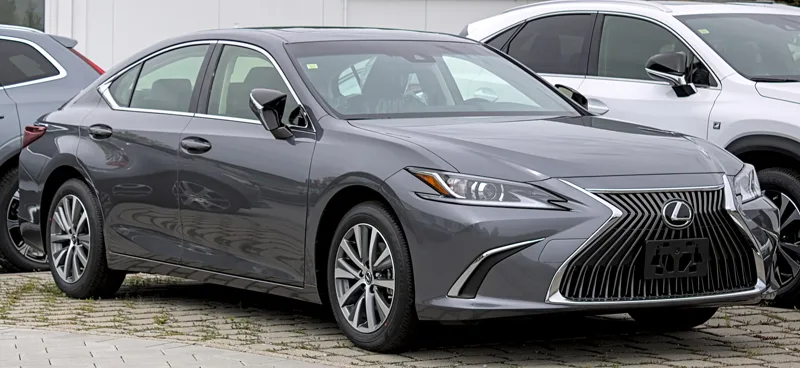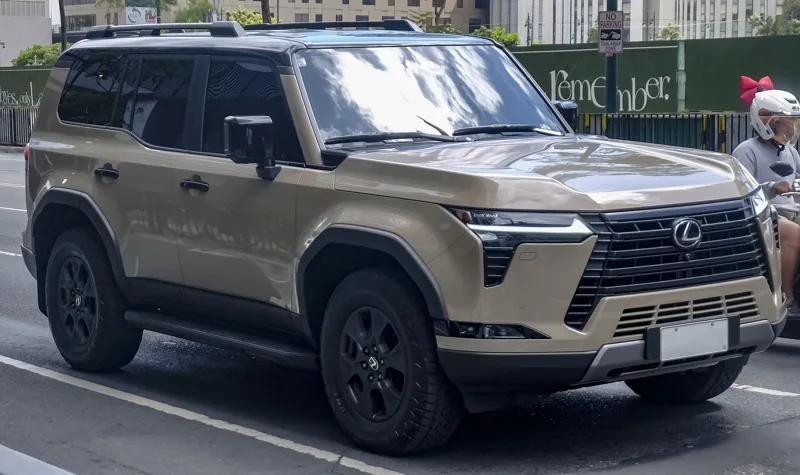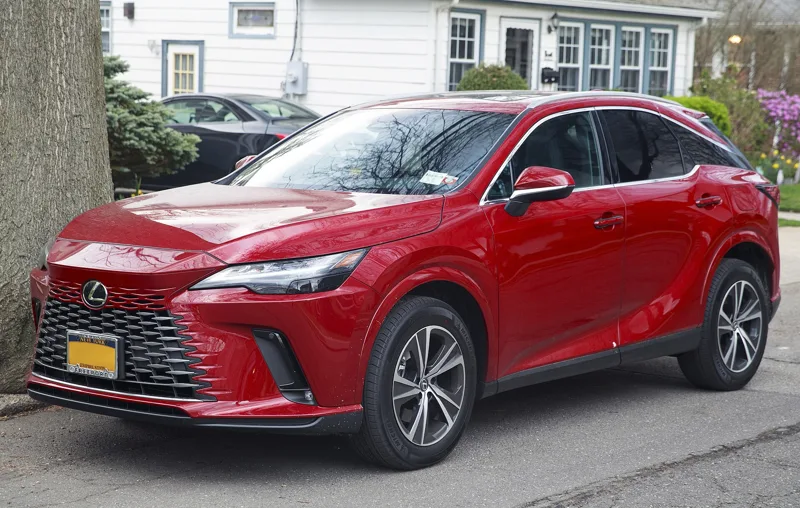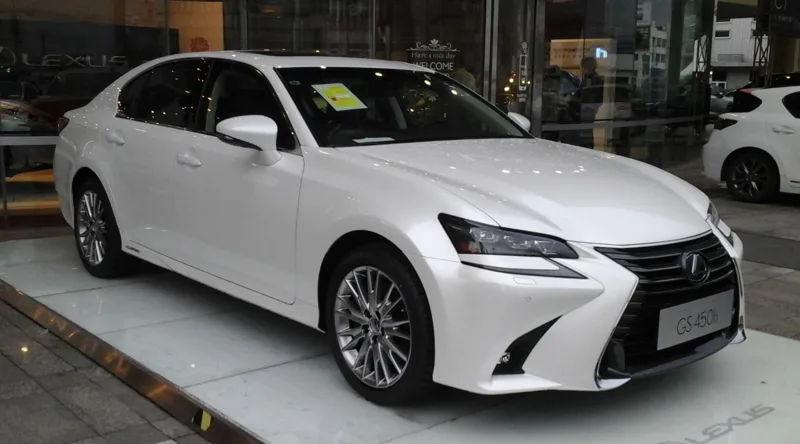
From the 1989 ES 250 built on the Camry to the 2025 electric ES, Lexus's longest-running sedan has been the brand's volume seller in several markets.
Built by Lexus since 1989 over eight generations, the ES began as a Camry-based sedan with a V6. Hybrid and electric versions followed, and it became the brand's best-selling sedan in several markets.
The Lexus ES is a luxury sedan that Lexus, Toyota's luxury division, has sold since 1989 across eight generations. Almost all of them used a V6 and a front-engine, front-wheel-drive layout, with all-wheel drive added later. The first five generations shared the Toyota Camry platform, and the ES became the brand's volume seller in several markets.
What is the Lexus ES?
The ES is a front-wheel-drive luxury sedan positioned in the comfort segment. Lexus has built it around interior amenities, quietness and ride quality rather than the firmer handling of sport sedans. Buyers after more performance were directed to the IS and to rival makes with sportier suspension.
The name stands for Executive Sedan, although some Lexus importers use Elegant Sedan. Until the arrival of the related RX in 1998, the ES was the only front-wheel-drive Lexus, and it held the entry-level luxury slot in North America and other regions until the IS arrived in 1999. In the United States it has been the best-selling Lexus sedan for more than fifteen years.
A Camry-based luxury sedan that became Lexus's volume seller, then went electric in its eighth generation.
Where did the ES begin?
The first ES, the ES 250, made its appearance in January 1989 at the Detroit show, when the new Lexus division launched. Lexus did not want to launch with a single model, so it developed the ES quickly to join the LS 400 flagship, and the two formed the debut line-up.
The ES 250 was based on the Camry Prominent and Vista, known inside Toyota as the V20. Its 2.5-litre V6 produced 116 kW (156 hp) and was aimed directly at the Acura Legend. Design patents were filed in Japan in November 1987 and registered in August 1989.
Outwardly the car shared its Toyota siblings' general body and dimensions, but it had a more prominent grille, larger tail lights, chrome trim, frameless windows and a wheel design similar to the LS. The cabin offered a six-speaker Pioneer stereo, real wood, power windows operated by one touch and leather upholstery. Buyers could pick a four-speed automatic or a five-speed manual.
How did the first ES sell?
The ES 250 went on sale in the United States in September 1989 with a suggested base price of about US$22,000. It logged 1,216 sales in its first month, but the larger LS, which had its own platform, soon outsold it. Some observers saw the ES as a placeholder built by badge engineering from the Camry.
Production began at Tsutsumi in June 1989, and the first 1990 car left the line on 30 August 1989. The line produced 19,534 cars in 1990 and 17,942 in 1991, mostly with the automatic. Production ended on 5 July 1991, which makes the ES 250 a rare sight on American roads today.
What did the second generation ES 300 offer?
Lexus announced the second generation in September 1991 for the 1992 model year. It shared its design with the XV10 Toyota Windom, which went on sale in Japan through a dealer channel that sold the Windom as a top-level luxury sedan. The Windom was a pillared hardtop, while the Toyota Scepter was a conventional sedan.
The car was renamed the ES 300 to reflect a 3.0-litre engine, and it was 127 mm (5 in) longer and 76 mm (3 in) wider than its predecessor. It gained projector headlamps, a three-slat grille and an invisible B-pillar, and its drag coefficient of 0.32 was a clear improvement. The 3.0-litre 3VZ-FE V6 made 138 kW (185 hp), and the car took 7.9 seconds to reach 97 km/h (60 mph).
In Japan, where it was the Toyota Windom, a 2.5-litre 4VZ-FE making 128 kW (172 hp) arrived in October 1993. The manual was a five-speed, and the automatic a four-speed. The passenger airbag was added in 1993, and the car gained 90 kg (200 lb) over the Camry, mainly from larger dimensions and extra equipment.
Production began on 9 September 1991 and the sedan went on sale in the United States as a 1992 model. It was not sold in Europe, where similar Toyotas were offered. In its first full year the ES sold 39,652 units, and sales stayed close to that level for years. By 1994, partly because of the strong yen, the suggested price had reached US$31,200, which was 19.3 percent more than the 1992 figure.
The 1995 model year brought a revised three-slot grille, new headlights and fog lights, and CFC-free air conditioning. In North America the update also introduced the all-aluminium 1MZ-FE engine, rated at 140 kW (188 hp). The 1996 model year saw a Coach Edition with Coach leather and luggage, and 40,735 units were built that year.
What was the third generation ES 300?
The third generation debuted in September 1996 as a 1997 model, and it evolved from the second. Its development ran under chief engineer Kosaku within the Camry programme, and the exterior concept by Hiroshi Okamoto was frozen for production in January 1994. The body was 30 percent stiffer, with sharper lines and reflector headlights in place of projectors.
The car was introduced at a gala on Rodeo Drive in Beverly Hills, hosted by the actress Sharon Stone. It used a 3.0-litre V6 making 150 kW (200 hp) and 290 N-m (214 lb-ft) of torque, with a four-speed automatic, while the Japanese Windom used a 2.5-litre 2MZ-FE V6 at 147 kW (197 hp). The ES 300 reached 97 km/h (60 mph) in 7.7 seconds and had a drag coefficient of 0.29.
It was the first ES to offer Adaptive Variable Suspension, which could adjust individual dampers to the road. Production started in August 1996 at Tsutsumi in Toyota, Aichi, and in May 1997 Toyota Motor Kyushu's Miyata plant joined in. The US base price was US$30,395, and the first year produced a record 58,430 sales, with later years in the 35,000 to 50,000 range.
The 1998 model year added a next-generation airbag system, standard front side-torso airbags and force-limiting seat belt pre-tensioners. The 1MZ-FE gained variable valve timing in 1999, lifting the output to 157 kW (210 hp). A widespread engine oil gelling problem also led to a class action, after which Toyota agreed to overhaul or replace damaged engines free of charge.
How did the fourth generation ES 330 change the car?
The fourth generation, known as the XV30 and built on a larger body, arrived in July 2001 as a 2002 model. Its development was led by Kosaku Yamada, with styling under Makoto Oshima and a concept by Kengo Matsumoto. The arrival of the IS let Lexus give the ES a more upscale image by dropping the sporting pretensions of earlier cars, and its drag coefficient fell to 0.28.
Production ran from July 2001 to September 2004 at Tsutsumi, with Miyata until December 2002. Higashi Fuji at Susono joined in January 2003 and built the car until February 2006. The cabin used California walnut, and features such as a DVD navigation system and a 240-watt Mark Levinson stereo were offered. Every model had drive-by-wire throttle, a five-speed automatic and stability control.
The car sold 71,450 units in its first year, which made it the best-selling luxury car in the United States. In 2003 the NHTSA gave the ES 300 five stars for frontal and driver-side protection. For 2004 the American car received a revised 3.3-litre engine, rated at 168 kW (225 hp) and later 163 kW (218 hp) under changed testing rules, and it was renamed the ES 330.
A 2005 facelift updated the front and rear fascias, added projector headlights and a redesigned grille, and brought heated and ventilated front seats. Lexus also sold a Black Diamond Edition in 2005 with Tumi luggage. The Japanese owner's manual had originally shown the car in front of the World Trade Center, and after the September 2001 attacks Toyota reissued it with the towers digitally removed.
What was the fifth generation ES 350?
Lexus unveiled the fifth generation at the Chicago Auto Show in February 2006 for the 2007 model year. The launch car was the ES 350, with a 3.5-litre 2GR-FE V6 making 203 kW (272 hp), a six-speed automatic and front-wheel drive. It used the L-finesse design language, and the badge was back on the grille for the first time since 1989.
Compared with the fourth generation, the fifth-generation body grew by 51 mm (2 in) in length and 10 mm (0.4 in) in width, with shorter overhangs. Its drag coefficient was 0.28. Standard equipment included eight airbags and SmartAccess keyless entry, and optional kit included a 14-speaker Mark Levinson system, radar cruise control and a panoramic moonroof on the Ultra Luxury Package.
Lexus said the ES 350 would reach 97 km/h (60 mph) in less than seven seconds. Magazines measured as little as 6.2 seconds, and the car cleared the quarter mile in 14.6 seconds at almost 100 mph (160 km/h). Some commentators complained of torque steer from the front-drive layout. The US base price for 2007 was US$33,470, and the car went on sale in late April 2006.
A four-cylinder ES 240 was added in 2010 for China, where it was built to meet emission rules for luxury cars. Its 2.4-litre 2AZ-FE inline-four made 123 kW (165 hp) and 224 N-m of torque at 4,000 rpm. It was the first gasoline four-cylinder Lexus since the 2005 IS.
The fifth generation drew praise. U.S. News and World Report named the 2009 ES 350 the best upscale car for the money, and Automobile Journalists Association of Canada gave it the best new luxury car under 50,000 dollars for 2007. Consumer Reports ranked it highest for reliability among upscale large cars in its 2006 survey.
What went wrong with the floor mat recall?
Toyota recalled 55,000 all-weather rubber floor mats from the Camry and the ES 350 in September 2007, because loose mats could jam the accelerator pedal. In August 2009 the NHTSA examined the ES 350 after 40 acceleration complaints, eight crashes and 12 injuries, most of which involved floor mats.
An accident involving a loaner ES 350 killed four people near San Diego on 28 August 2009. Investigators found that the car had been fitted with an unsecured SUV floor mat, which jammed the accelerator. Toyota's later notice advised removing the mat and shifting to neutral in an emergency. On 29 November the recall was revised to add shorter pedals, thinner replacement mats and a brake override.
A brake override that ignored the accelerator when the brake was pressed was fitted to new builds from January 2010, alongside a mid-cycle facelift that added a revised grille, memory seating and rear side airbags.
How did the sixth generation ES change?
The sixth generation was revealed on 4 April 2012 at the New York International Auto Show, with the ES 350 and the hybrid ES 300h. The ES 350 used a six-speed automatic, and the hybrid used an eCVT. Although the ES and the Camry still shared a platform, the ES had moved closer to the Avalon, and its 2,800 mm (111 in) wheelbase matched that car.
The interior gained the Lexus Remote Touch interface and an optional 835-watt Mark Levinson sound system. For 2013 the Technology package added a blind spot monitor, lane departure alert and pre-collision system, and every model had ten airbags. A 2.5-litre inline-four ES 250 went on sale in China, where the car was built at Miyata from 6 July 2012.
The sixth generation was export-only, not sold in Japan where it was built. Right-hand-drive versions arrived from late 2013 in Australia, Brunei, South Africa, New Zealand, Singapore, Hong Kong, Malaysia and Indonesia. The facelift was shown at the Shanghai show in April 2015, and production at the Kentucky plant, which made the ES 350 from October 2015, was the first Lexus built in the United States.
What is the seventh generation ES?
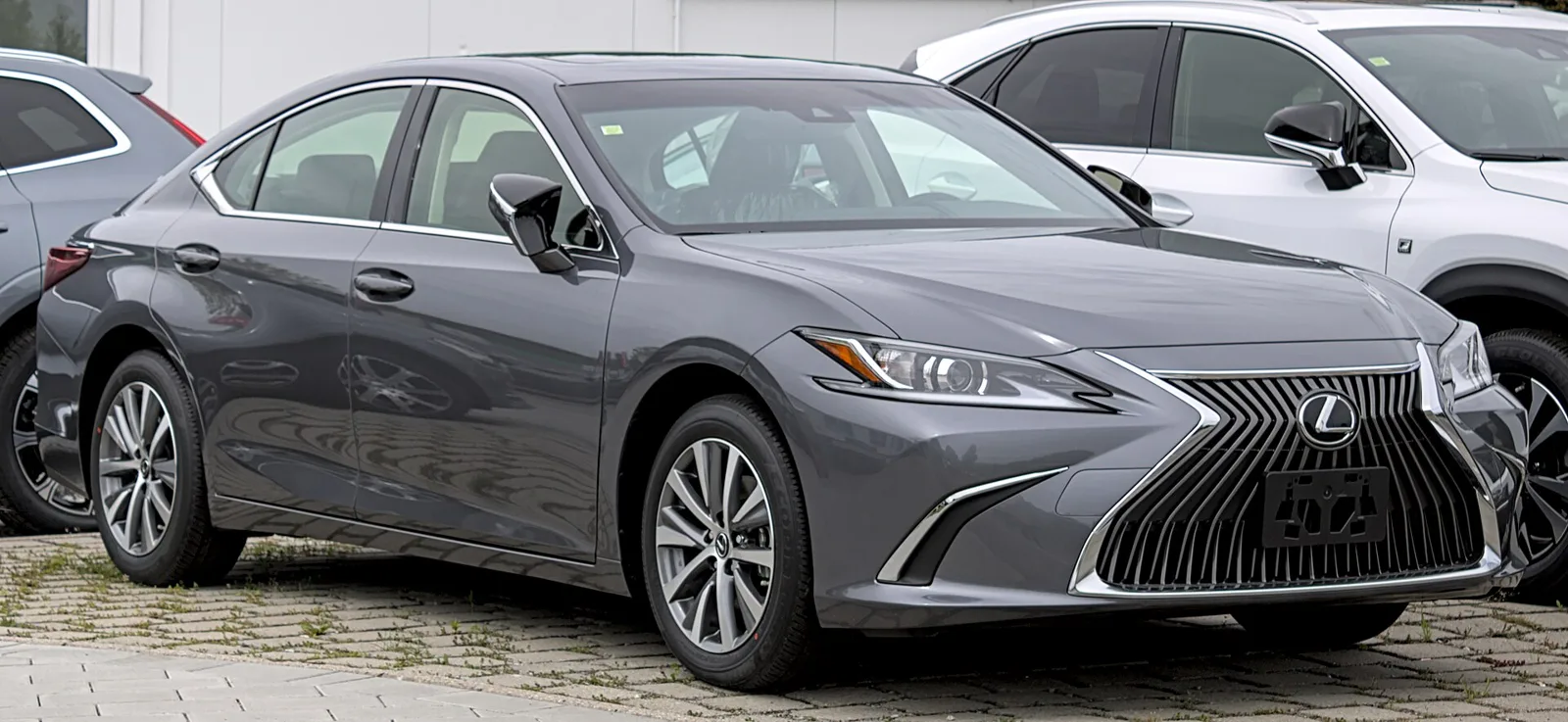
The seventh generation was unveiled at the Beijing show in April 2018 on the GA-K platform shared with the Avalon and the Camry. The F Sport made its debut in this generation, and every model came with Lexus Safety System+ 2.0. Sales began in South Africa in October 2018, with the ES 250 petrol and the ES 300h hybrid.
The ES reached Japan in the fourth quarter of 2018 and was the first ES there since the Windom was discontinued. Hong Kong and Thailand had unveilings in September and August 2018, and India received local assembly of the ES 300h from January 2020, backed by an investment of around US$100 million. Europe received the car for the first time, replacing the GS, with sales starting in September 2018 in Russia and from December in Western and Central Europe.
In the United States the seventh generation went on sale in September 2018 with an F Sport trim, a version that had never been offered on the ES before. The 2019 range had a base 3.5-litre trim, a hybrid and the F Sport. The 2021 model year brought the ES 250 with the All-Trac all-wheel drive system. The hybrid's battery changed from nickel-metal hydride to a lighter lithium-ion pack, and the 12 cm (4.7 in) lower pack freed trunk space.
How did the seventh generation's facelifts change the car?
The first facelift was unveiled in April 2021 for the 2022 model year, and it introduced AWD with a 50/50 torque split. The spindle grille gained horizontal slats, the side scoops became smaller, and the LED daytime running lights were redesigned. The infotainment screen moved up and was offered at 12.3 inches, and rear cameras replaced the side mirrors.
A second facelift arrived on 15 November 2024 for the Chinese market, with new headlights, a new grille, a full-width light bar at the rear and a 14-inch touchscreen inside.
What is the eighth generation ES?
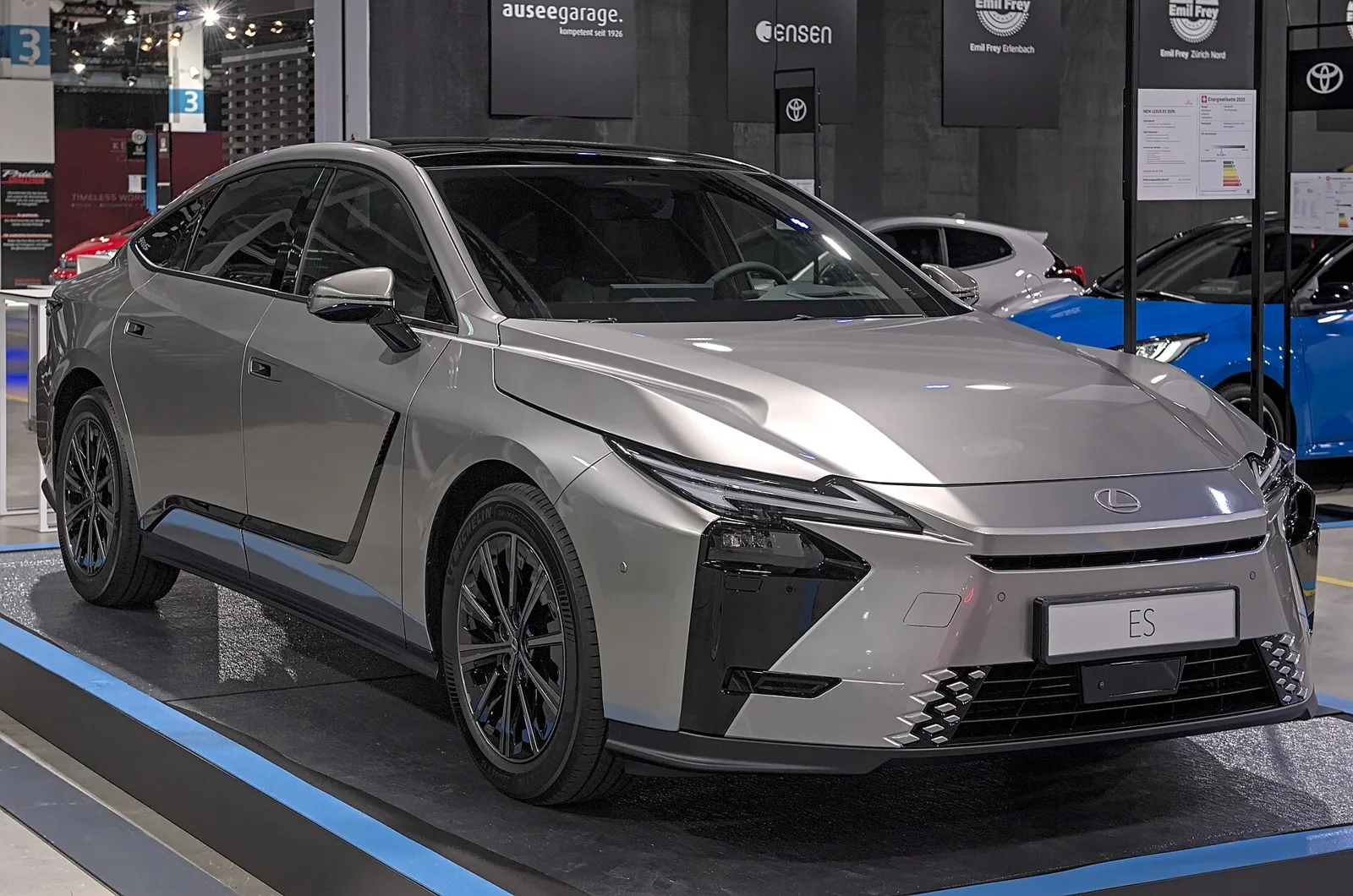
The eighth generation was unveiled on 23 April 2025 at the Auto Shanghai show. Most markets will receive cars built in Japan, but Lexus has announced a new plant near Shanghai, which will be the first Lexus made in China. The Georgetown plant in the US will return to producing the Camry and RAV4 only.
The exterior follows the LF-ZC concept shown at the 2023 Japan Mobility Show. It has Twin-L LED daytime running lights, a fastback profile and full-width taillights. Inside, there is a 12.3-inch digital instrument cluster, a 14-inch LexusConnect touchscreen and a dashboard with bamboo layering, while the door cards have see-through ambient lighting. The car also features a power forward-folding front passenger seat.
The eighth generation reached India in March 2026 as the ES 350e, with a hybrid added in July. Indonesia, the Philippines, Thailand and Brunei followed in the second half of 2026. In the Philippines the ES 500h is sold in Executive and Luxury trims, and in Thailand the ES 350h is offered in a single grade.
The ES was also the best-selling import car in China in 2020 and 2021 by a large margin, a position that shows how important the Chinese market has become for the model.
What are the Lexus ES specifications?
| Specification | Detail |
|---|---|
| First generation (ES 250) | 1989 to 1991, 2.5 L V6, 116 kW (156 hp) |
| Second generation (ES 300) | 1991 to 1996, 3.0 L 3VZ-FE V6, 138 kW (185 hp) |
| Third generation (ES 300) | 1996 to 2001, 3.0 L V6, 150 kW (200 hp) |
| Fourth generation (ES 330) | 2001 to 2006, 3.3 L V6, 168 kW (225 hp) at launch |
| Fifth generation (ES 350) | 2006 to 2012, 3.5 L 2GR-FE V6, 203 kW (272 hp) |
| Fifth generation (ES 240) | China, 2.4 L 2AZ-FE four, 123 kW (165 hp) |
| Sixth generation hybrid (ES 300h) | eCVT, from 2012 |
| Wheelbase (sixth generation) | 2,800 mm (111 in) |
| Kentucky production | From 19 October 2015, ES 350 only |
| Seventh generation platform | GA-K |
| Eighth generation | Unveiled 23 April 2025, XZ20 |