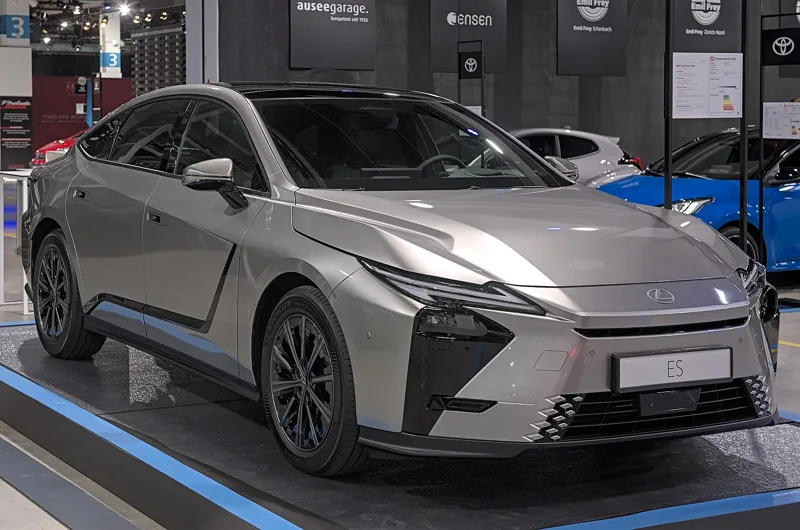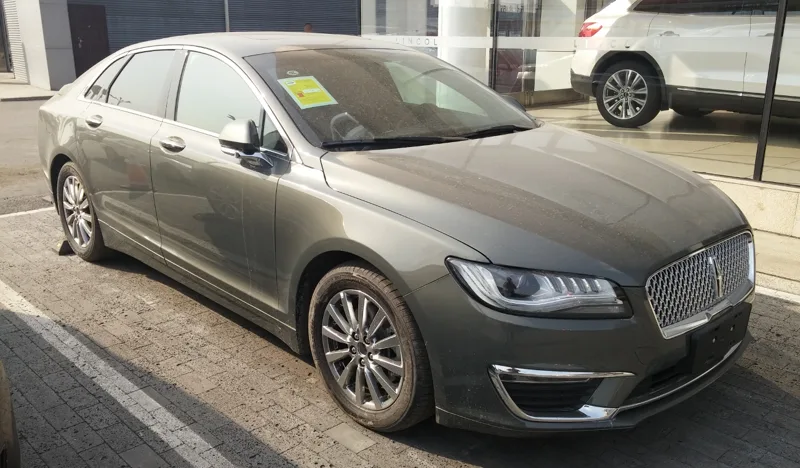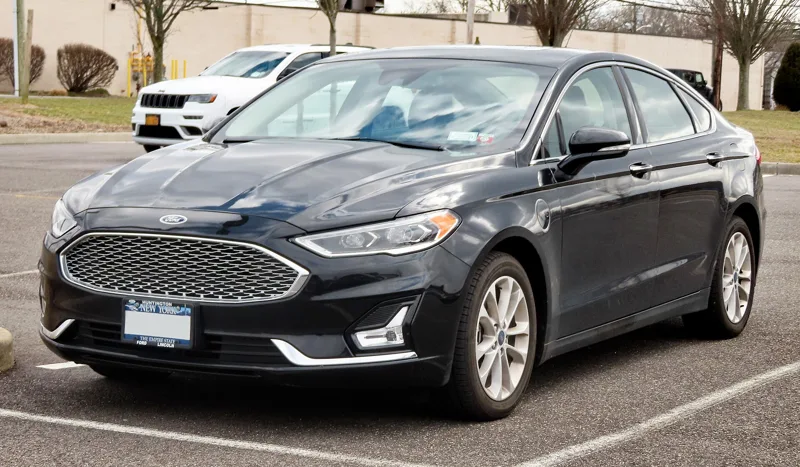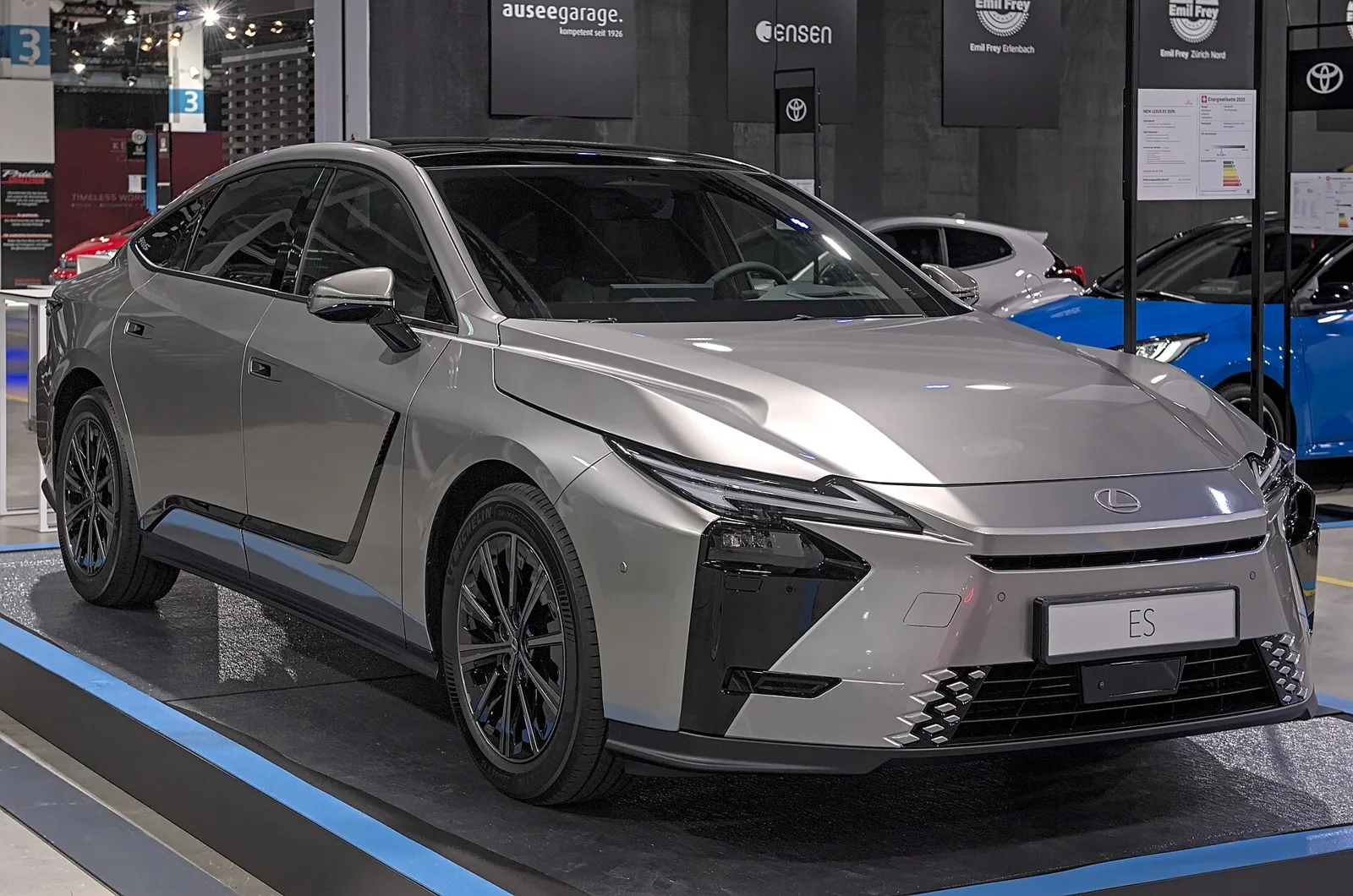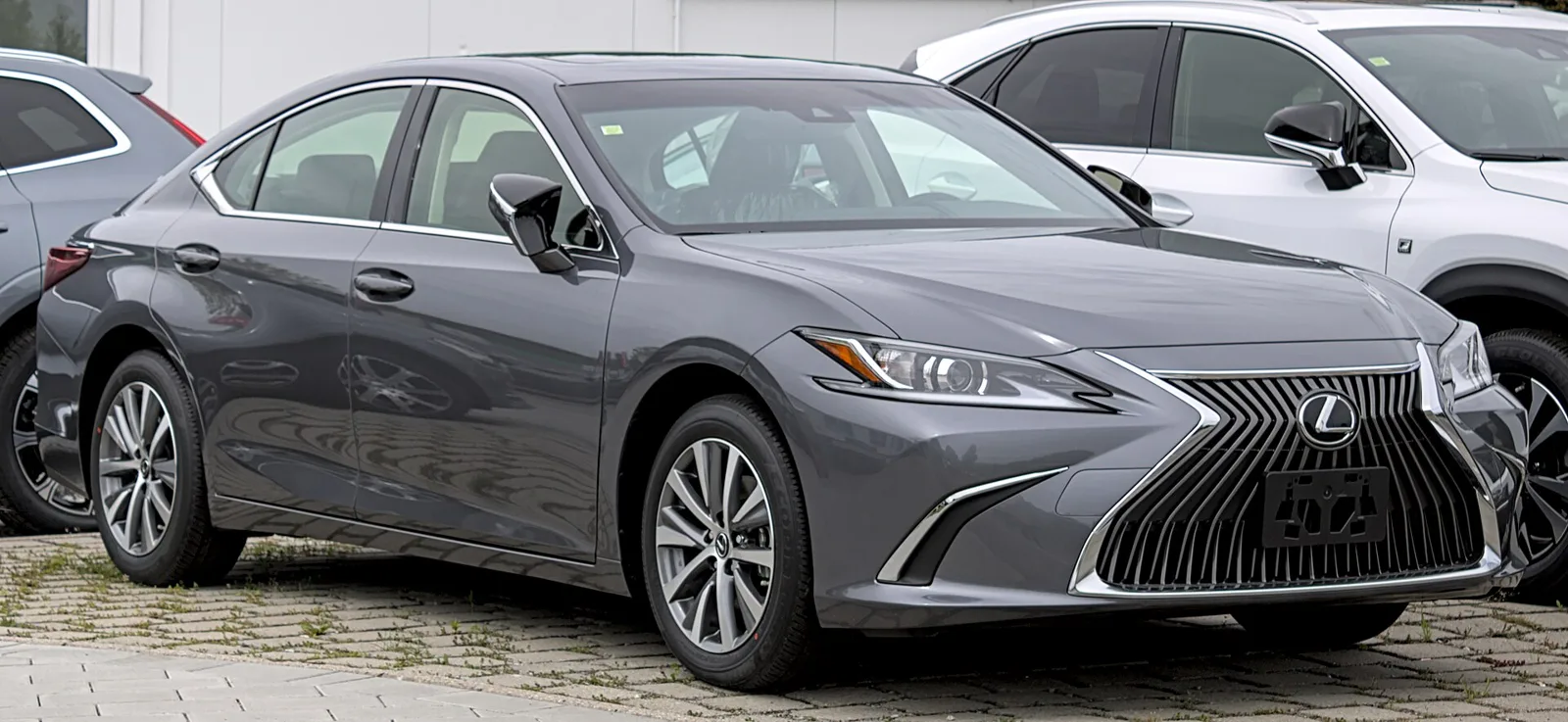
Both sedans began as entry-level luxury models built on mainstream platforms, and they took different routes to their showrooms and their sales.
Both sedans were entry-level luxury cars built on mainstream platforms. The ES used the Camry as its basis for five generations, while the MKZ shared Ford's CD3 platform with the Fusion and Milan. The MKZ Hybrid arrived for 2011, and the ES hybrid followed in 2012.
The Lexus ES and the Lincoln MKZ were both entry-level luxury sedans built on mainstream platforms, and each was sold alongside a more expensive flagship. The ES arrived in 1989 as one of Lexus's first two models, while the MKZ began as the Zephyr for the 2006 model year. Both cars were later offered with hybrid powertrains, and both were built on platforms shared with more affordable models.
This comparison covers platforms, engines, performance, pricing, production and hybrids. Where a figure exists for only one car, the gap is shown rather than estimated, and metric figures come first with imperial values in brackets.
Were the Lexus ES and Lincoln MKZ direct rivals?
Yes, in the entry-level luxury segment. The ES occupied that spot in the Lexus lineup in North America until the IS arrived in 1999, and the MKZ was described as remaining an entry-level luxury sedan with prices from just under US$30,000. Lincoln positioned the Zephyr as the replacement for the rear-wheel-drive Lincoln LS in that role.
The two cars also shared a broader story: each borrowed heavily from a mainstream sedan. The ES used the Toyota Camry platform for its first five generations, and the MKZ used Ford's CD3 platform, shared with the Ford Fusion, the Mercury Milan and the Mazda 6. Neither was a clean-sheet luxury design.
Two sedans from the same entry-level brief: one a long-running Camry-based Lexus, the other a Zephyr that became the MKZ within a year.
How did the first ES and the first MKZ begin?
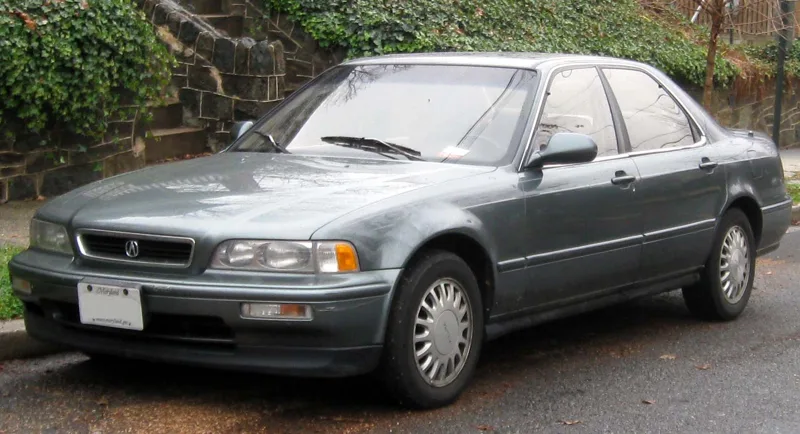
The first ES was introduced in January 1989 at the North American International Auto Show in Detroit, alongside the LS 400. Lexus developed the ES quickly to avoid launching the nameplate with only one model. The ES 250 used the Camry's 2.5 L, 116 kW (156 hp) V6 and was aimed directly at the Acura Legend.
The Zephyr was first shown as a concept at the 2004 New York International Auto Show with Lincoln's split-wing grille and quad projector headlamps. The production Zephyr arrived in autumn 2005 as a 2006 model, and the MKZ name followed for 2007. Lincoln first used the Zephyr name in the 1930s, when Ford sold a line of mid-size vehicles under it.
Which car had more power?
The Zephyr's 3.0-litre Duratec V6 delivered 221 hp (165 kW), peaking at 6250 rpm. The 1992 ES 300 used a 3.0-litre V6 rated at 138 kW (185 hp), and the 1997 version rose to 150 kW (200 hp) with 290 N m (214 lb ft) of torque.
The Zephyr's engine was stronger than the 1992 ES 300, and the 1997 ES 300 narrowed the gap to 200 hp against 221 hp. The 2007 MKZ moved to a 3.5 L Duratec 35 V6 with 265 hp (196 kW), and its 249 lb ft (337 N m) peak came lower in the rev range, at 4500 rpm, and all-wheel drive became optional. The record gives no torque figure for the ES 250.
How quick were the two sedans?
The Zephyr reached 60 mph (97 km/h) from rest in 7.5 seconds, while the ES 300 managed 7.9 seconds in its 1992 form. The 1997 ES 300 cut that to 7.7 seconds, and the Motor Trend test of the 2007 MKZ with all-wheel drive recorded 6.8 seconds.
A quarter mile took 15.2 seconds at 93.4 mph (150.3 km/h) in the same MKZ test, which the record attributes to its more powerful engine and extra traction. The ES's first-generation top speed is not given, so the top-end figures cannot be compared directly.
How were the two sedans engineered?
The first generation ES 250 shared the Camry's body structure, but it had a more prominent grille, bigger tail lights and frameless windows. The ES 300 of 1991 was 127 millimetres (5 in) longer and 76 millimetres (3 in) wider than its predecessor, and it gained projector headlamps and a Cd=0.32 drag coefficient.
Inside, the Zephyr used genuine ebony or maple wood inserts, chrome-bezeled gauges and white LED backlighting, with leather seating surfaces standard in all models. Its standard features included dual-zone automatic climate control, a universal garage door opener and 10-way power seats for the driver and front passenger. The 1992 ES 300 offered California walnut trim, an eight-speaker premium sound system and keyless entry.
The Zephyr used a coil-over damper, short- and long-arm front suspension and an independent multi-link rear. Its 17-inch wheels were standard, and its designers tuned the springs and dampers for ride comfort. The third-generation ES 300 of 1996 received a 30 percent stiffer body and adaptive variable suspension, which could adjust the dampers at each wheel.
The ES 300's third generation also reduced drag to Cd=0.29 and was slightly longer, by 61.0 millimetres (2.4 in), while weighing less than its predecessor.
What did each car cost?
The ES 250 had a US price of approximately $22,000 when it went on sale in September 1989. The ES 300 started at $26,550 in 1992 and rose to over $30,000 in later years, and the 1997 base price was $30,395. By 1994 the suggested retail price had reached $31,200, 19.3 percent above the 1992 figure.
The Zephyr started at a base MSRP of $28,995, rising to $35,340, while the 2007 MKZ was priced from just under US$30,000 with fully optioned models below $40,000. Lincoln's pricing therefore sat in a similar band to the ES over the same years.
How did sales compare?
The ES 250 logged 1,216 units in its first month on sale, alongside the LS 400 launch. Production totalled 19,534 units in 1990 and 17,942 in 1991, most of them automatics, and the car ended production on 5 July 1991.
Some observers saw the ES 250 as a placeholder built through badge engineering, and it sold less well than the larger LS, which had its own platform. The ES 300 was far more successful, logging 39,652 units in its first full year and becoming Lexus's best-selling vehicle overall.
The third-generation ES 300 reached a record 58,430 units in its first year and then recorded sales in the 35,000 to 50,000 range. The record gives no sales totals for the MKZ, although the ES has been the best-selling Lexus sedan in the United States for over fifteen years.
Which car had the better hybrid?
The MKZ Hybrid arrived for 2011 and was Lincoln's first hybrid and first four-cylinder engine. Its powertrain combined a 2.5-L, 156 horsepower Atkinson cycle Duratec inline-four with a parallel or full hybrid drivetrain. The vehicle was presented as one of Ford's green halo vehicles, sharing its engineering with the Fusion and Milan hybrids.
The ES's hybrid version came later, in 2012, and it was built on a platform that the record describes as closely related to the Camry and Avalon. The record does not give the ES hybrid's power output, so a direct comparison of the two hybrid systems is not possible.
What changed across the years?
The second-generation ES was not released in Europe, where similar Toyota models were offered instead. The sixth generation debuted in the first half of 2012 as a 2013 model, with a longer wheelbase. The MKZ's first generation ran from 2006 to its 2010 facelift, which added a split-wing grille, SelectShift six-speed automatic and Carlite SoundScreen acoustic glass.
The acoustic glass was marketed as Carlite SoundScreen, and it reduced noise by as much as 6 dB at certain frequencies, with the package sold as the Quietcraft interior.
Side-by-side specifications
| Specification | Lexus ES | Lincoln MKZ |
|---|---|---|
| Launch | ES 250 January 1989 at Detroit; US sales September 1989 | Zephyr for 2006 model year, shown fall 2005; MKZ from 2007 |
| Platform | Camry platform for first five generations | Ford CD3, shared with Fusion, Milan and Mazda 6 |
| Layout | Front-engine, front-wheel drive; all-wheel drive optional on later generations | Front-wheel drive; all-wheel drive optional from 2007 |
| Engine at launch | 2.5 L V6, 116 kW (156 hp) on ES 250 | 3.0 L DOHC Duratec V6, 221 hp (165 kW) |
| Later engine | ES 300 3.0 L V6, 150 kW (200 hp) from 1997 | 3.5 L Duratec 35 V6, 265 hp (196 kW), 2007 |
| Torque | ES 300 290 N m (214 lb ft) from 1997; ES 250 not given | Zephyr 205 lb ft (278 N m); 2007 249 lb ft (337 N m) |
| Gearbox | Four-speed automatic or five-speed manual; four-speed only from 1997 | Aisin six-speed automatic; SelectShift six-speed from 2010 |
| 0-60 mph | 7.9 seconds (ES 300, 1992); 7.7 seconds (ES 300, 1997) | 7.5 seconds (Zephyr); 6.8 seconds (2007 MKZ with all-wheel drive) |
| Drag | Cd=0.32 (1992); Cd=0.29 (1996) | not given |
| Base price | about $22,000 (ES 250); $26,550 (ES 300, 1992); $30,395 (1997) | $28,995 Zephyr base; from just under US$30,000 for 2007 MKZ |
| Sales | 1,216 in first month (ES 250); 39,652 first full year (ES 300) | not given |
| Production | ES 250 ended 5 July 1991; Tsutsumi plant | Hermosillo, Mexico, from August 2005 to 2020 |
| Hybrid | Introduced 2012 | MKZ Hybrid 2011, 2.5-L inline four |
| Safety | Driver SRS airbag and anti-lock brakes; passenger airbag from 1993 | Standard dual front-side and curtain airbags |
| Name origin | Executive Sedan | Zephyr, after the Greek west wind |
The ES's sixth generation shared its longer wheelbase with the full-size XX40 Avalon, which increased cabin dimensions. That gave the sedan more room than its predecessors, which was a key part of its later appeal.
Which buyer suits each car?
On the figures available, the ES suits a buyer who wanted a comfort-led Lexus sedan with a long sales history and a Camry-based build. The MKZ suits a buyer who wanted a Lincoln with a stronger early engine, all-wheel drive from 2007 and the acoustic refinements added in 2010.
Both cars were built to compete in the same price band, and neither is shown to be better overall. The ES has the longer sales record, while the MKZ has the bigger early engine and the acoustic package. The record leaves the choice to buyer priorities.
What does the record leave open?
Several points are missing. The ES 250's torque is not given, the MKZ's second generation is not described in the record, and the ES's sixth generation has no specifications. The record also gives no sales totals for the MKZ, so the two cars cannot be compared on volume.