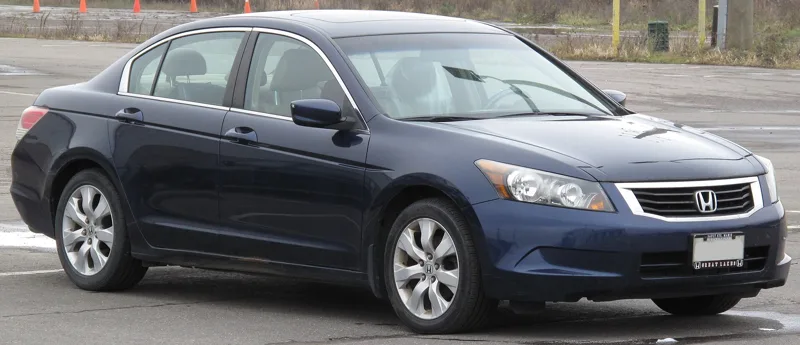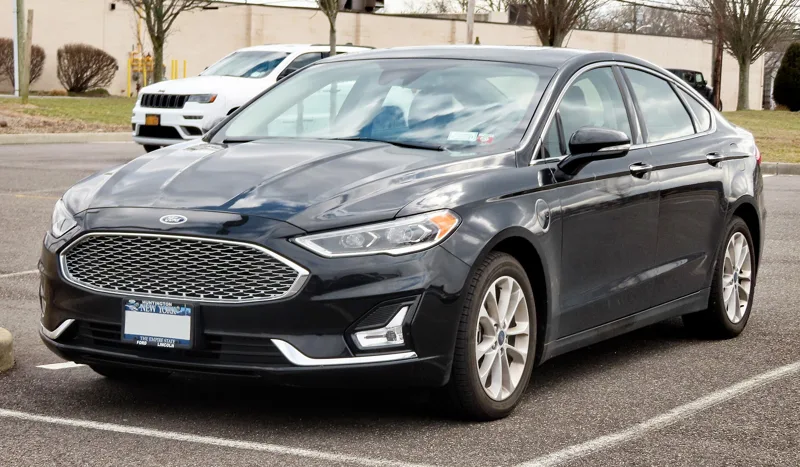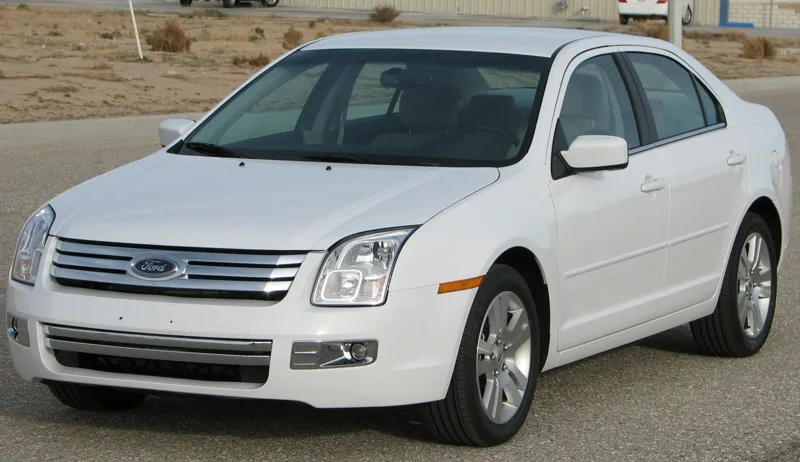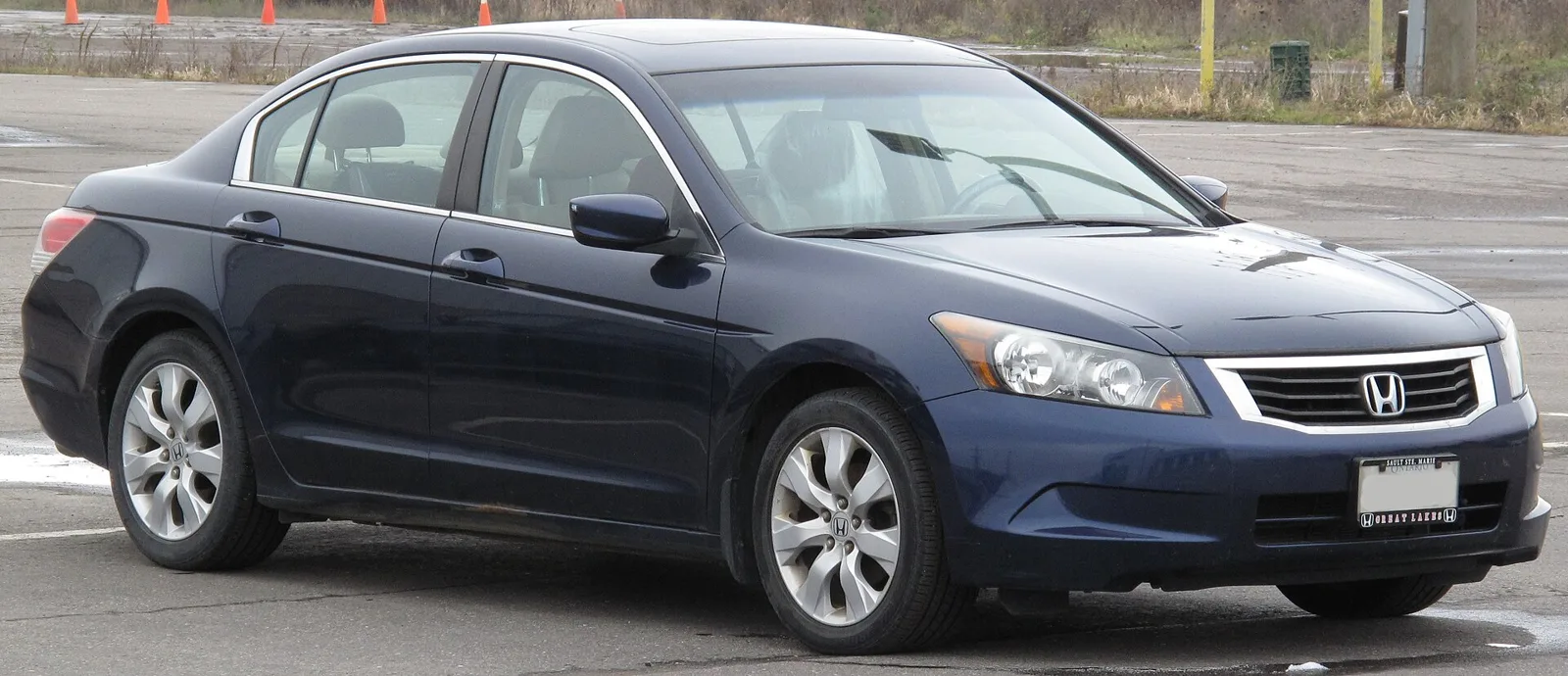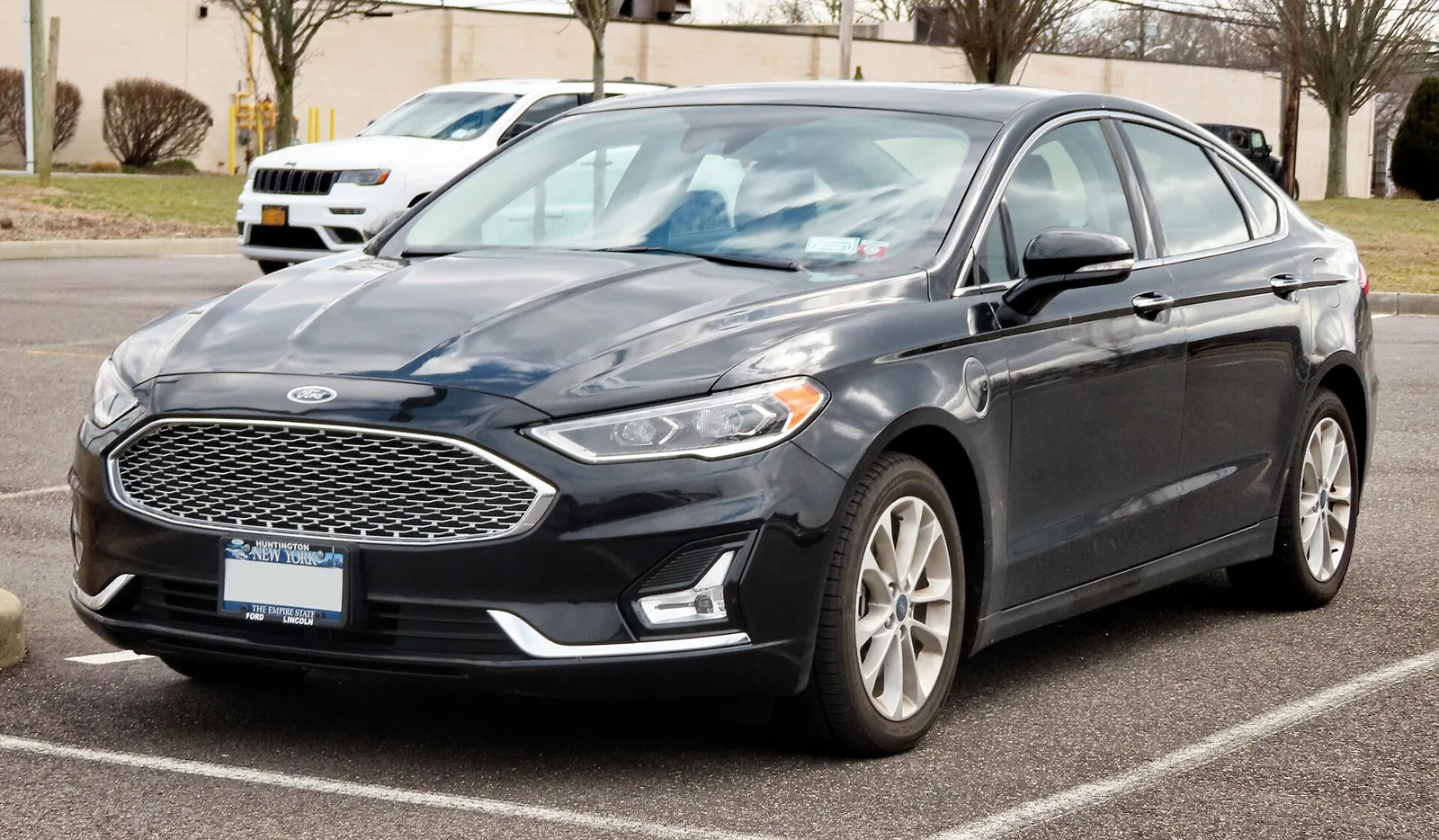
A Mazda-designed platform from Mexico against a Honda that grew four inches for 2008, with each sedan finding its own strengths and recall problems.
The Ford Fusion went into production in 2005, and the Honda Accord eighth generation followed in 2007 for the 2008 model year. The Fusion came from Mexico on a Mazda-designed platform, while the Accord grew four inches and offered a V6 with cylinder management.
The Ford Fusion and the North American eighth-generation Honda Accord reached the market two years apart and were measured against each other in head-to-head tests. The Fusion was a Mexico-built car on a platform Mazda had originally designed, while the Accord grew by four inches for its 2008 debut. Both were mid-size sedans, and each found its strengths in different places.
Which of the two arrived first?
Production of the first Fusions began on 1 August 2005. The Accord followed in August 2007 for the 2008 model year, and US sales of the sedan began on 12 September 2007, with the coupe following on 20 September.
The Fusion was therefore the first of the two on sale. It replaced the Mondeo for Latin American markets and superseded the Taurus and Contour in the United States and Canada, sitting between the Focus and the full-size Taurus.
The Accord's sedan and coupe had been shown as a concept at the 2007 North American International Auto Show before the production cars were unveiled on 21 August 2007.
A Mazda-designed platform from Mexico against a Honda that grew four inches for 2008, and two sedans with very different recall histories.
Where were the two cars built?
The Fusion was made at Ford's Hermosillo plant in Sonora, Mexico, where the Lincoln MKZ was also built and the Mercury Milan was built until it was dropped. All three shared the CD3 platform, which Mazda had originally designed as its G platform.
The Accord was built in Marysville, Ohio, and from the eighth generation Marysville became the only plant making the Accord coupe worldwide. Majority production of the V6 sedan moved to Lincoln, Alabama in mid-2009, and Honda's Anna, Ohio engine plant produced the four-cylinder engines.
The US plants supplied most Accords for North and South America. Elsewhere the North American Accord was assembled in Thailand for Southeast Asia, Australia and New Zealand, and it was built in China by Guangzhou Honda, later Guangqi Honda.
How much bigger was the Accord?
The 2008 Accord was a much larger car than its predecessor: its length rose 4 inches (102 mm) and its width 3 inches (76 mm). That gave the sedan a combined interior of 120 cubic feet (3.4 m3), which the EPA classes as nearly executive, while the coupe's 105 cubic feet (3.0 m3) keeps it in the mid-size category.
The Fusion's own footprint had been set by the platform. Its wheelbase was stretched by 5 cm and its width extended by 5.5 cm from the Mazda-derived layout, which gave it a roomier body than the cars it replaced.
What engines did each car offer?
The first Fusion's standard engine was a 2.3-litre Duratec I4 rated 160 hp (119 kW), with a five-speed manual or automatic. The SE and SEL could be had with a 3.0-litre Duratec V6 at 221 hp (165 kW) and a six-speed Aisin automatic.
The Accord's LX used a 2.4-litre DOHC i-VTEC four rated at 177 hp, and the EX pushed that to 190 hp. The V6 was a 3.5-litre i-VTEC rated at 268 hp, with variable cylinder management that shuts off two or three cylinders depending on how the car is driven.
Without that cylinder management, the Accord would lose about 4 mpg on the highway. The V6 engines were re-rated in the 2009 model year, and 4-cylinder and V6 versions with five-speed automatics were offered as PZEV configurations in 15 states.
The 2010 Fusion refresh brought a 2.5-litre I4 at 175 hp (130 kW) and a 3.0-litre V6 at 240 hp (179 kW) that could run E85 fuel. The Sport version used a 3.5-litre Duratec 35 at 263 hp (196 kW) and a six-speed 6F35 transmission.
Specifications side by side
| Specification | Ford Fusion | Honda Accord (North America eighth generation) |
|---|---|---|
| Introduced | Production from 1 August 2005; 2006 model year | August 2007; 2008 model year |
| Platform | CD3, originally designed by Mazda as its G platform | Honda platform shared with Acura TSX and TL |
| Size change | Wheelbase stretched 5 cm, width extended 5.5 cm | 4 inches (102 mm) longer, 3 inches (76 mm) wider |
| Interior space | Not given | Sedan 120 cubic feet (3.4 m3); coupe 105 cubic feet (3.0 m3) |
| Base engine | 2.3-litre Duratec I4, 160 hp (119 kW) | 2.4-litre i-VTEC I4, 177 hp |
| Larger engine | 3.0-litre Duratec V6, 221 hp (165 kW) | 3.5-litre i-VTEC V6, 268 hp, with VCM |
| Transmission | Five-speed manual or automatic; six-speed automatic on the V6 | Five-speed manual or automatic; five-speed automatic on the V6 |
| Refresh engines | 2010: 2.5-litre I4, 175 hp (130 kW); 3.0-litre V6, 240 hp (179 kW) | 2009: V6 re-rated; 2011: revised five-speed automatic |
| Fuel economy | Not given | 23 mpg city, 34 mpg highway after the 2011 update |
| IIHS frontal offset | Acceptable (2006 and early 2007); Good from late 2007 to 2009 | Good in 13 of 14 measured categories |
| IIHS side impact | Poor without side airbags (2006); Good from late 2007 | Side structure Acceptable |
| Top Safety Pick | 2010, for Fusions built after April 2010 | Earned, lost over roof strength, regained for 2012 |
| Stability control | Optional from 2009 | Standard across the range from 2008 |
| Hybrid | Fusion Hybrid on the SEL base; Energi plug-in from 2013 | Not given for the eighth generation |
| Recalls | 2015 steering recall; floor-mat investigation | 2015 airbag recall of 300,000 cars |
How did the trim lines compare?
Fusion trims were S, SE and SEL, with the S taking the 2.3-litre engine and steel wheels with plastic covers. The SE added alloy wheels and a power driver's seat, and the SEL added 17-inch aluminium wheels and dual power front seats.
The Accord ran through LX, EX, EX-L, EX-L with Navigation and V6 versions in Canada. The United States added the LX-P, a premium sedan with illuminated power window switches and an 8-way driver's seat, and the LX-S sport coupe with 190 hp and 17-inch alloys.
The 2011 Accord update added an SE trim in the United States, slotted between the LX-P and the EX, with leather upholstery. The 2010 Fusion added the Sport as a stand-alone model, with 18-inch alloys, a rear spoiler, leather seats and a sport-tuned suspension.
How did the two cars rate in crash tests?
The Accord earned the IIHS Good rating in 13 of 14 measured categories, with the side impact structure rated Acceptable. That earned it a Top Safety Pick, which it lost over roof strength, and which came back for 2012 models with a Good roof rating.
The Fusion's IIHS record moved with its build. Its frontal offset rating rose from Acceptable to Good, its side impact rating rose from Poor without side airbags to Good, and its roof strength was Acceptable before May 2010 and Good afterward. Its 2010 Top Safety Pick applied only to cars built after April 2010.
In a study of vehicle fatalities, the Accord had the lowest fatality rate in the non-luxury midsize sedan class. Among luxury midsize sedans, only the Saab 9-3 was lower. The Accord's 2008 safety kit added vehicle stability assist and traction control standard across the lineup, which made it the first mid-size car in its class to include both as standard.
What recalls and lawsuits affected each car?
The Fusion's problems were largely about driving controls. An NHTSA investigation into floor-mat unintended acceleration covered an estimated 249,301 cars, and a 2014 steering investigation covered 938,000 vehicles after more than 500 complaints of sudden power steering loss.
The Accord had a class action over rear brake wear on 2008 to 2010 cars, which ended in a settlement. Owners were reimbursed for part of their brake repair costs, and Honda paid up to $150 for redesigned pads. Final court approval came on 29 July 2010.
The Accord's sudden airbag deployment problem was harder to resolve. Some 2008 and 2009 cars deployed side curtain airbags without warning, which caused at least 14 injuries. Honda eventually recalled 300,000 Accords in October 2015, after finding a software fault in the airbag control unit.
How did reviewers receive the two sedans?
Car and Driver placed the 2008 Accord EX first in a March 2008 comparison of four-cylinder mid-size sedans, which included the Fusion. Edmunds InsideLine also placed the LX-P and EX-L V6 Navi first against rivals, praising its performance, build quality, handling and fuel economy.
MotorTrend criticised the Accord for being too heavy and less nimble than its predecessor. The Fusion had earlier won a subscriber-run comparison against the Toyota Camry and Honda Accord, with a campaign that moved from Life in Drive to Fusion Challenge and later Ford Challenge.
The 2013 Fusion line-up won the 2013 Green Car of the Year award at the 2012 Los Angeles Auto Show. The Fusion was the seventh-best-selling car in the United States in 2019.
What did each car add in later versions?
The second-generation Fusion offered four options in one line-up: a gasoline engine, an EcoBoost engine, a next-generation hybrid and a plug-in hybrid called the Fusion Energi. Deliveries of the Energi began in the US in February 2013, and the Fusion became the first production sedan to offer all four.
Honda left hybrids out of its coupe, saying its hybrid system worked better on smaller cars. The eighth-generation Accord kept PZEV versions and its cylinder management, which were its main efficiency tools.
Where else were the two sold?
The Fusion replaced the Mondeo in Latin America, and it was sold in Europe and Asia as the Ford Mondeo from 2015. In South Africa it kept the Fusion name, and only the 2.5-litre engine was offered in the Middle East.
The Accord was sold as the Honda Inspire in Japan and was rebadged as the Accord Euro and Accord V6 in Australia and New Zealand. In Malaysia, Honda and Proton created the Proton Perdana from the eighth-generation Accord, which launched on 11 December 2013 for the Malaysian government.
What options did the early Fusion offer?
The early Fusion's options grew quickly. For 2007 all-wheel drive became available on the V6 models, Sirius satellite radio became an option on the SE and SEL, and a front passenger fold-flat seat was standard on the SEL and SE.
For 2008 the Sport Appearance Package brought 18-inch machined aluminium wheels, a rear spoiler, stiffer suspension, red seat inserts and red stitching on the leather. The Moon and Tune package added a power moonroof and an eight-speaker Audiophile sound system with an amplifier.
Mexico ran a different ladder. Its Fusions were SE and SEL with automatic transmission only until the 2007 model year, when an S trim and a manual gearbox arrived, and the Mexican cars never had steel wheels. The manual was dropped after 2008 because of poor sales there.
Which buyer suits each car?
A buyer who wanted a Mexico-built sedan with a Mazda-designed platform, a choice of V6 power and, later, a hybrid or plug-in option would look at the Fusion. Its safety record improved as the build changed, so the later cars are the stronger case.
A buyer who put Honda's standard stability control, the larger interior and the V6 with cylinder management first would look at the Accord. Its IIHS record and its fatality study suit a buyer who wants proof of safety in the numbers.