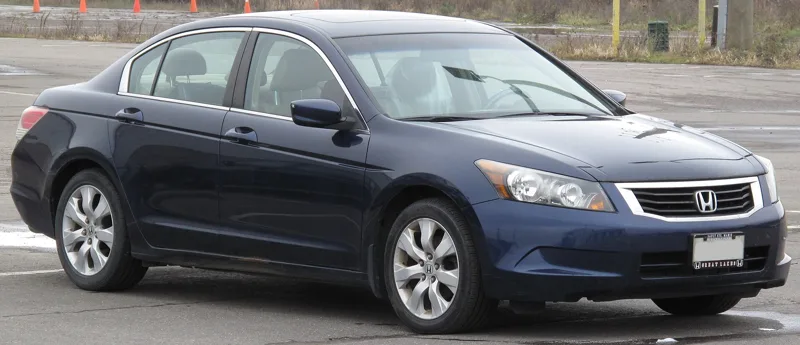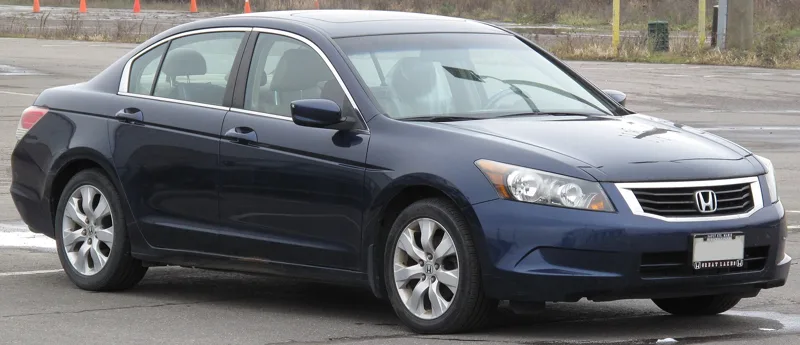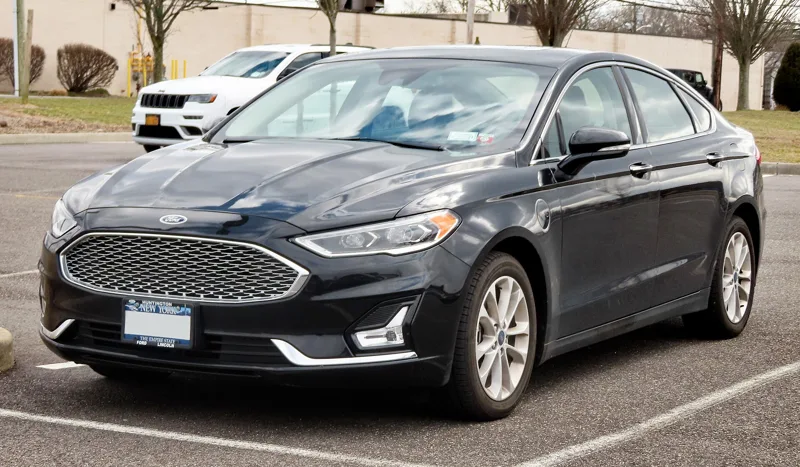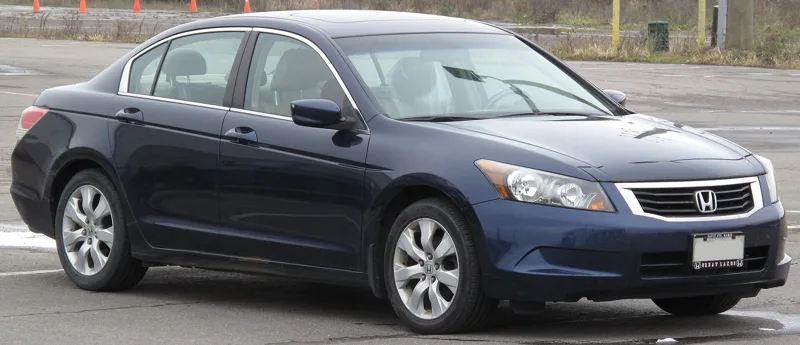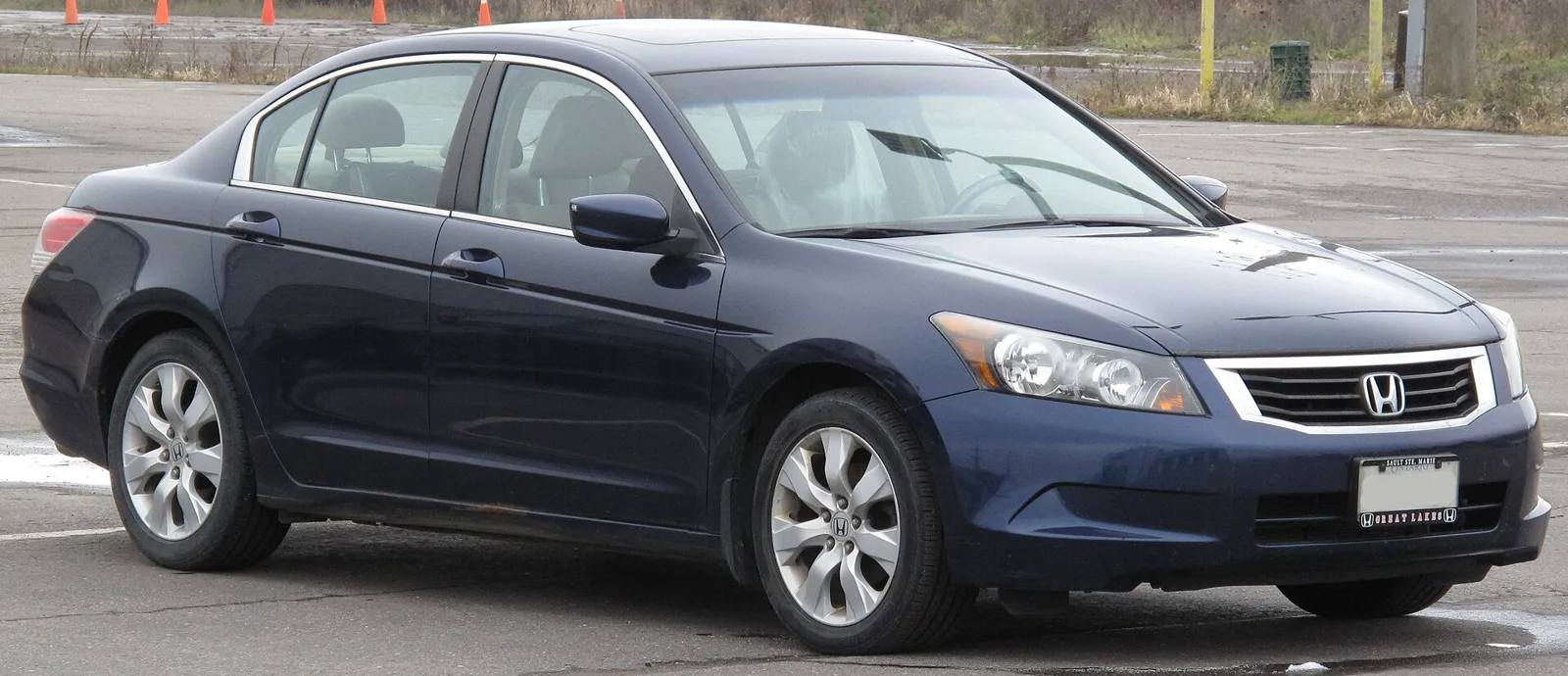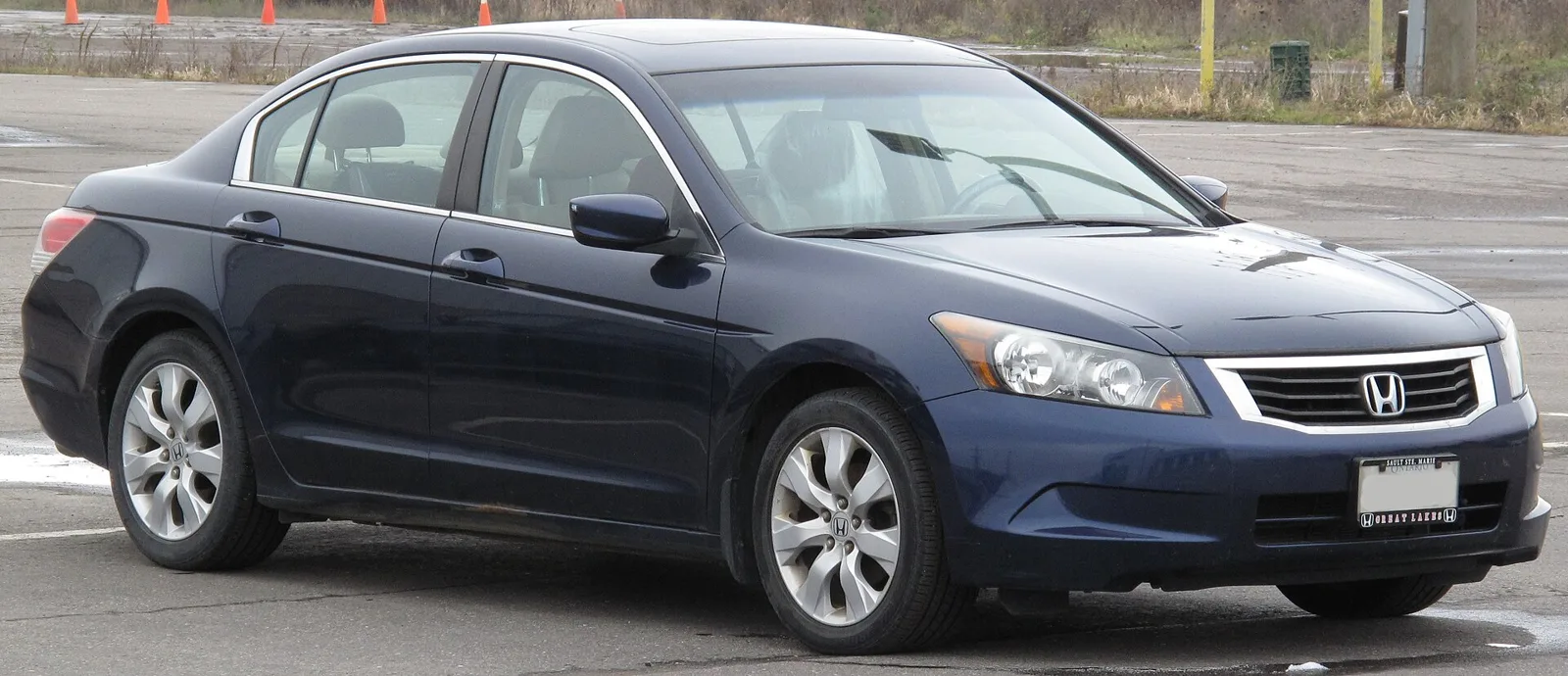
A 2008 Accord with a VCM V6 against a 2007 Camry that was the first in its line to offer a hybrid.
The Honda Accord eighth generation and the Toyota Camry XV40 were mid-size rivals that reached US showrooms about 18 months apart. The Camry offered a hybrid from its first year, while the Accord offered a 268 hp V6 with cylinder deactivation, and each car's IIHS and recall record differs.
The Honda Accord and the Toyota Camry were built to win the same mid-size buyers. Toyota's XV40 Camry reached North American showrooms in March 2006 as a 2007 model, and Honda's eighth-generation Accord followed in September 2007 for the 2008 model year. The Camry was the first in its line to offer a hybrid, while Honda had decided against one for this Accord.
Where did these two cars come from?
The Accord arrived in August 2007 and sold in parts of Asia and Australasia, where it also appeared as the Honda Inspire in Japan. The North American car shared its platform with Acura models, including the TL and the TSX, which was badge-engineered from the smaller Euro-spec Accord. Honda's coupe concept previewed the production two-door at the 2007 show in North America, and Honda revealed the production sedan and coupe on 21 August 2007.
The Camry XV40 replaced the XV30 and was the sixth generation of the Camry outside Japan. It was unveiled in January 2006 at the North American show. A badge-engineered Daihatsu Altis sold alongside it in Japan between 2006 and 2010, and the XV40 gave way to the XV50 in 2011. Its design was long in the making: development began in early 2002, the shape was fixed in September 2003 and locked in August 2004, a full 17 months before production began.
One mid-size sedan with a cylinder-switching V6, the other with a hybrid from its first year.
How big were the Accord and Camry?
Honda enlarged the Accord for 2008. It is now 4 inches (102 mm) longer and 3 inches (76 mm) wider than the outgoing car. The sedan's interior volume came to 120 cubic feet (3.4 m3), enough for the EPA to call it nearly an executive car. The coupe offered 105 cubic feet (3.0 m3) and sat in the mid-size class.
Toyota took a different route with the Camry. The wheelbase grew by 55 millimetres (2 in), the tracks widened and the body was stiffened, yet the overall length stayed the same as before. Toyota moved the windscreen base and rear glass outwards and redesigned the front seats to find extra room where it counted. Cargo space fell by 32 litres (1 cu ft) to 535 litres (19 cu ft).
Which engines did each car offer?
The Accord LX ran a 2.4 L i-VTEC inline-four with 177 hp, and the EX used a stronger version of the same engine with 190 hp. Five-speed manual and automatic gearboxes were offered on the four-cylinder. The V6 was a 3.5 L i-VTEC with 268 hp, mated to a five-speed automatic, and V6 coupes could be ordered with a six-speed close-ratio manual, which used a non-VCM version of the J35 engine.
The V6 is the Accord's most interesting engine. Its Variable Cylinder Management system shuts off two or three cylinders depending on the driving, which helps fuel economy in town, on hills and on the motorway. Without VCM the car loses 4 MPG on the highway, so the system earns its place. Pollution-sensitive buyers could also opt for PZEV versions, which were offered in 15 US states.
Toyota's entry-level Camry used a 2.4 L 2AZ-FE inline-four with front-wheel drive, a five-speed manual or automatic. The American line-up changed in January 2009, when the 2.5 L 2AR-FE replaced the 2.4. In some markets the 3.5 L 2GR-FE V6 was the top engine, paired only with a six-speed automatic. Japan also received an all-wheel-drive 2.4 with a four-speed automatic, which was the sole gearbox in that version.
How were the Accord trims arranged?
In Canada the 2008 to 2010 sedan range ran from the LX up through the EX, the EX-L, the EX-L with navigation and the V6 versions. The LX came with anti-lock brakes with brake assist, electronic stability control, air conditioning, keyless entry and cruise control, plus body-coloured door handles and mirrors. Stepping up to the EX added a power moonroof, a security system and 17-inch alloy wheels, while the EX-L brought leather upholstery and XM satellite radio.
The United States added an LX-P sedan with illuminated power window switches, an eight-way power driver's seat, a security alarm and 16-inch alloy wheels. Its LX-S coupe swapped the 177 hp engine for the 190 hp unit and fitted 17-inch wheels and a six-disc CD changer. V6 coupes came on 18-inch rims with a rear spoiler, and the 2011 update slotted a new SE trim between the LX-P and the EX.
Did the Camry really offer a hybrid?
It did, and from the start. The Camry Hybrid premiered at the January 2006 show alongside the petrol car. Its 2AZ-FXE engine ran an Atkinson cycle and paired with Toyota's Hybrid Synergy Drive, pushing 110 kW (148 hp) and 187 N m (138 lb-ft) of torque from the petrol side. An electric motor added 105 kW (141 hp) and 270 N m (199 lb-ft), and the combined system produced 140 kW (188 hp).
The battery is a nickel-metal hydride pack of about 70 kilograms (154 lb) stowed in the boot, and the hybrid hardware weighs roughly 135 kilograms (298 lb) in total. Toyota put the acceleration gain at an estimated 15 percent versus the non-hybrid 2.4 L automatic. Power steering, brakes and air conditioning all worked with the engine switched off, and the hybrid could run on electricity alone.
Production spread from the start. The hybrid was first built at the Tsutsumi plant in Japan, moved to Kentucky from October 2006 for North American models, and began local manufacture in Australia on 11 December 2009 at Altona, Victoria. By August 2009 more than 167,000 Camry Hybrids had been sold worldwide, and the US total reached 154,977 units by December that year.
Did the Accord ever get a hybrid?
No hybrid was offered in this generation. Honda felt its hybrid system worked better on smaller cars, so the Accord went without one. Its efficiency features were the VCM V6 and, from 2011, a reworked five-speed automatic.
The 2011 facelift, with new aerodynamics and that reworked transmission, reached 23 mpg in town and 34 mpg on the highway. The same update brought new front fascias, updated tail lamps and paddle shifters for the EX-L V6 coupe, along with USB connectivity for the coupe and the EX and EX-L sedans. Honda also made the rearview camera standard with navigation on the sedan.
What did the Camry sporty trim and Aurion add?
Toyota Australia developed the sporty variant, called the SE in North America and the Sportivo in Australasia. It has a black honeycomb grille, blacked-out fog lamps, a rear lip spoiler, a lower ride height and 17-inch wheels. Firmer shock absorbers, stiffer springs, thicker anti-roll bars and a V-shaped brace behind the rear seat changed how it handled. That brace stops the seat folding down, which leaves only a ski pass opening.
The Aurion is the other variant. Toyota officials in Japan call it the prestige Camry, and it was designed in Australia on the regular car's body. Its front and rear fascias are unique, but the doors, roof and wheelbase are shared, and the interior keeps the lower dashboard of the regular Camry. Toyota describes its styling as perfect imbalance, pairing concave and convex surfaces against horizontal headlamps.
How did reviewers rate them?
Car and Driver put the 2008 Accord EX first in its March 2008 test of four-cylinder mid-size sedans, which included the then newly updated Camry. Edmunds InsideLine also rated the LX-P sedan and EX-L V6 with navigation top against the Camry and the Altima, praising its all-round performance, build quality, handling and fuel economy.
MotorTrend was less impressed. Its complaint was weight, and it argued that the Accord felt less nimble than its predecessor. The Germanic-looking styling drew comparisons with the BMW 3 Series and 5 Series.
How did the two cars fare in crash testing?
The IIHS gave the Accord sedan Good in 13 of its 14 measured categories. Its side-impact structure earned Acceptable, which was enough to win a Top Safety Pick award, a result that few of its competitors managed. The award was lost after a roof strength test rated Acceptable, and 2012 models regained it with a Good roof rating.
The Camry sedan did better on paper. The IIHS rated it Good in both the frontal offset and side impact tests, with Good in all 14 measured categories and a Good roof strength result. Toyota had also strengthened the body with ultra high-tensile steel hot stamped into the roof, the A- and B-pillars and the rocker panels.
An IIHS study of vehicle fatalities put the Accord at the lowest fatality rate in the non-luxury mid-size sedan class. The Saab 9-3 alone had a lower rate among luxury mid-size sedans.
Were there recalls or lawsuits for the Accord?
There were two significant legal matters. In September 2009 a class action said the braking system on 2008 to 2009 Accords and certain 2010 models forced too much force onto the rear wheels, wearing the rear pads out every 15,000 to 20,000 miles. A preliminary settlement in April 2010 offered reimbursement for past brake repairs and up to $150 for redesigned pads, and the court gave final approval on July 29, 2010.
The airbag problem was harder to resolve. Some 2008 to 2009 Accords deployed their passenger-side curtain airbags unexpectedly, sometimes with the doors closing or the car moving, and at least 14 injuries were reported. Honda at first would not cover the repair under warranty. The NHTSA opened a preliminary investigation in August 2014 covering at least 335,195 2008 Accords, and Honda recalled 300,000 cars in October 2015 over a software fault in the airbag control unit.
Specifications side by side
| Feature | Honda Accord (eighth generation) | Toyota Camry (XV40) |
|---|---|---|
| Introduced | August 2007, 2008 model year | January 2006 show; US sales from March 2006 as a 2007 model |
| Production run | Not listed | January 2006 to October 2011 |
| Size change | 4 in (102 mm) longer and 3 in (76 mm) wider | Wheelbase 55 mm (2 in) longer; overall length unchanged |
| Interior space or cargo | Sedan 120 cu ft (3.4 m3); coupe 105 cu ft (3.0 m3) | Cargo 535 L (19 cu ft); hybrid 389 L (14 cu ft) |
| Base engine | 2.4 L i-VTEC inline-4, 177 hp (LX) | 2.4 L 2AZ-FE inline-4, 2.5 L 2AR-FE from 2009 (US) |
| V6 engine | 3.5 L i-VTEC V6 with VCM, 268 hp | 3.5 L 2GR-FE V6, six-speed automatic |
| Hybrid | Not offered | Combined 140 kW (188 hp) system |
| Fuel economy | 23 mpg (city), 34 mpg (hwy) after 2011 facelift | Not listed |
| Drag coefficient | Not listed | 0.28 (0.27 hybrid) |
| IIHS result | Good in 13 of 14 categories; Top Safety Pick | Good in all 14 categories |
| Recalls and settlements | Brake settlement 2010; airbag recall of 300,000 cars in 2015 | Not listed |
| Production | Marysville, Ohio (sole global source of the coupe) | Hybrid built in Kentucky for North America |
Which buyer suits which?
The Accord suits a buyer who wants a larger sedan body and a V6 that switches cylinders off to save fuel. Its coupe offers a two-door version of the same platform, and its IIHS record includes a Top Safety Pick award that was lost and then regained. A buyer who keeps that airbag recall in mind should check the fix history on any car considered.
The Camry suits a buyer who wants a hybrid from the start. Toyota offered the hybrid with a combined 140 kW (188 hp) output, a 0.27 drag figure and a battery that could run the car on electric power alone. Its IIHS Good ratings across all 14 categories were the cleanest result in this pairing.
On the evidence here, neither car takes a clear overall lead. The Accord brings a V6 with cylinder deactivation and a sedan body that the EPA treats as nearly an executive car, while the Camry brings a hybrid and a clean sweep of IIHS Good ratings. A buyer who puts efficiency first will look at the Camry, and one who puts room and V6 power first will look at the Accord.