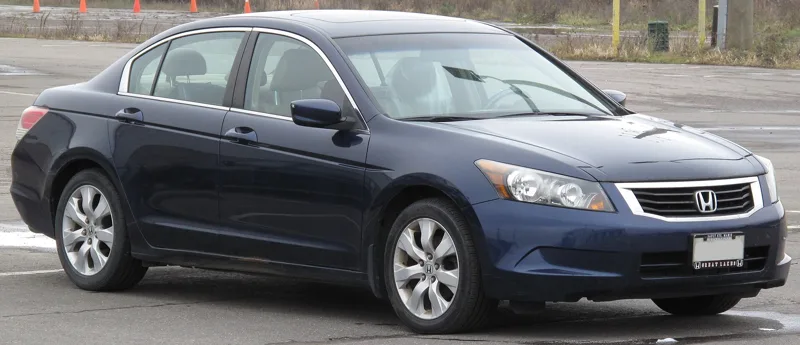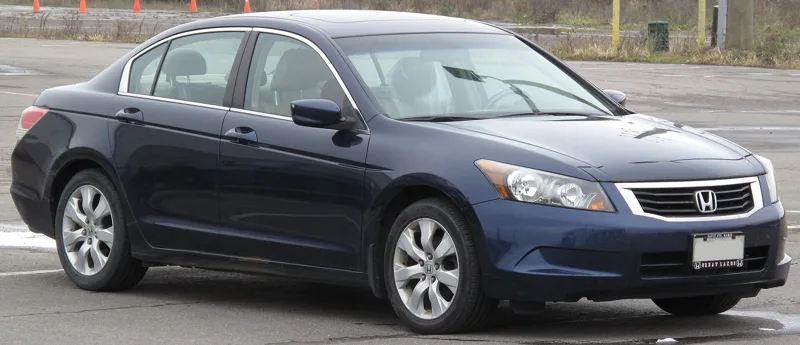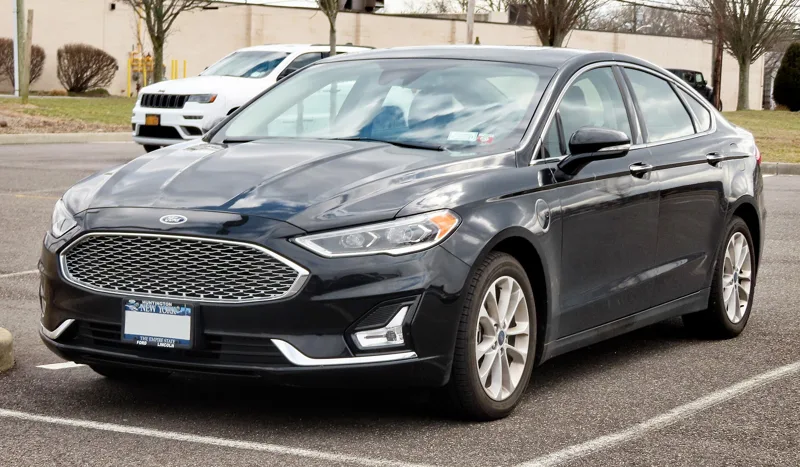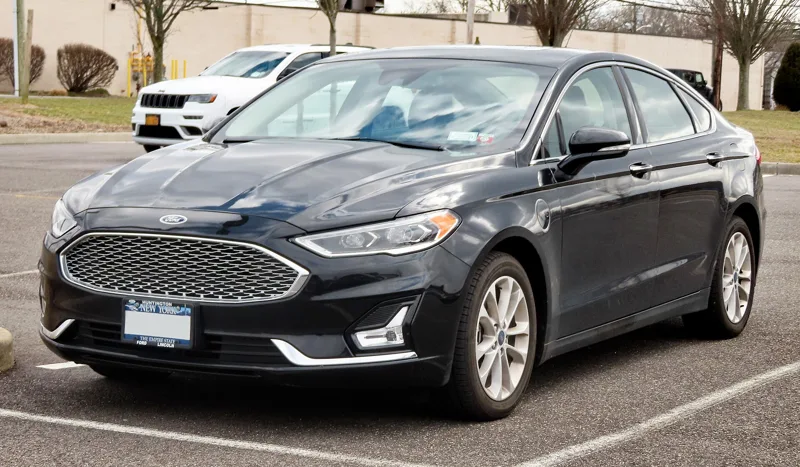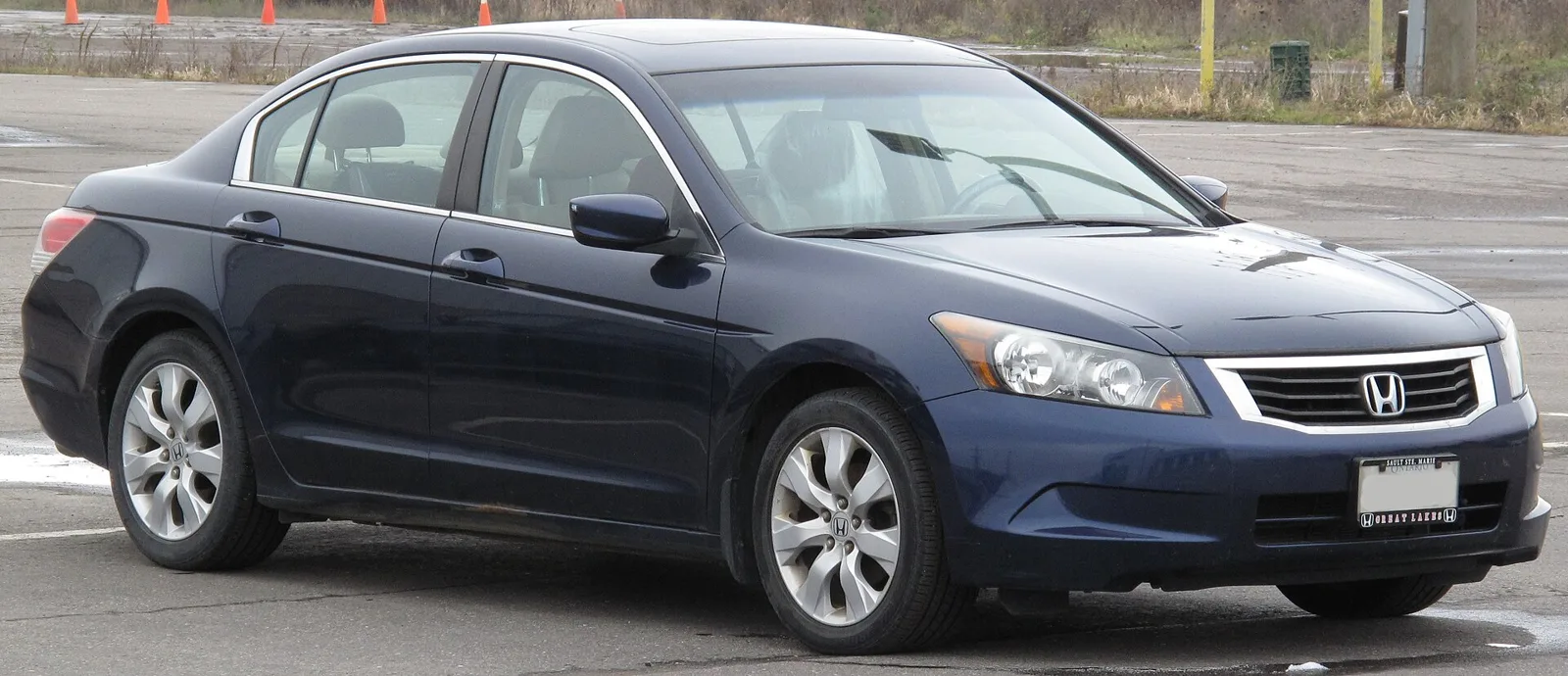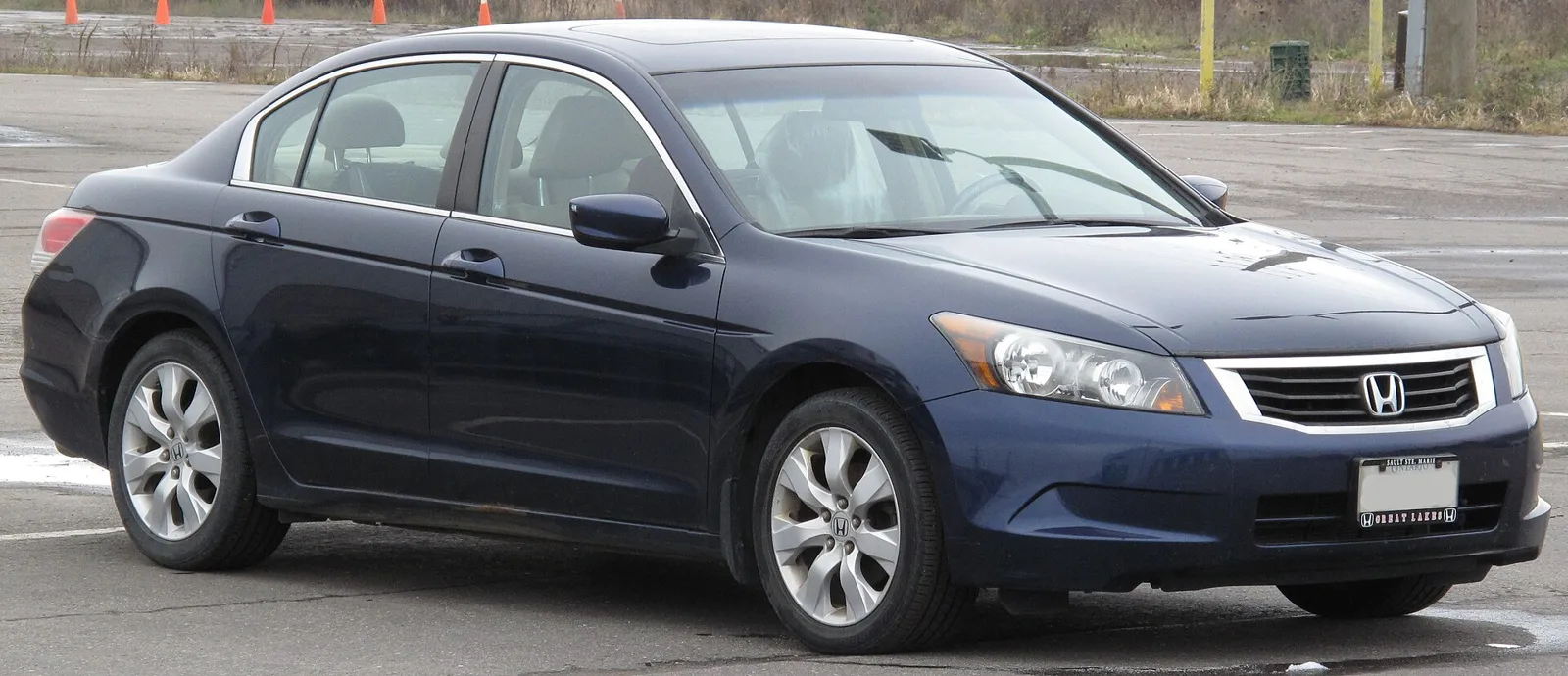
Nissan's Altima grew from a Bluebird-based sedan into a V6 family car, while Honda's 2008 Accord went the other way with a cylinder-switching V6.
The Honda Accord eighth generation arrived in 2007 with a 268 hp V6 and cylinder deactivation, while the Nissan Altima, which began in 1992 as a Bluebird-based sedan, offered a 250 hp V6 and a 260 hp SE-R from 2005. The two cars competed for mid-size buyers, with the Accord holding a stronger IIHS record.
The Honda Accord and the Nissan Altima were both mid-size sedans sold in North America, and they fought for many of the same family buyers. The Altima began in 1992 as a US-built car descended from the Bluebird line, and it grew into a V6 family sedan. The eighth-generation Accord arrived in August 2007 with a cylinder-switching V6. Comparing the two shows how Nissan's offering was built to match Honda's on size and power.
Where did the Altima come from?
Nissan's Altima was an offshoot of the Bluebird line, which began in 1955. It was larger, more powerful and more luxurious than the Sentra, though it sat below the Maxima. It replaced the Stanza, a Bluebird clone, in 1992, and the first Altima came off the line in June 1992 as a 1993 model. The earliest examples were the export version of the Bluebird SSS, with styling from Nissan's California studio.
The name had earlier roots. Altima was first a top trim level of the Nissan Leopard in Japan in 1986, and it also marked a mid-size Laurel in Central America and the Caribbean before 1992. Early models carried a Stanza Altima badge in their owner's manuals, which tells you how closely the new car was tied to its predecessor.
A Bluebird-descended Altima that grew into a V6 family sedan, set against a 2008 Accord with a cylinder-switching V6.
What did the first Altima offer?
Every first-generation Altima used Nissan's 150 hp (112 kW) KA24DE straight-four, paired with a five-speed manual or a four-speed automatic. Nissan quoted 9.4 seconds from 0 to 60 mph with the automatic and 8.2 seconds with the manual. Struts sat at both ends with stabilizer bars, and all wheels were 15 inches, which gave the car a sporty, firm feel.
The trim ladder was the stripped XE, the mid-line GXE, the sporty SE and the luxury GLE. The GLE offered a head-up display for 1993 and 1994 only, showing speed and warning lights on a mirrored patch on the windscreen. The SE had a stiffer suspension, fog lights, four-wheel disc brakes and sport seats, with a sunroof standard in 1994 and 1995.
Airbags came in steps. The 1993 models had a driver's airbag and automatic shoulder belts, and the 1994 cars gained a flush-mounted passenger airbag. A 1995.5 model from March 3, 1995 used a raised-mount passenger airbag with a new inflator. The 1997.5 cars added crash protection for the 1997 side-impact standards.
How did the second and third generations change?
The second generation, chassis L30, was built for American and Canadian markets only. Its interior volume was 108 cubic feet (3.1 m3), which was distributed better and gave a slightly roomier feel. Many reviewers were less impressed by its plainer styling and cheaper interior, and some felt the accelerator was too lightly sprung.
The 2000 model year brought a power increase from 150 to 160 hp and a 0 to 60 mph time that improved from 8.7 to 8.4 seconds. The SE and GLE moved to 16-inch wheels, and the Monroe struts were tuned for acceleration-sensitive valving. Side airbags became standard on the GLE and optional on the GXE and SE.
The third-generation Altima, chassis L31, debuted in 2001 for the 2002 model year. It was the first mass-market car built on Nissan's FF-L platform, which was unique to North America. Interior volume rose to 118.8 cubic feet (3.36 m3), and the car carried a 20-gallon (76 L) fuel tank, the largest in its class. Its rear suspension became multi-link, it had four-wheel discs, and it was the first Altima to offer a V6.
How did the Altima V6 perform?
In 2003 and 2004 the 3.5 SE rose from 240 hp (179 kW) to 245 hp (183 kW), with torque of 246 lb-ft (334 N m) unchanged. The 2.5 L four took the sedan from 0 to 60 mph in 8.6 seconds. The V6 manual models of 2002 to 2004 were the lightest V6 cars in the line.
The 2005 facelift added a new grille, all-red tail lights, a redesigned interior and an optional DVD navigation system. The V6 was then rated at 250 hp (186 kW) and 249 lb-ft (338 N m), and it hit 60 mph in 6.2 seconds with the five-speed automatic. The new SE-R used a 260 hp (194 kW) V6 with 251 lb-ft (340 N m), a six-speed manual, upgraded brakes, 18-inch wheels and a firmer suspension than the 3.5 SE.
Car and Driver measured the SE-R at 6.1 seconds from 0 to 60 mph. MotorWeek recorded 5.8 seconds for an SE-R with the automatic, which was among the quickest runs noted for a family sedan of the time.
How did the Altima and Accord compete in the mid-size market?
The Altima was well received by the press. Critics praised its style, its extra space and its handling, and it was one of the more powerful family sedans available. Because it offered much of the Maxima's performance and space at a lower price, it cut into Maxima sales, and it made Nissan competitive in the mid-size segment for the first time.
The Accord was in the same magazine world. In its March 2008 issue, Car and Driver put the 2008 Accord EX first in a test of four-cylinder mid-size sedans, and the Altima was one of the cars in that group. Edmunds InsideLine also placed the Accord's LX-P and EX-L V6 Navi first against the Altima, praising its all-round performance and build quality.
How did the Altima fit into Nissan's range?
The Altima sat between the Sentra and the Maxima, and it was the car that let Nissan compete in the mid-size market with a product of its own. Outside North America, Nissan sold a related mid-size sedan called the Teana, which sat between the Altima and the Maxima in size. The Teana became a rebadged version of the fifth-generation Altima in 2013.
Canton, Mississippi began building the Altima in June 2004, alongside the Smyrna, Tennessee plant that had been its only home until then, to meet high demand.
What were the criticisms of each car?
The Altima's main criticisms centred on the 2002 to 2004 interior, which used hard and brittle plastics. Some reviewers also found the steering too light and the turning circle too wide because of the longer wheelbase. The 2002 2.5 L cars drew reports of excessive oil consumption, which in some cases led to engine failure, and most of those reports came from cars older than eight years and beyond 100,000 miles.
The Accord had its own issues. MotorTrend criticised the car for being heavy and less nimble than its predecessor. Honda faced a brake wear class action in 2009, which was settled in 2010, and a larger airbag recall of 300,000 cars in 2015 over a software fault in the airbag control unit. The Accord's IIHS record was stronger, with Good in 13 of 14 categories and a Top Safety Pick.
Which Altima generation is compared here?
This comparison uses the third-generation Altima, the car launched for the 2002 model year and sold through its 2005 facelift. The 2005 update and the SE-R gave it a sportier identity, while the V6 supplied the power that buyers expected in a family sedan.
What was the Altima class action about?
In April 2015 a class action was filed in federal court in Illinois on behalf of owners of the 2002 to 2006 Altima. It alleged defective floorboards on the driver and passenger sides, which led to premature rust that generally happened after the warranty had expired. The case was dismissed by a judge in January 2016.
The rust, as the car maker's critics saw it, came from front mudguards that were not high enough and from the lack of a stone guard on the metal plates under the car. Those details explain why the problem was felt most by owners whose cars spent years on rough roads.
Specifications side by side
| Feature | Honda Accord (eighth generation) | Nissan Altima (third generation) |
|---|---|---|
| Introduced | August 2007, 2008 model year | 2001 debut, 2002 model year |
| Platform | Honda mid-size platform | Nissan FF-L, unique to North America |
| Four-cylinder | 2.4 L i-VTEC inline-4, 177 hp (LX), 190 hp (EX) | 2.5 L four, accelerating to 60 mph in 8.6 seconds |
| V6 | 3.5 L i-VTEC with VCM, 268 hp | 3.5 L V6, 245 hp (SE, 2003 to 2004); 250 hp from 2005 |
| Sporty variant | V6 coupe, with a six-speed manual option | SE-R, 260 hp (194 kW), six-speed manual |
| Interior volume | Sedan 120 cu ft (3.4 m3) | 118.8 cu ft (3.36 m3) |
| Fuel tank | Not listed | 20 US gal (76 L), largest in class |
| Rear suspension | Not listed | Multi-link |
| 0 to 60 mph | Not listed | 6.2 s V6 automatic (2005); 6.1 s SE-R (Car and Driver) |
| Safety ratings | IIHS Good in 13 of 14; Top Safety Pick | Not listed |
| Recalls and issues | Brake settlement 2010; airbag recall 2015 | Oil consumption reports on 2002 to 2003 cars; 2015 class action dismissed in 2016 |
| Assembly | Marysville, Ohio; Lincoln, Alabama (V6 sedan) | Smyrna, Tennessee until June 2004; then Canton, Mississippi |
What did the Accord's 2011 update change?
Both the Accord sedan and coupe received a facelift for 2011, with new front fascias and updated tail lamps. Inside, the EX-L V6 coupe gained steering-wheel paddle shifters, and USB connectivity was added for the coupe and the EX and EX-L sedans. A rearview camera became standard with the navigation system on the sedan.
New aerodynamics and a reworked five-speed automatic helped the car reach 23 mpg in town and 34 mpg on the highway. In Canada an SE trim replaced the LX as the entry-level car, while in the United States the SE slotted between the LX-P and the EX, with leather upholstery.
The 2008 American line-up began with the LX, which came with a 177 hp four and standard anti-lock brakes with brake assist, stability control and cruise control. The EX added a 190 hp engine, a power moonroof and 17-inch alloy wheels, while the LX-P sedan brought illuminated power window switches and an eight-way power driver seat. The V6 produced 268 hp and used Variable Cylinder Management.
Which mid-size sedan suits which buyer?
The Accord suits a buyer who wants a car with a strong IIHS record, a nearly executive interior and a V6 that switches off cylinders to save fuel. Its coupe offers a sporty alternative.
The Altima suits a buyer who wants a larger, more powerful sedan with a choice of a V6 or a sporty SE-R. Its 2005 SE-R offered quick acceleration and a six-speed manual, and it was a credible rival to more expensive cars.
On the evidence here, neither sedan takes a clear overall lead. The Accord has the safety record and the cylinder-switching V6, while the Altima offers the SE-R and its six-speed manual. A buyer who puts safety first will look at the Accord, and one who wants raw V6 acceleration will look at the Altima.