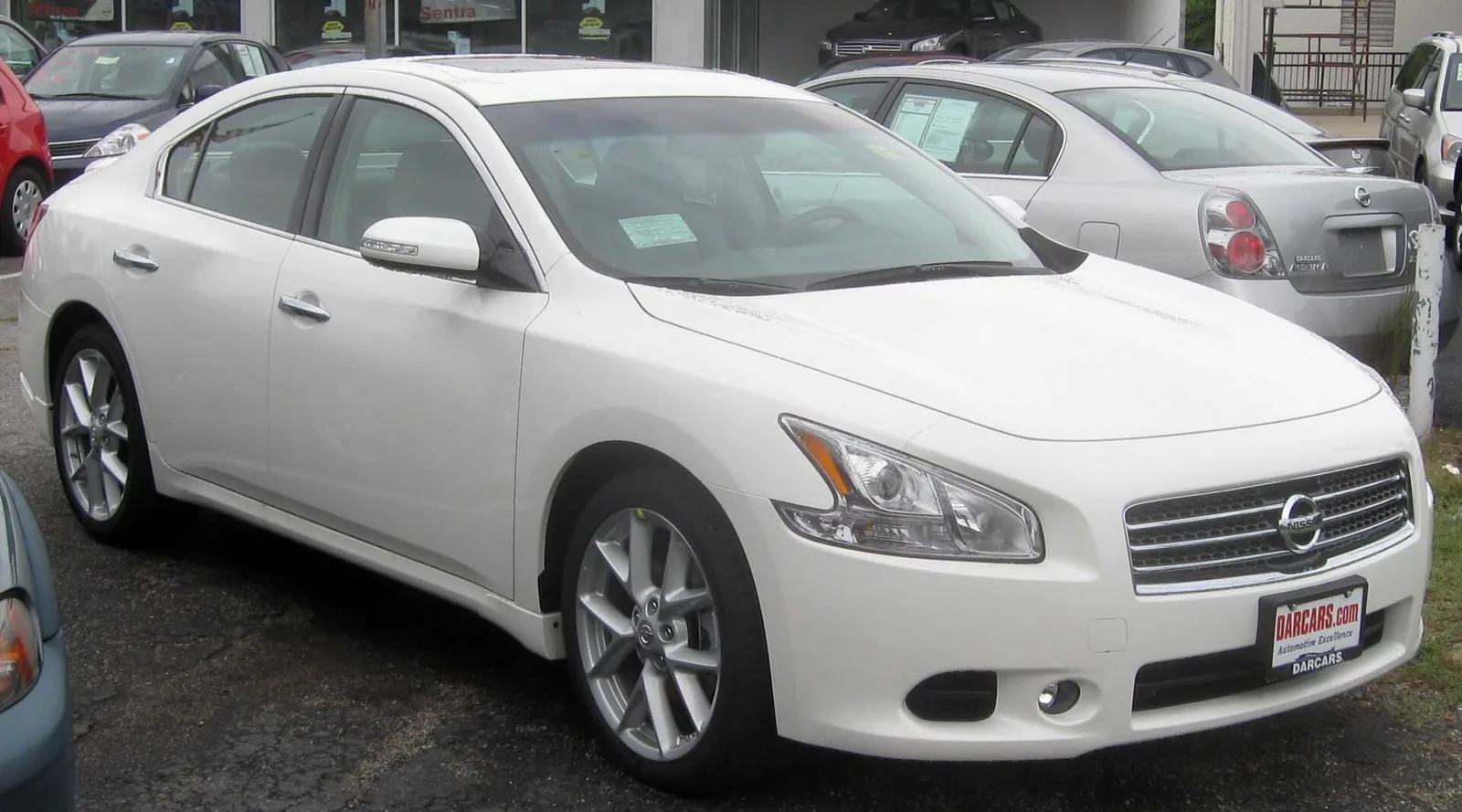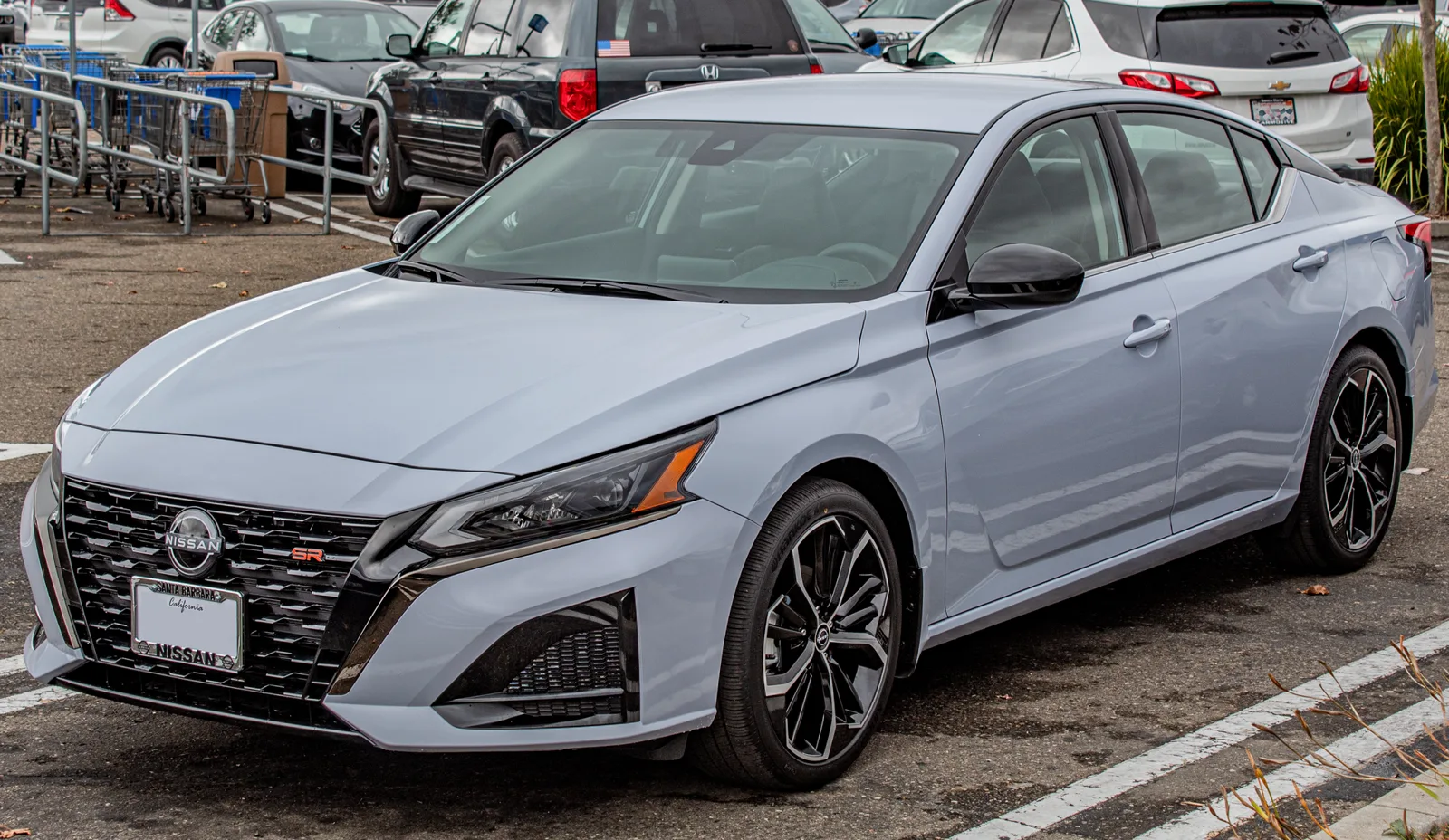
Born in 1992 as the Bluebird's American successor, the Altima turned Nissan's fortunes around in the early 2000s and ends its run with the 2027 model year.
The Nissan Altima is a mid-size sedan that Nissan has built since 1992. It was the Bluebird's American successor and grew through six generations, with four-cylinder, V6 and turbo engines. Nissan has confirmed a 2027 model year before the nameplate ends.
The Nissan Altima is a mid-size car that Nissan has built since 1992, when it replaced the Stanza as the American-built model in the range. Across six generations it has moved from a Bluebird-derived compact sedan to a larger, more upmarket car. It was the Altima's third generation that turned the nameplate into a major success, and the model is set to end with the 2027 model year.
What is the Nissan Altima?
The Altima sits above the Nissan Sentra in size and power, but below the Maxima. The first four generations were built only in the United States and sold in North and South America, the Middle East and Australia. Other markets received the related Nissan Teana, which sat between the Altima and Maxima in size.
For most of its life the car has been a front-wheel-drive four-door sedan with a choice of four-cylinder and V6 engines. A coupe was offered between 2007 and 2013, and a hybrid briefly joined the range. In its later years the model moved to turbo four-cylinder power and a broad range of driver-assistance equipment.
A Bluebird-derived sedan that became Nissan's most profitable model and then ran into the end of its own story.
Where did the Altima come from?
The Altima is an offshoot of the Nissan Bluebird line, which began in 1955. Its name was first applied in 1986 to a top trim of the Nissan Leopard in Japan, and then to the Laurel Altima sold in Central America and the Caribbean. The first US-built car went into production in June 1992 as a 1993 model.
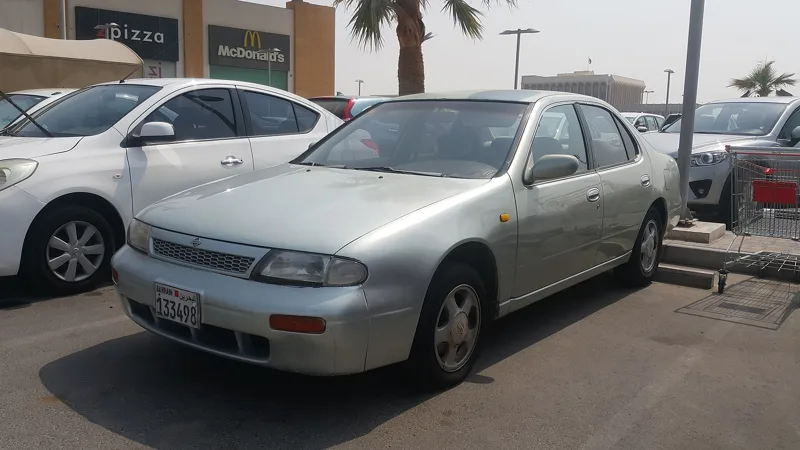
The original Altima was the export version of the Bluebird SSS, with styling from Nissan's California design group in 1989. Early cars carried the official name Stanza Altima, and some 1993 models still show a Stanza sticker near the trunk emblem. The car replaced the Stanza, a Bluebird clone, and it was one of the bigger compact cars of its era.
How did the first-generation Altima perform?
Every first-generation Altima used Nissan's 150 hp (112 kW) KA24DE straight-four, mated to a five-speed manual or four-speed automatic. Nissan's figures put the automatic at 9.4 seconds to 60 mph (100 km/h) and the manual at 8.2 seconds. The suspension used struts with stabilizer bars at both ends and was praised for sporty handling, although the ride was firm.
Trims ran from the stripped XE to the mid-line GXE, the sporty SE and the luxury GLE. The GLE offered a digital head-up display for 1993 and 1994 only, showing speed, turn signals and warnings on a patch of the windscreen. The SE brought sport seats, fog lights and four-wheel disc brakes, and it could be ordered with a sunroof in 1994 and 1995.
Equipment shifted through the 1990s. The digital in-dash clock became optional in 1995, and in 1997 the GLE gave up its premium extras in exchange for standard leather. Most final-year cars were sold as 1997.5 models with the extra crash protection needed for the 1997 side-impact standard.
What changed in the second and third generations?
The second generation, chassis L30, arrived in 1997 as an American and Canadian model. It had a new interior with a revised glovebox and cup holders, a folding rear seat and depowered airbags. Power rose from 150 to 160 hp with four-way sparks in 1999 for the 2000 model year, and the 0-60 mph time fell from 8.7 to 8.4 seconds.
The third generation, chassis L31, debuted in 2001 for the 2002 model year. It marked Nissan's first mass-market car on the FF-L platform, a North American layout with no Japanese twin. Interior volume grew to 118.8 cubic feet (3.36 m3), and the car carried the biggest fuel tank in its class at 20 US gal (76 L; 17 imp gal).
The third generation also added a multi-link rear suspension, four-wheel disc brakes and the first V6 option. A 2005 facelift brought a new grille, all-red tail lights and an optional DVD-based navigation system, and the V6 rose to 250 hp (186 kW). The SE-R produced 260 hp (194 kW) and 251 lb ft (340 Nm) with a six-speed manual.
Why was the third-generation Altima a turning point?
The third-generation car was the first Altima to achieve considerable success. Critics praised its new style and extra space, and it was one of the most powerful and best-handling family sedans on sale. Its performance and space matched the upmarket Maxima at a lower price, which cut into Maxima sales and made Nissan competitive in the mid-size segment for the first time.
Nissan's wider fortunes improved with the car. The Altima was credited with turning the company from debt-ridden to one of the industry's most profitable. Criticism focused on brittle plastics in the 2002 to 2004 interiors, light and abrupt steering, and a wide turning circle caused by the longer wheelbase.
What did the fourth-generation Altima bring?
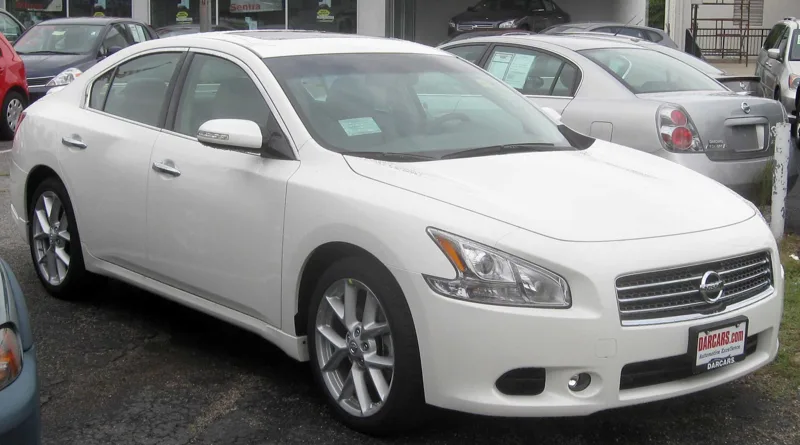
The fourth generation, chassis L32A, was announced at the 2006 New York International Auto Show. It was the first American-market Nissan to ride on the smaller D platform, which brought a fresh front end and a better rear suspension. The wheelbase was 1-inch (25 mm) shorter, but the interior space was mostly unchanged.
Engines were revised versions of the previous units. The VQ35DE 3.5 L V6 made 270 hp (201 kW) and 258 lb ft (350 Nm), and the QR25DE 2.5 L four made 175 hp (130 kW) and 180 lb ft (244 Nm). A six-speed manual was standard, with a continuously variable transmission as the option. The car also brought Nissan's Intelligent Key, Bluetooth and a parking camera.
The fourth generation was also the first to fix the floorboard problem of the third generation. Nissan changed the floor design, and the rust issue did not recur from 2007 onward. A 2010 facelift added a new front fascia, new wheels and interior materials, and made electronic stability control standard across the range.
Was there a hybrid Altima?
Yes, and it was Nissan's first hybrid car. It went on sale in February 2007 and was discontinued for the 2011 model year. In the United States it was sold only in 10 states that followed California's energy rules, and it was also available in Canada. Its drive system was licensed from Toyota, and Nissan said later hybrids would use its own technology.
The hybrid paired a 2.5 L QR25DE producing 158 hp (118 kW) and 162 lb ft (220 Nm). An electric motor added 40 horsepower, for a combined 198 hp (148 kW). Its fuel economy was rated at 6.7 L/100 km (42 mpg-imp; 35 mpg-US) in the city and 7.1 L/100 km (40 mpg-imp; 33 mpg-US) on the highway. Poor sales ended the programme after 2011.
What did the fifth-generation Altima change?
The fifth generation, chassis L33, debuted at the 2012 New York International Auto Show for the 2013 model year. Its exterior took cues from the Ellure concept, and the car was described as the lightest midsize sedan in its class despite being larger than the car it replaced, thanks to high-strength steel and aluminium in the trunk, hood and roof.
The 2.5 L QR25DE made 182 hp (136 kW) and 180 lb ft (244 Nm), while the 3.5-litre V6 carried on unchanged. For the first time the Altima dropped the manual transmission. The sedan also gained NASA-inspired Zero Gravity front seats as standard equipment in the 2013 model year.
The Altima was sold as the Teana in Japan, China and much of Asia, and a 2016 facelift gave the US car new bumpers, headlamps, tail lamps and a new SR trim. The 2.5 S became the base trim in 2018.
How did the sixth-generation Altima change the engine line-up?
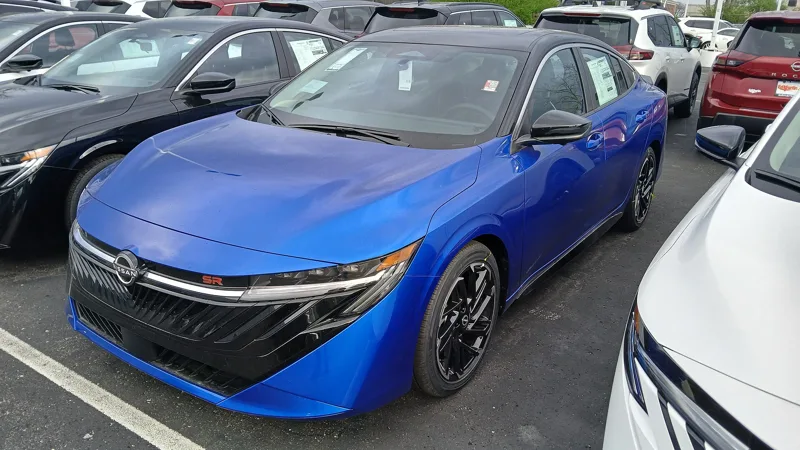
The sixth generation, chassis L34, was unveiled in New York in 2018. Its base engine was a 2.5 L naturally aspirated direct-injected four rated at 188 hp (191 PS; 140 kW), with all-wheel drive available at 182 hp (136 kW). Nissan also offered a 2.0 L variable compression turbo four of 248 hp (251 PS; 185 kW), described as the world's first production-ready engine of its kind.
The car arrived in US showrooms in October 2018, with production at Smyrna from August 24, 2018, and at Canton from September 27, 2018. It came with Pro-Pilot Assist, an around-view monitor and automatic emergency braking. The 2022 refresh added a new front fascia and a 12.3-inch touchscreen, standard on the SL and SR VC-Turbo, and the 2.0-litre engine was dropped after the 2024 model year.
Is the Altima still on sale?
Reports in 2023 said the Altima would end after the 2025 model year, but Nissan revealed pricing for a 2026 Altima in the United States in December 2025. For 2026 Nissan removed the S and SL, so only the SV and SR remained, and all-wheel drive stayed as an option. Canada lost the car for that year.
In July 2026, after wide media coverage of its discontinuation, Nissan confirmed the Altima would see a 2027 model year. The car therefore continues in the American market for at least one more year.
What problems and recalls affected the Altima?
The 2002 2.5-litre cars had major oil consumption problems that could lead to serious engine failure, mostly on cars over 100,000 miles and more than eight years old. A class action covering 2002 to 2006 model years over floorboard rust was dismissed in January 2016, though the rust itself was extensive and often arose out of warranty.
On December 13, 2023, the NHTSA opened an investigation into complaints about engine failure in the KR15DDT and KR20DDET engines, the latter an option on the L34 Altima. The complaints described loss of power, knocking and metal debris in the oil pan. Nissan said it was addressing the failures by changing its manufacturing process.
How did the Altima race?
In 2012 Kelly Racing announced four custom Altimas for the 2013 International V8 Supercars Championship. The car was the first homologated for the new V8 Supercar regulations, and it was Nissan's first appearance in the series since 1992. Kelly Racing has taken three wins since the switch, through James Moffat (2013), Michael Caruso (2016) and Rick Kelly (2018).
At the 2014 Bathurst 1000, Moffat and Taz Douglas reached the podium. Kelly Racing's last Altima season in the Supercars Championship was 2019. The cars then moved into the Dunlop Super2 and Super3 series, where Bryce Fullwood won the 2019 Super2 drivers title and Thomas Randle won it in 2020.
Nissan Altima specifications at a glance
| Specification | Detail |
|---|---|
| Introduced | June 1992 production, sold as a 1993 model |
| First-generation engine | KA24DE straight-four, 150 hp (112 kW) |
| First-generation 0-60 mph | 9.4 seconds (automatic), 8.2 seconds (manual) |
| Third-generation interior volume | 118.8 cubic feet (3.36 m3) |
| Third-generation fuel tank | 20 US gal (76 L; 17 imp gal) |
| Fourth-generation V6 | VQ35DE 3.5 L, 270 hp (201 kW), 258 lb ft (350 Nm) |
| Fourth-generation four | QR25DE 2.5 L, 175 hp (130 kW), 180 lb ft (244 Nm) |
| Hybrid system | 2.5 L QR25DE, 198 hp (148 kW) combined |
| Fifth-generation four | QR25DE 2.5 L, 182 hp (136 kW), 180 lb ft (244 Nm) |
| Sixth-generation base engine | 2.5 L naturally aspirated, 188 hp (191 PS; 140 kW) |
| Sixth-generation turbo | 2.0 L VC-Turbo, 248 hp (251 PS; 185 kW) |
| Final model year | 2027, confirmed in July 2026 |