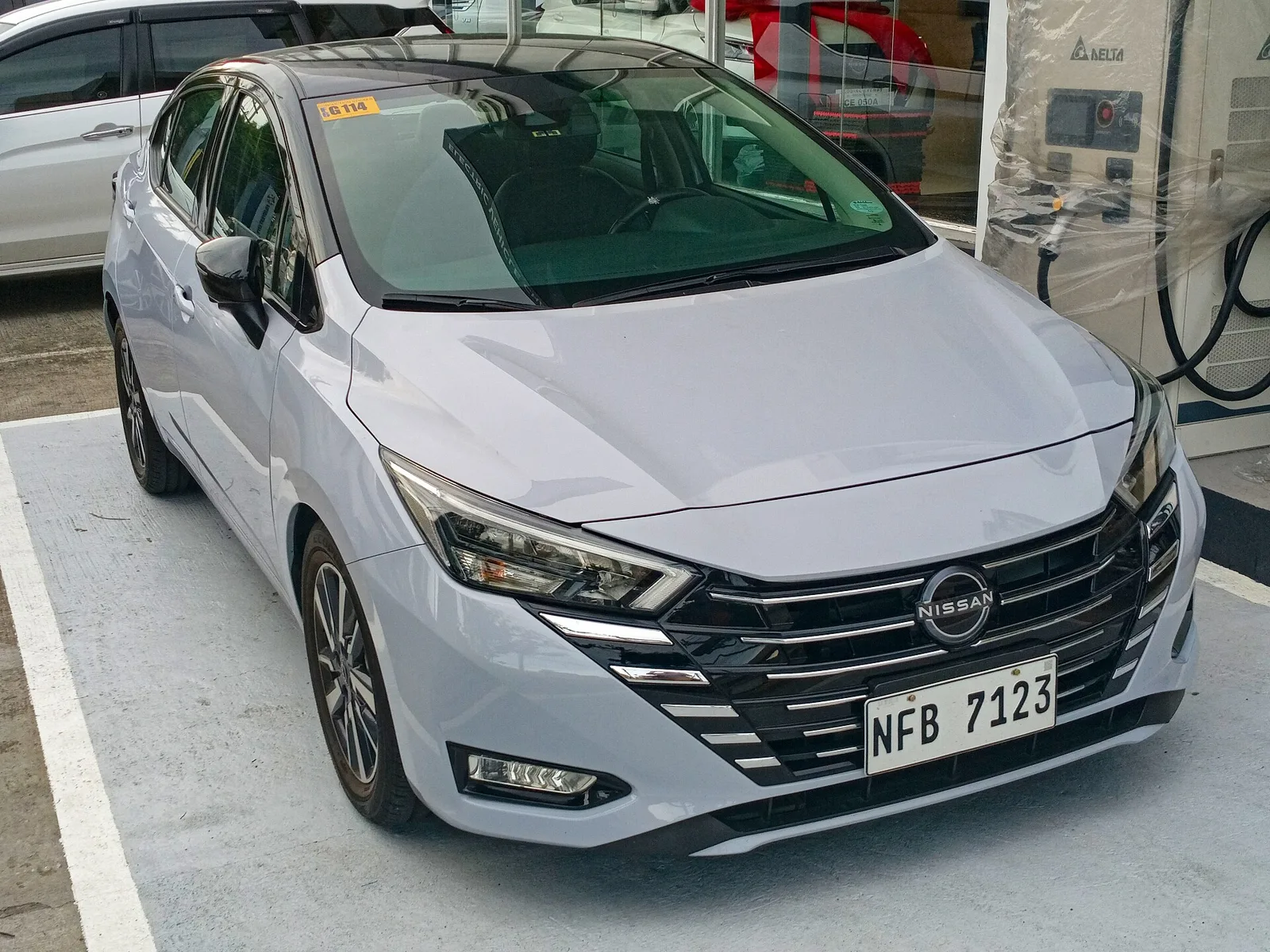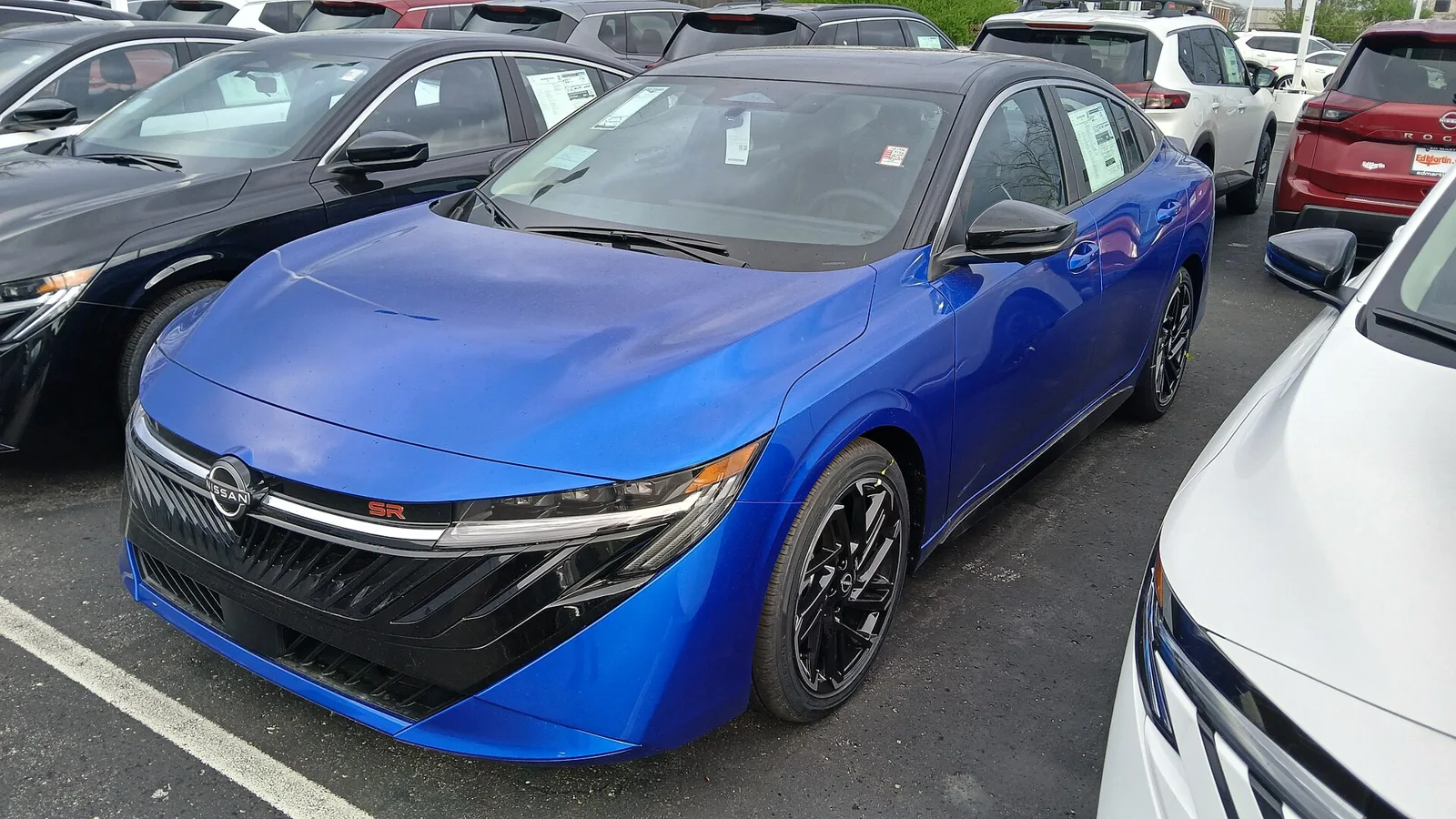
A front-drive compact that began as a subcompact in 1982, became the Tsuru in Mexico, carried SE-R performance variants and reached a ninth generation in 2026.
Nissan's compact Sentra has been built since 1982 through nine generations. Its first version was front-wheel drive, the Mexican-built version was called the Tsuru for decades, SE-R performance variants were offered, and the ninth generation arrived as a 2026 model.
The Nissan Sentra is a compact car that Nissan has built since 1982, across nine generations and several markets. It began as a subcompact with front-wheel drive, moved up into the compact class in 2000, and was sold in Mexico for decades as the Tsuru. Its nameplate is not used in Japan.
This guide covers the name, the first-generation car and its economy record, the Mexican Tsuru, the second and third generations, the SE-R and Spec V performance models, the fifth and sixth generations, the front-drive seventh generation, the eighth and ninth generations, the markets outside North America and the specification figures.
Where did the Nissan Sentra name come from?
The Sentra name was created for Nissan by Ira Bachrach of NameLab. Bachrach said the aim was to show that a small car could still feel safe, and he pointed to the words central and sentry, which suggest protection. The Sentra is a series of cars that Nissan has made since 1982.
Until 2006 the Sentra was a rebadged version of the Japanese Nissan Sunny for markets outside Japan. From the 2013 model year it became a rebadged Sylphy for those markets. Several Latin American countries sold their own versions of the Sunny under the Sentra name, and the nameplate is not used in Japan.
A front-drive compact from 1982 that became a Mexican national car as the Tsuru and reached its ninth generation in 2026.
How did the first-generation Sentra work?
The first generation, codenamed B11, reached the United States in May 1982 as a direct replacement for the Datsun 310. It was first imported from Zama in Japan, and it came as a two-door sedan, four-door sedan, five-door wagon or three-door hatchback coupe. It was the second Nissan-badged car to carry a model name rather than a number, after the Stanza.
Previous Sunny models had used a front-engine, rear-wheel-drive layout, but the B11 was the first Sentra with front-engine, front-wheel drive. Its 1.5-litre four-cylinder SOHC engine made 67 hp (50 kW) and a torque peak of 85 lb-ft (115 Nm) at 3,200 rpm. The gearbox choice was a four-speed or five-speed manual, or a three-speed automatic.
At launch the Environmental Protection Agency rated the Sentra MPG at 43 mpg-US in the city and 58 mpg-US on the highway, or 48 mpg-US combined, which was the best figure for a petrol car sold at that time. A curb weight of 1,875 pounds helped, and the car also used a three-way exhaust catalyst and electronic fuel metering.
Trim levels were Standard, Deluxe and XE, priced from US$4,949 for the base two-door sedan up to US$6,899 for the XE hatchback coupe. In its first year the Sentra was the best-selling import in the US, and it sold 209,889 units in 1983, which put it eighth among passenger cars.
How safe was the early Sentra?
The B11 was ranked seventh safest in a 1983 assessment by the Center for Auto Safety, which drew on NHTSA frontal crash tests at 35 mph. The next generation was less impressive at first. The 1987 Sentra earned a one-star driver rating in the NHTSA 35 mph full frontal test, the lowest score possible.
Nissan corrected the problem for the 1988 model year, and those cars earned a three-star rating. Later cars gained electrically retracted front shoulder belts in 1990, and three-point harnesses for rear outboard passengers.
Safety was also a sore point in Latin America. The most basic Tsuru without airbags scored zero stars for adult occupants and zero for infants in Latin NCAP tests in 2013. In October 2016 a 2015 Tsuru was tested against a 2016 Versa in a 50 percent overlap test with the IIHS and partners, and the older car's cabin was badly compromised.
Why was the Sentra called the Tsuru in Mexico?
In 1984 the Sentra entered production at Nissan Mexicana's Cuernavaca plant as the Nissan Tsuru, and 210,565 of the first Tsurus were built in Mexico before the next generation replaced it in 1987. The name is Japanese for crane.
The Mexican car became a national fixture. The Tsuru was the most popular car in Mexico from 1997 until 2011, when the Mexican-made Volkswagen Jetta overtook it. Its low price, fuel economy and easy servicing made it popular with taxi drivers and low-income families across Mexico, South America, Central America and the Caribbean.
Production stopped in May 2017 because stricter safety rules from 2019 would have required anti-lock brakes and airbags, which the Tsuru lacked. A commemorative edition of 1,000 cars went on sale in March 2017, and by then 1,849,289 third-generation Tsurus had been built in Mexico.
What changed in the second-generation Sentra?
The second generation, codenamed B12, kept the body styles of its predecessor, including a station wagon, two-door and four-door sedans, a three-door hatchback and the hatchback-bodied Sport Coupe. The B12 chassis first appeared in other markets in 1985, and it reached the United States in August 1986 as a 1987 model.
The chassis carried over a modified four-wheel independent suspension, and the trim structure lasted until 2003. The base E was the economy car, XE was the next step, GXE topped the four-door range and SE was the sporty coupe. The Sport Coupe was built only in Japan, and it had dual sway bars and a tachometer.
A four-wheel-drive wagon was offered for 1987 to 1989 with an electrically activated single-range transfer case. It was a selectable four-wheel-drive car, not all-wheel drive, and sales were small, with 429 in 1986 and 892 deliveries in 1989. The B12 was also the last Sentra chassis to offer a station wagon.
The Smyrna, Tennessee plant had a five-month conversion for the B12, and it began building four-door sedans on 12 August 1986. The hatchback followed in December and the wagon in January 1987.
What was the third-generation B13?
The third generation, codenamed B13, arrived in 1990 with a fuel-injected 1.6-litre 16-valve GA16DE engine rated at 110 to 126 hp (94 kW). Trims were the base model, E, XE, SE and GXE, and the GXE added power windows, locks and mirrors. The sporting coupe was replaced by the Nissan NX.
A facelift for the 1993 model year brought revised front and rear fascias, and a driver airbag became standard on the GXE. The 1994 cars received CFC-free refrigerant, and a 1994.5 Limited model served as a placeholder for a delayed replacement due in 1995.
In Mexico the B13 became the Tsuru and stayed in production for 25 years, while Chile sold it as the V16 and several Central and South American countries used the Sentra B13 name.
What were the SE-R and Spec V?
The B13 used Nissan's SR20DE engine in the sporty two-door SE-R, which made 140 hp (104.4 kW) at 6,400 rpm and 132 lb-ft (179 Nm) of torque at 4,800 rpm. Its 0-60 mph time was 7.6 seconds, and the quarter mile took 15.8 seconds. Four-wheel disc brakes and a viscous limited-slip differential came with it.
The 2002 SE-R used a 2.5-litre QR25DE four-cylinder with 165 hp (123 kW) and 175 lb-ft (237 Nm). The Spec V added a six-speed manual, a limited-slip differential and 175 hp (130 kW) with 180 lb-ft (244 Nm) on premium fuel. Its styling borrowed from the Skyline GT-R, and Buyers of the Spec V could add Brembo calipers as an option in 2004 to 2006.
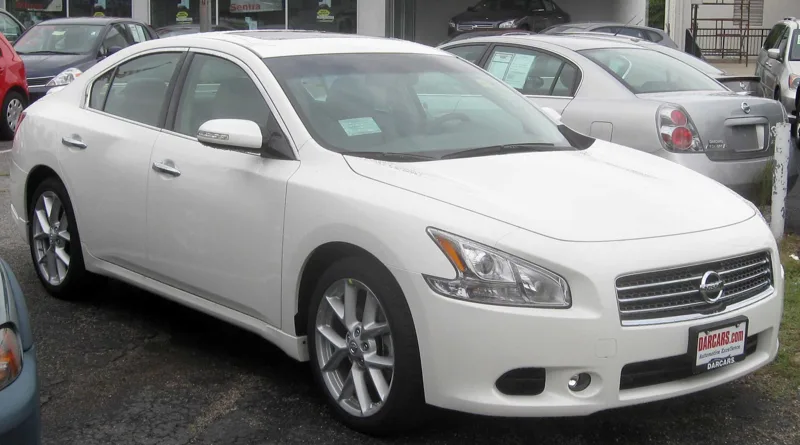
For the 2007 model year the SE-R returned in the sixth generation with a 2.5-litre engine. The base SE-R made 177 hp (132 kW) and was automatic only, while the Spec V made 200 hp (149 kW) with a six-speed manual, and its starting price was US$19,900. The SE-R and Spec V were discontinued after 2012.
NISMO also sold S-Tune and R-Tune parts from 2004. The S-Tune kit included a cat-back exhaust, springs and shocks, and 17-inch Rays wheels made for the Sentra. The R-Tune added engine, suspension and visual upgrades.
How did the fifth generation move the Sentra up a class?
The fifth generation, codenamed B15, launched in February 2000 as a 2000 model, and it finally put the Sentra into the compact class. It was a substantial upgrade on the economy car it replaced. Production moved from Smyrna to Aguascalientes in Mexico, and the Smyrna line was retooled for the Xterra.
The 1.6-litre GA16DE was dropped for a 1.8-litre QG18DE rated at 126 hp (94 kW) and 129 lb-ft (175 Nm). The 2000 and 2001 SE carried a 2.0-litre SR20DE with 145 hp (108 kW). The curb weight of the QG18DE car was 2,513 lb (1,140 kg).
A Clean Air California trim had a double-walled exhaust, three catalytic converters and special radiator coating. It received CARB super ultra low emission vehicle certification, and it was the only petrol car of its time to earn that rating and zero-emission credits.
What was the sixth-generation B16?
Nissan introduced the sixth generation at the 2006 North American International Auto Show in January. The EPA classed it as a mid-size sedan, thanks to 110 cubic feet of interior volume. It was 65 mm (2.3 in) longer, 91 mm (3.2 in) wider and 113 mm (4.0 in) taller than the B15, with a wheelbase 167 mm (5.9 in) longer.
The B16 used the C platform shared with the first Nissan Rogue and Qashqai, and it was built exclusively in Mexico. The standard engine was a 2.0-litre inline-four, with 140 hp (104 kW) and torque of 147 lb-ft (199 Nm). The Versa became Nissan's entry-level model in North America, which left the Sentra as a larger car.
Nissan considered a hybrid Sentra in 2007 and 2008, when oil briefly rose above US$100 per barrel. Prices fell back below US$40, and the company chose hydrogen fuel cell and electric research instead. Its only hybrid on the American market was the Altima Hybrid.
In Brazil a flex-fuel version launched in August 2009, running on hydrated ethanol or any petrol blend. Its power rose to 141 hp (143 cv) on either fuel. The B16 was also introduced in Argentina in 2010, where 948 units had sold by March 2011.
What did the seventh-generation B17 bring?
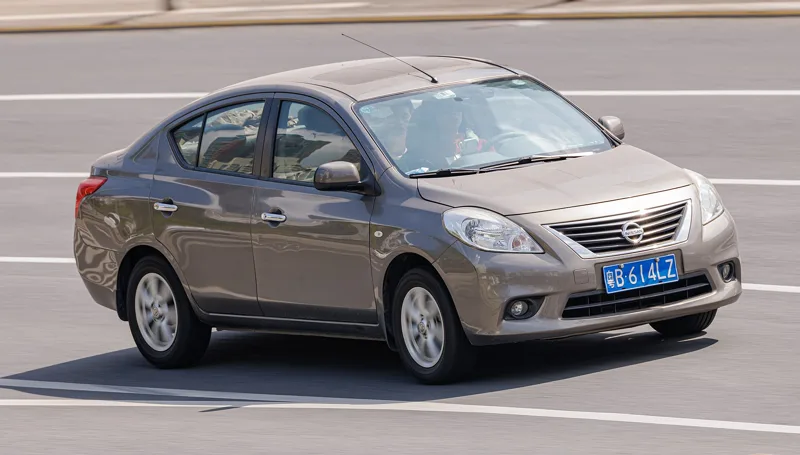
The seventh generation was revealed at the 2012 Beijing Auto Show as the Nissan Sylphy, because Nissan merged the Sylphy and Sentra development into one global model. It had LED-bordered headlamps, LED tail lamps and a large interior. It was planned to debut in more than 120 countries by 2014, and North America was the third region after China and Thailand.
The North American Sentra went on sale for the 2013 model year, built at the Canton, Mississippi plant from December 2012. The base engine was a 1.8-litre DOHC four with 130 hp (97 kW), and a 1.6-litre turbo from the Juke gave 188 hp (140 kW). Combined EPA rating for the turbo was 34 mpg-US.
The 2016 facelift brought new bumpers, lights and wheels that echoed the Maxima and Altima. For 2017 the SR Turbo and NISMO used the 188 hp (140 kW) MR16DDT, the first turbocharged Sentras that Nissan had sold in North America.
What did the eighth and ninth generations bring?
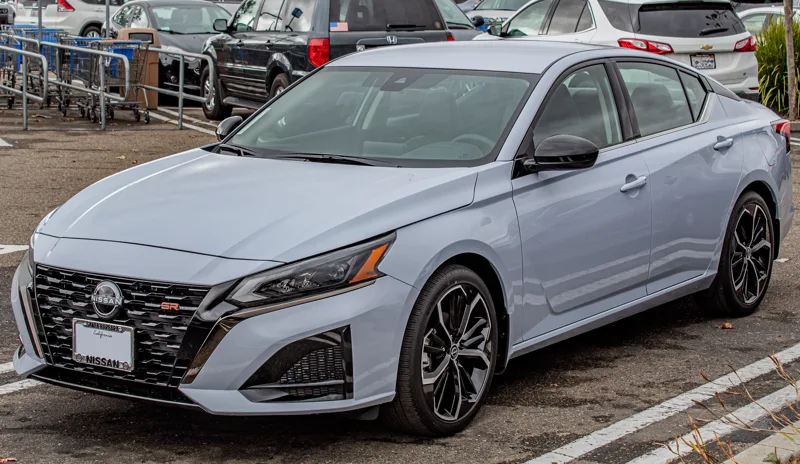
The eighth generation, codenamed B18, was unveiled on 16 April 2019 at the Shanghai exhibition, and the US version appeared at the Los Angeles Auto Show in November 2019. Its 2.0-litre MR20DD engine is naturally aspirated and makes 149 hp (151 PS; 111 kW) and 198 Nm (146 lb-ft) of torque, with a CVT as standard.
The US market had no manual option, while Canada and Mexico did. Independent rear suspension replaced the torsion beam used in the earlier Sentras of the Americas. The 2020 model went on sale in late January 2020 with S, SV and SR trims. A facelift was unveiled on 13 June 2023 for the 2024 model year, with a new front and rear fascia and engine start-stop technology.
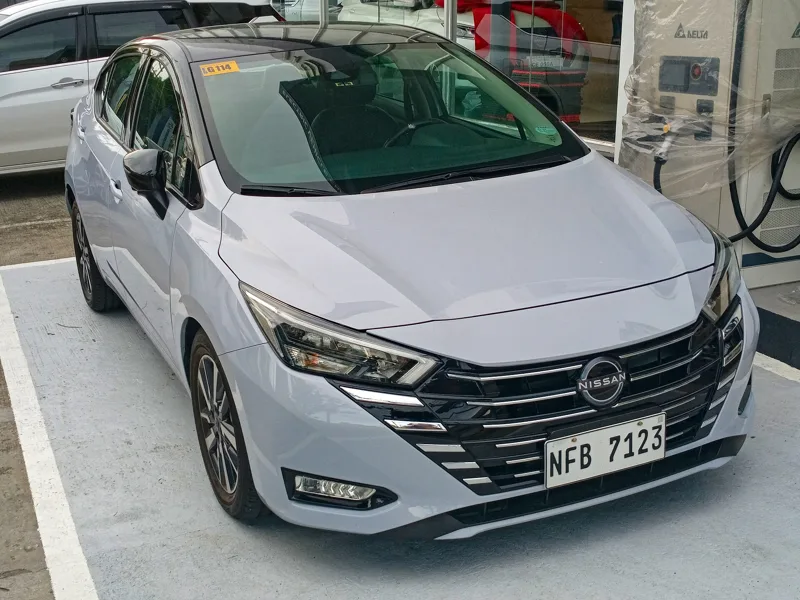
The ninth generation was shown to the public on 23 September 2025 as a 2026 model. It is 15 mm longer, at 4,656 mm (183.3 inches), while its wheelbase is 3 mm shorter. The fastback body has an inverted trapezoidal grille and a 12.3-inch touchscreen on every trim. North America offers S, SV, SR and SL, and the Chinese version appeared in February 2026.
How did the Sentra sell outside North America?
In Australia the Nissan Pulsar name returned on 28 February 2013 on a rebadged Sentra, sold in ST, ST-L and Ti trims with manual or CVT transmissions. Sales ended in 2017 because of competition from the Toyota Corolla and Mazda3, and rising SUV sales.
In Taiwan, Yulon built a licensed Sunny as the Sentra from 1990. The name returned in October 2013 as the B17, sold as the Super Sentra. In the Philippines the B16 was sold as the Sentra 200, with the MR20DE engine, and the Sylphy later replaced both the B16 and N16 Sentra.
In China the Sylphy went on sale in April 2019, and an electric Sylphy Z.E. appeared in 2018. Russia received the Sentra in 2014, built in Izhevsk with a 1.6-litre engine.
What are the Nissan Sentra specifications?
| Specification | Detail |
|---|---|
| First generation (B11, 1982) | 1.5 L E15 four-cylinder, 67 hp (50 kW), torque 115 Nm (85 lb-ft) |
| First generation economy | 43 mpg-US city, 58 mpg-US highway, 48 mpg-US combined |
| 1983 US sales | 209,889 units |
| B12 engine (1989-1990) | GA16i 90 hp (67 kW) |
| B13 engine | GA16DE 1.6 L, 110 to 126 hp (94 kW) |
| B13 SE-R | SR20DE 2.0 L, 140 hp (104.4 kW); 0-60 mph in 7.6 seconds |
| B15 engine | QG18DE 1.8 L, 126 hp (94 kW); 2.5 L QR25DE on the 2002 SE-R, 165 hp (123 kW) |
| B15 Spec V | 175 hp (130 kW), 180 lb-ft (244 Nm), six-speed manual |
| B16 engine | 2.0 L inline-four, 140 hp (104 kW), 147 lb-ft (199 Nm) |
| B16 SE-R Spec V | 200 hp (149 kW); 0-60 mph in 6.7 seconds; starts at US$19,900 |
| B17 engine | 1.8 L MRA8DE, 130 hp (97 kW); 1.6 L turbo, 188 hp (140 kW) |
| B18 engine | 2.0 L MR20DD, 149 hp (151 PS; 111 kW), 198 Nm (146 lb-ft) |
| B19 length | 4,656 mm (183.3 inches), wheelbase 3 mm shorter |
| Tsuru production | 1,849,289 third-generation cars built in Mexico by March 2017 |