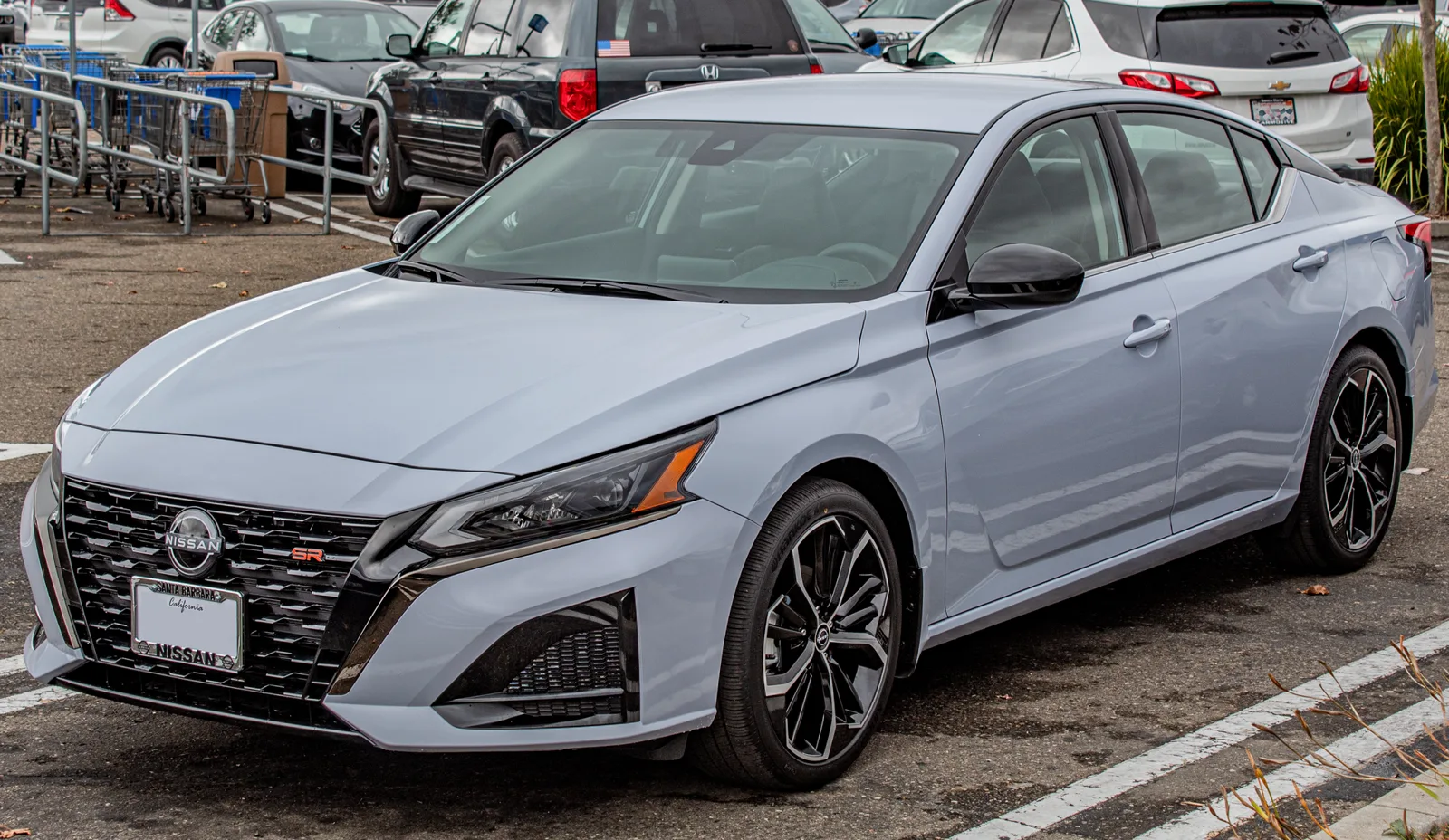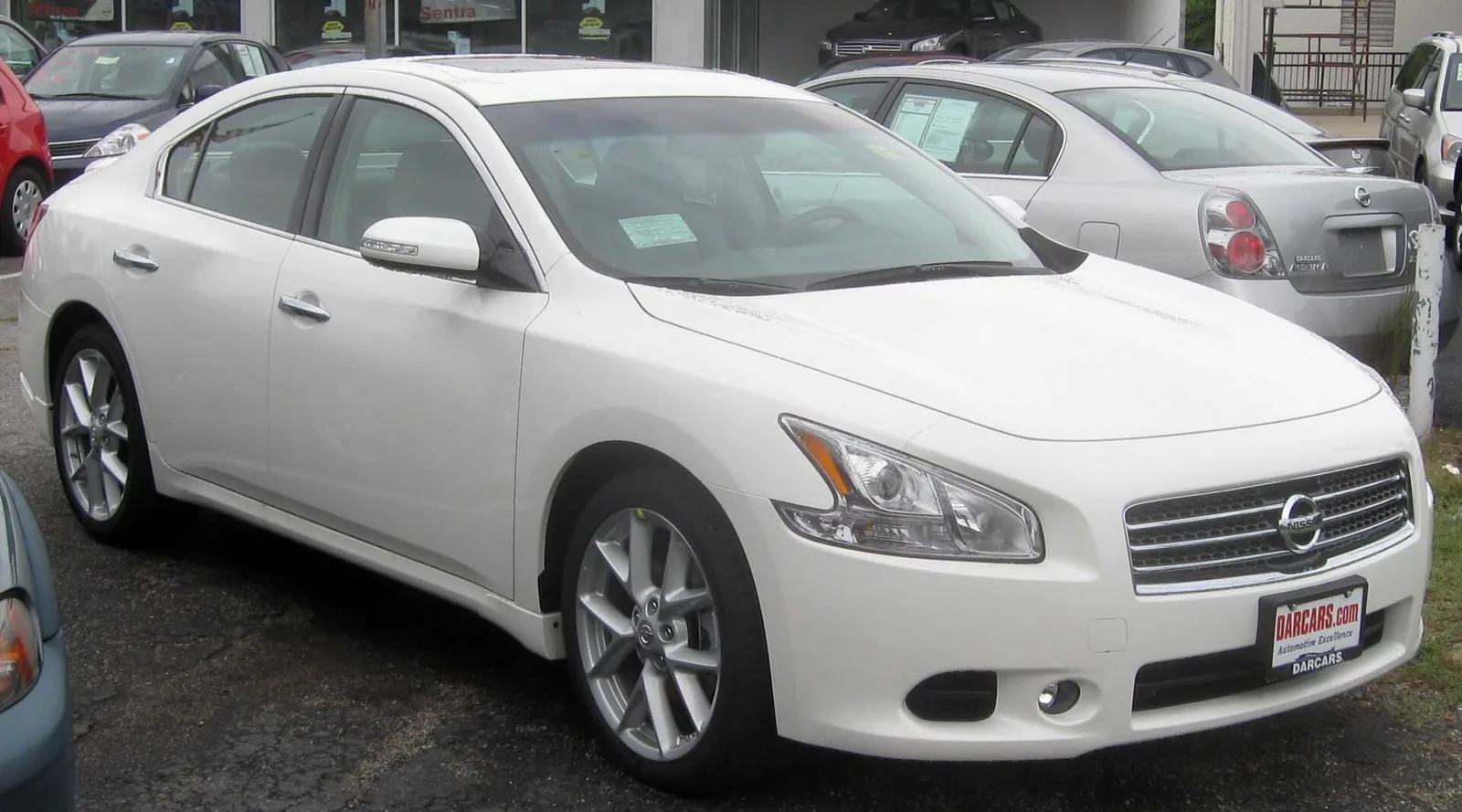
From the 1982 Datsun Maxima to the 2023 North American finale, the Maxima moved from rear-drive luxury to front-drive sports sedan and back to a CVT era.
The Nissan Maxima was a full-size flagship sedan built by Nissan from the 1982 Datsun Maxima through to 2023 in North America. Its V6 engines, front-wheel-drive layout from 1985 and CVT from 2007 defined its role as an upmarket sports sedan.
The Nissan Maxima was Nissan's flagship sedan in North America, Asia and parts of the Middle East for eight generations. It began as the Datsun Maxima for model year 1982 and ended with production in the US and Canada in July 2023. Across that span the car moved from rear-drive luxury to a front-drive sports sedan with V6 power.
Where did the Maxima start?
The Maxima badge first appeared on the second-generation Datsun 810, which reached North America in 1980 as a 1981 model. The 810 was essentially a Japanese Datsun Bluebird, with its wheelbase extended by 3.9 in (100 mm) to accommodate an inline-six engine.
The 810 was sold in two trim levels. The lower-trimmed 810 Deluxe came with a five-speed manual transmission, while the upper-trimmed 810 Maxima came only with a three-speed automatic. Both were offered as a four-door sedan or a five-door wagon.
In 1981 for the 1982 model year, all 810s were rebranded as the Datsun Maxima. By 1984 North American cars carried both a Datsun and a Nissan badge, which marked the change of brand that was taking place across the range.
The Maxima's introduction followed the success of the Datsun 240Z in North America. Its engine and transmission came from that sports car, but the Maxima offered luxury content in a four-door body that the sports car could not match.
Eight generations of Nissan's flagship, from a Datsun wagon-and-sedan badge to a 300 hp sports sedan.
How did the 810 become the Maxima?
The Maxima was marketed as an upscale alternative to the Altima and, before 1993, the Stanza. It was distinguished by a premium interior and by its V6 engine, which set it apart from the four-cylinder cars around it.
Its early features included a phonograph-based alert system. The 1981 models were the first talking car marketed in the United States, and their pre-recorded female voice warned the driver of open doors and an ignition key left in the car.
The Maxima name was not new. Its first use came in August 1977 on the top equipment level of the Japanese Nissan Stanza A10, and it appeared on a luxury hardtop version of the Bluebird in Japan. The North American car inherited the name from that heritage.
Why did the second generation matter?
The second generation arrived on 17 October 1984 for the 1985 model year. It was the first front-wheel-drive Maxima, based on the Bluebird U11, and it was offered with a 3.0-litre VG30E V6 rated 157 hp (117 kW).
That V6 was a milestone for Japanese manufacturing, and it gave Nissan its first front-drive V6. The US market placed the second generation in the compact class, a reflection of its smaller footprint.
The second generation was also the last to offer a station wagon, a body style that had been available since the Datsun 810 days. The wagon had been a steady seller, and its disappearance marked the end of an era for the family-car buyer.
In Japan the Bluebird Maxima took a different form, with four-door hardtop or pillared sedan bodywork and a 2.0-litre V6. The smaller engine kept the car out of higher tax bands, which was the reason for the difference between the two markets.
What changed with the third generation?
The redesigned Maxima debuted on 24 October 1988 for the 1989 model year, with the internal designation J30. The bigger body meant it became the second Japanese sedan in North America classed as mid-size, after the Mazda 929.
Nissan used a 4DSC window decal and marketed the third generation as a four-door sports car. The VG30E was used on GXE models, while the 190 hp VE30DE became standard on the SE from the 1992 model year.
The VE30DE was a 3.0-litre, 24-valve DOHC motor with an iron block and aluminium cylinder heads. It had variable intake valve timing, coil-on-plug ignition and a limited-slip differential, and it was rated at 190 hp (142 kW) at 5600 rpm.
Some 1989 to 1992 models offered a holographic heads-up display that projected the car's speed on a small screen in the windscreen. It was one of the industry's first such systems and was part of the luxury package on the GXE.
The third generation was also sold in Europe, where it replaced the Laurel, and in Australia, where Nissan began importing the J30 for a May 1990 release. Australian cars came with the 3.0-litre VG30E V6 and a four-speed automatic, and the SE earned a place on Car and Driver's Ten Best list for 1990.
Which engine did the fourth generation use?
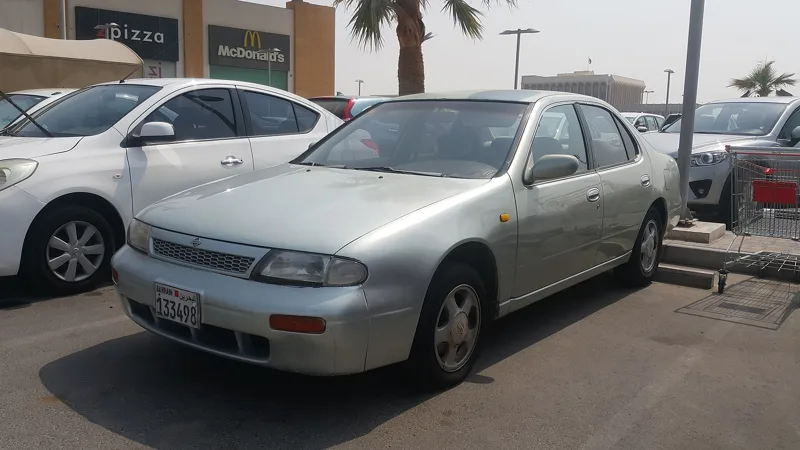
The fourth-generation Maxima, code-named A32, arrived in May 1994 for the 1995 model year. Its only North American engine was the VQ30DE, a 3.0-litre V6 rated at 190 hp (141 kW) and 205 lb ft (278 newton-metres) of torque.
The VQ30DE won a place on Ward's 10 Best Engines list, and it was recognised for 18 years running by 2012. Its reputation was one of the reasons the Maxima remained competitive through the decade.
The fourth generation dropped the independent rear suspension of its predecessor in favour of a lighter multi-link beam system. That change was part of a wider trend of cost-cutting by Japanese manufacturers in the years after the bubble economy burst.
The Cressida, which had been the Maxima's main rival, was discontinued after the 1992 model year. Toyota pointed to the front-wheel-drive Avalon, a stretched Camry, as its replacement, which left the Maxima with a clearer field.
How did the fifth generation and its twins work?
The fifth generation, introduced in May 1999 for the 2000 model year, was designed at Nissan's La Jolla studio under Jerry Hirshberg. It was a badge-engineered version of the Japanese A33 Cefiro, which Nissan's luxury brand Infiniti also sold as the I30 and later the I35.
The base engine was a 222 hp (166 kW) VQ30DE, while the SE produced 227 hp (169 kW). A 0-60 mph time of 7.0 seconds was claimed for the car, which was quick for a mid-sized sedan of its era.
For 2002 the Maxima received a mild facelift and the 3.5-litre VQ35DE with 255 hp (190 kW), the same engine used in the Infiniti I35. The facelifted SE with the six-speed manual could reach 60 mph in 6.0 seconds.
The facelift also brought a six-speed manual with a helical Torsen limited-slip differential, which was borrowed from the Japanese Skyline GT-R. The manual pedals were brushed metal, which gave the cabin a more purposeful look.
What did the sixth generation change?
The sixth-generation Maxima, code-named A34, was developed between 1998 and 2002 and introduced as a 2004 model at the 2003 North American International Auto Show. It was sold only in the United States, Canada and Mexico.
The sixth generation used the VQ35DE, a DOHC V6 producing 265 hp (198 kW) at 5,800 rpm and 255 lb ft (346 newton-metres) of torque. The SE came with 18-inch alloy wheels, while the SL offered a softer ride and leather seats as standard.
The rear suspension returned to an independent multi-link setup, similar to that of the Altima. The sixth generation also offered a standard SkyView glass roof panel or an optional traditional moonroof.
Starting with the 2007 model year, the standard Xtronic CVT became the sole transmission. The CVT had a manual mode, but the manual gearbox was no longer offered, which was a clear break with the car's earlier sporting image.
How did the seventh and eighth generations perform?
The seventh-generation Maxima, code-named A35, went on sale in late June 2008 as a 2009 model. It used the Nissan D platform shared with the fourth-generation Altima and second-generation Murano, and it was the top front-drive sedan in Nissan's North American line.
Its revised VQ35DE produced 290 hp (216 kW), with torque of 261 lb ft (354 newton-metres), and it could reach 60 mph in 5.8 seconds. The skid pad lateral acceleration was rated at 0.85 g, and the quarter-mile run took 14.5 seconds at 99 mph (159 km/h).
The eighth generation was unveiled at the 2015 New York International Auto Show as a 2016 model, skipping the 2015 model year. It was 82 lb (37 kg) lighter than the car it replaced, and its interior took inspiration from aerospace.
The eighth-generation car made 300 hp (224 kW), and it kept the torque figure of its predecessor. It could reach 60 mph in 5.9 seconds, cover the quarter mile in 14.4 seconds at 101 mph (163 km/h), and stop from 70 mph in 168 feet (51.2 m).
Where else did the Maxima name appear?
The Maxima name was used on other models outside North America. In the United Kingdom it was a high-series trim on the B11 Sunny, the N12 Cherry and the Japanese-built Bluebird and Stanza.
Between 1994 and 2003 the name was applied to the Nissan Cefiro in Australasia, Europe and South America. In Europe the A32 was sold as the Maxima QX, while the Cefiro name was used in Japan, and from 2003 to 2013 Nissan Australasia sold the Teana under the Maxima badge.
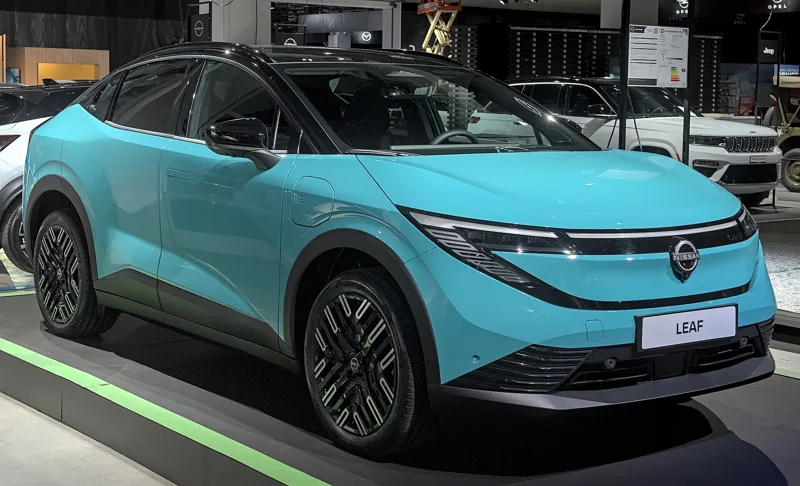
Nissan planned to use the Maxima name on a future electric sedan, with an Infiniti counterpart. In 2025 the company scrapped plans for two electric sedans in the US, which ended the prospect of the name returning in that form.
Maxima specification by generation
| Generation | Years | Engine | Notable figure |
|---|---|---|---|
| First (810 Maxima) | 1981 to 1984 | 2.4-litre four and 2.8-litre diesel six | Talking-car alerts |
| Second | 1985 to 1988 | 3.0-litre VG30E V6, 157 hp (117 kW) | First front-wheel-drive Maxima |
| Third (J30) | 1989 to 1994 | VE30DE V6, 190 hp (142 kW) | Four-door sports car |
| Fourth (A32) | 1995 to 1999 | VQ30DE V6, 190 hp (141 kW) | 6.6 seconds to 60 mph, manual |
| Fifth (A33B) | 2000 to 2003 | VQ30DE, 222 hp (166 kW) | 7.0 seconds to 60 mph |
| Sixth (A34) | 2004 to 2008 | VQ35DE V6, 265 hp (198 kW) | CVT only from 2007 |
| Seventh (A35) | 2009 to 2015 | VQ35DE, 290 hp (216 kW) | 5.8 seconds to 60 mph |
| Eighth | 2016 to 2023 | VQ35DE, 300 hp (224 kW) | 5.9 seconds to 60 mph |