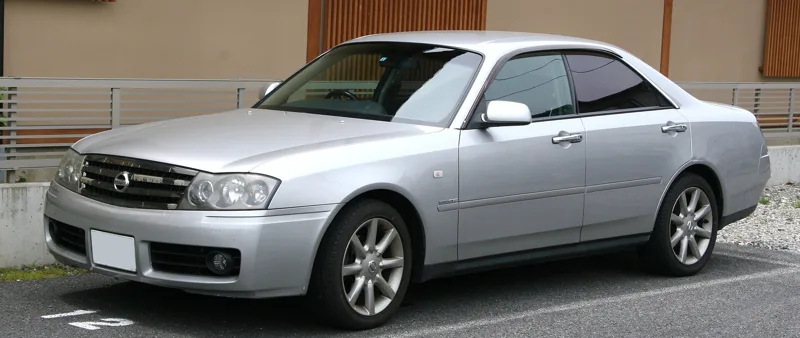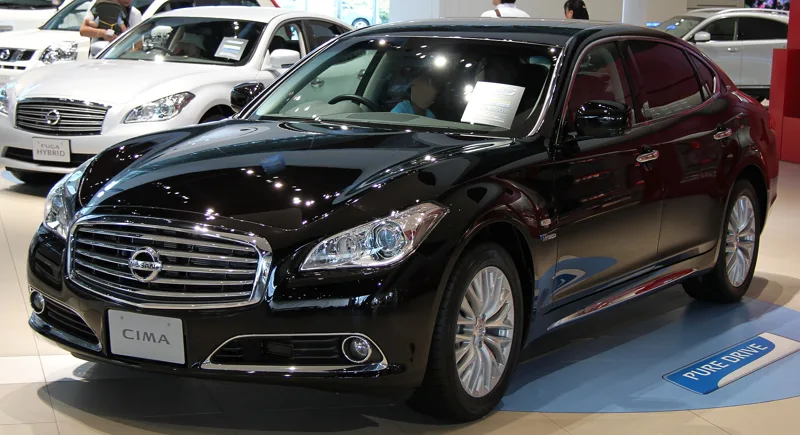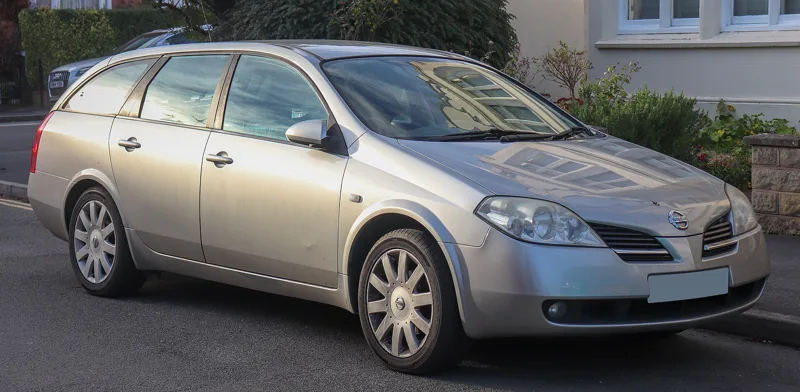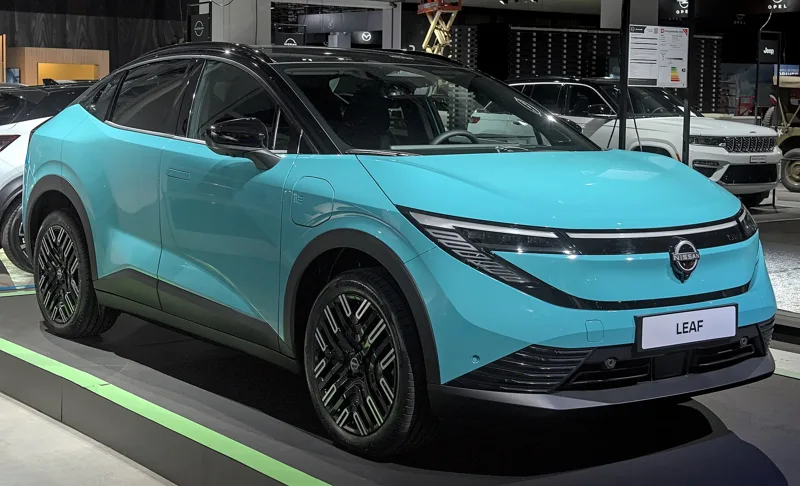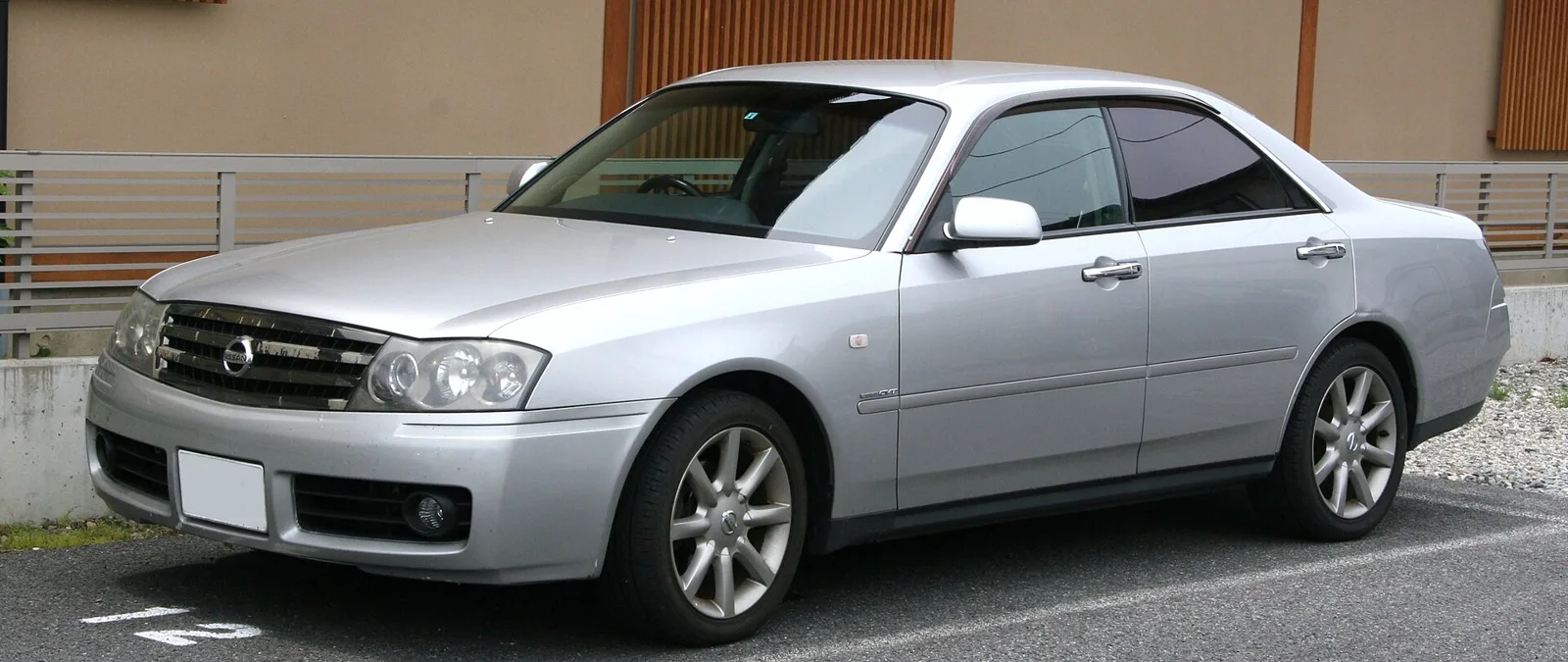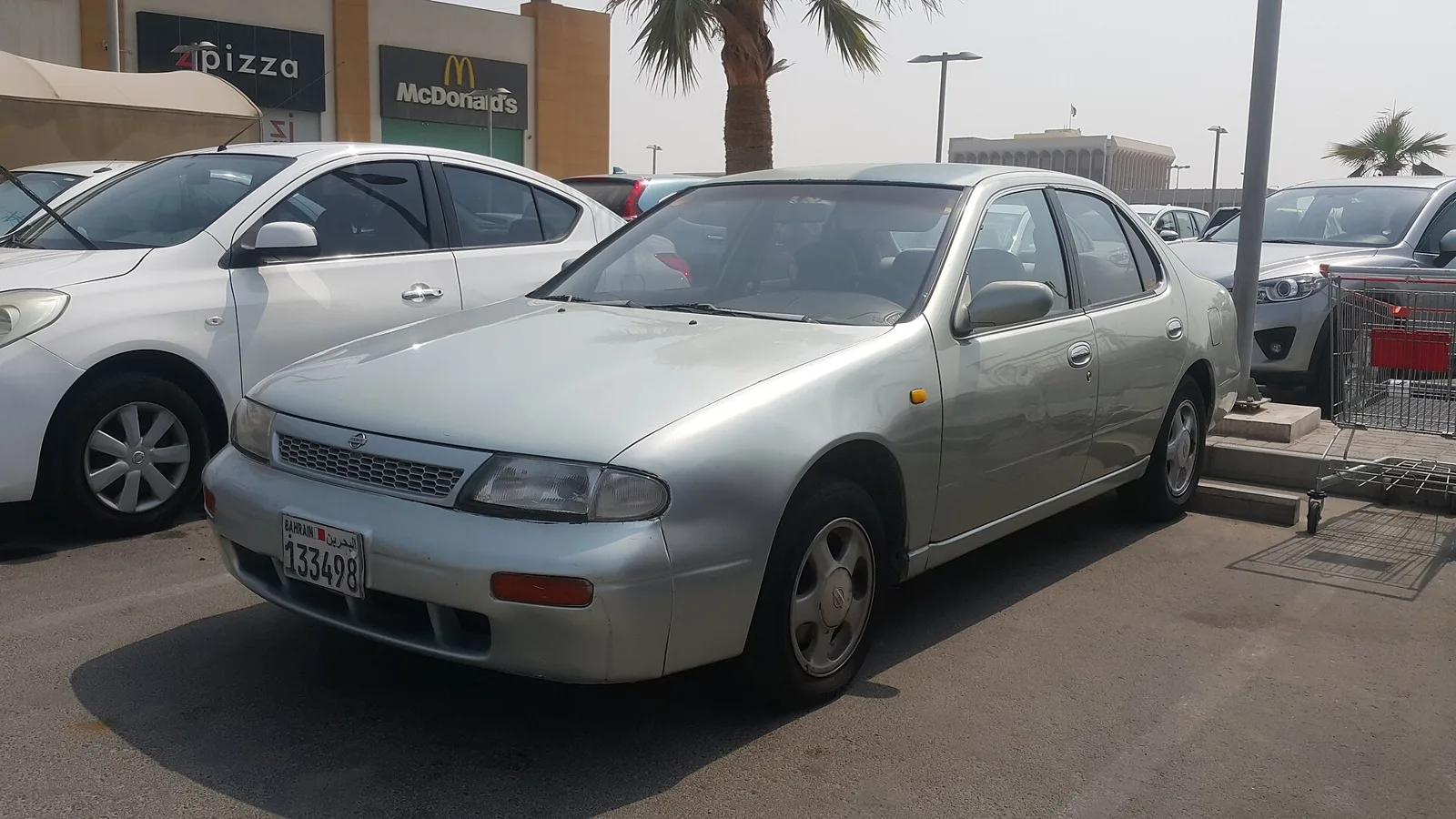
A reliable taxi-bred compact that became Nissan's most widely recognised sedan, changed from rear-wheel drive to front-wheel drive and ended production in Japan in 2001.
Nissan's Bluebird ran as a compact sedan from 1955 to 2007, a name that first appeared in 1957. It was the brand's most internationally recognised sedan, sold as a taxi and family car, and it moved from rear-wheel drive to front-wheel drive in 1983.
The Nissan Bluebird was a compact car built from 1955 to 2007, with the model name arriving in 1957. It became Nissan's most internationally recognised sedan, and it stayed close to its taxi roots while growing into a family and sporting car. Few Japanese nameplates have lasted as long, and the Bluebird's story runs from Datsun prototypes to the front-wheel drive cars of the 1980s and 1990s.
Where did the Bluebird come from?
The Bluebird grew from the Datsun name, which Nissan's predecessor DAT had used for small cars built to exploit a 1930 rule that let drivers avoid a licence for engines up to 500 cc. Early Datsuns were named by engine size, and later cars, including the 210, carried the Bluebird name.
Some records show the Bluebird name first appearing on a 988 cc, 34 PS (25 kW) four-door sedan in 1957, while Nissan's own materials place the name in 1959. The 210 was part of the company's 110/210 series, and its engine was based on an Austin design.
Every generation has been sold as a taxi, a role shared with the base Nissan Cedric. The Bluebird's traditional rival was the Toyota Corona, which had been developed as a taxi sedan at a time when the Toyota Crown was growing in size.
A taxi-bred compact that grew into Nissan's most widely recognised sedan and ran in Japan until 2001.
How did the early Datsun cars lead to the Bluebird?
DAT's 1929 prototype became the DATSON Type 10, a shrunken version of an earlier model powered by a 495 cc side-valve four. The Type 11 followed in 1932, and 150 were sold that year before the law change allowed a larger engine.
The Type 11 matched the Austin Seven in displacement and external size, and the British car's engineers had presented detailed papers in Tokyo. Herbert Austin later imported a 1935 Datsun to examine it, but he decided not to file a complaint.
The Type 12 of 1933 used a 747 cc engine once the limit rose to 750 cc. The Type 13 went into production in April 1934, and 44 examples were exported to South Africa and Australia, the first Datsun exports from Japan.
The Type 14 of 1935 used a 722 cc engine, and the Type 17 ran from April 1938 until a 1949 resumption that lasted until 1955.
What did the 110 and 210 series bring?
In 1955 Nissan revamped its passenger cars with the Datsun 110 series. Its design, credited to Shozo Sato, earned a 1956 industrial design prize from the Mainichi Shimbun. The car was built to Japanese dimension rules and kept its engine below 910 cc, the upper limit for small taxis.
The 110 used an 860 cc D10 engine giving 25 PS (18 kW) at 4000 rpm. Incremental changes arrived as the 112 and 113, and the 113 switched to a column-shifted four-speed that was 10 kg (22 lb) lighter than the Austin unit it replaced.
The 210 followed as a 988 cc four-door, and it was the first Nissan exported to the United States, where it was sold as the Datsun 1000 in some markets. Two 210s won the 1000 cc class in the 1958 Australia Mobilgas Rally against the first-generation Toyota Crown.
The 211 of October 1958 added twin taillights and a larger rear window, with power rising to 37 PS (27 kW). The export P211, marketed as the Datsun 1200, used the E engine to produce 48 PS (35 kW) at 4800 rpm.
How did the 310 and 410 series spread the Bluebird?
The all-new Bluebird debuted in August 1959 and was sold through the Nissan Store dealership channel in Japan. The 310 family was built from 1960 to 1963 in three models, the 310, 311 and 312, and it reached Taiwan as the Yue Loong Bluebird 704.
A five-seater model arrived in October 1959, described as Japan's first post-war five-seater car. The five-door station wagon, WP310, followed in July 1960 as the first station wagon to enter series production in Japan.
Its half-moon lights earned the early 310s the nickname persimmon seed, and the 311 and 312 were later restyled with larger, squarer units and separate amber turn signals. A three-speed automatic was added in April 1962, near the end of the 310's run.
The 310 was also one of the first Japanese cars to sell in significant numbers in Europe. After Finland opened its doors to car imports in mid-1962, 700 were brought in, and by the time the 410 arrived Datsun had passed both SAAB and Triumph in registrations.
In September 1963 the Bluebird gained boxier styling by Pininfarina, with a look that resembled European designs, particularly the Lancia Fulvia. The 410 was built from 1964 to 1967, and it was the first Nissan with a full unibody design, introduced in time for the 1964 Summer Olympics.
The 410 was also the first Nissan produced outside Japan. Its CKD kits were built at the CIVAC plant in Cuernavaca, Mexico, producing about 10,510 units. New Zealand took the car under a tariff arrangement that allowed 300 cars a year, the so-called 300 Club.
What did the 410 SS and SSS add?
A sporting Bluebird SS was launched in Japan in March 1964, with a tuned 1.2-litre engine producing 71 PS (52 kW). A double-carburettor version of the same engine gave 78 PS (57 kW) in the DP411, and the SS was originally sold only as a four-door before a two-door followed.
In May 1965 a twin-carburettor 1.6-litre SSS arrived with 90 PS (66 kW), beginning a line of performance Bluebirds in Japan. The SSS remained a mainstay of the range until it was deleted in 2001.
One DP411 SSS was entered in a 1964 Monte Carlo rally, driven by South African Ewold van Bergen, and the car was also used in motor sport in South Africa.
What did the 510 series achieve?
Launched in August 1967, the 510 offered sedans with two or four doors and a five-door station wagon, with a coupe added in November 1968. It still enjoys considerable fame in the United States.
The SS trim name became SSS on the 510 because General Motors was already using the term Super Sport for its performance Chevrolets from 1961. Export New Zealand cars were a single 1.6-litre four-speed Deluxe assembled from CKD kits by Campbell Industries.
What was the 610 Bluebird-U?
The 610 series arrived in Japan in August 1971, badged as the Datsun Bluebird-U. The U stood for user oriented, promising more comfort than the 510, and one domestic campaign built on the slogan Bluebird U, which was soon dropped over its innuendo.
The 610 adopted the coke bottle styling of the period, which was shared with the larger Nissan Cedric. The SSS hardtop coupe was the first Nissan to use that body shape, and Nissan products offered it in two- and four-door forms for several decades.
Japanese buyers saw the 610 as a rival to the second-generation Toyota Mark II. Trim levels were GL, SSS, DX and STD, and export markets often badged the car as the 160B or 180B. An SSS-E with Bosch-licensed electronic fuel injection was one of the first mass-produced Nissans without a carburettor.
A 1974 facelift brought turn signals on the front corners, a squarer grille and new taillamps. The 610 then came in three front-end forms, and a minor suspension change added offset strut tops that improved handling before the 810 arrived.
Why did the 810 struggle?
The 810 was introduced in July 1976 with carried-over engines, meeting the 1976 emissions requirements through Nissan's NAPS system. Styling evolved from the 610, and a four-door sedan, a two-door hardtop coupe and a five-door station wagon were offered, with the wagon mostly sold as a light van in Japan.
The heavy-looking and rather dated 810 did not sell well. Australian magazine Wheels called the 200B a 180B with 20 more mistakes, and Nissan responded by accelerating work on the next generation, the 910. The 810 stayed in production for only three years and four months.
In Japan the range was upgraded to meet the 1978 emissions standards, with the crossflow Z engines replacing the L-series units. A six-cylinder Bluebird also continued in Japan, with a longer nose, offering a 2.0-litre engine producing 115 or 130 PS (85 or 96 kW).
How did the 610 and 710 sell in Australia, the UK and New Zealand?
In the UK, Datsun became the leading Japanese importer on the back of the 180B. Autocar tested a 180B at 101 mph (163 km/h) with 0-60 mph in 13.6 seconds and 27.7 mpg (10.2 L/100 km) overall. Its recommended retail price of 2,950 pounds undercut the Ford Cortina 1600 GL at 3,263 pounds and the Morris Marina at 3,315 pounds.
Australia introduced the locally produced 180B in October 1972, with a 1.8-litre L18 and a four-speed or three-speed automatic. A fully imported luxury GX sedan arrived in November 1974, and the 180B proved popular until its discontinuation in October 1977.
The 710 series arrived in January 1973, sold as the Datsun 140J/160J, Violet or 710 in various markets. In Japan it was exclusive to Nissan Cherry Store dealerships, giving Nissan a Bluebird-sized car in another channel, and its name caused confusion because it suggested an upscale 610.
What was the 200B and why was it important?
The 200B arrived in Australia in October 1977, with fully imported coupes and wagons while locally assembled sedans came from January 1978. Its L20B engine grew to 1952 cc, producing 72 kW (97 hp), and the 200B became Australia's top-selling four-cylinder car.
Australian cars switched to coil springs and a live rear axle to meet an 85% local content quota demanded by the government. The live axle, an Australian development, improved the car's handling, and the 200B remained a family favourite until it was replaced in May 1981.
The 200B reached New Zealand from 1977, assembled at Nissan's new plant in Wiri, South Auckland. A 1.6-litre 160B joined in 1979 for buyers who preferred smaller engines, and production in New Zealand continued until late 1980.
Why was the 910 a turning point?
The Bluebird 910 was the last rear-wheel drive Bluebird, with simple clean-cut lines unlike the coke bottle shape of its predecessor. It kept the same engine range, MacPherson strut suspension and a 2,500 mm (98.4 in) wheelbase.
Japanese Bluebirds returned to four-cylinder engines only, and the six-cylinder model passed to the Skyline-based Nissan Leopard. Owners praised its dependability, although bodies in salt-prone regions corroded well before the engines failed.
The 910 was assembled in Australia, South Africa, Taiwan and New Zealand, and it formed the basis of the North American Datsun/Nissan 810 Maxima from 1980. In Europe the Stanza joined it in 1981 with front-wheel drive and a hatchback.
Why did the U11 switch to front-wheel drive?
The Bluebird moved to front-wheel drive in October 1983, keeping the boxy styling of its predecessor. Every panel changed, and the drag coefficient was a fairly high 0.39. Four-door sedan, four-door hardtop and five-door station wagon bodies were offered, and the coupe was deleted.
In Europe the U11 sold for just two years before a UK-built Auster-based Bluebird took over from 1986 at Nissan's new plant. The T12 was introduced in Europe in 1985 as the third-generation Auster, rebadged and sold there.
The U11 range had petrol engines of 1.6, 1.8 and 2.0 litres, with a turbocharged 1.8 option. The VG20ET V6 arrived in Japan in 1984 in a Bluebird Maxima with an extended front end, and the U11 Maxima later used a 3.0-litre VG30E.
How did the U12 and U13 change the Bluebird?
Nissan replaced the boxy U11 in September 1987 with the U12, which had a rounder appearance. The sedan and hardtop were joined by the SSS, SSS-X and Twin Cam variants, while the wagon passed to the Nissan Avenir.
The U12 introduced Nissan's mechanical four-wheel drive system, called ATTESA, and the SR20DET engine that arrived in the second series of 1989 to 1991. A turbocharged RNU12 used the 1809 cc DOHC CA18DET and also carried ATTESA, while the SSS-R was a limited edition with lowered weight and oversized headlamps.
The U13 arrived in September 1991 with curved panels in place of the U12's edges. The hardtop called the Nissan Bluebird ARX kept more traditional styling, and an optional active noise cancellation system featured on Japanese hardtops.
The SSS Attesa LTD used the SR20DET with 210 PS (154 kW), a close relative of the Pulsar GTi-R engine but with a single throttle body and a smaller turbo.
How did the Bluebird end in Japan?
The U14 arrived in January 1996 with boxy styling, and its width stayed below 1,700 mm (66.9 in) to fit a lower tax bracket. Only a four-door sedan was offered, with the SR18DE, SR20DE and SR20VE engines and optional all-wheel drive.
The SSS-Z carried a variable valve lift SR20VE engine rated at 190 PS (140 kW), with silver interior trim where the other trims had wood. A final limited run of SSS cars in 2001 used red and grey paint and gold emblems.
Production of the Bluebird ended in Japan in August 2001, replaced by the Nissan Maxima, Teana and Altima internationally, and the compact Bluebird Sylphy in Japan. The car has been a popular used export to Russia, Africa, parts of the Caribbean and New Zealand.
How did the Bluebird fare in export markets?
In Chile the U12 arrived only in 1990, and Malaysia's Tan Chong assembled U12s priced well above the previous generation. Malaysian Nissan sales had fallen 90 percent from their peak by 1986, which prompted the upmarket repositioning.
In Australia the U12 was sold as the Nissan Pintara from 1989 to 1993, codenamed Project Matilda, and a five-door Superhatch was sold as the Bluebird in some export markets. A twin built for Ford Australia, the Corsair, was less successful, and Nissan Australia ceased local manufacturing in 1994.
Dongfeng of China agreed in the early 2000s to build the U13 as the Fengshen Bluebird. Yulon in Taiwan built the EQ7200-II variant in 2001, keeping the U13 centre section with revised ends and a 2,620 mm (103 in) wheelbase. The EQ7200-III ran from 2003 to 2007.
What was the Bluebird's motorsport record?
In 1973 610 Bluebird four-doors took part in the East African Safari Rally as the Datsun 1800 SSS, and they placed second and fourth overall behind the winning Datsun 240Z. The same year Bob Sharp took his 610 hardtop to second place in the American SCCA B Sedan Championship.
Sharp's car later won the 1976 SCCA B-Sedan title with Elliot Forbes-Robinson driving.
What are the Bluebird specifications?
The table covers the main body, engine and market figures for the Bluebird's generations. Each row names the generation it applies to, and metric figures come first wherever both systems are given.
| Specification | Detail |
|---|---|
| Production | 1955 to 2007; model name from 1957 |
| Early engine (110 series) | 860 cc D10, 25 PS (18 kW) at 4000 rpm |
| Early 210 engine | 988 cc, 34 PS (25 kW) |
| 211 engine | 37 PS (27 kW) at 4600 rpm |
| 410 SS engine | 1.2 L E-1 with 71 PS (52 kW); DP411 with 78 PS (57 kW) |
| 1.6-litre SSS | 90 PS (66 kW), from May 1965 |
| 610 North America | 1770 cc L18, 94 hp (70 kW); 2.0-litre L20B, 97 hp (72 kW) from 1974 |
| 200B engine | L20B, 1952 cc, 72 kW (97 hp) |
| U12 Japan 1.8-litre | SR18Di, 110 PS (81 kW) |
| U13 SSS Attesa LTD | SR20DET, 210 PS (154 kW) |
| Australian U13 | KA24DE, 112 kW (152 PS) and 210 Nm |
| U14 SSS-Z | SR20VE, 190 PS (140 kW) |
| Wheelbase, 910 | 2,500 mm (98.4 in) |
| Wheelbase, EQ7200 | 2,620 mm (103 in) |
| EQ7200 length | 4,664 mm (183.6 in) |
| Japanese production end | August 2001 |
Frequently asked questions
Was the Bluebird always rear-wheel drive?
No. The rear-wheel drive cars ran from the 110 series to the 910, and the U11 moved to front-wheel drive in October 1983. Four-wheel drive ATTESA versions followed on the U12 and U13.
Why was the Bluebird sold as the Datsun in some markets?
Early export cars were named Datsun, followed by engine displacement, and the Datsun 1000 and 510 were common examples. The Nissan Bluebird name began to appear in export markets around 1982, as the Datsun marque was phased out.
How big was the Bluebird's early Japanese sales run?
The 310 family built from 1960 to 1963 was one of the first Japanese cars sold in significant numbers in Europe. Finland took 700 cars after imports opened in mid-1962.
Did the Bluebird ever win on the rally stage?
Yes. In the 1958 Australia Mobilgas Rally two 210s won the 1000 cc class, and in 1973 610s placed second and fourth at the East African Safari.