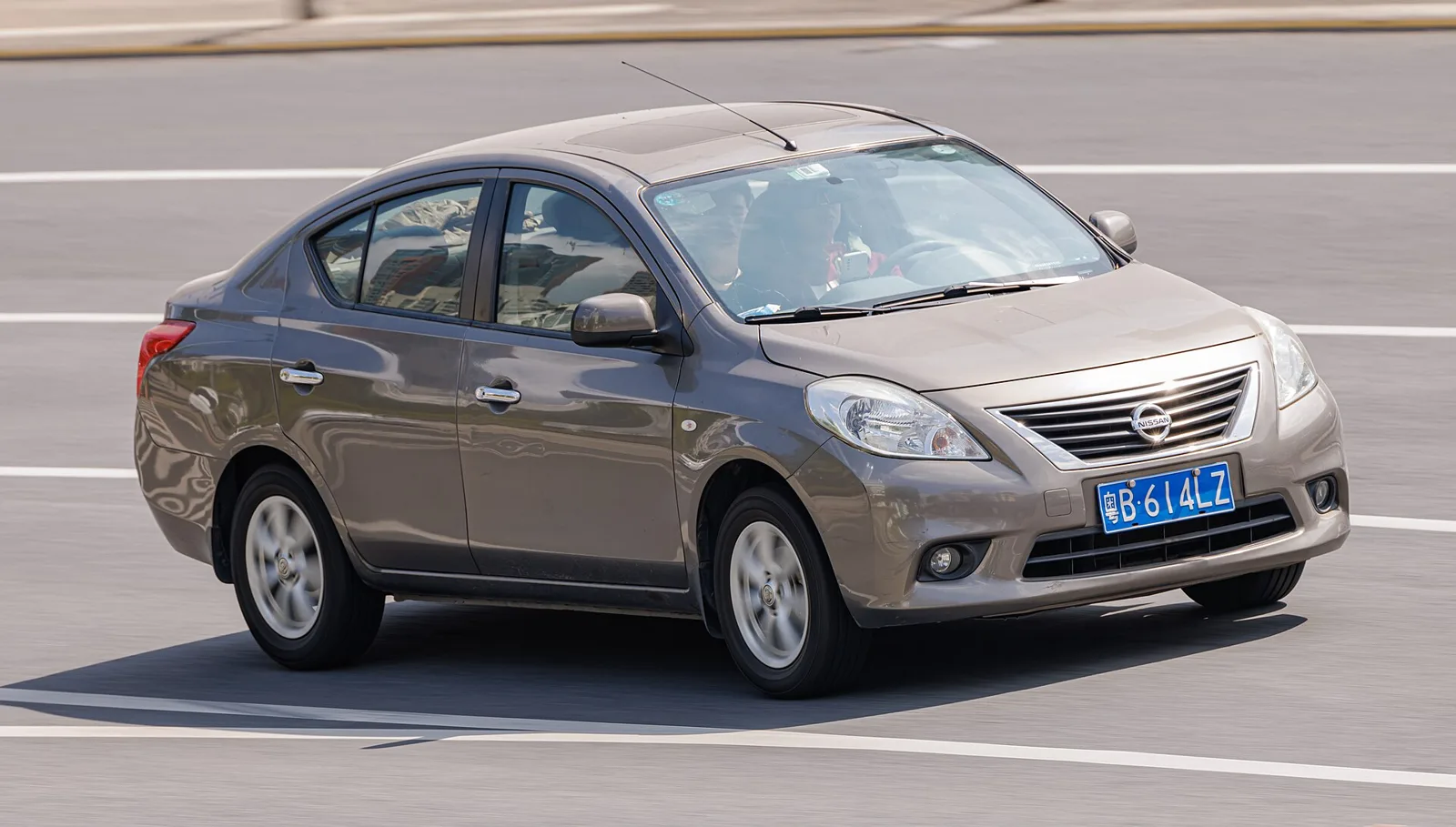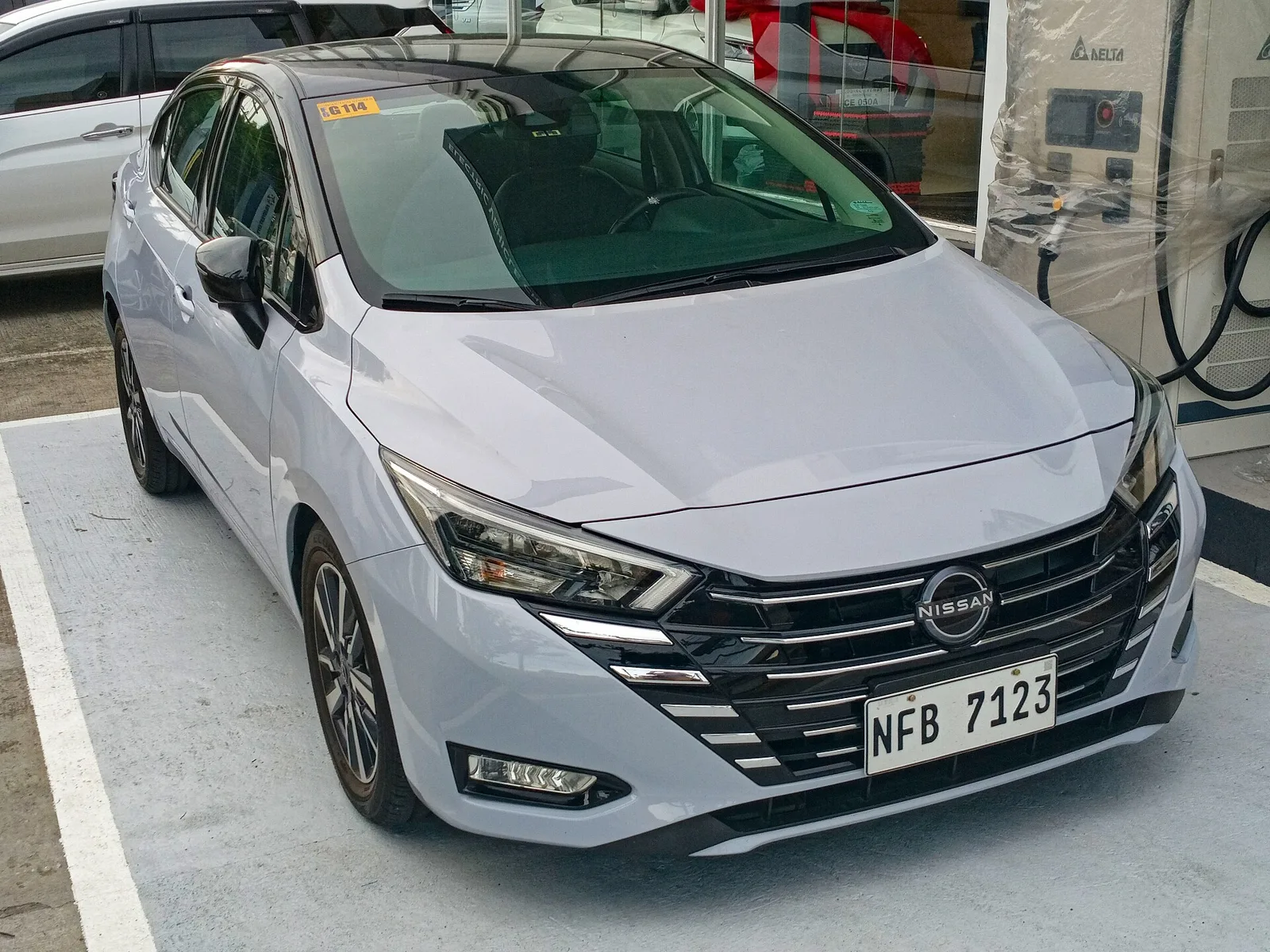
From a 1995 replacement for the Sunny to a turbocharged fourth generation, the Almera changed platform, size and badge in every market it reached.
The Nissan Almera is a sedan that Nissan has produced since 1995, starting as the successor to the Sunny. The later generations moved to a subcompact design on the V platform and then the CMF-B architecture, and they were sold under several names including Versa, Latio and Sunny.
Nissan has built the Almera since 1995, when it took over from the Sunny, a name that had served for nearly 30 years. Across four generations the car changed platform, size and badge several times, and the same basic sedan reached buyers under a long list of names. This guide follows each generation and the markets that shaped it.
The four generations can be read as four platform eras. The N15 mirrored the Japanese Pulsar, the N16 sat on the MS platform, the N17 used the global V platform, and the N18 moved to the CMF-B architecture. Each step brought a new body and a new set of engines, and in several markets a new name.
Where did the Almera come from?
The Almera began in late 1995 as Nissan's replacement for the Sunny N14, a nameplate that had been in use for nearly 30 years. The first generation, the N15, was almost identical to the Japanese Pulsar N15, which made it a close relative of the Pulsar rather than a wholly new design.
Early models used a 1.4 GA14DE or 1.6 GA16DE petrol engine, or a 2.0-litre CD20 diesel. About one year into production a 2.0-litre SR20DE GTi joined the range, making 143 PS (105 kW; 141 hp) with uprated suspension, strut braces and a quicker steering rack.
In the United Kingdom almost every Almera sold was a hatchback, while Ireland preferred the saloon. Early UK models came with power steering, airbags, electric mirrors and a stereo, which set them apart from many rivals at the time.
One sedan under many names, from a 1995 compact to a turbocharged fourth generation.
How did the second-generation Almera change?
The N16 arrived in January 2000 with smoother and more curved lines than its predecessor. It sat on Nissan's global MS platform, the first developed after the partnership with Renault, and European cars were built at the Sunderland factory. Its wheelbase measured 2.53 metres (99.6 in).
Sunderland had opened in 1986 and built the N16 for Europe, so most European buyers received cars from that plant. The petrol range came from Nissan's QG series, with 1.5, 1.6 and 1.8-litre units. Diesel buyers could choose a 2.2-litre YD22DDT rated 110 bhp or a common-rail YD22DDTi rated 136 bhp, and a 1.5 common-rail dCi came from the Renault Megane II.
Critics faulted the N16 for limited rear passenger legroom, which its 2.53 metre wheelbase helped to explain. The smoother bodywork was the most visible change from the car it replaced, and it gave the range a more modern look.
A facelift in 2003 added projector-style headlights and a honeycomb mesh grille. The front and rear suspension were retuned at the same time, so the facelifted car differed from the version that had launched in January 2000 in both look and feel.
Production ended on 28 November 2007, but the car was not replaced at once. The Tiida took over in several countries during 2007 and 2008. In the United Kingdom the Qashqai was regarded as the successor, and Irish-sourced cars reached British buyers from March 2009. Several Almeras were registered in Ireland in 2008, even though production had ended in 2007.
Why did the third generation become a subcompact?
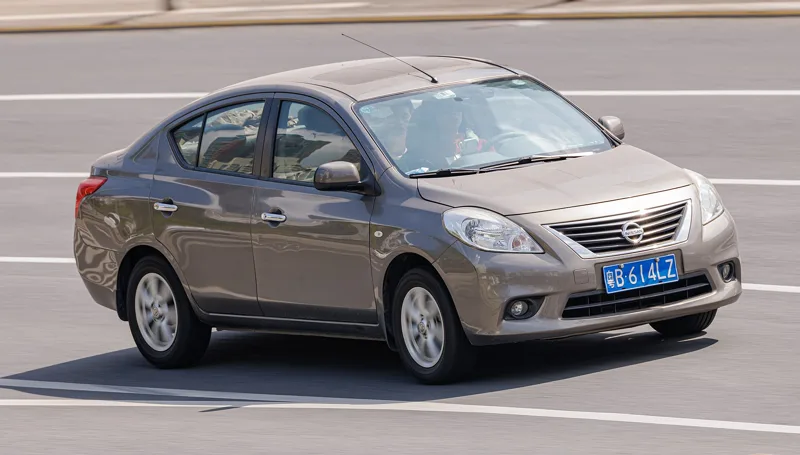
The third-generation N17 was reclassified as a subcompact B-segment sedan and built on Nissan's global V platform. It debuted at the Guangzhou Auto Show in December 2010 and was marketed across 170 countries as a saloon for the world market, with assembly in several regions.
The name changed with each market. Thailand launched the Almera on 7 October 2011 under the Eco Car programme, and the Americas sold the same basic car as the Versa. One design therefore carried several badges, which is why the family tree is so tangled.
Japan received the Latio, released on 5 October 2012 and built in Thailand. Sales were poor, and the Latio was discontinued on 26 December 2016. India also saw a modified version sold as the Renault Scala, launched in August 2012 under the two companies' partnership.
The N17 saloon kept being built after the N18 arrived. In India the Sunny ended production in May 2020, but exports continued. Malaysia sold the Almera Black Series alongside its successor, which showed how long the older design stayed in service.
Nissan presented the N17 as a saloon for the global market rather than for a single region. That positioning explains why one design could appear under so many badges, from the Latio in Japan to the Versa in the Americas.
Assembly and sales spread across the region. The Philippine Almera was assembled in Santa Rosa, Laguna, from 2013 to 2021, while in Indonesia the model was sold only as a taxi fleet vehicle. In Russia, the G15 Almera was built by AvtoVAZ from December 2012, and the earlier G10 Almera Classic had been sold in Ukraine and Russia from April 2006.
How did the Almera sell in Australia and South Africa?
Australia received the Almera in August 2012 with a 1.5-litre petrol straight-four, and Nissan dropped it in July 2014. In South Africa it arrived in August 2013, imported from India, and stayed on sale until 2023, when those imports ended. Australian cars came in ST and TI trims.
The entry-level ST was the base Australian trim, and the TI was the other choice. Both trims used the same 1.5-litre petrol straight-four engine, so the choice between them was about trim rather than power.
South Africa sold the car only in Acenta trim. Launch prices were R165 000 for the manual and R175 000 for the automatic, and every car sold there was imported from India until those imports ended in 2023.
What engines did the Almera use?
Across four generations the Almera used petrol fours from 1.0 to 2.0 litres, along with diesels. The second generation relied on QG petrol engines, the N17 used a 1.2-litre HR12DE, and the fourth generation fitted a turbocharged 1.0-litre HRA0.
The GTi was the sporting first-generation model. Its 2.0-litre SR20DE made 143 PS (105 kW; 141 hp), and the chassis included strut braces and a quicker steering rack.
Malaysian and Singapore cars used the 1.5-litre HR15DE, while the Thai-spec N17 returned 20 km/L (56 mpg-imp; 47 mpg-US) on fuel. The same family of cars was tuned differently for each market.
The fourth generation moved to a turbocharged 1.0-litre HRA0 engine, the smallest unit the Almera had carried since the 1.4 GA14DE of the first generation.
The fourth generation across Asia and the Americas
The N18 was unveiled on 12 April 2019 in Fort Lauderdale, Florida, where it was marketed as the third-generation Versa saloon. It uses the Renault-Nissan CMF-B architecture, a platform also found under the Renault Clio V, Captur, Micra and Kicks.
Thailand launched the fourth generation on 14 November 2019, and Vietnam followed on 4 August 2021 with cars imported in full from Thailand. The Thai line-up included the Sportech trim, which had LED fog lights and a rear spoiler. A limited Sportech-X run launched on 8 August 2022, with over 300 units built.
Malaysia offered an optional Nismo package on the facelifted car from January 2015, and it kept the Almera Black Series on sale alongside its successor. Malaysian buyers could therefore choose between a Nismo-equipped car and the Black Series edition.
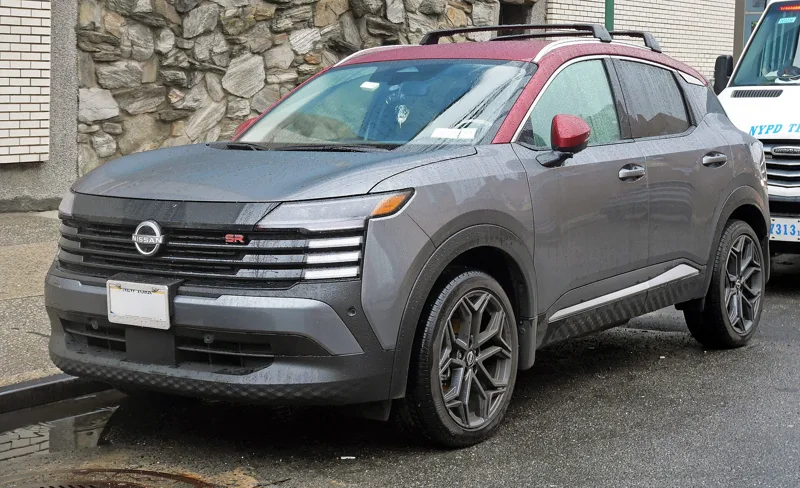
Mexico's version of the N18 received its facelift on 10 February 2023 with Sense, Advance, Exclusive and SR trims. Those four trims made up the Mexican range after the update.
The N19 heavy facelift debuted in Mexico on 4 March 2026. It keeps the N18 structure and chassis, adds a front fascia that takes cues from the Murano, and brings redesigned taillights and rear bumpers. The N19 is aimed at the 2027 model year.
How well did the Versa sell in the United States?
In the United States the Versa sold 113,327 units in calendar 2012 and 117,352 in 2013. It was the least-expensive new car in the country in 2013, and sales climbed to 144,528 in 2015 before falling to 106,772 in 2017, a drop of 19.2%.
The 2015 total was up 3.4% on 2014, before sales slipped in the years that followed.
The US car used a 1.6-litre engine producing about 80 kW (107 bhp) and 145 newton-metres (107 lb ft) of torque. CVT-equipped cars were rated at 30 mpg-US (8 L/100 km; 36 mpg-imp) in the city and 38 mpg-US (6 L/100 km; 46 mpg-imp) on the highway. The facelifted N18 for the US was unveiled on 10 October 2022 and gained a V-motion grille.
Mexico was another strong market, and the Versa became the best-selling car there in 2017. That result came in the same year that US volumes fell.
Nissan discontinued the US Versa after the 2025 model year, with production ending in December 2025. The company cited a shift to higher-margin Sentra and Kicks models, a move that ended America's cheapest new car under $20,000.
Safety ratings and reception
Crash test results varied by market. The 2012 US Versa won an IIHS Top Safety Pick award, and the 2014 model received a 4-star overall rating from the National Highway Traffic Safety Administration. Each rating came from a different testing body, so the results are best read market by market.
In Latin NCAP testing in 2016, a basic Latin American Versa scored 3 stars for adults and 2 stars for toddlers. That result applied to the most basic Latin American configuration, not to every Versa on sale.
The South African Almera, fitted with two airbags, scored 3 stars in a 2021 test. Each result applies only to the car tested in that market.
The Nissan Safety Shield became standard on the 2020 US Versa. In Mexico, the V-Drive gained six airbags on 25 August 2021.
Almera specification by generation
| Generation | Launch | Key engines | Platform and notes |
|---|---|---|---|
| First (N15) | 1995 | 1.4 GA14DE, 1.6 GA16DE, 2.0 CD20 diesel | Replaced the Sunny N14; GTi made 143 PS (105 kW; 141 hp) |
| Second (N16) | January 2000 | 1.5, 1.6 and 1.8 QG petrol; 2.2 YD22DDT diesel | MS platform; wheelbase 2.53 metres (99.6 in) |
| Third (N17) | December 2010, Guangzhou | 1.2-litre HR12DE; 1.5-litre HR15DE | Global V platform; B-segment sedan |
| Fourth (N18) | 12 April 2019 | 1.0-litre HRA0 turbocharged | CMF-B architecture; N19 facelift for the 2027 model year |