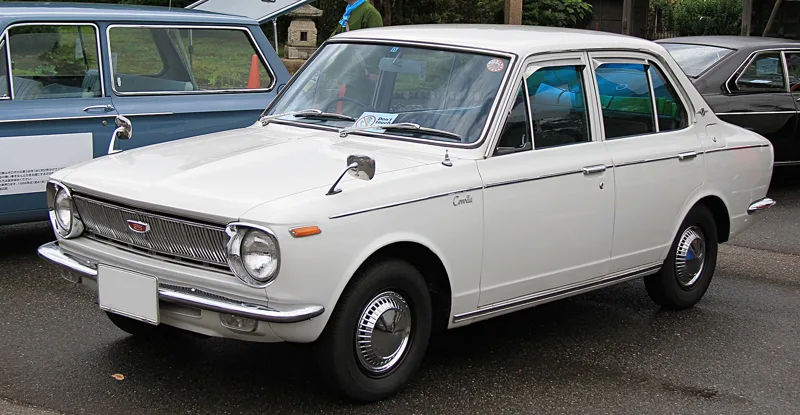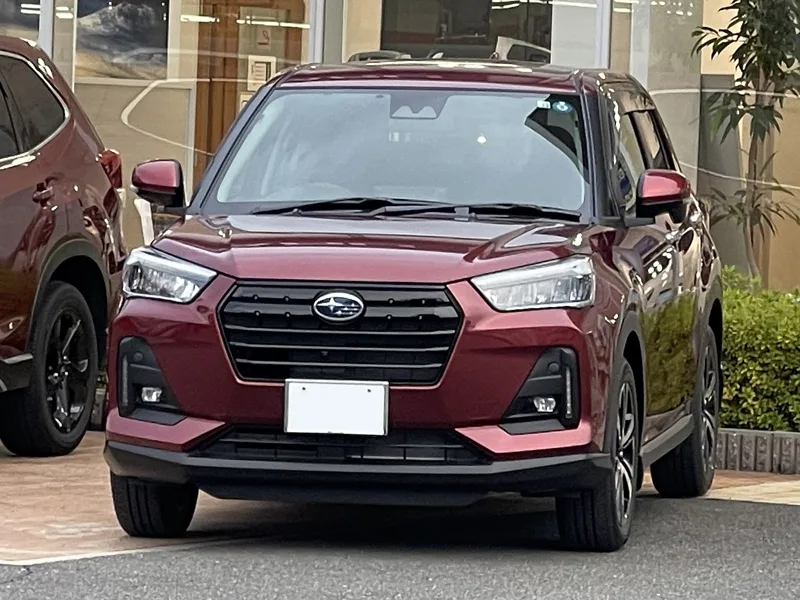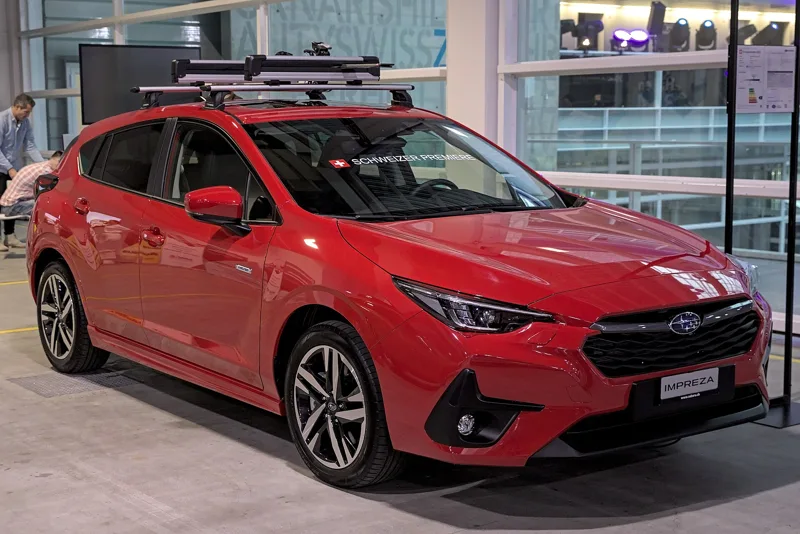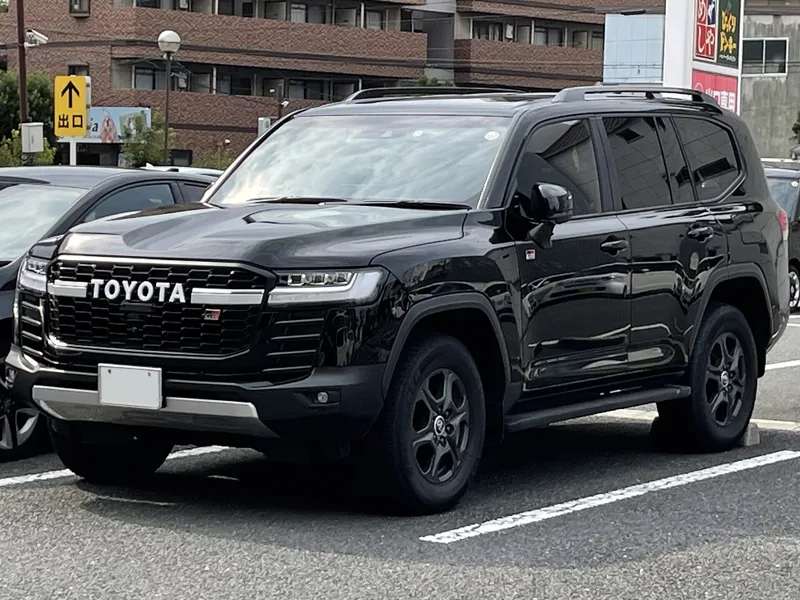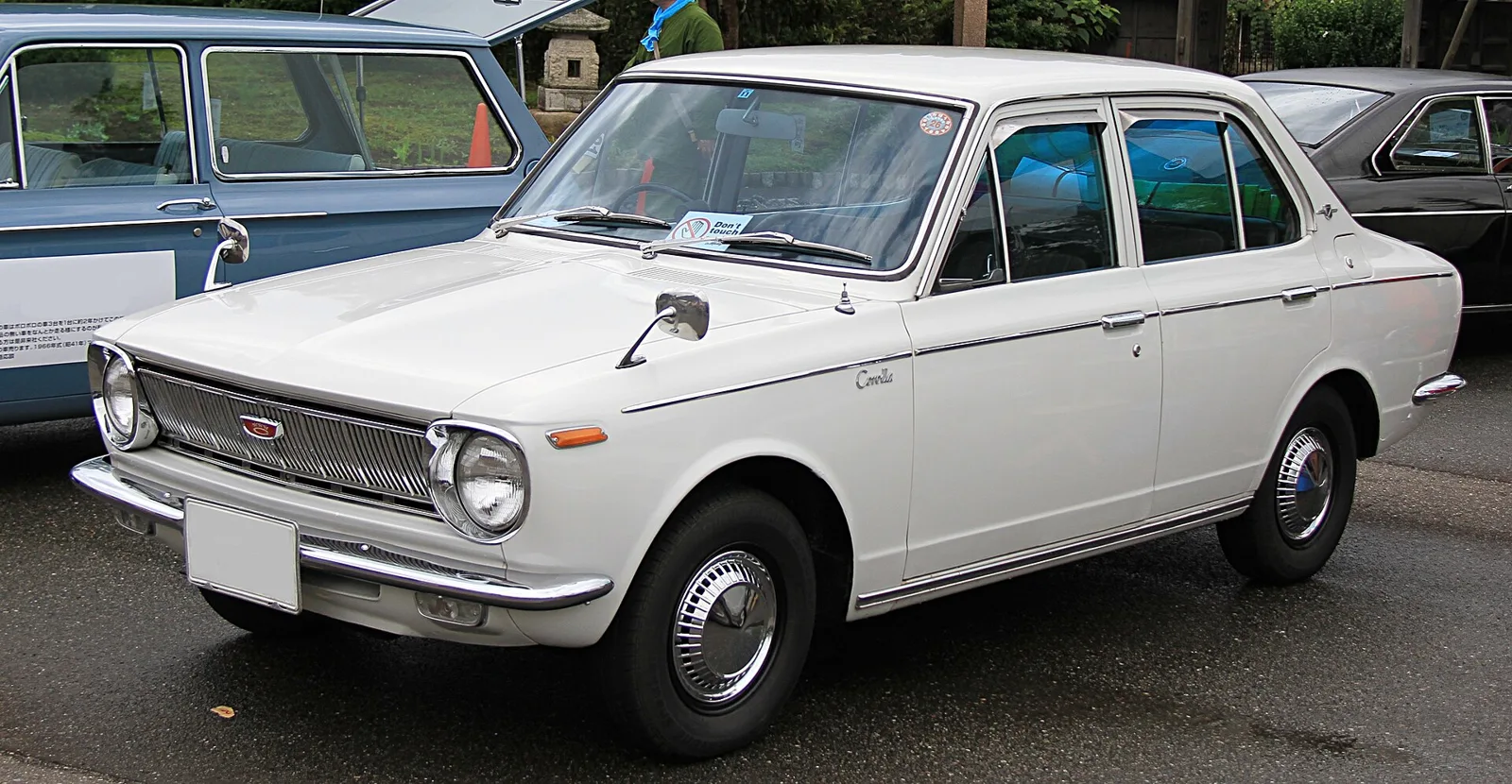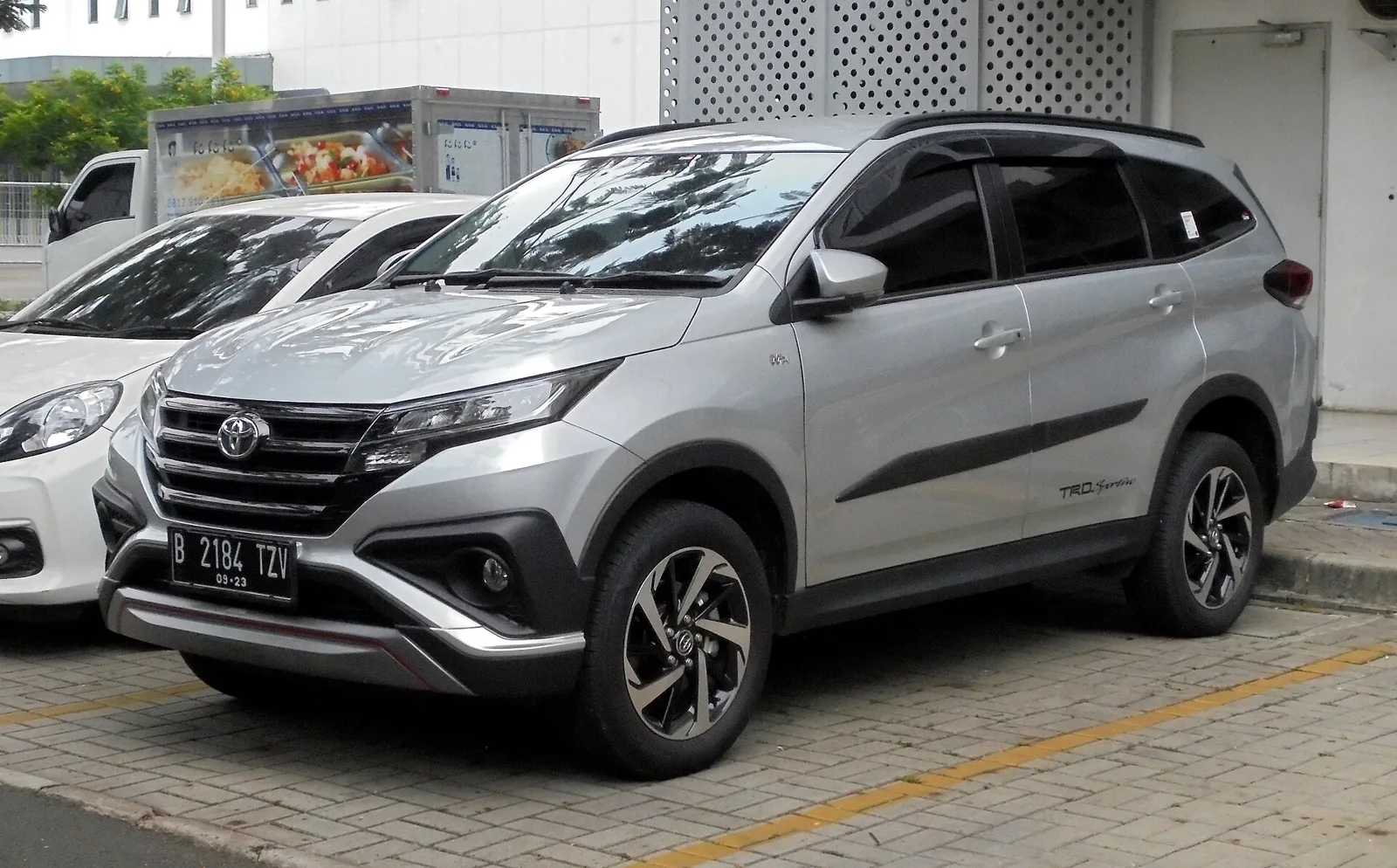
A Japanese maker of kei cars, three-wheelers and compact models, Daihatsu has been a wholly owned Toyota subsidiary since 2016 and still builds small cars for Southeast Asia.
Daihatsu is a Japanese maker of kei cars, based in Ikeda, Osaka, that began as the engine business Hatsudoki Seizo in 1907. Toyota has owned it since 2016, and it withdrew from Europe, the United States and Australia over the following decades.
Daihatsu Motor Co., Ltd. is a Japanese carmaker headquartered in Ikeda, Osaka Prefecture. Its core business is kei cars, the small vehicles that dominate the Japanese market, and it also builds kei trucks, kei vans and larger small cars. Since August 2016 it has been a wholly owned subsidiary of Toyota.
Where did Daihatsu come from?
Daihatsu's roots go back to Hatsudoki Seizo Co. Ltd, which was founded in 1907. Daihatsu itself was formed on 1 March 1951 as a successor to that company, during a major restructuring of Hatsudoki's business. It was an engine maker first, and it became a car maker later.
The name is a combination of two parts. It joins the first kanji of Osaka with the first part of the phrase for engine manufacture, so the word itself points back to the company's industrial origins in the city.
A company that began with railway engines now sells mostly kei cars, and its future runs through the Toyota group.
How did the early engine business develop?
From the beginning until 1930, Hatsudoki's focus was largely steam engines for Japanese National Railways, along with rail carriages for passenger transport. In 1930 a prototype three-wheeler truck was considered and proposed, which pointed the company toward road vehicles. The company then turned to railroad diesel engines, working with Niigata Engineering and Shinko Engineering.
Before it began making automobiles, its main Japanese competitor for diesel engines was Yanmar, which supplied engines that were not fitted to commercial trucks. The choice to focus on cars was shaped by the early years of car making in Japan. Ford opened a factory at Yokohama in March 1925, and General Motors opened Osaka Assembly in 1927. Both factories were taken over by the Imperial Japanese Government before the Second World War.
When did Toyota become involved?
Toyota took a major shareholding in Daihatsu in 1967, at a time when the government wanted the domestic car market opened up. Its stake rose from 16.8 per cent to 33.4 per cent in 1995, and it reached 51.2 per cent in 1998.
Daihatsu became a wholly owned subsidiary in August 2016, and Toyota bought the company's remaining assets that year. Toyota's influence showed in the company's products. Daihatsu had been producing mini-vehicles and small cars under contract for Toyota before the ownership change. The partnership deepened in January 2017, when Toyota and Daihatsu formed an internal company called the Emerging-market Compact Car Company. It was intended to develop compact vehicles for emerging markets, with Daihatsu responsible for product and quality planning. The internal company was abolished on 1 May 2024, and its product planning functions moved to the Toyota Compact Car Company.
What is the Daihatsu New Global Architecture?
The Daihatsu New Global Architecture, known as DNGA, was announced in October 2016 as a new vehicle architecture being developed by the two companies. The second-generation Mira e:S became the first car shown under the new architecture in 2017. The company later revised its definition of DNGA and launched the fourth-generation Tanto as the first DNGA model instead.
That change shows how the architecture was reshaped as the programme developed. Daihatsu also sold Perodua cars in the United Kingdom and Ireland for a time, and the last of those sales ran until 2012.
Where does Daihatsu sell its cars today?
As of 2023 Daihatsu's presence is limited to Japan and Indonesia under the Daihatsu brand, and to Malaysia under the Perodua brand. Those markets are where the company keeps its significant research and development resources, manufacturing facilities and sales operations.
The company's Japanese base is built around kei cars. Its range also includes kei trucks and kei vans, along with larger small cars. Its entry-level compacts are built in Japan and Southeast Asia, and they are often supplied to emerging markets under the Toyota brand.
How did Daihatsu's export business develop?
Exports began in 1953, and the company had shipped half a million vehicles abroad by 1980. A European main office was set up in Brussels in 1979 to control and expand exports to Western Europe. In the years that followed, the export business steadily contracted.
Sales through Toyota's network, along with the transfer of technology to Perodua in Malaysia, partly made up for the lost volume. Daihatsu also supplied cars under other companies' badges in the past. Today the company provides engines and transmissions to Perodua, which builds and markets rebadged Daihatsu cars locally.
Why did Daihatsu leave Europe?
European sales fell from 58,000 in 2007 to 12,000 in 2011, after the financial crisis. The company announced its exit from the market on 13 January 2011, and car sales ceased across Europe on 31 January 2013. The company cited a persistently strong yen as the reason.
The higher yen made it hard to make a profit from exports, and it pushed prices above a competitive level. Daihatsu had no stock of new cars in the UK at the time of the announcement.
What happened in the United States?
Daihatsu entered the US market in 1987 with the Hijet, which was sold as an off-road utility vehicle. The Rocky and the Charade followed in 1988, but the brand's compact and fuel-economical cars did not match what American buyers wanted at the time.
US sales ceased in 1992, and Daihatsu halted production of US-spec vehicles. Toyota, which had recently bought a controlling interest in Daihatsu, continued to support existing customers with after-sales service for some years afterwards.
How did Daihatsu fare in Australia?
Sales slid sharply in the years before Toyota decided to pull the brand out of Australia. The decision came even though the overall new-car market was growing. The Australian business closed in March 2006, after almost four decades of operation.
The models on sale then included the Charade, Copen, Delta, Sirion and Terios.
How strong is Daihatsu in Asia?
Daihatsu has been a major player in Indonesia since 1992, working with Astra Daihatsu Motor to assemble a wide range of private and commercial models. Astra Daihatsu is the largest car producer in Indonesia by output, and Daihatsu is the second best-selling brand there behind Toyota.
The company put 20 billion yen ($238.9 million) into an Indonesian factory in August 2011, aimed at low-cost cars for the Low Cost Green Car scheme. Operations started at the end of 2012, and the plant produces up to 100,000 cars per year.
The Malaysian operation began in 1980 as a joint venture, selling Charade and Mira models. After Perodua was launched, Daihatsu's Malaysian business was scaled down to focus on commercial vehicles, selling the Delta and Gran Max truck chassis.
Thailand was a different story. After the Asian financial crisis, Daihatsu closed its Thai plants and withdrew from the market entirely in March 1998, after mostly selling the Mira there.
What is Daihatsu's record with electric and hybrid cars?
Daihatsu has run a long development programme for electric vehicles. It began with pavilion cars built for the 1970 Osaka World Expo and continued with golf carts and institutional vehicles. An electric version of the Fellow Max kei car followed, and the 1973 oil crisis gave further impetus to the work.
In 1973 the company displayed a 550 W electric trike, the TR-503E, at the Tokyo Motor Show. The tilting Hallo trike followed in November 1974, powered by an electric motor and two 12V batteries, and it entered production in 1975.
The Pico EV Concept, a four-wheeled electric vehicle, appeared from Daihatsu in December 2011. The company's hybrid work moved on too, with a mild hybrid system launched in 2007.
In November 2021 Daihatsu released its first mass-produced full hybrid system, the e-Smart Hybrid. It is a series hybrid, unlike Toyota's parallel hybrid technology. The system was first used in the hybrid version of the A200 series Rocky, and the Toyota-branded Raize uses it under the Hybrid Synergy Drive name.
How did the D logo come about?
The stylised D logo debuted in September 1963 on the Compagno, the first automobile to carry it. Before that, from the company's founding until 1969, Daihatsu used a Ford-like logo with a cursive wordmark outside Japan, and in the 1950s and 1960s it was often called Japan's Ford.
The D became the corporate logo in December 1969. Its shape echoes the D in the earlier logo, and it is also an initialism for the company's name. In November 1989 the D was set inside a chrome oval, and a bolder, bigger chrome version arrived in 2004.
Who is the Daihatsu mascot?
The company's mascot is Kakukaku Shikajika, an anthropomorphic deer. Chiharu Sakazaki, the illustrator, drew him, and Sakazaki also created the mascot used for the Suica card. The mascot wears a white shirt and black pants and is drawn without outlines.
The mascot was first used to advertise the Move Conte, and he has appeared in animated commercials, merchandise and promotional items, mainly in Japan. He is described as having a cool and slightly cynical personality, and he has also appeared in New Year commercials discussing the company's sales.
Kakukaku has a family of four, with a son and a daughter, and the family names were revealed in later 2021. The company also has a smaller mascot, Tufton, a blue bird that was designed to advertise the Taft line.
What was the 2023 safety scandal?
In April 2023 investigators found that Daihatsu had manipulated safety tests on 88,000 cars, most of them sold as the Toyota Yaris in Thailand, Mexico and the Gulf Cooperation Council states. Door trim on crash-test cars had been notched to lower the injury risk, a change that was never made on cars sold to customers.
By December 2023 shipments of 64 models were on hold, covering Mazda and Subaru products and two dozen Toyota-branded models. In some models the airbag control unit used in testing differed from the part fitted to cars sold to the public, and the misconduct went back as far as 1989.
The company shut its Japanese plants until the end of January 2024. Production stayed halted until February through April 2024, when the shipment ban was lifted, and the scandal affected markets across Asia and Latin America.
Who has led Daihatsu?
Mizuo Takezaki led the company from 1951 to 1955, and Soichiro Okudaira led it from 2017 to 2024. Masahiro Inoue has led Daihatsu since 2024. The leadership has changed hands several times, and the most recent change came in 2024, the same year the compact-car company was abolished.
Where are Daihatsu's plants?
The oldest site, Ikeda Plant 1, dates from May 1939 and sits in Ikeda, Osaka. The company's offices in Osaka and Tokyo sit alongside its production sites. Its factories in Ryuo, Shiga, opened in April 1974 and January 1989. The company also opened a factory in Oyamazaki, Kyoto, in April 1973.
Its two Nakatsu plants in Oita opened in November 2004 and November 2007, and the Kurume Plant opened in August 2008.
Key Daihatsu facts at a glance
| Item | Detail |
|---|---|
| Headquarters | Ikeda, Osaka Prefecture, Japan |
| Predecessor | Hatsudoki Seizo Co. Ltd, founded 1907 |
| Formed | 1 March 1951 |
| Toyota ownership | Wholly owned since August 2016 |
| Share of Toyota Group sales | 4 per cent (2021) |
| Indonesia investment | 20 billion yen ($238.9 million), up to 100,000 cars a year |
| Hybrid system | e-Smart Hybrid, series hybrid, November 2021 |
| European exit | Sales ceased 31 January 2013 |
| Australian exit | March 2006, after almost 40 years |