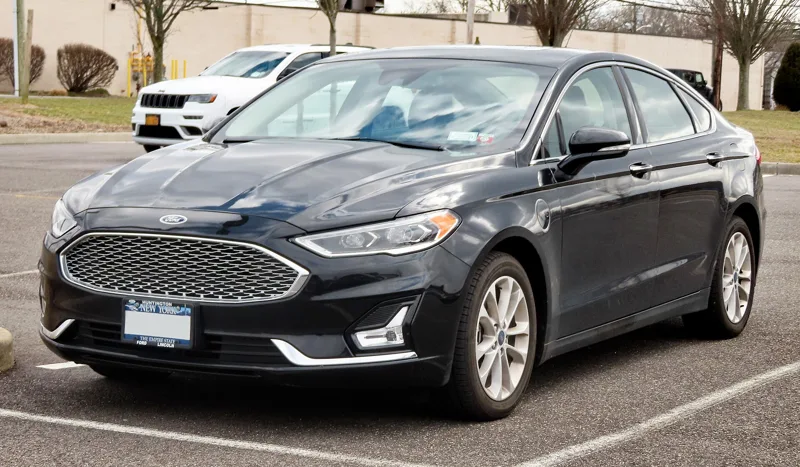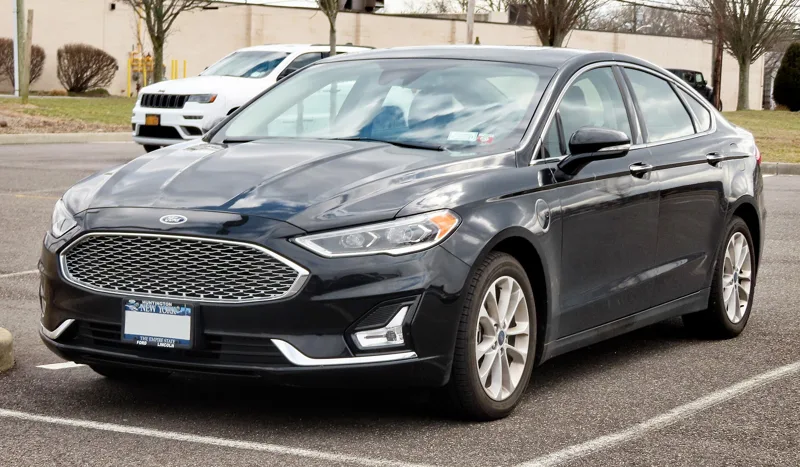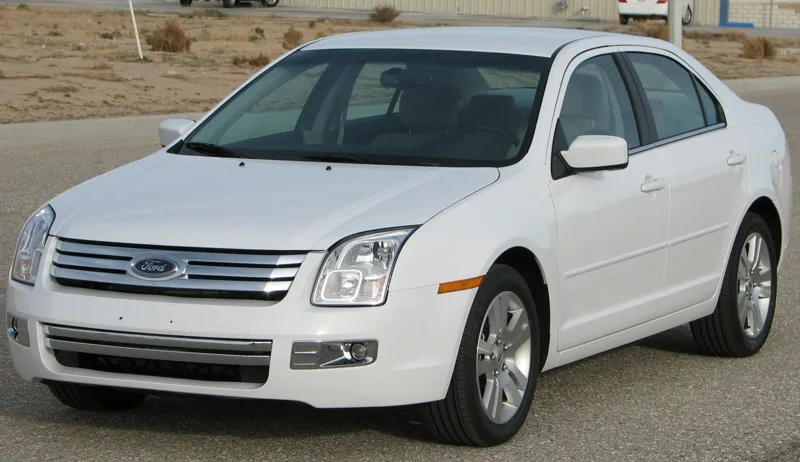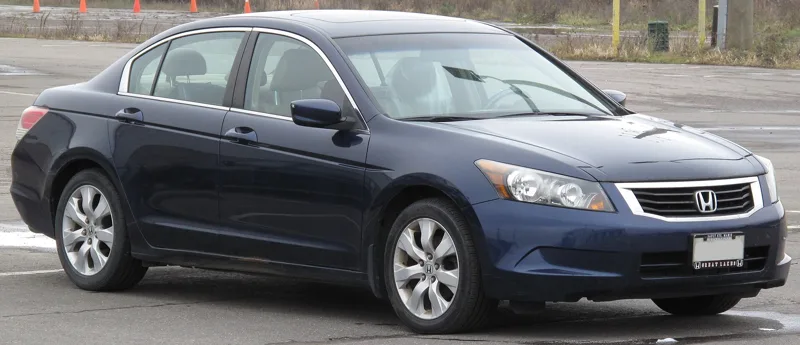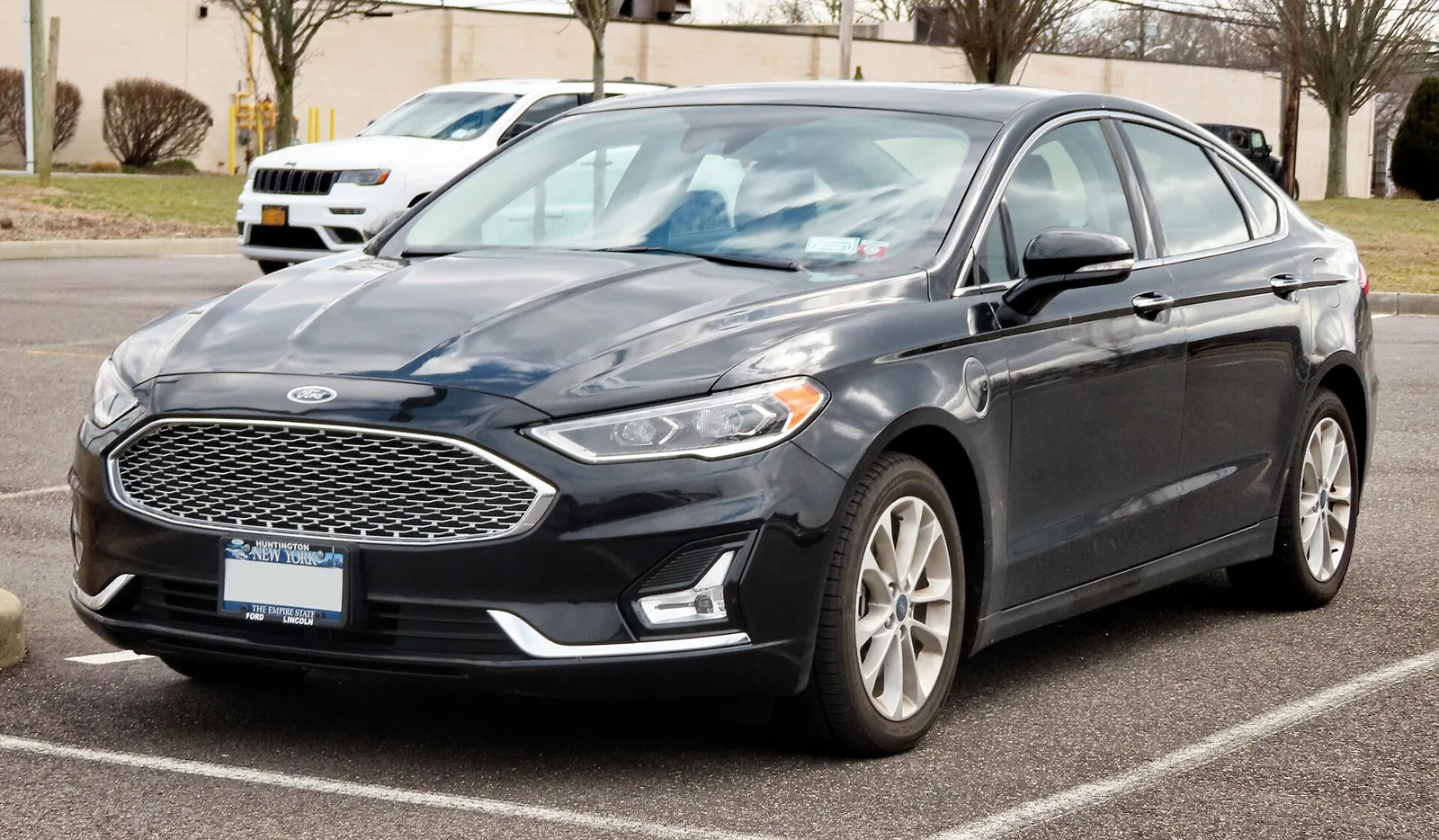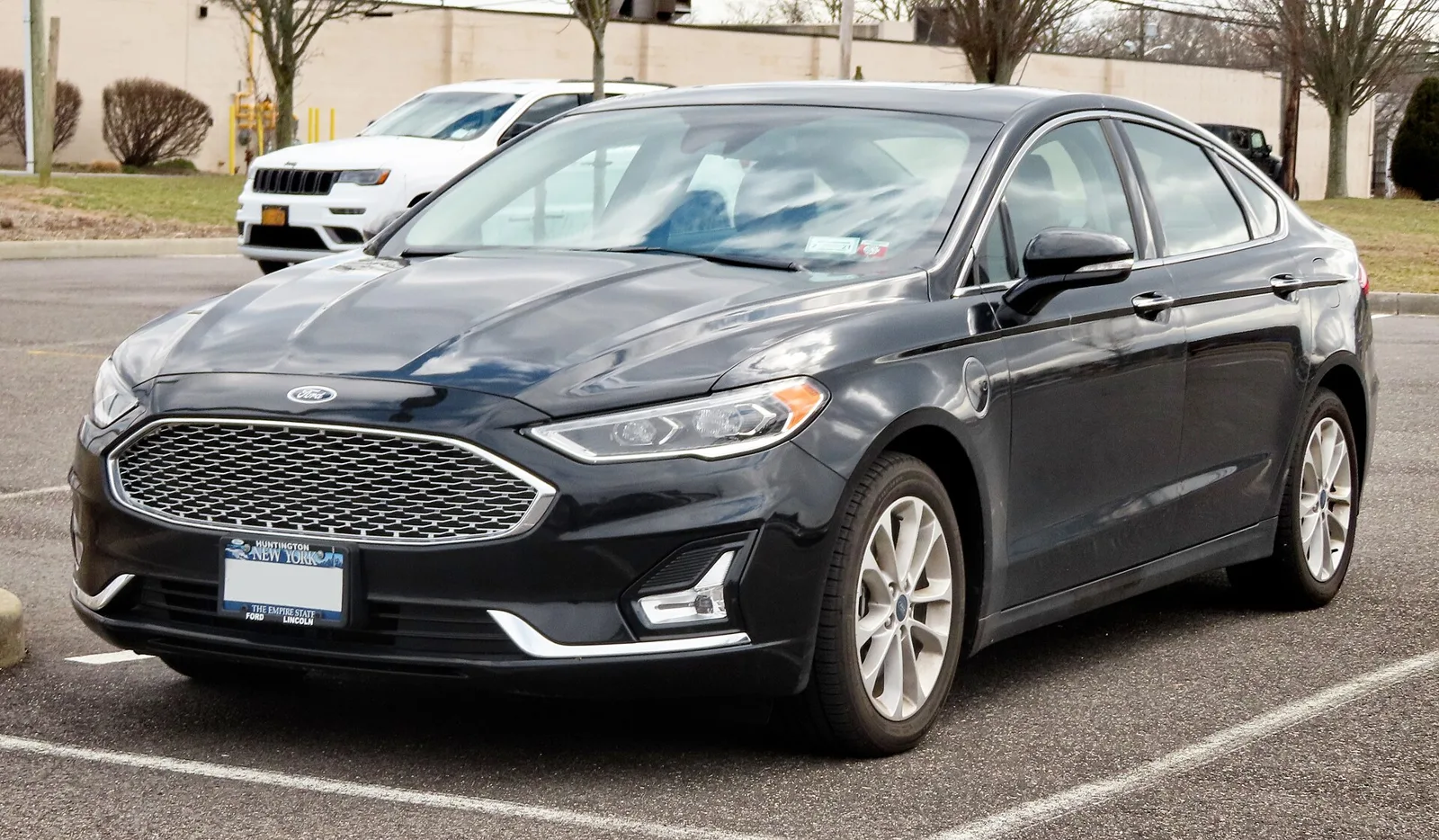
Ford's Mazda-designed Fusion and Toyota's sixth-generation Camry arrived within months of each other, and both pushed hybrids in the same years.
The Ford Fusion went into production in August 2005, and the Toyota Camry XV40 followed in 2006. The Fusion used a Mazda-designed platform built in Mexico, while the Camry offered a 2.5-litre and a 3.5-litre engine and a 140 kW hybrid.
The Ford Fusion and the Toyota Camry XV40 were both mid-size sedans from the second half of the 2000s, and they arrived within months of each other. The Fusion was built on a Mazda-designed platform in Mexico, while the Camry was Toyota's own sixth-generation car outside Japan. Both offered hybrids, and both carried their own strengths into the showroom.
Which arrived first?
The Fusion went into production on 1 August 2005, which gave it an early start on the Camry. The XV40 was introduced at the January 2006 North American International Auto Show, and it made its North American debut in March 2006 as a 2007 model.
The Fusion therefore had a head start on sales, while the Camry arrived with a hybrid from day one. The XV40 was the first Camry series available with a petrol-electric drivetrain, which was offered alongside the four- and six-cylinder cars.
The Camry's production run ran from January 2006 to October 2011, and it was replaced by the XV50. The Fusion's first generation carried on through the 2010 refresh, and the second generation appeared later as a separate design.
Two mid-size sedans from the late 2000s, one built on a Mazda-designed platform and the other a Toyota hybrid that sold well.
How were the two cars built?
The Fusion was made at Ford's Hermosillo plant in Sonora, Mexico, where the Lincoln MKZ was also built. The CD3 platform was originally designed by Mazda as its G platform, and Ford used it across its mid-size range.
The Camry's hybrid was built at Tsutsumi in Japan at first, and it was never sold in its home market. From October 2006 North American Camry Hybrids were made at Toyota Motor Manufacturing Kentucky, and Toyota Australia began local hybrid production at Altona, Victoria, on 11 December 2009.
Thai production of the hybrid began in May 2009 at the Gateway plant in Chachoengsao. Those Thai cars were based on the prestige Camry design, which set them apart from the regular car built elsewhere.
How did the Camry's size and layout compare?
The XV40 had a wheelbase 55 mm (2 in) longer than its predecessor, along with wider wheel tracks and a stiffer body. Toyota kept the overall length the same but pushed the windscreen and rear glass outward to gain interior room, especially fore and aft.
The Camry's cargo space was 535 litres (19 cu ft), 32 litres less than the car it replaced. The SE and Sportivo had 504 litres (18 cu ft) because of a brace behind the rear seat, and the hybrid fell to 389 litres (14 cu ft) because its battery pack sat in the boot.
No Fusion boot or interior volume is quoted, so the Camry is the only one of the two with published cargo figures. Toyota's drag figure for the regular XV40 was 0.28, falling to 0.27 for the hybrid.
What engines did each car use?
The Camry's entry engine was a 2.4-litre 2AZ-FE four-cylinder, front-wheel drive with a five-speed manual or automatic. The Japanese market alone had an all-wheel drive 2.4, which was paired with a four-speed automatic.
In the United States from January 2009, the 2.4-litre gave way to the 2.5-litre 2AR-FE, which came with new six-speed manual and automatic transmissions. Some markets offered a 3.5-litre 2GR-FE V6 with a six-speed automatic at the top of the range.
The Fusion's 2.3-litre Duratec I4 produced 160 hp (119 kW), and its 3.0-litre Duratec V6 made 221 hp (165 kW) with a six-speed Aisin automatic. The 2010 refresh brought a 2.5-litre I4 rated 175 hp (130 kW), a 3.0-litre V6 at 240 hp (179 kW) and a Sport version with a 3.5-litre Duratec 35 at 263 hp (196 kW).
How did the hybrid versions compare?
The Camry's hybrid used a 2.4-litre 2AZ-FXE Atkinson-cycle engine with Toyota's Hybrid Synergy Drive. The petrol engine made 110 kW (148 hp) and 187 N-m (138 lb-ft), and the 105 kW (141 hp) electric motor added 270 N-m (199 lb-ft). Together they made 140 kW (188 hp).
The battery was a nickel-metal hydride unit of about 70 kg (154 lb) in the trunk, and the hybrid hardware added roughly 135 kg (298 lb). Toyota claimed a 15 percent acceleration gain over the non-hybrid 2.4 with five-speed automatic, which offset the extra weight.
The Fusion Hybrid was offered on the SEL base with a 2.5-litre Atkinson-cycle I4 and an Eco Driving mode that told the driver how economically they were driving. Its instruments used an electroluminescent gauge cluster, and its Eco Driving mode told the driver how economically they were driving.
Camry hybrid sales were strong. By August 2009 the car had sold more than 167,000 units worldwide, 8.3 percent of Toyota's hybrid sales and second only to the Prius. In the US it had reached 154,977 units by December 2009, making it the third-best-selling hybrid there.
Specifications side by side
| Specification | Ford Fusion | Toyota Camry (XV40) |
|---|---|---|
| Production | From 1 August 2005; two generations through 2020 | January 2006 to October 2011 |
| Platform | CD3, originally designed by Mazda as its G platform | Toyota's XV40; wheelbase 55 mm longer than predecessor |
| Base engine | 2.3-litre Duratec I4, 160 hp (119 kW) | 2.4-litre 2AZ-FE I4 (front-wheel drive); 2.5-litre 2AR-FE in the US from 2009 |
| V6 engine | 3.0-litre Duratec, 221 hp (165 kW); 2010: 240 hp (179 kW) | 3.5-litre 2GR-FE with six-speed automatic in some markets |
| Transmission | Five-speed manual or automatic; six-speed Aisin automatic on the V6 | Five-speed automatic; six-speed manual or automatic from January 2009 (US) |
| Hybrid | Fusion Hybrid on the SEL, 2.5-litre I4 with Atkinson cycle | 2AZ-FXE hybrid, 140 kW (188 hp) combined |
| Drag coefficient | Not given | 0.28; hybrid 0.27 |
| Cargo space | Not given | 535 litres (19 cu ft); hybrid 389 litres (14 cu ft) |
| IIHS results | Good in frontal offset and side impact from late 2007; roof Good after May 2010 | Good in frontal offset and side impact; Good in all 14 measured categories |
| Top Safety Pick | 2010, for Fusions built after April 2010 | Not given |
| Recalls | Floor-mat investigation; 2015 steering recall | Not given |
| Hybrid sales | Not given | 154,977 in the US by December 2009 |
| Build location | Hermosillo, Sonora, Mexico | Kentucky (US); Tsutsumi (Japan); Altona, Victoria (Australia) |
How did the two cars compare on safety?
The Camry earned Good ratings from the IIHS in both the frontal offset and side impact tests, and it was rated Good in all 14 measured categories. Its roof strength was also Good, which gave it a clean sheet in the IIHS tests.
The Fusion's record moved over time. Its frontal offset rating was Acceptable early on and Good later, and its side impact rating went from Poor without side airbags to Good. Its roof was Acceptable before May 2010 and Good afterwards, which was why the 2010 Top Safety Pick applied only to cars built after April 2010.
Toyota strengthened the XV40 with ultra high-tensile steel, hot-stamped into the roof, the A and B-pillars and the rocker panels. The front seat mounts were designed to carry side impact loads across the car.
Which Camry trim matched the Fusion?
Toyota's sporty trim, the SE in North America and the Sportivo in Australasia, was developed by Toyota Australia. It had a black honeycomb grille, tinted lamps, a rear lip spoiler and 17-inch wheels, with firmer shock absorbers, thicker anti-roll bars and a lower ride height.
The Fusion's sporty answer was the Sport, which came with 18-inch alloys, a rear spoiler, lower body side skirts, leather seats and a 3.5-litre Duratec V6. The Camry SE came with charcoal sports fabric and a leather-wrapped three-spoke wheel, so the two sporty trims took different routes.
The Camry SE's V-brace stopped the rear seat from folding flat, leaving a ski-pass only layout. That is a practical trade-off buyers would have to weigh against the sporty look.
How did the prestige Aurion differ from the regular Camry?
The Aurion was a rebadged XV40 designed in Australia, with its own front and rear fascias. Its body sides, doors, rear quarters, greenhouse and roof were shared with the regular Camry, so the two had the same wheelbase, axle tracks and interior dimensions.
Inside, the Aurion kept the regular car's lower dashboard but gained a redesigned upper dash and a revamped centre console. In the Middle East the Aurion shared its dashboard with the regular Camry.
The Aurion followed Toyota's "vibrant clarity" design language with an extra idea called "perfect imbalance". Intersecting concave and convex surfaces on the front fascia were balanced by horizontal headlamps, and the rear had a clamshell-shaped boot lid that wrapped over the flanks, a deep bumper and dual exhaust pipes.
How did the Camry change for 2009?
Toyota refreshed the regular Camry XV40 for 2009, unveiling the update in January 2009 at the Detroit show. The changes included a new front fascia with larger air intakes, larger projector headlamps and LED tail lamps across the range, which had been a hybrid-only feature before.
Inside, the revised audio system added satellite radio in North America and USB connectivity, and the screen on satellite navigation models gained a backup camera. The hybrid got its own distinct front end, with a central air dam, vertically slotted fog lamps and a single-blade grille.
How did the Fusion change in its early years?
The Fusion's first generation picked up options quickly. For 2008 the Sport Appearance Package brought 18-inch machined aluminium wheels and red stitching, and the Moon and Tune package added a power moonroof and an eight-speaker Audiophile system.
For 2010 Ford facelifted the Fusion extensively, and the car gained a new 8-inch navigation screen, a new centre console and Ford's Ice Blue illumination. The 2010 model also used Carlite SoundScreen acoustic glass, which Ford said cut noise by as much as 6 dB at certain frequencies.
Where were the two sold?
The Fusion replaced the Mondeo in Latin America, and it was sold in Europe and Asia as the Ford Mondeo from 2015. In South Africa it kept the Fusion name. In the Middle East only the 2.5-litre engine was offered, and South Korea also had only 2.5-litre engines, including the hybrid's, as of the 2012 model year.
The Camry's regular version was sold in Australasia, Hong Kong, India, Japan, the Middle East, North America and Russia. China and most of Southeast Asia received the Aurion, a prestige version designed in Australia, although Toyota badged it as the Camry there.
Japan had its own companion. From 2006 to 2010 a badge-engineered Daihatsu Altis sold alongside the Camry, which had a different generational lineage in Japan. The XV40 was then replaced by the XV50 in 2011.
Which buyer suits each car?
A buyer who wanted a mid-size sedan with a choice of four-cylinder, V6 and hybrid power, and who liked Ford's sporty Sport trim, would look at the Fusion. The Fusion also won early subscriber comparisons on handling and styling.
A buyer who wanted the Camry's cargo room, its hybrid economy and a sporty SE that could carry a rear seat or a ski pass would look at the Toyota. Its IIHS record, with Good in all 14 categories, also suits buyers who put crash results first.
Neither car has a clear winner on every measure in these figures. The Camry has the fuller cargo and hybrid figures, while the Fusion has the stronger later awards and the 2019 sales position in the United States.