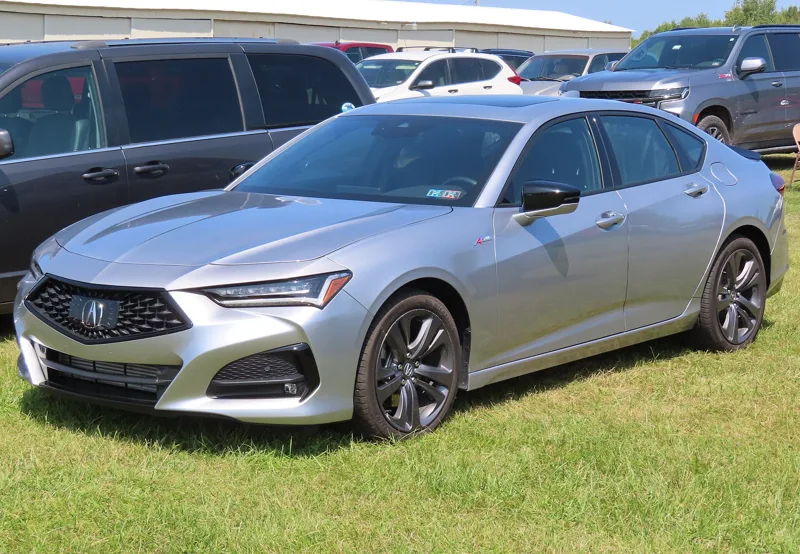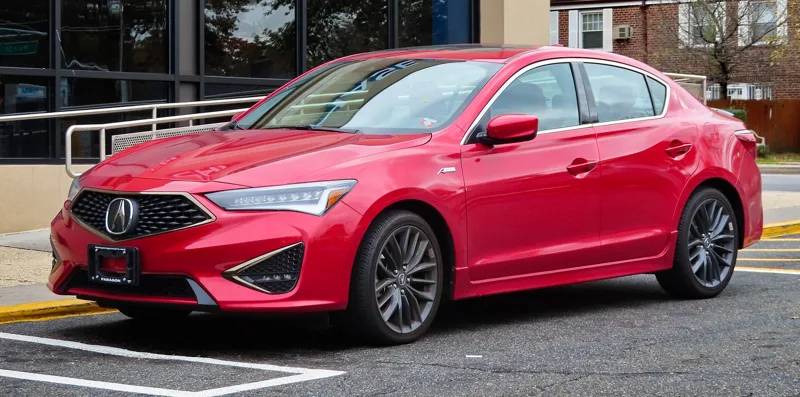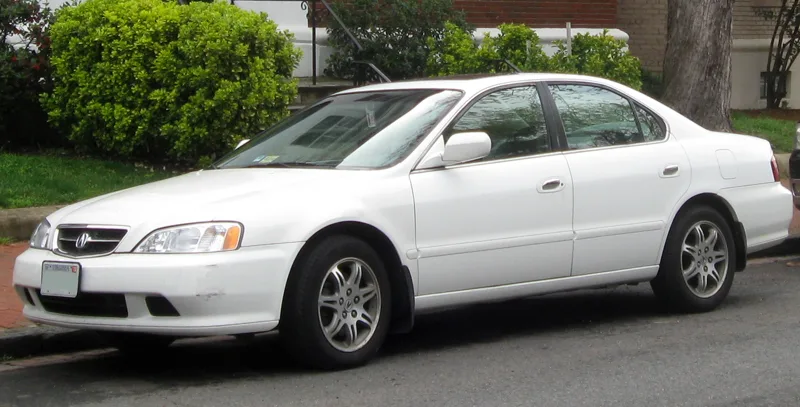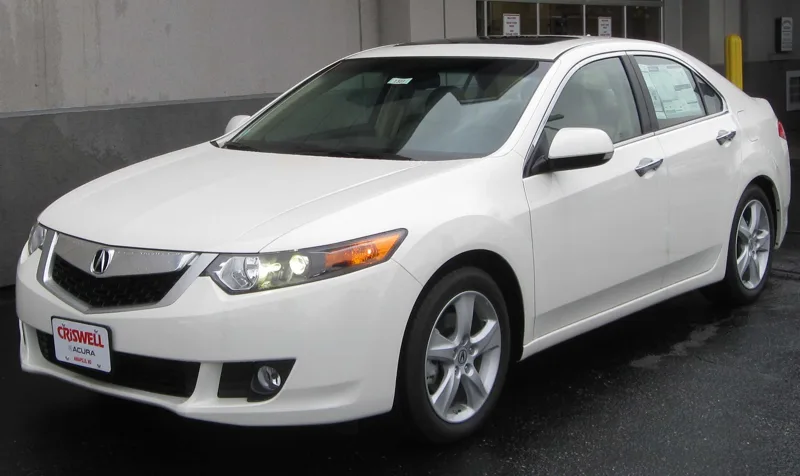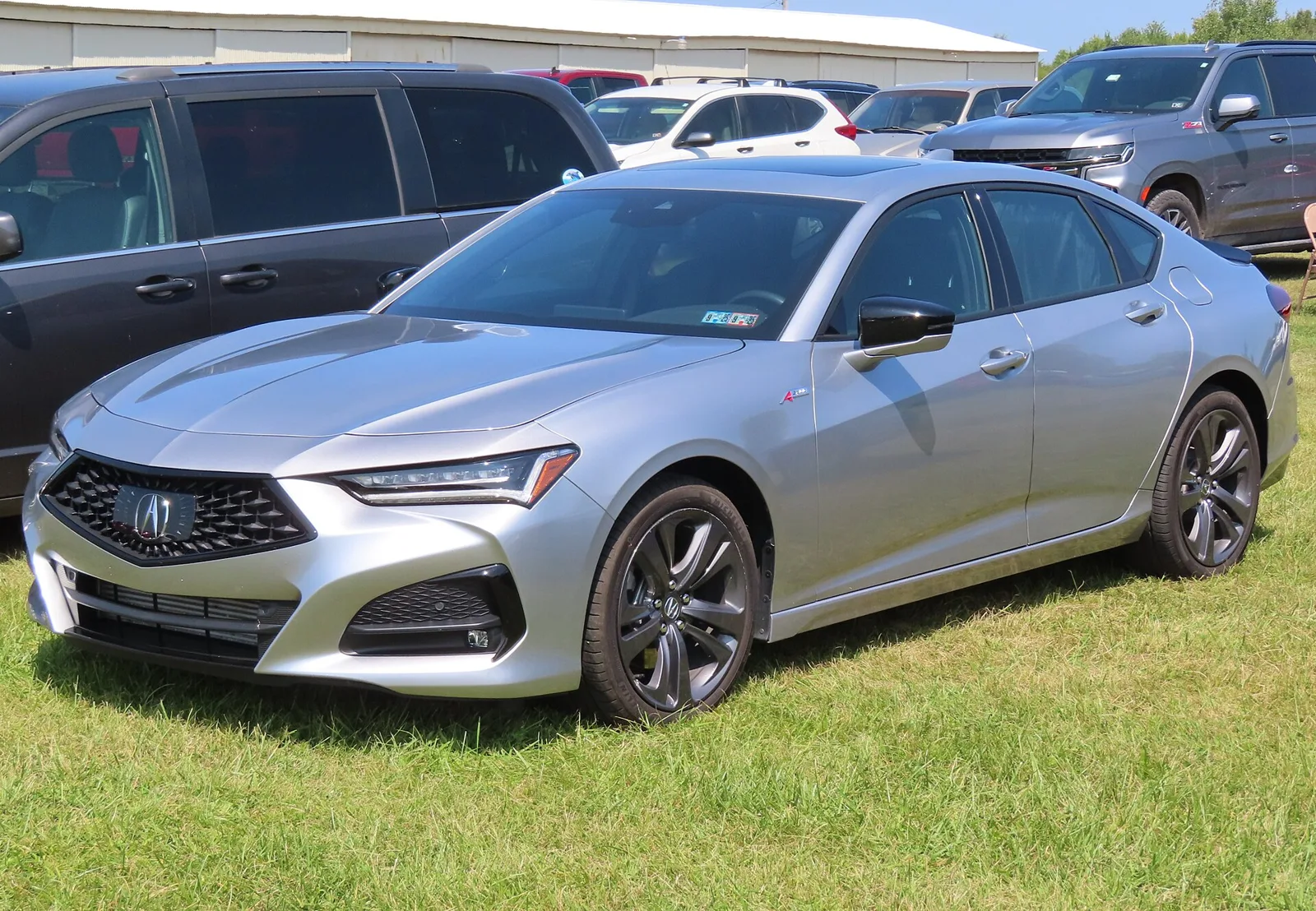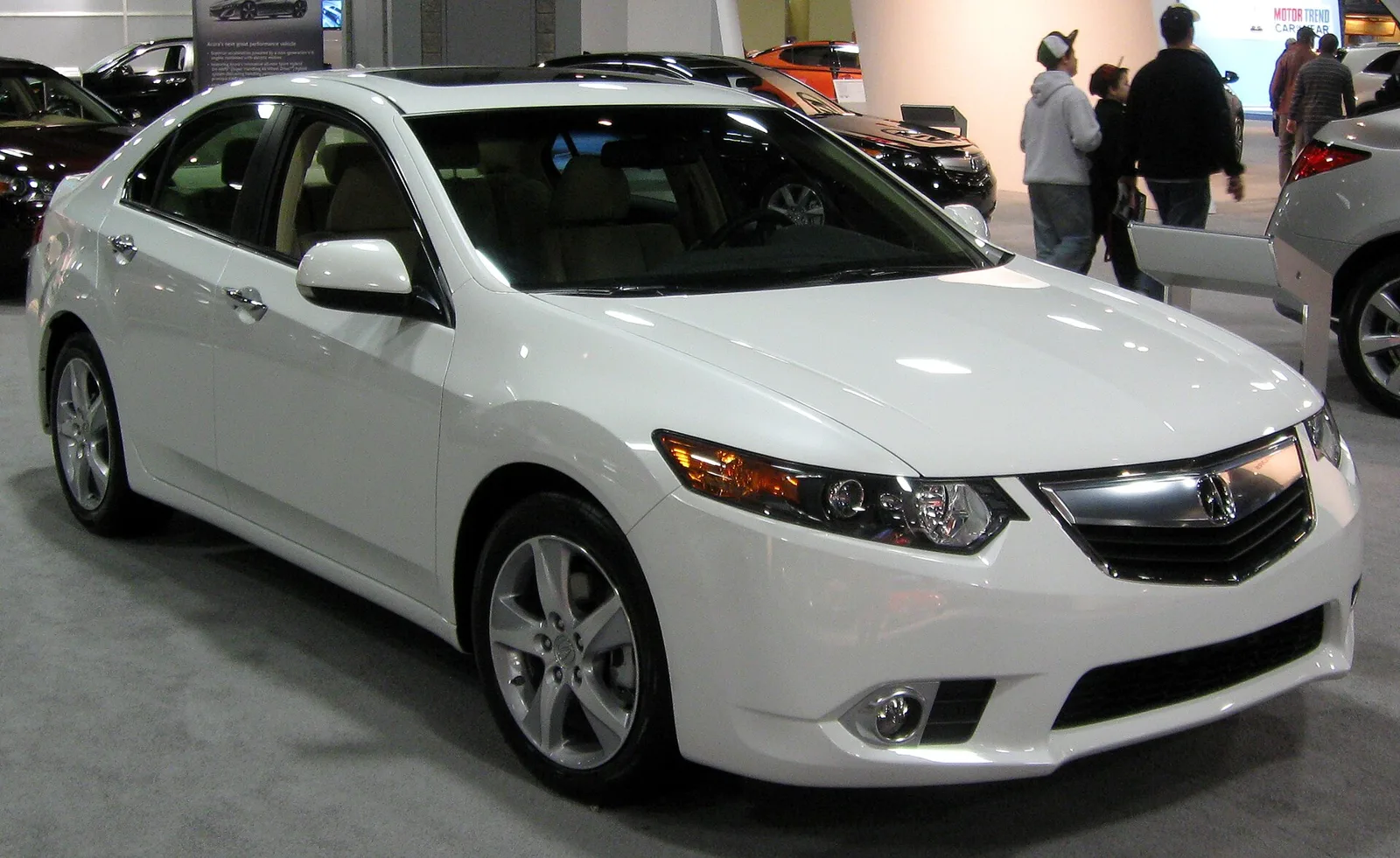
A rebadged Japanese Accord that grew into a second generation, a V6 option, a sport wagon and a racing programme.
The Acura TSX was a compact executive car sold by Acura from the 2004 to 2014 model years. Built in Sayama, Japan, it was based on the Honda Accord, spanned two generations, and was succeeded by the TLX in 2014.
Acura's TSX was sold from the 2004 to the 2014 model years as a compact executive sedan built by Honda. Both generations were derived from Honda Accord models that were smaller and sportier than the American car.
Where did the Acura TSX come from?
The car arrived in April 2003 as a 2004 model, a rebadged Japanese-market Honda Accord 2.4 Type-S. Its interior came from the Japanese fourth-generation Honda Inspire, and its production debut took place during the 2003 North American International Auto Show.
The car replaced the Integra sedan, which had been discontinued in the United States in 2001. In Canada the EL had filled the Integra sedan's place from 1996, so the TSX took over that role only in the US market.
All TSX models were built in Sayama, Saitama, Japan, and the car sat below the larger TL in Acura's lineup. Both cars drew on the Accord platform, although the TL used the bigger North American version.
A Japanese-built Accord cousin that gave Acura an entry-level sedan for a decade, then made way for the TLX.
What engine did the first-generation TSX use?
The first TSX used a 2.4-litre inline-four designated K24A2, which produced 200 hp at launch. The engine featured i-VTEC variable valve timing, and unlike other Honda K-series engines, its timing acted on both the intake and exhaust cams.
The K24A2 was related to the engine used in the seventh-generation Accord, the CR-V and the Element. A six-speed manual with a magnesium casing saved weight, while a five-speed automatic was available at no extra cost in the United States.
Ahead of the 2006 model year, the K24A2 received a slightly larger throttle body and intake valves, plus changes to cam duration and valve lift, which lifted output to 205 hp.
How did the first-generation TSX change over its life?
For 2005 Acura added XM Satellite Radio, plus a power passenger seat with four-way adjustment and illuminated steering-wheel audio and cruise controls. Buyers also got a multi-information display and a memory setting for the driver's seat, linked to the key in use.
The model year 2006 update, with sales from 9 November 2005, brought a sportier look: reworked front and rear styling, side skirts fitted as standard, integral fog lights and restyled wheels. Bluetooth HandsFreeLink could pair six phones, and voice control handled the calls.
The 2007 model year added tyre pressure monitoring and an improved electronic rear-view mirror, and 2008 brought a new colour. Launch colours included Milano Red, Nighthawk Black Pearl and Premium White Pearl.
How did the first-generation TSX fare in crash tests?
The Insurance Institute for Highway Safety rated the first-generation car Good for frontal offset testing, Poor for rear crash protection and Acceptable for side impacts. The car also earned a five-star frontal rating from the US National Highway Traffic Safety Administration.
The car also won the IIHS Best Pick award for a frontal impact.
What was the second-generation TSX?
The second-generation car was unveiled at the New York show on 20 March 2008, before going on sale on 24 April 2008 as a 2009 model. It was built on the eighth-generation Japanese Accord and was larger than its predecessor.
Width grew by 3.0 inches (76 mm), the track by 2.6 inches (66 mm), and the wheelbase by 1.3 inches (33 mm). Length increased by 2.4 inches (61 mm), and the car gained roughly 45 to 68 kg (100 to 150 lb) in curb weight.
The body used Honda's Advanced Compatibility Engineering structure, meant to lessen the effect of crashes on those inside. US cars came with leather upholstery, dual-zone climate control, a power driver's seat with memory, a sunroof, Xenon headlights and a USB port.
What engines did the second-generation TSX offer?
The base engine was a 2.4-litre inline-four with 201 hp (150 kW) at its peak, plus 172 lb-ft (233 Nm) of torque. Acura said the new unit spread its power across a wider rev range, which gave a stronger sense of power even with lower peak output than the 2008 model.
The automatic gained steering-wheel paddle shifters, and the six-speed manual remained available. From the 2010 model year a 3.5-litre V6 rated at 280 hp joined the range, shared with the Acura TL and offered only with the five-speed automatic.
A 2.2-litre i-DTEC clean turbodiesel had been planned for the 2010 model year, but Honda abandoned diesel plans for the US and Japan in favour of hybrid powertrains.
What changed with the 2011 facelift and the 2012 Special Edition?
For the 2011 model year the upper grille gained horizontal slots, a thin chrome surround replaced the wide silver one, and the front bumper and lower grille were redesigned. Inside, the car gained more LED lighting, a new navigation screen and rear-seat centre vents.
The 2012 Special Edition marked Acura's anniversary year. It had a more aggressive front spoiler, synthetic suede seat inserts with red backing and aluminium pedal covers. The trunk lid carried a Special Edition badge, and the body gained a rear fascia and side sills.
What was the TSX Sport Wagon?
The TSX Sport Wagon was a badge-engineered version of the Honda Accord Tourer, unveiled at the 2010 New York Auto Show. It went on sale in the United States on 21 December 2010 as a 2011 model and was never sold in Canada.
The wagon shared the sedan's 201 hp four-cylinder, the five-speed automatic and its four-wheel independent sports suspension. It had no manual gearbox and no V6, and it offered 60.5 cubic feet of cargo space with the rear seats folded and 25.8 cubic feet with them up.
The rear seats split 60/40. A compact tyre repair kit introduced in September 2011 freed up a much larger underfloor storage area for the 2012 model year.
How did the second-generation TSX do in safety testing?
The IIHS found the 2009 to 2011 TSX had an overall driver death rate of 7 per million registered years, the second lowest among midsize four-door cars. Its death rates for single-vehicle crashes and for rollovers were both zero.
The IIHS scored the second generation Good in front and side impact tests, with Good marks in all 14 measured categories, and it gave the car a Best Pick accolade.
What awards did the TSX win?
The TSX was named the 2008 Wheels Car of the Year and was a 2009 Motor Trend Car of the Year finalist. CNN ranked it top for resale value in the sedan category on 29 November 2006. Consumer Reports and the IIHS also gave it strong marks, as the sections below explain.
Car and Driver put it on its Ten Best list in the first three years of production, from 2004 to 2006. SmartMoney named it the top-value car of 2004 in the sedan category under US$35,000.
In November 2004 Consumer Reports recommended the TSX and named it best overall among four sporty sedans, and in April 2007 it rated the used car a good bet. US News chose it as the best upscale small car for families in 2011.
Did the TSX compete in racing?
Realtime Racing took a factory TSX and readied it for the SCCA Pro Racing World Challenge's GTS category. The TSX competed in both the Touring and GTS classes, so Acura's racing record covered two categories. The car was stiffened, lightened and given raised compression, along with a custom sequential transmission.
Acura won the 2005 manufacturers' title in the Touring class with the RTR TSX, and Peter Cunningham took the drivers' championship that year. The brand returned in 2006 to win the Speed World Challenge Touring Car manufacturers' title again, with TSX drivers finishing third and fourth in the drivers' standings.
Pierre Kleinubing won the title in 2007, and Peter Cunningham claimed it again in 2008. The 2009 RTR line-up featured Cunningham and Kleinubing alongside Grahovic, Wittmer and Courtney.
What replaced the Acura TSX?
Honda announced in late 2013 that the TSX would be replaced by the TLX sedan, and it ended TSX sales in 2014. The TLX also took the place of the TL, although it sits close in size to that car.
The Civic-based ILX had already become Acura's entry-level car, a role the TSX held before it.
Why was the TSX Acura's smallest car?
Between 2007 and 2012 the TSX stood as the smallest Acura, with only the Civic-based CSX and the EL sold in Canada below it. The ILX took over as the entry-level car for the 2012 model year. Its size made the TSX the brand's entry point for buyers in those years.
The TSX had already taken on the entry-level role after the RSX was discontinued in 2006, so its time at the bottom of the lineup spanned several years.
How was the TSX sold in Canada?
Canadian buyers of the second generation got a Premium Package, which in the US market was simply standard equipment. The base trim had cloth seats and halogen headlights, and it lacked the USB port, memory seat function and fog lamps.
Canada also received an A-Spec version of the 2012 Special Edition, with A-Spec lettering on both front fenders and 18-inch multi-spoke alloy wheels in silver and dark grey.
What are the Acura TSX specifications?
| Specification | Detail |
|---|---|
| Built in | Sayama, Saitama, Japan |
| Model years | 2004 to 2014 |
| First-generation engine | 2.4-litre K24A2 inline-four, 200 hp, later 205 hp |
| Second-generation engine | 2.4-litre inline-four, 201 hp (150 kW), 172 lb-ft (233 Nm) |
| V6 option | 3.5-litre, 280 hp, from 2010 |
| Second-generation width | 3.0 inches (76 mm) wider than the first generation |
| Sport Wagon cargo area | 60.5 cubic feet with seats folded |