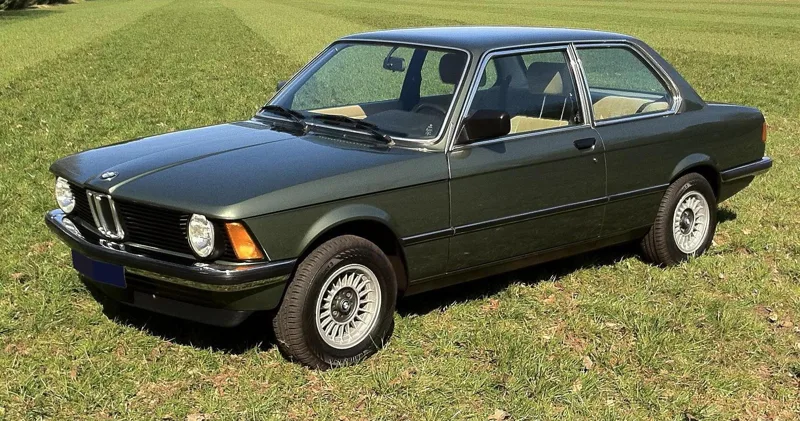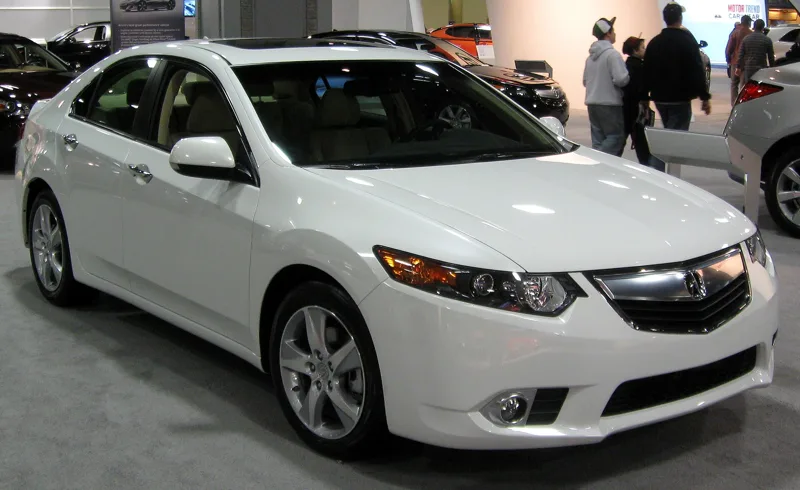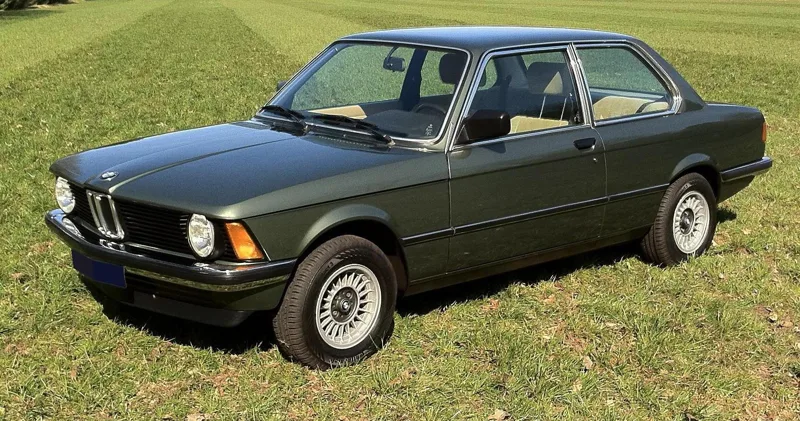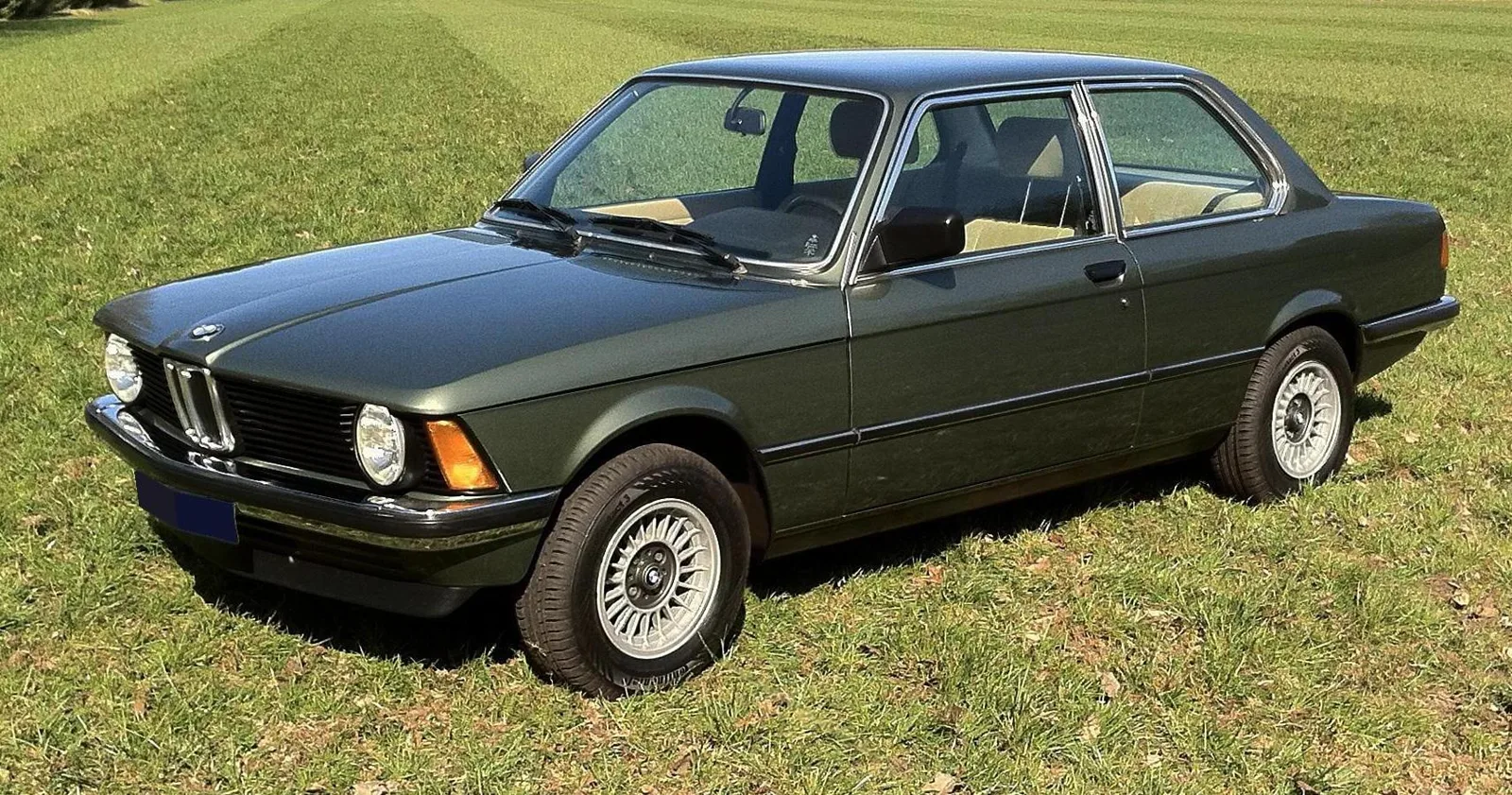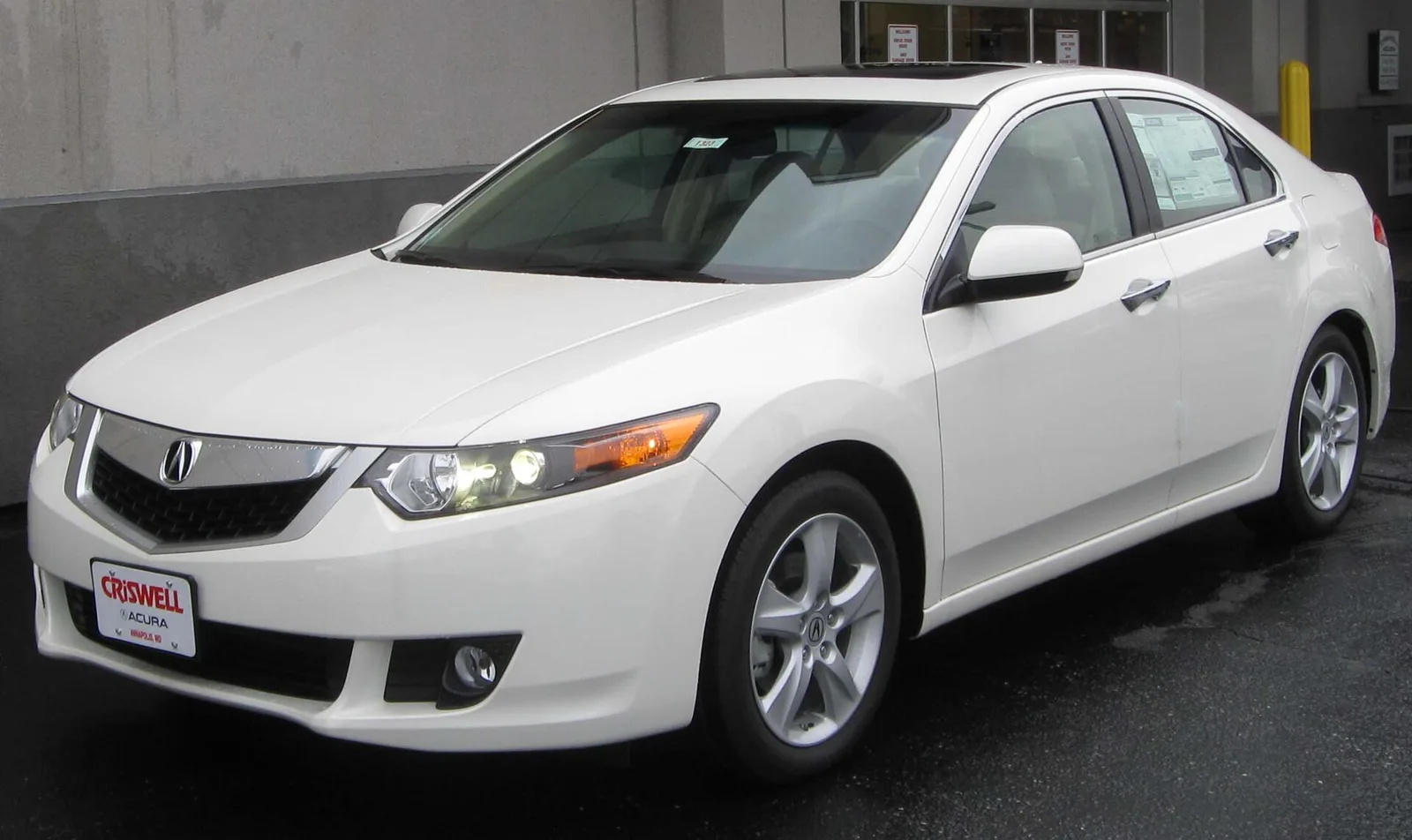
A Honda-built Acura sedan from the 2000s set against the first BMW 3 Series, a car nearly three decades older.
The Acura TSX and BMW 3 Series are compact executive cars from different eras. The TSX was a Honda-based sedan sold from 2004 to 2014, while the 3 Series covered here is the E21, built from 1975 to 1983 with engines from 1.6 litres to a 2.3-litre six.
The Acura TSX and the BMW 3 Series both sit in the compact executive class, but they are nearly three decades apart in age. The TSX ran from 2004 to 2014 and became Acura's entry-level car after 2006, while the BMW side of this comparison is the E21, built from 1975 to 1983 as the first 3 Series.
Why are these two compact executive cars worth comparing?
They are worth comparing because both were built as compact executive cars with sporting intent for buyers wanting a smaller premium car. The TSX drew on the Honda Accord, while the E21 gave BMW a compact model with a sporting reputation.
The TSX was sold by Acura, the luxury marque of Honda, and was built in Sayama, Saitama, Japan. The E21 was introduced to the public at the Munich Olympic Stadium in July 1975, so the two cars belong to very different parts of the history of their makers. Reading them side by side shows how each brand approached the compact class in its own time.
A compact sedan from the 2000s set against the first 3 Series, two cars separated by nearly three decades.
How did each car begin?
The first TSX reached the market in 2004 as a rebadged Japanese Accord 2.4 Type-S, and the E21 entered production in June 1975 to replace the BMW 02 Series. Each car answered a specific gap in its maker's line-up, although the reasons were different.
The TSX was introduced in April 2003 as a 2004 model and sold in North America under the Acura name. It replaced the Integra sedan, which was dropped in 2001 in the United States, and in Canada the EL had already taken over from it in 1996. Its interior was borrowed from the Japanese Honda Inspire of the fourth generation.
BMW's majority shareholder, Herbert Quandt, drove the decision to find a replacement for the ageing 02 Series. The E21 was the first 3 Series, offered solely with two doors, and its six-cylinder versions were easy to spot thanks to their quad round headlights.
Where and when did each car compete?
The two cars met most directly in the wagon class. When the TSX Sport Wagon arrived for the 2011 model year, the BMW 3 Series Touring was left as the only wagon in the entry-level luxury class, so the two were direct alternatives there.
The TSX Sport Wagon went on sale in the United States in December 2010. The Volkswagen Passat wagon and Mercedes C-Class wagons were withdrawn around the same time, which is why the Touring stood alone. The E21 never had a Touring body, so that wagon rivalry belongs to later 3 Series generations rather than the car covered here.
The two cars never shared a showroom year. The E21 was sold in the United States as the 320i from 1977 to 1983, and it was replaced by the E30 in 1982, while the first TSX did not arrive until 2004. The TSX then ran until 2014, when the TLX replaced it.
What were the design differences?
The TSX was an Accord-derived sedan that brought a new safety structure and a long list of luxury features in its second generation. The E21 set a new BMW look, with a kidney grille, a Hofmeister kink on the C-pillar and an interior angled toward the driver.
The second-generation TSX was larger than the car it replaced, at 76 mm (3.0 in) wider with a 66 mm (2.6 in) wider track and a 33 mm (1.3 in) longer wheelbase. Its length grew by 61 mm (2.4 in), and curb weight rose by about 45 to 68 kg (100 to 150 lb). Honda's Advanced Compatibility Engineering body structure made its debut on this car.
In the United States the second-generation TSX came with leather upholstery, dual-zone climate control, a power driver's seat with memory, a sunroof and Xenon headlights. Canadian buyers could choose a base trim with cloth seats and halogen headlights instead.
The E21's front was dominated by the BMW kidney grille, and its shape resembled the E12 5 Series that was in production at the same time. Paul Bracq, BMW's design director from 1970 to 1974, is credited with setting its direction. The Design Museum in London includes it among fifty cars that changed the world.
The E21 cockpit was new in concept, with the centre console and dashboard angled towards the driver. Its instrument order, reading fuel, speed, engine revs and water temperature from left to right, was copied from the 1936 328 sports car. The 1979 facelift replaced the slider heat controls with rotary knobs.
How did the engines compare?
The TSX's base engine was a 2.4-litre four with i-VTEC, rated at 149 kW (200 hp) and later 153 kW (205 hp) from 2006. The E21 began with 1.6, 1.8 and 2.0-litre fours and later added six-cylinder engines, including a 2.3-litre unit in the 323i.
The first-generation K24A2 used intelligent variable valve timing, and its 2006 update raised output from 149 kW (200 hp) to 153 kW (205 hp) through a larger throttle body and bigger intake valves. The second-generation engine made 150 kW (201 hp) and 233 N m (172 lb ft). Acura said the new unit spread its power over a wider rev range, so the rated figure was 3.0 kW (4 hp) lower than the 2008 car but felt stronger.
The 2010 model year brought an optional 3.5-litre V6 rated at 280 hp, shared with the Acura TL. It was available only with the five-speed automatic. A planned 2.2-litre i-DTEC diesel was dropped in favour of hybrid plans in Japan and the United States.
Early E21s used carburetted four-cylinder engines, and fuel injection arrived on the 320i in late 1975. In 1977 the six-cylinder M20 engine replaced the 320 four, and the 323i used a 2.3-litre six with Bosch K-Jetronic injection. Six-cylinder models were not sold in the United States, where the 320i kept a four.
The E21 used a 3-speed ZF automatic on the 318 and 320, with 4-speed or 5-speed Getrag manuals. The TSX offered a six-speed manual or a five-speed automatic with paddle shifters, and the second-generation automatic was fitted with steering-wheel paddles.
How quick were the two cars?
The E21 range has published acceleration and top speed figures, running from 14.8 seconds to 100 km/h in the 315 to 8.7 seconds and 190 km/h (118 mph) for the 323i. The TSX has no acceleration or top speed figure listed, so a direct pace comparison is not possible.
The 316 reached 100 km/h in 14 seconds with a top speed of 160 km/h (99 mph). The 318i managed 11.5 seconds and 173 km/h (107 mph), and the 320i brought that to 10.5 seconds and 180 km/h (112 mph). The 320/6 reached 100 km/h in 10.0 seconds, and the 323i was the flagship at 8.7 seconds and 190 km/h (118 mph).
US-market 320i cars were slower, because the downsized 1.8-litre car of 1980 took 11.1 seconds to reach 100 km/h and topped out at 169 km/h (105 mph). The TSX's power ratings are the closest comparison available, though they are rated outputs rather than timed results.
Which car was more practical?
On body choice alone the TSX offered more, with a sedan and, from 2011, a wagon. The E21 was a two-door sedan or coupe with no touring body, and its wheelbase of 2.6 m (102 in) kept the overhangs short.
The Sport Wagon offered 60.5 cu-ft of rear cargo space with the rear seats folded down, and 25.8 cu-ft with them up. Its rear seats folded 60/40. In September 2011 a compact tyre repair kit freed up a larger underfloor storage area.
The E21's track measured 1,364 mm (53.7 in) at the front and 1,377 mm (54.2 in) at the rear. US models came standard with air conditioning, and the 1981 320iS gave that up in exchange for sport equipment including Recaro seats and a limited-slip differential.
What motorsport history did each car have?
The E21 has a motorsport record, most notably through a Group 5 version of the 320 that raced from 1977. The TSX has no motorsport record in this comparison, so the racing story belongs to the BMW.
The Group 5 320, nicknamed the Flying Brick for its blocky body, replaced the 3.0 CSL in BMW's racing programme. It used a Formula Two engine tuned to 225 kW (302 bhp) by BMW Motorsport, and it was developed in just over 12 weeks without technical drawings, with the car taking its final shape as the engineers worked on it.
The car also ran with the McLaren team in the American International Motor Sports Association series and with the BMW Junior Team, whose drivers included Manfred Winkelhock, Eddie Cheever and Marc Surer. Surer won its first race at Zolder in 1977, and the car later took victories in Macau.
How did sales and reception compare?
The E21 sold in very large numbers, with 1,364,039 cars built between June 1975 and December 1983, plus 4,595 Baur TopCabriolets. The TSX earned awards and resale praise, but its total output is not listed in this comparison.
The TSX was named 2008 Wheels Car of the Year, reached the 2009 Motor Trend Car of the Year finalists, and was ranked for resale value in the sedan category by CNN in November 2006. Car and Driver placed it on its Ten Best list for 2004 to 2006, and SmartMoney named it top value among sedans under $35,000 in 2004.
Safety results were mixed for the first generation. The Insurance Institute for Highway Safety rated it Good for frontal offset, Poor for rear crash protection and Acceptable for side impact. The 2009 to 2011 cars recorded 7 driver deaths per million registered years, the second lowest figure among midsize four-door cars.
The E21's design was recognised by the Design Museum in London, and its later limited models, such as the 320iS of which just 2,500 were produced, added to its appeal. Its successor, the E30, arrived in 1982.
Which buyer suits each car?
The TSX suits a buyer who wants a Honda-engineered compact executive sedan with a long list of standard luxury features and, later, a wagon body. The E21 suits a buyer who values early BMW design, a wide range of engines and the appeal of limited editions.
A buyer who wants a V6 or a wagon has more choice with the TSX, since the V6 came in 2010 and the Sport Wagon in 2011. A buyer drawn to a classic, collectible design has the E21, with the 320iS, the Baur cabriolet and the Group 5 racing history behind it.
Side-by-side specifications
| Specification | Acura TSX | BMW 3 Series (E21) |
|---|---|---|
| Production span | 2004 to 2014 model years | June 1975 to December 1983 |
| Body | Sedan; wagon from 2011 | Two-door sedan or coupe; Baur cabriolet 1978 to 1981 |
| Base engine | 2.4-litre inline four, 149 kW (200 hp) in 2004 | 1.6-litre four, 66 kW (89 hp) |
| Top engine | 3.5-litre V6, 280 hp, from 2010 | 2.3-litre six, 105 kW (141 hp) in the 323i |
| Torque | 233 N m (172 lb ft) on the second-generation base engine | Not given |
| Transmission | Six-speed manual or five-speed automatic | Three-speed automatic, or four or five-speed manual |
| Wheelbase | 33 mm (1.3 in) longer on the second generation | 2.6 m (102 in) |
| 0-100 km/h | Not given | 8.7 seconds for the 323i; 14.8 seconds for the 315 |
| Top speed | Not given | 190 km/h (118 mph) for the 323i; 154 km/h (96 mph) for the 315 |
| Cargo | 60.5 cu-ft with rear seats folded (Sport Wagon) | Not given |
| Production total | Not given | 1,364,039 cars |
| Notable variants | 2011 Sport Wagon; 2012 Special Edition | 320iS (2,500 built); Baur TopCabriolet (4,595 built) |
| Successor | TLX from 2014 | E30 from 1982 |