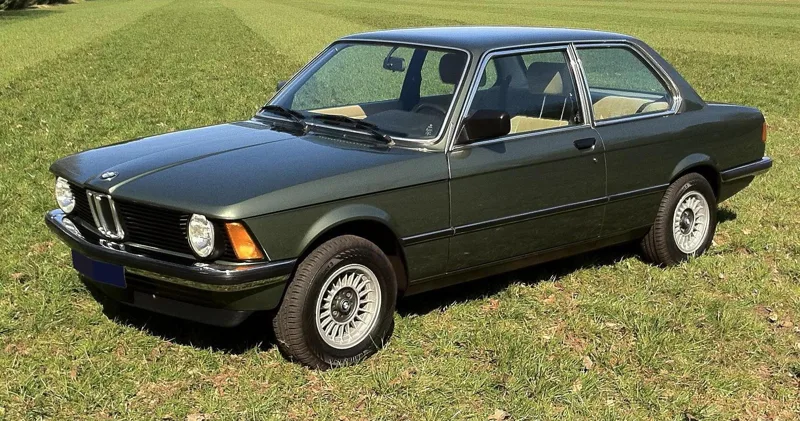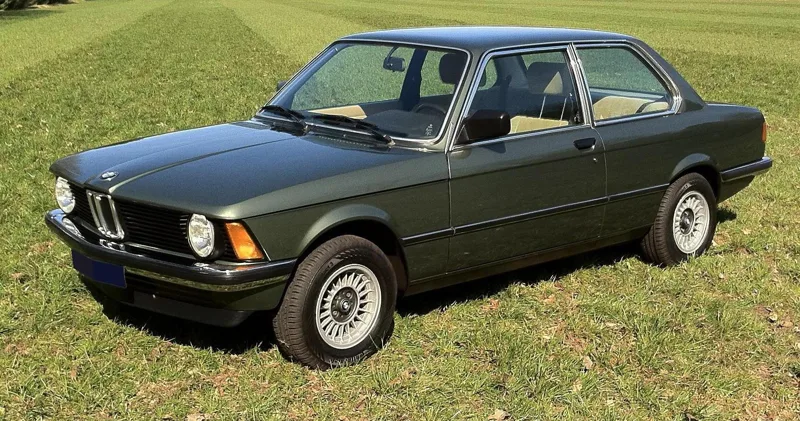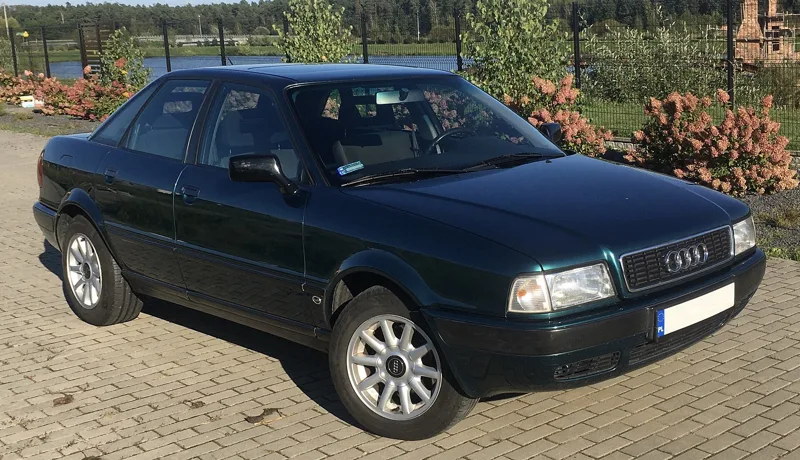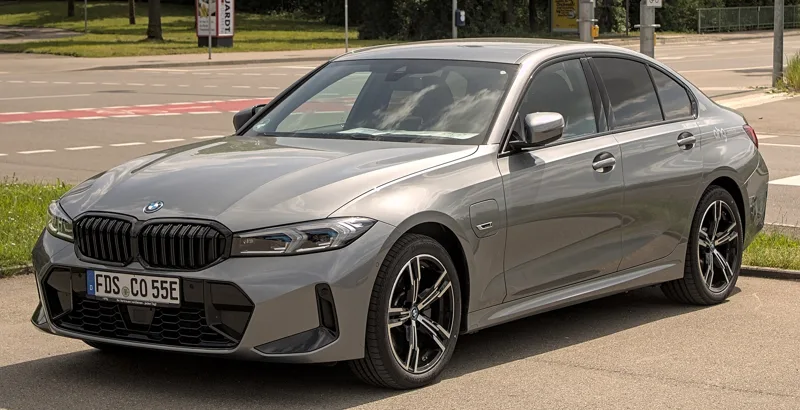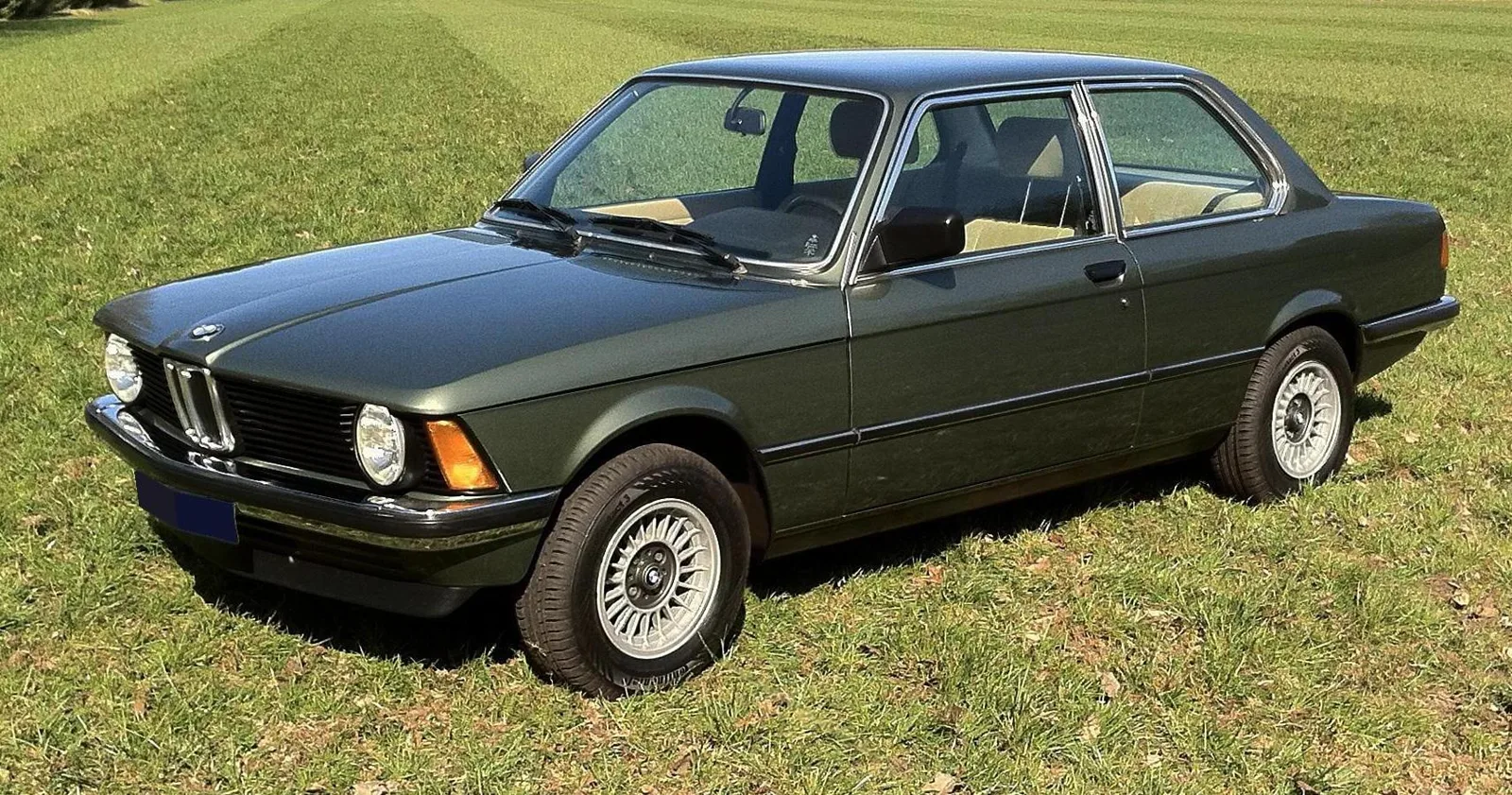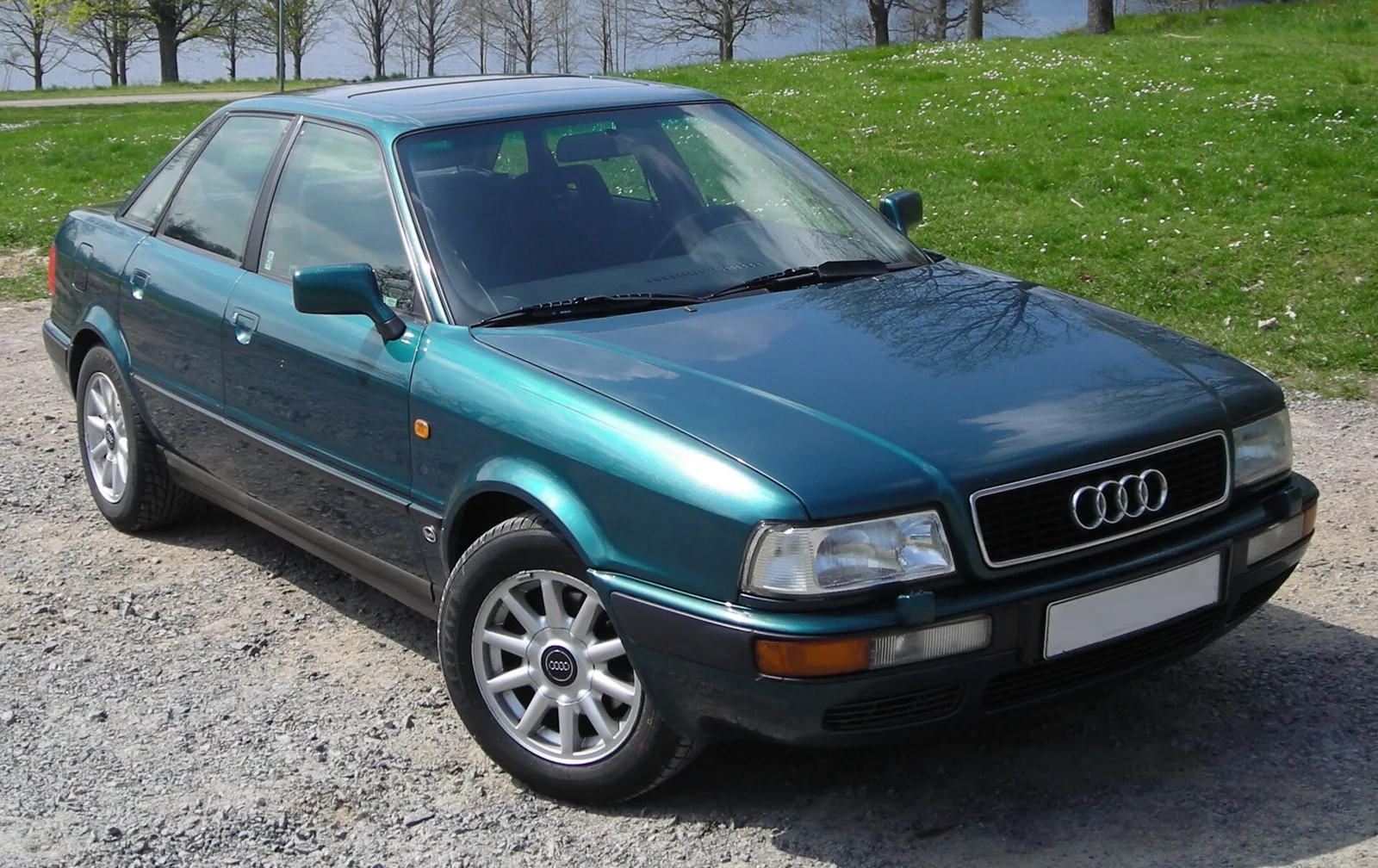
Audi's second-generation 80 was designed to take on BMW's 3 Series in the compact executive class, and the two cars shared the market from 1978 to 1983.
The Audi 80 B2 was presented in September 1978 and pitched directly against the BMW 3 Series, whose E21 generation had been built since June 1975. The two cars shared the market until the E21's end in 1983.
The Audi 80 B2 and the BMW E21 were both compact executive saloons of the late 1970s, and they competed for the same buyers in Europe and North America. The Audi arrived in September 1978, and it was pitched directly against the 3 Series. The E21 had been on sale since June 1975, and it carried BMW's reputation for sporting saloons into the next decade.
Were the Audi 80 and the 3 Series rivals?
Yes. Audi's second-generation 80 was designed to move the car upmarket from the mid-sized family segment into a compact executive class, and that class was the one BMW had built with the E21. Audi had the 3 Series squarely in mind when it set the B2's brief.
The two cars overlapped from 1978 to 1983, when both were on sale. The comparison therefore sets the Audi 80 B2 against the E21, the car it was intended to rival.
Audi designed its 1978 saloon to take on the 3 Series, and the two cars shared five years of competition in the compact executive class.
How did the BMW E21 come about?
The E21 was the first generation of the 3 Series. Majority shareholder Herbert Quandt had decided that BMW needed to replace the ageing 02 Series, and the E21 was introduced to the public at the Munich Olympic Stadium in July 1975. It was built as a two-door saloon or coupe, and convertibles were made by Baur.
The styling bore a resemblance to the E12 5 Series that was in production as the E21 appeared, and the C-pillar carried the Hofmeister kink. Paul Bracq, BMW's design director from 1970 to 1974, is credited with setting the design direction. The Design Museum London has listed the E21 among its fifty cars that changed the world.
How did the Audi 80 B2 come about?
Audi presented the B2 platform, which was given the type code Typ 81, in September 1978. The four-door sedan reached European showrooms a few weeks later, and the fuel-injected GLE and two-door cars followed in early 1979. North America saw the car in 1979 as a 1980 model, badged as the Audi 4000.
The body was designed by Giorgetto Giugiaro. The B2 had no Avant, because the Volkswagen Passat filled that role, and it was also a de facto replacement for the NSU Ro 80, whose production had ended the year before. Audi dropped the NSU brand completely after that car's demise.
How do the specifications compare?
| Feature | Audi 80 (B2) | BMW 3 Series (E21) |
|---|---|---|
| Production | 1978 to 1986; 4000 in North America from 1980 | June 1975 to December 1983; 1,364,039 built |
| Body | Four-door sedan and two-door; no Avant | Two-door saloon or coupe; Baur TopCabriolet, 4,595 built |
| Front suspension | Not reported | MacPherson strut |
| Rear suspension | Not reported | Semi-trailing arm |
| Base engine | 1.6 and 1.8-litre fours; 70 PS (51 kW; 69 bhp) 1.6 turbodiesel | 1.6 at 90 PS (66 kW; 89 hp) on the 316; 1.8 at 98 PS (72 kW; 97 hp) on the 318 |
| Top engine | 2.2-litre five-cylinder, 136 PS (100 kW; 134 bhp), later 2.3 litres | 2.3-litre six in the 323i, 105 kW (141 hp) in 1977 |
| Fuel injection | Fuel-injected GLE from 1979 | 320i from late 1975; six from 1978 in the 323i |
| Four-wheel drive | 80 quattro from 1983 | None |
| 0 to 100 km/h | Not reported | 8.7 seconds for the 323i; 10.0 seconds for the 320/6 |
| Top speed | 187 km/h (116 mph) for the 80 quattro; 199 km/h (124 mph) for the front-drive 100 CD | 190 km/h (118 mph) for the 323i |
| Transmission | Not reported | 3-speed ZF 3HP22 automatic; 4 and 5-speed Getrag manuals |
| Motorsport | Not reported | Group 5 320 won its first race at Zolder in 1977 |
| North America | 4000 from 1980 with a 1588 cc four at 76 hp (57 kW) | 320i sold from 1977 to 1983; six-cylinder models not sold there |
| Sales | Not reported | 1,364,039 cars built in total |
How did the Audi 80 B2's engines develop?
The B2 started with 1.6 and 1.8-litre engines, and a 1.6 turbodiesel rated at 70 PS (51 kW; 69 bhp) was offered too. The 1984 facelift replaced the 1.6 and 1.8 with newer versions that could take catalytic converters, and the Audi 90 was introduced as a larger-engined version of the 80.
The larger engines were five-cylinders. A 2.0-litre produced 115 PS (85 kW; 113 bhp), and a 2.2-litre produced 136 PS (100 kW; 134 bhp) and was later enlarged into a 2.3-litre. The 2.2 quattro was rated at 120 PS (88 kW; 118 bhp).
How did the BMW E21's engines develop?
The E21 began with carburetted fours of 1.6, 1.8 and 2.0 litres. Fuel injection arrived on the 320i in late 1975, and in 1977 a carburetted six replaced the 320 and 320i, with the 323i becoming the first fuel-injected six in 1978.
The 316 with its 1.6-litre engine reached 100 km/h in 14 seconds and a top speed of 160 km/h (99 mph). The 318 reached 100 km/h in 12 seconds, and the 320i in 10.5 seconds. The 320/6 took 10.0 seconds, and the 323i took 8.7 seconds with a top speed of 190 km/h (118 mph). The 323i was the flagship.
How did four-wheel drive and the quattro change the Audi?
The 80 first became available with four-wheel drive in 1983. It was essentially an Ur-Quattro without the turbocharger, with saloon bodywork, and it weighed more than the front-drive Audi 100 CD with the same 2144 cc engine. The 80 quattro was slower than the larger 100, and its luggage compartment was marginally smaller.
The E21 offered no four-wheel drive. Its strengths lay in its rear-drive balance and its six-cylinder options, which the Audi did not offer in the B2 range.
How did the two cars sell in North America?
In the United States the E21 went on sale as the 320i for the 1977 model year and stayed until 1983. Six-cylinder models were not sold there, because the E21 versions of the M20 engine did not meet US emissions rules at the time. Early US cars had a thermal reactor, and the engine was later downsized to 1.8 litres.
The Audi reached North America as the 4000 from 1980, with a 1588 cc inline-four at 76 hp (57 kW). For 1981 the 4000 received a 1.7-litre engine and a standard five-speed manual, and the 4000 5+5 added a five-cylinder engine that year.
What did the E21's interior and dashboard add?
The E21 introduced a new design concept for the cockpit, with the centre console and central dashboard area angled towards the driver. Reading from left to right, the gauges showed fuel, speed, revs and water temperature, a layout copied from the 1936 328 sports car, and it became part of BMW's interior philosophy for years.
Safety was built in. All edges and control elements were rounded off and padded, and the 1979 facelift replaced the slider heating and ventilation controls with rotary knobs. The analogue centre clock was replaced with a digital one below the instruments, and the centre stack gained room for a revised air conditioning system.
How did the E21 ride and handle?
The 2.6 m (102 in) wheelbase kept the front and rear overhangs short. Track widths were 1,364 mm (53.7 in) at the front and 1,377 mm (54.2 in) at the rear, and the steering was rack and pinion.
The rear semi-trailing arm suspension changed camber as it moved, which could introduce oversteer at the handling limits. Power-assisted brakes used discs at the front and drums at the rear, except on the 323i, which had discs all round. Options included a 5-speed close-ratio sport gearbox and a 25 percent limited-slip differential.
How did the Audi 80 B2's body and styling work?
The B2's body was designed by Giorgetto Giugiaro, and it was built in four-door and two-door forms. In North America the car had quad headlamps, while European models had two headlamp casings, a difference that was typical of how the two markets were served.
The 80 quattro gained twin headlamps, a front spoiler with built-in foglights and a rear spoiler in body colour. It also had a quattro script on the bootlid and a twin exhaust, and a temporary spare wheel was the only option the smaller luggage area could take.
What was the E21's economy model?
The 315 was introduced in March 1981 as an economy model, a response to the second oil crisis of late 1979. It used a 75 PS (55 kW; 74 hp) tune of the 316's 1.6-litre engine, set up for economy, and it used bumpers with exposed screws and a vinyl parcel shelf.
The 315 was the last E21 to be built, and it was produced alongside the early E30 models. It reached 100 km/h in 14.8 seconds and topped out at 154 km/h (96 mph), and it helped BMW reach a lower price point in a shrinking market.
Which buyer suits which car?
The facts do not settle which car was better, because the two cars offered different strengths. The Audi 80 B2 suits a buyer who wanted a compact executive saloon with four-wheel drive from 1983, a turbodiesel option and a five-cylinder engine. The BMW E21 suits a buyer who wanted a sporting rear-drive saloon with a six-cylinder option, a fuel-injected 320i and a strong motorsport record.
The E21's production total of 1,364,039 cars is the clearest sales figure available here, while the Audi's sales are not reported. No verdict on the two can be reached from sales alone. A buyer in North America would find the 320i on sale from 1977 with a 1.8-litre engine from 1980, while the Audi 4000 offered only four and five-cylinder engines. The 320iS of 1981 added Recaro sport seats and a five-speed gearbox, and only 2,500 were built.
The E21 was built exclusively as a two-door body, apart from convertibles, while the Audi offered four doors. The Passat followed the B2 Audi 80 two years later, sharing its platform and running gear but carrying a stronger visual identity of its own.