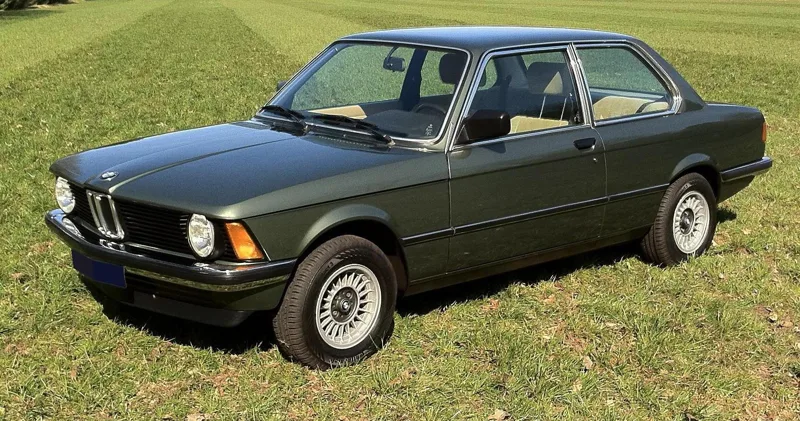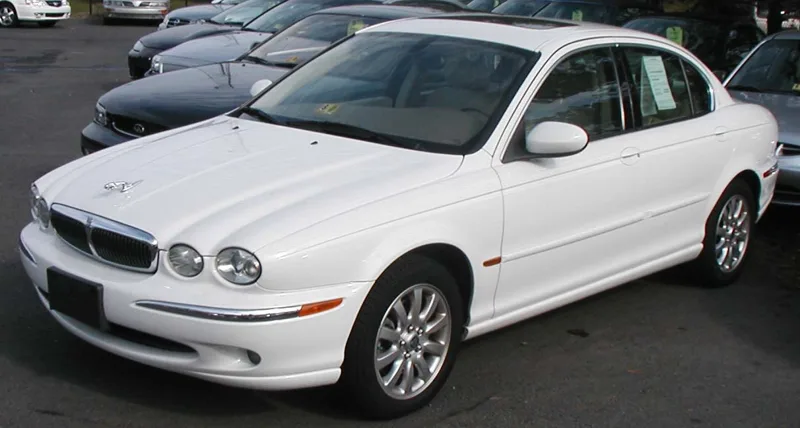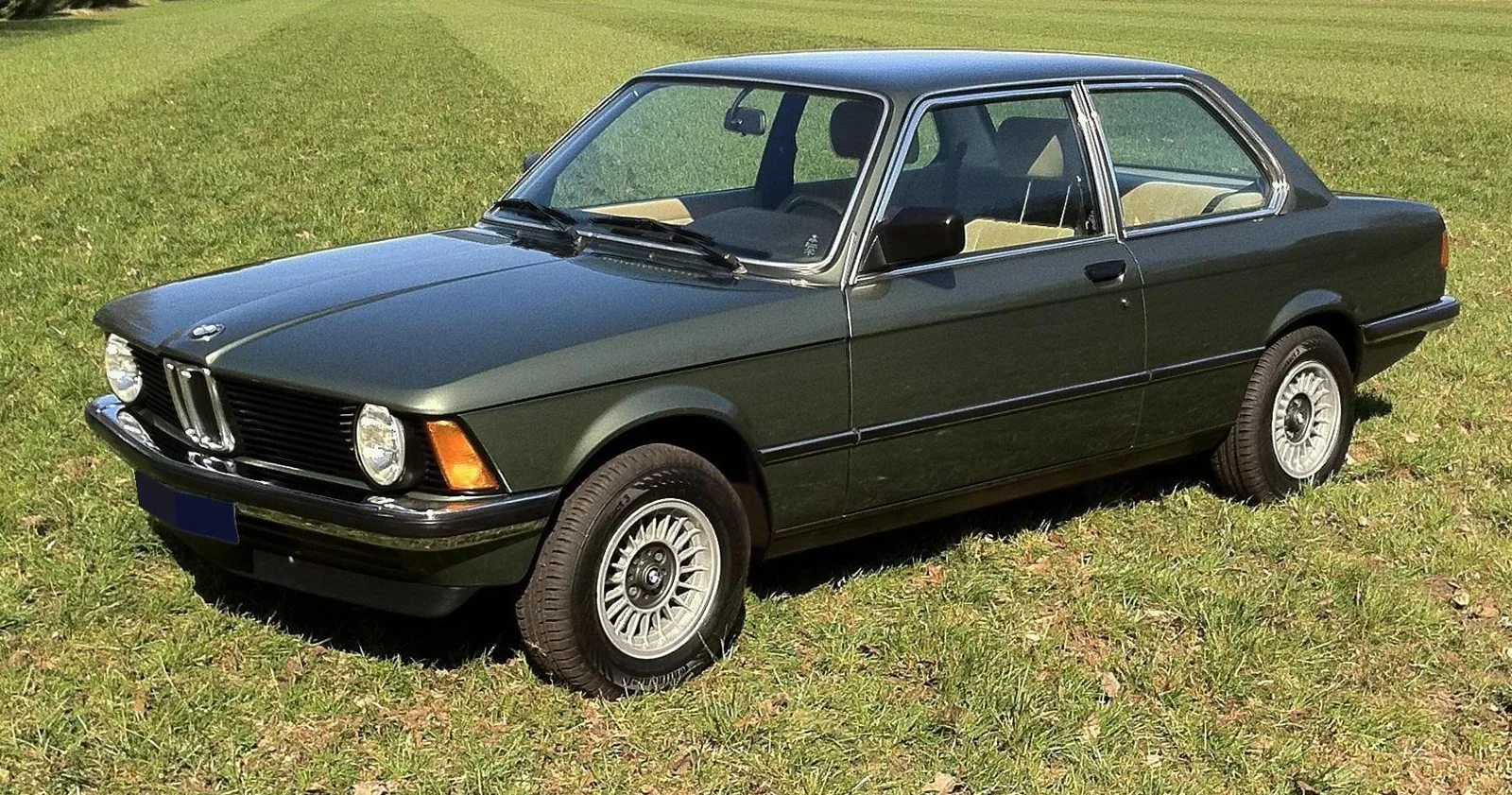
BMW's E21 gave the 3 Series its name in 1975, while Jaguar's X-Type arrived in 2001 as its first compact executive, built on a Ford platform.
The BMW E21 was the first generation of the 3 Series, built from 1975 to 1983 with four- and six-cylinder engines. The Jaguar X-Type was a compact executive car built from 2001 to 2009 on a modified Ford platform, and it offered front-wheel drive and all-wheel drive versions.
The BMW 3 Series and the Jaguar X-Type were both aimed at buyers who wanted a compact executive car with real performance, yet they came from very different corners of the car business. One carried BMW's name through several decades, while the other was Jaguar's attempt to enter a segment it had never served with a car of this size.
The E21 was the first 3 Series, and it set the pattern that the later generations followed. The X-Type was Jaguar's first compact executive since the 1959 Mark 2, and it was the company's first front-wheel drive car, which made it a notable departure from the brand's rear-drive tradition.
Why were the BMW 3 Series and Jaguar X-Type seen as rivals?
Jaguar's X-Type was launched to compete in the compact executive class, which was dominated by the BMW 3 Series and the Mercedes-Benz C-Class. The E21 had already established the 3 Series name, so the X-Type arrived to challenge an entrenched rear-wheel drive benchmark.
The X-Type was developed while Jaguar was owned by Ford as part of its Premier Automotive Group, which ran from 1999 to 2010. The programme aimed for 100,000 annual sales, and Autocar called the car the most important Jaguar ever, a claim that reflected how much rested on it.
The E21's story began earlier. BMW's board of management introduced it to the public at the Munich Olympic Stadium in July 1975, and majority shareholder Herbert Quandt had pushed for a replacement for the ageing 02 Series. The E21 went on sale in the same year, and it remained in production until December 1983.
One car started a long-running badge in 1975, the other tried to give Jaguar a compact executive car with a Ford heart.
How did the E21 and X-Type differ in design?
The E21 carried a prominent kidney grille and resembled the E12 5 Series, which was in production as the E21 was introduced. The X-Type was built on a modified Ford CD132 platform, and about 19% of its origins were shared with the Mondeo, mostly in hidden components such as heating and air-conditioning units.
Paul Bracq, BMW's design director from 1970 to 1974, is credited with setting the E21's design direction. The Design Museum London later listed the E21 among the fifty cars that changed the world, a recognition that still shapes how the car is remembered.
The 1979 facelift replaced the sliding heat and ventilation controls with rotary knobs, and a digital clock took the place of the analogue one. The E21 had a 2.6 m (102 in) wheelbase with minimal overhangs, which gave it a compact and balanced stance.
The X-Type estate was the first Jaguar estate built in series production, and its design was revised by Ian Callum, who later led the brand's styling. The estate offered a Cd of 0.32 in standard form and 0.33 in Sport trim, and its loading space was designed to suit family use.
How did the engines and performance compare?
The E21 320i with fuel injection reached 100 km/h (62 mph) in 10.5 seconds and had a top speed of 180 km/h (112 mph). The 323i topped the range with a 2.3-litre six, reaching 100 km/h (62 mph) in 8.7 seconds and a top speed of 190 km/h (118 mph).
The X-Type launched with 2.5-litre and 3.0-litre V6 petrol engines, all of them sold with all-wheel drive. A 2.1-litre V6 front-wheel drive model followed in 2002, and diesel models arrived in 2003 with four-cylinder engines, the first diesels Jaguar had offered.
Torque split was a feature of the all-wheel drive car. Its default was 60% to the rear and 40% to the front through a viscous coupling, which could vary the split when grip was lost. The coupling was deleted for the 2004 model year, which removed that mechanical limited-slip function.
The E21 range also covered economy. The 316 needed 14 seconds to reach 100 km/h (62 mph) from its 1.6-litre engine, while the fuel-injected 318i was quicker at 11.5 seconds. The X-Type range later added a 2.2-litre diesel with a particulate filter, which arrived with the 2008 facelift.
What was each car like to live with?
The E21 had standard air conditioning on US models, and the 320i sold there used a thermal reactor to meet emissions rules. The X-Type came with alloy wheels as standard, an eight-way power driver's seat and split-folding rear seats, which gave it a practical interior for its class.
The AA praised the X-Type's elegant looks, silky drive and roomy load bay, although it noted a smallish load area with all seats in place. Honest John said the car was not recommended for towing, which matters for buyers who plan to pull a trailer.
Owners of the E21 could also choose a Baur TopCabriolet, a conversion with a targa roof and an independent rear soft-top. The conversion let the owner keep an open-air feel while protecting the plastic rear window from scratches and frost.
How many were built, and how did they sell?
The E21 reached total production of 1,364,039 cars across its run from June 1975 to December 1983. The X-Type peaked at 50,000 sales in 2003 and built about 350,000 over its eight-year run, well short of the 100,000 annual sales that had been hoped for.
The E21 Baur TopCabriolet total was 4,595 cars before production ended in 1981, and a special 320iS package with a sports focus sold 2,500 cars in 1981. Those figures make the E21's special editions a small but notable part of its story.
In the United States the X-Type's sales fell from 21,542 in 2004 to 10,941 in 2005. In the same year BMW sold 106,950 3 Series, Audi sold 48,922 A4s and Mercedes-Benz sold 60,658 C-Class, showing how far the X-Type trailed its German rivals.
Jaguar lost EUR 4,690 on every X-Type built because of poor sales, and production ended in July 2009. The car's economics never matched the ambitions set when the programme began, and the record shows that the German rivals kept the segment's volume.
How were the two cars received?
The E21 is remembered as a design landmark, named among the cars that changed the world by the Design Museum London. The X-Type drew mixed reviews, with praise for its looks and driving feel but criticism for its Mondeo heritage and its safety results.
Jeremy Clarkson praised the 4x4 and sport versions of the X-Type on Top Gear, and he did not treat the Mondeo link as a reason to avoid the car. In his view the shared platform was a small matter next to the car's real strengths on snow and dry roads.
Euro NCAP's crash testing found that the doors could still open after a frontal impact and that the car protected rear child passengers well. It rated pedestrian protection as dire, however, which was a serious black mark for a family car.
Robert Cumberford called the X-Type's styling a pastiche of past Jaguars in Car and Driver, a judgement that reflected the wider criticism that the car looked too much like its relatives. Reviewers in general found the car pleasant to drive but less distinctive than the brand's older models.
Did either car have a motorsport record?
The E21 had a real motorsport career, with its Group 5 version, nicknamed the Flying Brick, winning races in the late 1970s and early 1980s. The X-Type has no motorsport record in the material used for this comparison, and that difference is one of the clearest between the two cars.
The Group 5 car was developed in just over 12 weeks, with BMW Motorsport engineers modifying the car directly as its shape developed. It used an engine tuned to 225 kW (302 bhp), and it was a clear example of how the E21 platform could be pushed.
The 320 won its first race at Zolder in 1977 with Marc Surer at the wheel, and it later took the 1981 and 1982 Guia Race of Macau. BMW's Junior Team included Manfred Winkelhock, Eddie Cheever and Marc Surer, who helped build the car's reputation on the track.
How do the specifications compare?
| Specification | BMW E21 | Jaguar X-Type |
|---|---|---|
| Production | June 1975 to December 1983 | 2001 to 2009 |
| Total built | 1,364,039 cars | about 350,000 cars |
| Body styles | two-door sedan or coupe; Baur convertible | four-door saloon and five-door estate |
| Engines | four-cylinder and six-cylinder petrol, up to 2.3-litre six | 2.1, 2.5 and 3.0-litre V6 petrol; four-cylinder diesel |
| Drive | no figure given | front-wheel drive or all-wheel drive |
| Top speed | 190 km/h (118 mph), 323i | no figure given |
| 0-100 km/h | 8.7 seconds, 323i | no figure given |
| Peak sales | no figure given | 50,000 in 2003 |
| Drag coefficient | no figure given | Cd 0.32, estate standard |
| Reception note | Group 5 320 won its first race at Zolder in 1977 | Euro NCAP rated pedestrian protection dire |
Set side by side, the E21 offers the wider petrol range of its era, while the X-Type offers the more modern drivetrain options. Neither column gives a complete picture of either car, because the record supplies more detail for some cells than for others.
Which buyer suits each car?
The E21 suits an enthusiast who wants a classic 1970s BMW with a range of engines, from economical fours to the sporty 323i. The X-Type suits a buyer who wants a compact Jaguar with all-wheel drive or diesel economy and who accepts a car built on a shared Ford platform.
Collectors and drivers of older cars will find the E21 more interesting, especially the rare Baur TopCabriolet or the 2,500-built 320iS. The record gives no current value for either model, so buyers should check prices directly before deciding.
Buyers focused on long-term reliability or resale will need to look beyond the record, since it gives production figures rather than running costs. The fairest way to choose is to decide between the character of an earlier BMW and the Jaguar's brand-specific appeal.